 Seeking LED
How to Install Outdoor LED Flood Lights?
273How to install outdoor LED flood lights correctly for exterior areas. Learn mounting height, wiring tips, safety checks, and real installation advice.
View detailsSearch the whole station
Question:
How do LED lights work, and why are they different from traditional lighting?
Answer:
To understand how LED lights work, it helps to know that LEDs do not create light by heating a filament. Instead, they produce light through a controlled electrical process inside a semiconductor. This is why LED Tri-proof lamp uses less energy and lasts much longer than older light sources.
When electricity passes through an LED chip, it excites electrons inside the material. As these electrons move, they release energy in the form of light. This process happens instantly and with very little wasted heat.
If you ask how does LED lighting work, the short answer is: electricity goes in, light comes out, without burning anything.
An LED (Light Emitting Diode) is made from layered semiconductor materials. When power is applied:
Because there is no filament to break or gas to burn out, LEDs are far more stable over time.
Many people wonder how do LED bulbs work compared to incandescent or halogen bulbs.
Traditional bulbs:
LED bulbs:
This difference explains why LED lights are more energy-efficient and safer in long-hour industrial use.
The LED lighting working principle becomes especially important in industrial and outdoor environments. In factories, warehouses, and outdoor projects, lights often run 10–16 hours per day.
At SEEKING, LED fixtures are designed so that:
This practical approach ensures that LED lights continue working reliably instead of slowly degrading under daily use.
A common question is how LED lights produce light without getting extremely hot. The reason is efficiency.
LEDs convert a higher percentage of electrical energy into light, not heat. The small amount of heat that is generated is directed toward the heat sink and housing, rather than radiating forward.
This controlled heat behavior is why LED lighting is widely used in enclosed fixtures, high bays, and industrial spaces.
So, how do LED lights work?
They use semiconductor technology to turn electricity directly into light. This process avoids burning components, reduces heat, and allows LEDs to run longer and more efficiently than traditional lighting.
For industrial and commercial projects, this working principle translates into lower energy use, fewer replacements, and more stable lighting over time.
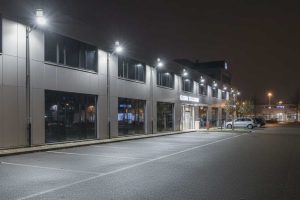
How to install outdoor LED flood lights correctly for exterior areas. Learn mounting height, wiring tips, safety checks, and real installation advice.
View details
Indoor sports LED lighting solutions improve visibility, safety, and energy efficiency. Learn how SEEKINGLED applies high bay lights, linear LEDs, and stadium lighting in real indoor sports facilities.
View details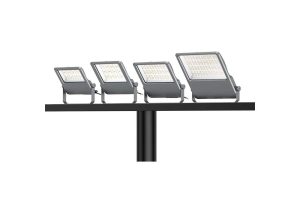
High lumen and CRI LED flood lights are widely used in outdoor, industrial, and stadium lighting. This engineer-written news article explains how lumen output and CRI affect real lighting performance using SEEKINGLED solutions.
View details
Upgrade large roads and industrial areas with a 200W LED street light delivering 150 lm/W efficiency, strong optics, and long service life by SEEKINGLED.
View details