 Seeking LED
SEEKINGLED Professional LED Stadium Lights Series
258The LED Stadium Lights Series is designed for real stadium use, not just specs. High power output, flexible optics, and reliable lighting for professional sports fields.
View detailsSearch the whole station
People ask what are LED street lights for different reasons.
Some are comparing quotes.
Some are replacing old sodium lamps.
Some just noticed their street looks different at night and want to know why.
The short answer is simple.
The real answer is not.
LED street lights are outdoor roadway lights that use light-emitting diodes instead of traditional bulbs like HPS or metal halide.
But calling them “just lights” misses the point.
An LED street light is a system:
When one part is poorly designed, the whole light tells on itself—slowly.
Here’s something you only notice after standing under them.
LED street lights don’t “warm up.”
They don’t buzz.
They don’t fade gently.
They either work—or they don’t.
That instant-on behavior is why cities adopted them fast. Traffic intersections, pedestrian zones, highways at night—no delay, no guessing.
From a maintenance perspective, this changes everything.
People still ask this comparison, so let’s be direct.
If someone tells you LED street lights solve all lighting problems, they’re overselling.
Good design matters more than the word “LED.”
This is where what are LED street lights becomes a quality question.
From SEEKINGLED’s project experience, reliable street lights usually share a few traits:
When these are right, lights stay quiet. Nobody notices them. That’s the goal.
It’s not just about power bills.
LED street lights reduce:
And yes, they look cleaner. Streets feel clearer. That matters more than specs.
No. And this is where confusion starts.
Two lights can share the same wattage and lumen rating—and behave very differently after two winters.
That difference usually comes down to:
SEEKINGLED focuses on these details because street lights don’t get second chances. They either earn trust or lose it.
LED street lighting is a roadway illumination system that uses light-emitting diodes (LEDs) to provide efficient, directional, and long-lasting outdoor lighting. Compared with traditional sodium lamps, LED street lighting offers better visibility, lower energy consumption, and reduced maintenance requirements for roads, highways, and public areas.
Modern LED street lighting systems combine LED modules, drivers, heat sinks, and optical lenses to control brightness distribution. In real projects, proper optics and thermal design are often more important than wattage alone because they directly affect long-term performance.
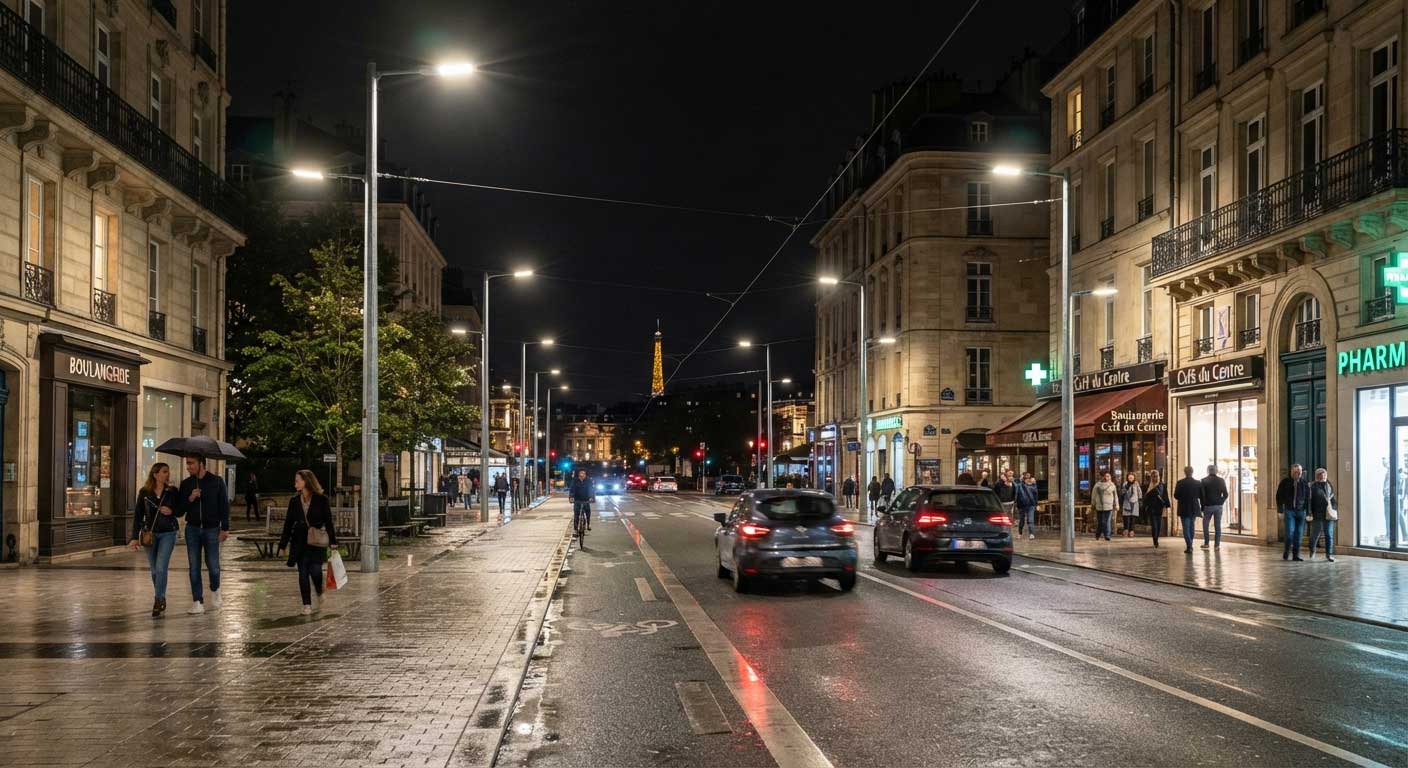
LED streetlights are mainly used for public roads, residential streets, highways, parking areas, industrial zones, and pedestrian paths where reliable outdoor illumination is required. They improve nighttime visibility while helping municipalities reduce electricity costs and maintenance frequency.
Many cities replace older high-pressure sodium lamps with LED streetlights because LEDs provide more accurate light distribution. Instead of sending light everywhere, advanced optical lenses direct illumination toward the road surface, reducing unnecessary light pollution.
Common applications include:
Street LED lighting is preferred because it provides higher efficiency, longer service life, and better control of light distribution compared with traditional lighting technologies.
A traditional sodium lamp may produce light in all directions, while modern street LED lighting uses precision optics to focus light where it is needed. This improves road visibility and reduces wasted energy.
According to the U.S. Department of Energy, LED lighting can use at least 75% less energy and last up to 25 times longer than incandescent lighting.
Source:
https://www.energy.gov/energysaver/led-lighting
For municipalities and commercial projects, these advantages translate into fewer replacements, lower operating costs, and improved nighttime safety.
LED streetlights provide consistent brightness, instant startup, and improved visibility for highways and roads. They are designed to operate continuously in outdoor environments where reliability is critical.
Key advantages include:
| Feature | Benefit |
|---|---|
| High efficiency LEDs | Lower electricity consumption |
| Directional optics | Better road coverage |
| Long lifespan | Reduced maintenance work |
| Instant lighting | Immediate visibility |
| Weather-resistant housing | Reliable outdoor operation |
In highway projects, lighting uniformity matters as much as brightness. A poorly designed system can create dark areas even with powerful fixtures.
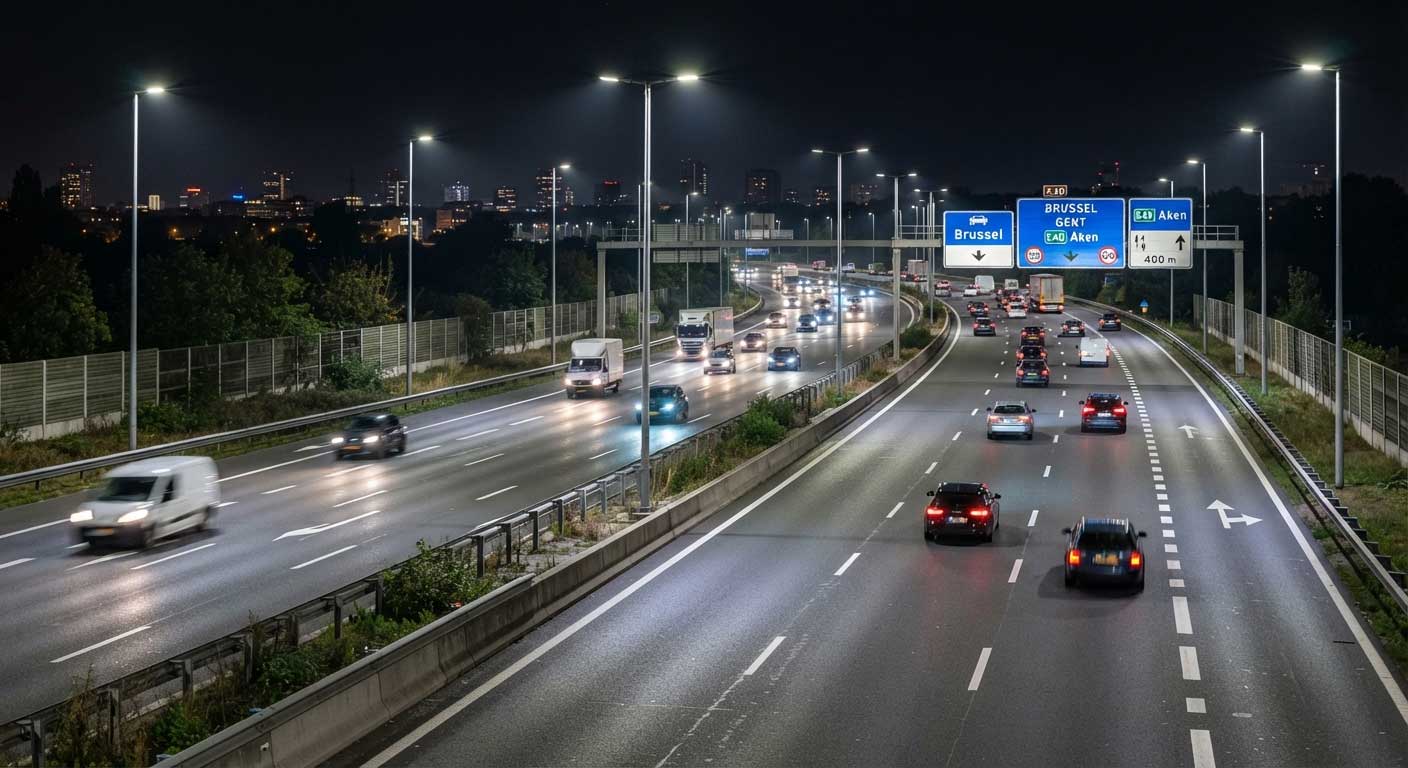
LED street lighting improves energy efficiency by converting more electrical power into usable light while producing less wasted heat compared with older lighting technologies.
The efficiency comes from several factors:
For example, replacing older 250W–400W high-pressure sodium fixtures with properly designed LED street lights can significantly reduce energy consumption while maintaining or improving roadway brightness.
However, the final performance depends on product quality. A cheap LED street light with poor heat management may lose brightness much faster than a professionally engineered fixture.
No, not all streetlights LED systems perform the same. Two fixtures with identical wattage can have very different results after several years of outdoor operation.
The main differences usually come from:
In SEEKINGLED street lighting projects, engineers focus on these details because roadway fixtures must handle rain, dust, temperature changes, and long operating hours.
A reliable streetlight is not defined only by initial brightness. It is defined by stable performance over years of use.
An LED light street light system uses semiconductor technology to produce illumination, while traditional street lighting often relies on sodium, mercury, or metal halide lamps.
The main differences are:
| LED Street Light | Traditional Street Light |
|---|---|
| Lower energy use | Higher energy consumption |
| Instant startup | Requires warm-up time |
| Better optical control | More light waste |
| Longer lifespan | Frequent replacement |
| Lower maintenance | Higher maintenance |
Modern cities increasingly choose LED solutions because they support smarter, safer, and more sustainable outdoor lighting networks.
LED street lighting has changed the way cities, highways, and industrial areas approach outdoor illumination. It is not simply a replacement for older lamps—it is a complete lighting system that combines efficient LED chips, reliable drivers, thermal management, and precision optics.
The biggest advantages of LED streetlights are lower energy consumption, longer operating life, improved visibility, and reduced maintenance costs. However, real performance depends on engineering quality, not just the LED label.
From municipal roads to commercial developments, well-designed LED street and roadway lighting helps create safer nighttime environments while improving long-term operational efficiency. For projects that require dependable outdoor lighting, choosing the right fixture design is just as important as choosing LED technology itself.
So, what are LED street lights?
They’re not just energy-saving fixtures.
They’re long-term infrastructure decisions.
When done right, they disappear into the night and just work.
When done wrong, they flicker, fail, and get blamed on “LED technology” unfairly.
The light itself isn’t the problem.
The choices behind it are.
— SEEKINGLED
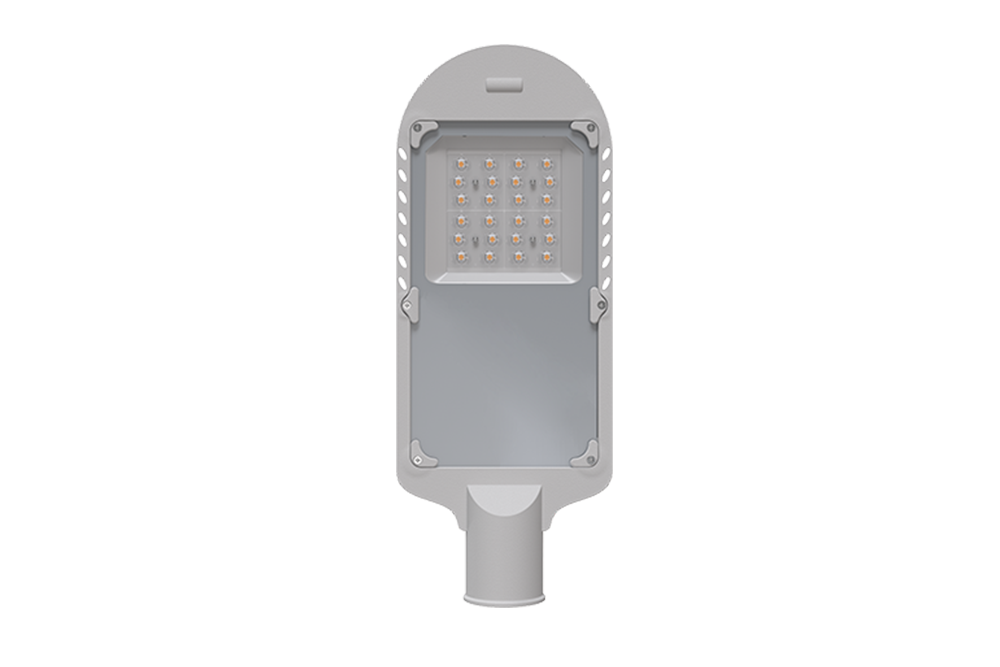
SEEKING STL-Series LED street lights deliver stable performance, 170 lm/W efficiency and 10KV surge protection. Ideal for city streets, parking lots, public roads and outdoor area lighting projects. Durable IP66 & IK08 design for long-term reliability.
View details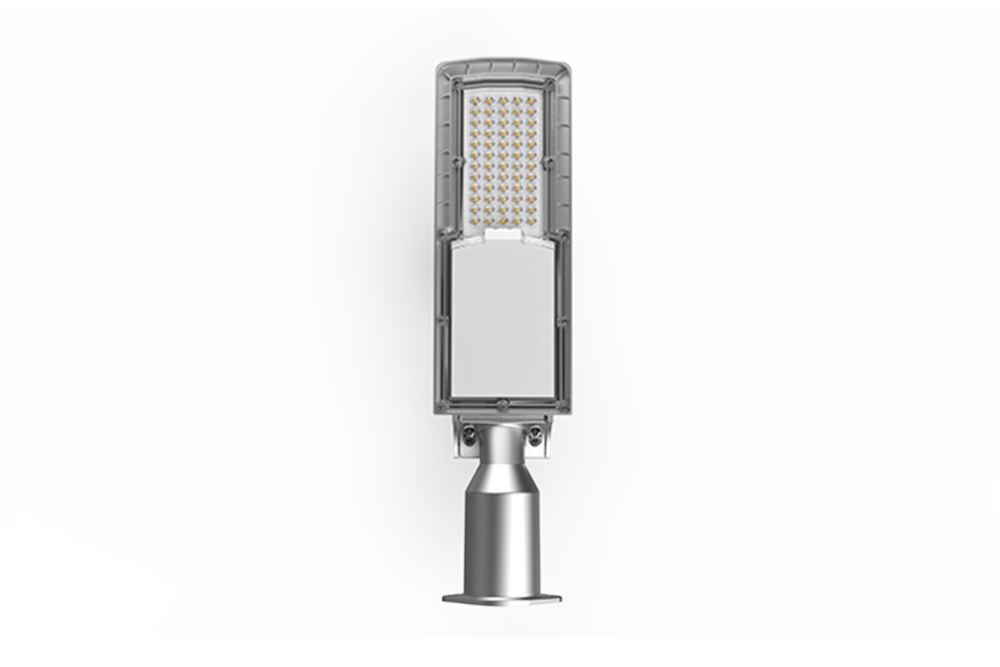
The SEEKING STC Series LED light street light delivers up to 170lm/W efficiency with MOSO drivers, IP66 protection, and a ±15° adjustable arm—ideal for roads, residential areas, and public lighting upgrades.
View details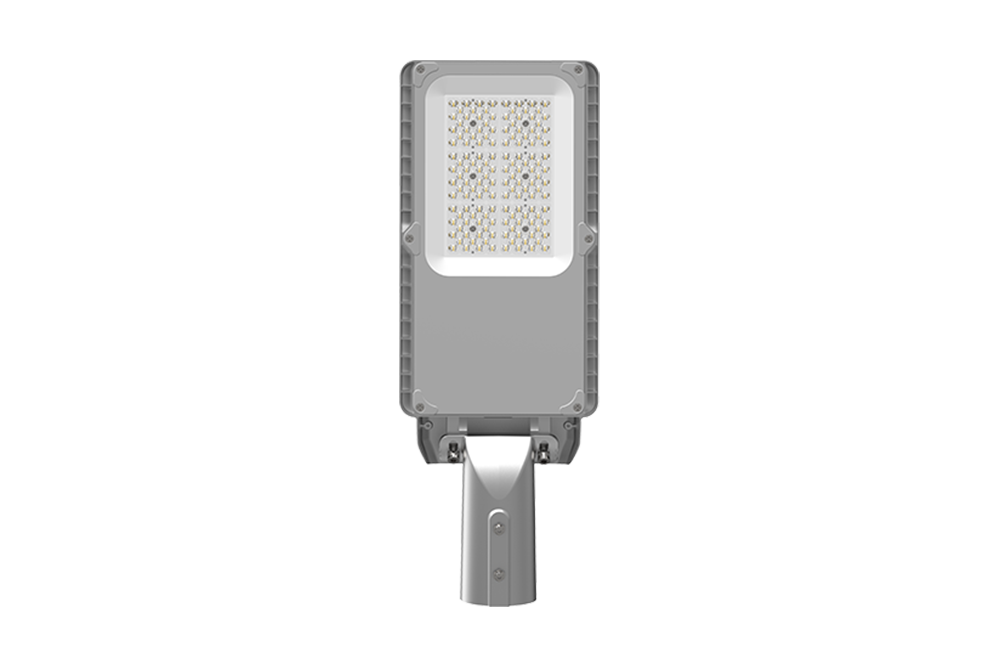
SEEKING STB Series LED street lighting delivers up to 160 lm/W, 10kV surge protection, IP66 waterproofing, and durable IK08 impact resistance. Ideal for streets, parking lots, and large outdoor areas needing long-lasting, energy-saving LED roadway lighting.
View details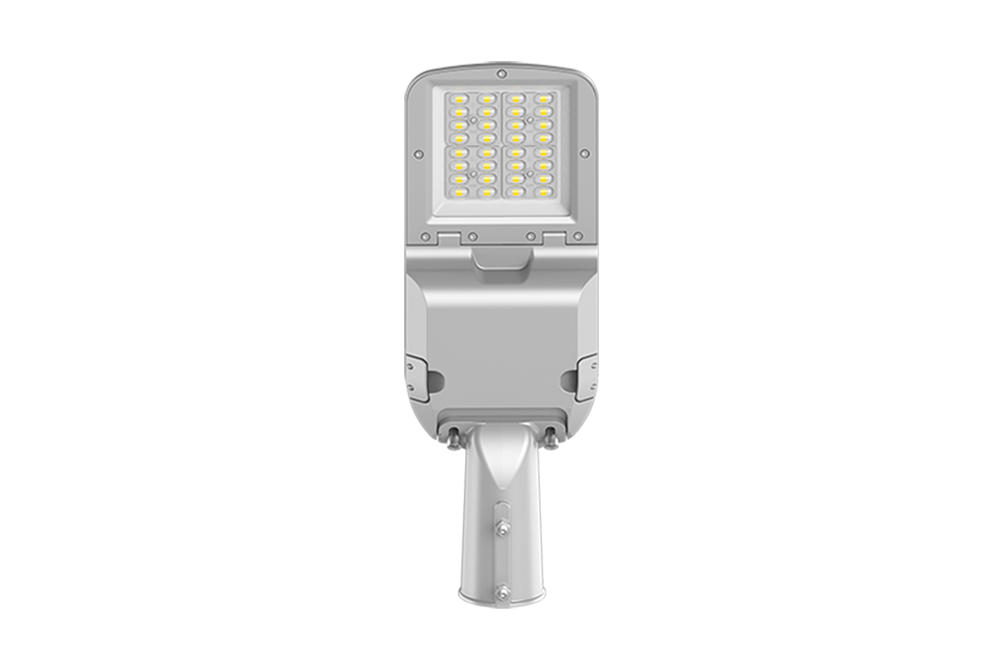
The SEEKING STA Series LED street light delivers strong efficiency, IP66 protection, 10kV surge resistance and multiple beam patterns for roads, parking lots and urban areas. High lumen output, easy installation and reliable performance for long-term outdoor lighting.
View details
The LED Stadium Lights Series is designed for real stadium use, not just specs. High power output, flexible optics, and reliable lighting for professional sports fields.
View details
Why are my LED flood lights flickering? Learn the real outdoor causes, wiring issues, driver problems, and proven fixes.
View details
What is Class 1 Div 2 LED lighting? Learn how Class 1 Division 2 hazardous location LED fixtures improve safety in oil, gas, chemical, and industrial facilities.
View details
500W LED flood explained for large outdoor projects. Learn where it works, where it fails, and how SEEKINGLED applies it in real installations.
View details