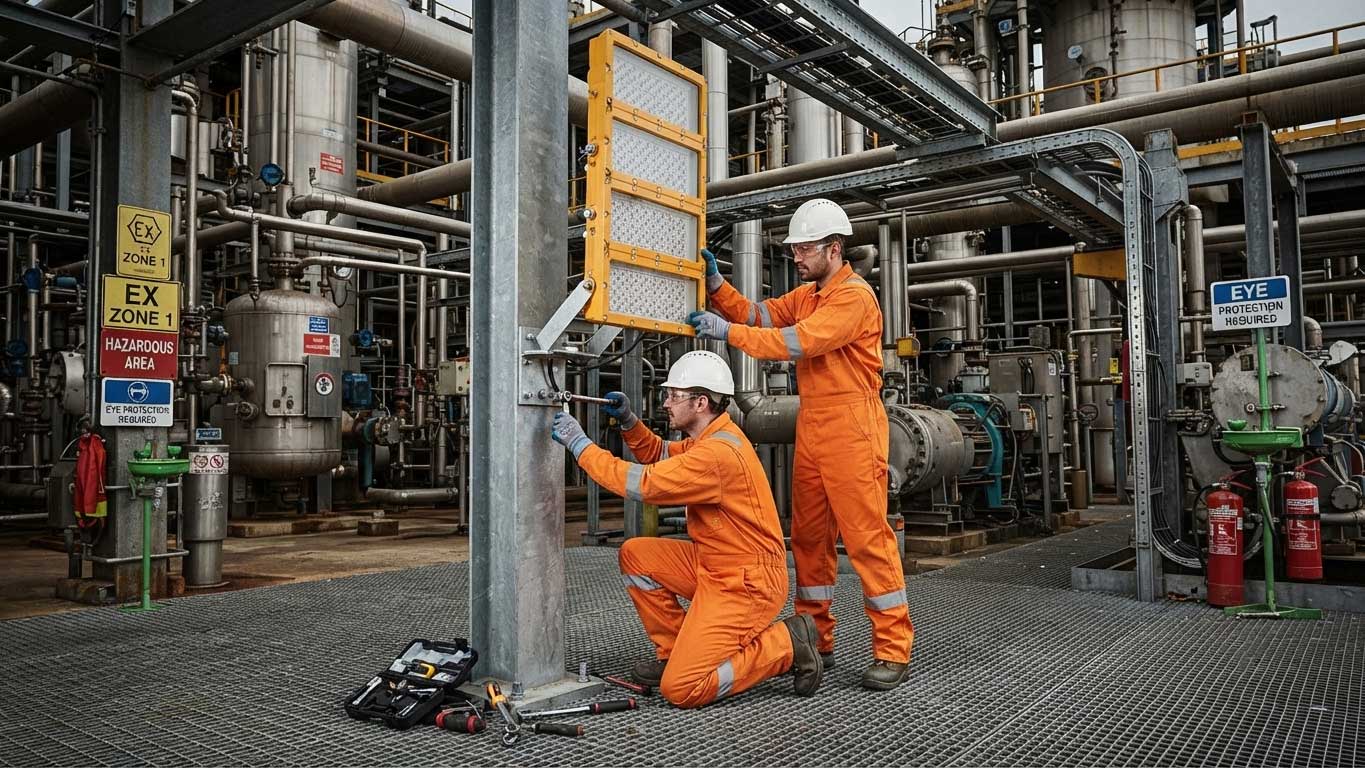
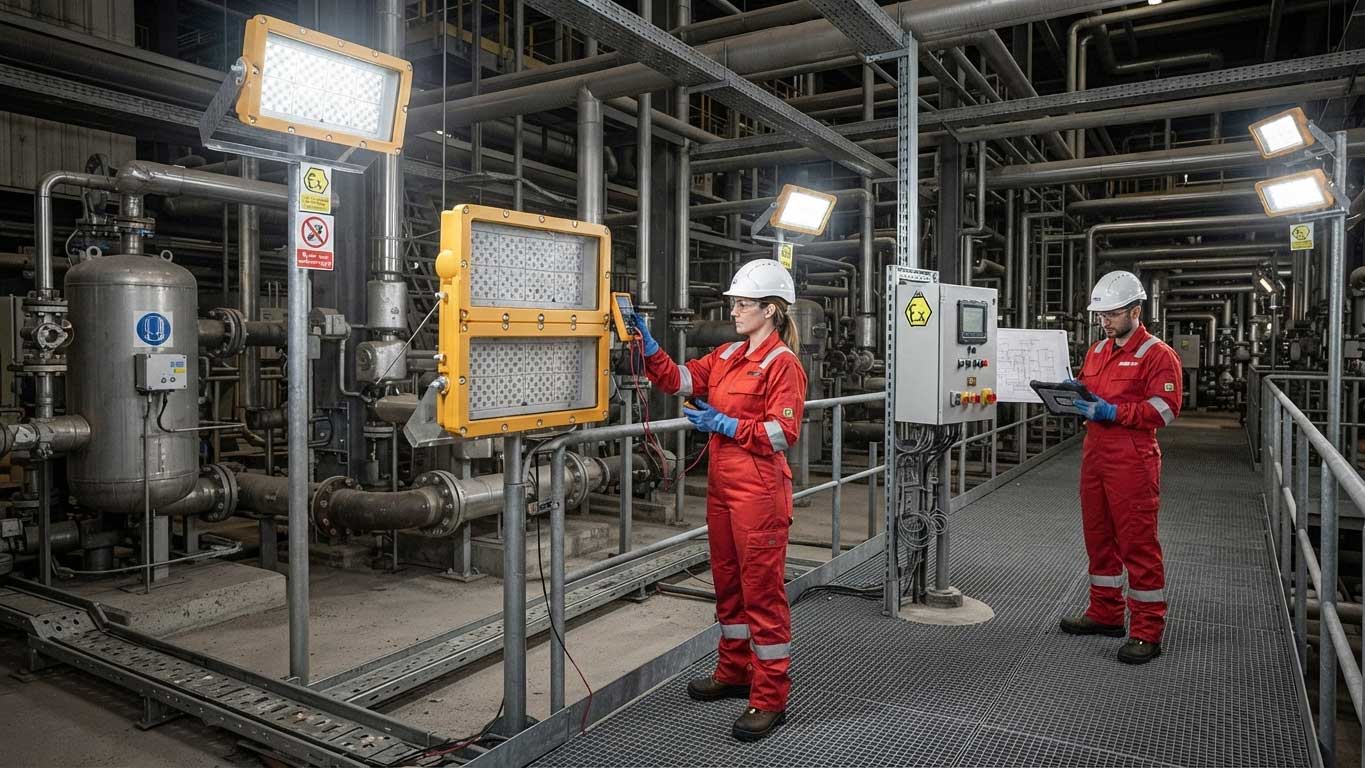
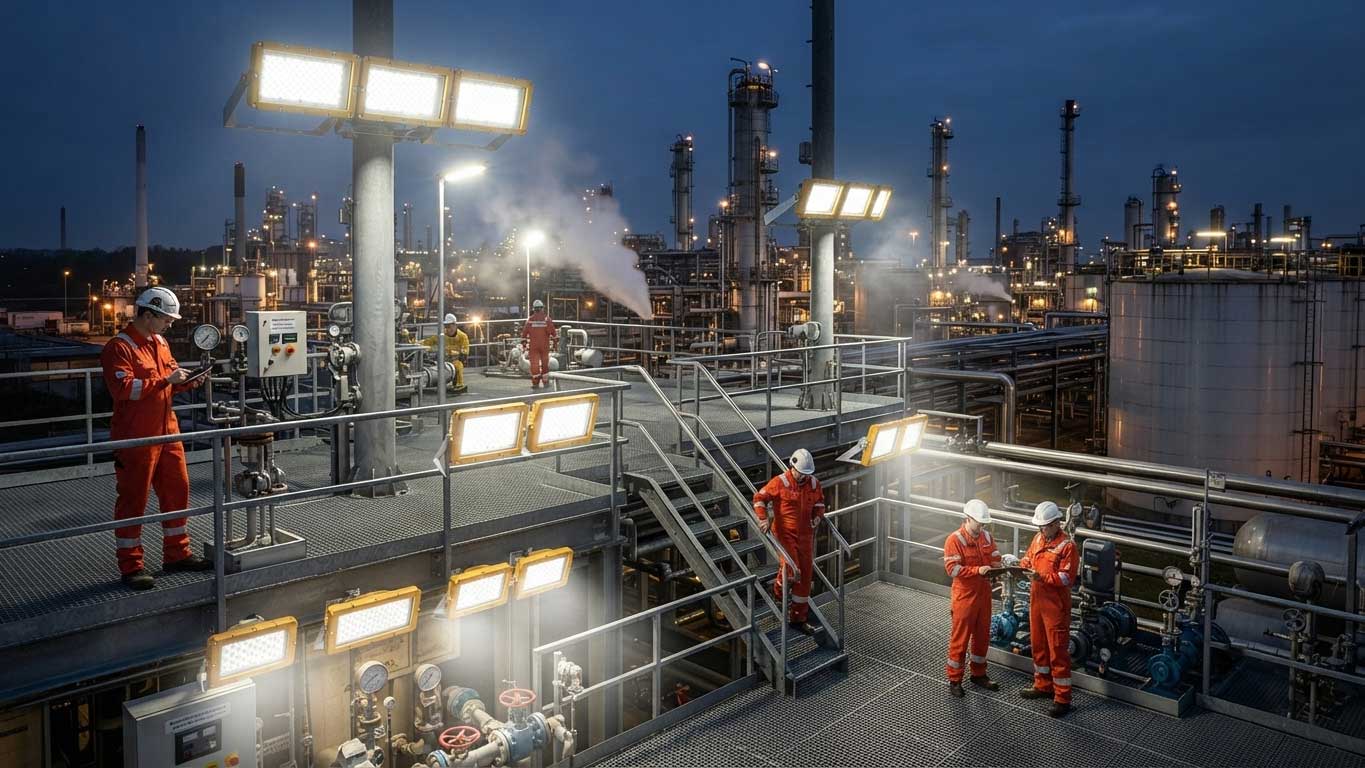
atex lights installation requires correct planning, certified components, and professional procedures to ensure hazardous area lighting operates safely in explosive environments.
Installing hazardous area lighting is not the same as installing ordinary industrial fixtures.
A standard lighting installation focuses mainly on electrical connection and brightness.
An atex lights installation project must consider explosion protection, hazardous zone classification, equipment certification, and long-term operational safety.Visit the product page: Explosion Proof Lighting
From our experience working with industrial lighting applications, the biggest installation mistakes usually happen before the fixture is even mounted.
A wrong product selection, unsuitable cable gland, or incorrect installation method can affect the complete protection system.
At SEEKINGLED, we have worked with industrial lighting requirements where customers needed solutions for demanding environments such as:
oil and gas facilities
chemical processing plants
manufacturing areas
offshore platforms
fuel storage locations
In these applications, lighting is part of the safety infrastructure.
It supports workers during normal operation, inspection tasks, and emergency situations.
A correct installation maintains the protection characteristics designed into the lighting product.
Preparation before atex lights installation
Site assessment and technical verification
Before installation begins, engineers should review the working environment.
A professional assessment normally includes:
Assessment Item
Purpose
Hazardous zone classification
Confirm suitable equipment category
Gas or dust type
Select correct protection level
Ambient temperature
Ensure temperature compatibility
Mounting location
Optimize lighting performance
Power supply
Confirm electrical requirements
For example, a lighting fixture installed near a fuel loading station may face different risks compared with one installed inside a controlled manufacturing room.
The installation plan should reflect the actual environment.
Confirming hazardous zone classification
The first technical step is identifying the hazardous area.
Common gas zone classifications include:
Zone
Description
Zone 0
Explosive atmosphere exists continuously or frequently
Zone 1
Explosive atmosphere may occur during normal operation
Zone 2
Explosive atmosphere is unlikely but may occur temporarily
Following recognized standards helps ensure the installed lighting system matches the intended hazardous application.
Installation considerations for different industrial environments
Oil and gas facilities
Oil and gas locations often contain highly demanding environments.
Examples include:
refineries
drilling platforms
fuel terminals
compressor stations
During installation, engineers consider:
flammable gas risks
outdoor weather exposure
corrosion
continuous operation requirements
Lighting must remain reliable even when maintenance opportunities are limited.
Chemical processing plants
Chemical facilities may contain:
volatile chemicals
combustible vapors
corrosive substances
For these applications, installation planning focuses on:
material compatibility
sealing protection
temperature control
maintenance access
A lighting fixture installed near chemical processing equipment must handle both safety and environmental challenges.
Manufacturing and industrial workshops
Manufacturing areas may require hazardous lighting around:
paint booths
production lines
storage areas
processing equipment
Correct lighting installation improves:
worker visibility
inspection accuracy
production efficiency
Improving efficiency after atex lights installation
Combining safety with energy performance
Modern hazardous lighting projects increasingly use LED technology.
Compared with traditional lighting systems, LED-based solutions can provide:
lower energy consumption
longer operating life
reduced maintenance frequency
According to the U.S. Department of Energy, LED lighting products can use at least 75% less energy and last up to 25 times longer than incandescent lighting.
Although hazardous area lighting requires additional certification, the efficiency advantages of LED technology are helping industries modernize existing systems.
Choosing the right partner for atex lights installation
Why installation experience matters
A hazardous lighting supplier should understand more than product specifications.
A professional partner should support:
product selection
technical documentation
installation guidance
application evaluation
after-sales service
At SEEKINGLED, hazardous lighting projects are developed around practical industrial requirements.
The focus is not only delivering a lighting fixture.
It is helping customers build a reliable lighting system that performs in challenging environments.
FAQ About atex lights installation
What is involved in atex lights installation?
atex lights installation includes site assessment, hazardous zone verification, correct product mounting, certified electrical connections, testing, and commissioning before operation.
A proper installation ensures the lighting system maintains its intended protection performance.
Can I install ATEX lights myself?
ATEX lighting should generally be installed by qualified professionals familiar with hazardous area requirements.
Incorrect installation may affect certification compliance and safety performance.
What should be checked before installing ATEX lights?
Before installation, engineers should confirm:
hazardous zone classification
product certification
temperature requirements
mounting location
electrical specifications
Do ATEX lights require special cables and accessories?
Yes.
Hazardous area lighting installations often require suitable:
cable glands
connectors
sealing components
mounting accessories
These components help maintain the protection system.
How often should ATEX lighting systems be inspected?
Inspection frequency depends on:
operating environment
industry requirements
manufacturer recommendations
local regulations
Facilities with harsh conditions may require more frequent checks.
Can existing industrial lighting be replaced with ATEX LED systems?
Yes.
Many facilities upgrade older systems to ATEX LED lighting to improve efficiency and reduce maintenance requirements.
The replacement project should verify certification compatibility.
Why is professional ATEX installation important?
Professional installation helps ensure:
safety compliance
reliable operation
longer equipment life
reduced maintenance problems
In hazardous environments, installation quality directly affects system performance.
Conclusion: Ensuring safer operations with atex lights installation
A successful atex lights installation requires careful planning, correct equipment selection, and professional execution.
Hazardous area lighting is not simply an electrical project.
It is a safety-related industrial system.
The best results come from combining:
correct ATEX certification
suitable installation methods
reliable components
regular maintenance
From refineries to chemical plants, properly installed hazardous lighting helps workers operate safely and confidently.
SEEKINGLED focuses on providing industrial lighting solutions designed for demanding applications, supporting customers with reliable products and practical engineering experience.
A good lighting installation does more than illuminate a workplace.
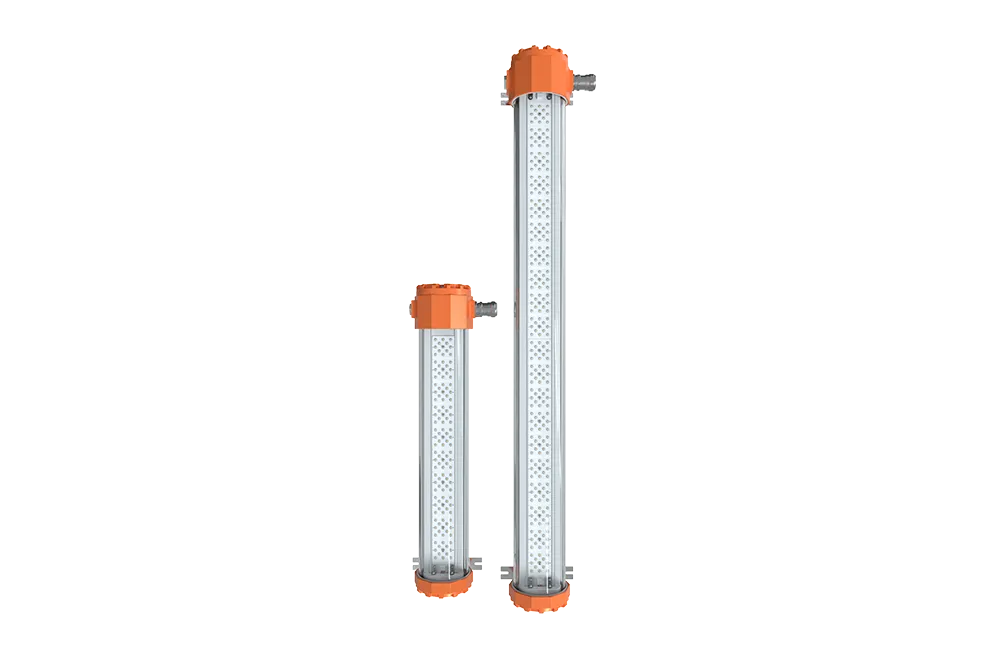
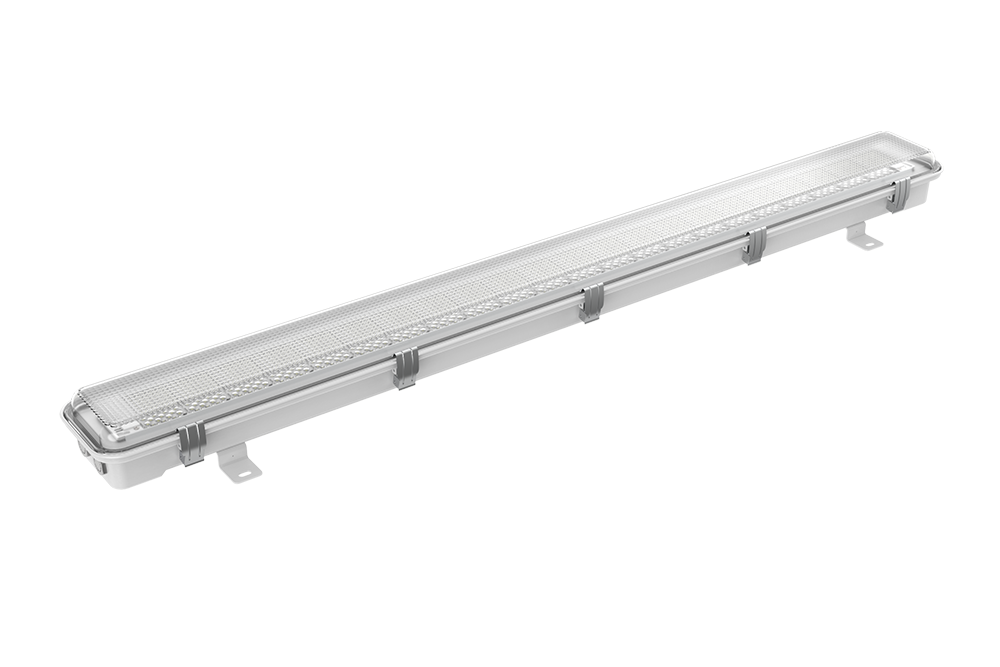
SEEKINGLED LED Linear Explosion Proof Light and Explosion Proof lighting is ATEX and IECEx certified for Zone 1, Zone 2, Zone 21 and Zone 22 hazardous locations, built for long-term industrial use.
LED Linear Explosion Proof Lights and EX Proof lights for Zone 1, Zone 2, Zone 21 and Zone 22 hazardous areas. ATEX & IECEx certified explosion proof LED linear lighting with emergency function, adjustable power and IP67 protection by SEEKINGLED.
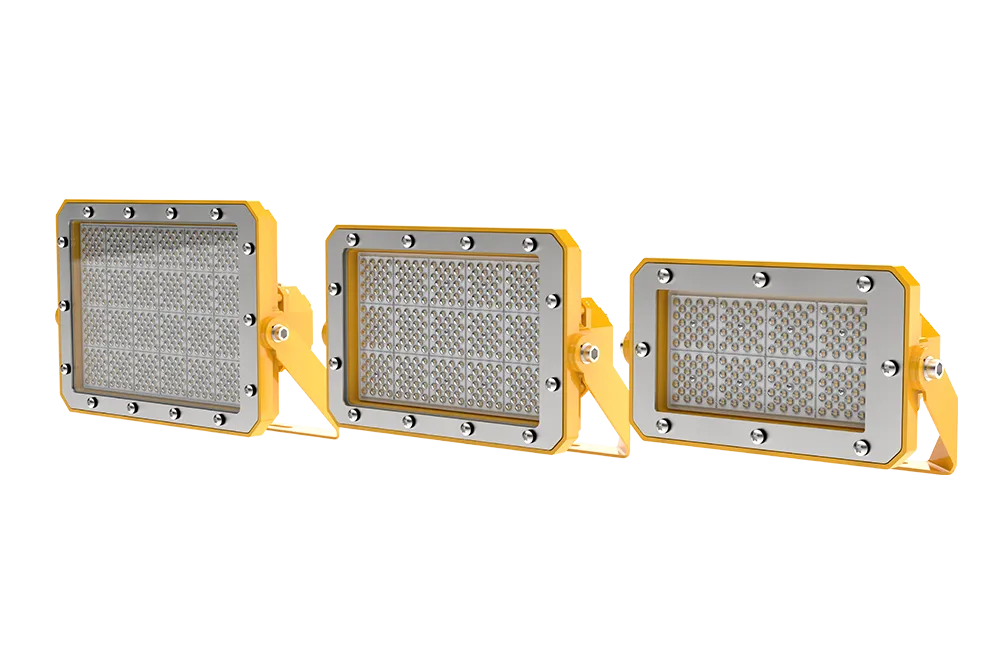
SEEKINGLED LED Explosion Proof Flood Lights are ATEX certified for Zone 2 and Zone 22 hazardous areas, offering high efficiency, adjustable power and integrated junction box.
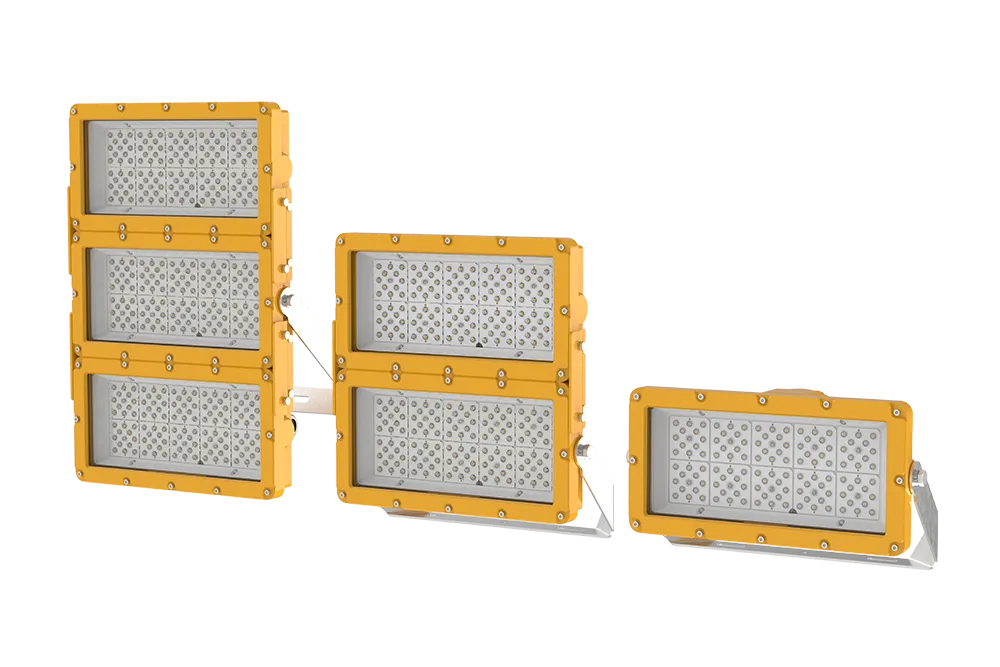
SEEKINGLED LED Explosion Proof Flood Lights are flameproof ATEX and IECEx certified for Zone 1 and Zone 2 hazardous areas, offering high power, adjustable output and long service life.
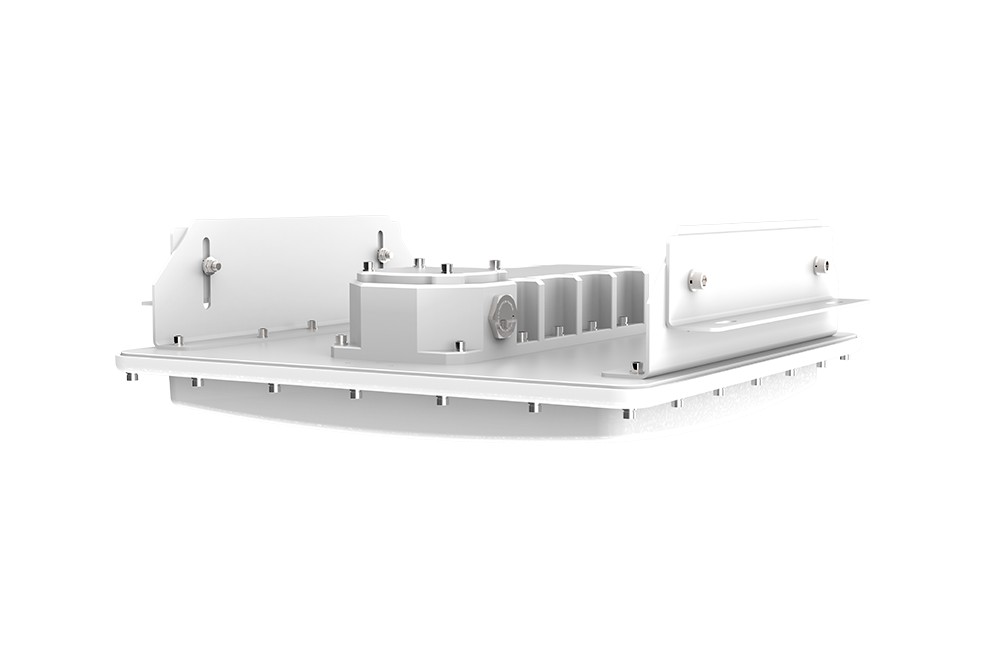
SEEKINGLED LED Gas Station Canopy Lights are ATEX certified for Zone 2 and Zone 22 hazardous areas, featuring adjustable power and built-in explosion-proof junction box.
ATEX: Ex II 2G Ex db IIB T6/T5 GbEx II 2D Ex tb IIIC T80°C/ T95°C Db IECEx Ex db IIB T6 Gb;Ex tb IIIC T80°C Db Feature: ● For Zone 1,2 and Zone 21,22● Flameproof type, the strongest● 100W can replace 250W HID,energy saving● Power:60W,80W,100W Application: Oil and gas, marine, Chemical, pharmaceutical, semiconductor,mining,military industr…
ATEX: II 3G Ex nR ⅡC T5/T6 GcII 3D Ex tc ⅢC T80℃/T95℃Dc ATEX Certificate NO: TÜV CY 26 ATEX 0207611 X Feature: ● For Zone 2 and Zone 22● 150W can replace 250W HID lamps,Energy saving● Power:50W,75W,100W,150W,200W Application: Oil and gas, marine, Chemical, pharmaceutical, semiconductor,mining,military industry, paint booth,power plant ETC…
LED explosion proof high bay lights are designed for Zone 1, Zone 2, Zone 21 and Zone 22 hazardous areas. This page introduces the HB21 Series from SEEKING, including certifications, power options and real application considerations.
LED Linear Explosion Proof Lights from SEEKINGLED. LU Series Flame Proof lights ATEX-certified explosion proof LED linear lighting for Zone 2 gas and Zone 22 dust areas, IP69K, IK10, long lifetime and flexible power options.
Certified explosion proof work lights for Zone 1 & 21 hazardous areas. Portable, ATEX & IECEx approved, built for oil, gas and chemical plants by SEEKINGLED.
ATEX: II 3G Ex nR ⅡC T6 GcII 3D Ex tc ⅢC T80℃ Dc ATEX Certificate NO: TÜV CY 26 ATEX 0207611 X Feature: ● For Zone 2 and Zone 22● Accepts battery-powered supply● indestructible● Power:AC input:50W,75W,100WDC input:15W,25W,35W Application: Oil and gas, marine, Chemical, pharmaceutical, semiconductor,mining,military industry, paint booth,po…
ATEX: Ex II 2G Ex db IIB T6 GbEx II 2D Ex tb IIIC T80°C Db IECEx Ex db IIB T6 Gb;Ex tb IIIC T80°C Db Feature: ● For Zone 1,2 and Zone 21,22● Flameproof type, the strongest Application: Oil and gas, marine, Chemical, pharmaceutical, semiconductor,mining,military industry, paint booth,power plant ETC hazardous area. Technical Specifications:…
ATEX: Ex II 2G Ex db IIB T6 GbEx II 2D Ex tb IIIC T80°C Db IECEx Ex db IIB T6 Gb;Ex tb IIIC T80°C Db Feature: ● For Zone 1,2 and Zone 21,22● Flameproof type, the strongest Application: Oil and gas, marine, Chemical, pharmaceutical, semiconductor,mining,military industry, paint booth,power plant ETC hazardous area. Technical Specifications:…
ATEX: Ex II 2G Ex d e IIB T6 Gb ATEX: Ex d e IIB T6 Gb; Feature: ● For Zone 1,2● 9W can replace 18W fluorescent lamps,50% Energy saving Application: Oil and gas, marine, Chemical, pharmaceutical, semiconductor,mining,military industry, paint booth,power plant ETC hazardous area. Technical Specifications: Standards:60079-0, 60079-1, 60079…
Class 1 Div 1 lighting is engineered for locations with continuous or frequent explosive gas hazards. Learn certifications, applications, and selection tips from hazardous-area lighting experts.
Upgrade your facility with car wash LED lighting. Brighter wash bays, lower energy use, moisture-resistant fixtures, built for real car wash conditions by SEEKINGLED.
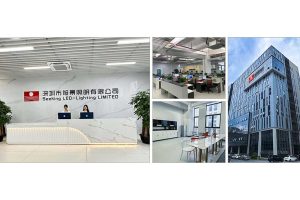
SEEKINGLED announces the relocation of its Shenzhen office to Guole Science and Technology Park, supporting continued growth in explosion proof lights, LED flood lights, street lighting and industrial LED solutions.
 Seeking LED