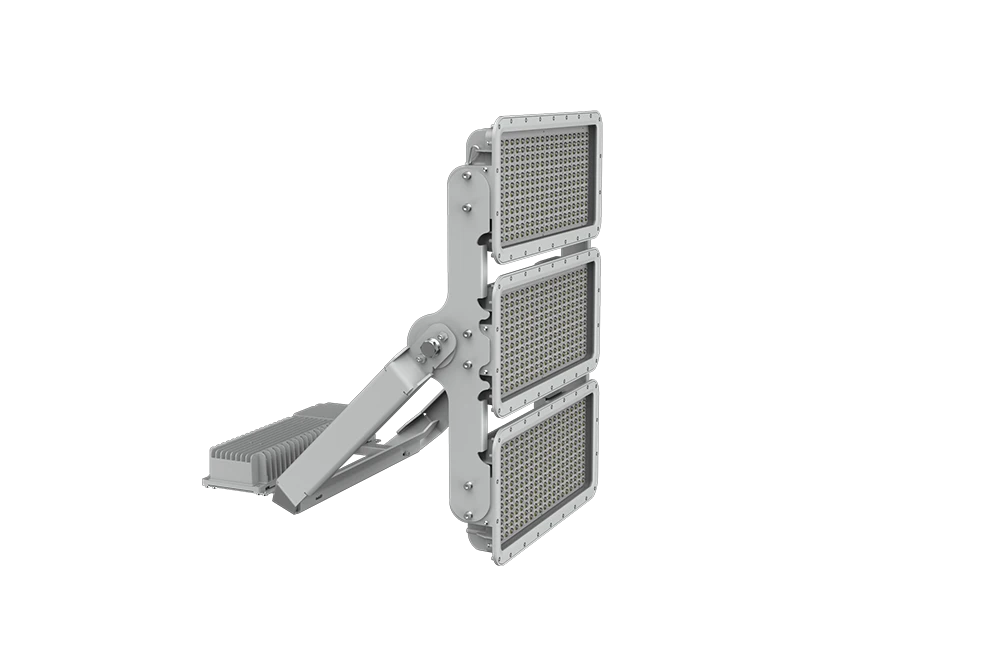
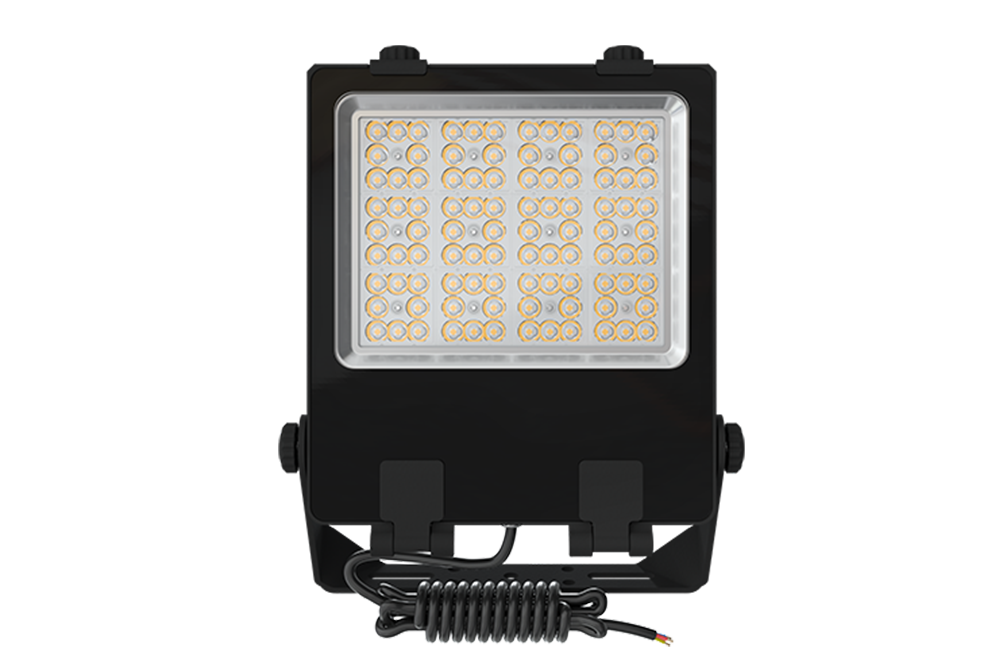
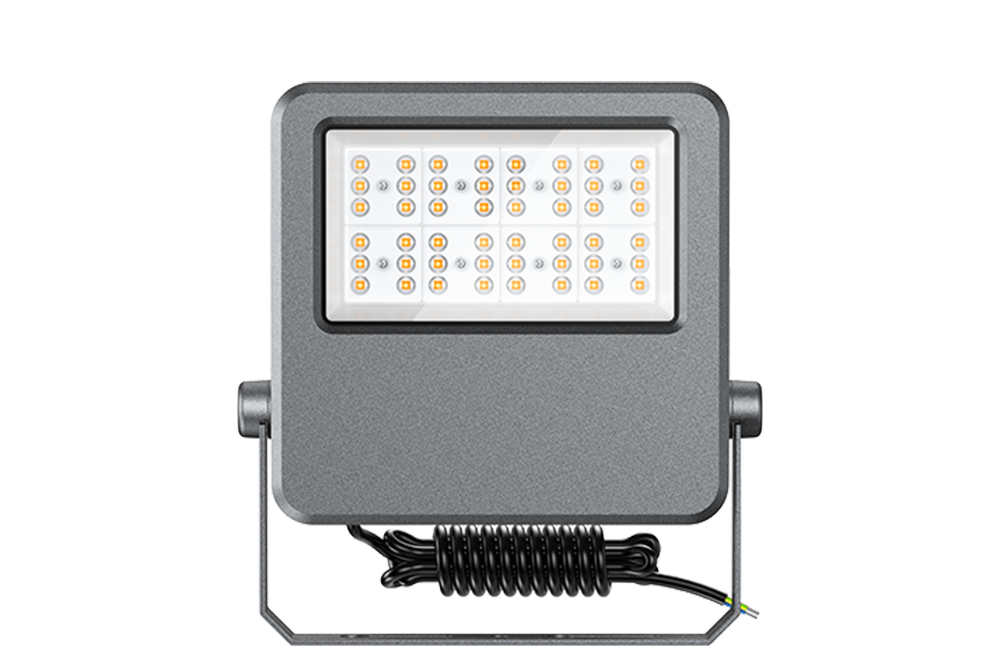
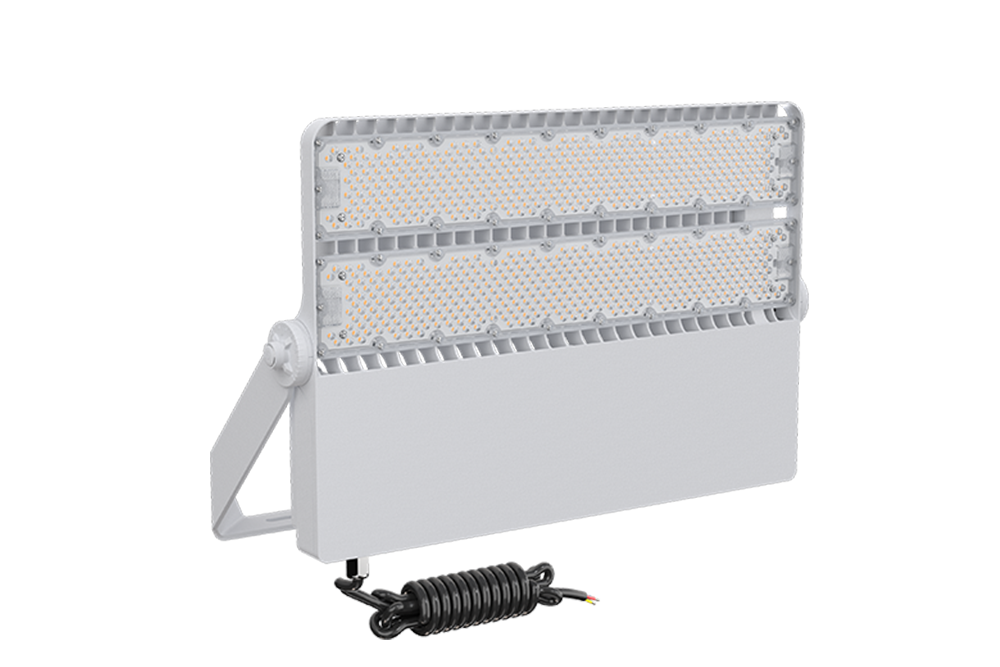
Yes, you can use some flood lights to grow plants, but ordinary outdoor flood lights are not automatically suitable as grow lights. Plants need sufficient usable light, an appropriate spectrum, and a controlled photoperiod. A full-spectrum LED flood light can supplement indoor plants, while dedicated horticultural LEDs are better for intensive growth.
Can Regular LED Flood Lights Grow Plants?
A regular LED flood light can provide useful supplemental light, particularly for foliage plants, seedlings, herbs, and plants already receiving daylight from a window. The problem is that a flood light designed for human vision is not necessarily designed around plant requirements.
For people, brightness is normally described in lumens or lux. Plants respond to photosynthetically active radiation and are better evaluated using horticultural measurements such as PPF and PPFD. The U.S. Department of Energy specifically distinguishes horticultural lighting metrics from conventional lighting: general lighting uses lumens, while horticultural lighting uses photosynthetic photon flux and photosynthetic photon flux density.
That distinction matters when choosing an outdoor flood light for a greenhouse or indoor growing area. A 100-watt fixture can look extremely bright to your eyes and still deliver a less useful spectrum or light level for the plant canopy.
What Type of Flood Light Is Suitable?
For supplemental plant lighting, look for:
Full-spectrum or broad-spectrum LED output
Stable light output without excessive flicker
Appropriate PPFD at the plant canopy
A beam angle that covers the growing area evenly
Suitable color temperature for the plants and growth stage
Dimming or control capability when available
Low enough radiant heat to avoid overheating foliage
Proper ingress protection when used in humid growing environments
The University of Minnesota Extension notes that white or balanced light is suitable for most plants at different growth stages, while blue or mixed light can support seedlings and leafy plants and red or mixed light can support flowering.
LED Flood Light vs Grow Light for Plants
The biggest difference is not simply LED versus LED. It is what the fixture was designed to accomplish.
Feature
Standard LED Flood Light
Horticultural LED Grow Light
Primary purpose
Human-area illumination
Plant growth
Main output metric
Lumens / lux
PPF / PPFD
Spectrum
Usually designed for visual lighting
Selected for plant response
Beam control
Outdoor area lighting
Canopy-focused distribution
Installation
Buildings, yards, parking areas
Grow rooms, racks, greenhouses
Plant suitability
Supplemental lighting
Dedicated plant lighting
Environmental options
Often available
Depends on model
DOE explains that horticultural lighting needs to consider intensity, distribution, and spectrum, because plant responses—not human visual perception—are the primary concern.
This is an easy detail to miss when specifying a fixture for a greenhouse. A flood light can illuminate the floor brilliantly while leaving the lower leaves of a dense plant canopy underlit.
How Long Should Flood Lights Stay On for Plants?
Light duration depends on the plant rather than the flood light itself.
University of Minnesota Extension recommends approximately 16–18 hours per day for seedlings, 12–14 hours for hydroponic lettuce and herbs, 12–14 hours for foliage houseplants, and 14–16 hours for flowering houseplants. It also emphasizes that plants need an appropriate dark period.
For a practical indoor setup, a timer is usually more useful than simply leaving the flood light switched on.
A common mistake is chasing brightness when the actual problem is distance. Moving a fixture closer can substantially change the light reaching the leaves. Conversely, mounting a flood light several feet above a plant spreads its output across a much larger area.
For seedlings, University of Minnesota guidance recommends keeping artificial lights very close to the foliage—often within a few inches—to prevent elongated, weak growth.
Can Outdoor Flood Lights Replace Grow Lights?
Sometimes, but the answer depends on the crop and lighting objective.
For a few houseplants that already receive daylight, an LED flood light can work well as supplemental lighting. It can also help during cloudy periods or winter when natural daylight is insufficient.
For high-light crops, dense indoor cultivation, vertical farms, or production greenhouse applications, a conventional flood light should not be selected solely because its lumen rating is high. Dedicated horticultural fixtures provide more relevant photometric and spectral information.
DOE notes that LEDs used in horticulture can provide selectable spectral power distributions, optical distributions, and intensity levels. In indoor horticulture, LED systems have also demonstrated 24–30% lower electricity consumption than HPS and other conventional horticultural lighting technologies in DOE-supported analysis.
When a Flood Light Makes Sense
A conventional LED flood light can be practical when:
You need supplemental rather than sole-source lighting.
The fixture has a suitable broad-spectrum output.
The plants have modest light requirements.
You need to illuminate a relatively large area.
The fixture will also serve another lighting purpose.
You can verify the actual light level at canopy height.
For commercial applications, also check the fixture’s environmental rating. Humidity, condensation, irrigation spray, and fertilizer residue can create a much harsher environment than an ordinary outdoor wall.
What Should I Check Before Using a Flood Light for Plants?
Before installing a fixture, check the technical data instead of judging the light by eye.
Spectrum: Is it broad-spectrum or intended only for general illumination?
PPFD: Is there measured light reaching the plant canopy?
Beam angle: Does the distribution cover the growing area evenly?
Mounting distance: How much light remains at the actual plant height?
Photoperiod: Can the fixture be controlled with a timer?
Heat: Can the fixture operate without overheating the growing environment?
IP rating: Is it appropriate for humidity, condensation, or outdoor exposure?
DOE’s exterior-lighting guidance also demonstrates why fixture efficacy and tested photometric performance matter when evaluating LED luminaires. Its current federal purchasing guidance lists 118 lm/W as the minimum luminaire efficacy requirement for floodlight luminaires in its covered category, although that figure is an exterior-lighting procurement benchmark—not a plant-growth requirement.
FAQ About Using Flood Lights to Grow Plants
Can I use an LED flood light as a grow light?
Yes, an LED flood light can provide supplemental plant lighting when its spectrum, intensity, coverage, and mounting distance are suitable.
Can a 5000K LED flood light grow plants?
It can support plant growth, particularly as supplemental lighting, but color temperature alone does not establish whether the fixture provides sufficient plant-usable light.
Are LED flood lights good for seedlings?
They can be, provided the fixture delivers enough usable light at the seedling canopy. Insufficient intensity can cause stretched, weak stems.
How many hours should I use a flood light for plants?
Typical requirements vary. University of Minnesota Extension recommends 16–18 hours for seedlings and 12–14 hours for many foliage plants and herbs.
Can flood lights grow vegetables indoors?
Yes, but productive vegetable growing generally requires more careful control of light intensity, spectrum, duration, and canopy coverage than keeping ordinary houseplants healthy.
Will a flood light burn plants?
It can if excessive light or heat reaches the foliage. University of Minnesota Extension notes that excessive light can cause scorched or bleached leaves.
Final Answer
So, can i use flood lights to grow plants? Yes, but choose the fixture according to plant-light requirements rather than visible brightness alone. For supplemental lighting, a suitable LED flood light can work; for intensive cultivation, a horticultural LED with verified PPFD and spectral data is the more appropriate specification.
Sports Stadium LED Lighting by SEEKINGLED delivers high mast illumination, precise beam control, and EN 12193 compliant performance for professional venues.
SEEKING FLX Series LED flood light outdoor for sports courts and open-area projects with 170lm/W efficiency, IP66 protection and multiple beam distributions. Designed for long-life commercial and public outdoor use.
SEEKING FLE Series LED outdoor flood lights for sports grounds and open areas with multiple beam angles, IP66 protection and up to 170lm/W. Designed for long-life outdoor installations with professional driver options.
SEEKING FLD Series outdoor LED flood lights and high power led flood light deliver up to 960W with precision beam angles for sports fields, stadiums and large outdoor areas. IK08 & IP66 protection, 170lm/W efficiency and 100,000h lifetime.
In 2024, a European storage warehouse upgraded to Seeking XJ-HBF240W LED High Bay Light, using 50 UFO fixtures with 200 lm/W, 300+ LUX and high uniformity, cutting energy use compared with traditional metal halide high bays.
480 volt LED high bay lights designed for demanding facilities. SEEKINGLED HBD Series delivers stable operation, 160 lm/W efficiency, and long service life.
How many lumens for flood light? Find the right lumen output for outdoor security, commercial areas, and industrial lighting with expert tips from SEEKINGLED.
Explosion-proof lights are essential in natural gas midstream processing. SEEKINGLED FL7 Series LED lights offer Zone 1 Ex d protection, IECEx & ATEX certified for safe and efficient operations.
 Seeking LED