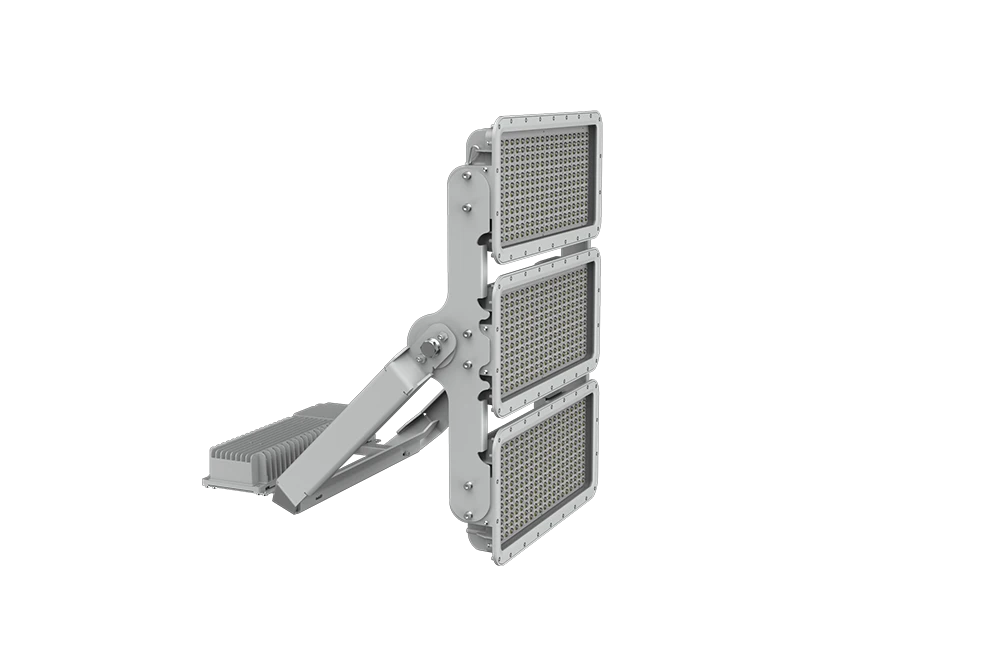
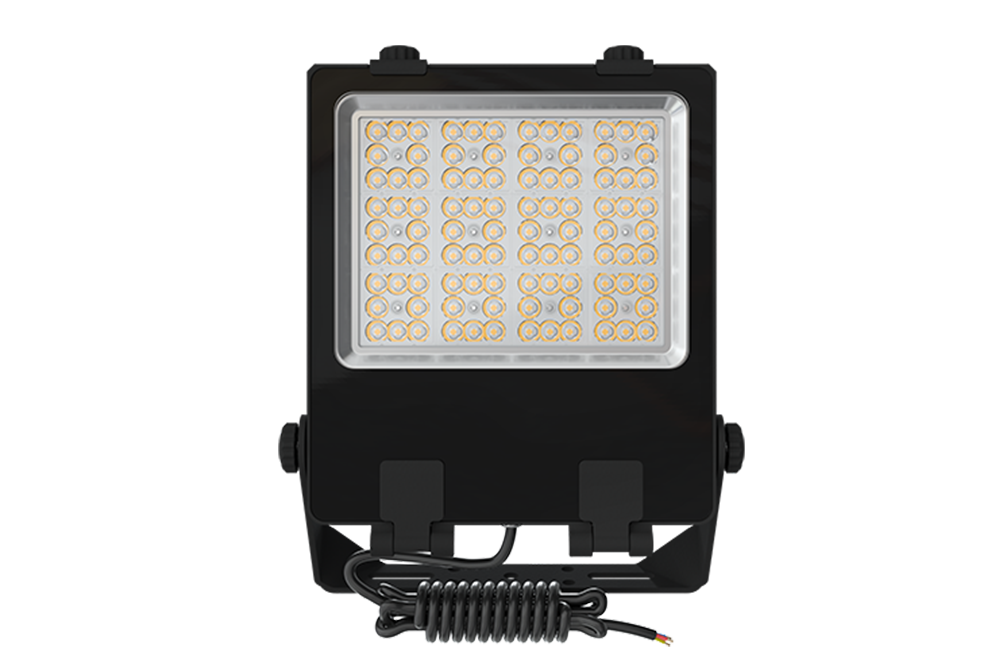
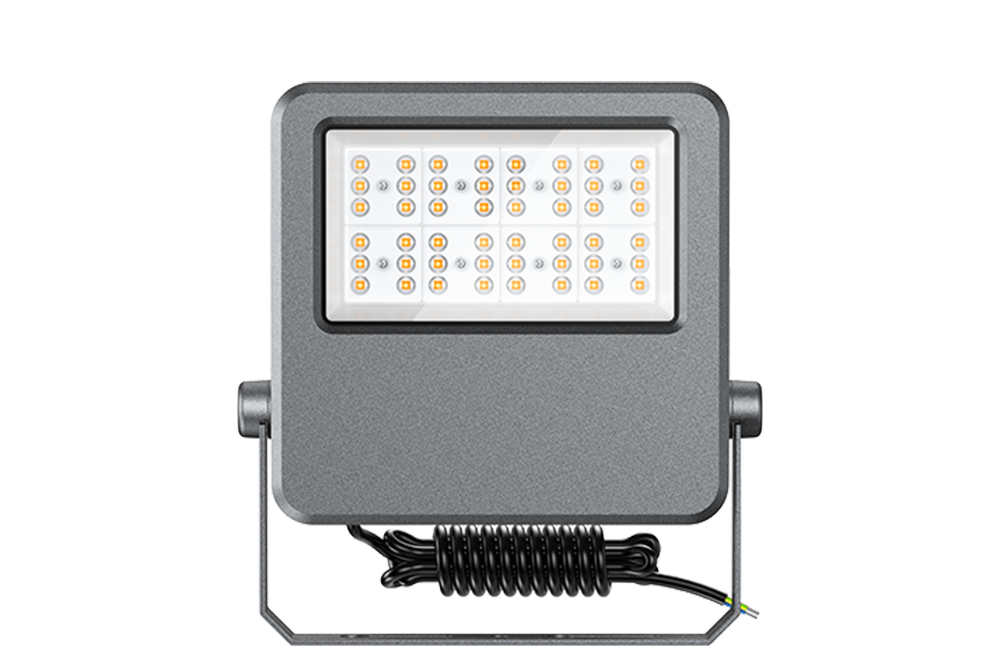
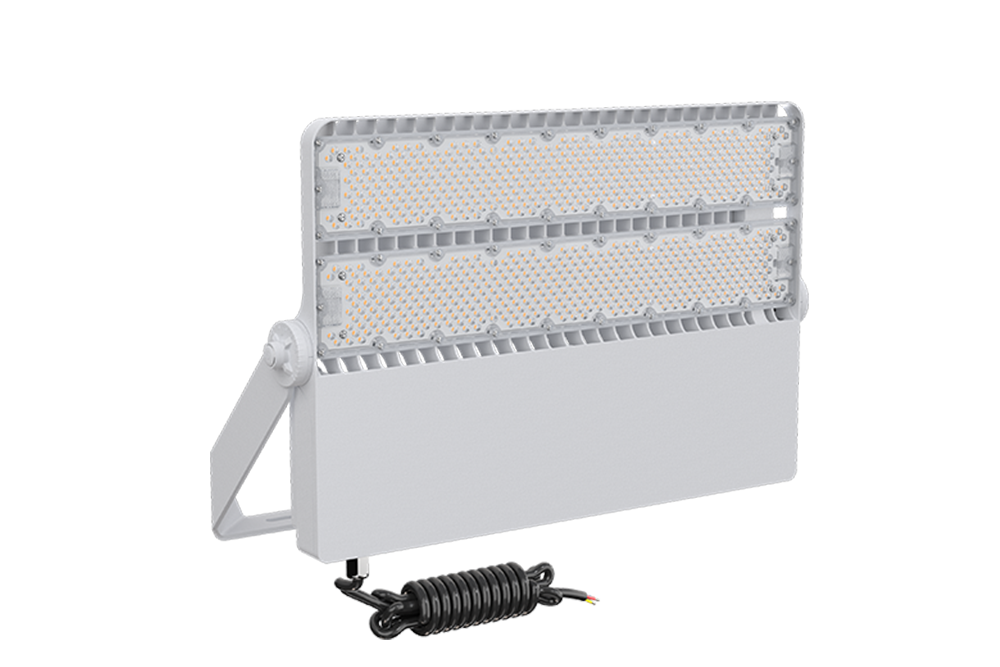
No, not unless the flood light is specifically rated and marked for outdoor use. Indoor flood lights are generally designed for dry environments, while outdoor fixtures must withstand moisture, temperature changes, and weather exposure. Always check the fixture’s location rating, IP rating, installation instructions, and certification before installing it outside.
Why Can’t Indoor Flood Lights Be Used Outdoors?
The issue is not simply whether an LED flood light can physically produce enough light outside. The real concern is environmental protection.
An indoor fixture may have openings around its housing, driver, terminals, or wiring connections that are perfectly acceptable in a dry room. Outdoors, those same openings can encounter condensation, rain, wind-driven water, dust, or rapid temperature changes.
UL Solutions distinguishes between dry, damp, and wet locations. Its luminaire guidance states that fixtures installed in damp locations should be marked for damp or wet locations, while fixtures exposed to dripping, splashing, or flowing water need a “Suitable for Wet Locations” marking.
That distinction becomes obvious during an outdoor installation. A fixture mounted under a covered porch is not exposed in the same way as one fixed above an open driveway.
Indoor vs Outdoor Flood Light Requirements
Feature
Indoor Flood Light
Outdoor Flood Light
Typical environment
Dry interior
Exposed or semi-exposed
Moisture protection
Limited
Designed for moisture exposure
IP rating
May be absent or lower
Often specified
Housing
Indoor-oriented
Weather-resistant construction
Temperature exposure
Relatively controlled
Hot, cold, thermal cycling
Installation location
Ceiling, retail, warehouse
Wall, pole, façade, yard
Certification
Depends on application
Must match outdoor installation requirements
UL Solutions also notes that outdoor line-voltage luminaires are evaluated for applicable wet-location requirements under UL 1598, while many outdoor products are additionally evaluated for ingress protection under EN 60529.
Can an Indoor Flood Light Be Used Under a Covered Porch?
This is where the answer becomes more specific.
A covered porch, balcony, or roof overhang can reduce direct rainfall, but it does not automatically turn an outdoor location into a dry location. Wind can drive rain sideways, condensation can form overnight, and humidity can remain high even when the fixture never receives direct rainfall.
UL’s location guidance defines damp locations as places periodically subject to condensation, including partially protected exterior locations. Wet locations are areas where water may drip, splash, or flow against electrical equipment.
So, rather than deciding based on the roof above the fixture, check the product marking.
What Does the IP Rating Tell You?
An IP rating is useful, but it should not be treated as a universal substitute for an outdoor-use listing or the manufacturer’s installation instructions.
The IP Code comes from IEC 60529 and describes the degree of protection provided by an enclosure against solids and water. UL Solutions notes that outdoor luminaires are often evaluated according to EN 60529 to establish an applicable IP rating.
For example:
IP44: Protection against solid objects and splashing water.
IP54: Limited dust protection and protection against water splashes.
IP65: Dust-tight enclosure with protection against water jets.
IP66: Dust-tight enclosure with protection against powerful water jets.
The exact rating required depends on the installation environment and applicable standards. An IP number alone does not necessarily establish that a fixture is certified for every outdoor application.
This is an important purchasing detail for contractors: “water-resistant” marketing language is not the same as a documented environmental rating.
What Happens If You Install an Indoor Flood Light Outside?
The fixture may operate normally at first. That does not prove the installation is suitable.
Moisture can eventually affect electrical connections, drivers, insulation, or internal components. Temperature cycling can also contribute to condensation inside an enclosure that was never designed for outdoor conditions.
UL Solutions specifically points out that outdoor equipment must address moisture and excessive dust, and that outdoor enclosures require appropriate protection against environmental effects.
Common warning signs include:
Flickering after rain or condensation
Intermittent operation
Corrosion around terminals
Water marks inside the lens
Driver failure
Tripped protection devices
Premature LED or electronic-component failure
The most difficult failures are often intermittent. A fixture may work perfectly during a dry afternoon and fail after a cold, wet night.
How Do You Choose an Outdoor Flood Light?
For a professional replacement, check the specification sheet before looking at wattage or appearance.
1. Confirm the Environmental Rating
Look specifically for wording such as “Suitable for Wet Locations”, “Suitable for Damp Locations,” or an equivalent manufacturer-approved outdoor application.
2. Check the IP Rating
Determine whether the fixture has been tested and rated for the moisture and dust conditions expected at the installation point.
3. Check Operating Temperature
Outdoor fixtures can face much wider temperature swings than indoor products. Confirm the manufacturer’s stated ambient operating range.
4. Inspect the Driver and Connections
The driver, cable entry, connectors, and junction box are just as important as the visible LED housing. A weather-resistant housing does not compensate for an unsuitable connection method.
5. Follow the Installation Instructions
UL Solutions notes that luminaires requiring specific sealing methods or supply-connection fittings must be installed according to those instructions.
FAQ About Using Indoor Flood Lights Outdoors
Can I use an indoor LED flood light outside under a roof?
Only if the manufacturer specifically permits that environment and the fixture has the required damp-location or outdoor rating. A roof alone does not guarantee a dry location.
Can an IP65 indoor flood light be used outdoors?
Not automatically. IP65 describes enclosure protection against dust and water jets, but the product’s intended application, certification, installation instructions, and local electrical requirements must also be considered.
Are outdoor flood lights different from indoor flood lights?
Yes. Outdoor models are designed and evaluated for environmental conditions such as moisture and wider temperature exposure. Their housing, seals, connections, and certifications can differ substantially.
Can I put an indoor flood light in a garage?
A dry, enclosed garage can be a different environment from an exposed exterior. Check the fixture’s location marking and the actual conditions, particularly if the garage is humid or routinely exposed to water.
What IP rating is good for outdoor flood lights?
The appropriate rating depends on exposure. Outdoor flood lights commonly use higher IP protection than dry-location fixtures, but the required rating should be selected according to the actual installation conditions and applicable standards.
Does rain damage an indoor flood light?
It can. An indoor fixture that is not evaluated for moisture exposure may not have the enclosure, seals, wiring protection, or environmental testing needed for outdoor conditions.
Final Answer
So, can i use indoor flood lights outdoor? Generally, no. Use a flood light specifically approved for the outdoor environment, and verify its location marking, IP rating, temperature range, electrical certification, and installation requirements. For SEEKINGLED projects, these details should be checked at the product-selection stage rather than after installation.
Sports Stadium LED Lighting by SEEKINGLED delivers high mast illumination, precise beam control, and EN 12193 compliant performance for professional venues.
SEEKING FLX Series LED flood light outdoor for sports courts and open-area projects with 170lm/W efficiency, IP66 protection and multiple beam distributions. Designed for long-life commercial and public outdoor use.
SEEKING FLE Series LED outdoor flood lights for sports grounds and open areas with multiple beam angles, IP66 protection and up to 170lm/W. Designed for long-life outdoor installations with professional driver options.
SEEKING FLD Series outdoor LED flood lights and high power led flood light deliver up to 960W with precision beam angles for sports fields, stadiums and large outdoor areas. IK08 & IP66 protection, 170lm/W efficiency and 100,000h lifetime.
Hazardous location lighting fixtures provide safe illumination in explosive environments. Learn types, standards, real applications, and how to choose the right solution.
Do LED flood lights use a lot of electricity compared with traditional lighting? This FAQ explains real power usage, efficiency, and cost savings of LED flood lights in outdoor applications, based on practical experience from SEEKINGLED projects.
Outdoor parking lot LED lighting solutions improve safety, visibility and energy efficiency. Learn how SEEKINGLED applies LED flood lights, street lights and tri-proof lamps in real parking projects.
outdoor energy efficient flood lights reduce energy use up to 70% while delivering high brightness and durability—ideal for yards, parking, and industrial use.
 Seeking LED