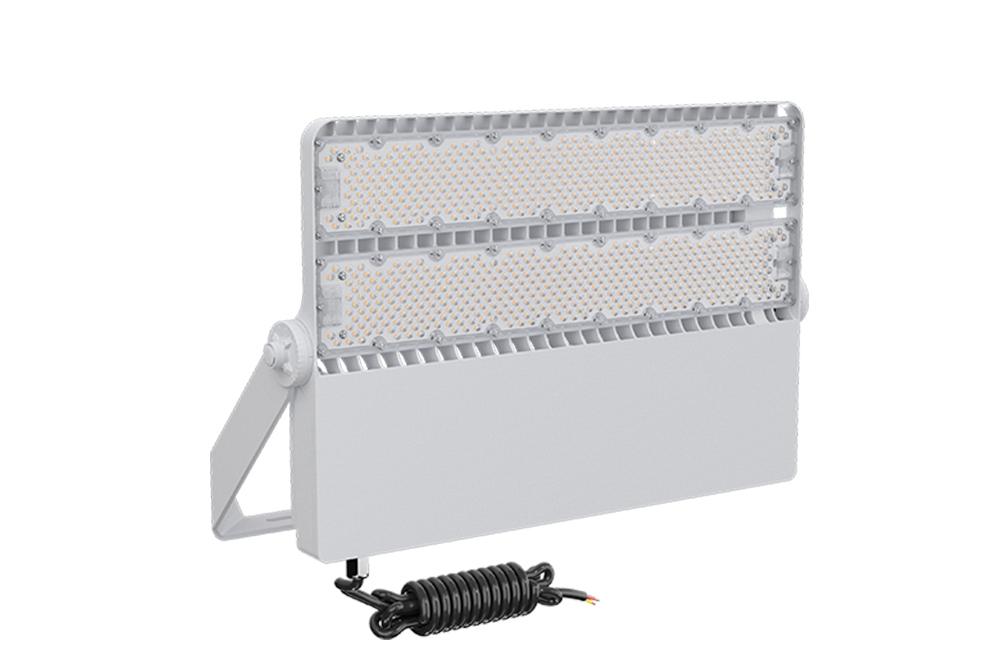
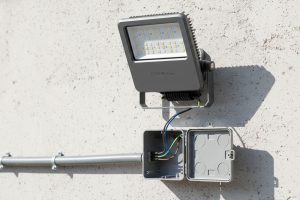
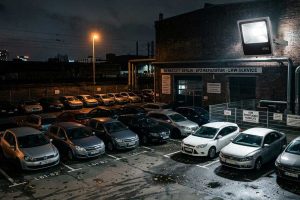
Flood lights work by converting electrical energy into light and directing that light over a broad area. Modern LED floodlights use semiconductor chips, optical lenses, and reflectors to illuminate driveways, building façades, parking areas, and outdoor workspaces efficiently.
How Do Flood Lights Produce and Direct Light?
A floodlight needs three things to do its job: an electrical power source, a light-producing element, and an optical system that directs light toward the target area. The details vary between older halogen fixtures and modern LED models, but the objective is the same—deliver useful illumination across a relatively wide area.
1. Electricity Powers the Light Source
In an LED floodlight, electrical power enters through the fixture’s wiring and passes through a driver. The driver regulates the electrical current supplied to the LED chips.
Those chips contain semiconductor materials that emit light when electric current passes through them. Unlike a halogen lamp, an LED does not rely on heating a filament until it glows.
That difference matters outdoors. LED fixtures can deliver substantial light output without requiring the same electrical input as many older technologies, although actual performance depends on the design and operating conditions.
2. The LED Converts Electrical Energy into Light
The amount of light produced is measured in lumens, while electrical consumption is measured in watts. These figures describe different things.
For example, a 100W LED floodlight rated at 130 lumens per watt would produce 13,000 lumens under the stated rating conditions. This is a calculation illustrating luminous efficacy, not a claim about every 100W product.
The U.S. Department of Energy explains the fundamentals of LED technology and its efficiency advantages in its LED Basics guide.
3. Optics Spread the Light Across the Area
The lens, reflector, and LED arrangement determine how light leaves the fixture. A broad beam spreads illumination over a larger footprint, while a narrower beam concentrates more light in a smaller area.
This is why two floodlights with identical wattage and lumen ratings can produce noticeably different results. One may brighten a wide building façade; the other may create a more concentrated pool of light on a loading entrance.
What Happens Inside an LED Floodlight?
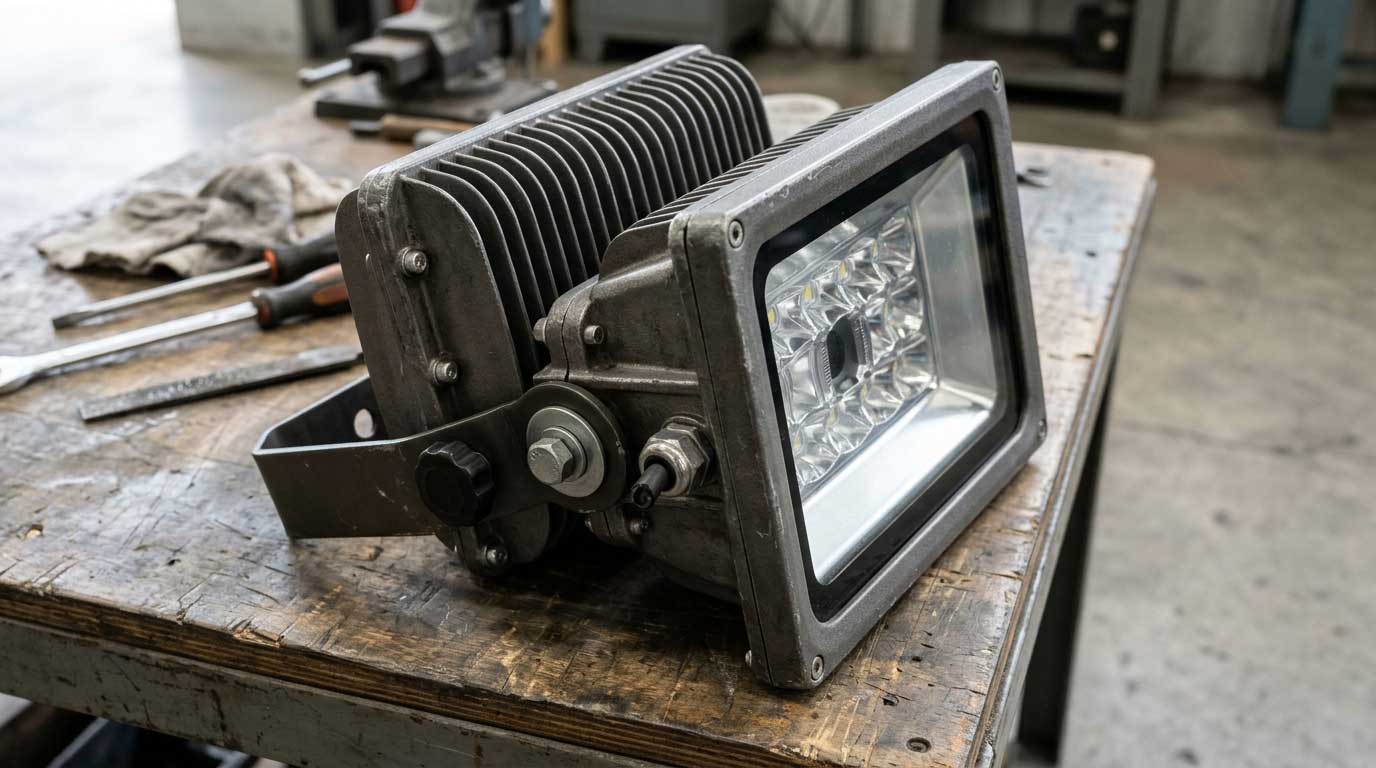
The housing does more than protect the electronics from rain and dust. It also helps manage heat. LED chips lose performance if they operate outside their intended thermal conditions, so many outdoor floodlights use a metal heat sink with fins to release heat into the surrounding air.
ENERGY STAR explains that LEDs produce light through a microchip and that a heat sink absorbs the heat generated during operation. It also notes that LED brightness gradually declines over time, a process called lumen depreciation. Source: ENERGY STAR — Learn About LED Lighting.
Typical LED floodlight components include:
LED chips: Generate light when electrical current passes through the semiconductor.
LED driver: Converts and regulates incoming electrical power for the LED circuit.
Lens or reflector: Shapes the beam and directs light toward the target.
Heat sink: Transfers heat away from sensitive components.
Housing and seals: Protect internal components against environmental exposure, according to the fixture’s rated protection level.
How Do Outdoor Flood Lights Work With Motion Sensors?
A motion-sensor floodlight adds a control system to the lighting circuit. A sensor detects movement or changes in its surroundings and signals the fixture to switch on, often for a preset period.
Many residential and commercial products use passive infrared (PIR) sensors, which detect changes in infrared radiation within their field of view. Other systems use microwave sensing or combine different detection methods.
For example, a warehouse employee walking toward a side entrance may trigger the light before reaching the door. Sensitivity, detection range, timer settings, and sensor direction all affect how reliably this works.
The main components are:
Sensor: Detects movement within its designed coverage area.
Control circuit: Processes the sensor signal and switches the light.
Timer or photocell: Depending on the model, controls how long the light stays on or whether it operates only in darkness.
Not every floodlight has a motion sensor. Fixed-output fixtures can operate through a wall switch, timer, photocell, or building lighting control system.
How to Choose a Floodlight That Works for Your Site
The Illuminating Engineering Society’s ANSI/IES RP-8-22 explains that floodlights use aimable, controlled beams to illuminate specific surfaces. It also emphasizes beam selection, aiming, and limiting glare and unwanted spill light. Source: IES Recommended Practice.
When evaluating products from SEEKINGLED, review these specifications before choosing a fixture:
Specification
Why it matters
Wattage
Indicates electrical power consumption
Lumens
Shows total light output
Beam angle and photometric file
Help predict coverage and light distribution
Color temperature
Describes whether the light appears warm or cool
IP rating
Indicates protection against dust and water under specified test conditions
Mounting and controls
Determine installation flexibility and operating behavior
A useful project-level check is to inspect the far edge of the target area after installation. If the entrance is bright but the steps beyond it disappear into shadow, increasing wattage may not be the only solution. Adjusting the angle or choosing a different beam distribution can produce a more balanced result.
FAQ About how do flood lights work?
Do flood lights use a lot of electricity?
It depends on their wattage and operating hours. A 50W floodlight running for 8 hours consumes 0.4 kWh. Over 30 days at that schedule, consumption is 12 kWh.
Why do LED flood lights have lenses?
Lenses and reflectors control how light spreads. They help direct light toward a driveway, wall, sign, or work area instead of wasting as much output outside the intended target.
Do flood lights get hot?
Yes. LED floodlights generate heat around their semiconductor components and driver, even though they generally waste less energy as heat than incandescent lighting. Their heat sinks help maintain suitable operating temperatures.
How do dusk-to-dawn flood lights work?
A photocell detects changes in ambient light. The control circuit switches the fixture on when surrounding light falls below its set threshold and switches it off when daylight returns.
Can flood lights work in heavy rain?
Only when the fixture is designed and installed for the conditions. Check its IP rating, installation instructions, cable entries, and mounting requirements. An outdoor appearance alone does not guarantee adequate water protection.
What is the difference between a floodlight and a spotlight?
A floodlight generally spreads light over a broader area, while a spotlight concentrates light into a narrower beam. The actual distinction depends on the optical design and specified beam angles.
How long do LED flood lights last?
Service life varies by product, operating temperature, driver quality, and environment. Check the manufacturer’s rated life and maintenance conditions rather than assuming every LED floodlight will last the same number of hours.
Conclusion
Understanding how do flood lights work starts with the interaction between the power supply, light source, optics, and thermal management system. For modern LED floodlights, good performance depends not only on the LED chips but also on how effectively the fixture controls light distribution and heat.
SEEKINGLED helps commercial buyers evaluate floodlighting solutions by matching technical specifications to installation conditions, coverage requirements, and lighting controls.
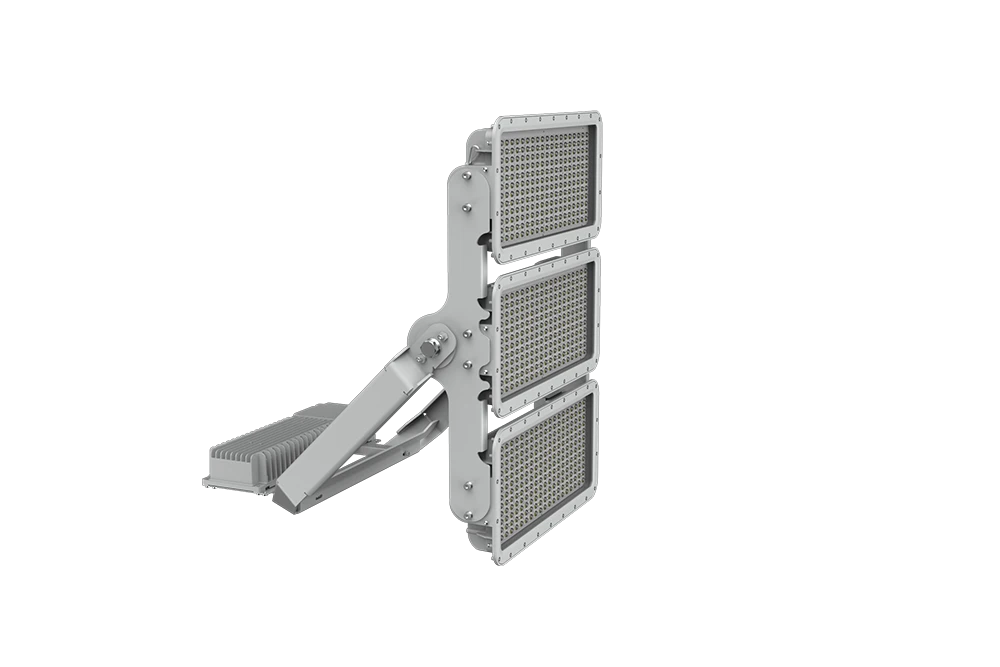
Sports Stadium LED Lighting by SEEKINGLED delivers high mast illumination, precise beam control, and EN 12193 compliant performance for professional venues.
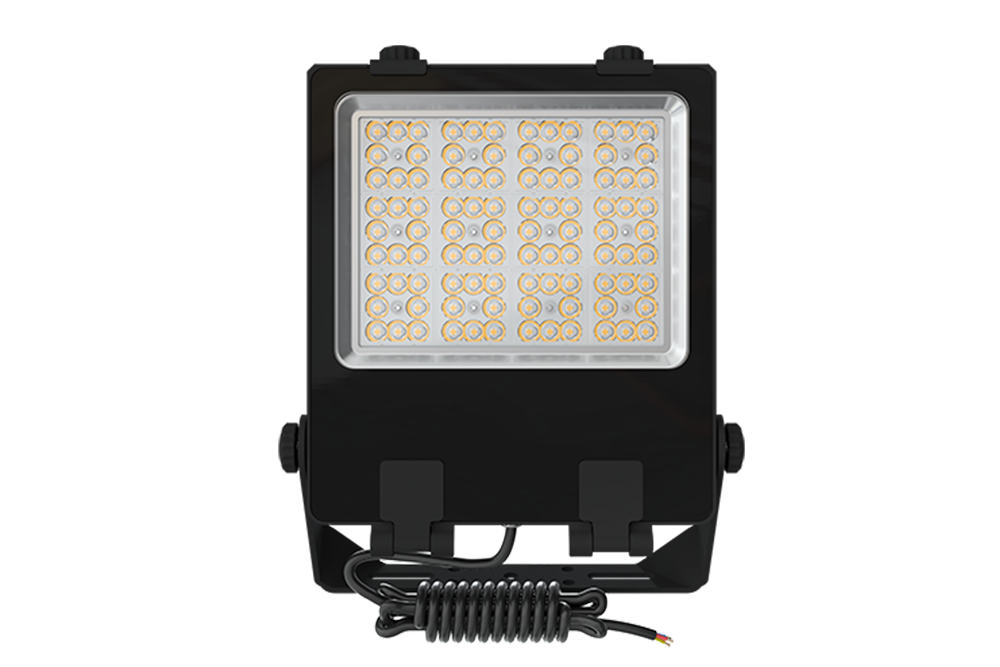
SEEKING FLX Series LED flood light outdoor for sports courts and open-area projects with 170lm/W efficiency, IP66 protection and multiple beam distributions. Designed for long-life commercial and public outdoor use.
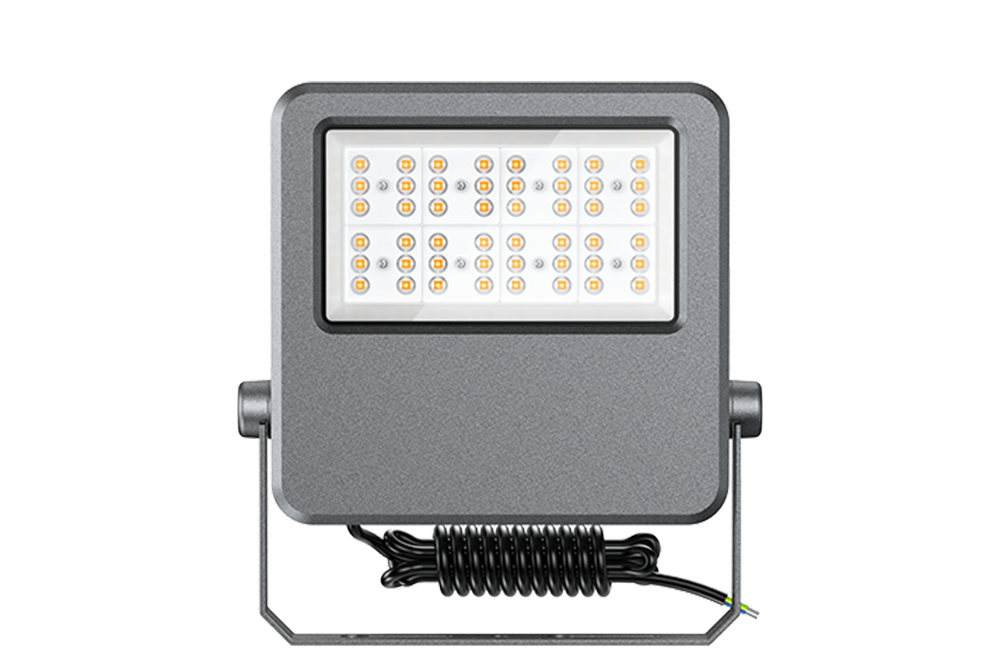
SEEKING FLE Series LED outdoor flood lights for sports grounds and open areas with multiple beam angles, IP66 protection and up to 170lm/W. Designed for long-life outdoor installations with professional driver options.
SEEKING FLD Series outdoor LED flood lights and high power led flood light deliver up to 960W with precision beam angles for sports fields, stadiums and large outdoor areas. IK08 & IP66 protection, 170lm/W efficiency and 100,000h lifetime.
Discover how high bay LED lights 200W from SEEKINGLED solve glare, energy waste, and maintenance issues in sports halls, warehouses, and large commercial interiors. UGR
LED flood light wiring diagram explained by real installers. Learn correct connections, grounding, safety codes, and mistakes to avoid with SEEKINGLED.
How do i choose high bay lights? Learn how to select LED high bay lights by ceiling height, lumens, beam angle, efficiency, and industrial lighting needs.
Why is my LED flood light flashing? Discover real causes like driver faults, wiring problems or unstable voltage, and how SEEKINGLED flood lights avoid flicker issues.
 Seeking LED