 Seeking LED
Floodlight vs Spotlight: What Actually Works When You Install Them?
66Floodlight vs spotlight—what really works on-site? Compare beam angles, lighting effects, and choose the right solution with SEEKINGLED professional lighting.
View detailsSearch the whole station
In hazardous locations such as petroleum, chemical plants, coal mines and pharmaceutical facilities, the installation method of explosion-proof lights directly affects lighting performance, operational safety and later maintenance. Different sites require matching mounting solutions. The most common methods are pendant, bracket, portable and recessed.
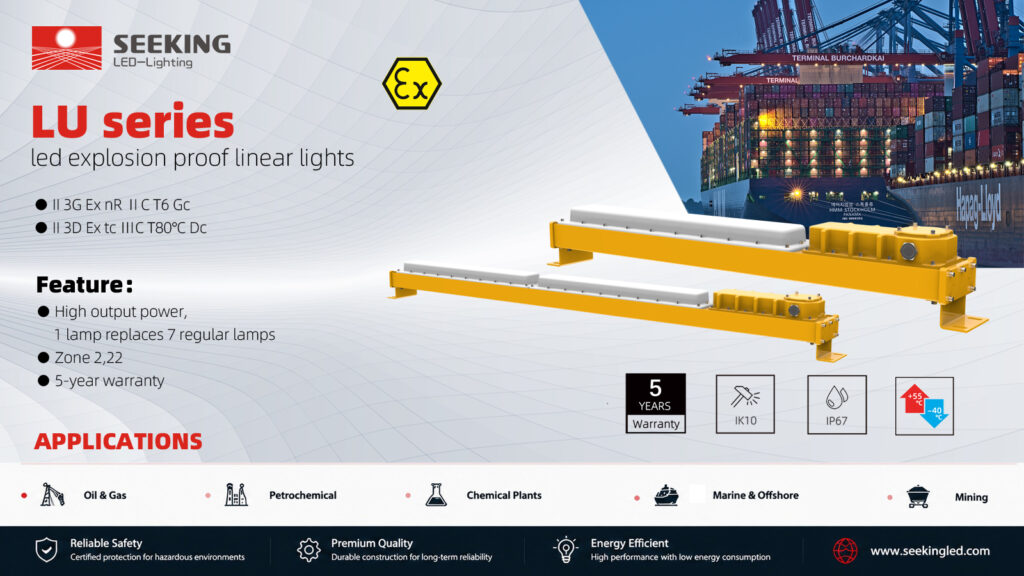
The luminaire is suspended from the ceiling, beam or steel structure using steel pipes or dedicated rods. Height can be flexibly adjusted, making it suitable for high workshops, process areas and warehouses. Cables can pass inside the rod for a cleaner and safer appearance. It provides uniform large-area illumination. Ensure support points have adequate load capacity and use certified explosion-proof cable glands for sealing.
Mounted on walls, equipment, pipes or columns with U-shaped, universal or fixed brackets. Angle is adjustable (up/down and left/right), ideal for floodlights and local lighting. Installation is simple with expansion bolts or welding. Widely used in tank farms, platforms and beside equipment needing directional light. Brackets are usually stainless steel or corrosion-treated aluminum alloy for long-term durability.
The light itself is movable, available as handheld, tripod, trolley or detachable-base versions. Fully flexible for temporary work, emergency repairs and inspections. Can be used with hooks or stands; some models are battery-powered for cordless operation. Must carry proper portable explosion-proof certification to remain safe while being moved.
Embedded directly into the ceiling or suspended ceiling for a flush, neat appearance. Saves space and looks clean, suitable for areas with higher aesthetic and dust-proof requirements. Especially common under gas-station canopies. SEEKINGLED GS series gas-station explosion-proof lights support recessed mounting, have passed laboratory testing and are certified for safe use in such hazardous locations.
Other common methods
Ceiling surface mount (low ceilings), wall mount (with optional arm), guardrail/flange mount (platforms), and pole mount (outdoor roads or large areas).
Key notes
Installation method must match the luminaire’s certification; do not modify arbitrarily. All connectors, glands and brackets must be certified explosion-proof accessories. Disconnect power and confirm the area’s explosion-proof rating before installation. Regularly check fasteners for looseness or corrosion.
For more information, please contact
Details: https://seekingled.com/lu-series-led-linear-explosion-proof-lights-atex-certified
web: www.seekingled.com
Email:dawei@seekingled.com
Visit the product page:Explosion Proof Lighting
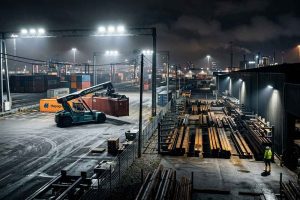
Floodlight vs spotlight—what really works on-site? Compare beam angles, lighting effects, and choose the right solution with SEEKINGLED professional lighting.
View details
What is the brightest outdoor LED flood light? Learn how brightness is judged on site, beyond lumen numbers and specs.
View details
What Is IECEx Certification? Learn the international explosion-proof standard, global market access benefits, hazardous area zones, and IECEx compliance requirements.
View details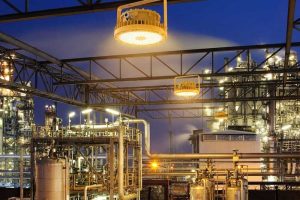
What is an explosion-proof high bay light fixture? Learn how it works, where it is used, and why certified explosion-proof high bay lighting is essential for hazardous industrial areas.
View details