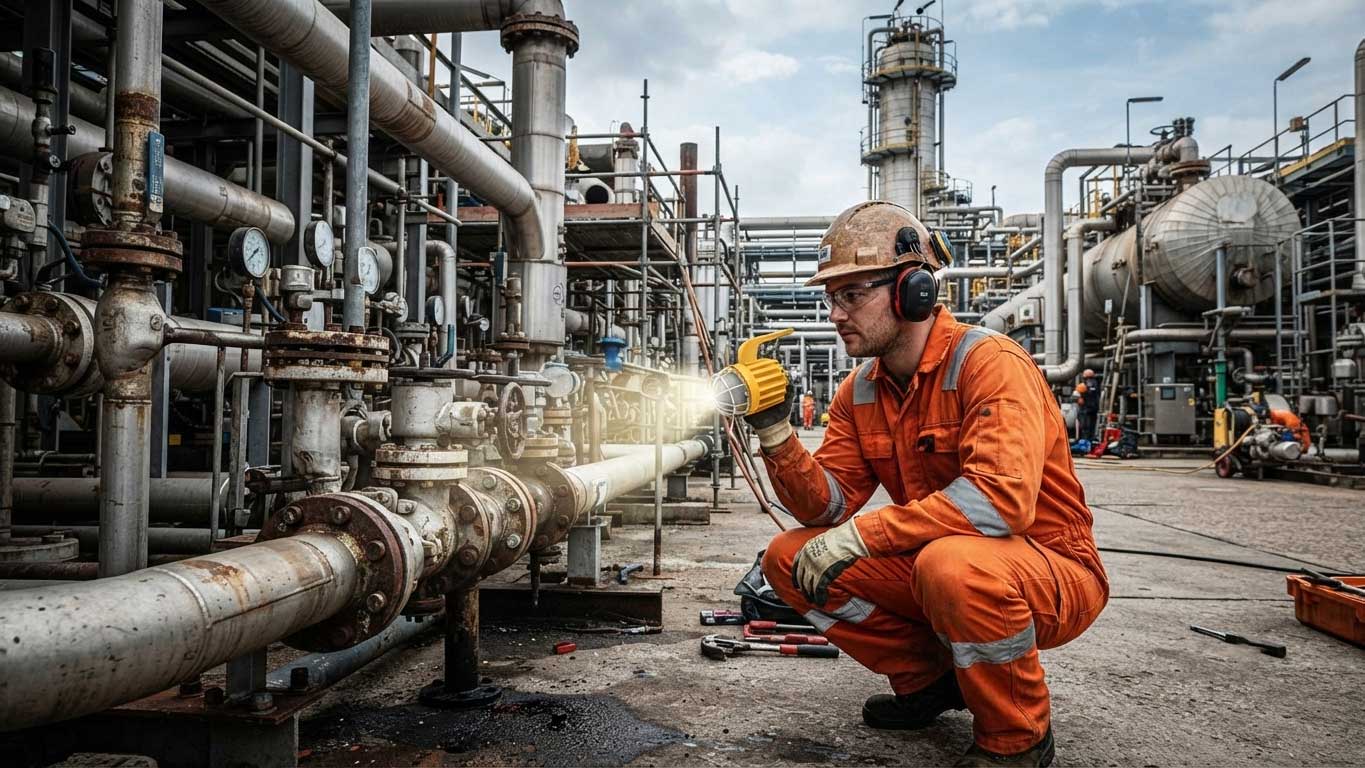
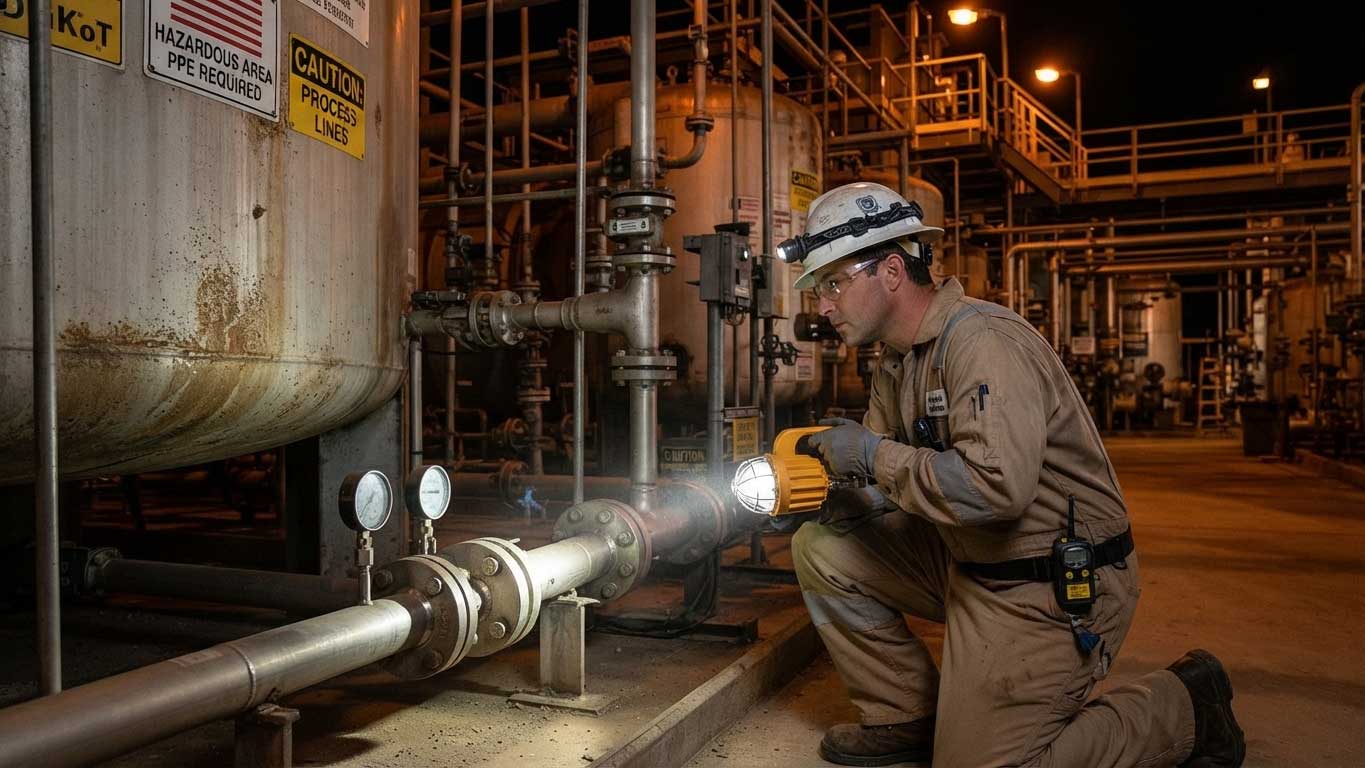
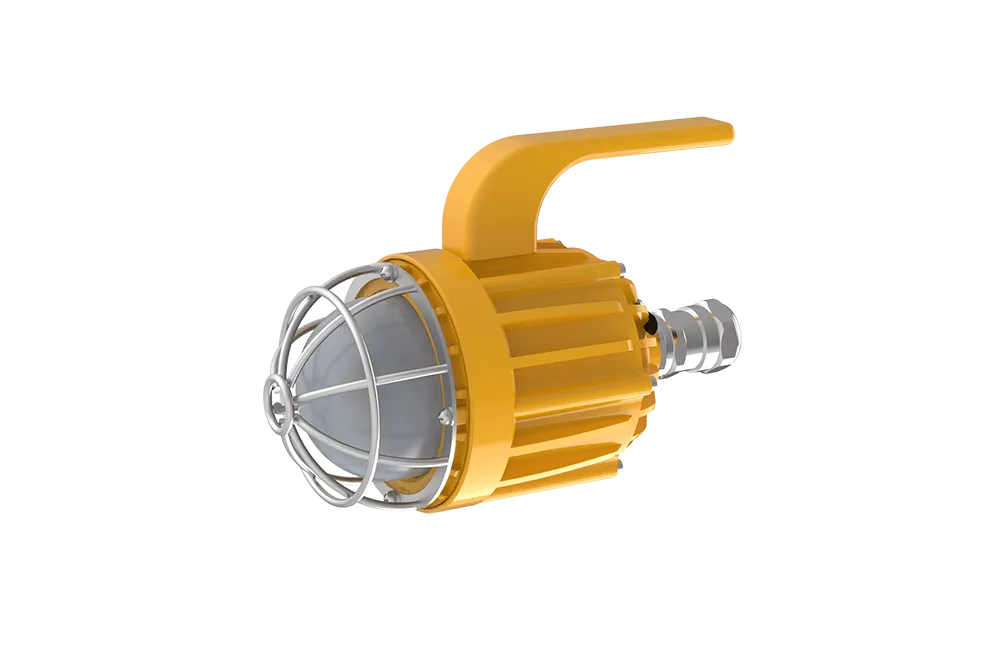
What Is explosion-proof flashlights? Explosion-proof flashlights are specially designed portable lighting devices that prevent internal sparks, heat, or electrical faults from igniting flammable gases, vapors, or dust in hazardous environments.
In industrial work, a flashlight is often considered a simple tool until it enters a classified area. During hazardous site inspections I have participated in, technicians usually check certification markings before switching on the light because one unsuitable device can introduce unnecessary risk.
Understanding Explosion-Proof Flashlights for Hazardous Areas
An explosion-proof flashlight is not simply a brighter version of a normal LED flashlight.
It is engineered for environments where combustible materials may exist, such as:
Oil refineries
Chemical plants
Gas processing facilities
Offshore platforms
Mining operations
Fuel storage areas
Industrial maintenance zones
The main purpose is to provide reliable illumination while preventing the flashlight itself from becoming an ignition source.
In hazardous locations, workers often need portable lighting when inspecting:
Machinery interiors
Pipelines
Storage tanks
Electrical cabinets
Processing equipment
A standard flashlight may work perfectly in a warehouse. The same flashlight may be unsuitable in an area containing explosive gases.
How Explosion-Proof Flashlights Protect Workers
The protection concept behind explosion-proof flashlights focuses on controlling possible ignition sources.
A certified flashlight normally includes several safety features.
Sealed electrical construction
Internal components are protected to reduce the possibility of sparks escaping into the surrounding atmosphere.
The battery compartment, switches, and circuit systems are designed differently from consumer flashlights.
Temperature control
Heat management is critical.
Even without visible sparks, an overheated surface may create an ignition risk if surrounding gases have a low ignition temperature.
Professional hazardous area lighting considers:
LED operating temperature
Housing temperature
Battery heat generation
Continuous runtime
Impact-resistant housing
Industrial flashlights are exposed to much harsher conditions than ordinary portable lights.
They may experience:
Drops from platforms
Chemical exposure
Water spray
Dust contamination
Daily transportation in tool bags
For this reason, many explosion-proof flashlights use reinforced polymer or aluminum housings.
Certification is one of the most important factors when selecting hazardous area lighting.
A flashlight may look durable, but appearance does not determine whether it is suitable for explosive environments.Visit the product page: Explosion Proof Lighting
ATEX Certification
ATEX is the European regulatory framework for equipment used in potentially explosive atmospheres.
These certifications help users confirm that a flashlight matches the required hazardous classification.
Why Ordinary Flashlights Are Not Suitable for Hazardous Areas
One common misunderstanding is:
“If the flashlight is waterproof and bright enough, why cannot it be used?”
The answer is protection design.
A normal flashlight may contain:
Unprotected switches
Consumer-grade batteries
Poor sealing
Components that generate uncontrolled heat
In a hazardous environment, these small differences matter.
During industrial equipment inspections, workers often carry multiple tools, but lighting is the one tool they use continuously. Reliability becomes more important than maximum brightness.
Real Field Experience: What Industrial Users Actually Need
From my experience working with industrial lighting solutions, I noticed that customers rarely choose hazardous flashlights only by lumen output.
Their questions are usually different:
“Is it approved for our zone?”
“How long can it operate during a shift?”
“Can workers carry it safely every day?”
These questions come from actual working conditions.
A maintenance technician inside a refinery does not need a flashlight that looks impressive on a specification sheet. They need a tool that continues working after being dropped, exposed to dust, and used repeatedly during long inspections.
That practical requirement influences professional product selection.
Applications of Explosion-Proof Flashlights
Industry
Typical Application
Oil & Gas
Pipeline inspection and refinery maintenance
Chemical
Equipment inspection and process areas
Marine
Offshore platform operations
Mining
Underground inspection
Energy
Power generation facilities
Manufacturing
Hazardous production zones
Portable lighting is especially valuable when fixed lighting cannot reach the working area.
Explosion-Proof Flashlight vs Standard Flashlight
Feature
Explosion-Proof Flashlight
Standard Flashlight
Hazardous area certification
Available
Usually unavailable
Spark protection
Designed
Limited
Temperature control
Required
Basic
Industrial durability
High
General use
Application
Classified areas
Normal environments
The biggest difference is not brightness.
It is whether the flashlight is designed to operate safely when explosive materials may be present.
How to Choose an Explosion-Proof Flashlight
Before purchasing, industrial teams normally check:
Hazardous zone classification
ATEX, IECEx, or UL certification
Battery approval
Runtime requirement
IP rating
Impact resistance
Operating temperature range
Choosing the wrong flashlight may create compliance problems even if the product performs well in normal conditions.
FAQ: What Is explosion-proof flashlights?
What Is explosion-proof flashlights used for?
They are used for portable illumination in hazardous areas where flammable gases, vapors, or dust may exist.
Are explosion-proof flashlights completely explosion proof?
They are designed and certified to reduce ignition risks under specified hazardous conditions.
What industries use explosion-proof flashlights?
Oil, gas, chemical, marine, mining, and industrial manufacturing industries commonly use them.
What certifications should an explosion-proof flashlight have?
Common certifications include ATEX, IECEx, and UL hazardous location approvals depending on the market.
Can normal LED flashlights replace explosion-proof models?
No. Normal flashlights are not designed or certified for hazardous environments.
How long do explosion-proof flashlights last?
Service life depends on battery type, LED quality, operating conditions, and maintenance practices.
Conclusion
What Is explosion-proof flashlights? They are certified portable lighting tools designed to provide safe illumination in hazardous environments where ordinary flashlights may create ignition risks.
For industries handling flammable gases, vapors, or dust, the flashlight is not just a lighting device. It is part of the worker’s safety equipment.
SEEKINGLED focuses on industrial lighting solutions where reliability, certification, and real-world performance are essential.
SEEKINGLED LED Linear Explosion Proof Light and Explosion Proof lighting is ATEX and IECEx certified for Zone 1, Zone 2, Zone 21 and Zone 22 hazardous locations, built for long-term industrial use.
LED Linear Explosion Proof Lights and EX Proof lights for Zone 1, Zone 2, Zone 21 and Zone 22 hazardous areas. ATEX & IECEx certified explosion proof LED linear lighting with emergency function, adjustable power and IP67 protection by SEEKINGLED.
SEEKINGLED LED Explosion Proof Flood Lights are ATEX certified for Zone 2 and Zone 22 hazardous areas, offering high efficiency, adjustable power and integrated junction box.
SEEKINGLED LED Explosion Proof Flood Lights are flameproof ATEX and IECEx certified for Zone 1 and Zone 2 hazardous areas, offering high power, adjustable output and long service life.
SEEKINGLED LED Gas Station Canopy Lights are ATEX certified for Zone 2 and Zone 22 hazardous areas, featuring adjustable power and built-in explosion-proof junction box.
ATEX: Ex II 2G Ex db IIB T6/T5 GbEx II 2D Ex tb IIIC T80°C/ T95°C Db IECEx Ex db IIB T6 Gb;Ex tb IIIC T80°C Db Feature: ● For Zone 1,2 and Zone 21,22● Flameproof type, the strongest● 100W can replace 250W HID,energy saving● Power:60W,80W,100W Application: Oil and gas, marine, Chemical, pharmaceutical, semiconductor,mining,military industr…
ATEX: II 3G Ex nR ⅡC T5/T6 GcII 3D Ex tc ⅢC T80℃/T95℃Dc ATEX Certificate NO: TÜV CY 26 ATEX 0207611 X Feature: ● For Zone 2 and Zone 22● 150W can replace 250W HID lamps,Energy saving● Power:50W,75W,100W,150W,200W Application: Oil and gas, marine, Chemical, pharmaceutical, semiconductor,mining,military industry, paint booth,power plant ETC…
LED explosion proof high bay lights are designed for Zone 1, Zone 2, Zone 21 and Zone 22 hazardous areas. This page introduces the HB21 Series from SEEKING, including certifications, power options and real application considerations.
LED Linear Explosion Proof Lights from SEEKINGLED. LU Series Flame Proof lights ATEX-certified explosion proof LED linear lighting for Zone 2 gas and Zone 22 dust areas, IP69K, IK10, long lifetime and flexible power options.
Certified explosion proof work lights for Zone 1 & 21 hazardous areas. Portable, ATEX & IECEx approved, built for oil, gas and chemical plants by SEEKINGLED.
ATEX: II 3G Ex nR ⅡC T6 GcII 3D Ex tc ⅢC T80℃ Dc ATEX Certificate NO: TÜV CY 26 ATEX 0207611 X Feature: ● For Zone 2 and Zone 22● Accepts battery-powered supply● indestructible● Power:AC input:50W,75W,100WDC input:15W,25W,35W Application: Oil and gas, marine, Chemical, pharmaceutical, semiconductor,mining,military industry, paint booth,po…
ATEX: Ex II 2G Ex db IIB T6 GbEx II 2D Ex tb IIIC T80°C Db IECEx Ex db IIB T6 Gb;Ex tb IIIC T80°C Db Feature: ● For Zone 1,2 and Zone 21,22● Flameproof type, the strongest Application: Oil and gas, marine, Chemical, pharmaceutical, semiconductor,mining,military industry, paint booth,power plant ETC hazardous area. Technical Specifications:…
ATEX: Ex II 2G Ex db IIB T6 GbEx II 2D Ex tb IIIC T80°C Db IECEx Ex db IIB T6 Gb;Ex tb IIIC T80°C Db Feature: ● For Zone 1,2 and Zone 21,22● Flameproof type, the strongest Application: Oil and gas, marine, Chemical, pharmaceutical, semiconductor,mining,military industry, paint booth,power plant ETC hazardous area. Technical Specifications:…
ATEX: Ex II 2G Ex d e IIB T6 Gb ATEX: Ex d e IIB T6 Gb; Feature: ● For Zone 1,2● 9W can replace 18W fluorescent lamps,50% Energy saving Application: Oil and gas, marine, Chemical, pharmaceutical, semiconductor,mining,military industry, paint booth,power plant ETC hazardous area. Technical Specifications: Standards:60079-0, 60079-1, 60079…
ex proof lighting engineered for Zone 1 & 2 hazardous areas. ATEX & IECEx certified, energy-efficient and built for oil, gas and chemical safety by SEEKINGLED.
Discover reliable atex led flood lights for hazardous areas. Learn certification requirements, LED advantages, industrial applications, and selection tips from SEEKINGLED.
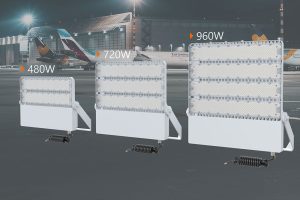
SEEKINGLED’s FLD Series High Mast Lights are specially designed for large-area outdoor illumination, ideal for sports fields, golf courses, training football pitches, ports, docks, and other high-mast applications over 12 meters.Available in 480W,...
 Seeking LED