 Seeking LED
can you use high bay lights in a garage?
0Can you use high bay lights in a garage? Learn when high bays make sense, how to choose wattage, beam angle, mounting height, and glare control for garages.
View detailsSearch the whole station
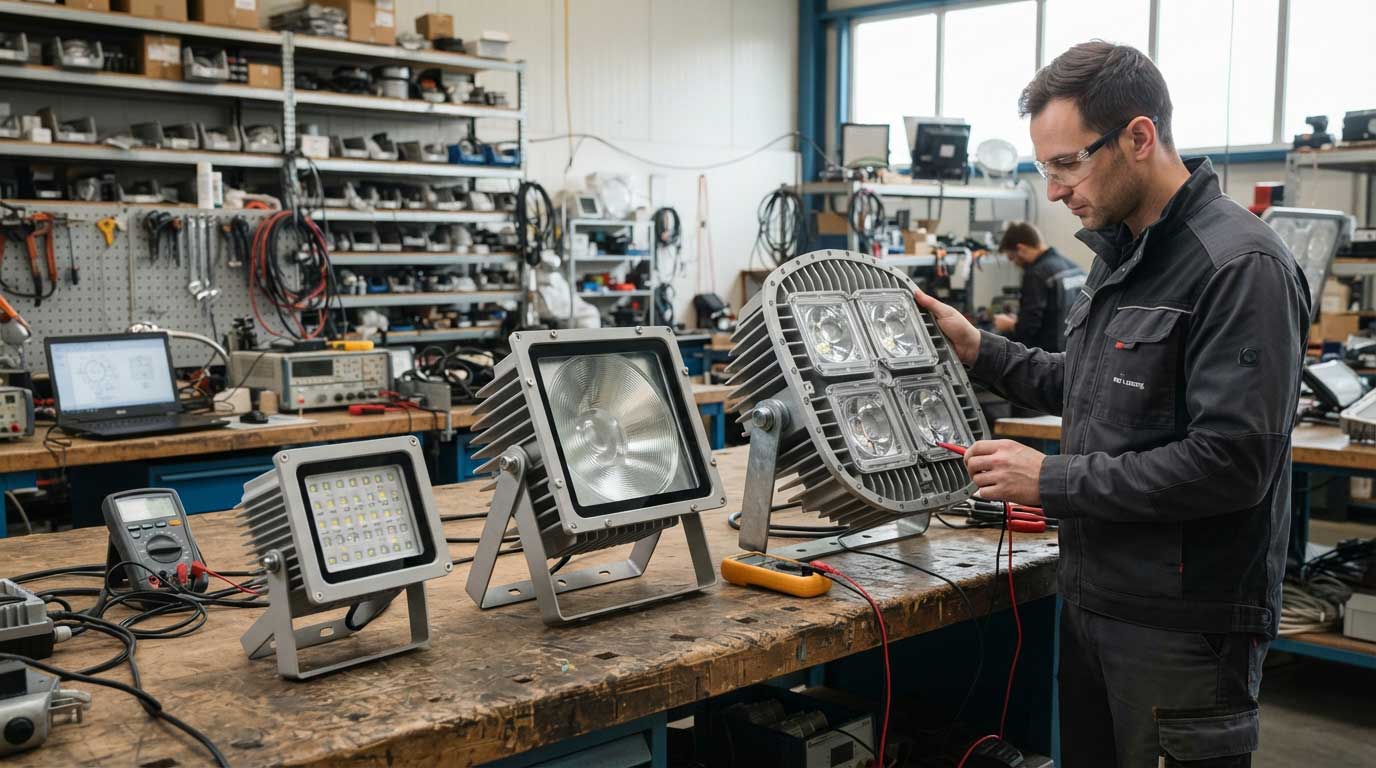
are all flood lights the same size? No. Flood lights come in different dimensions because wattage, lumen output, optics, heat dissipation, housing design, mounting method, and application all affect fixture size. A 50W security light and a 960W stadium flood light can be dramatically different in physical dimensions.
When specifying commercial lighting, I never treat wattage as a dimension. The physical body has to work with the optical system, driver, heat management, bracket, and installation point. That becomes obvious when a fixture is being mounted several meters above a warehouse yard or attached to a sports-lighting structure.
SEEKINGLED’s own product ranges show the difference clearly. Its FLX flood light covers 100W to 400W, while the FLD series extends from 400W to 960W, with substantially different mechanical dimensions across the models.
There is no universal flood light body size.
A compact 60W or 100W fixture may be designed for entrances, walls, small yards, or security lighting. Larger fixtures need more room for LED modules, optical components, drivers and thermal management.
The relationship is not perfectly linear either.
For example, SEEKINGLED’s FLX series specifies:
| Model | Power | Overall dimensions* |
|---|---|---|
| XJ-FLX100W | 100W | 320 × 495.2 mm |
| XJ-FLX200W | 200W | 320 × 495.2 mm |
| XJ-FLX300W | 300W | 380 × 495.3 mm |
| XJ-FLX400W | 400W | 440 × 565.4 mm |
Dimensions refer to the published mechanical drawings; fixture depth is also specified separately.
This is a useful real-world example: 100W and 200W models can share essentially the same main body dimensions, while moving to 300W and 400W requires a larger housing.
That is why “200W flood light” is not enough information for an installation drawing.
Several engineering factors influence the physical dimensions:
SEEKINGLED’s FLX series, for instance, offers 20°, 40°, 60°, 90°, P50 and 30×70° beam options across its range. The same wattage therefore cannot be judged only by physical appearance; optical distribution is part of the design.
Not necessarily.
Modern LED efficiency makes the comparison more complicated. Two 200W flood lights from different manufacturers can have different dimensions because their LED efficiency, driver architecture, thermal design and optics are different.
SEEKINGLED publishes FLX models at up to 170 lm/W, with 100W, 200W, 300W and 400W options. At that stated efficiency, the nominal 170 lm/W figures correspond to approximately 17,000, 34,000, 51,000 and 68,000 lumens respectively.
That does not mean every manufacturer’s 200W fixture will have the same lumen output or body size.
There is another detail I pay attention to during project specification: beam angle.
A 30° beam and a 90° beam are doing very different jobs. One concentrates light farther downrange; the other spreads it across a wider area. SEEKINGLED’s published outdoor flood-light guidance likewise notes that mounting height and beam angle affect practical coverage, not simply wattage.
A larger body is therefore not automatically a “brighter” body, and a smaller body is not automatically a weaker fixture.
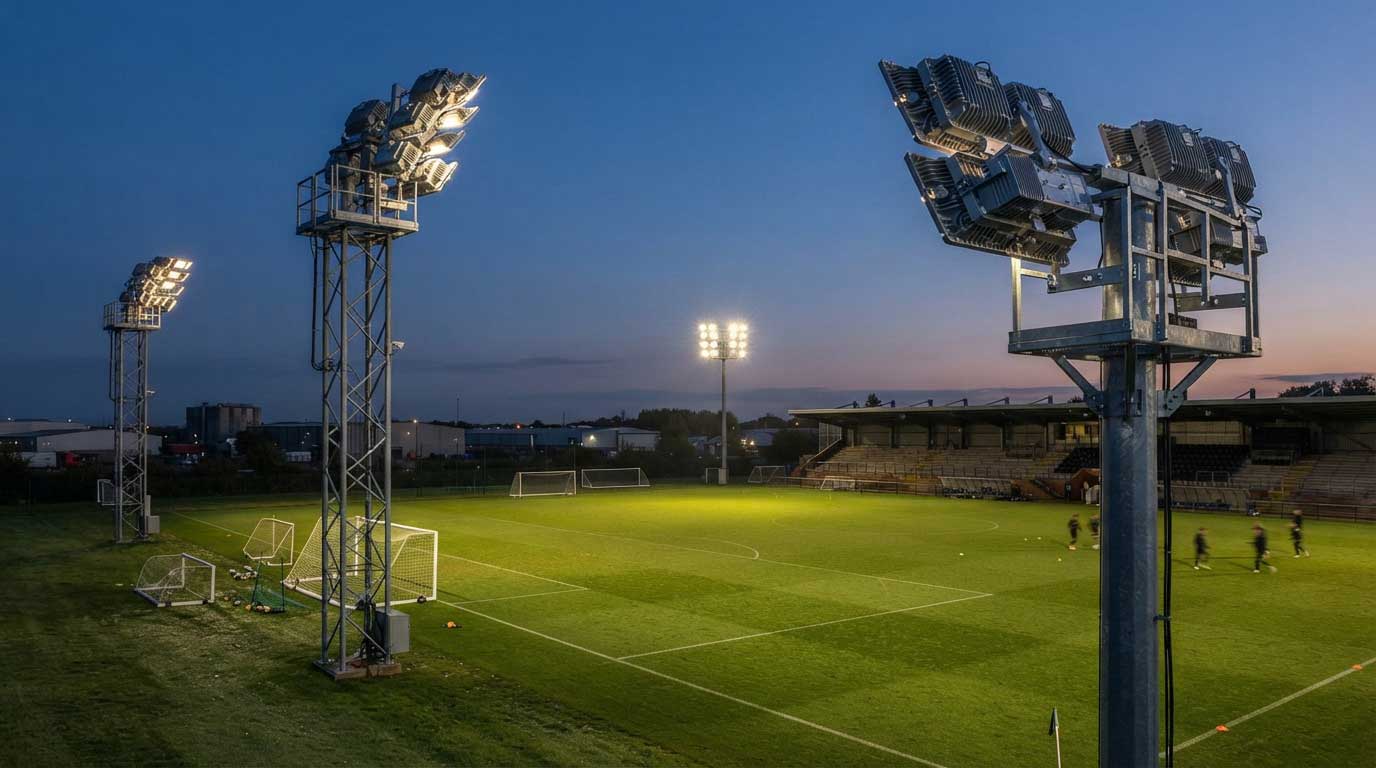
The difference becomes especially obvious with stadium, sports-field and large-area lighting.
SEEKINGLED’s FLD series includes 400W, 480W, 600W, 720W, 800W and 960W models. The published mechanical drawings show three different dimensional groups:
| Models | Front width | Overall height |
|---|---|---|
| 400W / 480W | 537 mm | 474 mm |
| 600W / 720W | 537 mm | 570 mm |
| 800W / 960W | 537 mm | 667 mm |
The depth also increases between these groups. The published specifications list IP66/IK08 protection, 15°, 30°, 60°, 90° and P50 beam options, and 10kV surge protection.
Notice something interesting here: the width stays at 537 mm while the height changes.
That is an important practical point. Fixture dimensions do not necessarily grow in every direction as wattage increases. Manufacturers may preserve one mounting dimension while increasing the housing volume elsewhere to accommodate the optical, thermal or electrical requirements.
For a replacement project, the physical dimensions should be checked alongside the photometric requirements.
Use this practical checklist:
For an existing pole or bracket, this matters more than it sounds. A replacement can have the correct wattage and lumen output but still fail the installation because the bracket holes do not align or the fixture extends too far into a restricted space.
| Application | Typical design concern | Size consideration |
|---|---|---|
| Residential entrance | Compact installation | Small housing |
| Building façade | Appearance + mounting | Compact/medium |
| Warehouse yard | Coverage + mounting height | Medium/high-power |
| Industrial perimeter | Throw distance | Medium/high-power |
| Sports field | Long throw + optics | Large/high-power |
| Stadium | High output + precise optics | Large/high-power |
| High-mast area | Wind load + weight | Structural design matters |
There is no single “standard flood light size” that fits all of these situations.
No. Flood lights vary in width, height, depth and weight according to their power, optical design, driver arrangement, thermal management and intended application.
No. Wattage alone does not determine physical size. Efficient LED systems and different housing designs can produce different dimensions at similar power levels.
Sometimes. For example, SEEKINGLED’s FLX 100W and 200W models use the same published main dimensions, while its 300W and 400W models use larger housings.
The fixture size should be selected from required illumination, mounting height, beam angle, coverage and mounting conditions rather than yard area alone.
High-power fixtures require effective thermal management, but the exact housing and heat-dissipation design varies by LED efficiency, driver design and fixture construction.
Possibly, but physical size is only one part of the replacement. Confirm lumen output, beam distribution, mounting compatibility, environmental rating and electrical specifications first.
Use the manufacturer’s technical datasheet or mechanical drawing. For professional installation, verify width, height, depth, weight and mounting-hole dimensions before ordering.
are all flood lights the same size? No. Flood light dimensions vary substantially between models and applications. SEEKINGLED’s own ranges demonstrate this clearly, from compact FLX fixtures to large 960W FLD models.
For a commercial project, the correct fixture is not simply the one with the right wattage. The housing dimensions, mounting geometry, optical distribution, heat management and site conditions all have to work together.
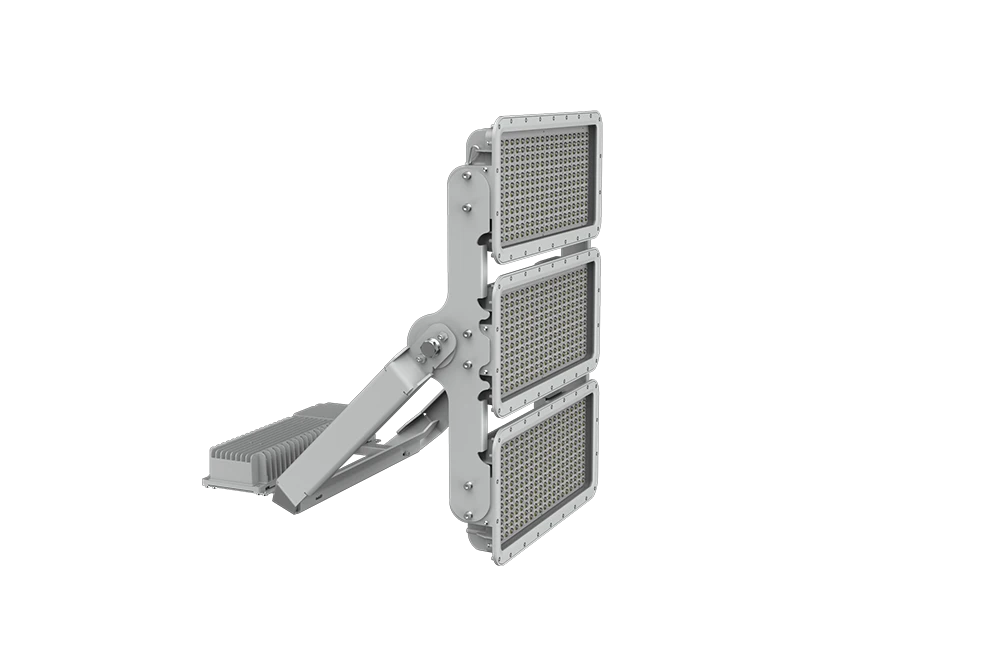
Sports Stadium LED Lighting by SEEKINGLED delivers high mast illumination, precise beam control, and EN 12193 compliant performance for professional venues.
View details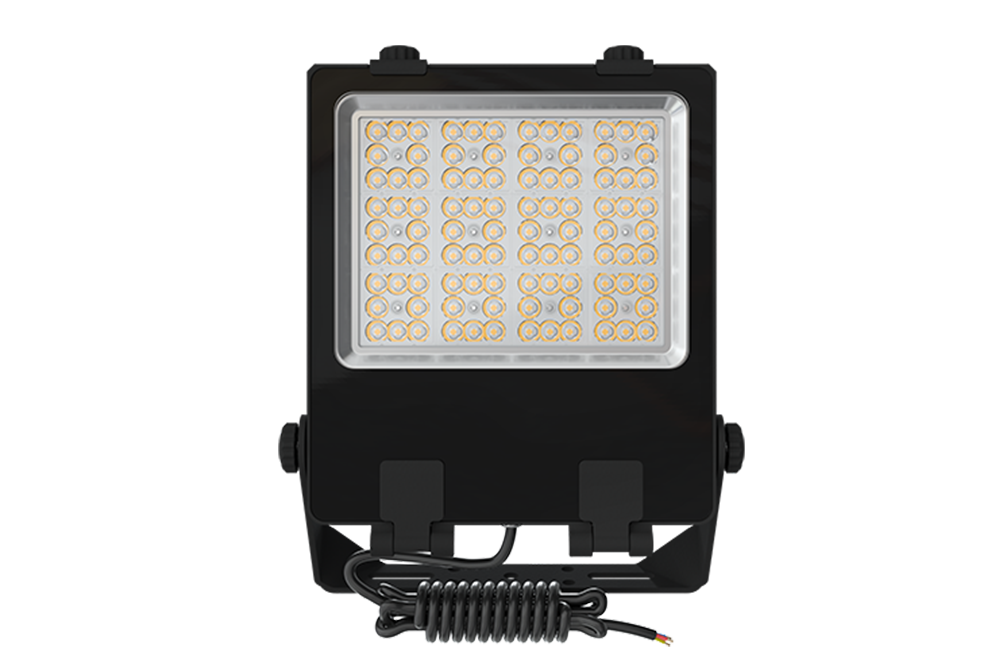
SEEKING FLX Series LED flood light outdoor for sports courts and open-area projects with 170lm/W efficiency, IP66 protection and multiple beam distributions. Designed for long-life commercial and public outdoor use.
View details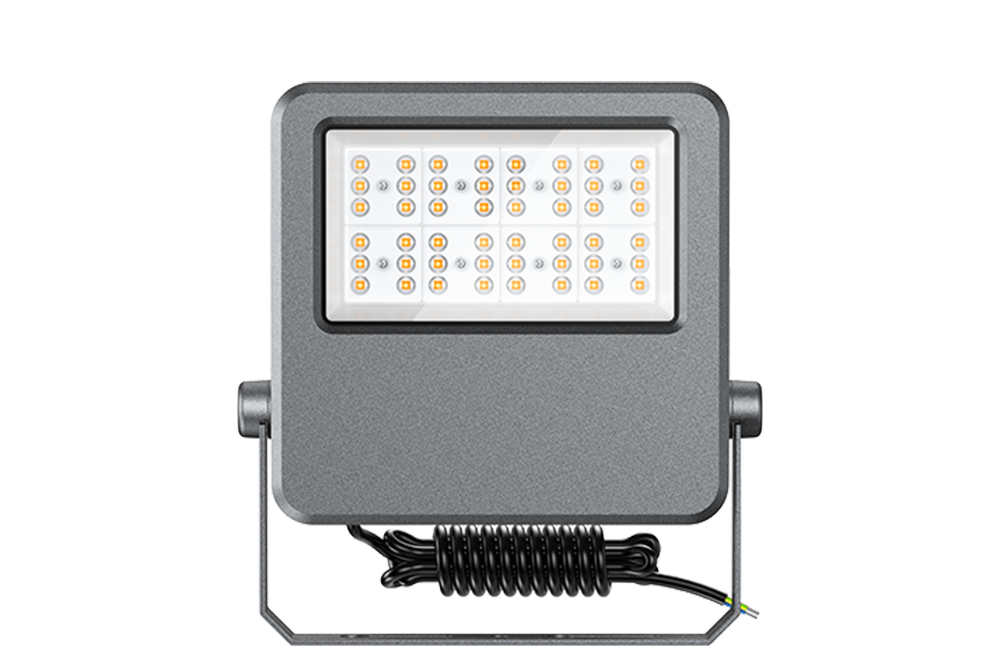
SEEKING FLE Series LED outdoor flood lights for sports grounds and open areas with multiple beam angles, IP66 protection and up to 170lm/W. Designed for long-life outdoor installations with professional driver options.
View details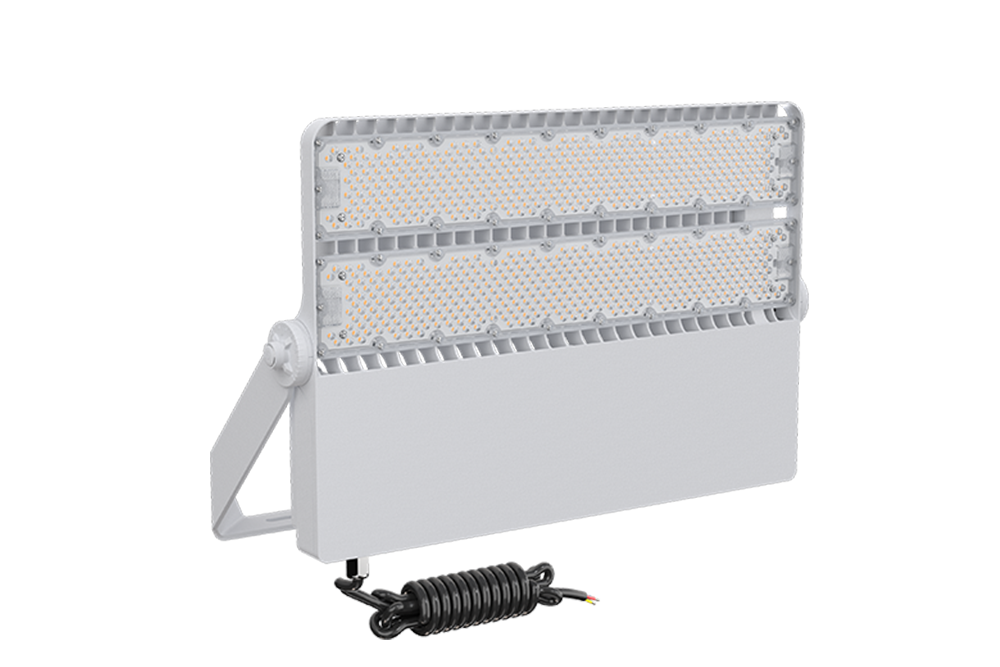
SEEKING FLD Series outdoor LED flood lights and high power led flood light deliver up to 960W with precision beam angles for sports fields, stadiums and large outdoor areas. IK08 & IP66 protection, 170lm/W efficiency and 100,000h lifetime.
View details
Can you use high bay lights in a garage? Learn when high bays make sense, how to choose wattage, beam angle, mounting height, and glare control for garages.
View details
In hazardous locations such as petroleum, chemical plants, coal mines and pharmaceutical facilities, the installation method of explosion-proof lights directly affects lighting performance, operational safety and later maintenance. Different sites...
View details
LED high bay light fixtures explained for warehouses and factories. Learn how to choose wattage, optics, and mounting height for real working spaces.
View details
LED High Bay Lighting for Warehouse Retrofit often starts from maintenance pressure rather than brightness demand. This project records how 100W LED high bay lights replaced 250W HPS lamps in a Denmark warehouse using SEEKINGLED HBS Series fixtures.
View details