 Seeking LED
What is LED ATEX lighting?
0What is LED ATEX lighting? Learn how ATEX-certified LED lighting works in hazardous zones, why industries use it, and how to choose safe explosion-proof fixtures.
View detailsSearch the whole station
are flood lights dimmable? Some flood lights are dimmable, but not all. Dimming depends mainly on the LED driver and its control interface. A fixture designed for 0–10V, DALI, PWM, or another specified method can be dimmed; a fixed-output model cannot simply be connected to any dimmer.
In commercial lighting work, this is usually checked at the driver level, not by looking at the LED modules. That distinction matters when replacing fixtures in a warehouse, parking area, façade, or sports field. The wrong control method can leave a perfectly good flood light flickering or refusing to respond.
The U.S. Department of Energy examined 23 LED streetlights that claimed 0–10V dimming capability and found measurable differences in driver and dimming performance. In other words, even when two products carry the word “dimmable,” their behavior is not necessarily identical.
The LED chip produces light, but the driver controls how electrical power reaches the LEDs.
A dimmable flood light normally has a driver designed to interpret a particular control signal. Common systems include:
| Dimming method | Typical application | Important consideration |
|---|---|---|
| 0–10V | Commercial and outdoor lighting | Requires compatible control wiring |
| DALI | Smart commercial lighting | Digital addressable control |
| PWM | Specialized LED systems | Requires compatible driver |
| TRIAC / phase-cut | Certain residential applications | Only use when specifically supported |
| Sensor dimming | Warehouses, yards, pathways | Requires compatible sensor/driver |
A common mistake is assuming that an LED flood light will dim simply because LEDs themselves can operate at different output levels.
They do not work that way as a complete fixture.
SEEKINGLED’s own product documentation reflects this distinction. Its FLD Series high-power flood light is specified as DALI and Dimmable, while the product uses a constant-current power driver and is designed for sports and area lighting. The published range includes 480W, 720W and 960W models, with IP66 and IK08 protection.
That specification is useful because it identifies dimming as a fixture-level feature, rather than assuming it from the LED source.
When troubleshooting an outdoor installation, the first things worth checking are:
This is also where field experience becomes useful. A flood light can illuminate normally at 100% and still have a serious control problem at 20%. Flickering that appears only when the output is reduced is often a compatibility or driver issue rather than a failure of the LED modules.
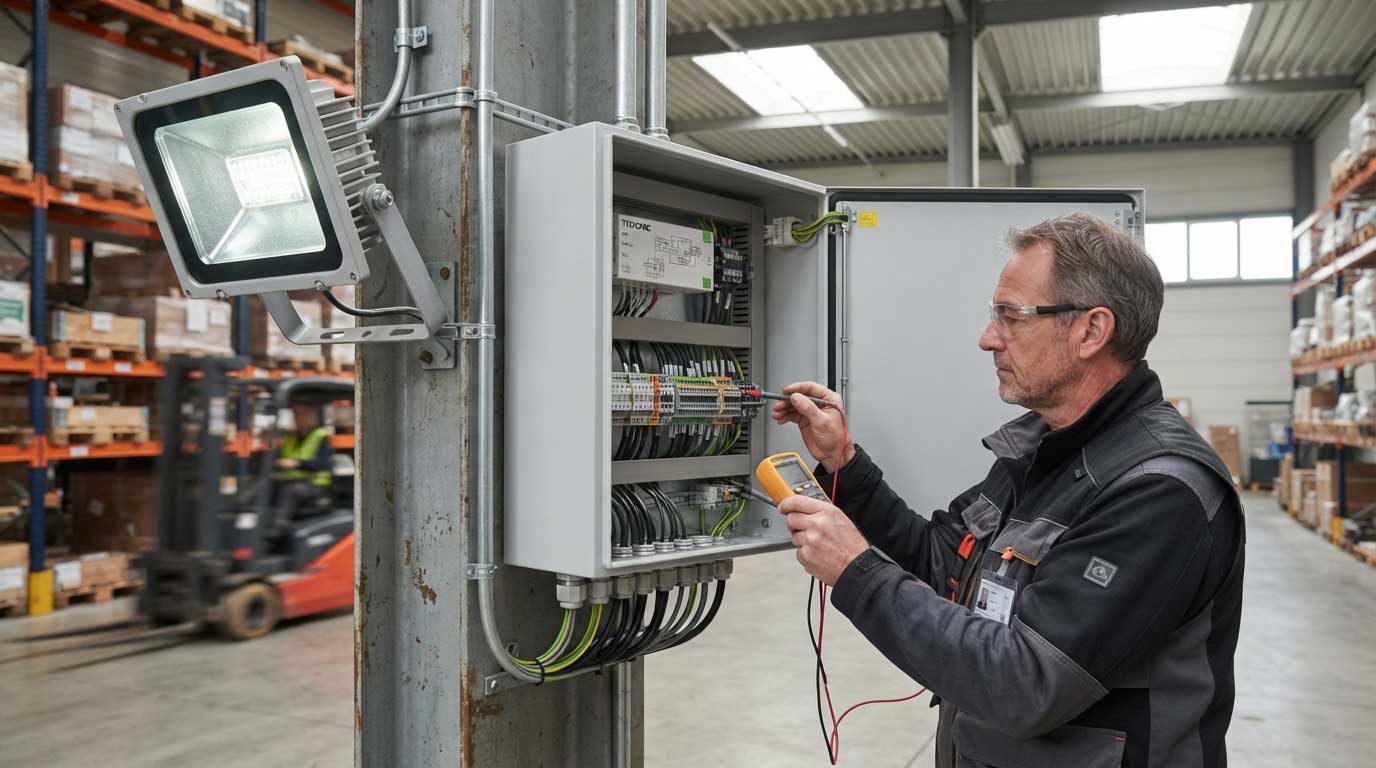
Some are, and the specification must say so.
For outdoor projects, dimming is useful when the required light level changes during the operating period. A parking area may need full output during busy hours but substantially less illumination during low-traffic periods. A sports facility may also use different lighting levels for training, maintenance, and competition.
SEEKINGLED lists dimmable LED flood lights within its product range and offers control options including DALI and 0–10V dimming for project-specific applications.
Its FLX flood-light series, for example, covers 100W, 200W, 300W and 400W, with stated efficacy of 170 ±5% lm/W and beam options of 20°, 40°, 60°, 90°, P50 and 30×70°. The published specification also identifies the driver options and marks the series as dimmable.
That combination is important. Dimming is only one part of a flood-light specification. The beam distribution still determines where the reduced light output actually goes.
It can, but the saving depends on the control strategy and operating conditions.
Simply installing a dimmable driver does not guarantee a particular percentage of energy savings. The actual result depends on how often the light is dimmed, the selected output level, the driver, and whether sensors or scheduled controls are involved.
The DOE’s study of 23 0–10V LED streetlights specifically examined the relationship between dimming performance, energy use, and driver behavior. Its findings highlight why control compatibility and consistent performance matter when dimming is used across a lighting system.
For an outdoor installation, practical uses include:
There is a small but important engineering detail here: dimming should be planned before installation, especially when separate control cables are required.
Retrofitting the control system afterward can be much more complicated.
Do not test an expensive commercial fixture by connecting an arbitrary dimmer.
Check the datasheet first.
For a new commercial project, it is worth specifying the control protocol at the quotation stage. That avoids a surprisingly common situation: the lighting contractor receives the fixture, the electrician prepares the wrong control circuit, and the problem only becomes visible during commissioning.
| Feature | Dimmable flood light | Non-dimmable flood light |
|---|---|---|
| Adjustable brightness | Yes | No |
| Special driver | Required | Fixed-output driver |
| 0–10V / DALI | Possible | Usually unavailable |
| Control-system integration | Possible | Limited |
| Installation complexity | Higher | Lower |
| Suitable for scheduled dimming | Yes | No |
| Compatible dimmer required | Yes | Not applicable |
The more controlled the project, the more useful dimming becomes. For a simple security light that runs at full output for a short period, it may add little value. For a large commercial site with hundreds of fixtures and different operating periods, control can become much more relevant.
Some are. A flood light is dimmable only when its driver and control interface are designed to support dimming.
No. A standard wall dimmer is only suitable when the flood light and driver specifically support that dimming method. 0–10V, DALI, TRIAC and PWM are not interchangeable.
Some commercial outdoor models are available with dimming functions, but it should never be assumed from the fact that the fixture uses LEDs. Check the manufacturer’s specification.
0–10V and DALI are common options in commercial lighting. The appropriate choice depends on the driver, control system and project requirements.
Possible causes include an incompatible controller, incorrect control wiring, an unsuitable driver, or operation outside the driver’s specified dimming range.
Reduced operating output may reduce electrical and thermal stress in some systems, but fixture life should be determined from the manufacturer’s rated specifications rather than assuming a fixed extension.
Yes. SEEKINGLED lists dimmable flood-light options, including models supporting DALI, and its product documentation identifies dimming capabilities on selected flood-light series.
are flood lights dimmable? Some are, but dimming is not automatic. The driver, control protocol and wiring determine whether brightness can be adjusted reliably. For commercial and outdoor projects, checking the complete driver specification before installation is more useful than judging the fixture by its LED source alone.
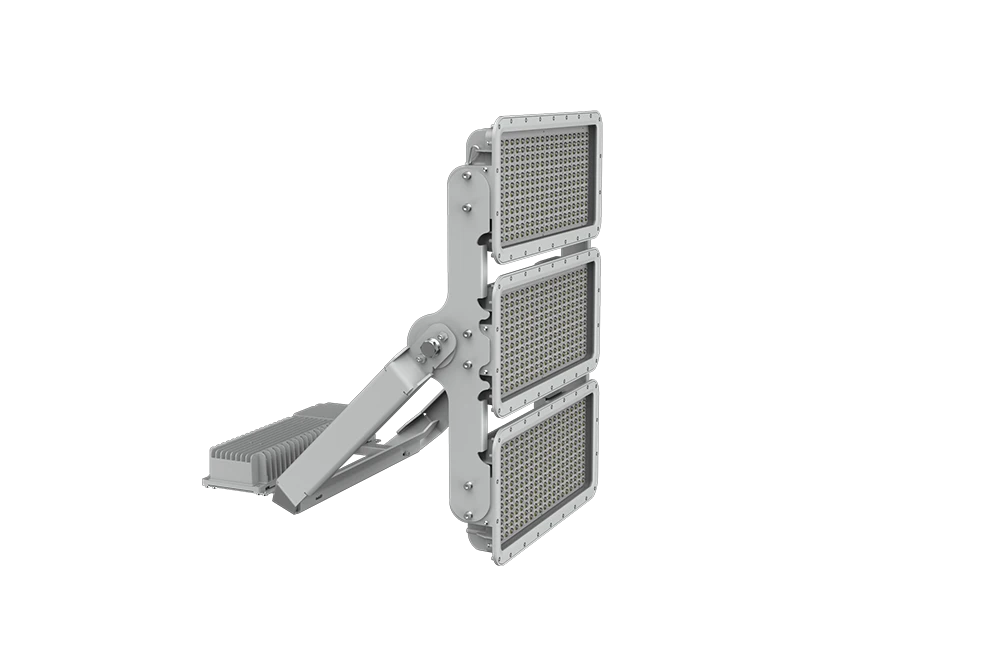
Sports Stadium LED Lighting by SEEKINGLED delivers high mast illumination, precise beam control, and EN 12193 compliant performance for professional venues.
View details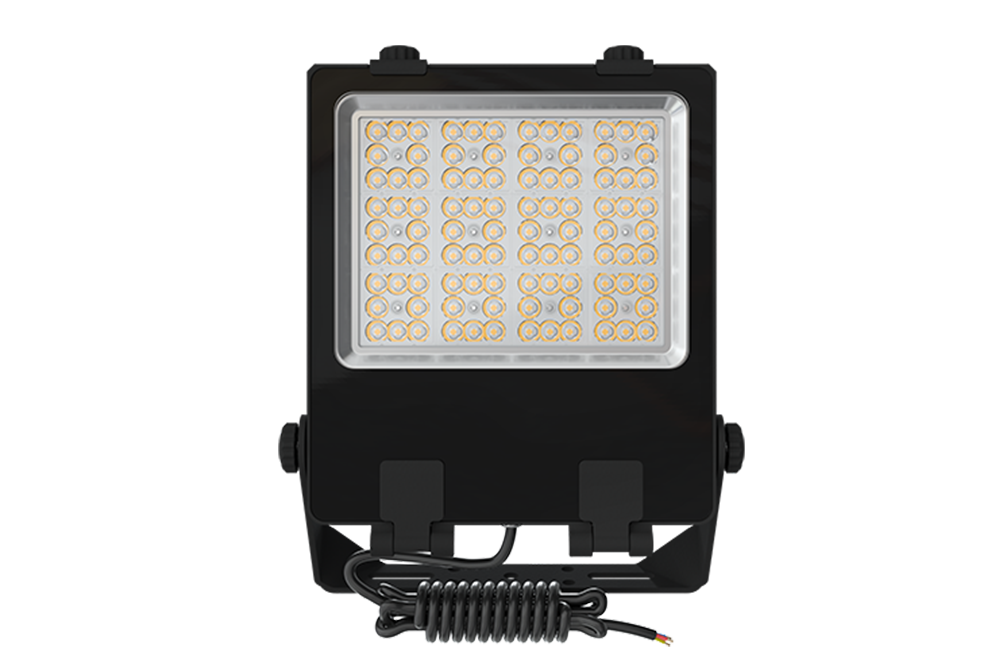
SEEKING FLX Series LED flood light outdoor for sports courts and open-area projects with 170lm/W efficiency, IP66 protection and multiple beam distributions. Designed for long-life commercial and public outdoor use.
View details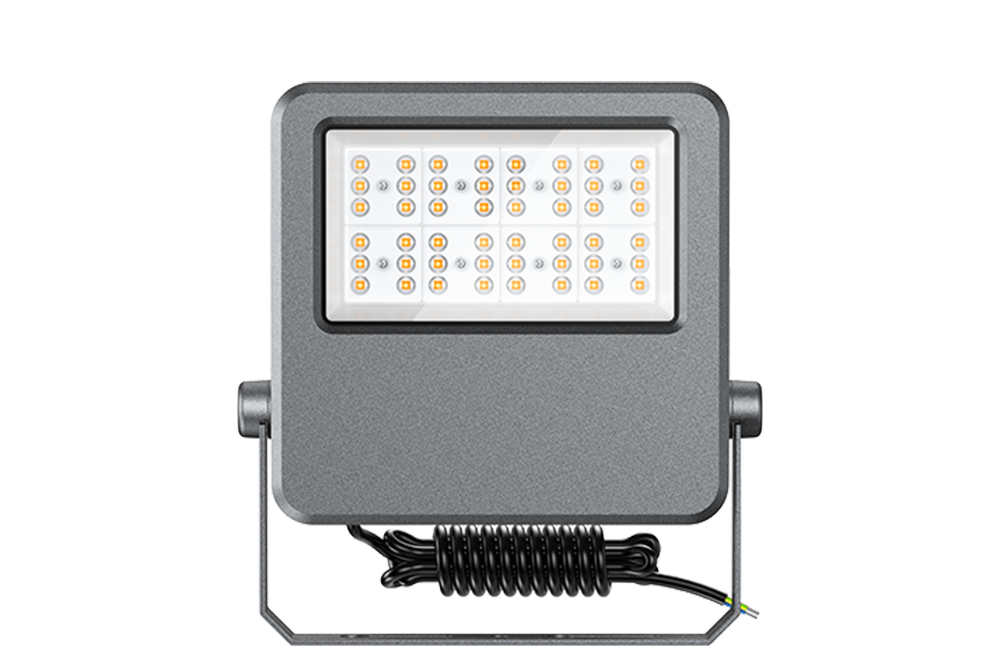
SEEKING FLE Series LED outdoor flood lights for sports grounds and open areas with multiple beam angles, IP66 protection and up to 170lm/W. Designed for long-life outdoor installations with professional driver options.
View details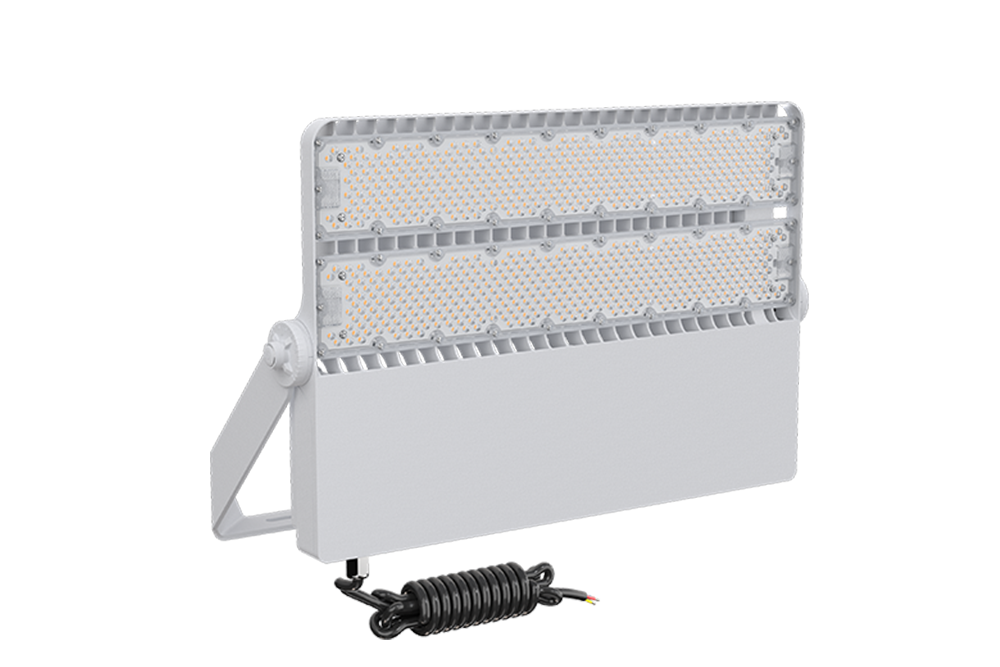
SEEKING FLD Series outdoor LED flood lights and high power led flood light deliver up to 960W with precision beam angles for sports fields, stadiums and large outdoor areas. IK08 & IP66 protection, 170lm/W efficiency and 100,000h lifetime.
View details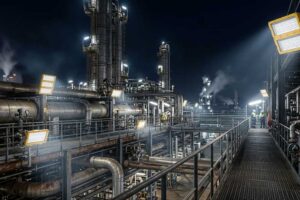
What is LED ATEX lighting? Learn how ATEX-certified LED lighting works in hazardous zones, why industries use it, and how to choose safe explosion-proof fixtures.
View details
Why does my LED flood light stay on all night? Discover real causes like sensor faults, wiring issues, or photocell problems, and how SEEKINGLED lighting solves them.
View details
LED High Bay Light Development History from 2011 to 2023. This article documents the real engineering evolution of SEEKINGLED LED high bay lights, covering thermal design, optics, drivers, and applications.
View details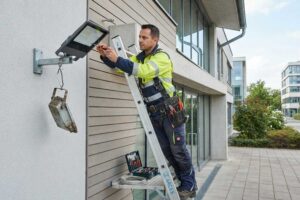
Learn how to replace floodlight safely with expert steps, tools, and LED upgrade tips. Discover professional floodlight replacement advice from SEEKINGLED.
View details