are flood lights incandescent? Some flood lights use incandescent lamps, but most modern commercial flood lights are LED. Incandescent flood lights create light by heating a filament, while LED flood lights use semiconductor technology, making the two very different in efficiency, heat, lifespan, and maintenance.
The word “flood light” describes the lighting distribution and application, not the light source itself. A flood light can use incandescent, halogen, metal halide, fluorescent, or LED technology.
That distinction is important when replacing an older fixture. A contractor may describe a fixture as a “flood light” without saying what technology is inside it. The housing shape alone does not tell you.
The U.S. Department of Energy states that incandescent lamps convert approximately 90% of the electricity they consume into heat, leaving only about 10% as light. DOE testing also found that general-purpose incandescent lamps have an average operating life of less than 2,000 hours, with standard lamps commonly around 1,000 hours.
Are Flood Lights Always Incandescent?
No. Flood lights are available with different light-source technologies.
Historically, incandescent and halogen lamps were common in outdoor flood-lighting applications. Today, LED flood lights dominate many commercial, industrial, architectural, and security-lighting applications because they can produce high light output with substantially lower electrical input.
Flood light technology
Light source
Heat output
Typical application
Incandescent
Heated tungsten filament
Very high
Older residential and specialty lighting
Halogen
Heated tungsten filament
High
Older flood and security fixtures
Metal halide
Electric arc
High
Older large-area lighting
Fluorescent
Gas discharge
Moderate
Some older commercial installations
LED
Semiconductor
Lower waste heat
Modern commercial and outdoor lighting
This is not just a technology preference. It affects the entire installation.
An incandescent lamp produces light because its filament becomes extremely hot. DOE laboratory information reports bulb-wall temperatures above 400°F (200°C) for a common incandescent A19 lamp during normal operation.
That heat becomes particularly relevant when a flood light is mounted close to combustible materials, enclosed fixtures, landscaping, or equipment that should not be exposed to unnecessary radiant heat.
What Makes an Incandescent Flood Light Different?
An incandescent flood light generally contains:
Tungsten filament
Glass lamp envelope
Reflector
Electrical contacts
Fixture housing
Lens or protective cover
The reflector directs the filament’s light into a wider beam.
There is no semiconductor LED module and no LED driver in the conventional sense. The electrical system is comparatively simple, which is one reason incandescent fixtures remained popular for so long.
But simplicity does not mean efficiency.
DOE’s lighting guidance notes that traditional incandescent technology wastes around 90% of its electrical energy as heat.
Why Are LED Flood Lights More Common Today?
The biggest difference appears when electricity consumption and operating hours are considered.
An incandescent lamp produces relatively little visible light for the electricity it consumes. DOE’s historical comparison identifies incandescent efficiency at roughly 10% light and 90% heat, while modern LED technology can deliver substantially more light from the same electrical input.
DOE’s exterior-lighting purchasing guidance now lists a minimum 118 lm/W luminaire efficacy requirement for floodlight luminaires in covered federal procurement applications. This is a luminaire-level requirement, not a claim that every LED flood light produces 118 lm/W.
That difference becomes significant when flood lights operate for many hours.
Consider a simple example:
Older incandescent flood light: 300W
Operating time: 10 hours/night
Daily electricity consumption: 3 kWh
Annual operation at 365 days: 1,095 kWh
The exact operating cost depends on the local electricity rate, but the electrical demand is straightforward.
For a commercial site with multiple fixtures, the difference compounds quickly.
And there is another maintenance issue. DOE’s benchmark research reports that general-purpose incandescent lamps have an average life of less than 2,000 hours.
A flood light mounted six or eight meters above a warehouse door is not a convenient lamp to replace every time a filament fails.
Can Incandescent Flood Lights Still Be Used?
Yes. Incandescent flood lights have not disappeared completely.
There are still situations where an incandescent or halogen lamp may be encountered:
Existing legacy installations
Decorative applications
Specialty equipment
Older residential fixtures
Applications where a specific lamp characteristic is required
Replacement work on older systems
However, for new commercial exterior projects, LED is now the technology most commonly considered.
The U.S. Department of Energy’s current exterior-lighting guidance emphasizes luminaire efficacy and includes floodlights among the categories with minimum efficiency requirements for federal purchasing.
There is also a practical reason to avoid automatically copying the old fixture specification.
Suppose an old parking-lot flood light uses a 300W incandescent or halogen lamp. Replacing it with a “300W LED” would not necessarily be the correct approach. The better comparison is light output, beam distribution, mounting height, target illuminance, and actual electrical input.
Wattage alone can send the project in the wrong direction.
Incandescent vs LED Flood Lights
For a commercial buyer, the comparison should go beyond “old versus new.”
Factor
Incandescent flood light
LED flood light
Light generation
Heated filament
Semiconductor
Electrical efficiency
Low
High
Heat generation
Very high
Lower waste heat
Lamp life
Often relatively short
Generally much longer
Maintenance
Frequent lamp replacement
Lower maintenance
Instant operation
Yes
Yes
Directional optics
Reflector-based
Lens/optic-based
Dimming
Generally straightforward with compatible systems
Driver-dependent
Commercial outdoor use
Mostly legacy/specialty
Widely used
LED does not mean “no heat.” High-power LED flood lights still require careful thermal management. The difference is that the heat is managed through the LED package, circuit board, driver, and housing rather than a glowing filament radiating most of the input energy away.
This is one reason modern commercial flood lights often have substantial aluminum housings or heat-dissipation structures.
What Should You Check When Replacing an Incandescent Flood Light?
Do not select the replacement by wattage alone.
Check:
Required lumen output
Beam angle
Mounting height
Illuminated area
Input voltage
IP protection
IK protection where impact is possible
Color temperature
Color rendering
Dimming or control requirements
Mounting dimensions
Operating hours
For an industrial project, I would also inspect the existing fixture after dark before specifying its replacement. Look at where the light actually lands, not just where the old housing is mounted. The old fixture may have been poorly aimed for years.
That is where a straightforward LED replacement can become a genuine lighting redesign.
FAQ About Incandescent Flood Lights
Are flood lights incandescent?
Some older and specialty flood lights are incandescent, but many modern flood lights use LED technology. “Flood light” describes the beam and application, not the light source.
Are LED flood lights incandescent?
No. LED flood lights generate light using semiconductor devices rather than heating a tungsten filament.
Do incandescent flood lights use a lot of electricity?
Yes. DOE states that approximately 90% of the energy consumed by incandescent lamps is released as heat rather than visible light.
How long do incandescent flood light bulbs last?
General-purpose incandescent lamps have an average operating life of less than 2,000 hours according to DOE benchmark research, with standard lamps commonly around 1,000 hours.
Are LED flood lights better than incandescent flood lights?
The appropriate choice depends on the application, but LED flood lights generally offer higher efficiency and longer service life than conventional incandescent technology, making them widely suitable for modern commercial outdoor lighting.
Can I replace an incandescent flood light with an LED flood light?
Usually, but the replacement should be checked for voltage, socket or wiring arrangement, physical dimensions, beam angle, lumen output, environmental rating, and mounting requirements.
Why are old flood lights so hot?
Incandescent lamps produce light by heating a filament to a very high temperature. DOE reports that roughly 90% of incandescent electrical input becomes heat, which explains the high surface temperature around these lamps.
Final Answer
are flood lights incandescent? If the question is whether flood lights are incandescent, the answer is not necessarily. Incandescent is one older flood-light technology, while modern commercial flood lights are commonly LED. For new projects, comparing lumen output, efficacy, beam distribution, thermal management, environmental protection, and maintenance is more meaningful than simply matching the wattage of an old incandescent fixture.
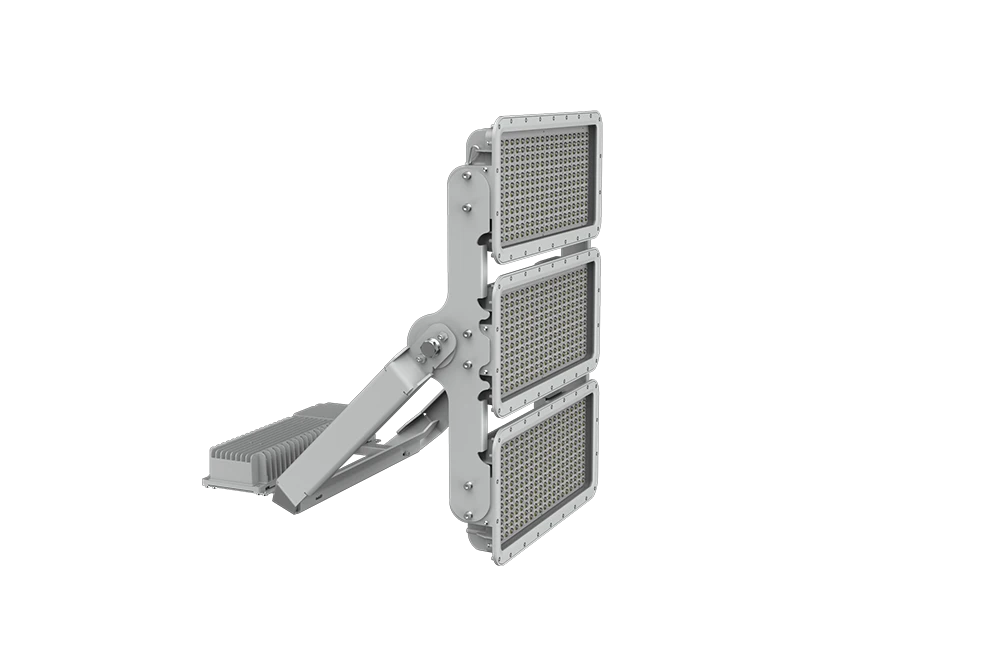
Sports Stadium LED Lighting by SEEKINGLED delivers high mast illumination, precise beam control, and EN 12193 compliant performance for professional venues.
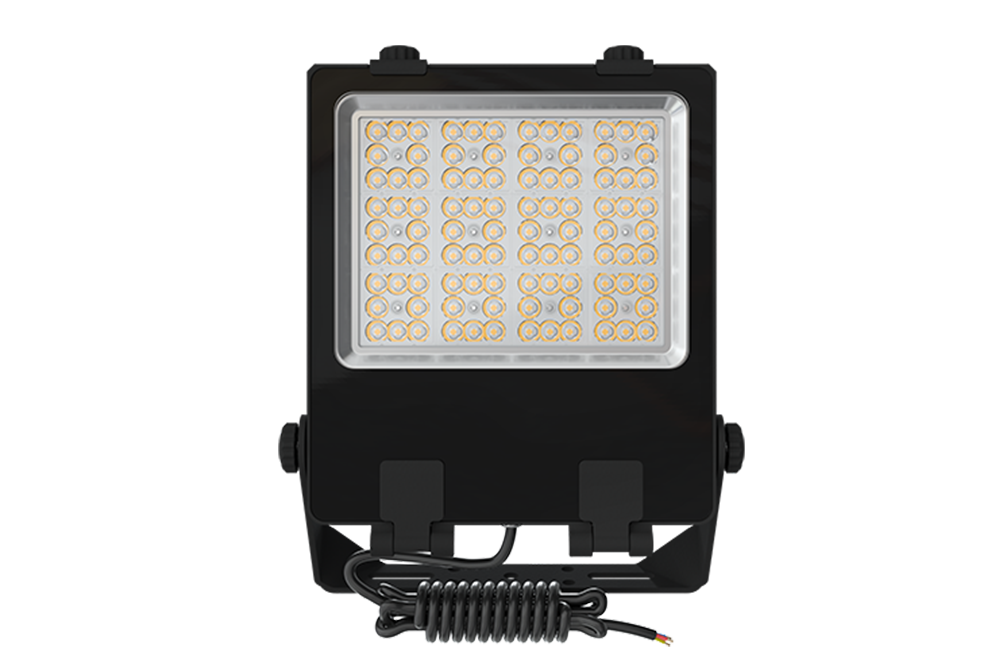
SEEKING FLX Series LED flood light outdoor for sports courts and open-area projects with 170lm/W efficiency, IP66 protection and multiple beam distributions. Designed for long-life commercial and public outdoor use.
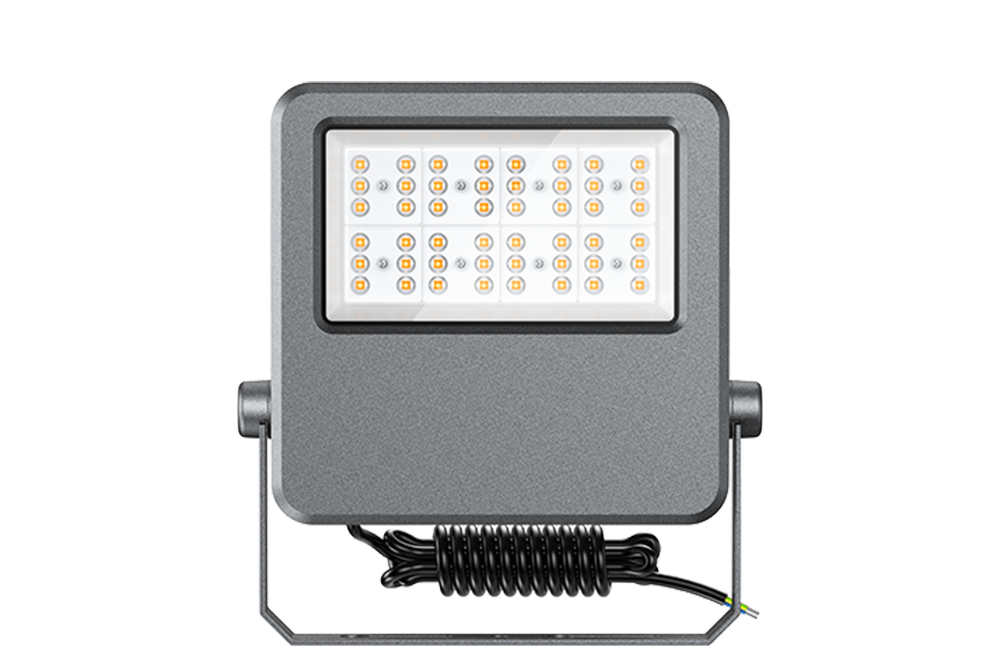
SEEKING FLE Series LED outdoor flood lights for sports grounds and open areas with multiple beam angles, IP66 protection and up to 170lm/W. Designed for long-life outdoor installations with professional driver options.
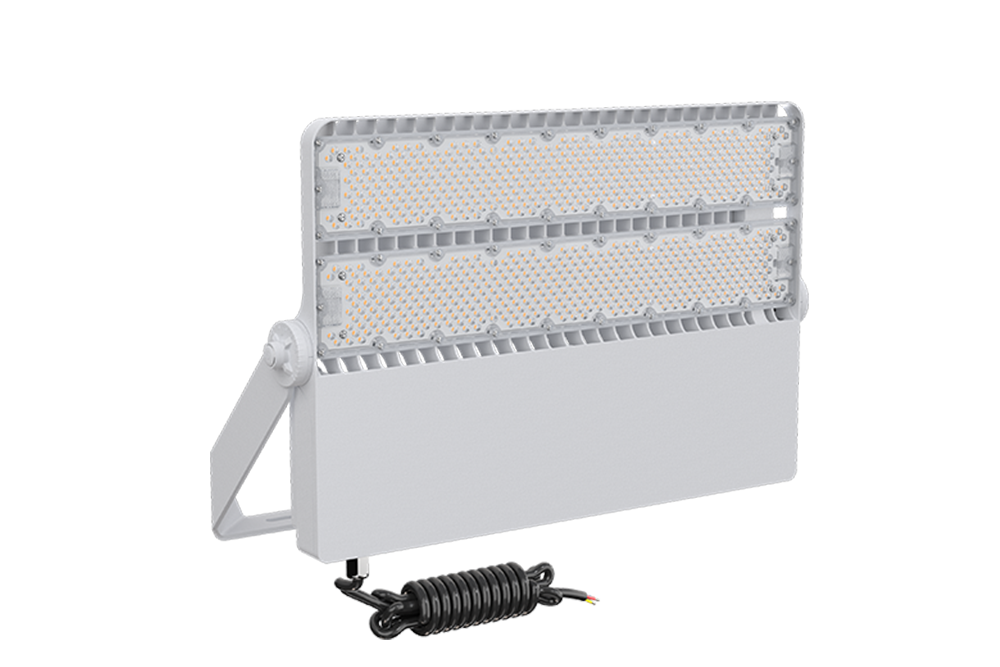
SEEKING FLD Series outdoor LED flood lights and high power led flood light deliver up to 960W with precision beam angles for sports fields, stadiums and large outdoor areas. IK08 & IP66 protection, 170lm/W efficiency and 100,000h lifetime.
hazardous area flood light guide for ATEX/IECEx zones. Learn real refinery use, safety limits, installation logic & field insights from SEEKINGLED engineers.
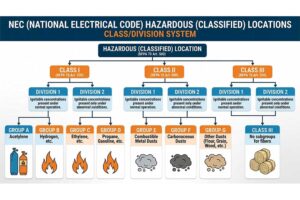
NEC Class/Division System explains US and Canada hazardous area classifications, including Class, Division, and Group. Learn safety rules for explosion-proof lighting.
What is explosion proof junction box? Learn how explosion-proof junction boxes prevent ignition risks in hazardous areas, where they are used, and how to choose the right model.
Automotive Showroom High Bay Lighting requires controlled brightness and visual comfort. This case records how SEEKINGLED applied XJ-HBS High Bays with PC reflectors in an Audi 4S store in Germany.
 Seeking LED