How to Select Explosion-Proof Lights for High and Low Temperature Environments
1.Key Temperature Parameters
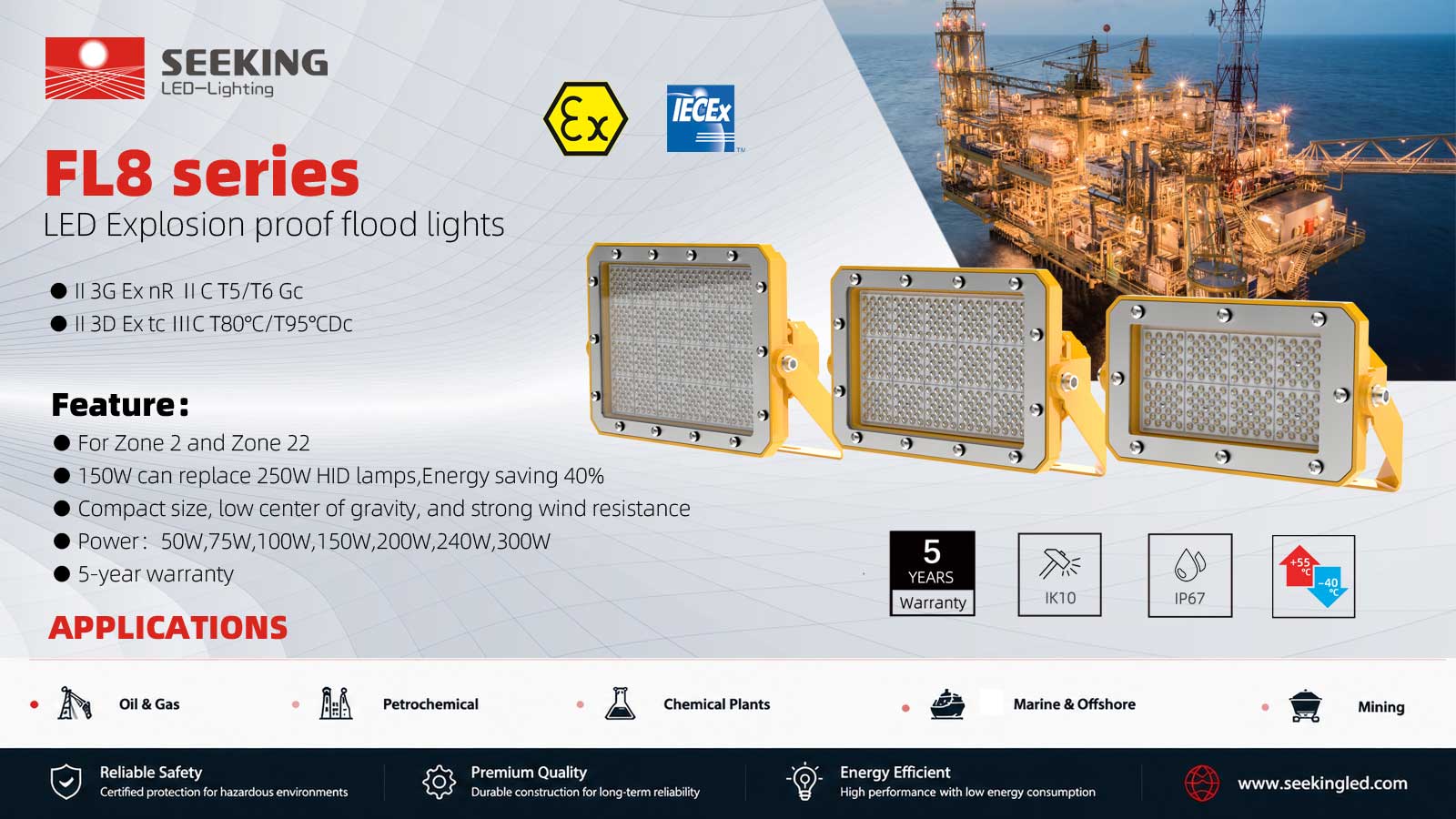
Common ambient ranges: -20°C to +40°C or -30°C to +55°C. High-end: -40°C to +55°C.
T-Class (max surface temperature):
T1 ≤450°C | T2 ≤300°C | T3 ≤200°C | T4 ≤135°C | T5 ≤100°C | T6 ≤85°C (strictest)
2.High-Temperature Challenges (>+40°C, especially >+55°C)
- A,Faster LED lumen depreciation and color shift
- B,Shorter driver life, power drop or shutdown
- C,Seal aging; aluminum expansion may affect flameproof joints
Countermeasures:
- A. Thermal-electric separation – separate light source and driver chambers with ventilation to avoid heat build-up.
- B. Reduce power – SEEKINGLED FL8 has DIP switches for 50%/75%/100% output. Most effective method.
- C. Use LiFePO4 batteries (better high-temp performance).
- D. Use silicone seals with good high/low-temp characteristics.
3.Low-Temperature Challenges (<-20°C, especially <-40°C)
- Difficult driver startup
- A,Brittle plastics/seals affecting protection
- B,Sharp drop in emergency battery capacity
- C,Condensation or icing risk
Countermeasures:
- A. Wide-temp drivers (start to -40°C)
- B. Add heating modules
- C. Use Ni-Cd batteries (better low-temp performance)
- D. Use silicone seals with good high/low-temp characteristics
4.Selection Tips
- A,Confirm max/min site temperatures and leave >10°C margin
- B,Check both T-Class and ambient temperature (Ta)
- C,Prefer wide-temp products (-40°C to +55°C or wider)
- D,Verify ranges in IECEx/ATEX reports
Summary
SEEKINGLED lights are tested and certified for -40°C to 55°C. 90% of models are T6 and can be selected with confidence.
 Seeking LED