What are the external materials of explosion-proof lights?
1.Main housing material:
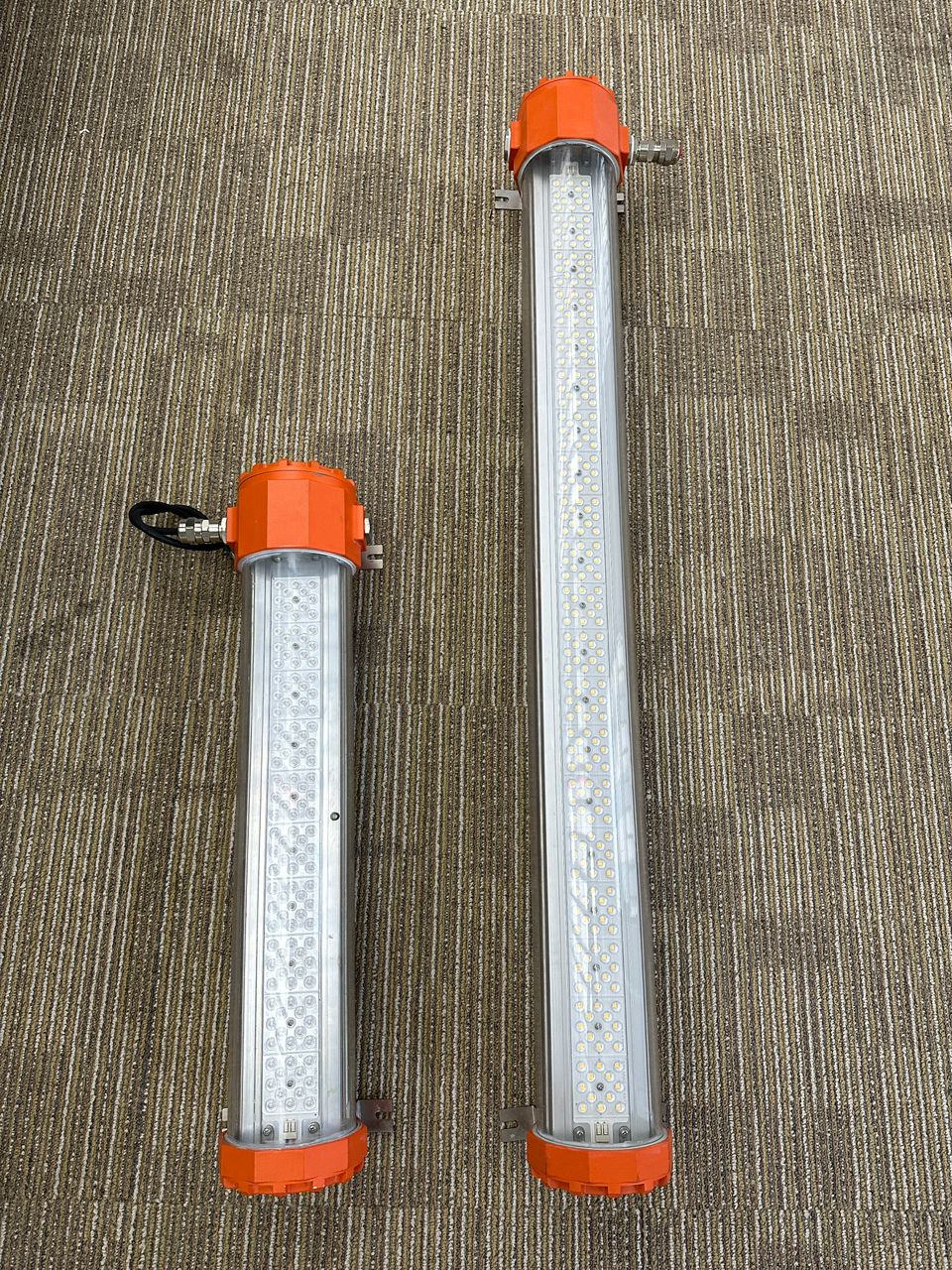
- A. For new LED light sources, the main housing is usually made of aluminum alloy. It serves both as a protective enclosure and as a heat sink.
- B. Stainless steel housing, commonly used for lights under 80W in corrosive environments where heat dissipation requirements are relatively low.
- C. GRP (Glass Reinforced Plastic, also known as fiberglass), generally applied in corrosive environments that require a high insulation level.
- D. Plastic, typically used for intrinsically safe (Ex ia/ib) or increased safety (Ex e) luminaires, usually with power below 40W.
2.Light-transmitting surface material:
- A. Glass: Most luminaires use tempered glass. It offers high light transmittance, is easy to source, has low cost, but is relatively heavy.
- B. PC (Polycarbonate): Strong impact resistance, allows irregular shapes, higher cost, and lightweight.
3.Mounting bracket:
- A. Usually made of 304 stainless steel, with good corrosion resistance, suitable for general corrosive environments such as oil & gas and chemical industries.
- B. 316L stainless steel, with excellent corrosion resistance, commonly used in marine environments.
4.Screws:
- A. Usually made of 304 stainless steel, with good corrosion resistance, suitable for general corrosive environments such as oil & gas and chemical industries.
- B. 316L stainless steel, with excellent corrosion resistance, commonly used in marine environments.Author: daweiboss / SEEKINGLED
 Seeking LED