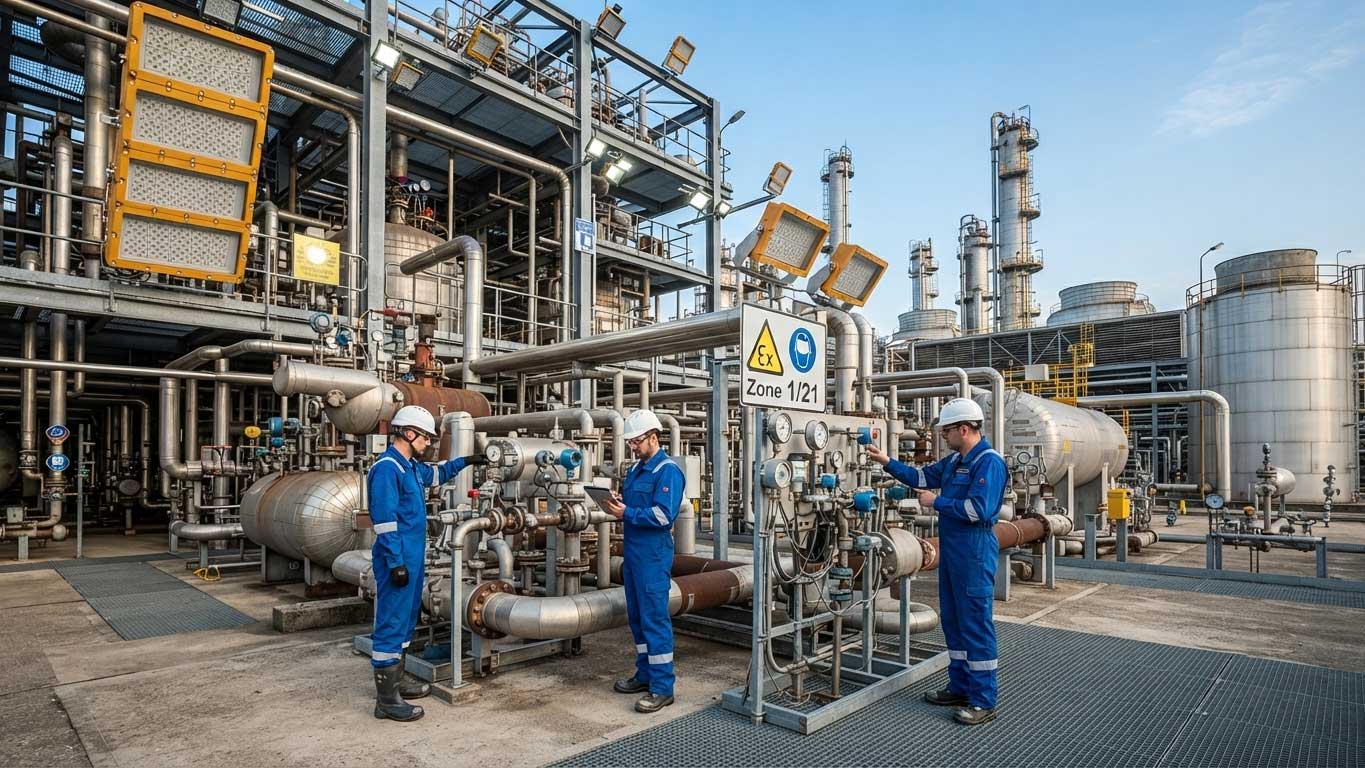
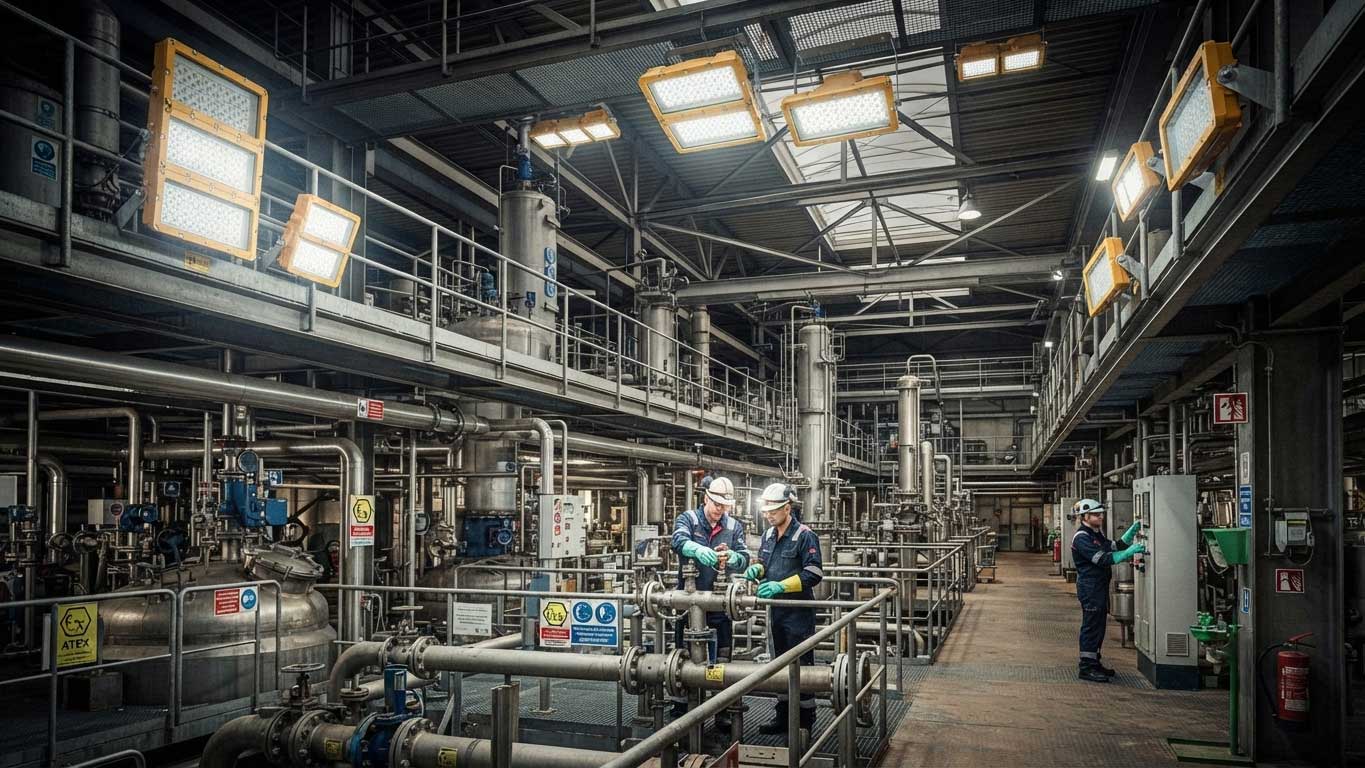
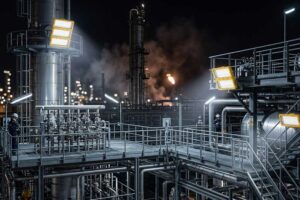
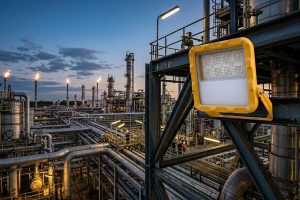
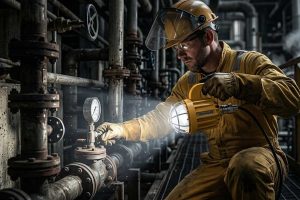
what is an atex area? An ATEX area is a workplace where explosive atmospheres containing gases, vapors, mists, or combustible dust may occur, requiring specially certified equipment to reduce ignition risks. These areas are classified into different zones according to the frequency and duration of explosive atmosphere presence.
In industrial projects, I have seen many customers initially focus only on equipment power ratings and installation costs. During hazardous lighting consultations, the first question we ask is not “how many watts are needed?” but “where will this equipment operate?” A correct ATEX area assessment determines whether a standard industrial product is acceptable or whether explosion-protected equipment is mandatory.
For manufacturers supplying hazardous location lighting solutions, understanding ATEX zones is not simply a certification exercise. It directly affects product selection, installation safety, maintenance procedures, and long-term operating reliability.
What Does an ATEX Area Mean in Industrial Applications?
An ATEX area refers to a location regulated under the European ATEX framework, where an explosive atmosphere can potentially exist during normal operation or abnormal conditions.
The term ATEX comes from the French phrase “ATmosphères EXplosibles” and relates mainly to two European Union directives:
Directive 2014/34/EU – Equipment and protective systems intended for use in potentially explosive atmospheres.
Directive 1999/92/EC – Minimum requirements for improving the safety and health protection of workers potentially at risk from explosive atmospheres.
According to the European Commission, employers must assess explosion risks and classify workplaces where explosive atmospheres may occur.
In real applications, ATEX areas are commonly found in:
Industry
Typical ATEX Area Examples
Oil & Gas
Refineries, offshore platforms, fuel storage
Chemical Processing
Solvent rooms, mixing areas, reactors
Pharmaceutical
Powder handling and production zones
Food Manufacturing
Flour mills, sugar processing facilities
Mining
Underground areas with combustible gases
How Are ATEX Hazardous Areas Classified?
The classification of an ATEX area depends on the type of explosive material and how often an explosive atmosphere may occur.
Gas and vapor environments use Zone 0, Zone 1, and Zone 2 classifications, while combustible dust environments use Zone 20, Zone 21, and Zone 22.
ATEX Gas Zones
Zone
Definition
Typical Location
Zone 0
Explosive atmosphere exists continuously or for long periods
Inside fuel tanks or process vessels
Zone 1
Explosive atmosphere likely during normal operation
Pump areas, filling stations
Zone 2
Explosive atmosphere unlikely, but possible temporarily
Around pipelines or storage equipment
ATEX Dust Zones
Zone
Definition
Typical Location
Zone 20
Combustible dust cloud exists continuously or frequently
Inside dust collectors
Zone 21
Dust atmosphere likely during normal operation
Powder processing areas
Zone 22
Dust atmosphere occurs occasionally
Storage areas
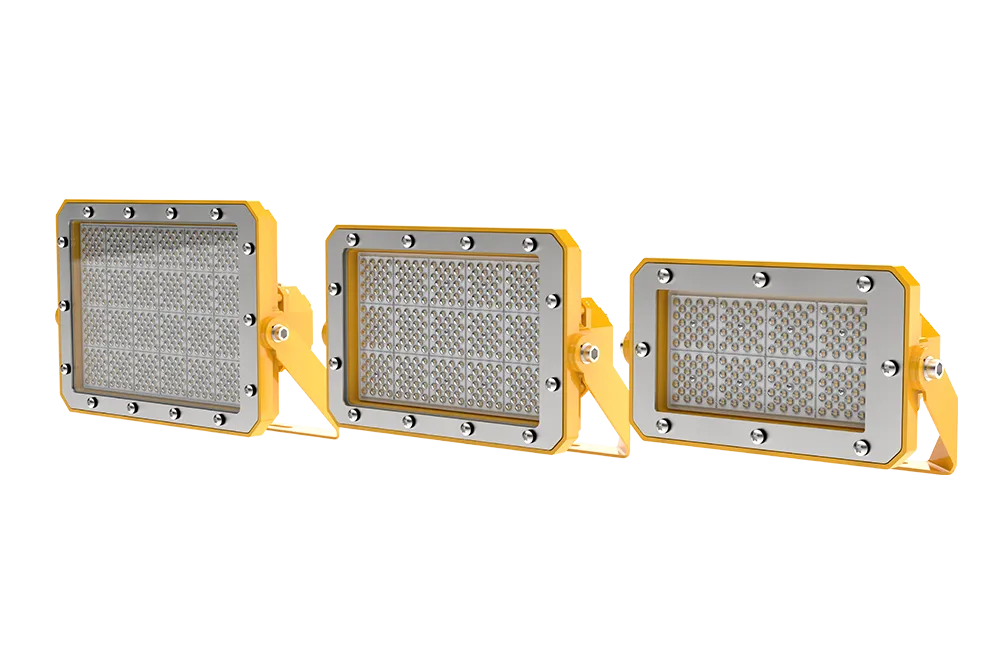
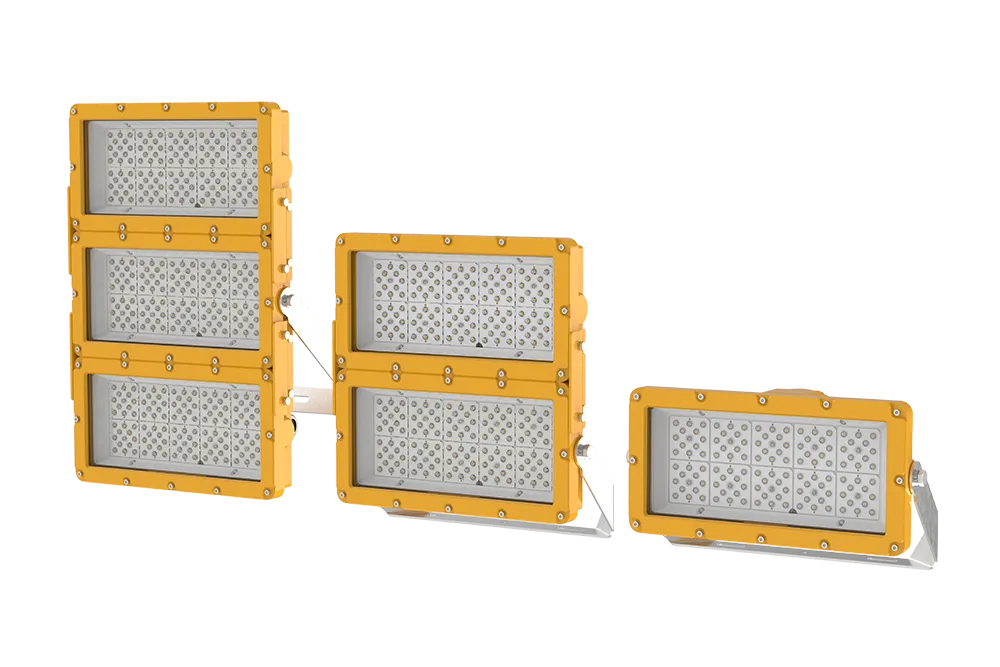
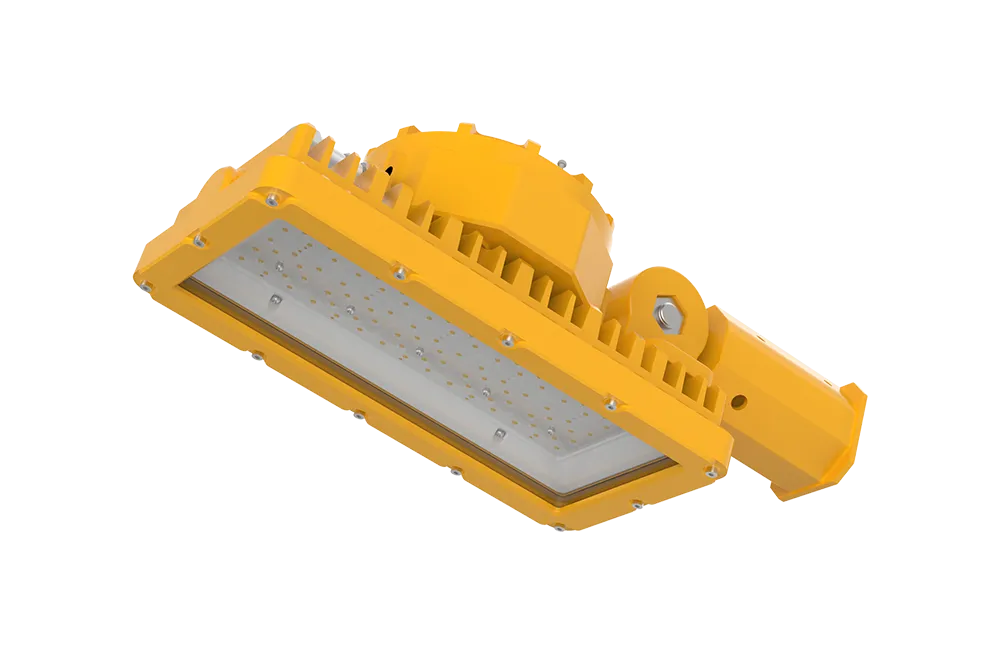
This classification determines what type of explosion-proof Lighting equipment can be installed. For example, an LED light suitable for Zone 2 cannot automatically be installed in Zone 1 because the protection requirements are different.
Why ATEX Area Classification Matters for Industrial Lighting
Lighting is often underestimated in hazardous environments. A conventional LED fixture may operate safely in ordinary industrial buildings, but inside an ATEX area, even a small electrical fault, excessive surface temperature, or damaged component could become an ignition source.
At SEEKINGLED, we have worked with industrial lighting requirements where customers needed solutions for refineries, chemical plants, and manufacturing facilities. One recurring issue we found was that some projects selected lighting based only on lumen output while ignoring temperature class and protection level.
For hazardous locations, engineers normally evaluate:
Explosion protection method
Gas or dust classification
Equipment protection level (EPL)
Temperature class
IP protection rating
Ambient operating temperature
For example:
Requirement
Why It Matters
Ex certification
Prevents ignition from internal faults
Temperature class
Limits external surface temperature
IP66/IP67 rating
Protects against dust and water ingress
Corrosion resistance
Extends service life in chemical environments
How ATEX Areas Affect Equipment Selection and Installation
Choosing equipment for an ATEX area requires more than checking whether a product has an explosion-proof label. The certification must match the actual hazardous zone, gas or dust type, and operating conditions.
During industrial lighting projects, I have noticed that many installation problems happen before the product reaches the site. The issue is usually not the LED technology itself, but a mismatch between the hazardous area classification and the selected protection level.
For example, a Zone 1 chemical processing area may require equipment with a higher protection level than a Zone 2 storage area. Installing unsuitable equipment can create compliance problems during inspections and increase replacement costs later.
Important factors engineers review include:
Selection Factor
Practical Consideration
Zone classification
Determines required explosion protection level
Gas group
Defines resistance against specific explosive gases
Dust group
Determines suitability for combustible particles
Temperature class
Controls maximum equipment surface temperature
Ambient temperature
Ensures stable operation in extreme environments
Certification standard
Confirms compliance with regulatory requirements
For hazardous area LED lighting, certification markings such as Ex d, Ex e, or Ex nR indicate different protection concepts. The correct choice depends on the installation environment.
ATEX Area Standards and Global Hazardous Location Requirements
Although ATEX is widely used in Europe, many international projects combine ATEX requirements with other hazardous location standards.
The International Electrotechnical Commission manages the IECEx system, which provides a globally recognized certification framework for explosive atmosphere equipment.
The main difference is that ATEX is a European legal framework, while IECEx is an international certification system. Many manufacturers develop products with both certifications to support customers working across multiple regions.
A typical hazardous lighting project may involve:
ATEX certification for European markets
IECEx certification for international oil and gas projects
NEC Class I Division 1 or Division 2 requirements for North America
Understanding these differences helps avoid selecting products that meet the wrong regulatory requirement.
Real Experience: Why Correct ATEX Area Identification Comes First
In hazardous lighting applications, the installation environment always tells the story.
During discussions with industrial customers, I have seen warehouses that looked like ordinary buildings but contained solvent storage areas classified as hazardous zones. From the outside, there was no obvious difference. However, the vapors created a completely different safety requirement.
This is why professional evaluation normally starts with:
Reviewing process materials
Checking explosive atmosphere probability
Confirming zone classification
Selecting certified equipment
Verifying installation methods
The lighting fixture is only one part of the safety system. The complete installation must work together.
According to the European Agency for Safety and Health at Work (EU-OSHA), workplace risk assessment is a fundamental requirement for identifying and controlling occupational hazards.
An ATEX area is a workplace where explosive atmospheres may occur due to gases, vapors, mists, or combustible dust. These locations require specially designed equipment to reduce ignition risks.
What industries use ATEX areas?
ATEX areas are common in oil and gas, chemical manufacturing, pharmaceutical production, mining, food processing, and other industries handling flammable substances.
What are the main ATEX zone classifications?
Gas environments are divided into Zone 0, Zone 1, and Zone 2. Dust environments use Zone 20, Zone 21, and Zone 22 classifications based on how frequently explosive dust atmospheres occur.
Can normal LED lights be installed in an ATEX area?
No. Standard LED lights may create ignition risks because they are not designed with explosion protection, temperature control, or certified enclosure requirements.
What certification should ATEX lighting have?
The required certification depends on the hazardous zone, gas or dust classification, temperature requirements, and local regulations. Common markings include ATEX and IECEx approvals.
Are ATEX and IECEx the same?
No. ATEX is a European Union regulatory framework, while IECEx is an international certification system. Both address equipment used in explosive atmospheres but follow different approval processes.
Conclusion: Understanding What Is an ATEX Area
Understanding what is an ATEX area is the first step toward selecting safe and reliable equipment for explosive environments. These areas are not defined by appearance but by the possibility of explosive gases, vapors, or dust being present.
From years working with industrial LED lighting solutions, the most important lesson is simple: safety begins before the product selection stage. Correct zone classification, suitable certification, and proper installation are what make hazardous area lighting systems reliable over many years.
For companies operating refineries, chemical plants, manufacturing facilities, or other industrial environments, choosing certified solutions from experienced suppliers such as SEEKINGLED helps ensure lighting performance while supporting hazardous location safety requirements.
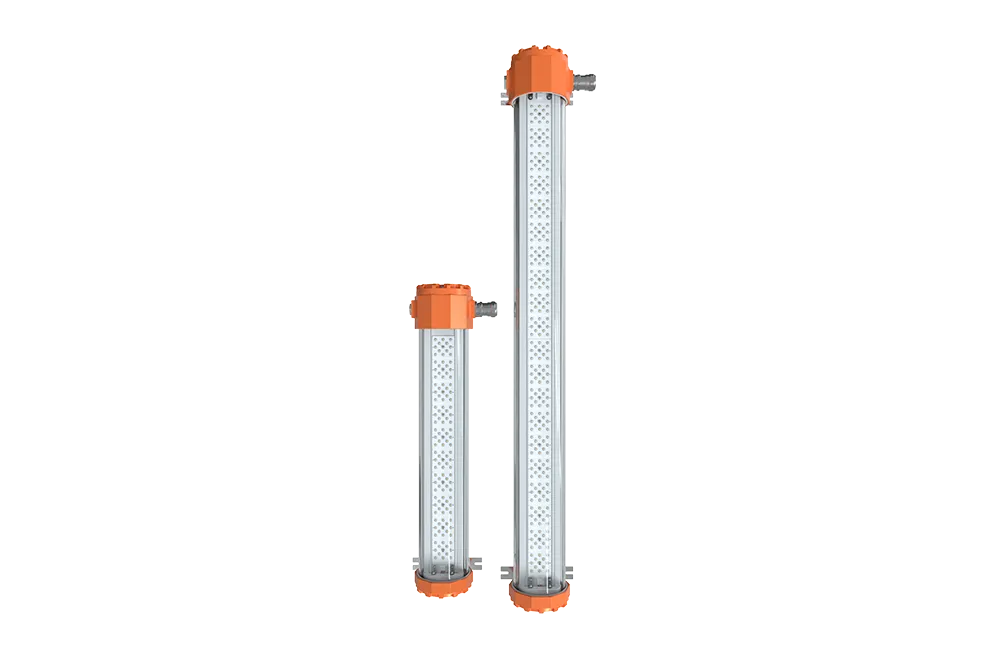
SEEKINGLED LED Linear Explosion Proof Light and Explosion Proof lighting is ATEX and IECEx certified for Zone 1, Zone 2, Zone 21 and Zone 22 hazardous locations, built for long-term industrial use.
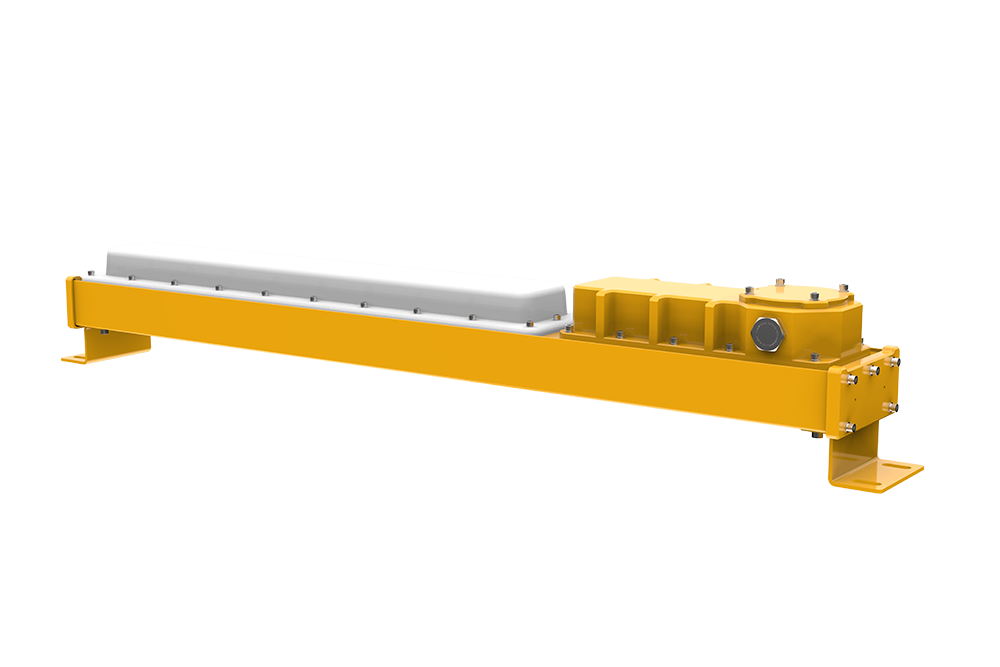
LED Linear Explosion Proof Lights and EX Proof lights for Zone 1, Zone 2, Zone 21 and Zone 22 hazardous areas. ATEX & IECEx certified explosion proof LED linear lighting with emergency function, adjustable power and IP67 protection by SEEKINGLED.
SEEKINGLED LED Explosion Proof Flood Lights are ATEX certified for Zone 2 and Zone 22 hazardous areas, offering high efficiency, adjustable power and integrated junction box.
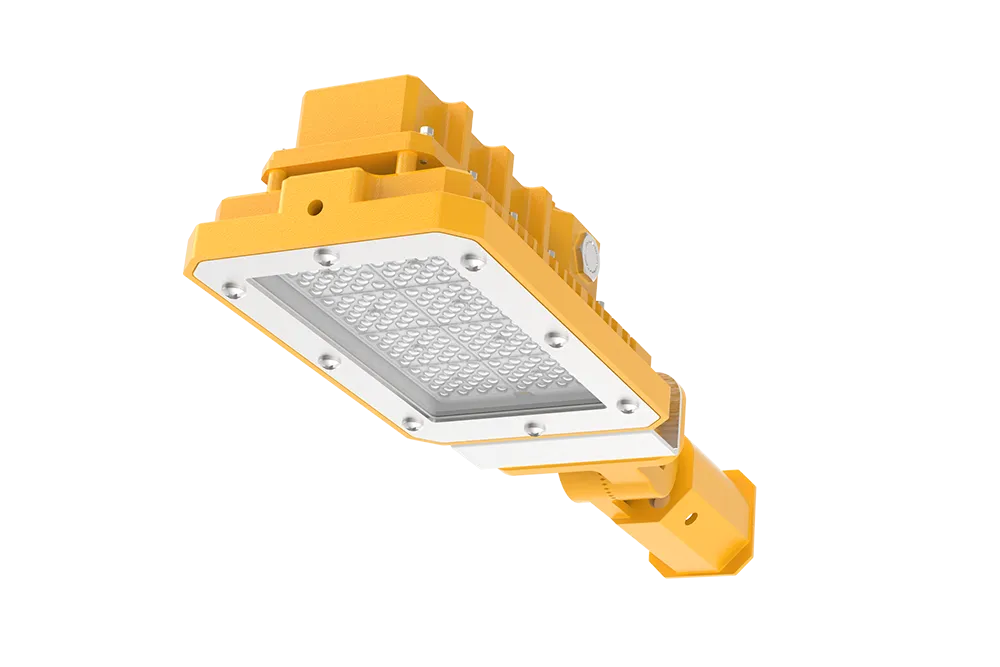
SEEKINGLED LED Explosion Proof Flood Lights are flameproof ATEX and IECEx certified for Zone 1 and Zone 2 hazardous areas, offering high power, adjustable output and long service life.
SEEKINGLED LED Gas Station Canopy Lights are ATEX certified for Zone 2 and Zone 22 hazardous areas, featuring adjustable power and built-in explosion-proof junction box.
ATEX: Ex II 2G Ex db IIB T6/T5 GbEx II 2D Ex tb IIIC T80°C/ T95°C Db IECEx Ex db IIB T6 Gb;Ex tb IIIC T80°C Db Feature: ● For Zone 1,2 and Zone 21,22● Flameproof type, the strongest● 100W can replace 250W HID,energy saving● Power:60W,80W,100W Application: Oil and gas, marine, Chemical, pharmaceutical, semiconductor,mining,military industr…
ATEX: II 3G Ex nR ⅡC T5/T6 GcII 3D Ex tc ⅢC T80℃/T95℃Dc ATEX Certificate NO: TÜV CY 26 ATEX 0207611 X Feature: ● For Zone 2 and Zone 22● 150W can replace 250W HID lamps,Energy saving● Power:50W,75W,100W,150W,200W Application: Oil and gas, marine, Chemical, pharmaceutical, semiconductor,mining,military industry, paint booth,power plant ETC…
LED explosion proof high bay lights are designed for Zone 1, Zone 2, Zone 21 and Zone 22 hazardous areas. This page introduces the HB21 Series from SEEKING, including certifications, power options and real application considerations.
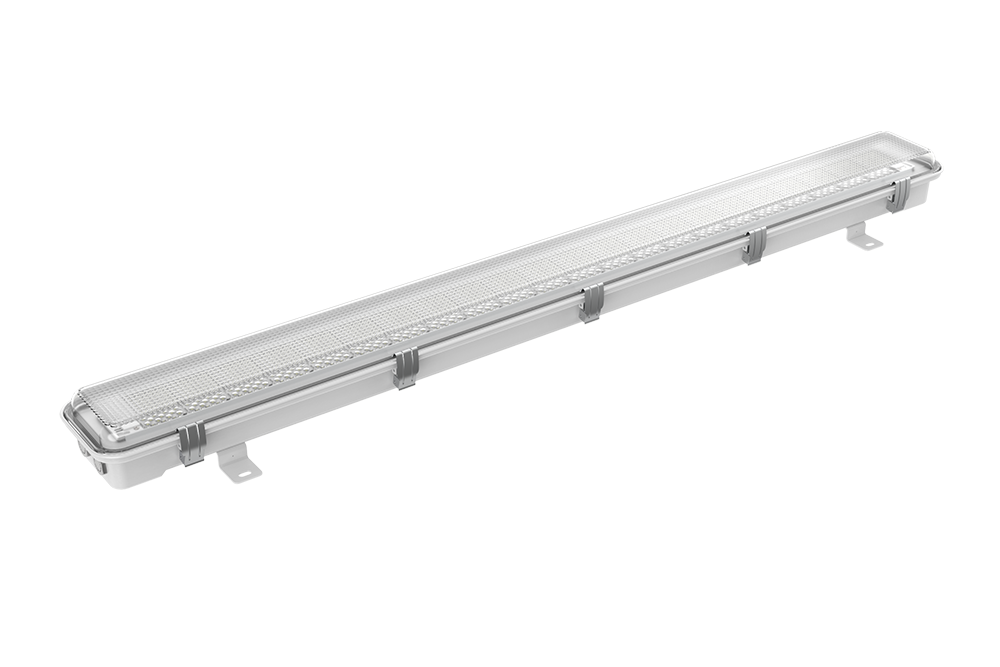
LED Linear Explosion Proof Lights from SEEKINGLED. LU Series Flame Proof lights ATEX-certified explosion proof LED linear lighting for Zone 2 gas and Zone 22 dust areas, IP69K, IK10, long lifetime and flexible power options.
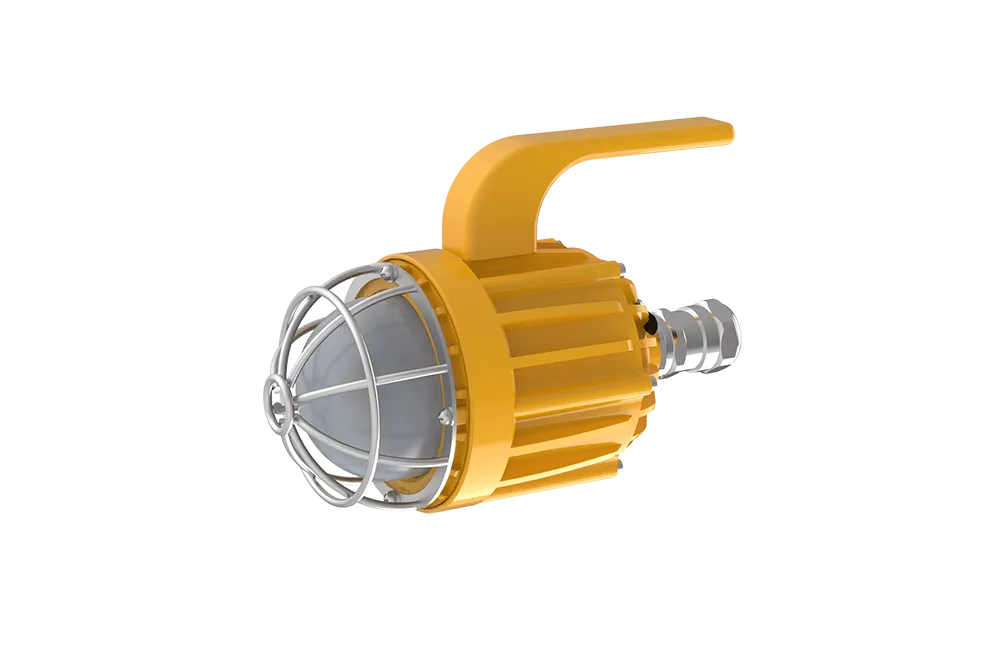
Certified explosion proof work lights for Zone 1 & 21 hazardous areas. Portable, ATEX & IECEx approved, built for oil, gas and chemical plants by SEEKINGLED.
ATEX: II 3G Ex nR ⅡC T6 GcII 3D Ex tc ⅢC T80℃ Dc ATEX Certificate NO: TÜV CY 26 ATEX 0207611 X Feature: ● For Zone 2 and Zone 22● Accepts battery-powered supply● indestructible● Power:AC input:50W,75W,100WDC input:15W,25W,35W Application: Oil and gas, marine, Chemical, pharmaceutical, semiconductor,mining,military industry, paint booth,po…
ATEX: Ex II 2G Ex db IIB T6 GbEx II 2D Ex tb IIIC T80°C Db IECEx Ex db IIB T6 Gb;Ex tb IIIC T80°C Db Feature: ● For Zone 1,2 and Zone 21,22● Flameproof type, the strongest Application: Oil and gas, marine, Chemical, pharmaceutical, semiconductor,mining,military industry, paint booth,power plant ETC hazardous area. Technical Specifications:…
ATEX: Ex II 2G Ex db IIB T6 GbEx II 2D Ex tb IIIC T80°C Db IECEx Ex db IIB T6 Gb;Ex tb IIIC T80°C Db Feature: ● For Zone 1,2 and Zone 21,22● Flameproof type, the strongest Application: Oil and gas, marine, Chemical, pharmaceutical, semiconductor,mining,military industry, paint booth,power plant ETC hazardous area. Technical Specifications:…
ATEX: Ex II 2G Ex d e IIB T6 Gb ATEX: Ex d e IIB T6 Gb; Feature: ● For Zone 1,2● 9W can replace 18W fluorescent lamps,50% Energy saving Application: Oil and gas, marine, Chemical, pharmaceutical, semiconductor,mining,military industry, paint booth,power plant ETC hazardous area. Technical Specifications: Standards:60079-0, 60079-1, 60079…
100 watt LED flood light delivers high brightness with low energy cost. Discover real-world performance, installation tips, and expert insights for outdoor lighting with SEEKINGLED.
How long do ATEX LED flood lights last? Discover real industrial lifespan data, maintenance factors, and why hazardous-area LED fixtures often exceed 50,000 hours.
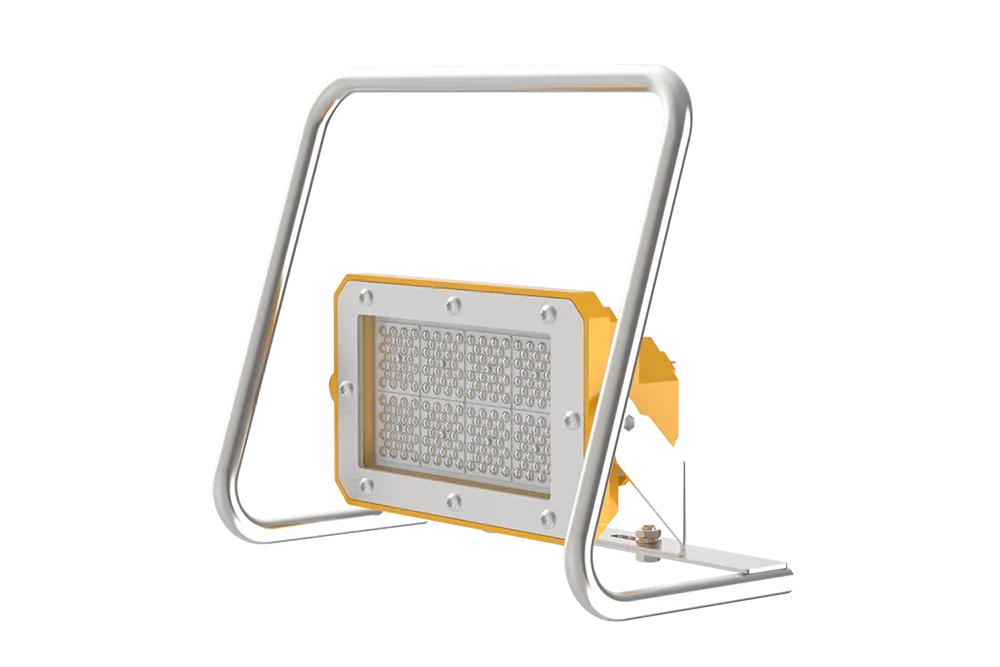
Explosion proof LED work lights provide safe, portable illumination in hazardous areas. Discover certified solutions, real use cases, and selection tips.
 Seeking LED