 Seeking LED
What Is LED Flood Light?
190What is LED flood light explained from real installation experience. Outdoor uses, common mistakes, and how SEEKINGLED designs them.
View detailsSearch the whole station
Fog lights are generally neither conventional flood lights nor narrow spotlights. Their beam is designed to spread light broadly across the road close to the vehicle, with a controlled low vertical distribution that helps reduce glare and improve visibility in fog, rain, or snow.
The simplest answer to are fog lights flood or spot is that automotive fog lights are closer to a wide, low beam than a traditional spotlight.
A spotlight concentrates light into a relatively narrow area. A flood light spreads illumination across a much wider field. A front fog lamp is designed around a different requirement: illuminate the road surface and roadside area relatively close to the vehicle while keeping the beam controlled vertically.
That distinction is not just terminology.
UNECE Regulation No. 19 specifically governs front fog lamps, while Regulation No. 48 includes installation and aiming requirements. For F3 front fog lamps, the permitted vertical inclination is defined according to mounting height; for lamps mounted at or below 0.8 m, for example, the specified limits are between -1.0% and -2.5%. For lamps above 0.8 m, the limits become -1.5% to -3.0%.
In other words, the beam is deliberately kept low.
A narrow spot beam is useful when the objective is long-distance illumination. That is not the primary job of a fog lamp.
Fog, snow, and heavy rain can scatter light back toward the driver. A high, concentrated beam can make the illuminated moisture more distracting. A properly designed fog-light beam instead puts useful illumination lower on the road.
This is why simply installing a very bright narrow-beam auxiliary lamp does not automatically produce a better fog-light system.
The U.S. Bureau of Automotive Repair also distinguishes the functions in its lamp-adjustment guidance: SAE J581 covers auxiliary driving lamps, while SAE J583 covers front fog lamps.
A conventional front fog lamp generally uses a wide horizontal distribution with a controlled vertical cutoff.
Think of the beam as a broad sheet of light rather than a cone aimed far into the distance.
| Light Type | Typical Beam Character | Main Purpose |
|---|---|---|
| Fog light | Wide and low | Near-road visibility in poor weather |
| Spot light | Narrow and concentrated | Long-distance illumination |
| Flood light | Broad distribution | Wide-area illumination |
| Driving light | More concentrated | Forward-distance visibility |
| Work light | Broad or adjustable | Area illumination |
The exact optical pattern varies by vehicle, lamp category, lens, reflector, and regulation. It is therefore better to specify the required photometric pattern than to describe every fog lamp simply as “flood.”
When inspecting an automotive auxiliary lamp, the horizontal spread is easy to notice. The light reaches across a relatively broad section of pavement instead of producing a small bright point far ahead.
The vertical distribution is more critical than many buyers realize.
A beam that is too high can create glare without adding useful road illumination. UNECE requirements explicitly address the vertical inclination and cut-off of front fog lamps, which shows how closely beam direction is tied to the function of the lamp.
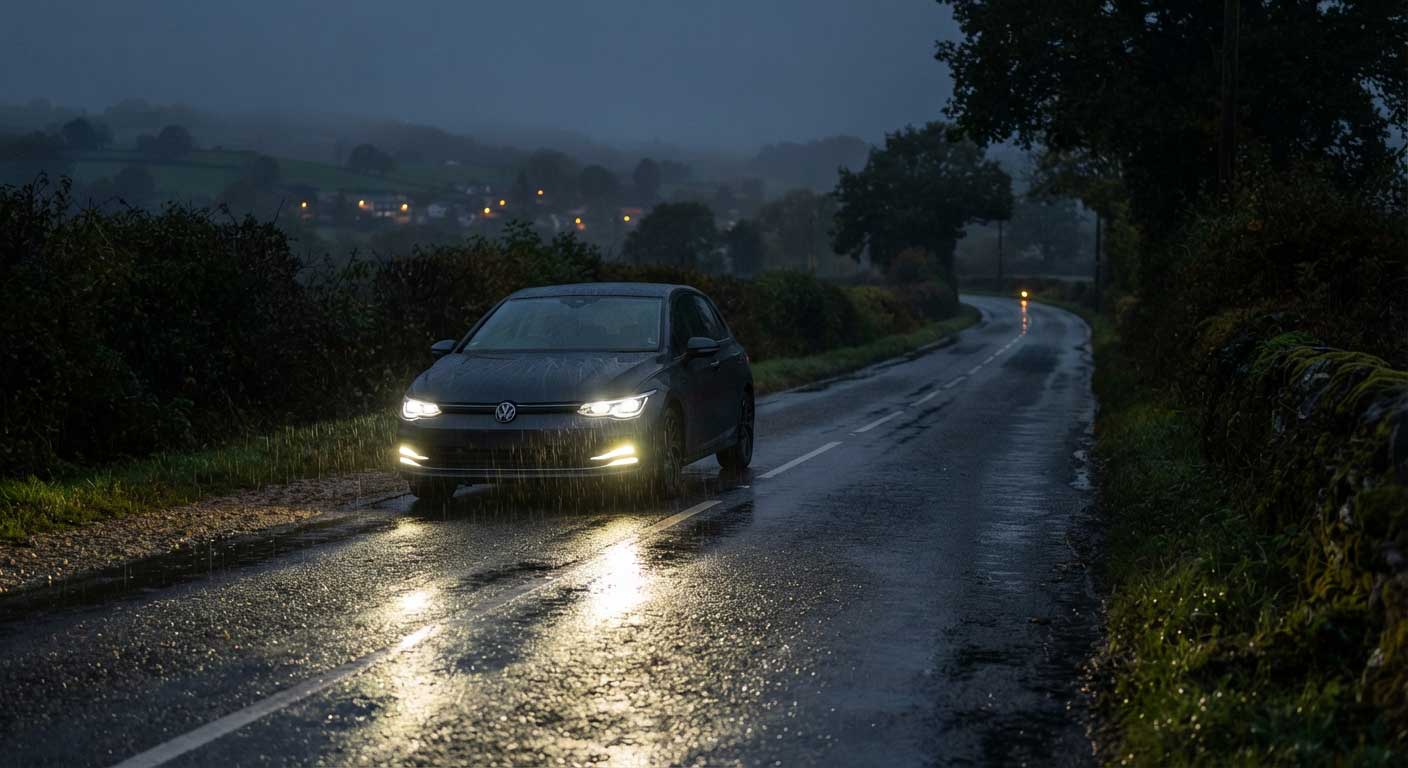
The useful area for a fog lamp is usually much closer to the vehicle than the maximum range of a high-beam or driving lamp.
On a winding road, a broad beam can help reveal the road edge, lane boundary, curve, or nearby obstacle without requiring the driver to rely entirely on the central forward beam.
This becomes particularly noticeable on wet pavement.
A narrow bright spot may look impressive in a demonstration photograph, but a driver does not evaluate lighting from a showroom wall. They evaluate what appears across the actual road surface while moving.
That is an important engineering difference.
There is some overlap in everyday terminology. Both can be described as “wide,” but their design objectives are different.
A LED Flood Lights used for industrial lighting may distribute light across a large area in front of a warehouse. A fog lamp must also satisfy vehicle-specific photometric and installation requirements.
For automotive applications, beam classification should therefore be based on the applicable regulation or performance standard rather than simply choosing between “flood” and “spot.”
A controlled cutoff is an important part of many regulated front fog-light designs.
UNECE material on vehicle lighting emphasizes that the required light distribution must not be disturbed or partly obscured during approval testing. The regulation also specifies aiming requirements for front fog lamps.
This is one reason optical design matters as much as LED power.
Two lamps can use LEDs with similar electrical power but produce very different results on the road. Reflector geometry, lens design, mounting height, aiming angle, and beam distribution determine where that light actually goes.
For manufacturers and lighting engineers, lumens alone are not enough.
For an automotive fog-light project, check:
The SAE/NHTSA material is particularly useful here because it distinguishes front fog lamps from auxiliary driving lamps rather than treating all forward auxiliary lighting as one category.
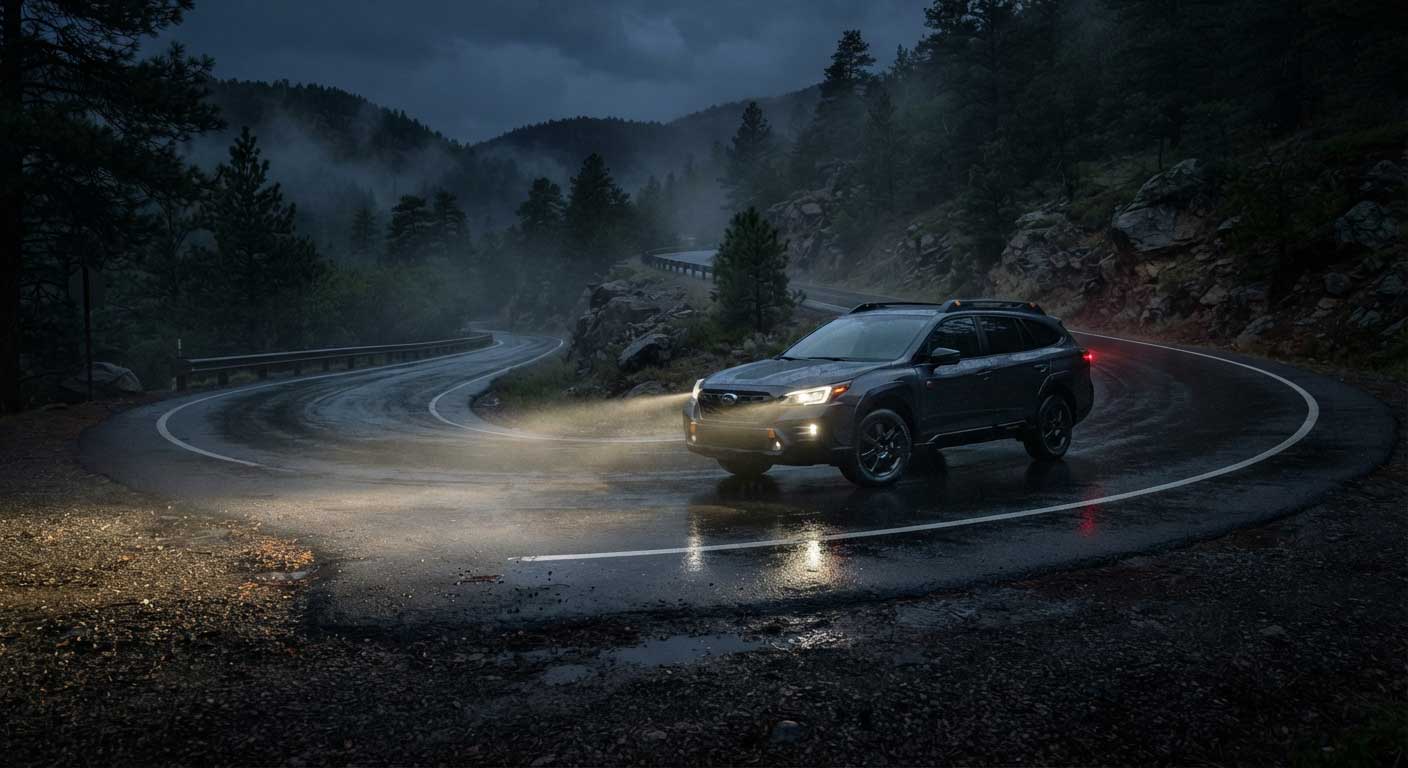
Fog lights are generally closer to a wide, low beam than a narrow spotlight. Their optical design prioritizes near-road illumination and controlled vertical distribution.
They can provide a wider near-field distribution than some main headlamp functions, but the exact pattern depends on the vehicle and lamp design.
Yes. Front fog lamps are designed and regulated with controlled vertical aiming. UNECE Regulation No. 48 specifies downward inclination requirements for front fog lamps.
No. Driving lamps are intended for forward-distance illumination, while front fog lamps have a different optical function and are governed by different requirements. SAE J581 addresses auxiliary driving lamps, while SAE J583 covers front fog lamps.
They are not primarily designed as long-distance spotlights. Their useful illumination is concentrated closer to the vehicle, particularly across the road surface and edges.
A generic flood light should not automatically be treated as an automotive fog lamp. Automotive fog lamps require an appropriate beam pattern, mounting arrangement, aiming, and applicable regulatory compliance.
LED technology can provide different efficiency, packaging, thermal, and optical-design possibilities, but the quality of a fog-light system depends on the complete optical and regulatory design rather than the light source alone.
Are fog lights flood or spot? They are generally neither. A properly designed fog light produces a broad, low, controlled beam intended to illuminate the near road surface while limiting upward light. That is fundamentally different from the narrow long-distance pattern of a spotlight. For professional automotive lighting development, beam distribution and regulatory compliance matter more than simply calling a lamp “flood” or “spot.”
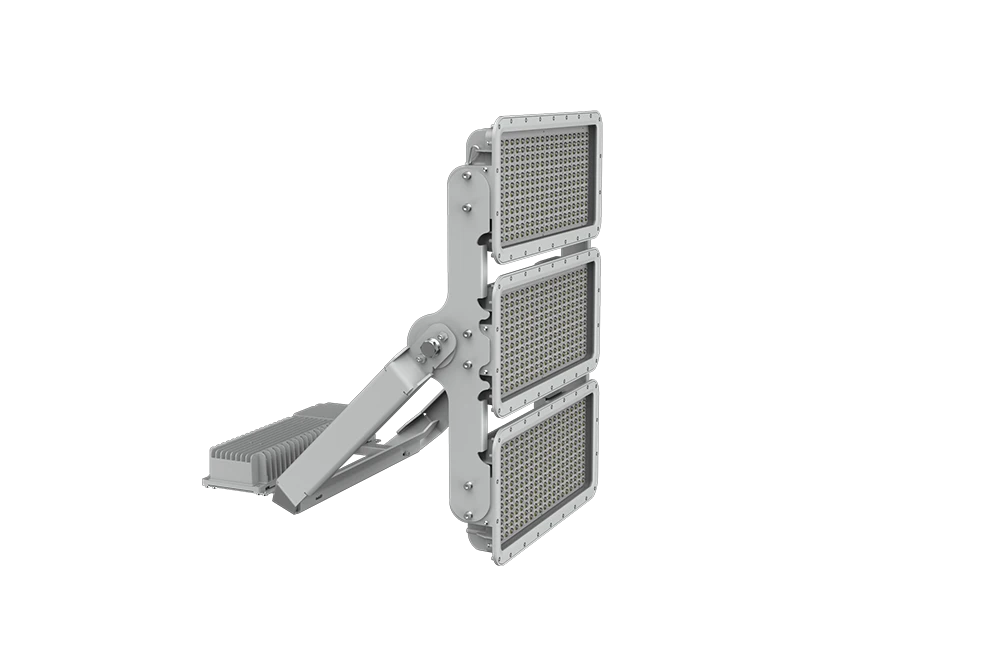
Sports Stadium LED Lighting by SEEKINGLED delivers high mast illumination, precise beam control, and EN 12193 compliant performance for professional venues.
View details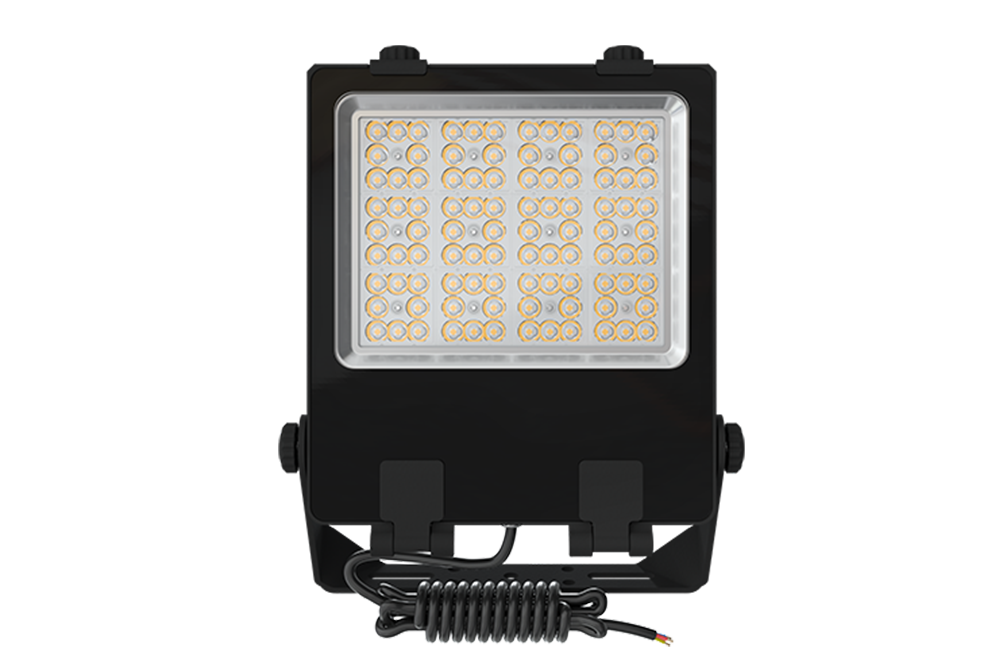
SEEKING FLX Series LED flood light outdoor for sports courts and open-area projects with 170lm/W efficiency, IP66 protection and multiple beam distributions. Designed for long-life commercial and public outdoor use.
View details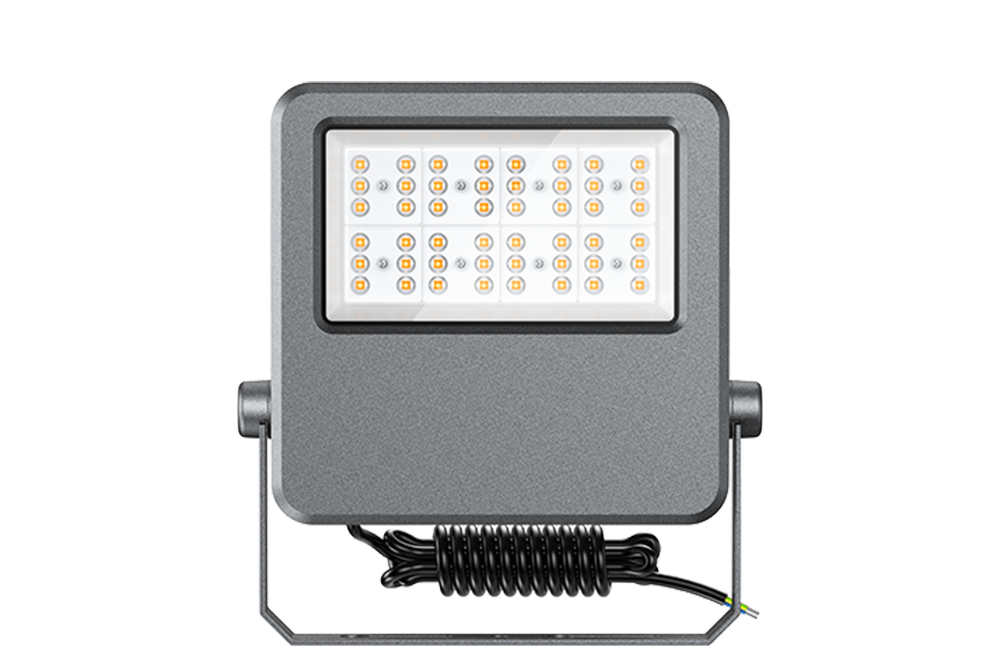
SEEKING FLE Series LED outdoor flood lights for sports grounds and open areas with multiple beam angles, IP66 protection and up to 170lm/W. Designed for long-life outdoor installations with professional driver options.
View details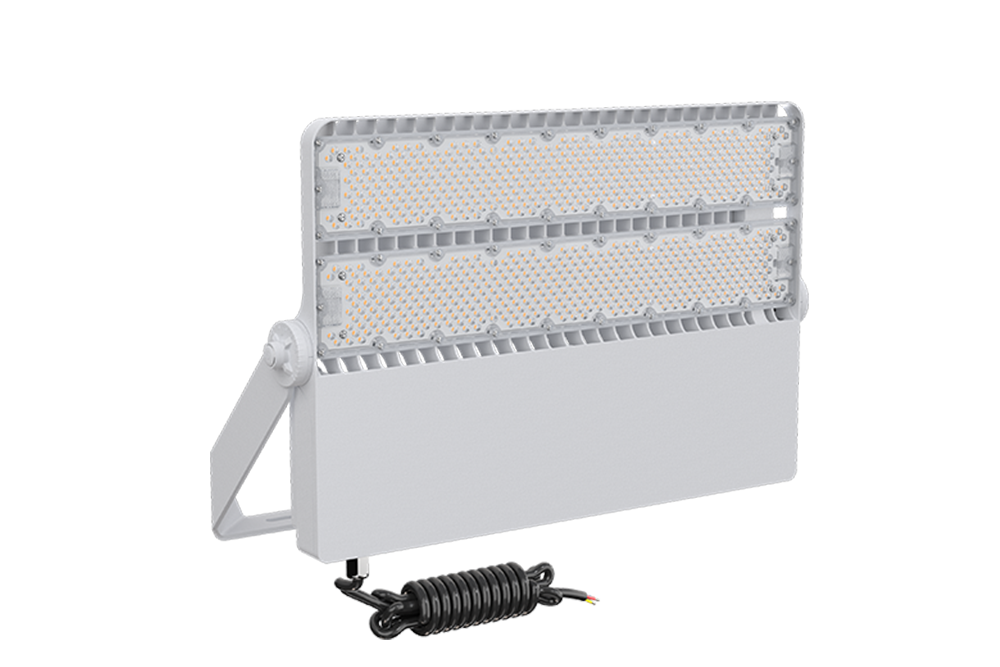
SEEKING FLD Series outdoor LED flood lights and high power led flood light deliver up to 960W with precision beam angles for sports fields, stadiums and large outdoor areas. IK08 & IP66 protection, 170lm/W efficiency and 100,000h lifetime.
View details
What is LED flood light explained from real installation experience. Outdoor uses, common mistakes, and how SEEKINGLED designs them.
View details
In hazardous areas such as oil & gas, chemical plants, coal mines and pharmaceuticals, safety always comes first. Extra functions are added according to project needs. Here is a clear answer. Dimming is not currently mainstream. Most standard ...
View details
A practical look at how LED linear trunking lighting systems are used in shopping malls and warehouses, focusing on installation, optics, and real project needs.
View details
Discover how ATEX approved lighting improves safety in explosive atmospheres. Learn certification requirements, applications, selection tips, and industry best practices.
View details