 Seeking LED
Why Do My LED Flood Lights Flicker?
239Why do my LED flood lights flicker outdoors? Learn the real causes—driver issues, wiring, voltage drops, and moisture—and how to fix flickering lights.
View detailsSearch the whole station
Yes, most halogen flood lights can be dimmed when they use a compatible dimmer and correctly rated circuit. Halogen lamps respond naturally to reduced voltage, but dimming lowers light output and color temperature while increasing the importance of heat, load, and dimmer compatibility.
The answer to are halogen flood lights dimmable is generally yes. Unlike many electronic lighting products, a conventional halogen lamp is essentially a resistive load, so reducing the electrical power supplied to it reduces the lamp’s temperature and light output.
This is one reason halogen lighting has historically been valued for smooth dimming. The U.S. Department of Energy notes that incandescent and halogen products are known for a characteristic “warm” dimming behavior: as output falls, the light becomes increasingly yellow and red.
That familiar warm shift is not a fault.
It is a direct consequence of the filament running at a lower temperature.
A halogen flood light does more than simply become darker.
As the dimmer reduces power:
This makes halogen dimming visually different from many modern LED flood lights.
With a halogen lamp, dimming is closely connected to the physical behavior of the filament. With an LED flood light, dimming is controlled electronically through the driver.
In practical installations, the biggest change is not the switch itself. It is the lamp temperature.
A halogen lamp produces light by heating a tungsten filament to a very high temperature. When the lamp is dimmed, the filament becomes cooler and produces less visible light. The color also shifts toward warmer tones.
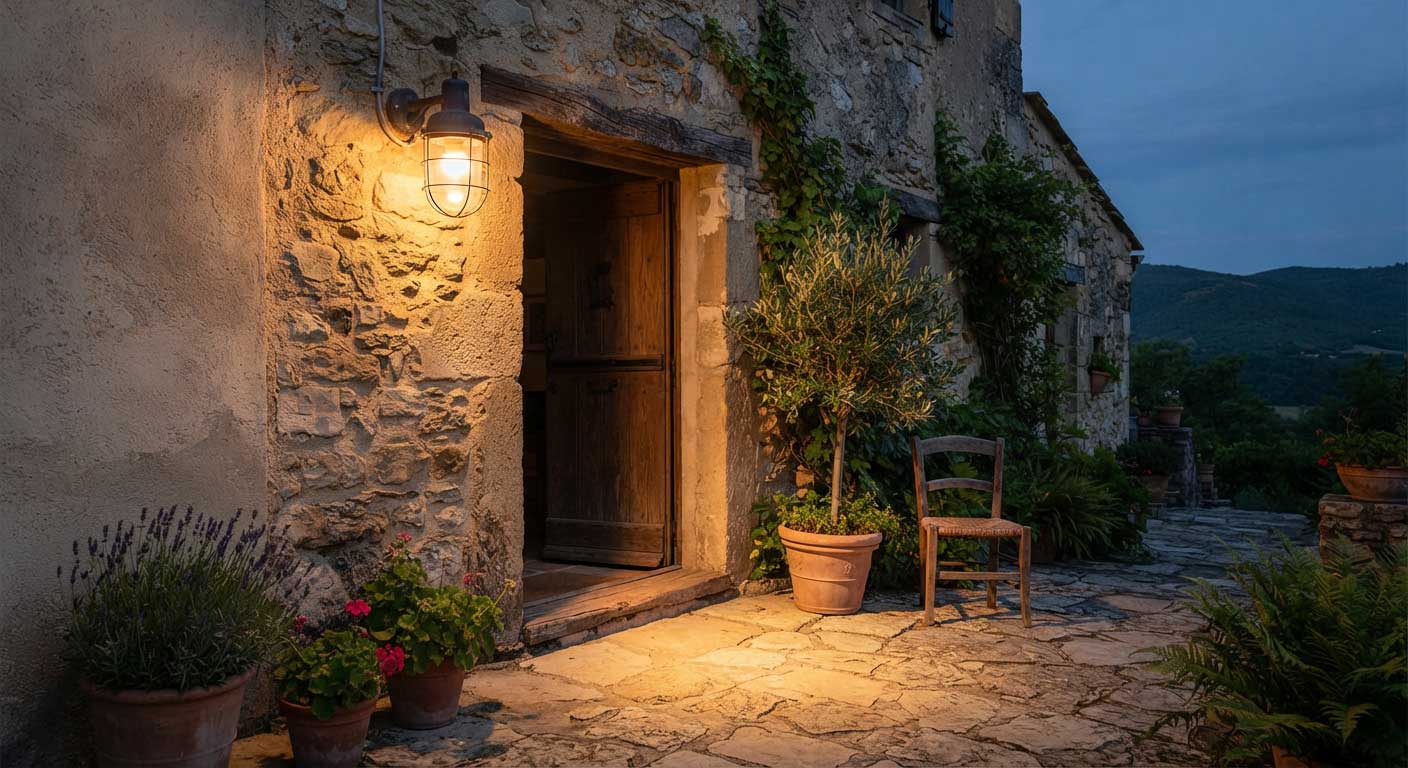
That can be useful around patios, entrances, architectural features, or hospitality spaces where a softer appearance is wanted.
It is less attractive for a security or industrial flood-light application where maintaining predictable illumination is the priority.
DOE describes this characteristic as similar to “dim-to-warm” behavior, which is why modern LED products sometimes deliberately reproduce the visual response of incandescent and halogen lamps.
A compatible dimmer is still required.
A common mistake is to assume that any wall dimmer will work with every flood-light circuit. The dimmer needs to be rated for the lamp type, voltage, and connected wattage.
For a simple mains-voltage halogen flood light, the electrical load is relatively straightforward. Low-voltage halogen systems are different because a transformer may be involved.
DOE technical guidance highlights this issue particularly clearly for low-voltage lighting: transformer type, dimmer type, minimum load, and lamp compatibility can all affect dimming behavior.
Before installation, check:
| Item | What to Verify |
|---|---|
| Lamp voltage | 120V, 230V, or another rated voltage |
| Total wattage | Must remain within dimmer capacity |
| Dimmer type | Confirm compatibility with the lamp |
| Transformer | Required for some low-voltage halogen systems |
| Minimum load | Especially important with electronic transformers |
| Wiring | Follow local electrical requirements |
| Enclosure | Consider heat generated by the halogen lamp |
This is where field installation details matter. A dimmer that works perfectly with one 500W halogen flood light may behave differently with several fixtures connected to the same control.
Yes, but “can dim” does not mean “will remain useful at every dimming level.”
At very low output, the halogen filament becomes much cooler. The resulting light is warmer and considerably weaker. Depending on the lamp and dimmer, the lowest usable setting may also be limited by the control equipment.
For a decorative application, this may be exactly what the designer wants.
For a warehouse yard, parking area, or security perimeter, it may not be.
A useful specification question is therefore not simply “Is it dimmable?” Ask instead: “What is the usable dimming range under the intended load?”
That question usually produces a better engineering answer.
From an electrical-control perspective, halogen lamps have a relatively simple dimming behavior because the filament itself responds to changes in supplied power.
LED flood lights depend on an electronic driver.
DOE explains that LED dimming performance depends on the driver and control method, and that different dimming approaches can produce differences in dimming range, consistency, and quality.
A 2024 DOE study of 23 LED streetlights that claimed 0–10V dimming found measurable variation in dimming performance among commercially available drivers. Although that study concerned LED streetlights rather than halogen flood lights, it illustrates an important specification principle: a “dimmable” label alone does not fully describe control performance.
For commercial buyers comparing older halogen flood lights with modern LED flood lights, this is worth keeping in mind.
| Characteristic | Halogen Flood Light | LED Flood Light |
|---|---|---|
| Dimming | Naturally responsive to power reduction | Requires compatible driver/control |
| Color during dimming | Becomes warmer | Usually remains more stable, depending on system |
| Control complexity | Generally simple for mains voltage | Depends on driver and protocol |
| Heat | High | Much lower fixture-level heat output |
| Energy efficiency | Low compared with LED | Generally much higher |
| Control options | Relatively limited | 0–10V, DALI, PWM, phase-cut, etc., depending on product |
| Deep dimming | Depends on lamp/dimmer | Depends strongly on driver |
DOE states that LEDs are inherently controllable and can support dimming and other lighting-control strategies, provided the specific product and control system are compatible.
For an existing installation, check these points before changing the switch:
Make sure the flood-light lamp is specifically designed for the supply voltage and fixture.
If four 150W halogen flood lights are connected together, the nominal connected load is 600W. The dimmer must be suitable for that load rather than being selected based on one lamp.
Do not substitute an LED-only dimmer or an incompatible electronic control without checking its specification.
Halogen lamps operate at high temperatures. The fixture, surrounding material, and installation clearance need to accommodate that heat.
If the purpose is security or area lighting, verify the actual illumination level after dimming rather than judging the result from the dimmer position.
Yes. Most conventional halogen flood lights can be dimmed with a compatible dimmer and correctly rated electrical circuit.
Yes. Their light generally becomes warmer as the filament temperature decreases. This warm-dimming effect is characteristic of incandescent and halogen lighting.
No. The dimmer must match the lamp voltage, connected load, and, where applicable, transformer type.
Yes, but the transformer and dimmer must be compatible. Minimum-load requirements can affect the usable dimming range.
Yes. Reducing the electrical power supplied to the lamp reduces its power consumption, although the light output also falls.
LED flood lights can support sophisticated dimming, occupancy sensing, and other controls, but the driver must be compatible with the control system. DOE identifies dimming as an important LED control capability.
Usually, but the replacement should be checked for electrical, optical, physical, and dimmer compatibility. A direct watt-for-watt substitution is not enough to guarantee equivalent lighting performance.
Are halogen flood lights dimmable? Yes. Conventional halogen flood lights are generally well suited to dimming when the lamp, dimmer, voltage, load, and transformer—if applicable—are correctly matched. Their light becomes warmer as they dim, which differs from the behavior of many modern LED flood-light systems. For commercial projects, the control equipment and actual dimming range should be specified together with the fixture.
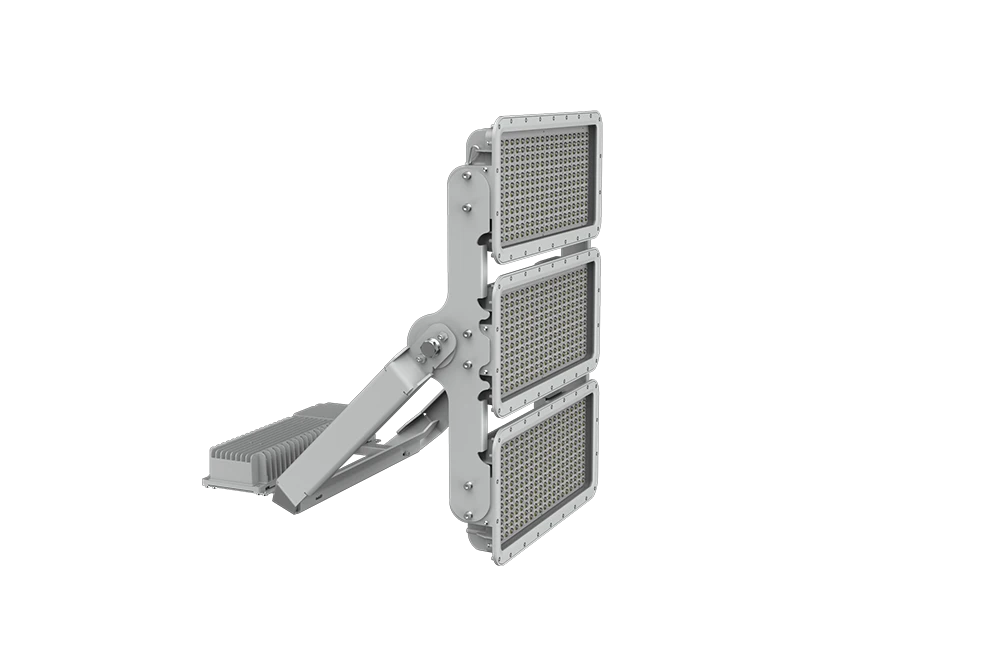
Sports Stadium LED Lighting by SEEKINGLED delivers high mast illumination, precise beam control, and EN 12193 compliant performance for professional venues.
View details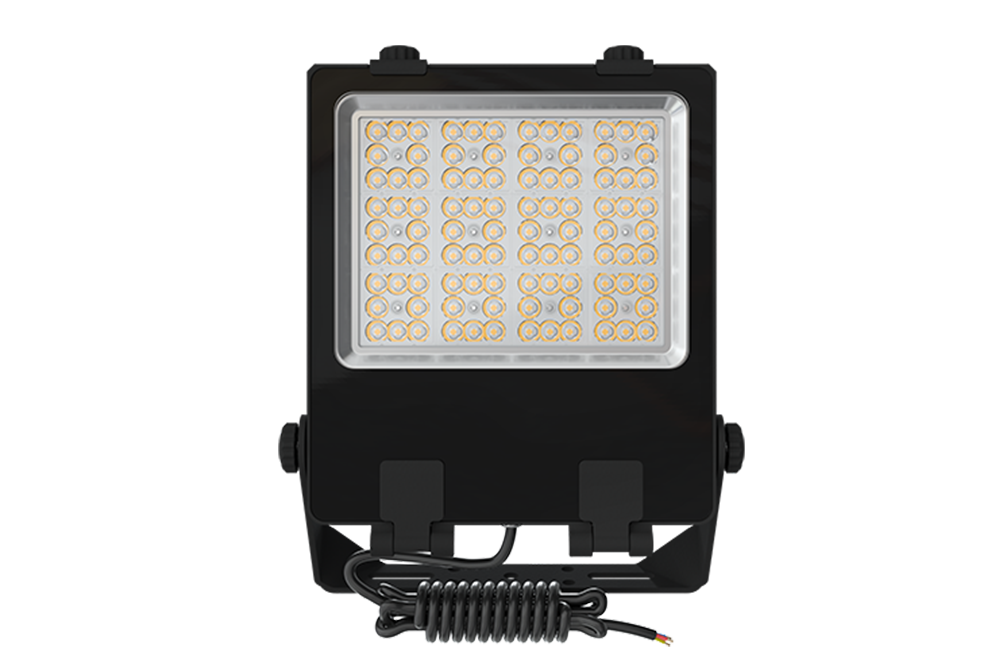
SEEKING FLX Series LED flood light outdoor for sports courts and open-area projects with 170lm/W efficiency, IP66 protection and multiple beam distributions. Designed for long-life commercial and public outdoor use.
View details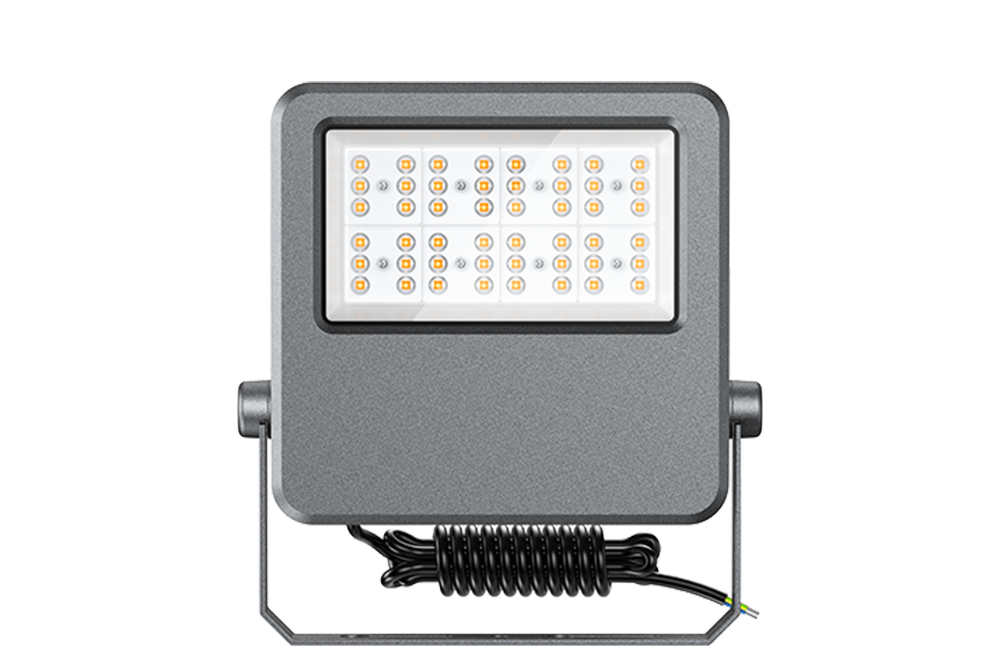
SEEKING FLE Series LED outdoor flood lights for sports grounds and open areas with multiple beam angles, IP66 protection and up to 170lm/W. Designed for long-life outdoor installations with professional driver options.
View details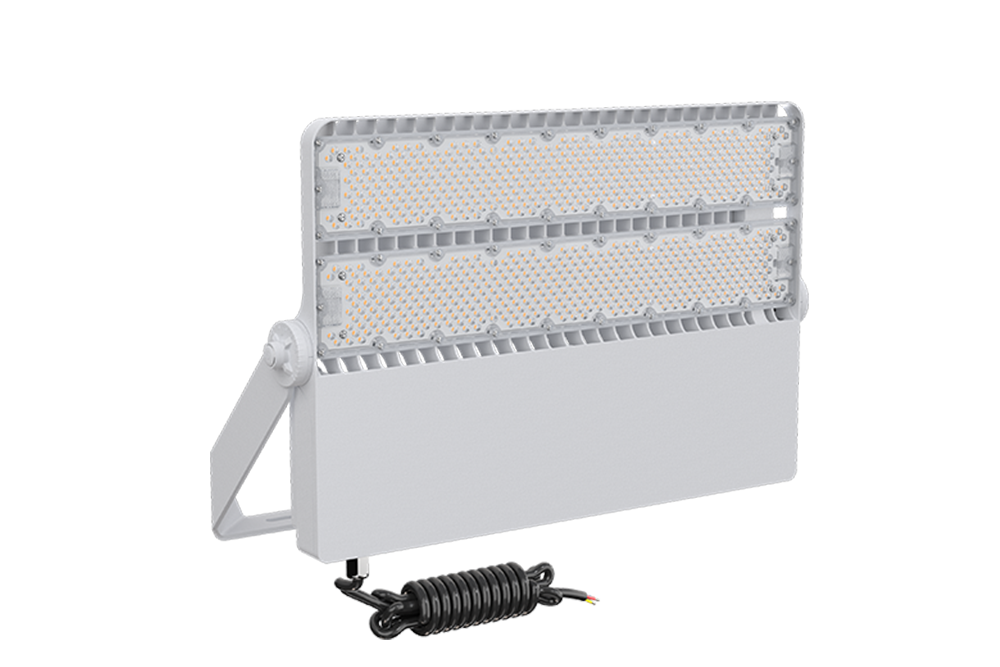
SEEKING FLD Series outdoor LED flood lights and high power led flood light deliver up to 960W with precision beam angles for sports fields, stadiums and large outdoor areas. IK08 & IP66 protection, 170lm/W efficiency and 100,000h lifetime.
View details
Why do my LED flood lights flicker outdoors? Learn the real causes—driver issues, wiring, voltage drops, and moisture—and how to fix flickering lights.
View details
100w led street light is a popular choice for roads and parking areas. Learn where it works best, where it fails, and how to choose correctly.
View details
Explosion-proof lighting is essential for spray paint booths. SEEKINGLED LO Series delivers ATEX & IECEx certified safety, IP69K protection, and high efficiency.
View details
Discover atex zone 0 lighting solutions designed for explosive gas environments. Learn certification, safety standards, and industrial applications from SEEKINGLED.
View details