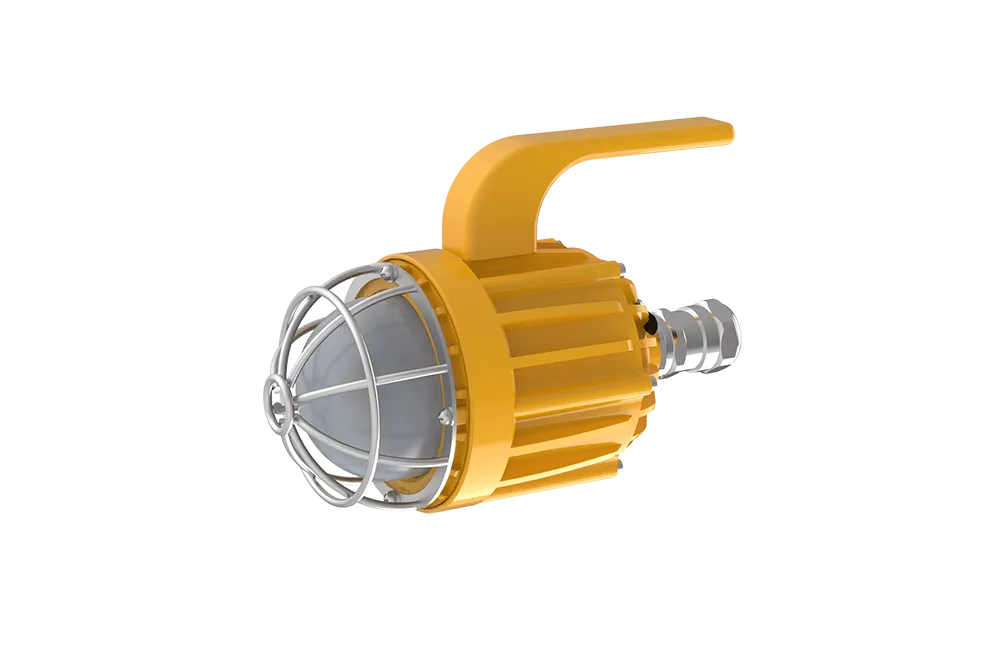
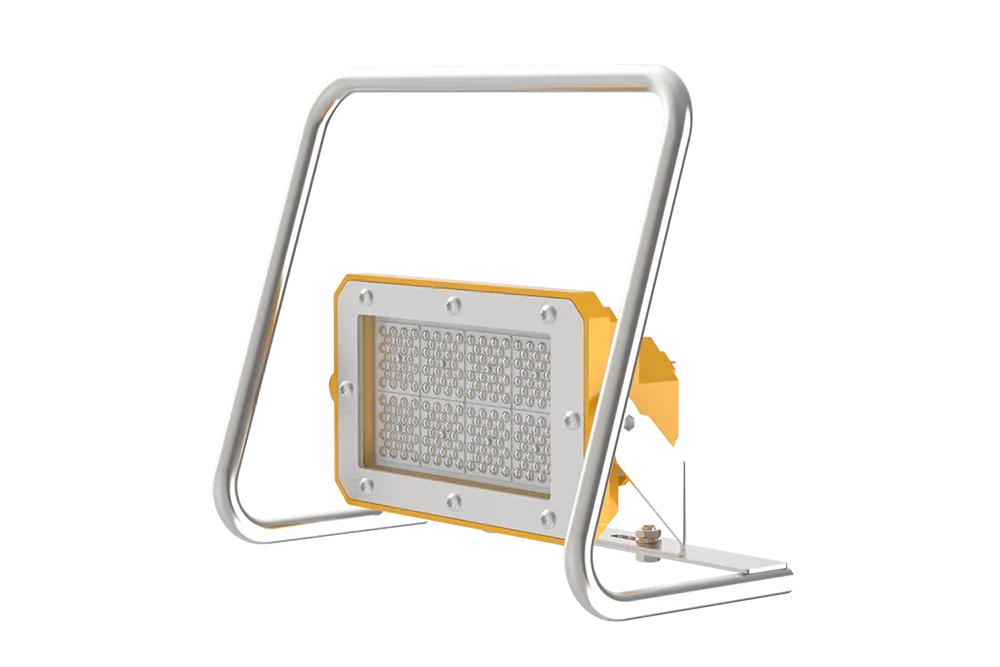
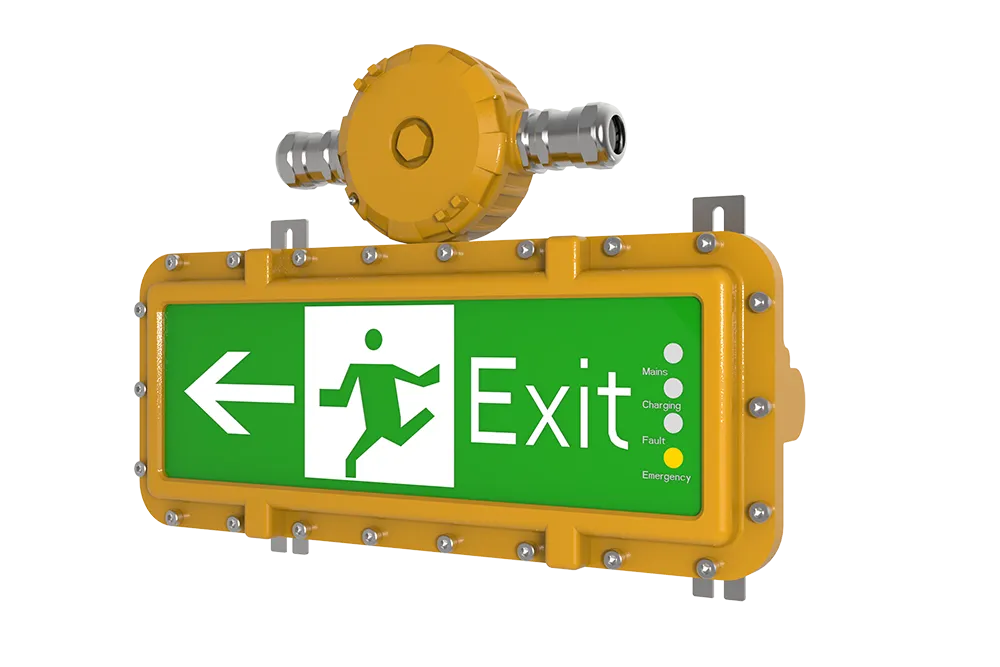
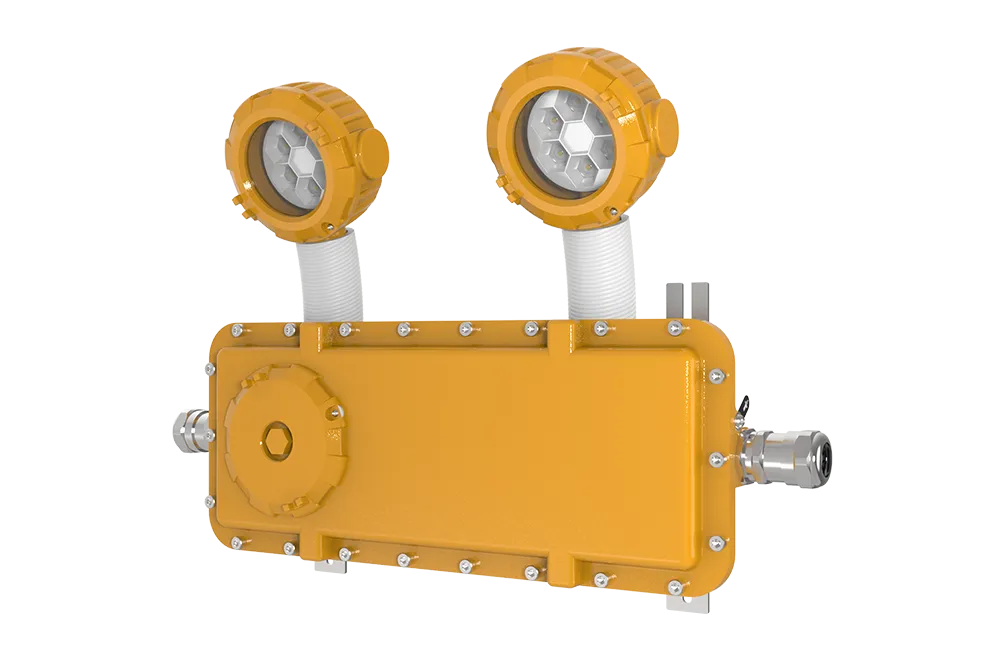
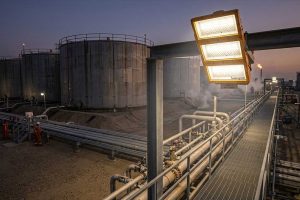
atex certified hazardous area lighting systems provide certified illumination for industrial locations where explosive gases, vapors, or dust may create ignition risks, combining safety compliance with reliable LED performance.
In hazardous industries, lighting is not simply an electrical product installed on a ceiling or structure. It becomes part of the safety infrastructure.
A poorly selected fixture can create unnecessary risks, increase maintenance challenges, and complicate compliance inspections.
At SEEKINGLED, we have worked with industrial lighting applications involving oil and gas facilities, chemical processing plants, manufacturing environments, and outdoor hazardous locations. From our experience communicating with engineers and project contractors, the most important factor is not only brightness output but whether the entire lighting system matches the actual hazardous classification.
A lighting system installed near a fuel transfer point faces completely different requirements compared with a standard warehouse.
The environment decides the technology.
Understanding atex certified hazardous area lighting systems
What makes a lighting system suitable for hazardous locations?
atex certified hazardous area lighting systems are specially designed lighting solutions intended for areas where explosive atmospheres may exist.
These systems are developed according to ATEX requirements and must consider:
explosion protection methods
temperature limitations
enclosure design
electrical safety
environmental durability
The ATEX framework comes from European Union legislation covering equipment used in potentially explosive atmospheres.
Explosive atmosphere exists continuously or for long periods
Zone 1
Explosive atmosphere is likely during normal operation
Zone 2
Explosive atmosphere is unlikely but may occur temporarily
Different zones require different protection levels.
Choosing the wrong category can create compliance problems and operational risks.
Main components of atex certified hazardous area lighting systems
Explosion protected housing design
The enclosure is one of the most important parts of hazardous lighting equipment.
A quality housing design helps protect internal components from:
external impact
dust penetration
moisture
chemical exposure
Common materials include:
aluminum alloy
corrosion-resistant coatings
strengthened glass lenses
Industrial environments can be harsh.
A fixture installed near offshore equipment may face salt spray, humidity, and temperature changes that ordinary lighting never experiences.Visit the product page: Explosion Proof Lighting
Reliable LED drivers and electrical components
The driver controls the electrical operation of LED fixtures.
For hazardous applications, engineers evaluate:
electrical stability
heat generation
component reliability
operating temperature range
A high-quality driver helps maintain:
consistent illumination
longer service life
reduced maintenance frequency
Thermal management performance
Temperature management is essential because hazardous area standards include maximum surface temperature requirements.
A professional lighting design must ensure the fixture remains within the required temperature range.
Applications of atex certified hazardous area lighting systems
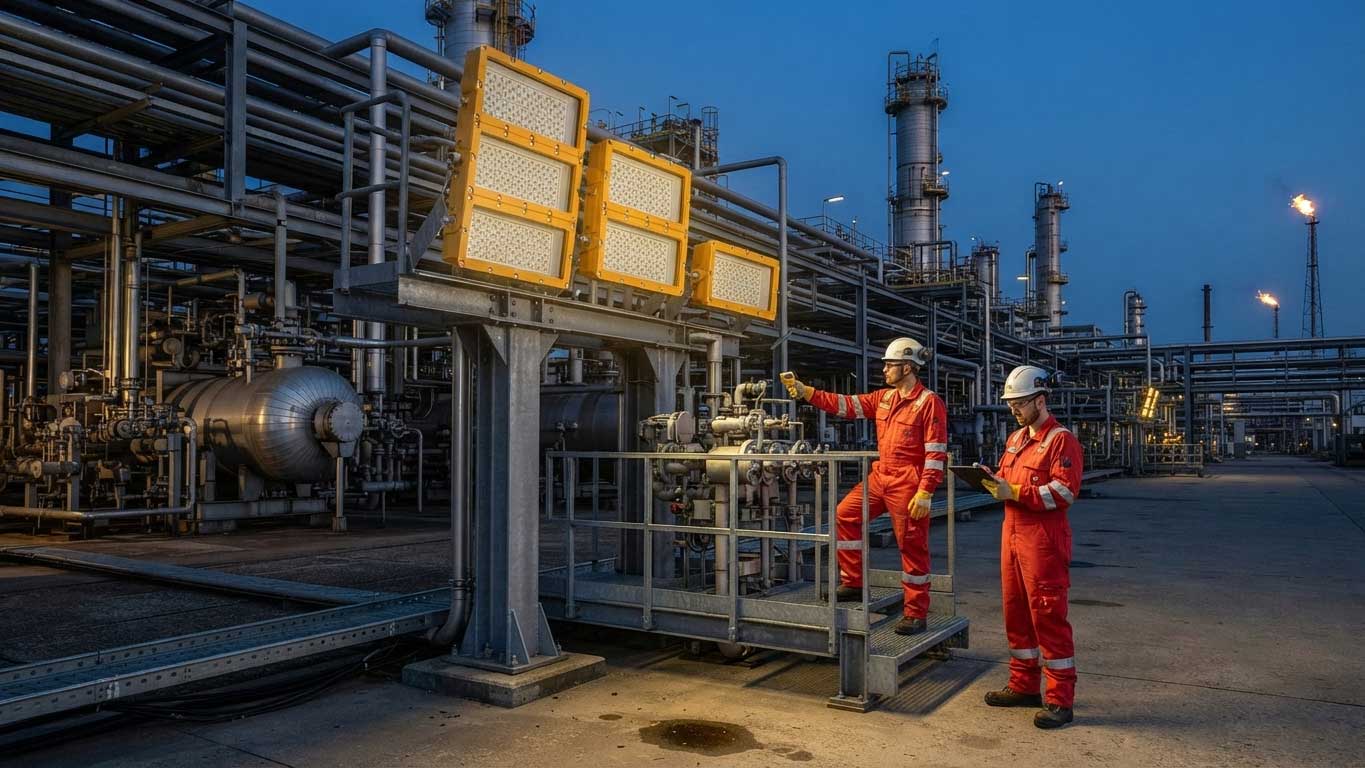
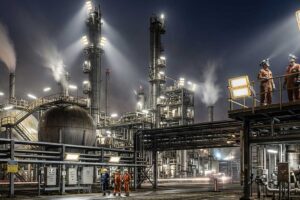
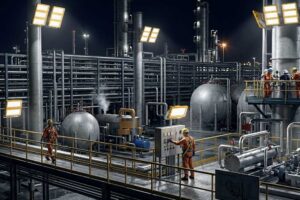
Oil and gas facilities
Oil and gas environments often contain combustible gases and vapors.
Typical applications include:
refineries
drilling platforms
LNG facilities
fuel storage terminals
pipeline stations
Lighting requirements may include:
explosion protection
corrosion resistance
continuous operation capability
In these environments, maintenance access can be expensive and time-consuming.
A reliable fixture reduces unnecessary replacement work.
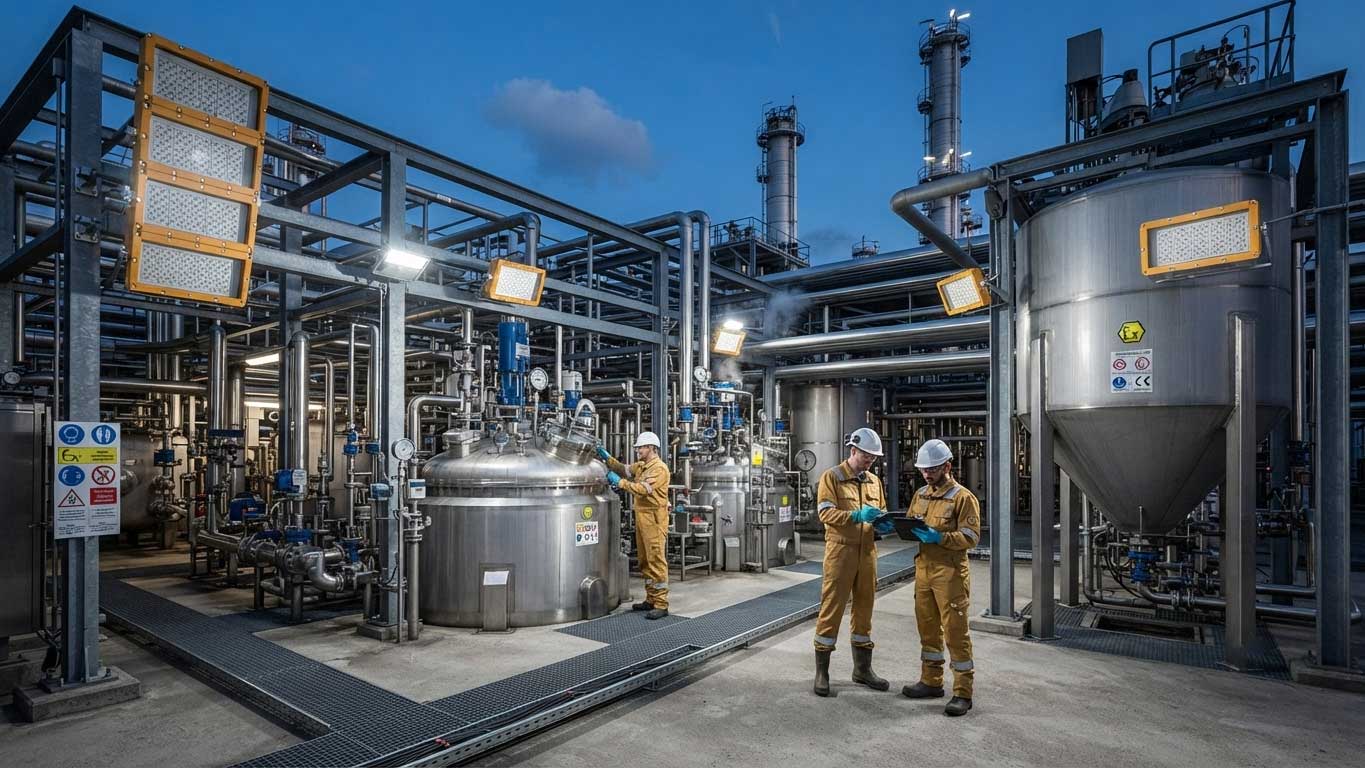
Chemical and pharmaceutical industries
Chemical plants often require hazardous lighting because production processes may involve:
solvents
gases
flammable chemicals
Lighting systems are commonly installed around:
reaction equipment
storage tanks
processing areas
The correct lighting choice depends on the specific chemical environment.
Manufacturing facilities
Some industrial production environments also require hazardous lighting.
Examples include:
paint manufacturing
automotive coating areas
chemical processing workshops
The lighting system must support worker visibility while maintaining safety compliance.
How engineers evaluate hazardous area lighting projects
A practical selection process
Based on industrial project discussions, experienced engineers usually review several factors before approving a lighting solution.
1. Confirm hazardous classification
Determine:
Zone category
Gas group
Temperature class
2. Review environmental conditions
Consider:
indoor or outdoor installation
operating temperature
corrosion level
vibration exposure
3. Check maintenance requirements
Evaluate:
expected operating hours
replacement accessibility
downtime impact
4. Verify certification documents
Confirm:
certificates
technical specifications
installation instructions
Manufacturing quality behind reliable hazardous lighting systems
Why production control affects field performance
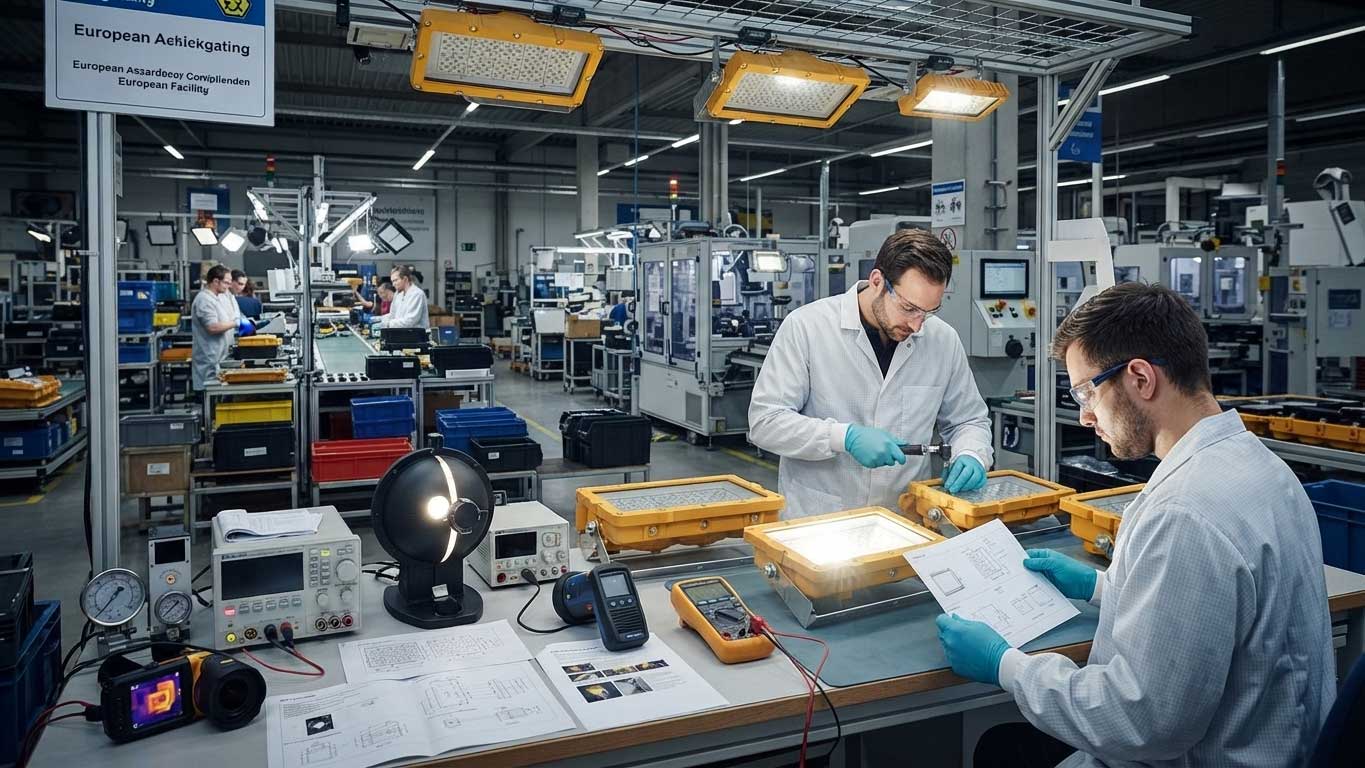
The reliability of atex certified hazardous area lighting systems depends heavily on manufacturing quality.
At SEEKINGLED, hazardous lighting production focuses on:
Manufacturing Step
Quality Objective
Component inspection
Verify material reliability
Assembly control
Maintain consistency
Electrical testing
Confirm stable performance
Thermal testing
Validate temperature control
Final inspection
Ensure shipment quality
Industrial customers usually install many fixtures within one project.
Consistency between products is therefore essential.
Energy efficiency advantages of modern hazardous lighting
Reducing long-term operating costs
Hazardous area facilities often operate lighting systems continuously.
Modern LED solutions can reduce:
electricity consumption
maintenance frequency
replacement requirements
According to the U.S. Department of Energy, LED lighting products use significantly less energy and have longer lifetimes compared with traditional lighting technologies.
For large industrial facilities, energy savings can become a meaningful operational advantage.
SEEKINGLED experience in hazardous area lighting solutions
Developing reliable hazardous lighting requires understanding both product technology and field conditions.
At SEEKINGLED, our approach focuses on combining:
certified protection requirements
industrial LED technology
application-based design
long-term reliability
A hazardous lighting project succeeds when the product matches the environment, not when specifications simply look impressive on paper.
Testing methods for atex certified hazardous area lighting systems
How manufacturers verify safety and reliability
The performance of atex certified hazardous area lighting systems depends on more than the final product appearance. Before industrial installation, lighting systems must go through detailed testing procedures to confirm safety, durability, and operational stability.
Hazardous environments are rarely gentle.
A fixture installed beside a refinery pipeline may experience heat, vibration, humidity, and chemical exposure at the same time.
For this reason, professional manufacturers evaluate multiple performance areas:
Testing Item
Purpose
Electrical safety testing
Verify stable power operation
Insulation testing
Reduce electrical failure risks
Thermal testing
Confirm temperature classification
IP protection testing
Validate dust and water resistance
Mechanical impact testing
Evaluate enclosure strength
Aging testing
Check long-term reliability
These tests help ensure that the lighting system performs consistently after installation.
Protection ratings used with hazardous area lighting
Why IP and IK ratings are also important
ATEX certification focuses on explosion protection, but industrial environments usually require additional protection.
A lighting fixture may also need:
IP66 or IP67 protection
IK08 or IK10 impact resistance
corrosion-resistant materials
These ratings address different challenges.
Rating
Function
IP Rating
Protection against dust and water
IK Rating
Protection against mechanical impact
Corrosion Resistance
Protection against aggressive environments
For example, a chemical plant located near the coast may require stronger corrosion protection than an indoor production area.
The hazardous classification alone does not describe the complete working environment.
Installation guide for atex certified hazardous area lighting systems
Planning before installation
A successful hazardous lighting installation begins before the electrician arrives on site.
Engineers normally review:
Location assessment
Confirm:
hazardous zone classification
equipment position
lighting coverage requirements
Mounting design
Consider:
ceiling height
support structure
maintenance access
Electrical connection
Check:
cable selection
cable glands
grounding requirements
Commissioning inspection
After installation:
verify fixture operation
confirm documentation
complete safety checks
A well-planned installation reduces future maintenance issues.
How to choose the right hazardous area lighting supplier
Important factors for industrial buyers
Selecting a supplier is a long-term decision.
The lowest initial price does not always represent the lowest project cost.
Experienced buyers usually evaluate:
Factor
Why It Matters
Certification knowledge
Helps avoid compliance problems
Manufacturing capability
Ensures product consistency
Technical support
Assists project decisions
Industry experience
Reduces application risks
After-sales service
Supports long-term operation
A reliable supplier understands that hazardous lighting is part of a complete industrial safety system.
Cost considerations for hazardous area LED lighting systems
Looking beyond purchase price
The total cost of hazardous lighting includes more than the fixture itself.
Project costs may include:
equipment purchase
installation labor
maintenance
replacement downtime
energy consumption
A fixture with better efficiency and durability may provide stronger value over its operating life.
For facilities operating thousands of hours annually, small efficiency improvements can accumulate into significant savings.
Future development of hazardous area lighting technology
Smarter and more efficient industrial lighting
Modern industrial lighting is moving toward:
higher LED efficiency
improved thermal designs
longer service intervals
intelligent monitoring
The International Energy Agency highlights energy efficiency improvements as an important part of reducing global electricity demand.
For hazardous industries, future lighting solutions will continue balancing safety, reliability, and energy performance.
FAQ — atex certified hazardous area lighting systems
What are atex certified hazardous area lighting systems?
atex certified hazardous area lighting systems are industrial lighting solutions designed for locations where explosive gases, vapors, or dust may exist. They are manufactured and certified according to hazardous area safety requirements.
Where are hazardous area lighting systems commonly used?
They are widely used in:
oil refineries
chemical plants
LNG facilities
fuel storage terminals
pharmaceutical production areas
industrial processing facilities
What is the difference between ATEX certified lighting and normal LED lighting?
Normal LED lighting is designed for general environments, while ATEX certified lighting includes additional protection features to reduce ignition risks in explosive atmospheres.
Why is ATEX certification important?
ATEX certification confirms that equipment has been evaluated for use in potentially explosive environments and meets required protection standards.
How long do hazardous area LED lighting systems usually last?
The service life depends on:
product quality
operating temperature
usage hours
installation environment
High-quality LED systems can provide many years of operation with proper installation and maintenance.
Can ATEX lighting be used outdoors?
Yes. Many hazardous area lighting systems are designed for outdoor industrial applications when the correct environmental protection ratings are selected.
How do I choose the correct hazardous area lighting system?
Selection should consider:
hazardous zone classification
gas or dust type
temperature requirements
environmental conditions
certification requirements
Conclusion — Selecting reliable atex certified hazardous area lighting systems
Choosing the right atex certified hazardous area lighting systems requires more than comparing lumen output or product prices.
A reliable solution should combine:
correct hazardous area certification
suitable protection ratings
durable industrial construction
efficient LED technology
professional technical support
In hazardous environments, lighting reliability directly affects workplace safety and operational efficiency.
SEEKINGLED develops industrial lighting solutions for demanding applications, helping customers achieve dependable illumination in oil, gas, chemical, and manufacturing environments.
The right lighting partner does not only provide a fixture.
It provides confidence that the system will continue performing when the working environment becomes challenging.
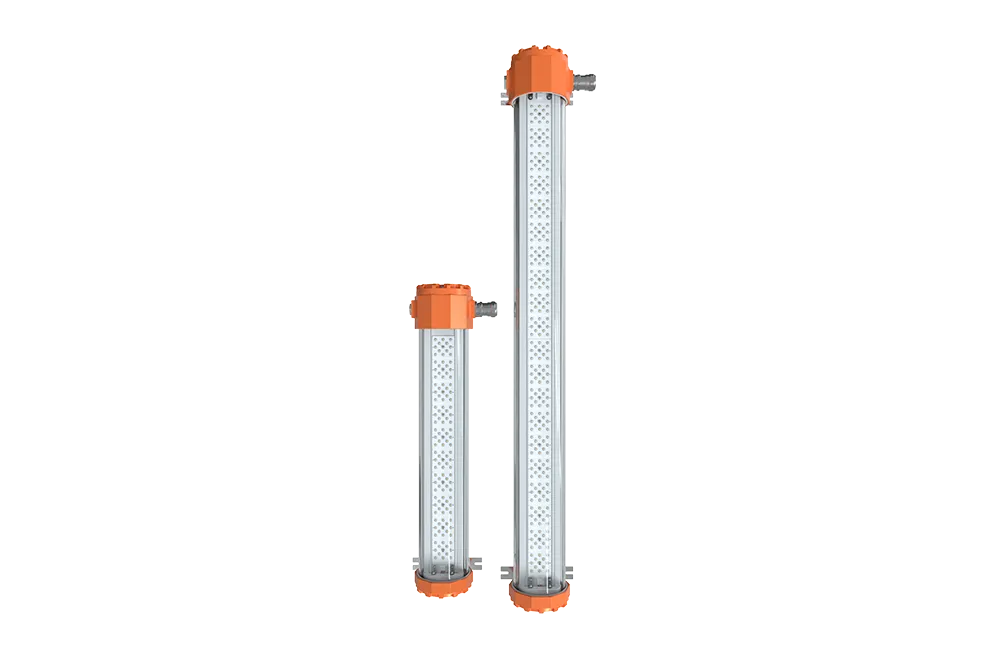
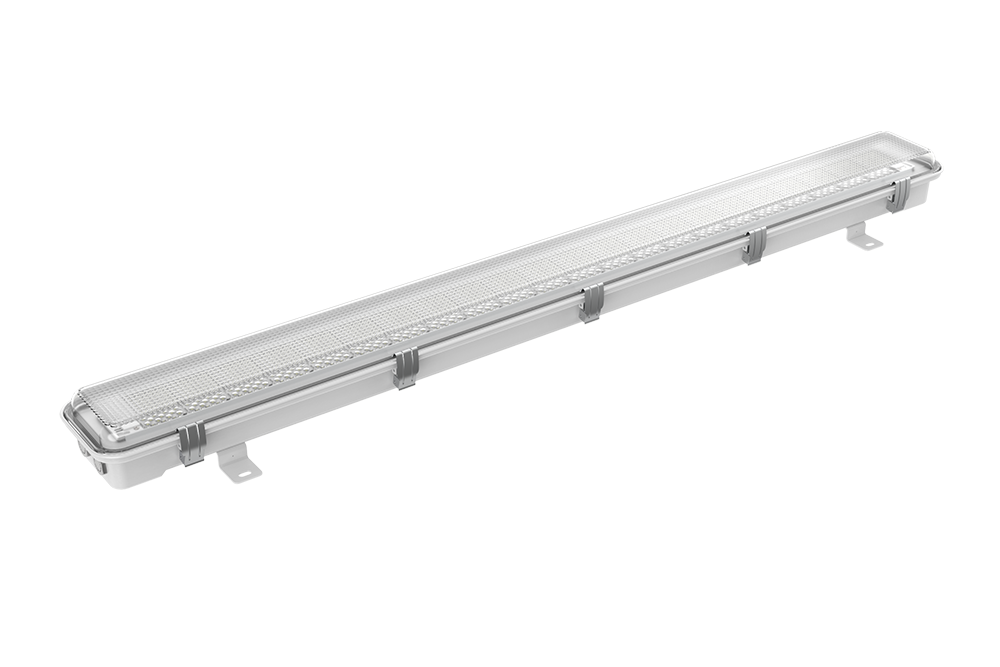
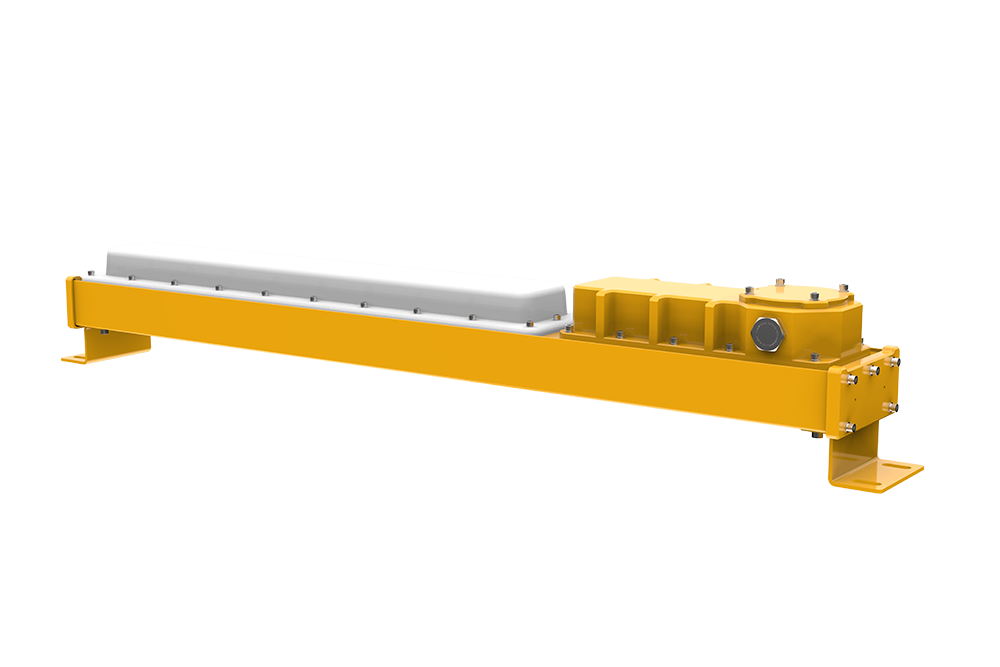
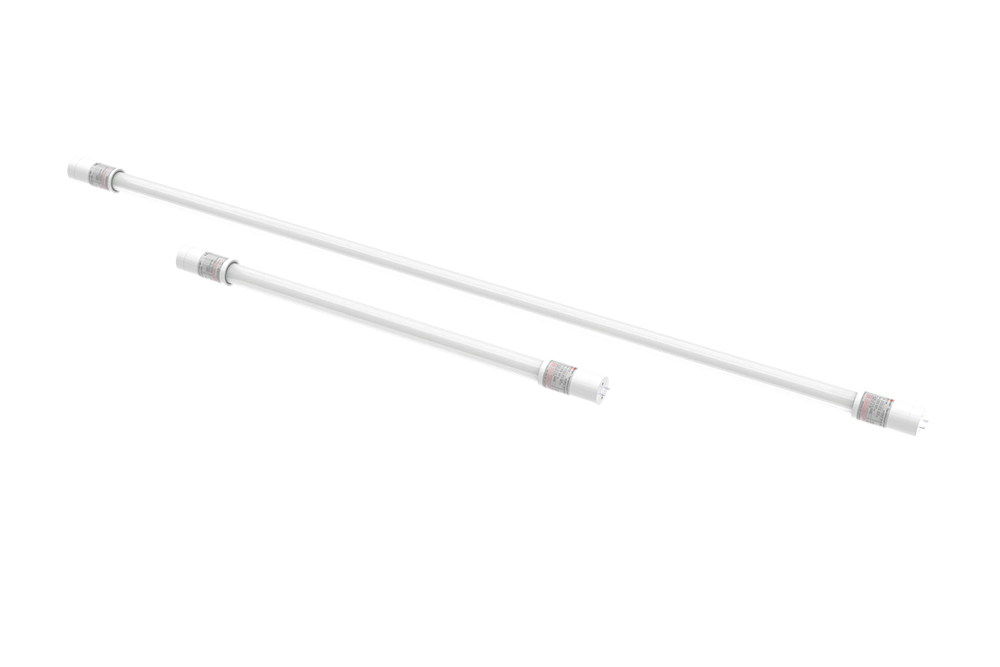
SEEKINGLED LED Linear Explosion Proof Light and Explosion Proof lighting is ATEX and IECEx certified for Zone 1, Zone 2, Zone 21 and Zone 22 hazardous locations, built for long-term industrial use.
LED Linear Explosion Proof Lights and EX Proof lights for Zone 1, Zone 2, Zone 21 and Zone 22 hazardous areas. ATEX & IECEx certified explosion proof LED linear lighting with emergency function, adjustable power and IP67 protection by SEEKINGLED.
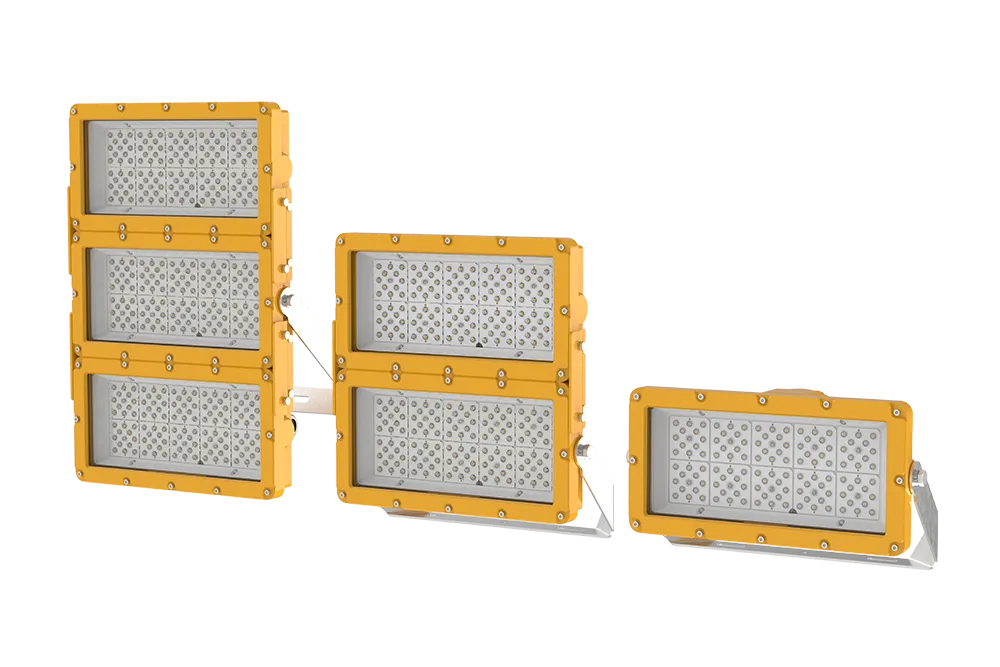
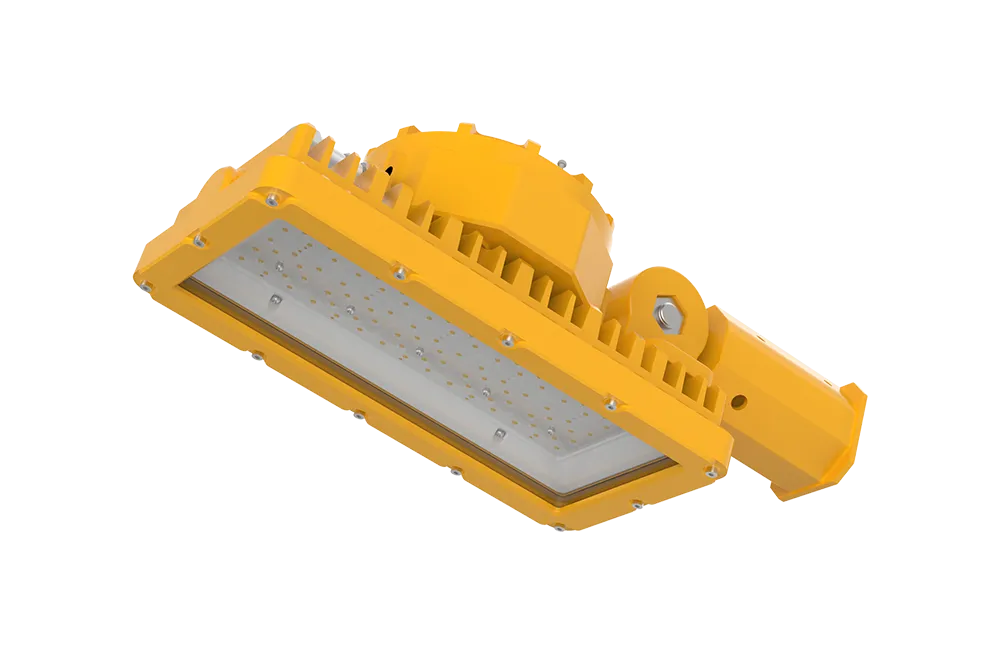
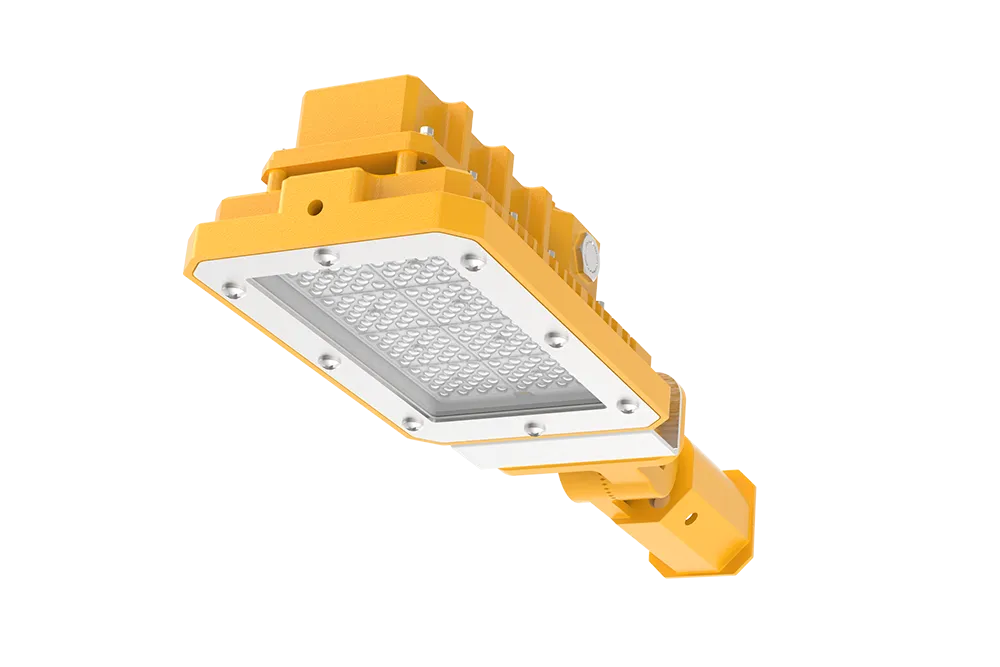
SEEKINGLED LED Explosion Proof Flood Lights are ATEX certified for Zone 2 and Zone 22 hazardous areas, offering high efficiency, adjustable power and integrated junction box.
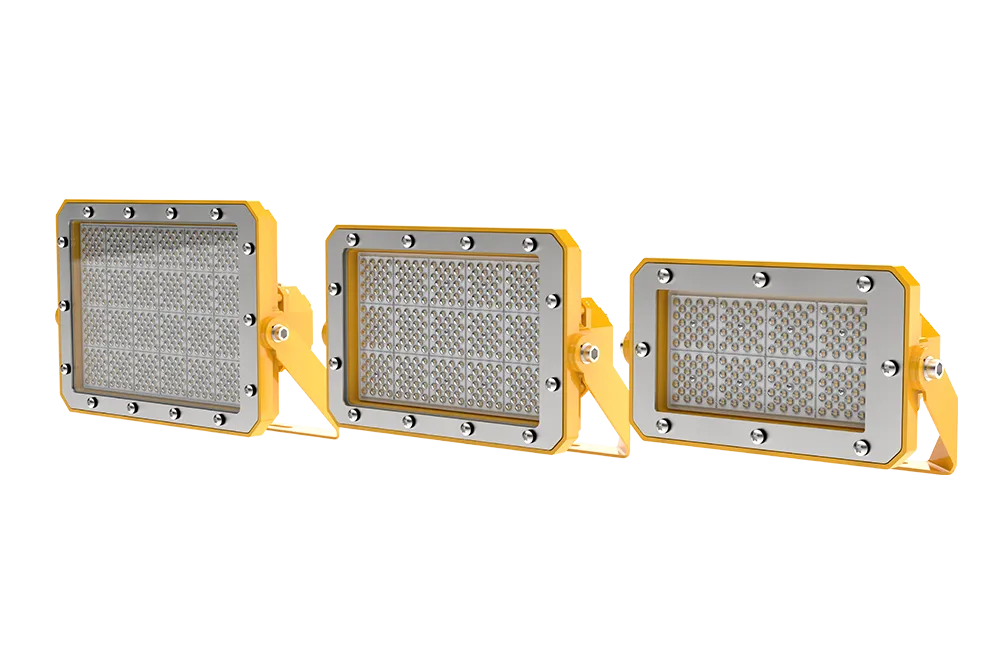
SEEKINGLED LED Explosion Proof Flood Lights are flameproof ATEX and IECEx certified for Zone 1 and Zone 2 hazardous areas, offering high power, adjustable output and long service life.
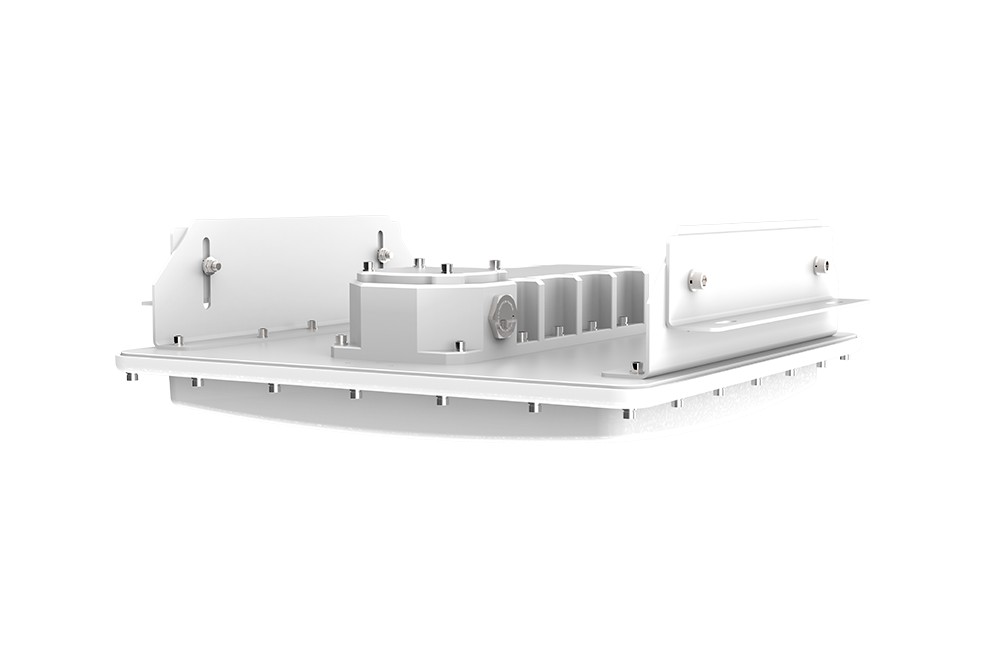
SEEKINGLED LED Gas Station Canopy Lights are ATEX certified for Zone 2 and Zone 22 hazardous areas, featuring adjustable power and built-in explosion-proof junction box.
ATEX: Ex II 2G Ex db IIB T6/T5 GbEx II 2D Ex tb IIIC T80°C/ T95°C Db IECEx Ex db IIB T6 Gb;Ex tb IIIC T80°C Db Feature: ● For Zone 1,2 and Zone 21,22● Flameproof type, the strongest● 100W can replace 250W HID,energy saving● Power:60W,80W,100W Application: Oil and gas, marine, Chemical, pharmaceutical, semiconductor,mining,military industr…
ATEX: II 3G Ex nR ⅡC T5/T6 GcII 3D Ex tc ⅢC T80℃/T95℃Dc ATEX Certificate NO: TÜV CY 26 ATEX 0207611 X Feature: ● For Zone 2 and Zone 22● 150W can replace 250W HID lamps,Energy saving● Power:50W,75W,100W,150W,200W Application: Oil and gas, marine, Chemical, pharmaceutical, semiconductor,mining,military industry, paint booth,power plant ETC…
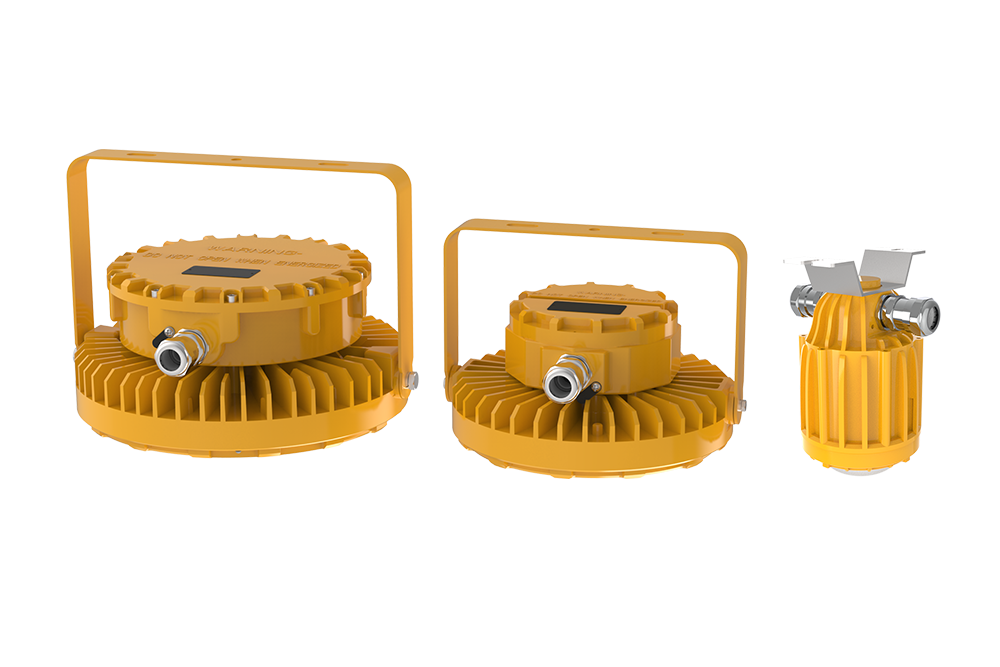
LED explosion proof high bay lights are designed for Zone 1, Zone 2, Zone 21 and Zone 22 hazardous areas. This page introduces the HB21 Series from SEEKING, including certifications, power options and real application considerations.
LED Linear Explosion Proof Lights from SEEKINGLED. LU Series Flame Proof lights ATEX-certified explosion proof LED linear lighting for Zone 2 gas and Zone 22 dust areas, IP69K, IK10, long lifetime and flexible power options.
Certified explosion proof work lights for Zone 1 & 21 hazardous areas. Portable, ATEX & IECEx approved, built for oil, gas and chemical plants by SEEKINGLED.
ATEX: II 3G Ex nR ⅡC T6 GcII 3D Ex tc ⅢC T80℃ Dc ATEX Certificate NO: TÜV CY 26 ATEX 0207611 X Feature: ● For Zone 2 and Zone 22● Accepts battery-powered supply● indestructible● Power:AC input:50W,75W,100WDC input:15W,25W,35W Application: Oil and gas, marine, Chemical, pharmaceutical, semiconductor,mining,military industry, paint booth,po…
ATEX: Ex II 2G Ex db IIB T6 GbEx II 2D Ex tb IIIC T80°C Db IECEx Ex db IIB T6 Gb;Ex tb IIIC T80°C Db Feature: ● For Zone 1,2 and Zone 21,22● Flameproof type, the strongest Application: Oil and gas, marine, Chemical, pharmaceutical, semiconductor,mining,military industry, paint booth,power plant ETC hazardous area. Technical Specifications:…
ATEX: Ex II 2G Ex db IIB T6 GbEx II 2D Ex tb IIIC T80°C Db IECEx Ex db IIB T6 Gb;Ex tb IIIC T80°C Db Feature: ● For Zone 1,2 and Zone 21,22● Flameproof type, the strongest Application: Oil and gas, marine, Chemical, pharmaceutical, semiconductor,mining,military industry, paint booth,power plant ETC hazardous area. Technical Specifications:…
ATEX: Ex II 2G Ex d e IIB T6 Gb ATEX: Ex d e IIB T6 Gb; Feature: ● For Zone 1,2● 9W can replace 18W fluorescent lamps,50% Energy saving Application: Oil and gas, marine, Chemical, pharmaceutical, semiconductor,mining,military industry, paint booth,power plant ETC hazardous area. Technical Specifications: Standards:60079-0, 60079-1, 60079…
ATEX LED floodlight solutions deliver safe, high-output illumination for hazardous locations. Discover certifications, applications, and selection insights for industrial environments.
What is a Zone 1 LED floodlight? Learn how certified hazardous area floodlights safely illuminate explosive gas environments in refineries, chemical plants, and offshore facilities.
Lamp explosion proof explained: real safety design, certifications, and industrial use cases. Learn how explosion proof lamps work from SEEKINGLED experts.
 Seeking LED