 Seeking LED
what are atex zones?
0what are atex zones? Learn ATEX hazardous area classifications, zone 0, zone 1, zone 2, and how explosion-proof lighting protects industrial facilities.
View detailsSearch the whole station
atex light fittings are certified lighting fixtures designed for areas where explosive gases, vapors, or combustible dust may exist. They provide safe illumination through controlled temperature, protected components, and ATEX compliance.
In hazardous industrial environments, lighting is not simply an electrical product installed on a ceiling or structure. It becomes part of the safety system.
At SEEKINGLED, I have worked with industrial lighting projects involving oil terminals, chemical processing plants, manufacturing facilities, and outdoor energy sites. One thing I noticed after reviewing different installations is that many buyers initially focus on wattage and price, but experienced engineers start with classification, certification, and operating conditions.
A 150W LED fixture installed in a warehouse and a 150W ATEX-certified fixture installed beside a chemical processing line may produce similar light output, but they are designed for completely different risks.
That difference determines whether the product is suitable.
The term atex light fittings refers to lighting products manufactured and certified for use in potentially explosive atmospheres under European ATEX requirements.
ATEX comes from the French phrase “Atmosphères Explosibles” and establishes requirements for equipment used in explosive environments.
According to the European Commission, equipment used in explosive atmospheres must satisfy essential health and safety requirements before entering the European market.
Reference:
European Commission ATEX Directive
https://single-market-economy.ec.europa.eu/sectors/mechanical-engineering/equipment-potentially-explosive-atmospheres-atex_en
These lighting fittings are commonly installed in locations such as:
Normal lighting fixtures are designed for general industrial environments.
ATEX light fittings are engineered differently because hazardous areas may contain:
The purpose of ATEX-certified lighting is not only to provide illumination.
It is designed to prevent the lighting equipment itself from becoming a potential ignition source.
Key safety considerations include:
| Design Requirement | Purpose |
|---|---|
| Temperature control | Prevent excessive surface heat |
| Protected electrical components | Reduce ignition possibilities |
| Sealed enclosure | Prevent hazardous material entry |
| Certified construction | Meet hazardous area requirements |
Choosing the right lighting fixture starts with understanding the hazardous area classification.
ATEX zones are mainly divided according to how frequently explosive atmospheres may occur.
| Zone | Description | Example |
|---|---|---|
| Zone 0 | Explosive atmosphere exists continuously or for long periods | Inside storage tanks |
| Zone 1 | Explosive atmosphere likely during normal operation | Processing areas |
| Zone 2 | Explosive atmosphere unlikely or short-term | Surrounding equipment areas |
For dust environments:
| Zone | Description |
|---|---|
| Zone 20 | Combustible dust present continuously |
| Zone 21 | Dust likely during normal operation |
| Zone 22 | Dust present only occasionally |
Selecting incorrect equipment classification can create compliance problems and safety risks.
A professional ATEX lighting fitting usually includes a strong industrial enclosure.
Common materials and features include:
These features help the fixture survive demanding environments.
A refinery outdoor lighting system may experience:
The enclosure must maintain protection over years, not just during initial installation.
Heat management is one of the most important factors in hazardous lighting.
Every ATEX fitting has limitations regarding maximum surface temperature.
Common temperature classes include:
| Temperature Class | Maximum Surface Temperature |
|---|---|
| T1 | 450°C |
| T2 | 300°C |
| T3 | 200°C |
| T4 | 135°C |
| T5 | 100°C |
| T6 | 85°C |
Reference:
IEC 60079 Explosive Atmospheres Standards
https://www.iec.ch/standards
For many industrial gas applications, T4-rated lighting products are widely selected because they provide suitable protection for common hazardous environments.
LED technology has changed hazardous area lighting because it reduces maintenance requirements.
According to the U.S. Department of Energy, LED lighting products use significantly less energy and can last much longer than traditional incandescent technologies.
Reference:
U.S. Department of Energy – LED Lighting
https://www.energy.gov/energysaver/led-lighting
For industrial facilities, the advantages include:
This matters especially in hazardous areas where maintenance work requires additional safety procedures.
During industrial lighting evaluations, I often see customers compare products using only:
Those numbers are useful, but they do not tell the whole story.
A lighting engineer usually asks:
I remember a chemical facility project where a lower-cost lighting option looked attractive during quotation comparison.
However, after reviewing the installation conditions, the maintenance team selected a more durable ATEX solution because several fixtures were installed above production equipment.
Changing one failed fixture would require:
The initial price difference became much smaller compared with the potential downtime cost.
ATEX light fittings are widely used in:
These locations require lighting equipment capable of operating near potentially flammable materials.
Chemical facilities often install ATEX lighting around:
Lighting systems must withstand both hazardous atmospheres and aggressive industrial conditions.
Some production environments require ATEX solutions due to:
The exact requirement depends on the materials involved and local regulations.
Before purchasing, verify:
Consider:
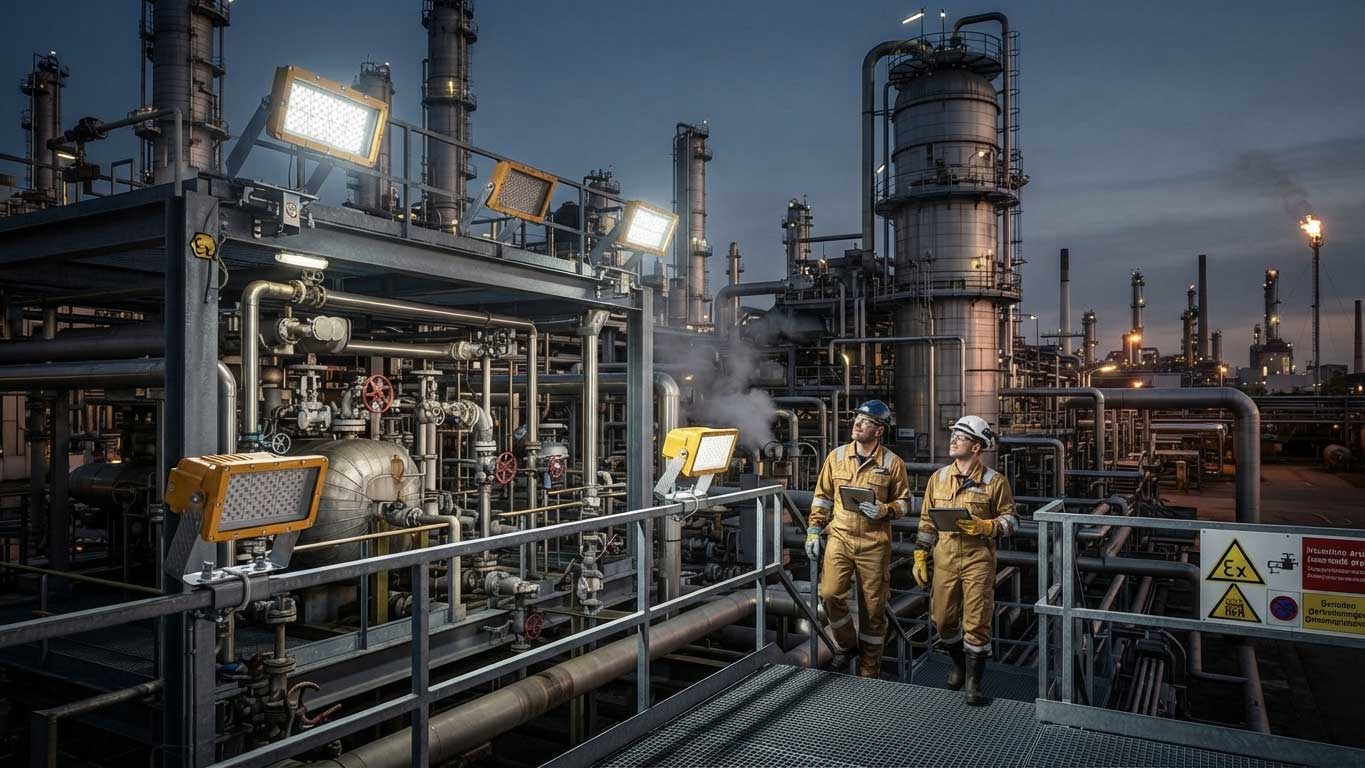
At SEEKINGLED, hazardous lighting products are developed around practical industrial requirements.
The focus is on:
A lighting fitting used in hazardous areas must perform consistently after years of exposure.
Certification is the starting point.
Real-world reliability is the final test.
An atex light fitting is usually installed in environments where lighting failure is not only inconvenient but may affect safety procedures and production continuity.
In hazardous industries, the fixture is often exposed to conditions that ordinary commercial lighting never experiences:
The real value of certified lighting appears after installation, when the equipment has to keep working for years.
A refinery maintenance area required replacement of aging lighting fixtures installed near process equipment.
The original system created several operational issues:
The replacement evaluation focused on:
| Evaluation Area | Industrial Requirement |
|---|---|
| Hazard classification | Correct ATEX approval |
| Light performance | Consistent illumination |
| Housing protection | Outdoor industrial durability |
| Maintenance | Reduced service frequency |
| Operating cost | Lower lifecycle expenses |
The final selection was based not only on initial purchase cost but also on long-term operational impact.
In hazardous areas, every maintenance activity has additional requirements. A lighting replacement may involve isolation procedures, safety approval, and specialized personnel.
A reliable fixture reduces these interruptions.
Chemical production areas create a combination of safety and durability challenges.
A typical installation may experience:
During lighting assessments, I have seen projects where the LED modules continued working, but the external housing failed because the fixture was not designed for the actual environment.
This highlights an important point:
A good ATEX light fitting is not only about electrical protection.
It also requires:
Offshore installations require lighting equipment that can handle both explosive atmospheres and harsh marine conditions.
Typical challenges include:
According to the International Maritime Organization (IMO), corrosion prevention remains a critical issue for marine structures because seawater accelerates material deterioration.
Reference:
https://www.imo.org
For offshore ATEX lighting projects, engineers often prioritize:
A fixture that performs well in a controlled factory environment may not deliver the same result offshore.
| Feature | ATEX Light Fittings | Standard Industrial Lighting |
|---|---|---|
| Hazardous area certification | Required | Usually unavailable |
| Explosion protection design | Included | Not considered |
| Temperature control | Safety-focused | General thermal design |
| Industrial environments | Oil, gas, chemical | Warehouses, factories |
| Maintenance approach | Hazard-controlled | General maintenance |
The difference between these products is not always visible from outside.
Two LED fixtures may have similar brightness ratings, but only one may be suitable for explosive atmospheres.Visit the product page: Explosion Proof Lighting
Before ordering, review:
A correct lighting choice begins with understanding the hazardous area.
Industrial locations should also consider:
Higher IP ratings help protect against:
Important for:
Consider:
Many industrial facilities are replacing older technologies such as:
with LED-based hazardous lighting solutions.
The reasons include:
According to the U.S. Department of Energy, LED lighting can significantly reduce energy use compared with traditional lighting technologies.
Reference:
https://www.energy.gov/energysaver/led-lighting
For large industrial sites operating thousands of hours annually, even small efficiency improvements can create measurable savings.
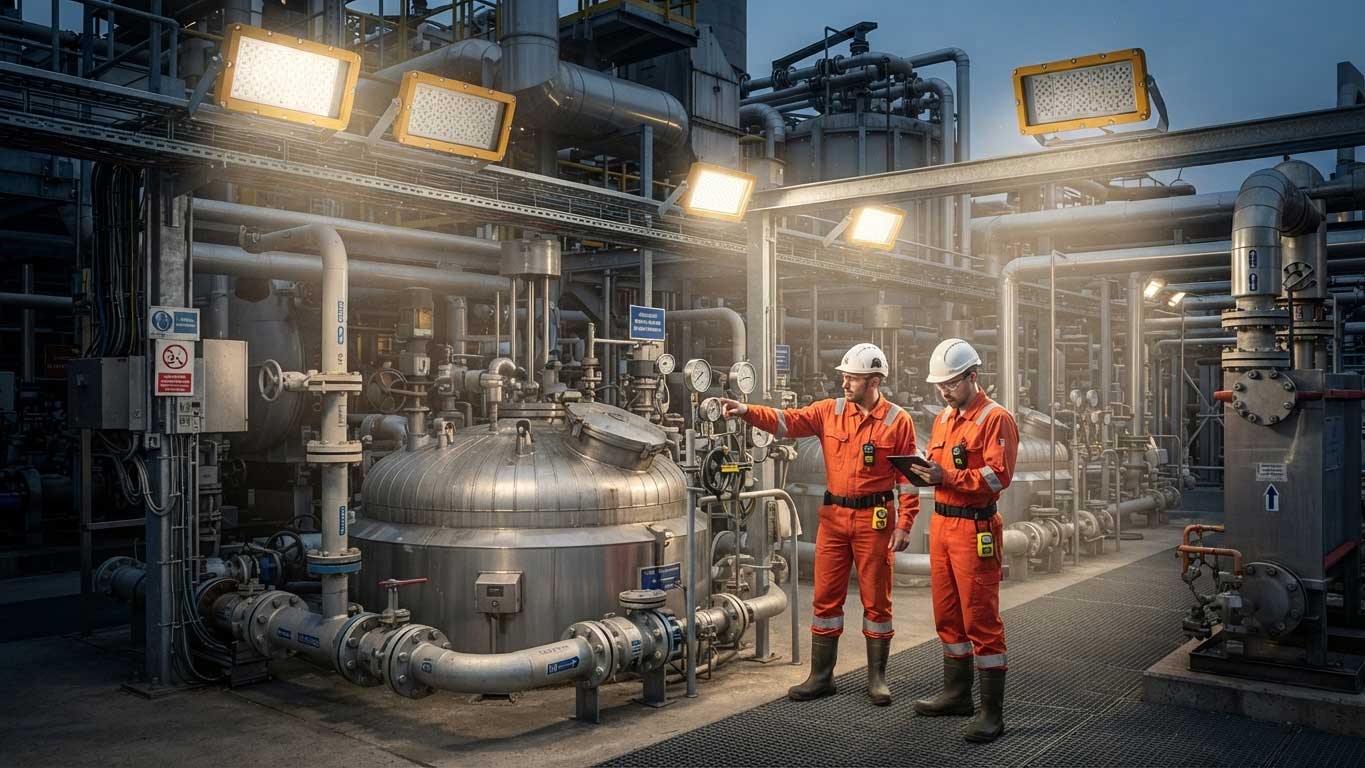
Certified lighting still requires correct maintenance practices.
Recommended checks include:
Inspect:
Monitor:
Keep records of:
Proper records help maintenance teams make better decisions.
Hazardous area lighting is moving toward:
However, safety certification remains the foundation.
New technology must still meet strict requirements before being introduced into explosive environments.
The future of ATEX lighting is not simply brighter fixtures.
It is safer, more efficient, and more connected industrial infrastructure.
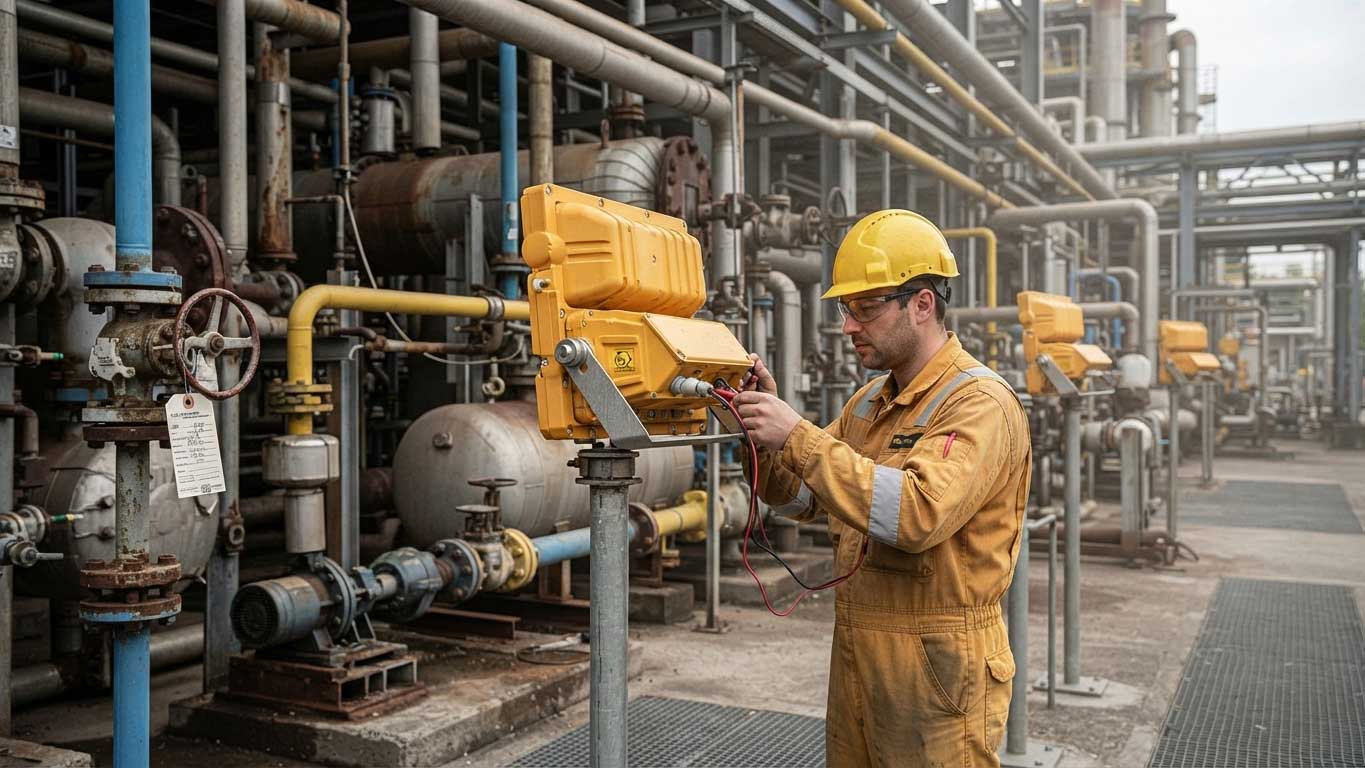
ATEX light fittings are used in hazardous locations where explosive gases, vapors, or combustible dust may exist, including oil, gas, chemical, and industrial facilities.
ATEX certification confirms that equipment has been designed and tested for use in potentially explosive atmospheres according to European safety requirements.
Yes, but the specific fitting must have the correct Zone 1 approval, equipment category, gas group, and temperature classification.
LED ATEX fittings generally provide longer service life, lower energy consumption, and reduced maintenance compared with many traditional lighting technologies.
Common applications include:
Service life depends on operating conditions, temperature, and product design. Quality industrial LED fittings are commonly designed for tens of thousands of operating hours.
Buyers should verify:
atex light fittings provide certified illumination for industrial environments where explosive atmospheres may occur.
The correct lighting solution depends on more than brightness or price. Hazard classification, certification, environmental resistance, and lifecycle performance determine whether a fixture is suitable.
For oil and gas facilities, chemical plants, offshore applications, and other hazardous industries, SEEKINGLED focuses on developing lighting solutions that combine safety engineering with practical industrial experience.
In explosive environments, dependable lighting supports more than visibility—it supports safer operations and more reliable industrial performance.
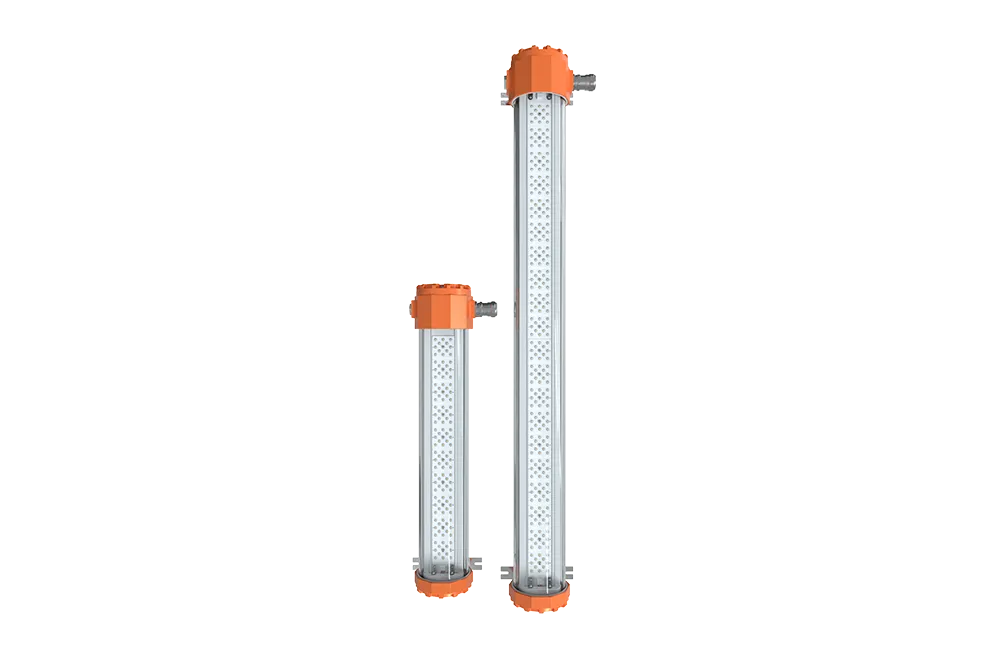
SEEKINGLED LED Linear Explosion Proof Light and Explosion Proof lighting is ATEX and IECEx certified for Zone 1, Zone 2, Zone 21 and Zone 22 hazardous locations, built for long-term industrial use.
View details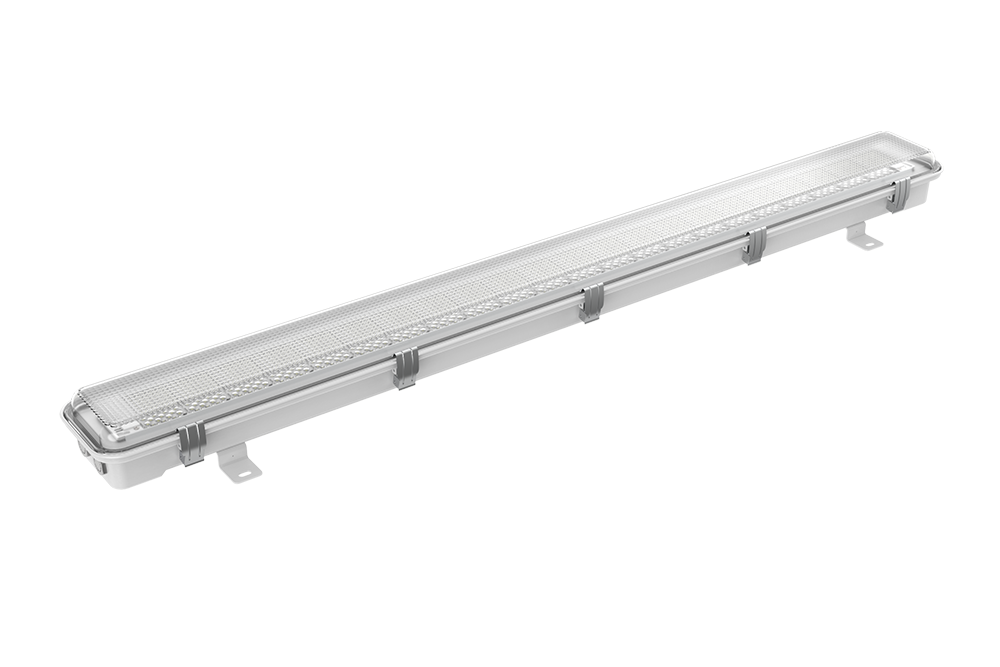
LED Linear Explosion Proof Lights and EX Proof lights for Zone 1, Zone 2, Zone 21 and Zone 22 hazardous areas. ATEX & IECEx certified explosion proof LED linear lighting with emergency function, adjustable power and IP67 protection by SEEKINGLED.
View details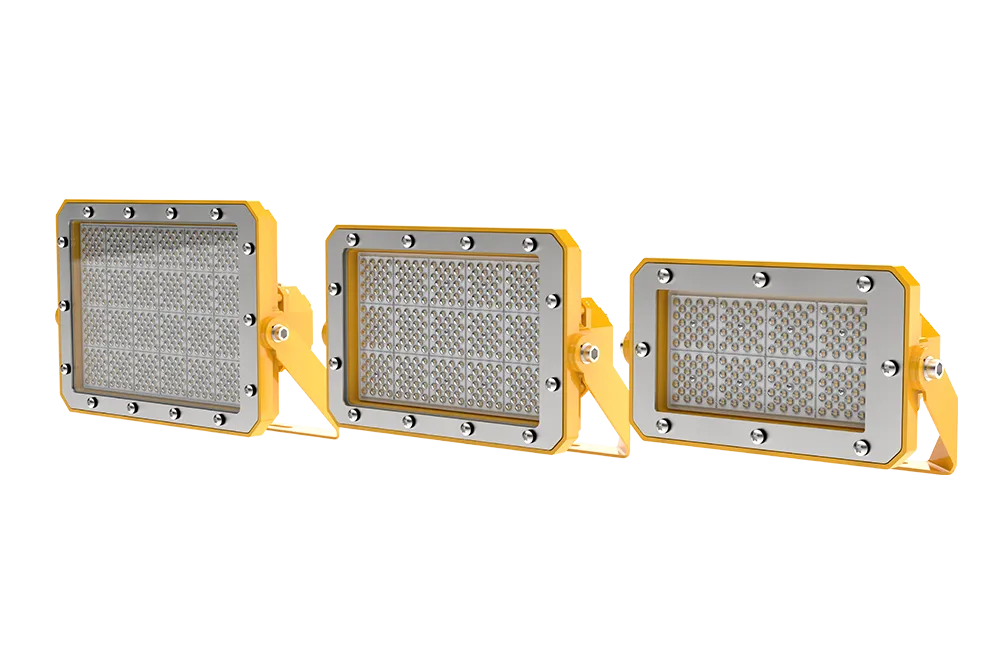
SEEKINGLED LED Explosion Proof Flood Lights are ATEX certified for Zone 2 and Zone 22 hazardous areas, offering high efficiency, adjustable power and integrated junction box.
View details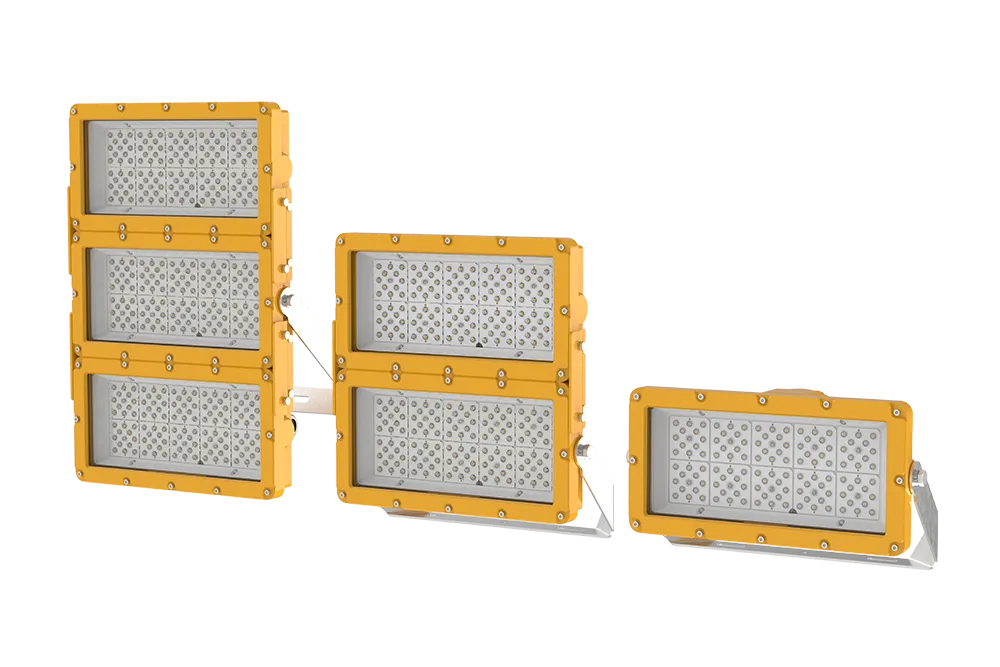
SEEKINGLED LED Explosion Proof Flood Lights are flameproof ATEX and IECEx certified for Zone 1 and Zone 2 hazardous areas, offering high power, adjustable output and long service life.
View details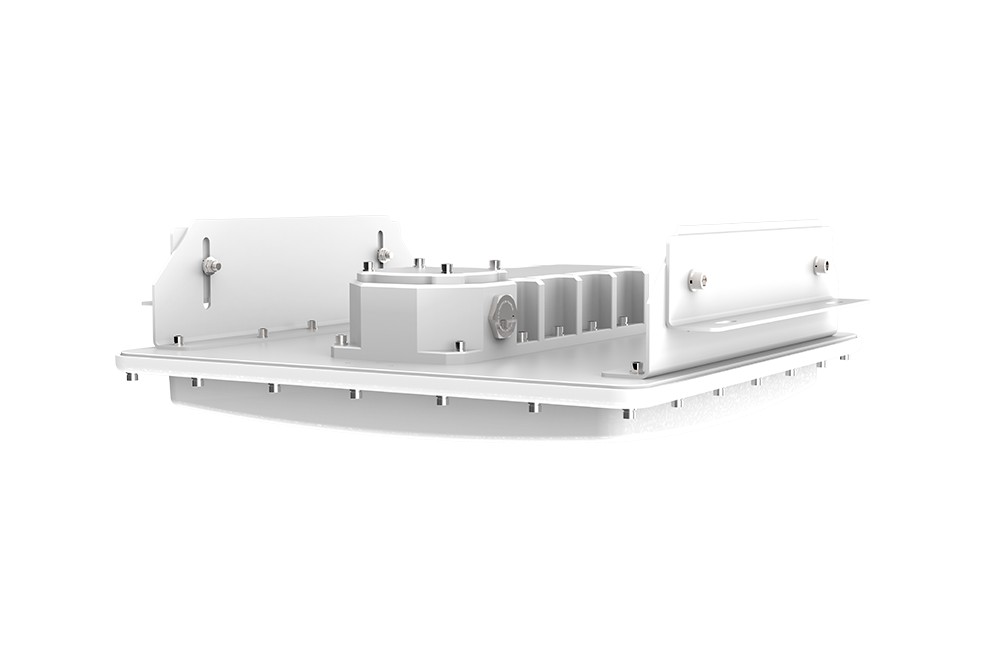
SEEKINGLED LED Gas Station Canopy Lights are ATEX certified for Zone 2 and Zone 22 hazardous areas, featuring adjustable power and built-in explosion-proof junction box.
View details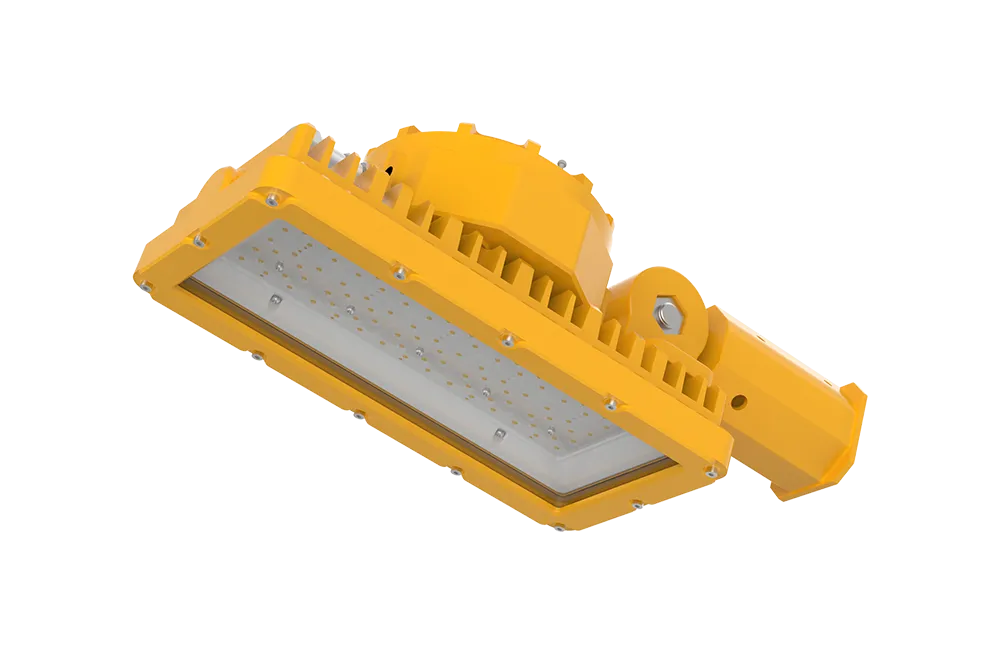
ATEX: Ex II 2G Ex db IIB T6/T5 GbEx II 2D Ex tb IIIC T80°C/ T95°C Db IECEx Ex db IIB T6 Gb;Ex tb IIIC T80°C Db Feature: ● For Zone 1,2 and Zone 21,22● Flameproof type, the strongest● 100W can replace 250W HID,energy saving● Power:60W,80W,100W Application: Oil and gas, marine, Chemical, pharmaceutical, semiconductor,mining,military industr…
View details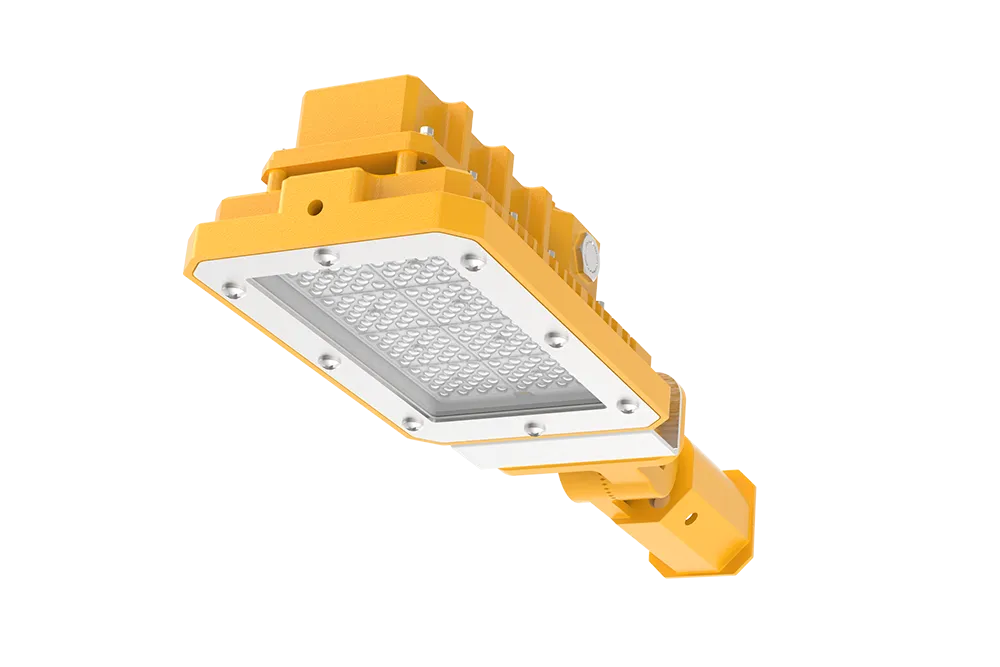
ATEX: II 3G Ex nR ⅡC T5/T6 GcII 3D Ex tc ⅢC T80℃/T95℃Dc ATEX Certificate NO: TÜV CY 26 ATEX 0207611 X Feature: ● For Zone 2 and Zone 22● 150W can replace 250W HID lamps,Energy saving● Power:50W,75W,100W,150W,200W Application: Oil and gas, marine, Chemical, pharmaceutical, semiconductor,mining,military industry, paint booth,power plant ETC…
View details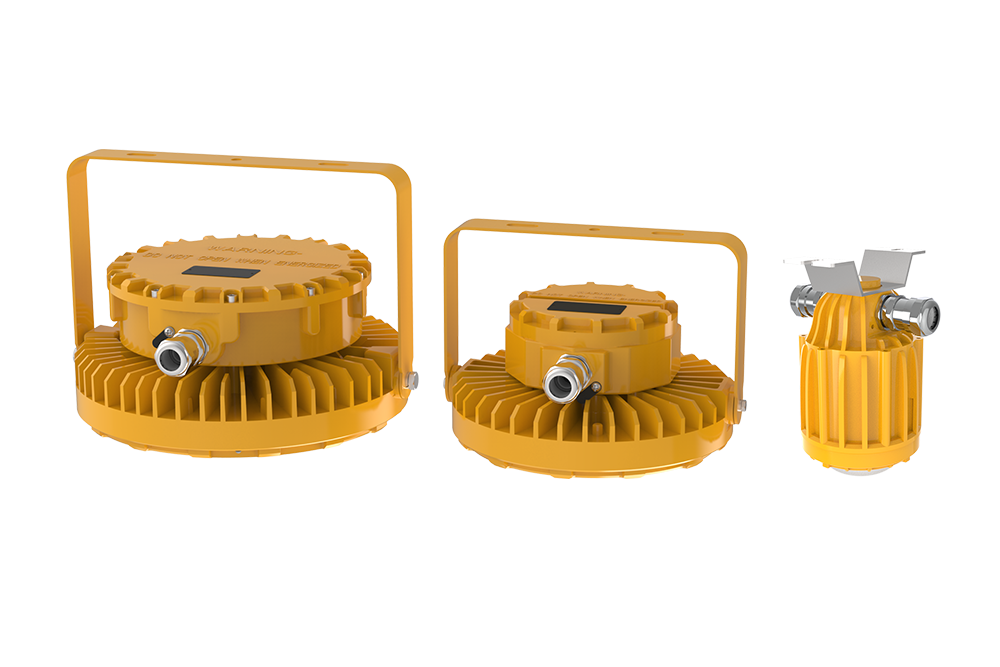
LED explosion proof high bay lights are designed for Zone 1, Zone 2, Zone 21 and Zone 22 hazardous areas. This page introduces the HB21 Series from SEEKING, including certifications, power options and real application considerations.
View details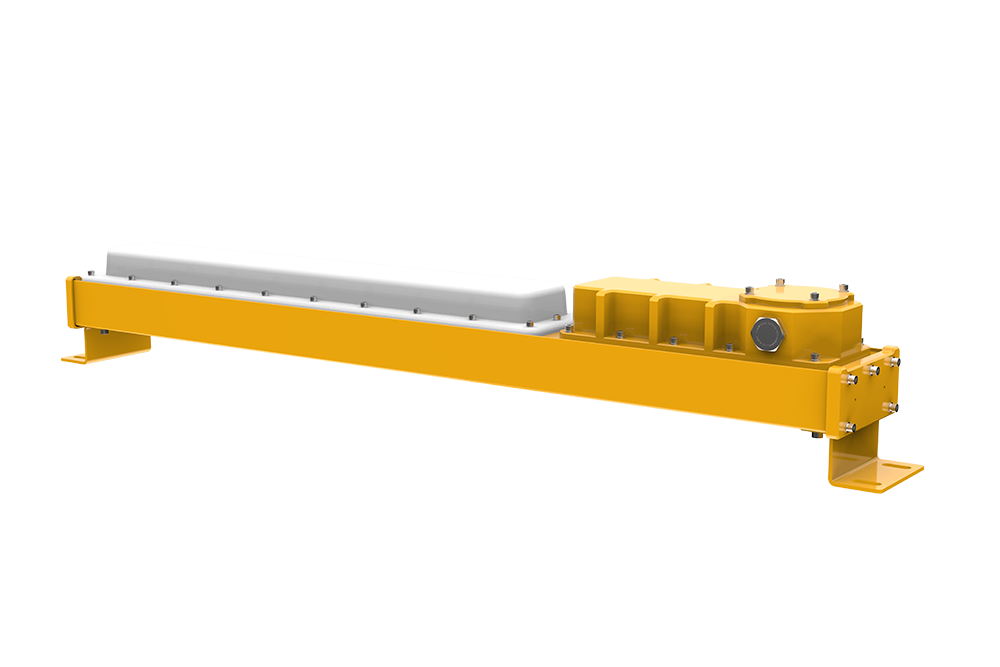
LED Linear Explosion Proof Lights from SEEKINGLED. LU Series Flame Proof lights ATEX-certified explosion proof LED linear lighting for Zone 2 gas and Zone 22 dust areas, IP69K, IK10, long lifetime and flexible power options.
View details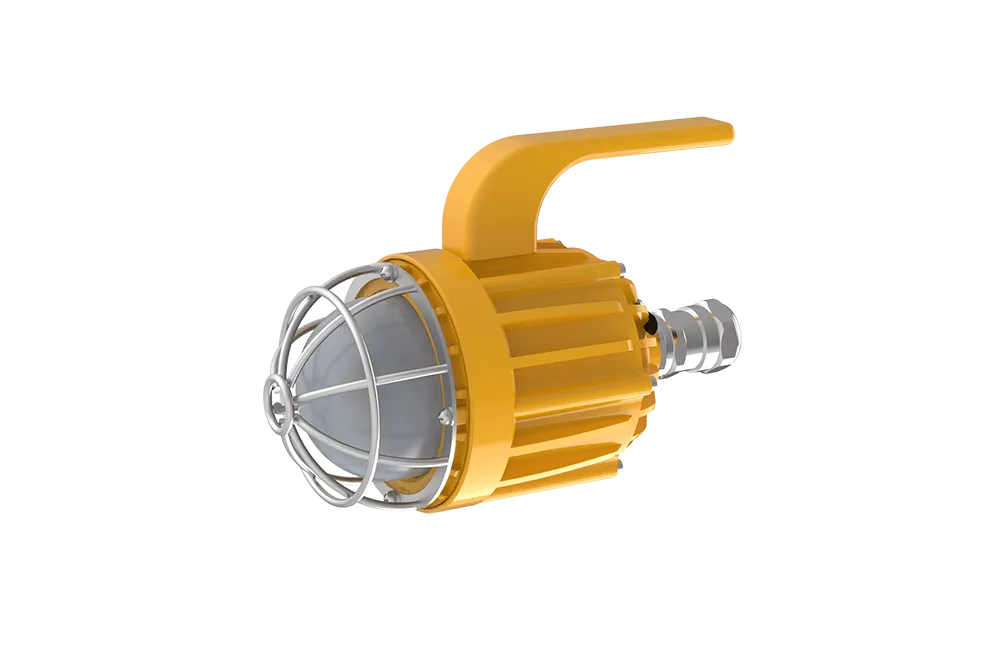
Certified explosion proof work lights for Zone 1 & 21 hazardous areas. Portable, ATEX & IECEx approved, built for oil, gas and chemical plants by SEEKINGLED.
View details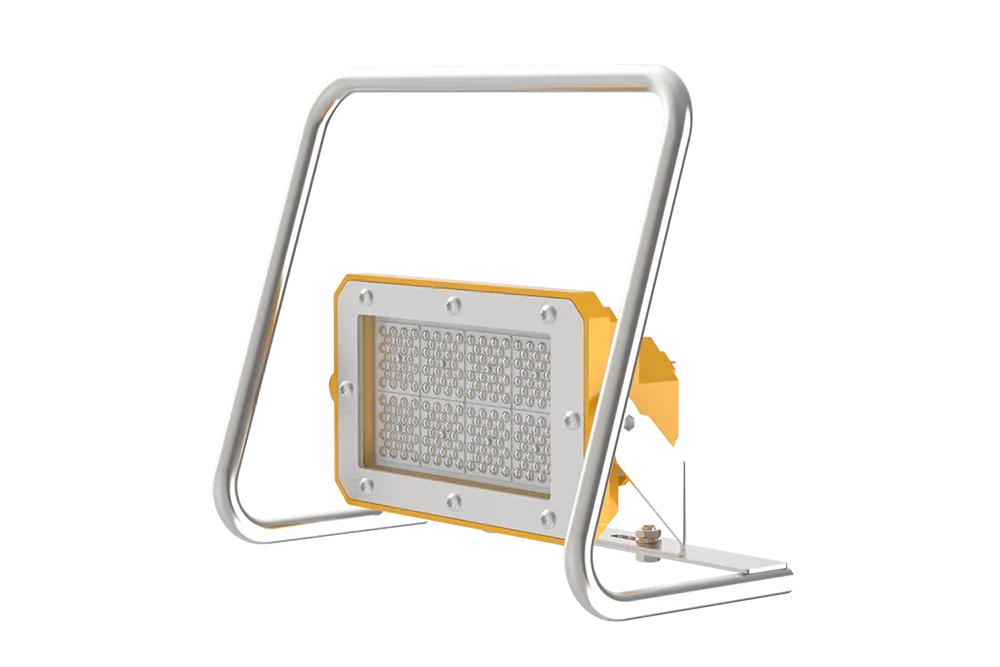
ATEX: II 3G Ex nR ⅡC T6 GcII 3D Ex tc ⅢC T80℃ Dc ATEX Certificate NO: TÜV CY 26 ATEX 0207611 X Feature: ● For Zone 2 and Zone 22● Accepts battery-powered supply● indestructible● Power:AC input:50W,75W,100WDC input:15W,25W,35W Application: Oil and gas, marine, Chemical, pharmaceutical, semiconductor,mining,military industry, paint booth,po…
View details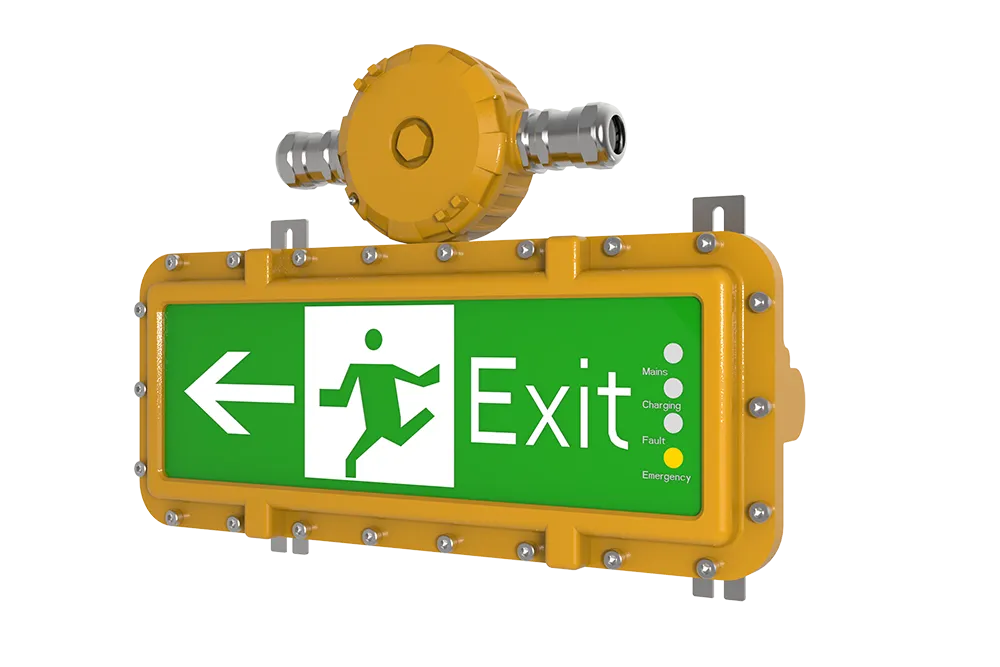
ATEX: Ex II 2G Ex db IIB T6 GbEx II 2D Ex tb IIIC T80°C Db IECEx Ex db IIB T6 Gb;Ex tb IIIC T80°C Db Feature: ● For Zone 1,2 and Zone 21,22● Flameproof type, the strongest Application: Oil and gas, marine, Chemical, pharmaceutical, semiconductor,mining,military industry, paint booth,power plant ETC hazardous area. Technical Specifications:…
View details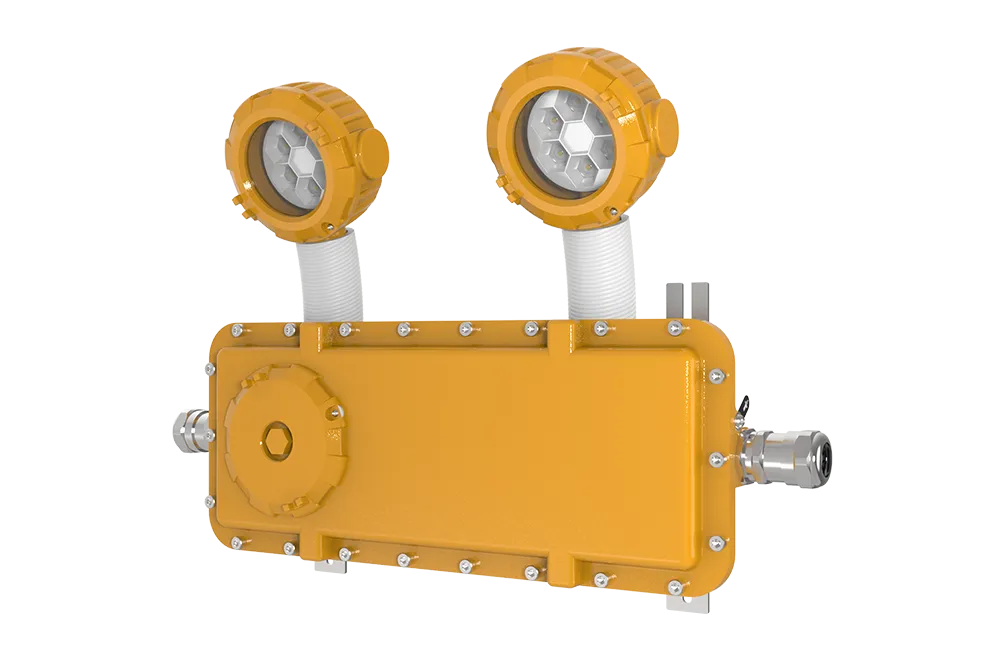
ATEX: Ex II 2G Ex db IIB T6 GbEx II 2D Ex tb IIIC T80°C Db IECEx Ex db IIB T6 Gb;Ex tb IIIC T80°C Db Feature: ● For Zone 1,2 and Zone 21,22● Flameproof type, the strongest Application: Oil and gas, marine, Chemical, pharmaceutical, semiconductor,mining,military industry, paint booth,power plant ETC hazardous area. Technical Specifications:…
View details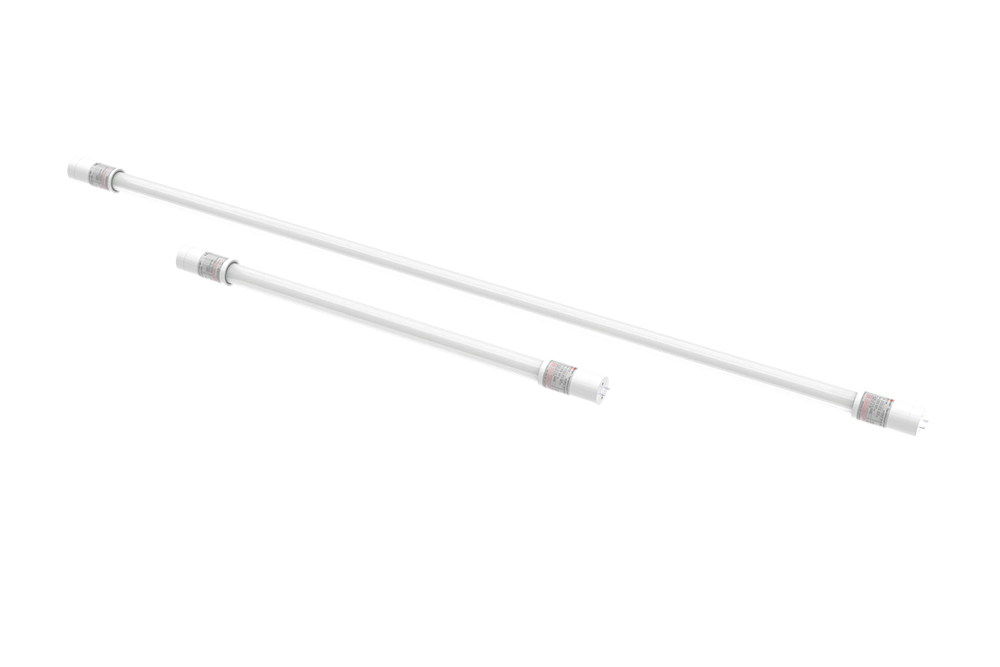
ATEX: Ex II 2G Ex d e IIB T6 Gb ATEX: Ex d e IIB T6 Gb; Feature: ● For Zone 1,2● 9W can replace 18W fluorescent lamps,50% Energy saving Application: Oil and gas, marine, Chemical, pharmaceutical, semiconductor,mining,military industry, paint booth,power plant ETC hazardous area. Technical Specifications: Standards:60079-0, 60079-1, 60079…
View details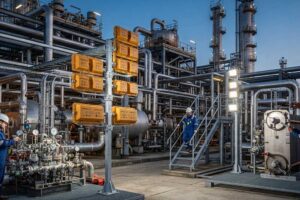
what are atex zones? Learn ATEX hazardous area classifications, zone 0, zone 1, zone 2, and how explosion-proof lighting protects industrial facilities.
View details
LED interior flood lights deliver efficient, uniform indoor lighting. Explore real-world insights, energy data, and expert tips for reliable performance.
View details
100w led high bay light is widely used in warehouses and workshops. See where it works best, where it doesn’t, and how to choose wisely.
View details
How many amps do 12 volt LED lights draw? Get real calculations, field-tested examples, and practical tips to size your power system correctly.
View details