 Seeking LED
XJ-HBS150W Replaces 600W Metal Halide Lighting in Factory
311Factory lighting upgrade using XJ-HBS150W high bays to replace 600W metal halide lamps, achieving over 75% energy savings after redesign and on-site testing.
View detailsSearch the whole station
atex zone 2 lighting is designed for hazardous locations where explosive gas atmospheres are unlikely during normal operation but may occur briefly, providing reliable illumination with certified protection and industrial durability.
In many industrial facilities, Zone 2 areas represent a unique challenge. The risk is lower than Zone 0 or Zone 1, but the consequences of incorrect lighting selection can still be serious.
At SEEKINGLED, we have supported industrial lighting requirements for applications including oil and gas facilities, chemical plants, manufacturing sites, and outdoor processing areas. Through years of discussing lighting solutions with engineers and contractors, we have found that Zone 2 projects often require a balance between safety compliance, energy efficiency, and practical installation needs.
The question is not simply:
“How bright should the light be?”
The more important question is:
“Will this lighting system remain safe and reliable under the actual operating conditions?”
atex zone 2 lighting refers to lighting equipment designed for areas where explosive gas atmospheres are not normally present but may occur temporarily due to abnormal conditions.
According to IEC 60079-10-1, hazardous areas are classified according to the probability and duration of explosive atmospheres.
Reference:
International Electrotechnical Commission – IEC 60079 Explosive Atmospheres Standards
https://www.iec.ch/standards
The basic gas zone classification includes:
| Hazardous Zone | Description |
|---|---|
| Zone 0 | Explosive atmosphere exists continuously or for long periods |
| Zone 1 | Explosive atmosphere is likely during normal operation |
| Zone 2 | Explosive atmosphere is unlikely and only exists briefly |
Zone 2 is commonly found in industrial locations where leaks or releases may happen occasionally.
Many industrial facilities contain areas where combustible gases may appear temporarily.
Examples include:
In these environments, lighting equipment must provide dependable operation without creating unnecessary risks.
A professional Zone 2 lighting solution helps companies achieve:
ATEX certification provides a framework for equipment used in explosive atmospheres.
Reference:
European Commission – ATEX Equipment Directive 2014/34/EU
https://single-market-economy.ec.europa.eu/sectors/mechanical-engineering/equipment-potentially-explosive-atmospheres-atex_en
Zone 2 equipment generally requires protection suitable for environments where explosive atmospheres occur only under abnormal situations.
Common considerations include:
For industrial buyers, certification documentation helps confirm that the product matches the intended application.
Zone 2 environments still expose lighting equipment to demanding conditions.
A reliable fixture may require:
For example, outdoor processing facilities may experience:
The lighting system must continue operating despite these challenges.
LED technology has become widely adopted in hazardous industrial lighting because of:
According to the U.S. Department of Energy, LED lighting uses significantly less energy compared with traditional lighting technologies.
Reference:
U.S. Department of Energy – LED Lighting
https://www.energy.gov/energysaver/led-lighting
For large industrial sites with hundreds or thousands of fixtures, efficiency improvements can have a measurable impact.
Zone 2 areas are common in:
Typical lighting applications include:
The lighting system must support workers while meeting hazardous location requirements.
Chemical facilities often include areas where vapors may occasionally escape.
Applications include:
The correct lighting choice depends on:
Some manufacturing facilities require Zone 2 lighting because of:
Examples include:
Experienced engineers usually evaluate several factors before choosing lighting equipment.
Confirm:
Review:
Consider:
A fixture that works well in one Zone 2 application may not be suitable for another.
A hazardous lighting product depends on manufacturing accuracy.
Important production steps include:
| Process | Purpose |
|---|---|
| Material inspection | Ensure component quality |
| Assembly control | Maintain product consistency |
| Electrical testing | Verify performance |
| Thermal testing | Control operating temperature |
| Final inspection | Confirm shipment quality |
For industrial projects, consistency matters because dozens or hundreds of fixtures may be installed together.
During conversations with industrial customers, I have noticed that many Zone 2 projects are not difficult because of the lighting itself.
The challenge is understanding the environment.
One customer initially focused on replacing old fixtures with brighter LED models.
After reviewing the installation area, the discussion changed toward:
The final decision was not based on maximum brightness.
It was based on choosing a product that matched the actual working conditions.
This approach prevents problems that often appear after installation.
A professional manufacturer can provide:
For industrial customers, supplier experience can reduce project uncertainty.
| Feature | atex zone 2 lighting | Standard LED Lighting |
|---|---|---|
| Hazardous area certification | Required | Usually unavailable |
| Explosion protection | Designed for classified areas | General use |
| Industrial application | Chemical, oil, gas | Normal facilities |
| Temperature control | Considered | Basic |
| Safety documentation | Provided | Limited |
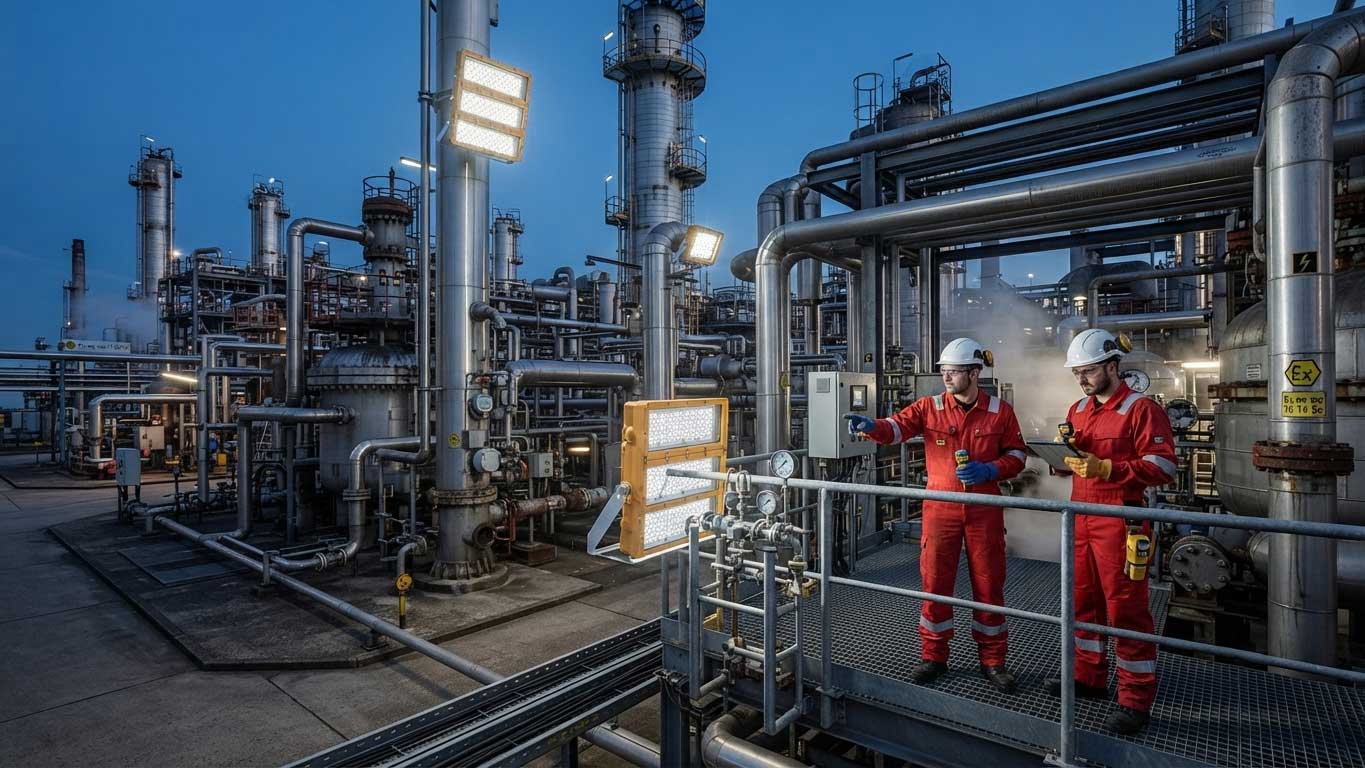
At SEEKINGLED, we focus on developing hazardous area lighting solutions that combine:
A successful atex zone 2 lighting project depends on understanding the environment, selecting the correct protection level, and ensuring reliable performance over years of operation.Visit the product page: Explosion Proof Lighting
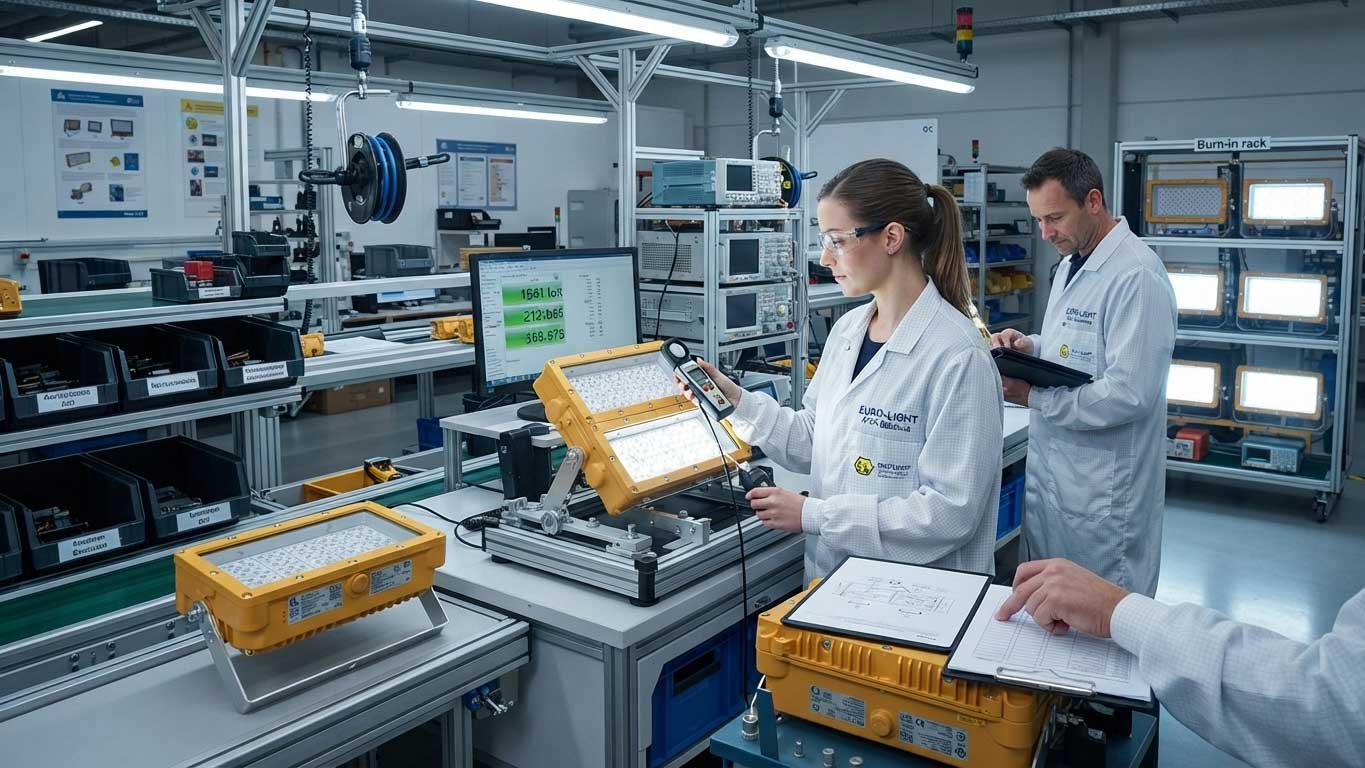
A professional atex zone 2 lighting manufacturer must control quality throughout the entire production process.
Unlike ordinary industrial lighting, hazardous area products require additional verification because they are installed in environments where safety is a critical requirement.
Typical testing procedures include:
| Testing Area | Purpose |
|---|---|
| Electrical inspection | Verify stable electrical performance |
| Thermal testing | Confirm safe operating temperature |
| Enclosure testing | Check protection against dust and moisture |
| Mechanical testing | Evaluate structural durability |
| Certification review | Ensure compliance documentation |
The purpose of these tests is not only to confirm that a fixture works when new.
The goal is to ensure reliable operation after years of industrial service.
LED technology offers excellent efficiency, but heat management remains important.
In hazardous locations, excessive surface temperature may create additional risks depending on the surrounding gases.
Engineers evaluate:
A well-designed fixture should maintain stable operation during:
This is especially important in facilities where lighting remains active for long periods.
Even a certified product requires correct installation.
Engineers should consider:
The fixture position affects:
Outdoor installations may require consideration of:
Installation teams must verify:
A lighting system performs best when product selection and installation planning are considered together.
Choosing a supplier is often as important as choosing the product.
Before purchasing, buyers should evaluate:
| Evaluation Point | Questions |
|---|---|
| Certification experience | Does the supplier understand ATEX requirements? |
| Product quality | Are testing procedures available? |
| Engineering support | Can they recommend suitable solutions? |
| Industrial experience | Have they supported similar projects? |
| Documentation | Are technical files complete? |
A manufacturer with hazardous area experience can help customers avoid unsuitable product selections.
Many industrial facilities operate lighting systems for thousands of hours every year.
Replacing traditional lighting with efficient LED solutions can help reduce:
According to the U.S. Department of Energy, LED products typically use at least 75% less energy and last up to 25 times longer than incandescent lighting.
Reference:
U.S. Department of Energy – LED Lighting
https://www.energy.gov/energysaver/led-lighting
For industrial sites with extensive lighting networks, these improvements can significantly affect operating expenses.
In industrial projects, lighting selection is often connected with broader operational goals.
A maintenance manager may not only ask:
“How bright is this fixture?”
They may also consider:
During hazardous lighting discussions, I have seen projects where the cheapest initial option created higher long-term costs because replacement work required additional downtime.
A slightly better-engineered lighting solution often provides better value throughout the product lifecycle.
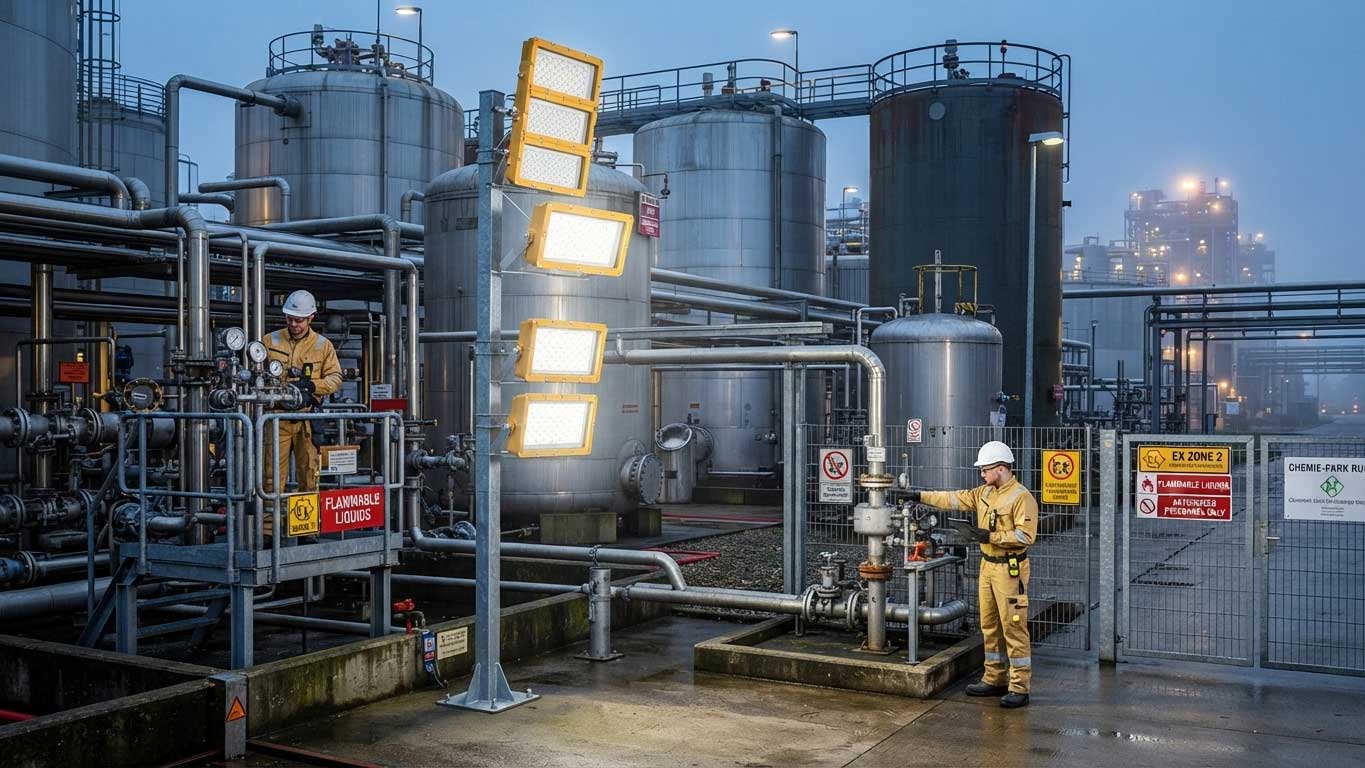
atex zone 2 lighting is designed for hazardous areas where explosive gas atmospheres are unlikely during normal operation but may occur temporarily due to abnormal conditions.
Typical applications include:
Zone 1 lighting is designed for areas where explosive atmospheres may occur during normal operation, while Zone 2 lighting is intended for locations where such conditions are rare and temporary.
Yes. Products used in ATEX classified areas require appropriate certification according to the hazardous zone and application requirements.
Yes. LED technology is widely used because it offers high efficiency, long service life, and reduced maintenance compared with traditional lighting technologies.
Selection should consider:
Experienced manufacturers understand hazardous area requirements, industrial environments, certification processes, and the practical challenges of long-term operation.
Selecting the correct atex zone 2 lighting solution requires a clear understanding of the working environment, hazardous classification, and operational requirements.
The best lighting choice is not always the fixture with the highest brightness or lowest purchase price.
A reliable solution combines:
For oil and gas facilities, chemical plants, and industrial applications, lighting plays an important role in creating safer and more efficient working environments.
SEEKINGLED focuses on providing hazardous area lighting solutions developed around real industrial needs, helping customers achieve dependable illumination in challenging locations.
Factory lighting upgrade using XJ-HBS150W high bays to replace 600W metal halide lamps, achieving over 75% energy savings after redesign and on-site testing.
View details
Gym lighting solutions for fitness centers explained from an engineering perspective. This SEEKINGLED news article covers LED high bay, linear lighting design, glare control, lux levels, and energy efficiency.
View details
A flood light is called a “flood” light because it spreads controlled illumination across a broad area instead of concentrating light into a small spot.
View details
LED high bay light UFO designed for large indoor spaces requiring low glare, high efficiency and long-term reliability. SEEKINGLED HB13(GLK) Series delivers up to 170 lm/W, UGR
View details