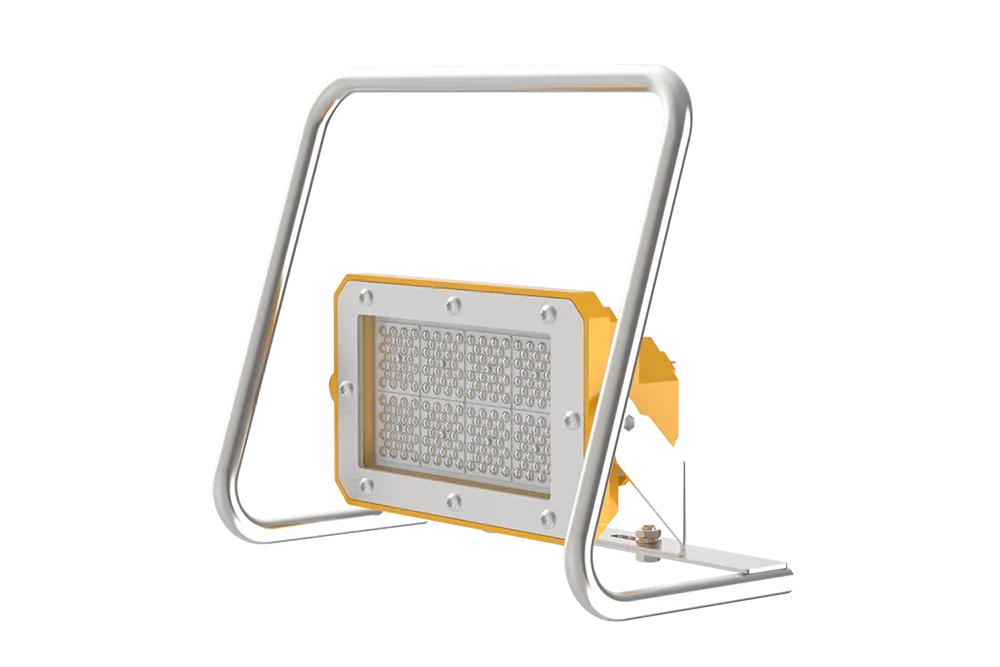
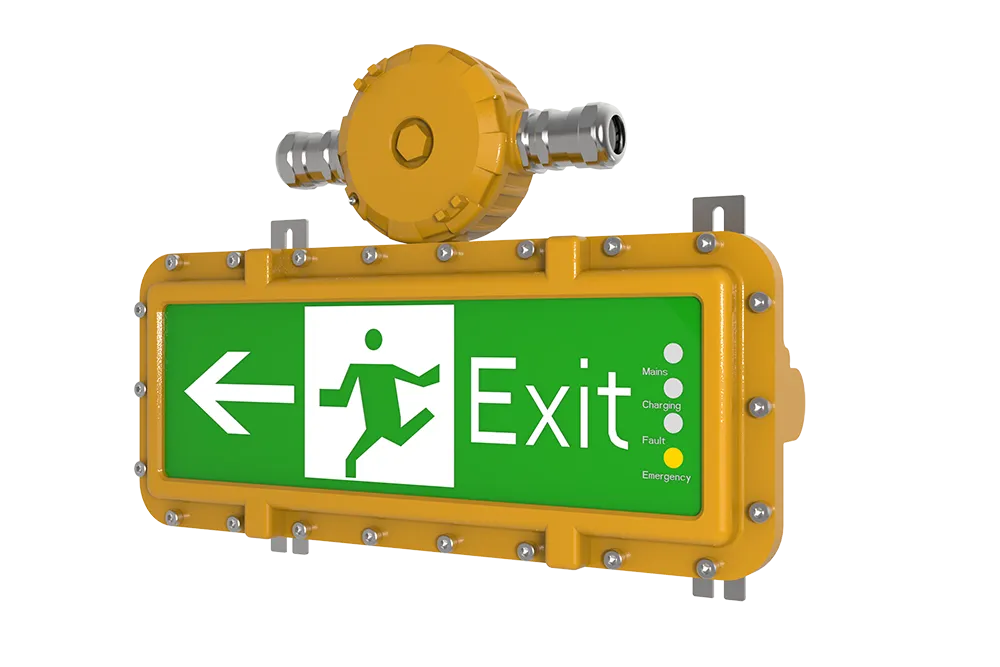
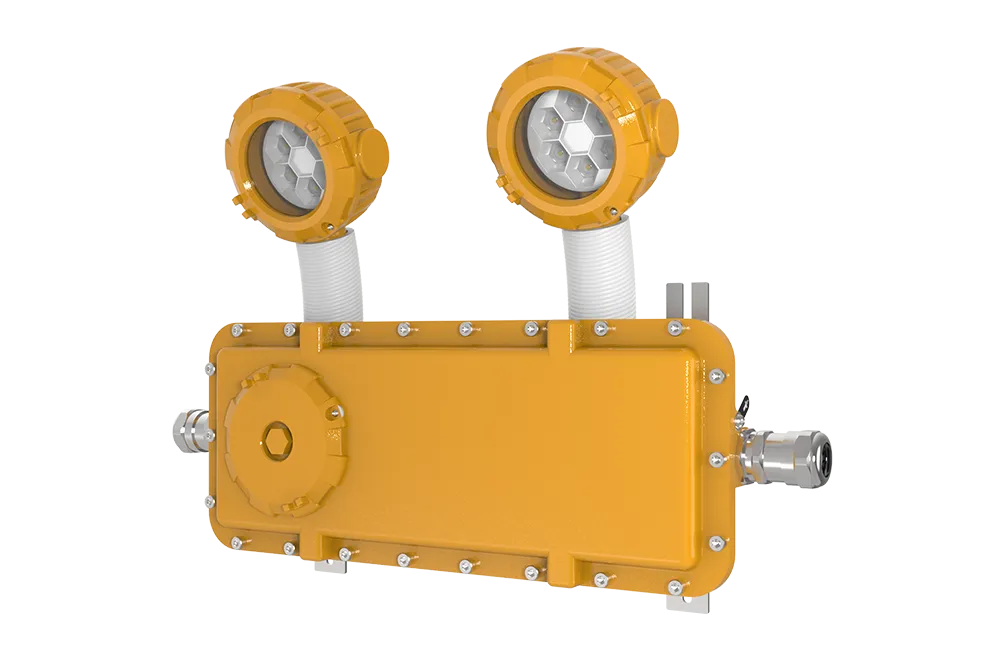
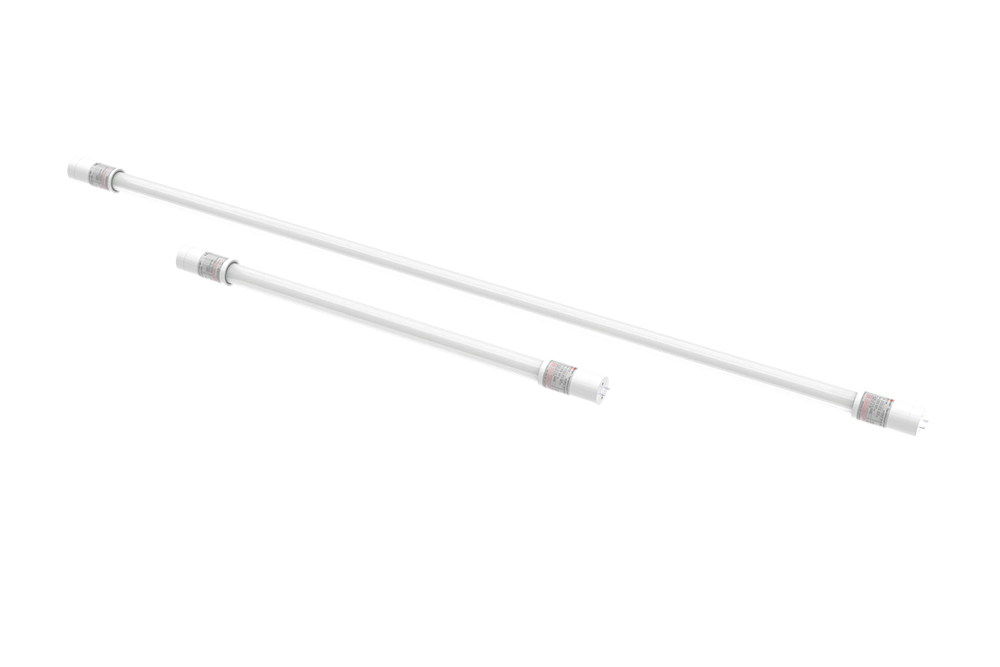
An explosion proof led light fixture is never just another industrial lamp. In hazardous facilities — refineries, chemical processing units, offshore platforms — it becomes part of the safety architecture. I’ve spent more than a decade working in hazardous lighting engineering, from specification review to on-site commissioning. I’ve stood on offshore decks checking torque values on flameproof joints, and I’ve rejected shipments that didn’t match certificate markings. That perspective shapes how we design at SEEKINGLED.
This article isn’t a brochure rewrite. It’s what I’ve learned the hard way.
Understanding Compliance Beyond the Label
In hazardous locations, compliance is not marketing language. Standards defined by the International Electrotechnical Commission under IEC 60079 govern equipment used in explosive atmospheres. In North America, hazardous classifications are guided by the NEC framework overseen by the National Fire Protection Association.
An explosion proof led light fixture must:
Contain internal ignition (Ex d flameproof)
Prevent excessive surface temperature (T-rating compliance)
Resist ingress of dust or gas (IP66/IP67 typical)
Withstand pressure during internal explosion tests
It sounds straightforward until you see a failed test. I’ve witnessed flameproof enclosures deform under pressure during certification testing. Tolerances that look fine on CAD drawings can fail under real explosion simulation.
Certification is not optional — and it’s never superficial.
Energy Efficiency and Thermal Reality
LED technology significantly improved industrial lighting efficiency. According to the U.S. Department of Energy, industrial LED systems can reduce energy consumption by 50–70% compared to legacy HID fixtures. Lower wattage reduces operating costs and heat load.
But here’s the nuance: while LEDs are efficient, drivers still generate heat, and explosion proof enclosures are sealed. In high ambient conditions (45–55°C), internal temperatures can climb quickly.
During a refinery retrofit in Southeast Asia, we monitored several imported fixtures. After six hours at 50°C ambient, driver compartments approached the maximum temperature class limit. The LED chips remained stable — the electronics did not.
Since then, at SEEKINGLED, we require extended burn-in testing at rated ambient extremes. Thermal margin is not theoretical; it must be measured.
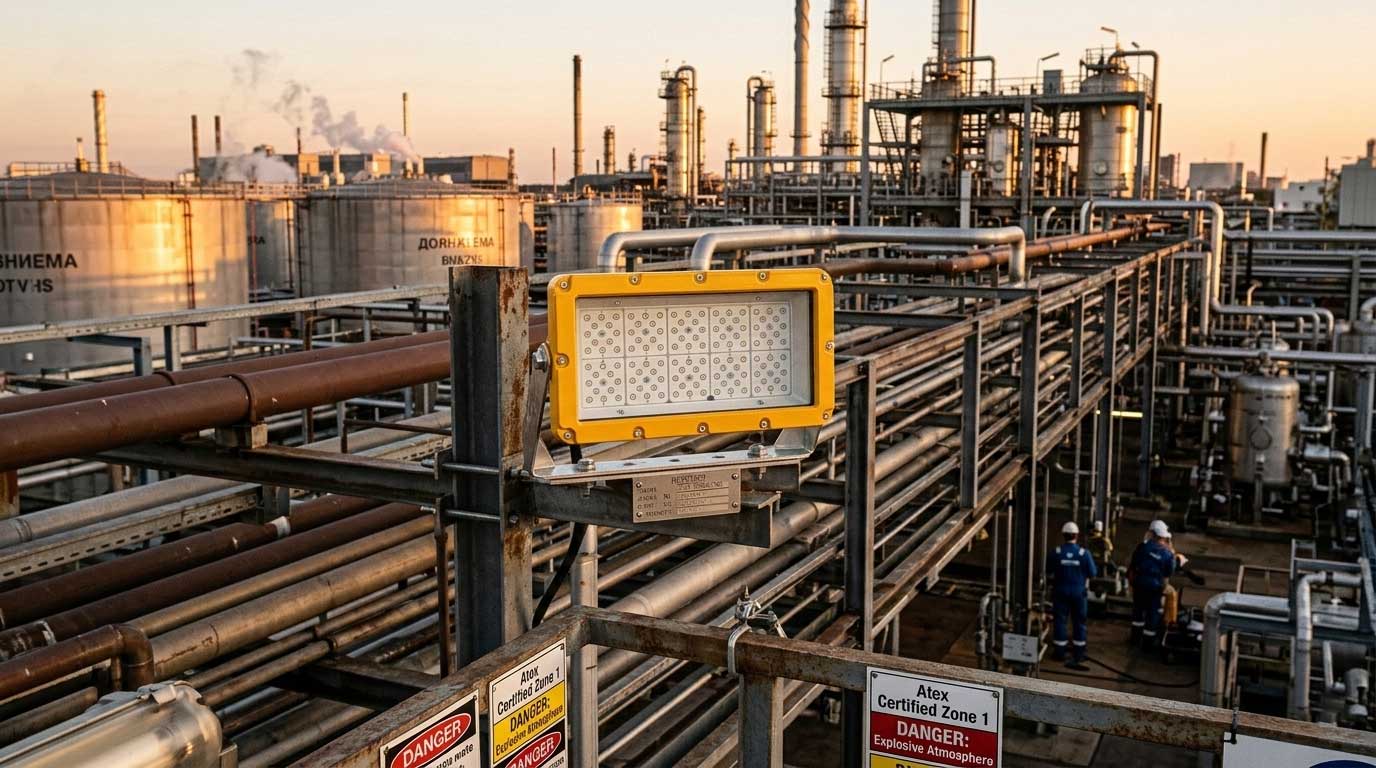
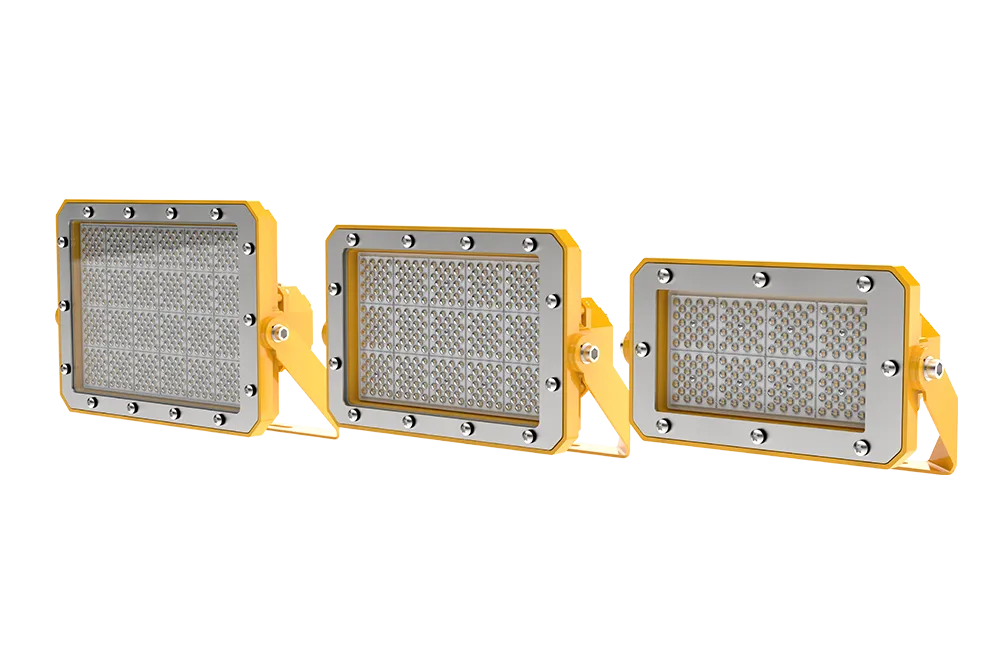
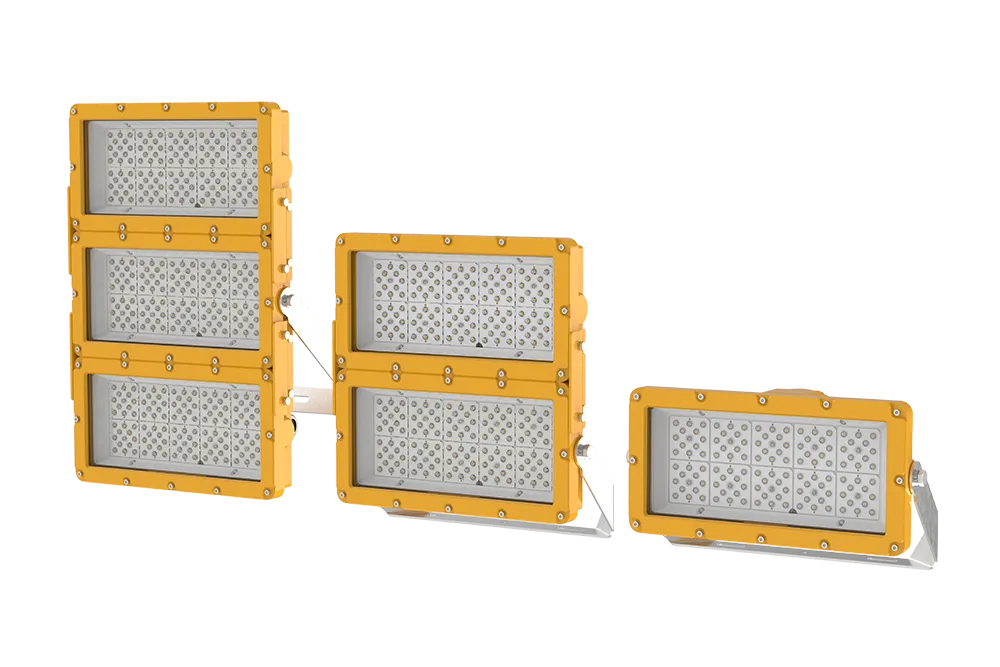
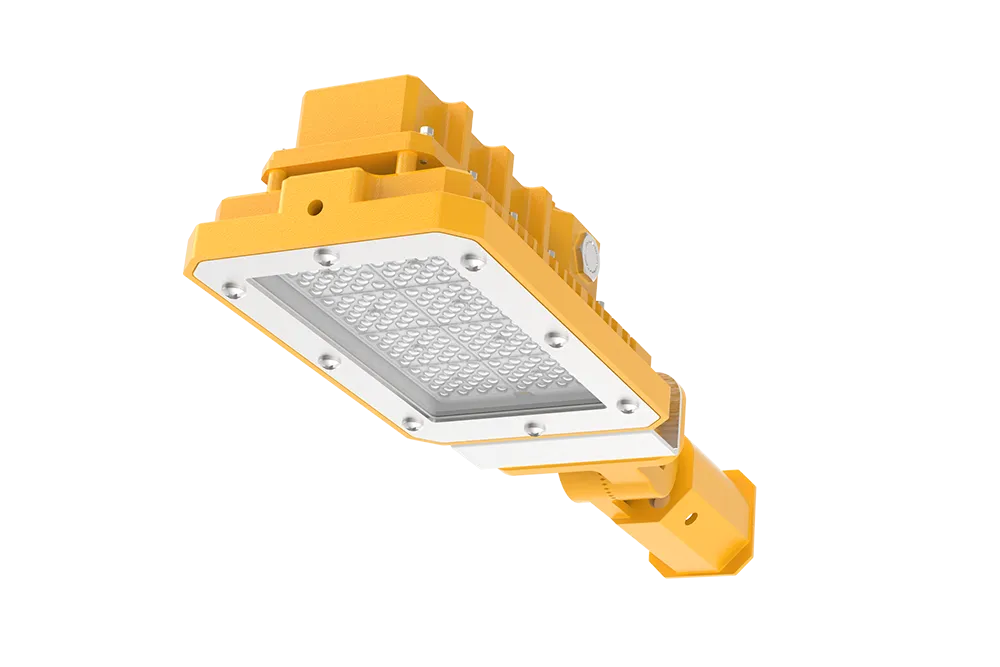
Certified explosion proof LED light fixture operating safely in hazardous refinery environment.
Mechanical Strength and Corrosion Resistance
Hazardous environments are aggressive. Offshore platforms introduce salt spray. Chemical plants generate corrosive vapors. Grain facilities create combustible dust clouds.
The International Energy Agency highlights that long-term reliability is essential to energy system performance. In practice, corrosion is one of the most common field issues I encounter.
I’ve inspected fixtures where powder coating blistered after three years offshore exposure. The LED modules worked fine — but the enclosure degraded. Once sealing integrity is compromised, certification value declines.
A reliable explosion proof led light fixture should incorporate:
Marine-grade anti-corrosion coating
Stainless steel external hardware
Reinforced cable glands
Precisely machined flamepaths
Material choice matters as much as electrical design.
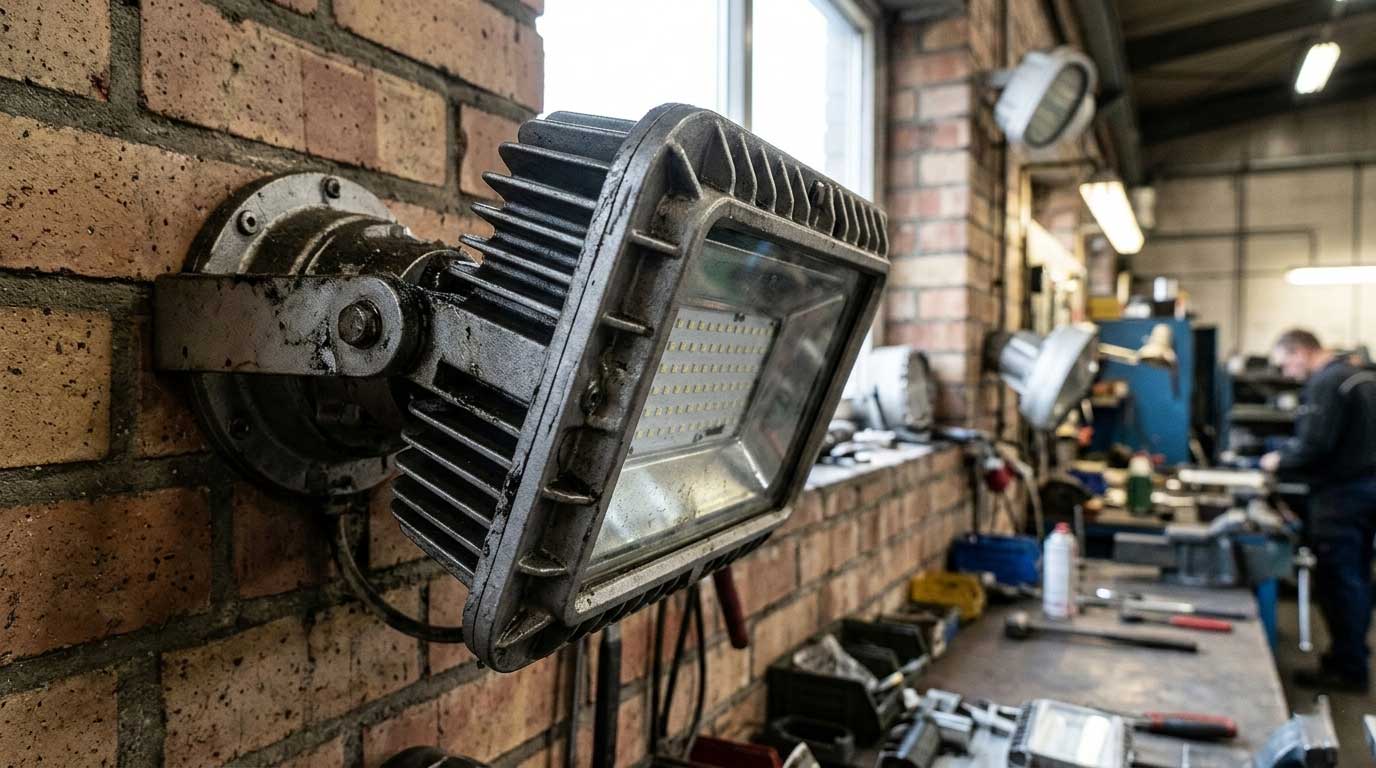
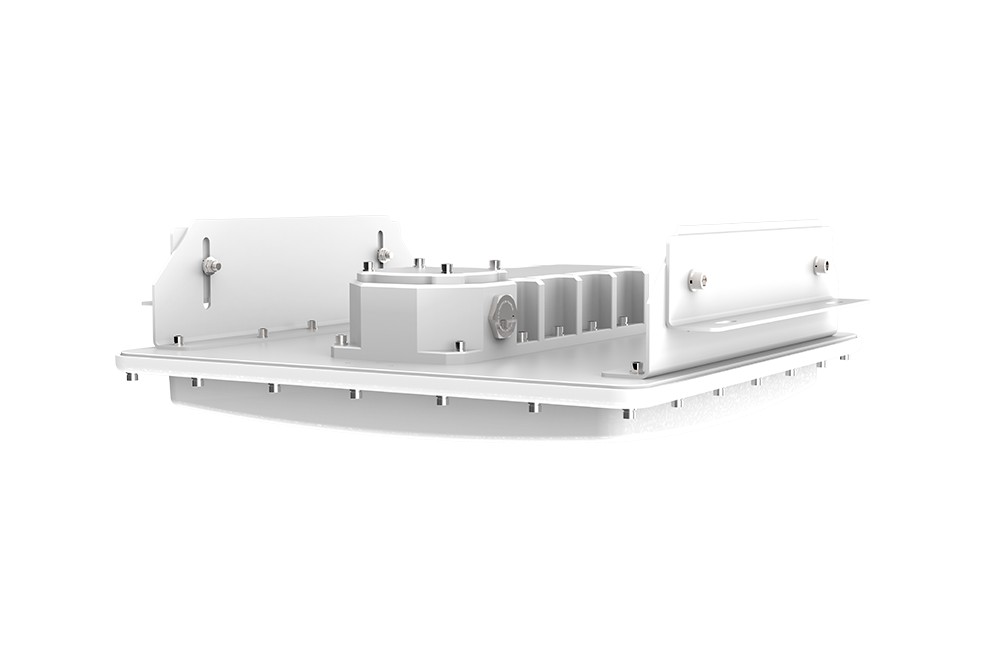
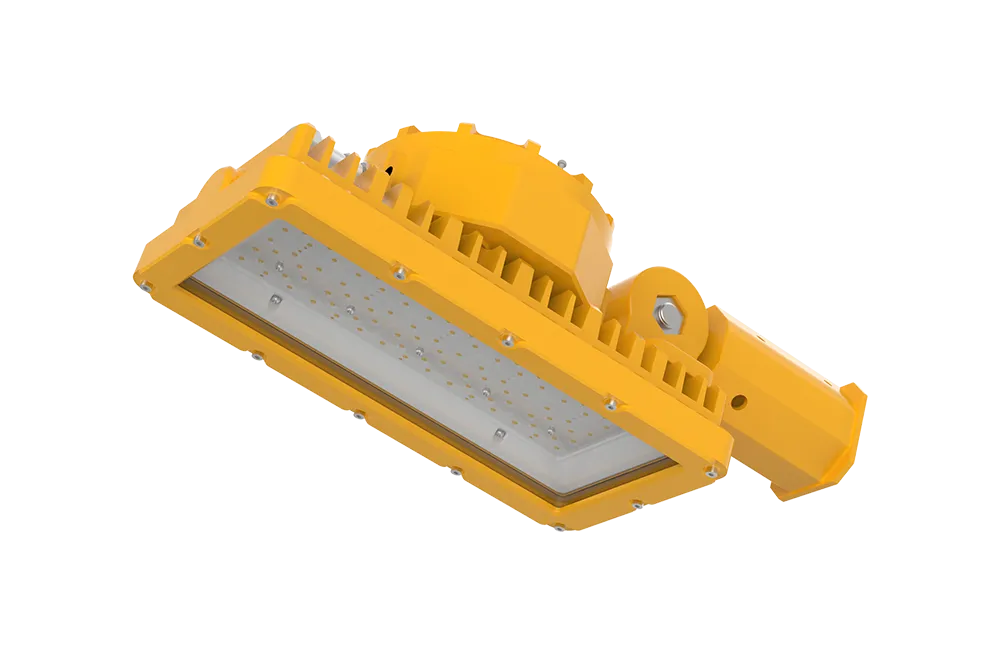
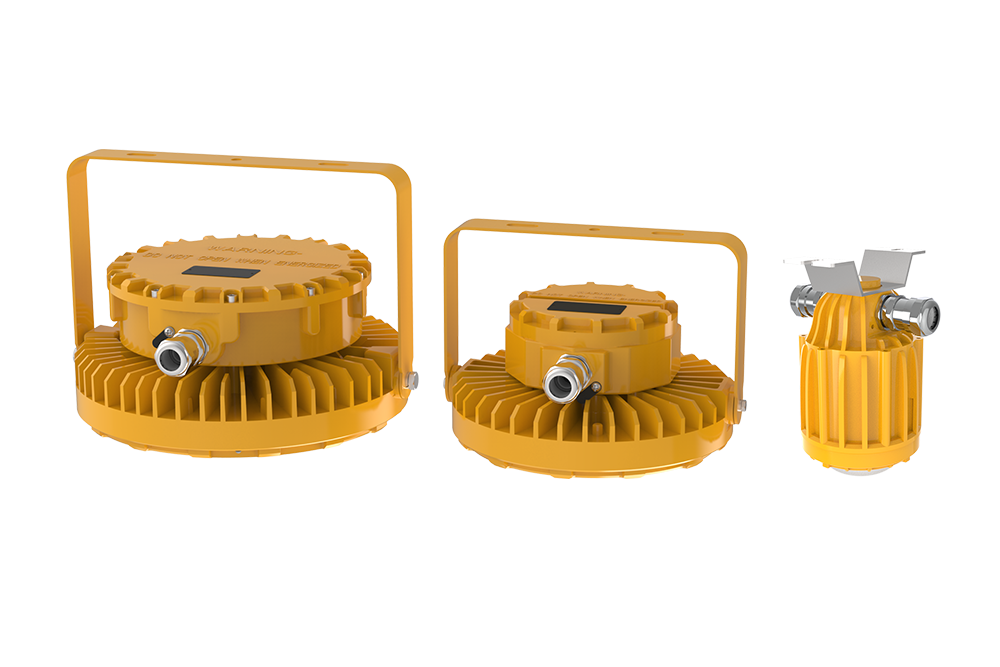
Heavy-duty aluminum housing engineered for heat dissipation and flame containment.
Installation Practicality in the Real World
Spec sheets don’t show how easy a fixture is to wire while wearing protective gloves on a steel platform 20 meters above ground.
We once replaced 120 fixtures in a petrochemical turnaround. Units with separate wiring compartments reduced average installation time noticeably. Balanced mounting brackets simplified alignment.
A well-designed explosion proof led light fixture reduces downtime, minimizes installation errors, and lowers total cost of ownership — even if its upfront price is slightly higher.
Documentation and Traceability
Every fixture must clearly display:
Certificate number
Gas group classification (IIA, IIB, IIC)
Temperature class
Ambient operating range
Auditors cross-check these markings against certification reports. At SEEKINGLED, batch-level traceability ensures production consistency with certified design.
Documentation errors can delay commissioning more than technical flaws.
These lessons shaped our internal testing protocols and supplier selection.
An explosion proof led light fixture must balance electrical engineering, mechanical integrity, and environmental resistance. Compromise any of these, and the product becomes a risk.
Final Perspective
After years in hazardous lighting projects, I’ve learned that reliability is rarely accidental. It is engineered, tested, verified, and sometimes redesigned after failure.
At SEEKINGLED, we treat every explosion proof led light fixture as a safety device first and a lighting product second. Because in explosive atmospheres, lighting is not decorative — it’s part of operational protection.
And that’s exactly how an explosion proof led light fixture should be designed.
SEEKINGLED LED Linear Explosion Proof Light and Explosion Proof lighting is ATEX and IECEx certified for Zone 1, Zone 2, Zone 21 and Zone 22 hazardous locations, built for long-term industrial use.
LED Linear Explosion Proof Lights and EX Proof lights for Zone 1, Zone 2, Zone 21 and Zone 22 hazardous areas. ATEX & IECEx certified explosion proof LED linear lighting with emergency function, adjustable power and IP67 protection by SEEKINGLED.
SEEKINGLED LED Explosion Proof Flood Lights are ATEX certified for Zone 2 and Zone 22 hazardous areas, offering high efficiency, adjustable power and integrated junction box.
SEEKINGLED LED Explosion Proof Flood Lights are flameproof ATEX and IECEx certified for Zone 1 and Zone 2 hazardous areas, offering high power, adjustable output and long service life.
SEEKINGLED LED Gas Station Canopy Lights are ATEX certified for Zone 2 and Zone 22 hazardous areas, featuring adjustable power and built-in explosion-proof junction box.
ATEX: Ex II 2G Ex db IIB T6/T5 GbEx II 2D Ex tb IIIC T80°C/ T95°C Db IECEx Ex db IIB T6 Gb;Ex tb IIIC T80°C Db Feature: ● For Zone 1,2 and Zone 21,22● Flameproof type, the strongest● 100W can replace 250W HID,energy saving● Power:60W,80W,10…
ATEX: II 3G Ex nR ⅡC T5/T6 GcII 3D Ex tc ⅢC T80℃/T95℃Dc ATEX Certificate NO: TÜV CY 26 ATEX 0207611 X Feature: ● For Zone 2 and Zone 22● 150W can replace 250W HID lamps,Energy saving● Power:50W,75W,100W,150W,200W Application: Oil and gas, m…
LED explosion proof high bay lights are designed for Zone 1, Zone 2, Zone 21 and Zone 22 hazardous areas. This page introduces the HB21 Series from SEEKING, including certifications, power options and real application considerations.
LED Linear Explosion Proof Lights from SEEKINGLED. LU Series Flame Proof lights ATEX-certified explosion proof LED linear lighting for Zone 2 gas and Zone 22 dust areas, IP69K, IK10, long lifetime and flexible power options.
Certified explosion proof work lights for Zone 1 & 21 hazardous areas. Portable, ATEX & IECEx approved, built for oil, gas and chemical plants by SEEKINGLED.
ATEX: II 3G Ex nR ⅡC T6 GcII 3D Ex tc ⅢC T80℃ Dc ATEX Certificate NO: TÜV CY 26 ATEX 0207611 X Feature: ● For Zone 2 and Zone 22● Accepts battery-powered supply● indestructible● Power:AC input:50W,75W,100WDC input:15W,25W,35W Application: O…
ATEX: Ex II 2G Ex db IIB T6 GbEx II 2D Ex tb IIIC T80°C Db IECEx Ex db IIB T6 Gb;Ex tb IIIC T80°C Db Feature: ● For Zone 1,2 and Zone 21,22● Flameproof type, the strongest Application: Oil and gas, marine, Chemical, pharmaceutical, semicondu…
ATEX: Ex II 2G Ex db IIB T6 GbEx II 2D Ex tb IIIC T80°C Db IECEx Ex db IIB T6 Gb;Ex tb IIIC T80°C Db Feature: ● For Zone 1,2 and Zone 21,22● Flameproof type, the strongest Application: Oil and gas, marine, Chemical, pharmaceutical, semicondu…
ATEX: Ex II 2G Ex d e IIB T6 Gb ATEX: Ex d e IIB T6 Gb; Feature: ● For Zone 1,2● 9W can replace 18W fluorescent lamps,50% Energy saving Application: Oil and gas, marine, Chemical, pharmaceutical, semiconductor,mining,military industry, pain…
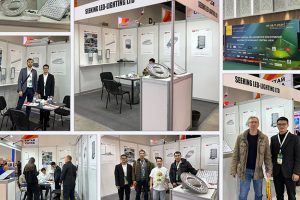
Seeking presented its latest LED lighting solutions at Interlight + Smart Sec & Building Central Asia 2024, showcasing energy-efficient, smart-ready LED Lighting for industrial, commercial and outdoor projects at Booth C19.
how many amps does a 200 watt led light draw in real installations? Discover the current draw at 120V and 240V, practical load calculations, and electrical tips from SEEKINGLED.
Are LED flood lights waterproof? Learn how IP ratings work, which LED flood lights handle rain and washdown, and what “waterproof” really means in outdoor use.
How long do LED lights last? Learn the real lifespan of LED lighting, what affects longevity, and how long LED bulbs last compared to traditional lights in commercial and residential use.
 Seeking LED