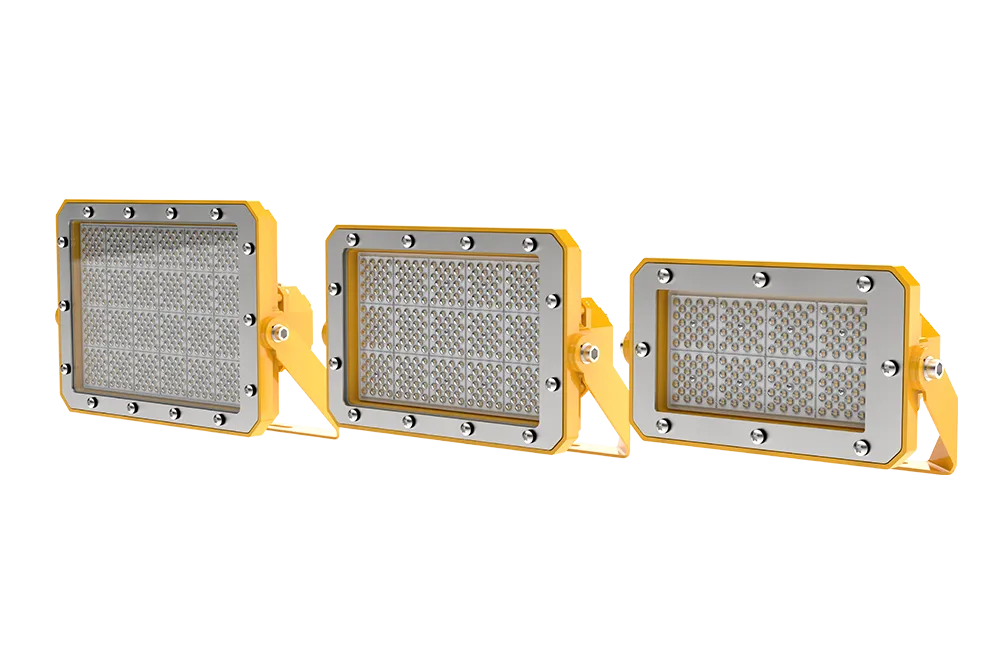
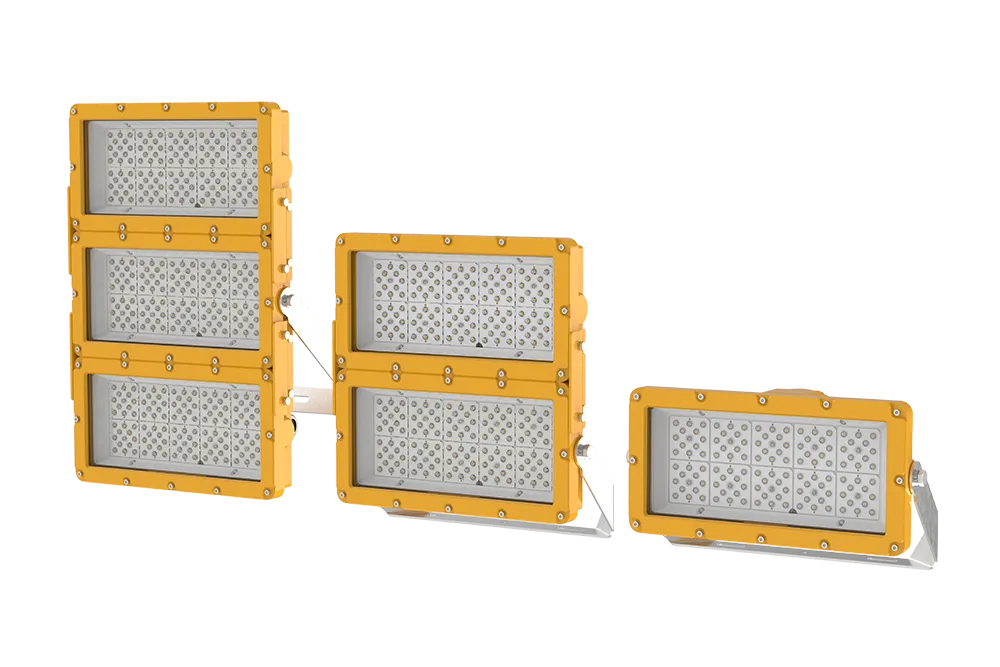
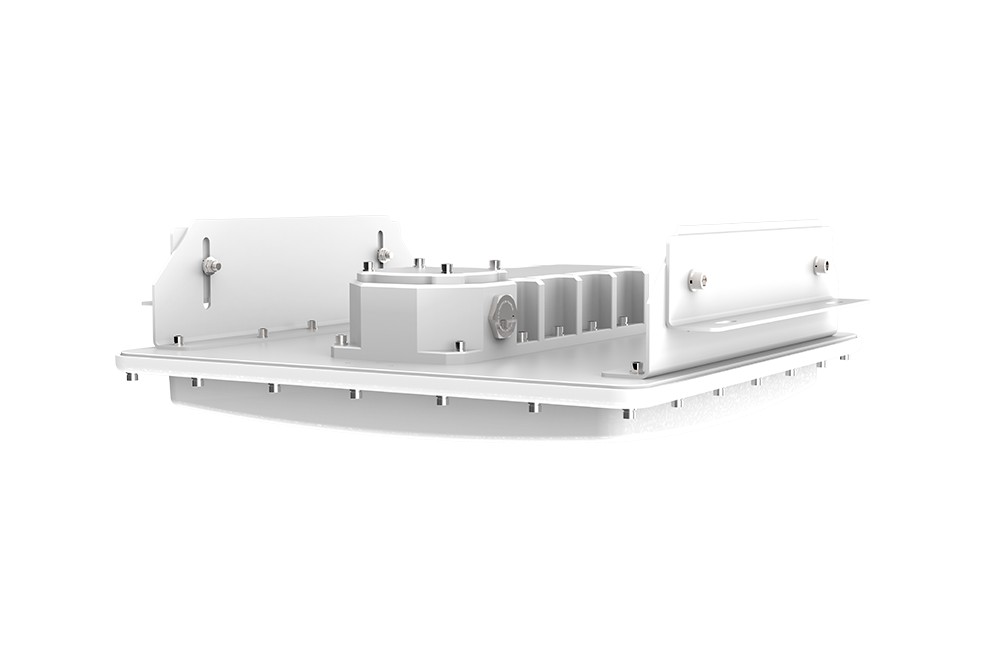
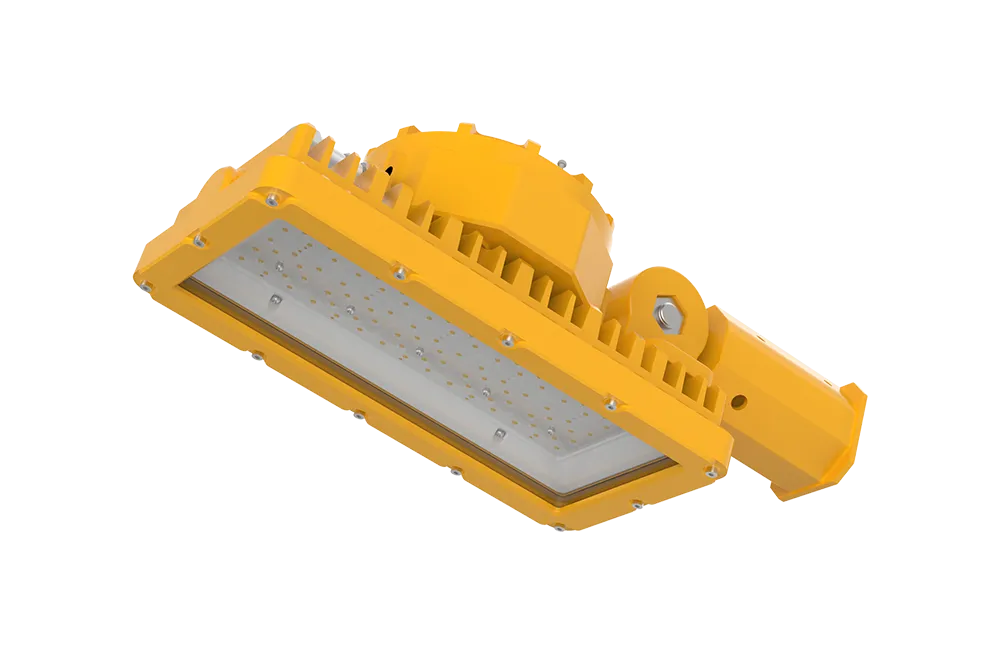
When clients ask about high bay explosion proof lighting, they usually focus on lumen output and certification. That’s understandable. In high-ceiling facilities — refineries, chemical warehouses, paint shops, offshore modules — illumination must be strong and safe.
But after more than 12 years working in hazardous lighting engineering, I’ve learned that high bay applications introduce challenges many spec sheets don’t show.
At SEEKINGLED, my role covers product validation, thermal testing review, and on-site commissioning support. I’ve climbed refinery steel structures to verify mounting torque. I’ve stood in 18-meter-high process halls checking lux readings after installation. Those experiences shaped how we design high bay explosion proof lighting today.
Why High Bay in Hazardous Areas Is Different
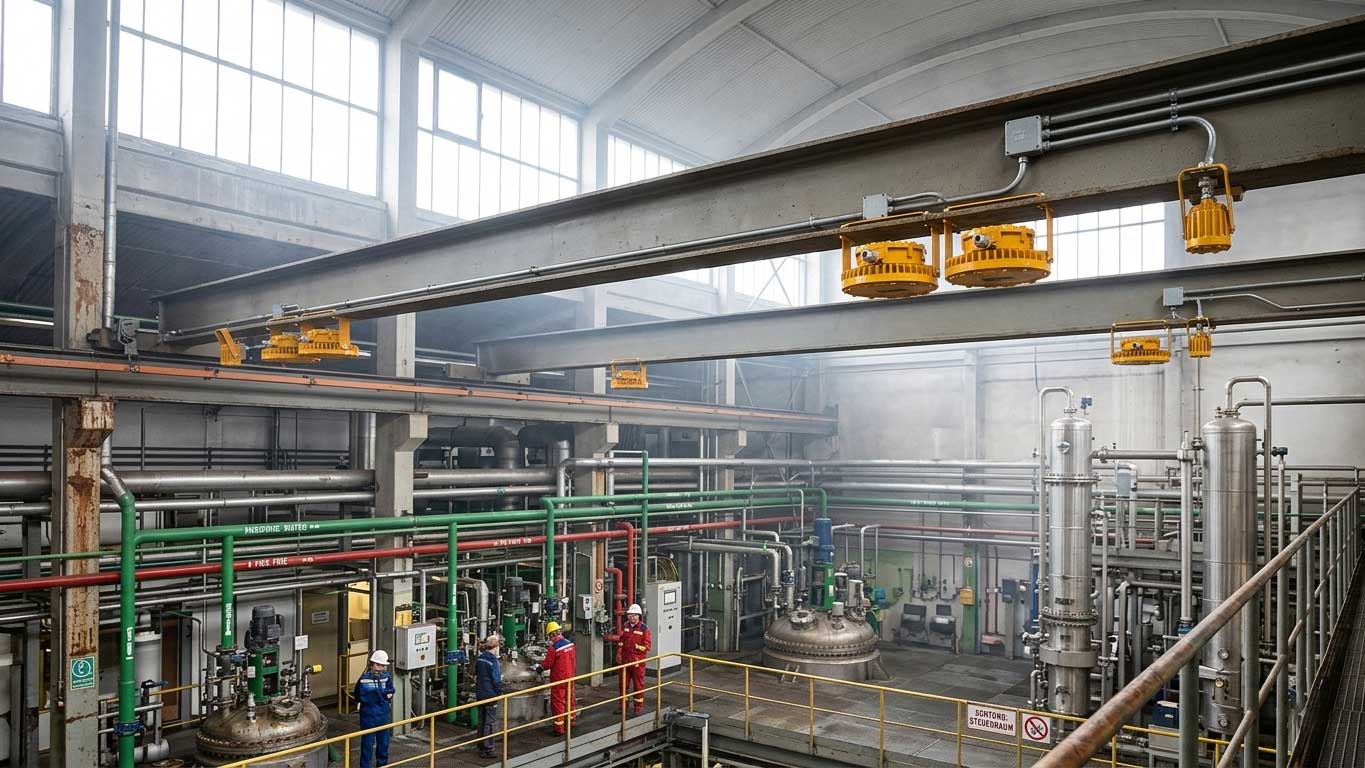
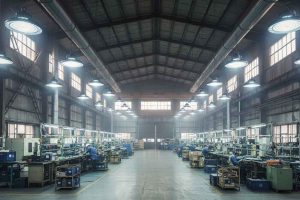
High bay fixtures are typically installed at heights between 8 and 20 meters. In hazardous zones, this creates three key engineering pressures:
- Higher lumen packages → More internal heat
- Longer beam throw → Optical precision required
- Difficult maintenance access → Reliability is critical
Standards developed by the International Electrotechnical Commission under IEC 60079 define flameproof (Ex d) and increased safety (Ex e) requirements. In North America, hazardous classifications follow NEC guidelines overseen by the National Fire Protection Association.
In simple terms: a high bay explosion proof lighting system must contain internal ignition, maintain certified temperature class ratings (T4, T5, etc.), and survive harsh environments — all while delivering uniform illumination from significant height.
Energy Efficiency vs Thermal Load
According to the U.S. Department of Energy, LED systems can reduce industrial lighting energy consumption by 50–70% compared to traditional HID high bay fixtures. That’s a major operational advantage.
However, in high bay explosion proof lighting, power levels are often 100W–300W or more. Inside a sealed flameproof housing, that wattage creates concentrated thermal load.
Several years ago, during a chemical plant upgrade, we evaluated competing fixtures rated for 55°C ambient. After extended operation testing, two samples exceeded their declared surface temperature class. The LEDs were stable. The driver compartments were not.
Since then, we insist on:
- Extended high-ambient burn-in tests
- Thermal simulation validation
- Independent third-party verification
High ceiling applications magnify heat management challenges. There is little room for error.
Optical Distribution: Often Overlooked
High bay explosion proof lighting isn’t just about brightness. Beam control matters.
In one warehouse storing volatile solvents, glare from narrow-beam fixtures created visual fatigue for forklift operators. Lux levels met design requirements — but uniformity did not.
We adjusted optics from 60° to 90° distribution and improved vertical illuminance across shelving. Small optical changes made measurable operational differences.
Photometric simulation before installation is essential. Real-world light distribution rarely matches simplistic lumen-per-watt calculations.
Mechanical Durability at Height
Maintenance in high bay hazardous areas is expensive. Scaffolding or lifts are required. Downtime can disrupt production.
The International Energy Agency highlights that system reliability significantly impacts industrial operational efficiency. In hazardous high bay applications, reliability is non-negotiable.
Critical design elements include:
- IK10 impact resistance
- IP66/IP67 ingress protection
- Anti-corrosion coating for chemical exposure
- Vibration-resistant mounting brackets
I’ve seen mounting bolts loosen over time due to structural vibration. That experience led us to reinforce bracket geometry and recommend locking hardware.
Small mechanical details prevent major service interruptions.
Installation Efficiency and Project Economics
In a 200-fixture refinery high bay replacement project, improved terminal compartment access reduced installation time by nearly 15%. That translated into measurable labor savings.
High bay explosion proof lighting should simplify:
- Wiring access
- Mounting alignment
- Inspection labeling visibility
Technicians working 15 meters above ground need clarity and reliability — not complex assembly steps.
Documentation and Certification Integrity
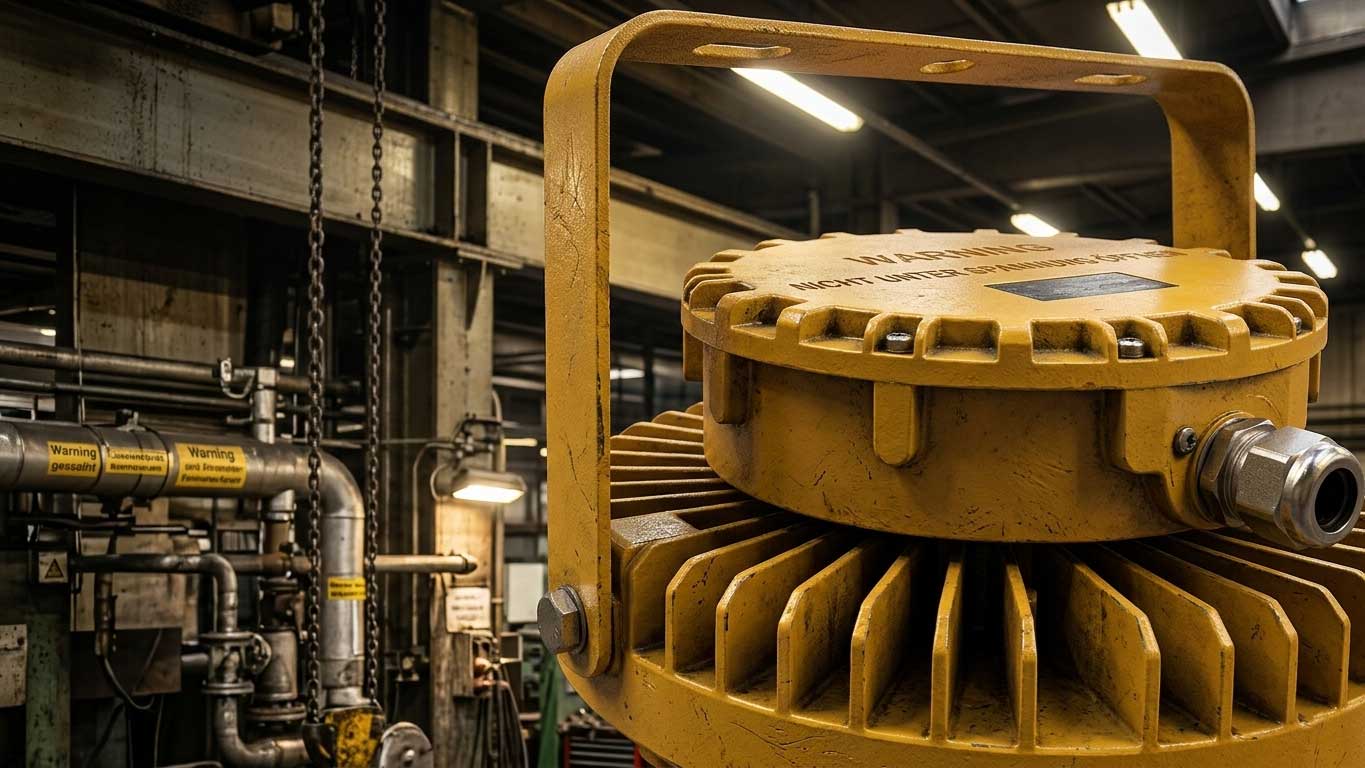
Each high bay explosion proof lighting fixture must clearly display:
- ATEX or IECEx certificate reference
- Gas group classification
- Temperature class
- Ambient rating
Field inspectors cross-check marking details carefully. Incomplete labeling can delay commissioning.
At SEEKINGLED, we maintain batch-level traceability between production and certification documentation to ensure consistency.
Final Thoughts from the Field
Over the years, I’ve learned that high bay explosion proof lighting must balance luminous performance, thermal control, mechanical durability, and certified safety compliance. Remove one pillar, and the system weakens.
High ceilings magnify every design decision. Heat accumulates. Maintenance becomes complex. Optical errors multiply.
At SEEKINGLED, we approach high bay explosion proof lighting as a safety-critical engineering system — not just a powerful lamp. Because in hazardous industrial spaces, lighting does more than illuminate. It protects operations, supports productivity, and ensures compliance.
That is what high bay explosion proof lighting should truly deliver.
high bay explosion proof lighting recommended
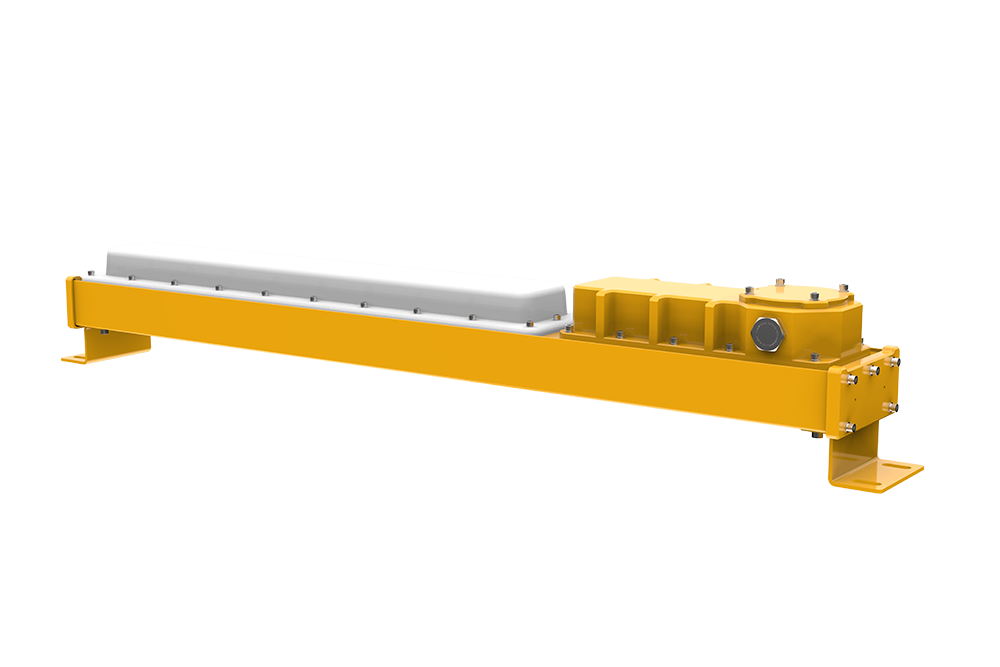
SEEKINGLED LED Linear Explosion Proof Light and Explosion Proof lighting is ATEX and IECEx certified for Zone 1, Zone 2, Zone 21 and Zone 22 hazardous locations, built for long-term industrial use.
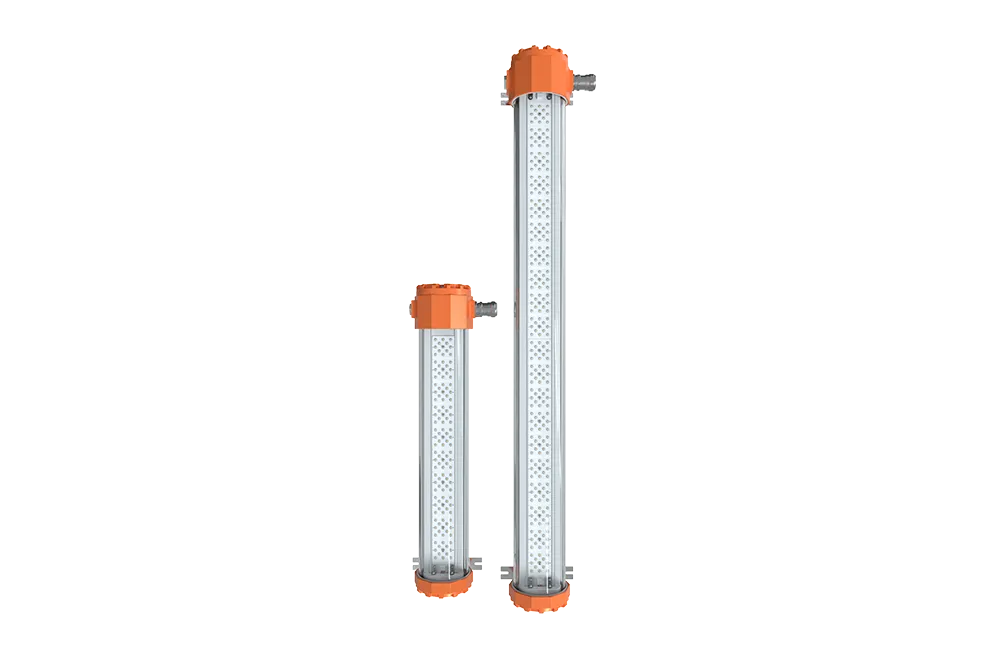
LED Linear Explosion Proof Lights and EX Proof lights for Zone 1, Zone 2, Zone 21 and Zone 22 hazardous areas. ATEX & IECEx certified explosion proof LED linear lighting with emergency function, adjustable power and IP67 protection by SEEKINGLED.
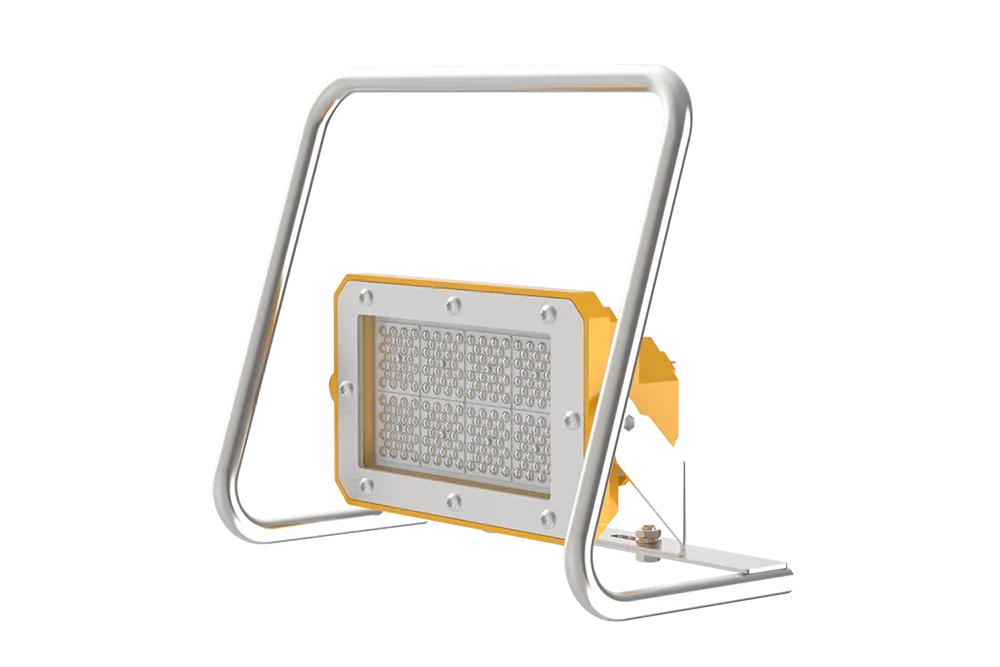
SEEKINGLED LED Explosion Proof Flood Lights are ATEX certified for Zone 2 and Zone 22 hazardous areas, offering high efficiency, adjustable power and integrated junction box.
SEEKINGLED LED Explosion Proof Flood Lights are flameproof ATEX and IECEx certified for Zone 1 and Zone 2 hazardous areas, offering high power, adjustable output and long service life.
SEEKINGLED LED Gas Station Canopy Lights are ATEX certified for Zone 2 and Zone 22 hazardous areas, featuring adjustable power and built-in explosion-proof junction box.
ATEX: Ex II 2G Ex db IIB T6/T5 GbEx II 2D Ex tb IIIC T80°C/ T95°C Db IECEx Ex db IIB T6 Gb;Ex tb IIIC T80°C Db Feature: ● For Zone 1,2 and Zone 21,22● Flameproof type, the strongest● 100W can replace 250W HID,energy saving● Power:60W,80W,10…
ATEX: II 3G Ex nR ⅡC T5/T6 GcII 3D Ex tc ⅢC T80℃/T95℃Dc ATEX Certificate NO: TÜV CY 26 ATEX 0207611 X Feature: ● For Zone 2 and Zone 22● 150W can replace 250W HID lamps,Energy saving● Power:50W,75W,100W,150W,200W Application: Oil and gas, m…
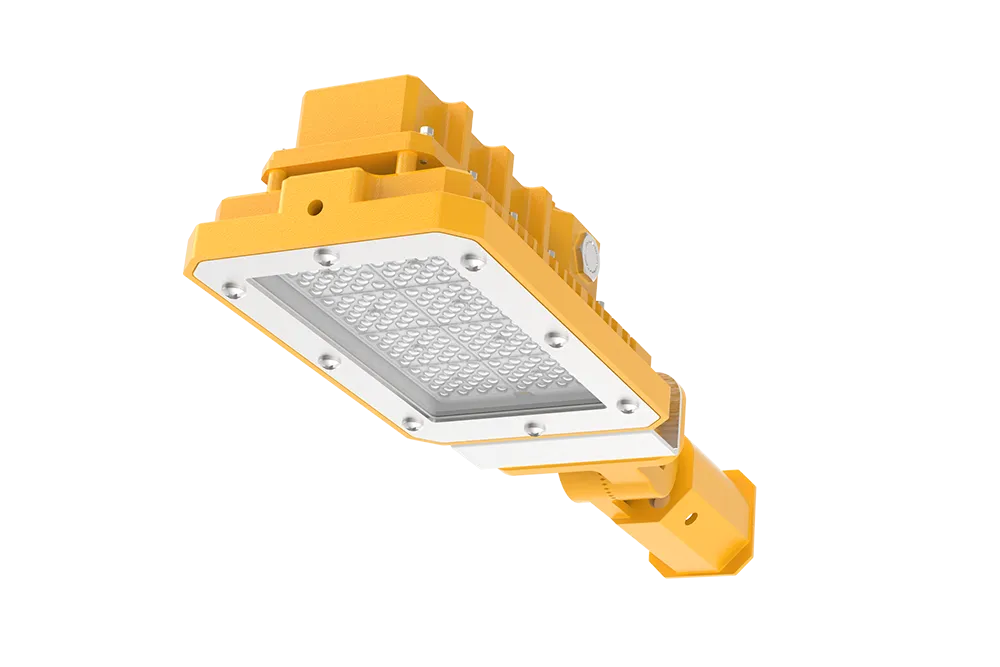
LED explosion proof high bay lights are designed for Zone 1, Zone 2, Zone 21 and Zone 22 hazardous areas. This page introduces the HB21 Series from SEEKING, including certifications, power options and real application considerations.
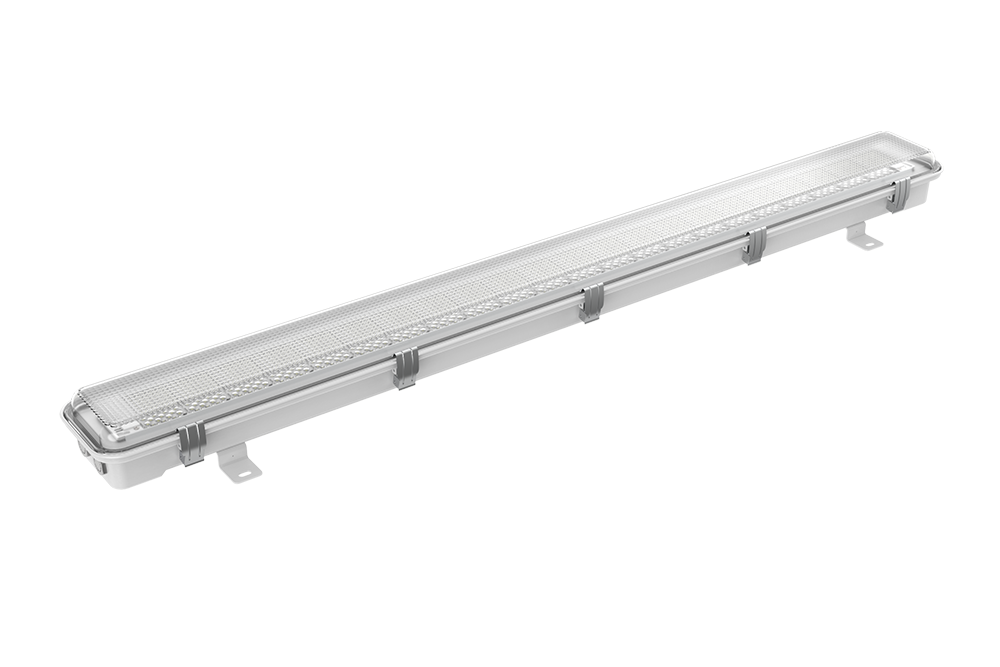
LED Linear Explosion Proof Lights from SEEKINGLED. LU Series Flame Proof lights ATEX-certified explosion proof LED linear lighting for Zone 2 gas and Zone 22 dust areas, IP69K, IK10, long lifetime and flexible power options.
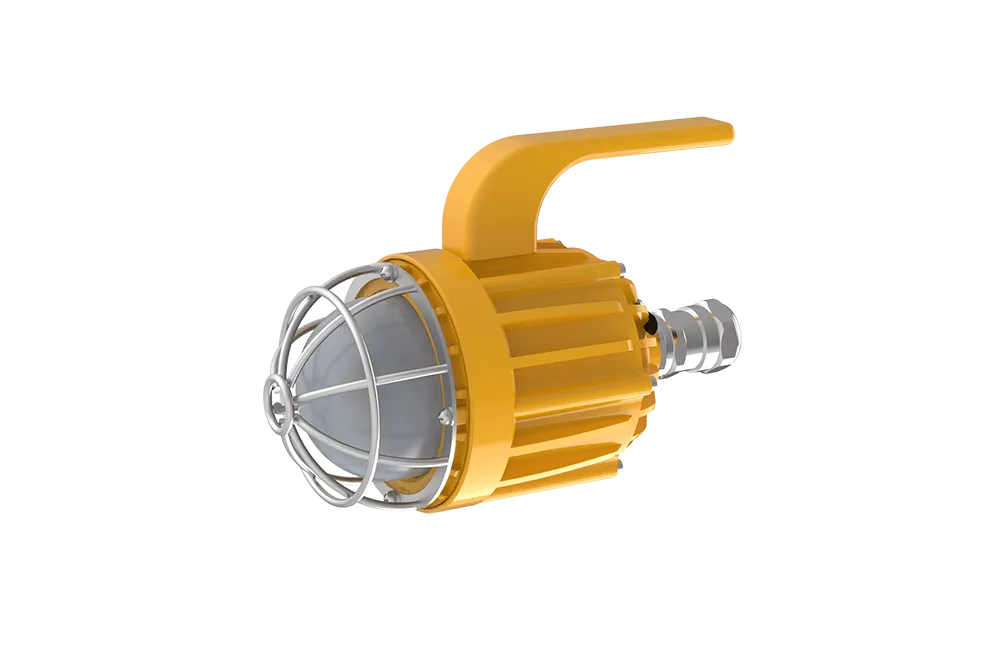
Certified explosion proof work lights for Zone 1 & 21 hazardous areas. Portable, ATEX & IECEx approved, built for oil, gas and chemical plants by SEEKINGLED.
ATEX: II 3G Ex nR ⅡC T6 GcII 3D Ex tc ⅢC T80℃ Dc ATEX Certificate NO: TÜV CY 26 ATEX 0207611 X Feature: ● For Zone 2 and Zone 22● Accepts battery-powered supply● indestructible● Power:AC input:50W,75W,100WDC input:15W,25W,35W Application: O…
ATEX: Ex II 2G Ex db IIB T6 GbEx II 2D Ex tb IIIC T80°C Db IECEx Ex db IIB T6 Gb;Ex tb IIIC T80°C Db Feature: ● For Zone 1,2 and Zone 21,22● Flameproof type, the strongest Application: Oil and gas, marine, Chemical, pharmaceutical, semicondu…
ATEX: Ex II 2G Ex db IIB T6 GbEx II 2D Ex tb IIIC T80°C Db IECEx Ex db IIB T6 Gb;Ex tb IIIC T80°C Db Feature: ● For Zone 1,2 and Zone 21,22● Flameproof type, the strongest Application: Oil and gas, marine, Chemical, pharmaceutical, semicondu…
ATEX: Ex II 2G Ex d e IIB T6 Gb ATEX: Ex d e IIB T6 Gb; Feature: ● For Zone 1,2● 9W can replace 18W fluorescent lamps,50% Energy saving Application: Oil and gas, marine, Chemical, pharmaceutical, semiconductor,mining,military industry, pain…
loading…
This is the last post!
 Seeking LED