 Seeking LED
Are LED Lights Street Legal?
333Are LED lights street legal for public roads? Learn how regulations work, which LED lights are allowed, and why dedicated LED street lights like SEEKINGLED STA Series are widely approved.
View detailsSearch the whole station
How do you calculate high bay lighting? Calculate high bay lighting by determining the required lumens, room size, ceiling height, mounting height, light loss factor, and fixture output. A proper calculation ensures balanced illumination, avoids dark areas, and prevents unnecessary energy consumption.
Calculating high bay lighting is not simply dividing a warehouse size by the wattage of a fixture.
That approach often creates problems.
During industrial lighting projects at SEEKINGLED, I have reviewed warehouses where customers installed powerful fixtures but still had uneven lighting because the spacing and beam distribution were never calculated.Visit the product page:Industrial LED High Bay Lights
The fixture was not the problem.
The calculation method was.
A good high bay lighting design starts with understanding the space:
Only after these questions are answered should fixture quantity and wattage be selected.
High bay lighting is commonly used in warehouses, factories, workshops, and large commercial spaces where fixtures are mounted high above the working area.
Because the installation height is greater than normal indoor lighting, small design mistakes become more noticeable.
An incorrect calculation can cause:
A warehouse with 40-foot ceilings requires a completely different approach compared with a 15-foot workshop.
The same LED high bay fixture can produce very different results depending on mounting height and spacing.
The Illuminating Engineering Society (IES) emphasizes that lighting design should consider factors including illuminance, uniformity, glare control, and the visual requirements of the application.
Source:
https://www.ies.org
The basic calculation begins with determining the total lumens required.
The common formula is:
Total Required Lumens = Area × Required Foot Candles
Then:
Number of Fixtures = Total Required Lumens ÷ Lumens Per Fixture
Example:
A warehouse:
Calculation:
10,000 × 30 = 300,000 required lumens
300,000 ÷ 20,000 = 15 fixtures
However, this is only a starting point.
Professional lighting calculations include additional correction factors.
Many lighting mistakes happen because people confuse lumens and foot-candles.
Lumens measure the total amount of light produced by a fixture.
Example:
A 150W LED high bay may produce 20,000–30,000 lumens depending on efficiency.
Foot-candles measure how much light reaches a surface.
One foot-candle equals one lumen distributed over one square foot.
In practical terms:
Lumens = light produced
Foot-candles = light received
The fixture specification tells you the lumens.
The lighting design determines the foot-candles at the working surface.
The U.S. Department of Energy identifies lumens and efficacy (lumens per watt) as important metrics when evaluating LED lighting performance.
Source:
https://www.energy.gov
Before calculating fixture quantity, determine the required lighting level.
Different applications require different illumination.
Typical examples:
| Application | Recommended Lighting Consideration |
|---|---|
| Storage warehouse | General visibility |
| Manufacturing area | Higher illumination for tasks |
| Inspection area | Increased brightness and color accuracy |
| Automotive workshop | Clear visibility around vehicles |
| Sports facility | Uniform lighting coverage |
For example:
A storage building mainly requires safe movement and product identification.
A production line may require workers to inspect components, read measurements, or operate machinery.
The required light level changes with the activity.
Ceiling height is one of the most important calculation factors.
The higher the fixture is mounted, the more light spreads before reaching the floor.
Typical guidelines:
| Mounting Height | Common High Bay Output |
|---|---|
| 15–20 feet | Lower output LED high bays |
| 20–30 feet | Standard industrial high bays |
| 30–40 feet | Higher output high bays |
| 40+ feet | Specialized high bay systems |
A 30-foot warehouse may require fewer high-output fixtures.
A 20-foot workshop may require more fixtures with wider beam distribution.
The calculation is not only about producing enough light.
It is about delivering light evenly.
Real environments are not perfect.
Over time, lighting performance decreases because of:
The Light Loss Factor adjusts calculations to account for future performance reduction.
A simplified formula:
Adjusted Lumens = Required Lumens ÷ Light Loss Factor
For example:
Required output:
300,000 lumens
Light loss factor:
0.8
Calculation:
300,000 ÷ 0.8 = 375,000 lumens
This means the original lighting system should provide more initial output to maintain performance over time.
This factor is especially important in:
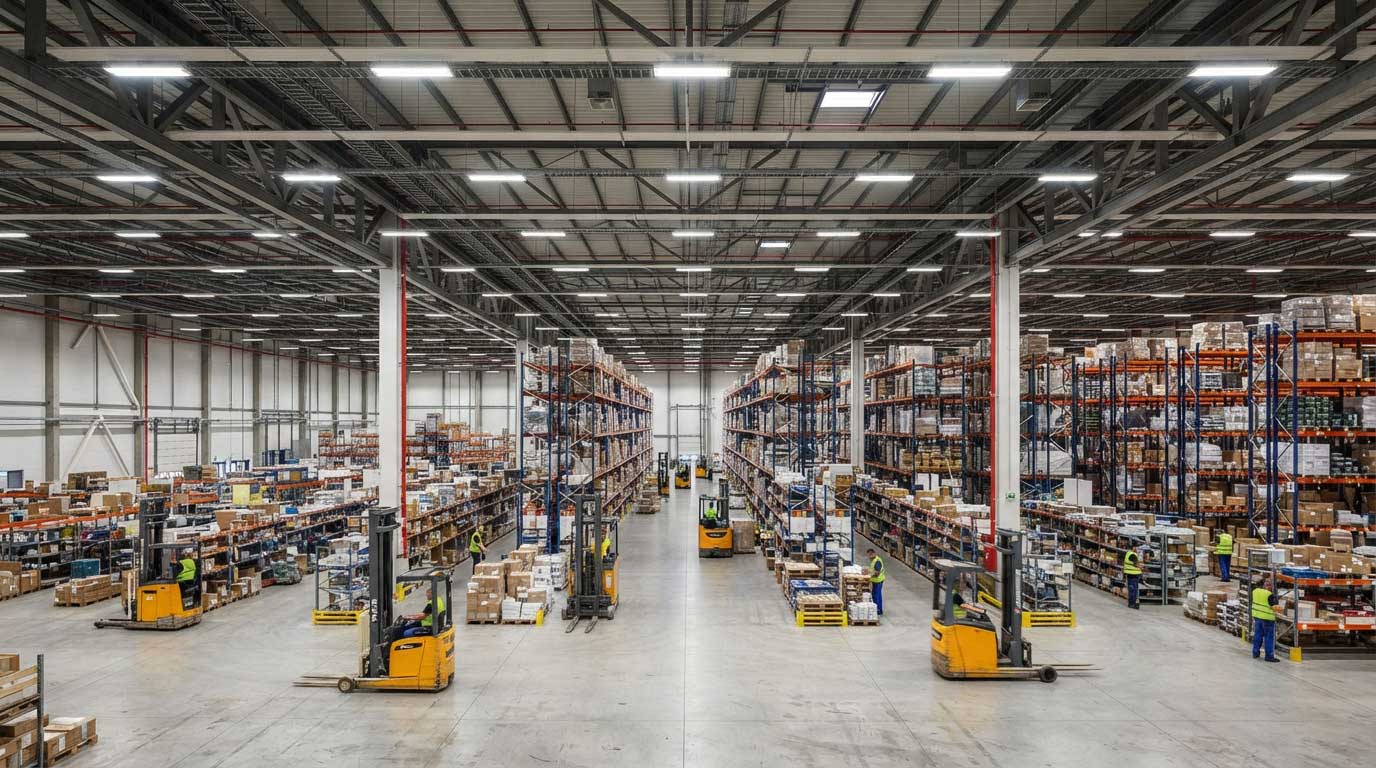
Even if the total lumen calculation is correct, fixture placement determines whether the space feels properly illuminated.
Important layout factors include:
A common mistake is placing fixtures only in a grid pattern without considering the actual light distribution.
For example:
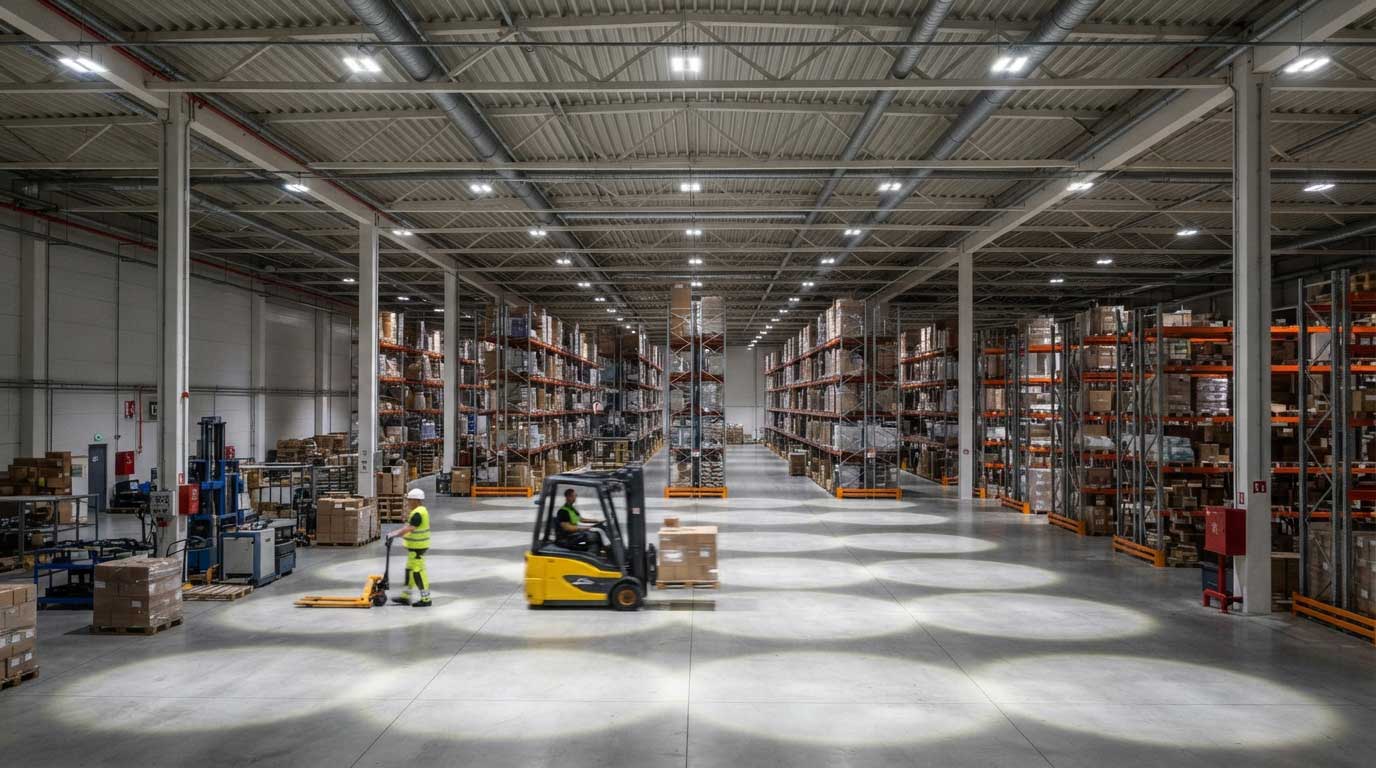
A narrow-beam fixture installed too far apart can create dark areas between lights.
A wide-beam fixture installed too close together can waste energy.
Professional lighting layouts often use photometric simulation based on IES files.
This shows:
One of the most common mistakes is calculating from wattage instead of lumens.
For example:
Fixture A:
Fixture B:
Both consume the same power.
But Fixture B provides significantly more light output.
When calculating high bay lighting, always check:
Not just watts.
Modern industrial LED high bay lights can exceed 150 lm/W, allowing facilities to achieve required illumination with lower energy consumption compared with older lighting systems.
The Department of Energy’s LED adoption research highlights increasing LED efficacy as a major factor in industrial lighting upgrades.
Source:
https://www.energy.gov
The utilization factor (CU) explains how much generated light actually reaches the working surface.
Not every lumen produced by an LED high bay fixture reaches the floor.
Some light is:
A typical industrial lighting calculation includes:
Fixture Quantity = (Area × Target Foot-Candles) ÷ (Fixture Lumens × CU × LLF)
Where:
For many industrial spaces, CU values are often influenced by:
A bright white warehouse ceiling may use light more effectively than a dark manufacturing environment.
This is why two buildings with identical dimensions may require different high bay lighting designs.
Let’s look at a practical example.
A customer has a warehouse with:
150 × 80 = 12,000 square feet
12,000 × 30 foot-candles
= 360,000 lumens required
360,000 ÷ 30,000
= 12 fixtures
At first calculation, the result is 12 fixtures.
However, a professional design would continue checking:
If the warehouse contains tall storage racks, a different beam angle or additional fixtures may be required.
The math gives the starting point.
The layout creates the final solution.
Fixture spacing is where many real projects succeed or fail.
You can install high-quality LED high bay lights, but poor spacing can still create:
A common guideline is:
Fixture Spacing = Mounting Height × 1.0–1.5
For example:
If the mounting height is 30 feet:
The exact distance depends on:
Narrow beam fixtures usually require closer spacing.
Wide beam fixtures can cover larger areas.
Industry lighting guides commonly use the 1.0–1.5 spacing-to-height ratio as an initial planning reference before photometric verification.
Beam angle directly affects coverage.
A common mistake is calculating only lumens while ignoring optics.
Example:
Two fixtures:
Fixture A:
Fixture B:
Both produce the same amount of light.
But their distribution is completely different.
Best for:
Best for:
Best for:
At SEEKINGLED, we normally review beam angle together with mounting height instead of selecting fixtures only by lumen output.
The brightest fixture is not always the most effective fixture.
After years working with industrial lighting applications, several calculation mistakes appear repeatedly.
A 200W fixture does not automatically provide better lighting.
Different LED technologies produce different lumen outputs.
Always compare:
A fixture installed at 40 feet performs differently from the same fixture installed at 20 feet.
Height changes:
New installations always look brighter than systems after years of operation.
Including LLF helps maintain long-term performance.
For small workshops, basic calculations may be enough.
For:
photometric simulation is strongly recommended.
It provides a more realistic prediction of actual lighting conditions.
Before ordering LED high bay lights, confirm:
| Check Point | Purpose |
|---|---|
| Building dimensions | Calculate area |
| Ceiling height | Select fixture output |
| Required foot-candles | Determine brightness |
| Fixture lumens | Match output |
| Beam angle | Control coverage |
| Spacing plan | Improve uniformity |
| Environment | Select protection level |
| Operating hours | Estimate energy savings |
This simple checklist prevents many expensive mistakes.
Calculate the required lumens by multiplying the area by the target foot-candle level, then divide by fixture lumen output while adjusting for utilization factor and light loss factor.
The number depends on warehouse size, ceiling height, required brightness, fixture output, and spacing. A 10,000-square-foot warehouse may require different quantities depending on whether it stores products or performs detailed manufacturing work.
You need:
A common starting point is 1.0–1.5 times the mounting height, but final spacing depends on optics and application requirements.
Yes. LED high bay systems can reduce energy consumption compared with older lighting technologies because of higher efficiency and longer operating life.
For small spaces, a calculator can provide an estimate.
For large industrial facilities, professional photometric planning provides more accurate results.
How do you calculate high bay lighting? Start with area, required foot-candles, and fixture lumens, then refine the result using ceiling height, beam angle, spacing, utilization factor, and light loss factor.
A successful high bay lighting project is not created by choosing the strongest fixture.
It is created by matching the lighting system to the real environment.
At SEEKINGLED, we have learned that every industrial space tells a different story.
A warehouse storing finished products.
A factory running production lines.
A workshop repairing heavy equipment.
Each requires a different lighting calculation.
The correct high bay lighting design delivers:
The calculation is the foundation.
The final goal is a workspace where people can perform better every day.
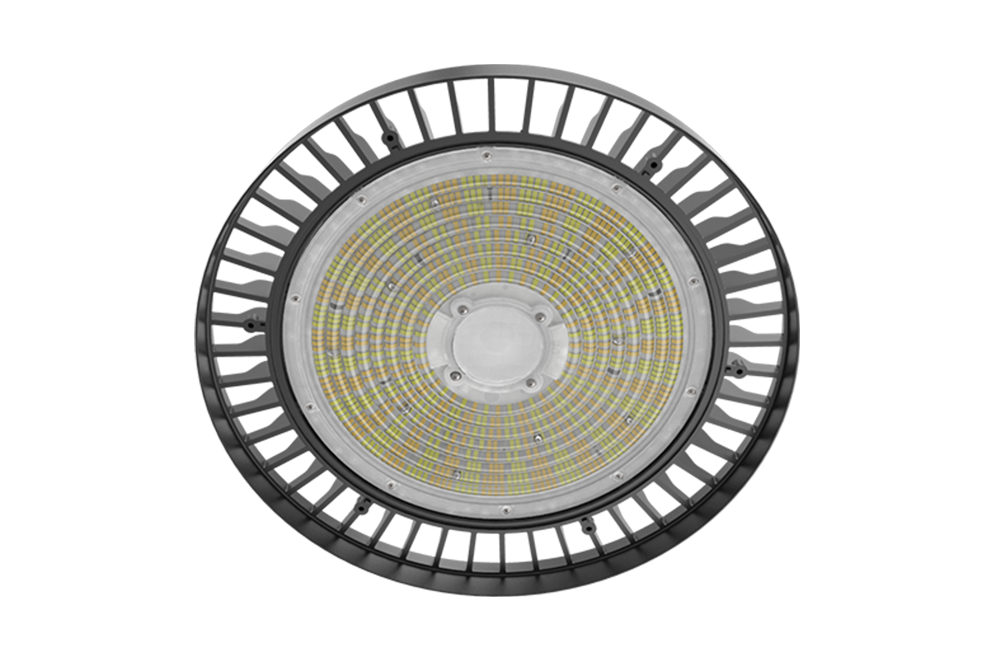
The SEEKING HBC-T Series high bay lights LED offer long-lasting performance for warehouses, production plants and logistics centers. Durable IP65 & IK08 housing, 60°/90° beam angles, up to 150 lm/W, and a lifespan beyond 100,000 hours. Ideal for airport halls, commercial storage, construction sites and large indoor spaces.
View details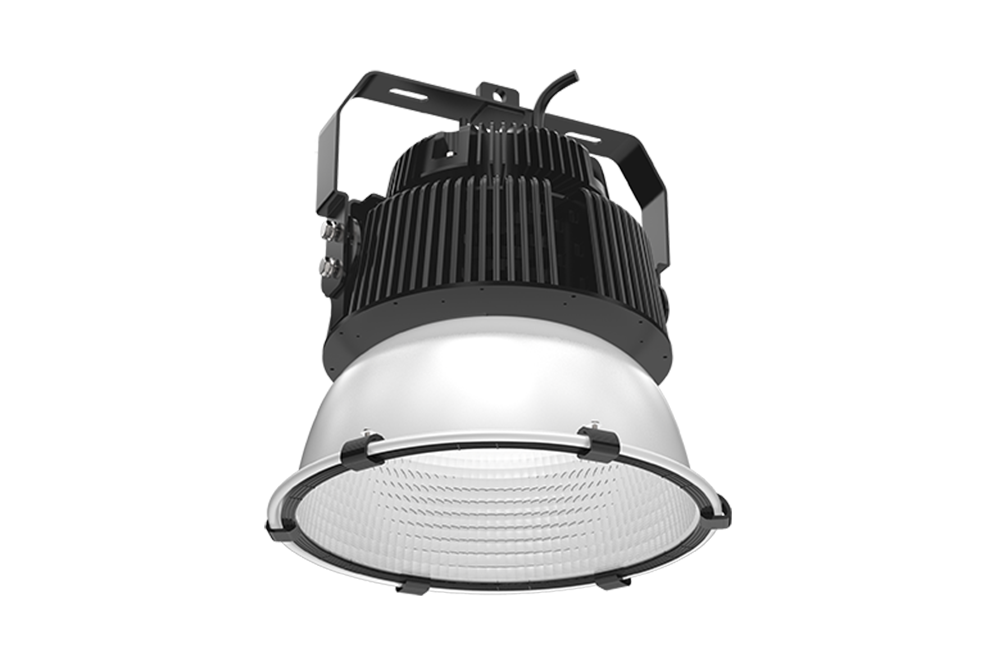
The SEEKING HBS Series LED UFO high bay light delivers 140 lm/W efficiency, IP65 protection and MEAN WELL drivers. A durable high-rise lighting solution for factories, warehouses and commercial halls.
View details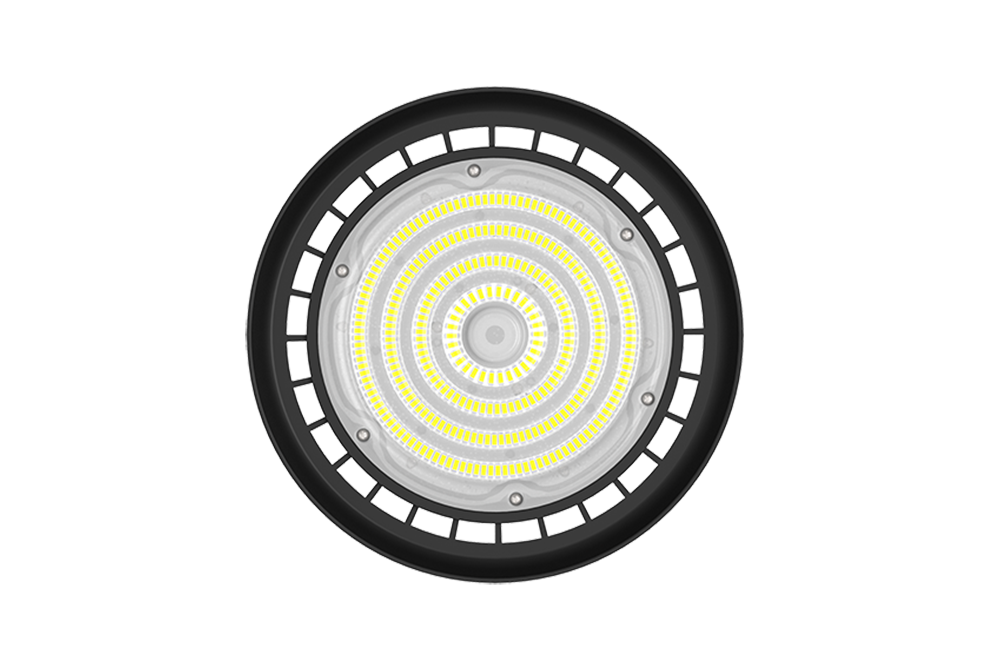
SEEKING HBD Series LED high bay lighting delivers 160 lm/W efficiency, IP66 protection, and long 100,000-hour lifespan. A durable UFO high bay solution for warehouses, workshops, logistics centers and commercial facilities.
View details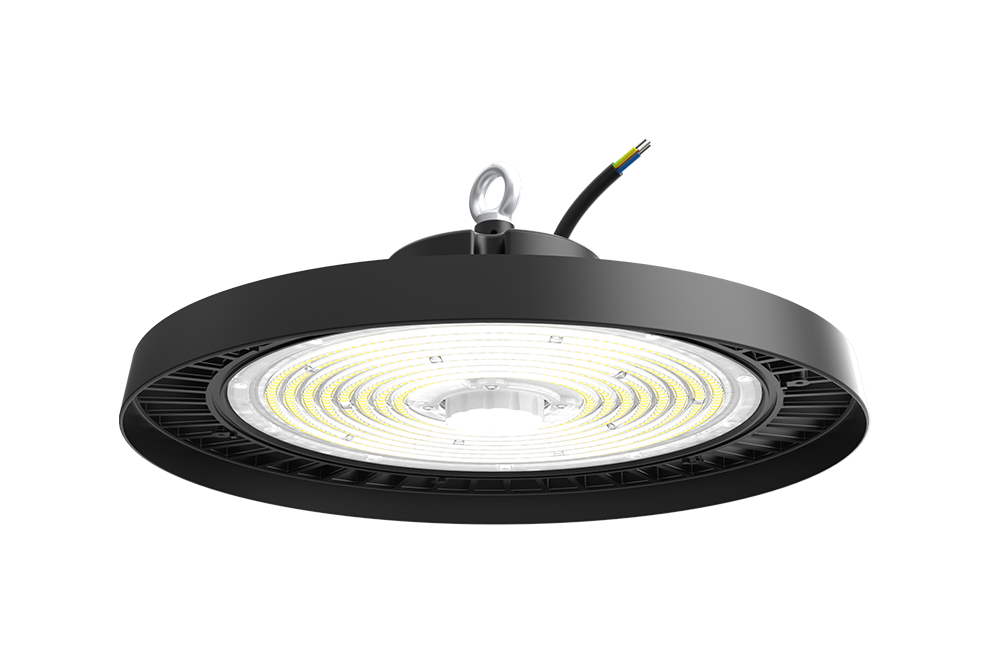
The SEEKING HBC Series high bay LED light fixtures combine strong efficiency, practical design and reliable SOSEN drivers. A durable UFO high bay lighting option for warehouses, workshops and wholesale projects.
View details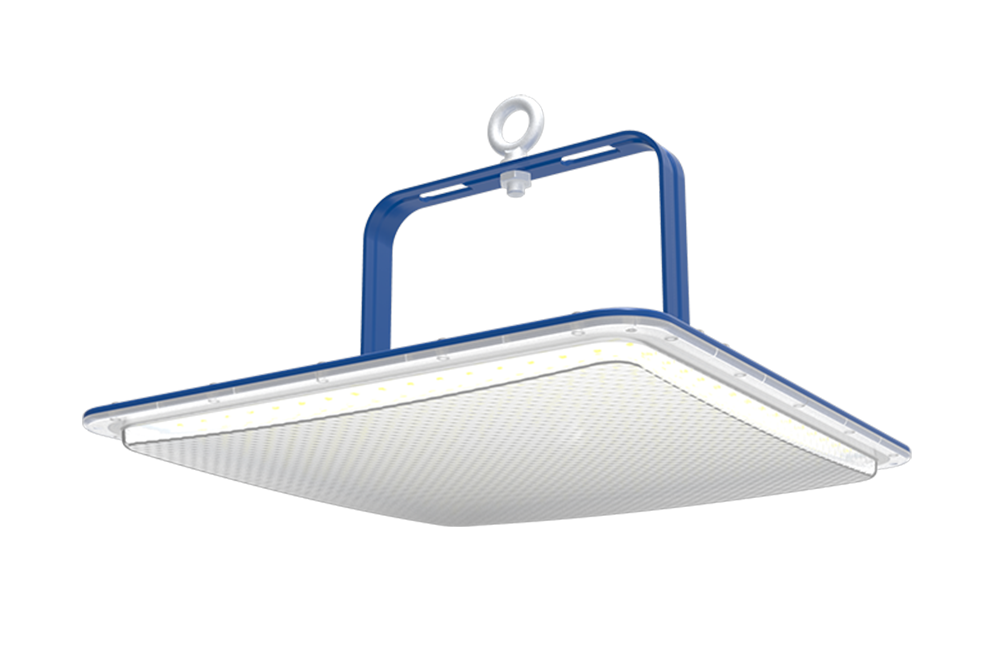
The SEEKING GSL Series high bay LED light delivers powerful, efficient lighting for industrial and commercial spaces. With IP65 protection, flexible mounting, and up to 140 lm/W performance, it’s ideal for warehouses, workshops, and retail areas.
View details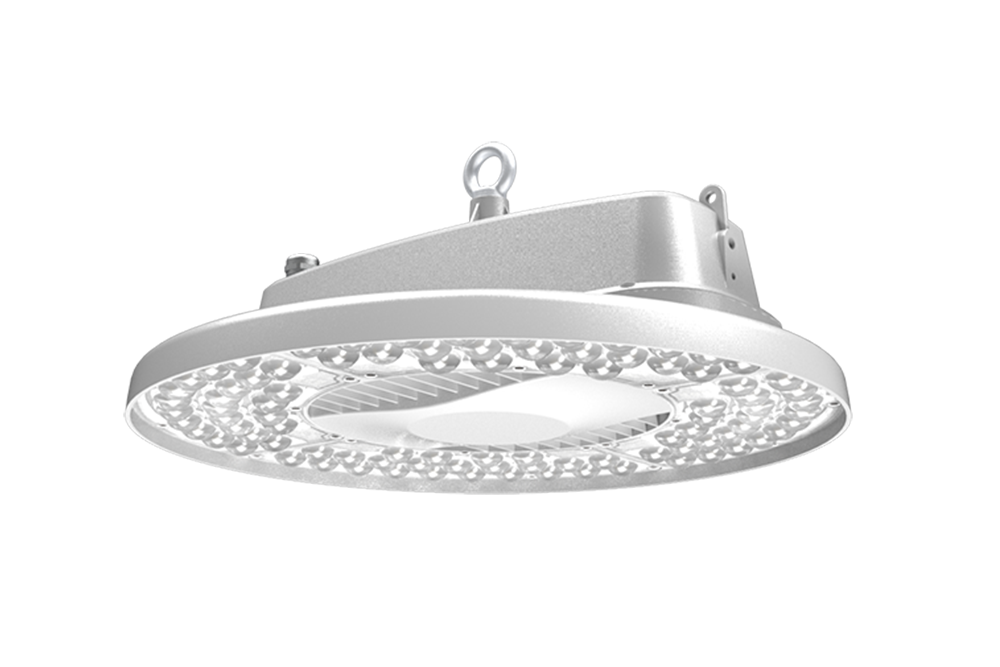
The SEEKING HB15(GLE) Series delivers advanced high bay led lighting with UGR 100,000 h) and reliable illumination for demanding commercial environments.
View details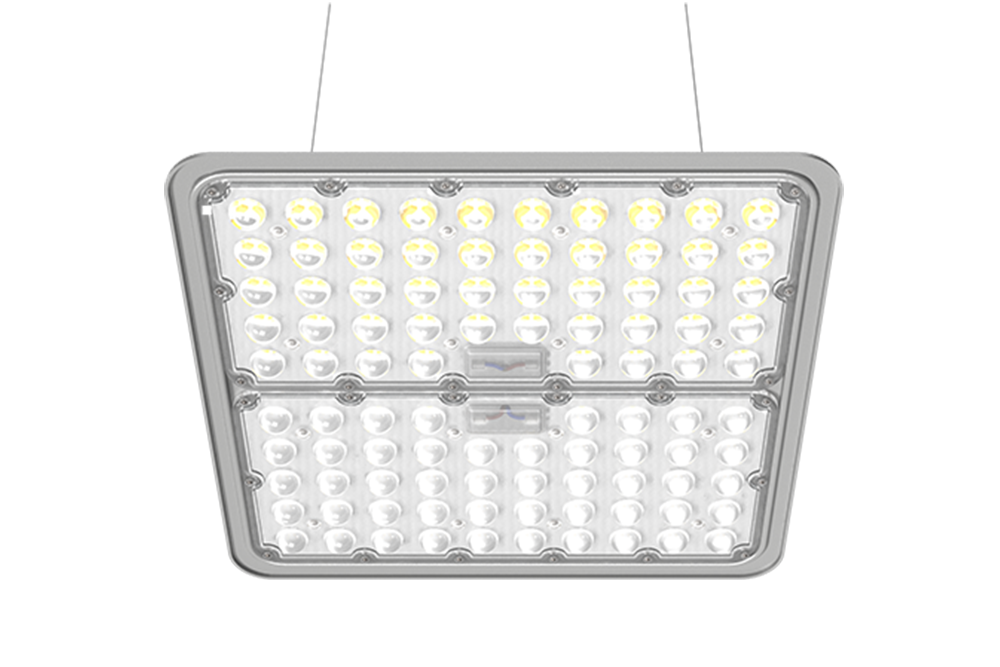
Discover the SEEKING HB13(GLK) Series ufo led high bay light, engineered for sports halls, airport lounges, showrooms, and large commercial spaces. UGR 100,000 h). Ideal for industrial ufo high bay lighting fixtures and commercial retrofits.
View details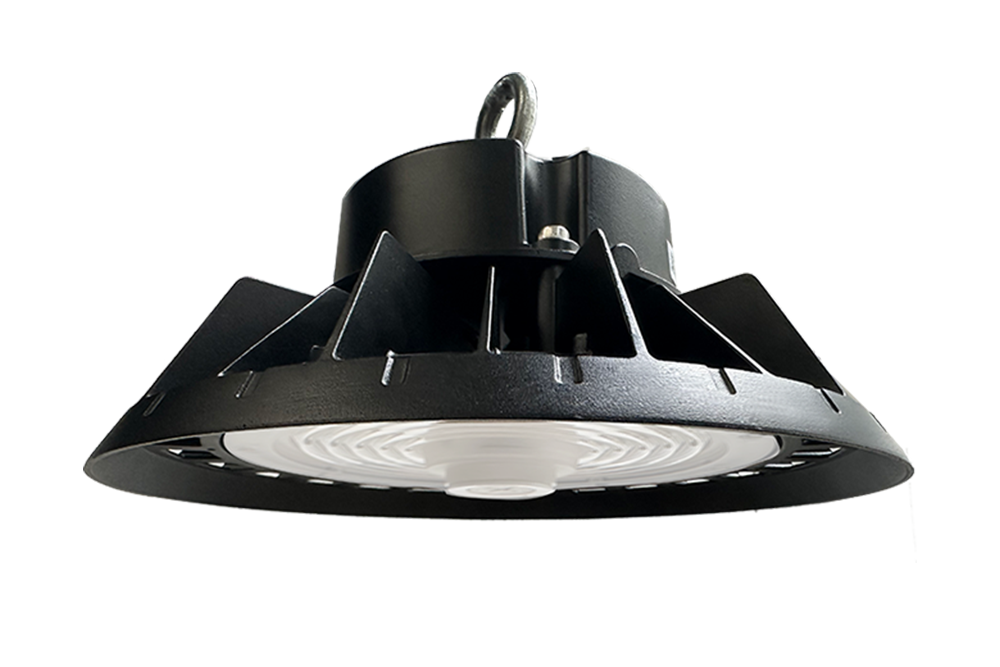
SEEKING HBF Series offers industrial LED high bay lighting with up to 200lm/W efficiency, SOSEN flicker-free driver, IP65 protection and optional microwave motion sensor. Ideal for warehouses, factories and commercial distribution projects.
View details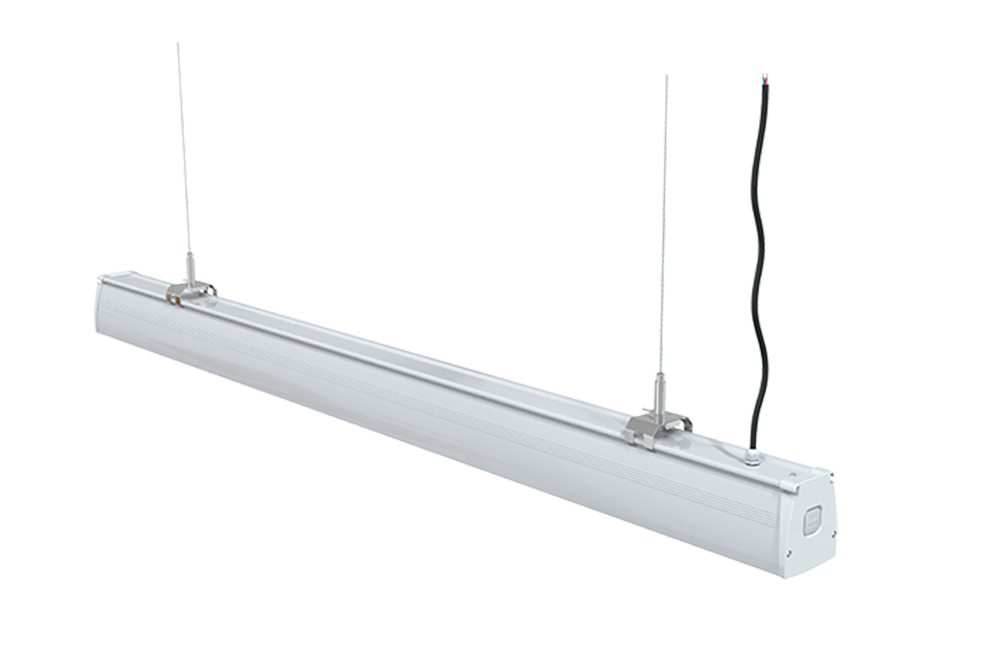
The HLD Series linear high bay LED lights from SEEKING deliver up to 200 lm/W with multiple beam angles and adjustable CCT options for warehouse, workshop, corridor and general industrial lighting.
View details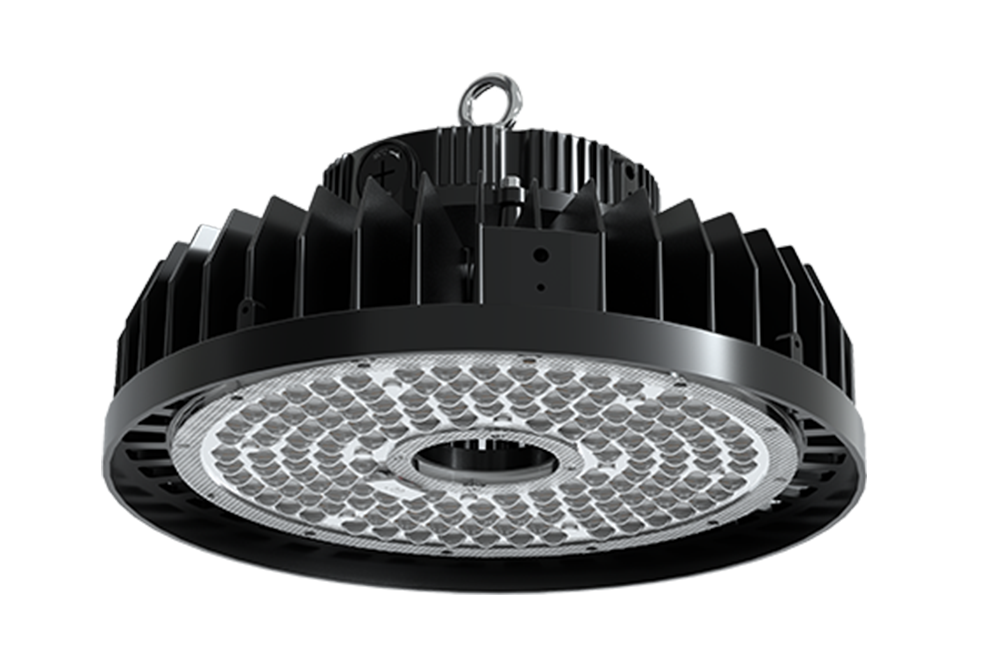
The HBK Series LED high bay light by SEEKING combines 500W power, 160–175 lm/W efficiency and IP65 durability for heavy-duty industrial lighting. Designed for warehouse, factory and production facilities with demanding ceiling heights.
View details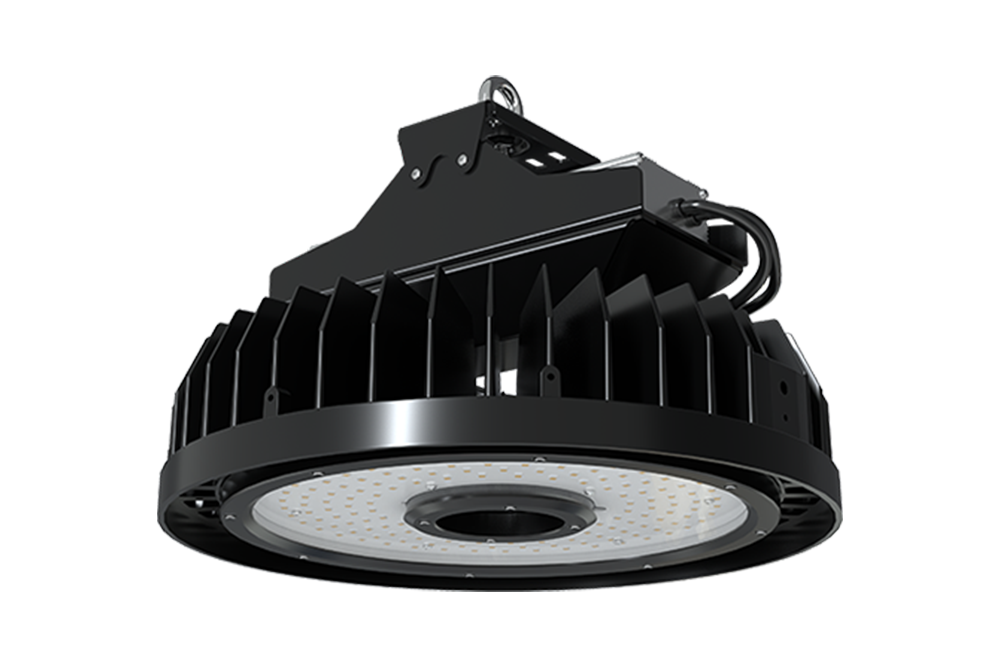
LED high bay lights engineered for extreme heat and low-temperature industrial sites. SEEKING HBK Ultua Series operates from -40°C to +70°C with Nichia LEDs and Inventronics driver.
View details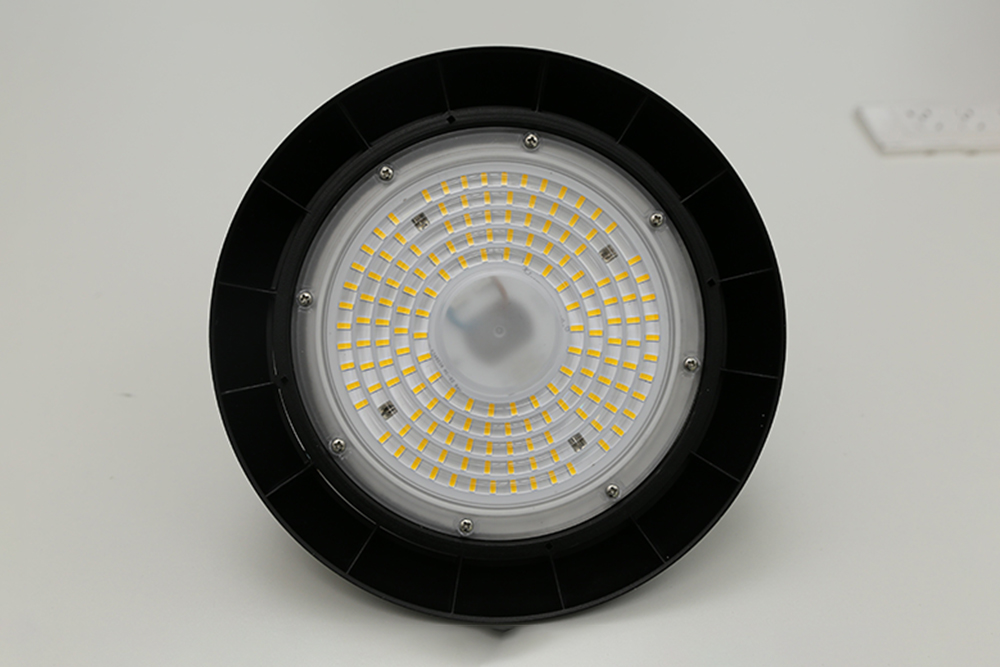
High bay LED lights built for warehouses, production plants and wholesale distribution. SEEKING HBI Series offers up to 200lm/W, IP65, IK08 and optional microwave motion sensor for energy saving operation.
View details
Are LED lights street legal for public roads? Learn how regulations work, which LED lights are allowed, and why dedicated LED street lights like SEEKINGLED STA Series are widely approved.
View details
High bay explosion proof LED light for hazardous areas. Reliable, energy-efficient lighting for oil, gas, and industrial sites. Trusted by SEEKINGLED.
View details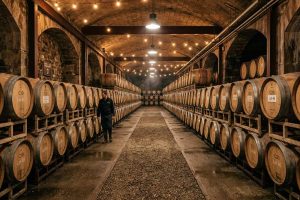
Wine cellar LED lighting for winery fermentation spaces. Low heat, moisture-resistant, and stable illumination for barrels and production by SEEKINGLED.
View details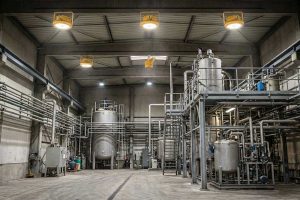
Explosion proof LED lighting Class 1 Division 1 is critical for hazardous locations. This article shares real engineering experience using SEEKINGLED HB21 Series LED explosion proof high bay lights, with references to IEC 60079 standards and ATEX ...
View details