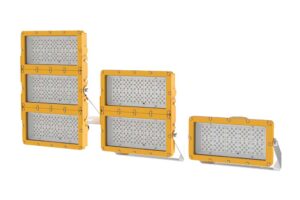
how many lumens is a street light? A typical modern LED street light can produce roughly 5,000–30,000 lumens, while larger roadway luminaires may exceed 30,000 lumens. The correct output depends on road width, pole height, spacing, mounting arrangement, optics, and the required illumination level.
How Many Lumens Does a Street Light Need?
There is no single lumen rating that works for every road.
A residential street, parking lot, urban arterial, and multi-lane roadway have very different lighting requirements. In a real street-lighting project, I would not start by asking, “How many lumens do we need?” I start with the road geometry and photometric target.
A practical range for modern LED street lights is:
Application
Typical LED Output
Typical Use
Residential streets
5,000–10,000 lm
Low-traffic local roads
Small roads
8,000–15,000 lm
Local and collector roads
Urban roads
12,000–25,000 lm
Heavier traffic areas
Major roads
20,000–35,000+ lm
Arterial and multi-lane roads
High-output roadway applications
30,000+ lm
Wide roads and demanding layouts
These are practical product-selection ranges, not mandatory lighting standards. The final specification should come from a photometric design.
The Federal Highway Administration explains that roadway lighting design considers variables including mounting height, number of luminaires, optics, orientation, wattage, light source and photometrics.
That is why two 20,000-lumen street lights can produce noticeably different results on the same road.
Why Lumens Alone Do Not Tell You How Good a Street Light Is
Lumens describe the total quantity of visible light produced by a luminaire. They do not tell you exactly where that light lands.
FHWA defines illuminance as the lumens incident on a surface divided by its area. It also notes that illuminance changes according to the inverse-square relationship with distance from the light source.
In practical terms, a 20,000-lumen fixture mounted at one height with a narrow roadway distribution can perform very differently from a 20,000-lumen fixture using a different optic.
This is something we pay close attention to when developing street-lighting products at SEEKINGLED. A higher lumen number looks attractive on a quotation, but the beam distribution and installation geometry determine whether those lumens are actually useful.
How Many Lumens for a 20-Foot or 30-Foot Street Light?
Pole height changes the way light spreads across the roadway.
For a pole around 20 feet, a lower-output luminaire may be sufficient for a narrow residential road or pedestrian area. At approximately 30–40 feet, higher-output luminaires and more appropriate roadway optics are often needed to maintain useful illumination over a larger area.
FHWA notes that roadway lighting layouts commonly use one-sided, opposite, staggered, or median arrangements.
That means lumen requirements cannot be separated from pole spacing.
For example, increasing the distance between poles without changing optics may create dark areas between fixtures. Increasing lumens alone is not necessarily the right fix.
Typical Street Light Lumens by Wattage
LED efficacy provides another useful way to estimate output.
For example:
LED Street Light
At 150 lm/W
At 170 lm/W
50W
7,500 lm
8,500 lm
80W
12,000 lm
13,600 lm
100W
15,000 lm
17,000 lm
150W
22,500 lm
25,500 lm
200W
30,000 lm
34,000 lm
These are calculated examples rather than guaranteed product outputs.
DOE’s current Federal Energy Management Program guidance gives 136 lm/W as the minimum luminaire efficacy rating for outdoor pole/arm-mounted area and roadway luminaires purchased by federal agencies.
So when comparing two street lights, I recommend checking watts, lumens, lm/W, optical distribution and photometric files together.
What Determines the Required Street Light Lumens?
Several factors should be checked before selecting a street light.
Road width: Wider roads generally require greater coverage.
Pole height: Higher mounting changes beam spread and illuminance.
Pole spacing: Large spacing can create uneven illumination.
Road classification: Traffic volume and road function affect design criteria.
Pedestrian activity: Crosswalks and pedestrian-heavy areas may require additional consideration.
Optical distribution: Type II, III, IV and other distributions direct light differently.
Pavement characteristics: Road surface affects reflected light and luminance.
Glare and light trespass: More light is not automatically better.
FHWA states that roadway lighting levels are established using factors such as road classification, pavement type and pedestrian activity/conflict level.
This is why a professional street-lighting design normally uses a photometric calculation rather than choosing a fixture from a lumen table alone.
How Many Lumens Is a Street Light Compared With Older Lighting?
LED street lights are not simply replacements with the same nominal wattage.
DOE’s exterior-lighting guidance emphasizes luminaire efficacy, measured in lumens per watt, as a way to compare the amount of light produced for electrical input.
DOE also reports that a typical street or area light historically operates around 12 hours per day, or approximately 4,380 hours per year.
That operating schedule makes efficiency important.
A 150W street light operating 4,380 hours annually consumes approximately:
150 × 4,380 ÷ 1,000 = 657 kWh/year
A 100W fixture under the same schedule uses about:
438 kWh/year
The difference is 219 kWh per fixture each year. Across 1,000 fixtures, that becomes approximately 219,000 kWh annually.
That is where a seemingly small wattage difference becomes a meaningful infrastructure decision.
FAQ About Street Light Lumens
How many lumens is a street light?
Most modern LED street lights produce approximately 5,000–30,000 lumens, although larger roadway fixtures can exceed 30,000 lumens.
Is 10,000 lumens enough for a street light?
It can be suitable for some residential streets, pathways or smaller roads, but the required output depends on pole height, spacing, roadway width and photometric requirements.
How many lumens does a 100W LED street light produce?
At 150 lm/W, a 100W fixture would produce approximately 15,000 lumens. At 170 lm/W, it would produce approximately 17,000 lumens. Actual product output varies.
How many lumens do I need for a 30-foot pole?
There is no universal lumen requirement for a 30-foot pole. Pole spacing, road width, optical distribution and required illuminance must be considered together.
Are more lumens always better for street lighting?
No. Excessive output can increase glare, light trespass and energy consumption. FHWA recommends evaluating photometric performance, glare, distribution and other factors rather than focusing on output alone.
What is a good lm/W for an LED street light?
DOE’s current federal purchasing guidance lists 136 lm/W as the minimum efficacy requirement for outdoor pole/arm-mounted area and roadway luminaires.
Should I choose a street light by lumens or watts?
Neither number should be considered alone. Compare lumens, wattage, lm/W, optical distribution, mounting height, pole spacing and photometric results before making the final selection.
Final Answer
how many lumens is a street light? For many modern LED roadway applications, 5,000–30,000 lumens is a practical range, but the correct specification depends on road geometry, pole height, spacing, optics and required lighting performance. At SEEKINGLED, we recommend evaluating the complete photometric design rather than selecting a street light by lumen output alone.
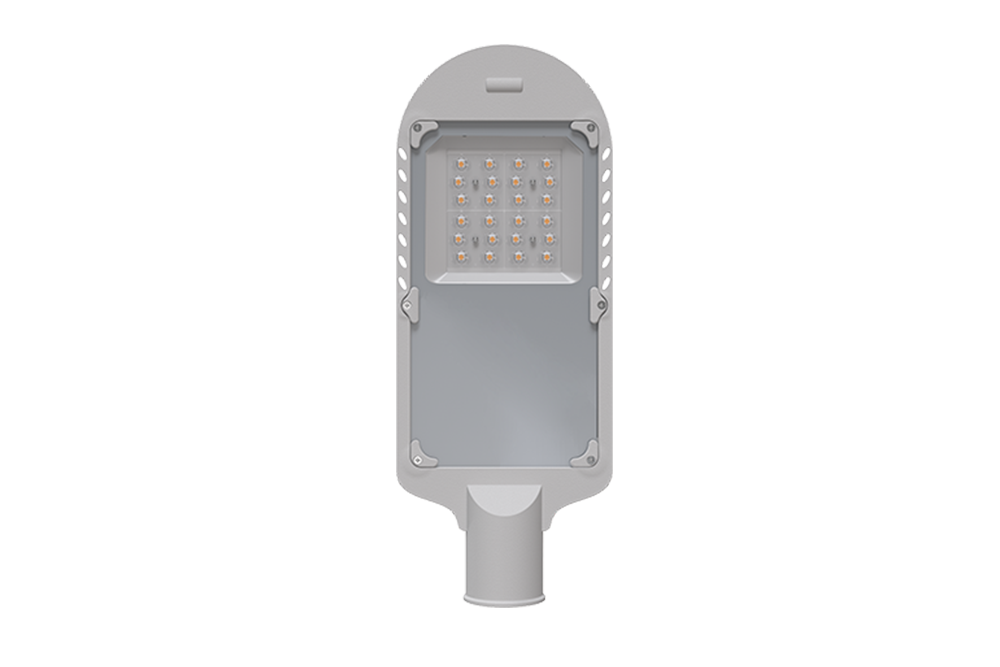
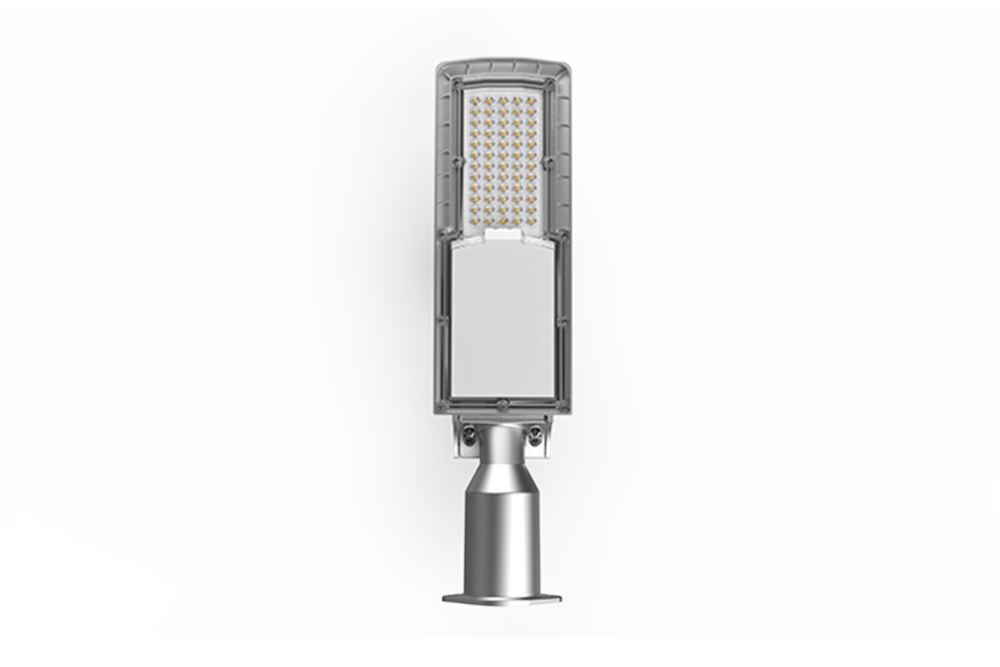
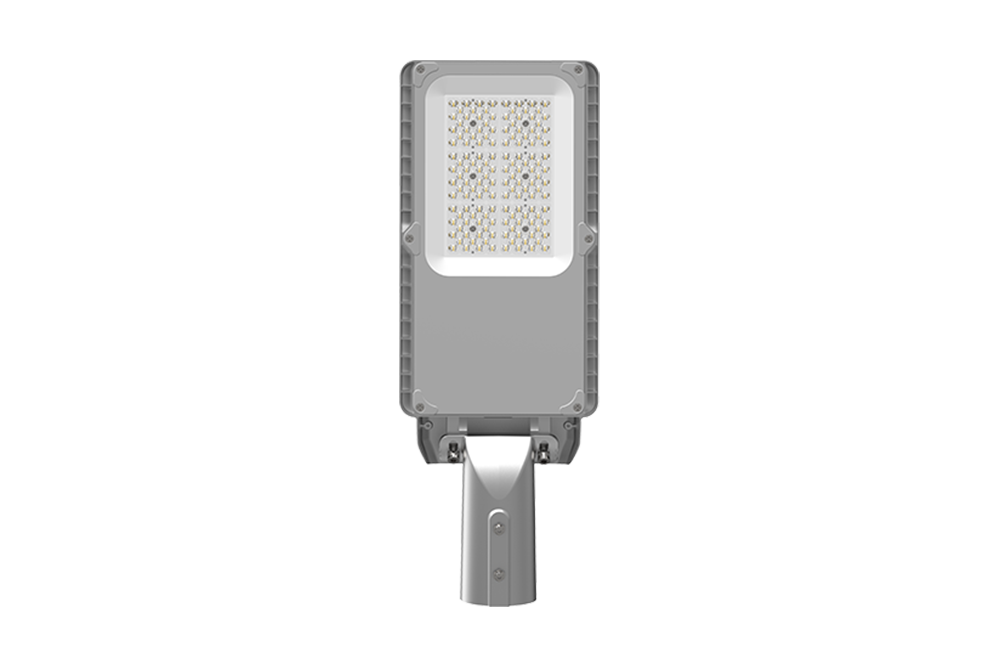
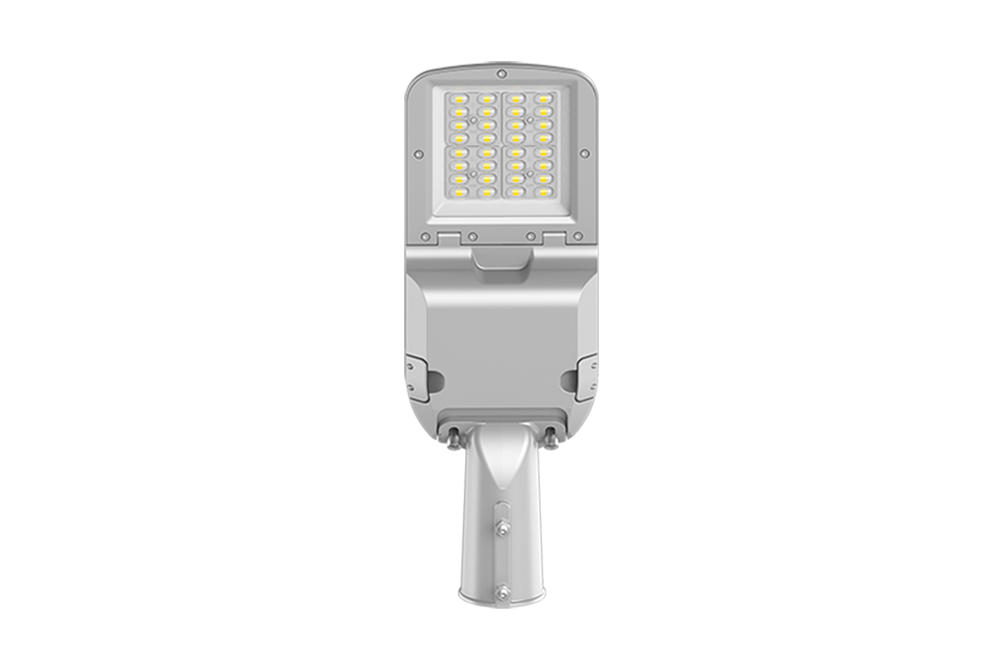
SEEKING STL-Series LED street lights deliver stable performance, 170 lm/W efficiency and 10KV surge protection. Ideal for city streets, parking lots, public roads and outdoor area lighting projects. Durable IP66 & IK08 design for long-term reliability.
The SEEKING STC Series LED light street light delivers up to 170lm/W efficiency with MOSO drivers, IP66 protection, and a ±15° adjustable arm—ideal for roads, residential areas, and public lighting upgrades.
SEEKING STB Series LED street lighting delivers up to 160 lm/W, 10kV surge protection, IP66 waterproofing, and durable IK08 impact resistance. Ideal for streets, parking lots, and large outdoor areas needing long-lasting, energy-saving LED roadway lighting.
The SEEKING STA Series LED street light delivers strong efficiency, IP66 protection, 10kV surge resistance and multiple beam patterns for roads, parking lots and urban areas. High lumen output, easy installation and reliable performance for long-term outdoor lighting.
LED explosion proof flood lights for high-risk outdoor oil & gas sites. SEEKINGLED FL7 Series offers Zone 1 ATEX/IECEx certification, IP66, IK10, and up to 52,000 lumens.
Learn how to wire LED high bay lights safely with professional installation steps, wiring tips, voltage guidance, and expert insights from SEEKINGLED lighting engineers.
Learn how to identify Temperature Groups and T-Code in ATEX IECEx Zone systems. Compare T1-T6 ratings and select safer explosion proof lighting for hazardous areas.
What does explosion proof lighting mean? Learn how certified explosion proof lighting works, where it is required, and why certification matters in hazardous areas. By SEEKINGLED.
 Seeking LED