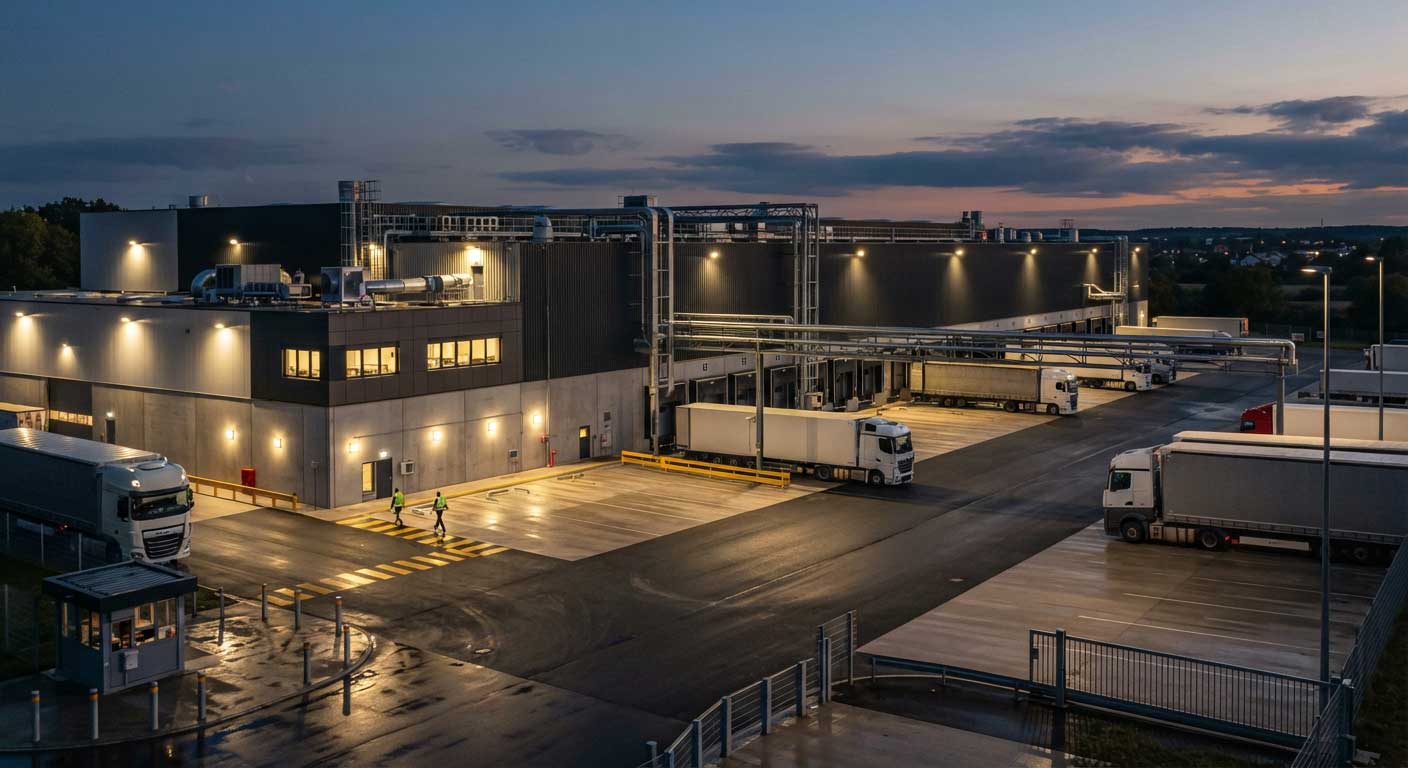
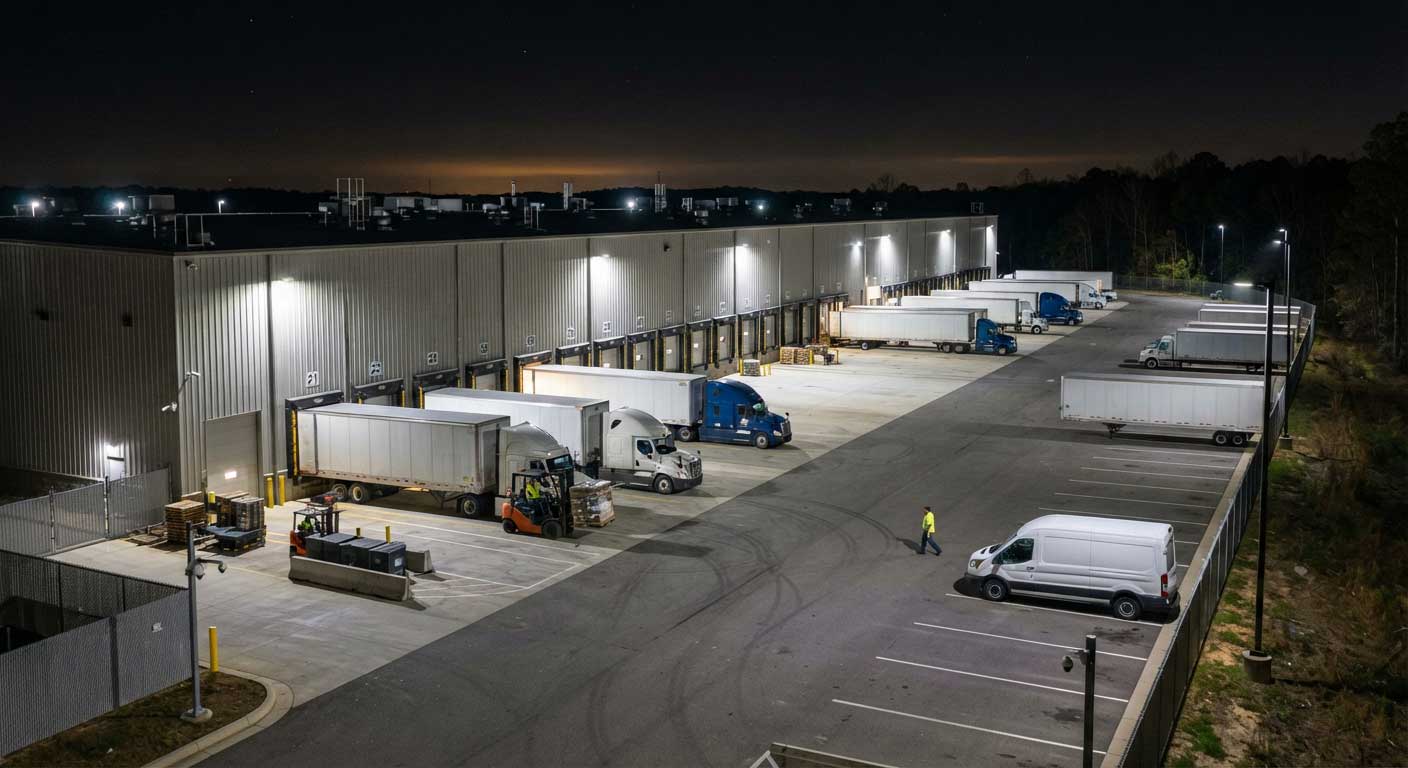
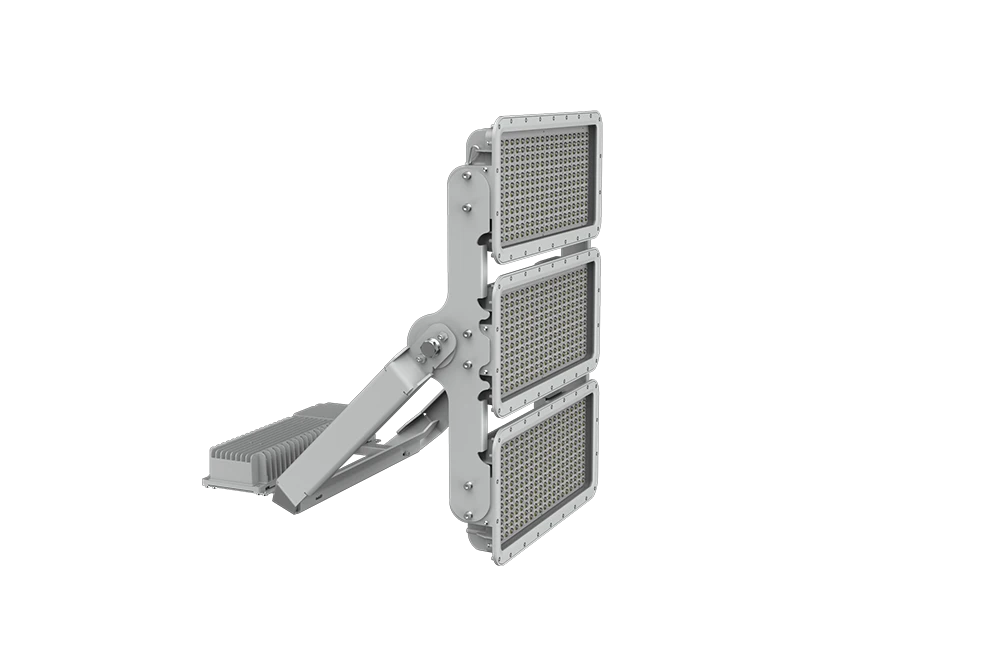
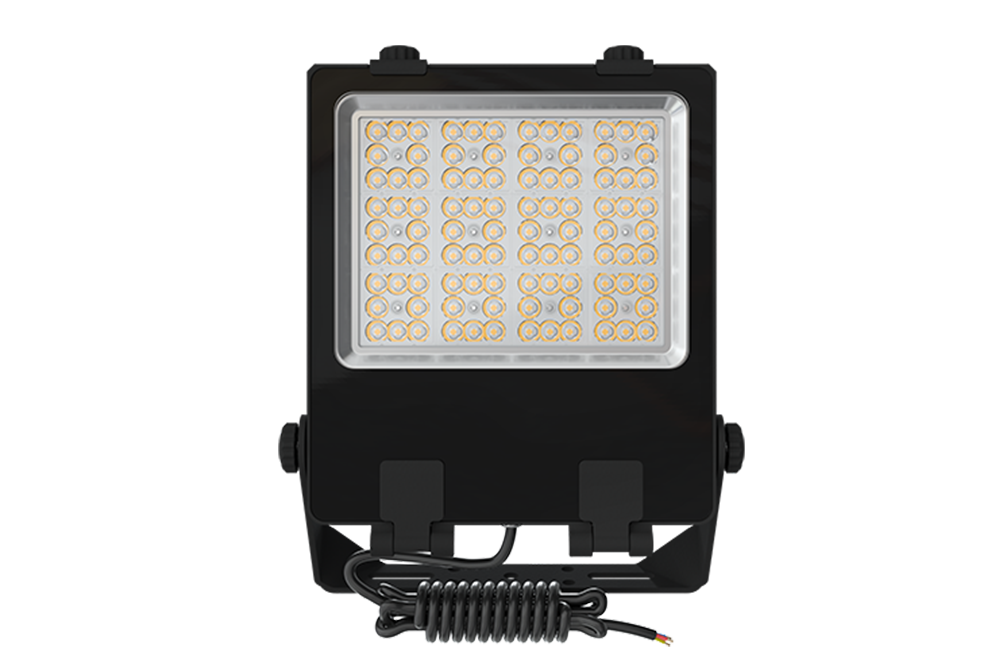
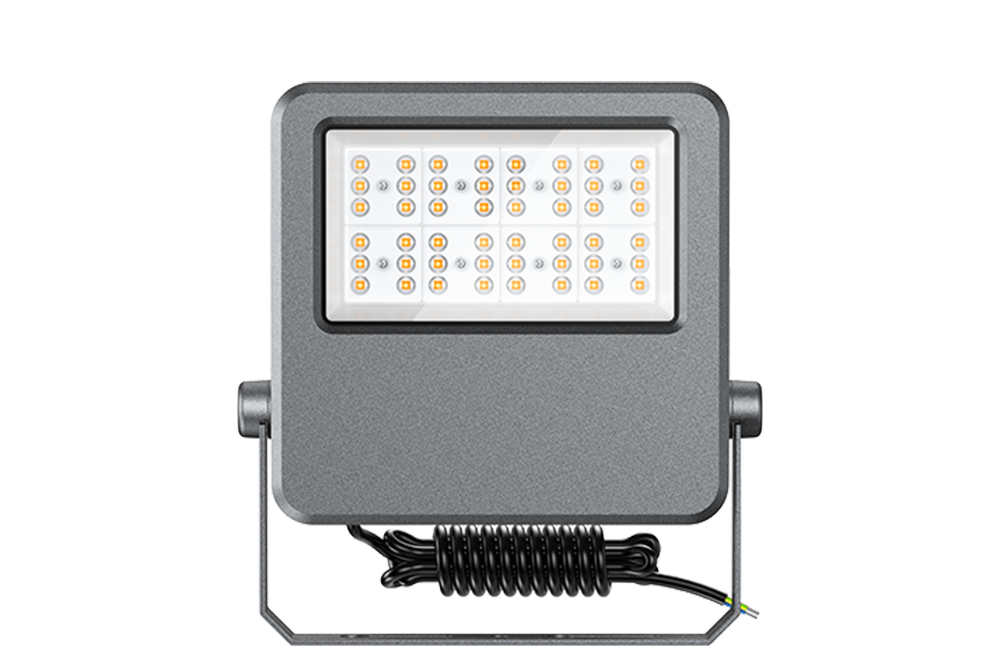
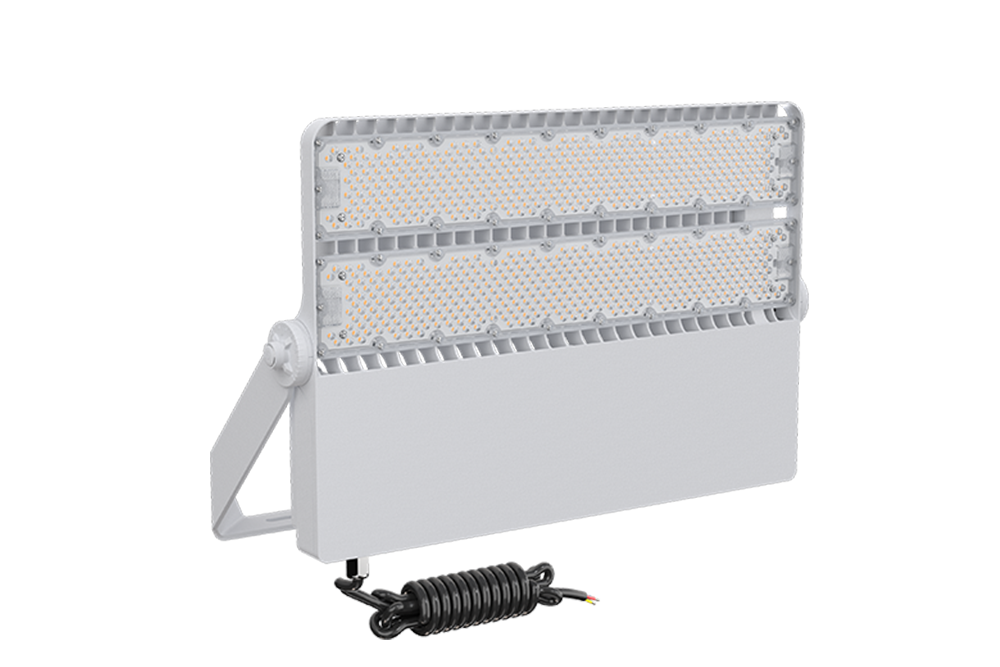
what is flood light? A flood light is a weather-resistant luminaire designed to project a controlled, relatively broad beam over an outdoor or indoor area. It is commonly used for buildings, yards, sports facilities, parking areas, construction sites, security zones, and architectural illumination.
What Is a Flood Light Used For?
A flood light is different from a conventional lamp because the fixture is designed around where the light needs to go.
The Illuminating Engineering Society (IES) defines a floodlight as a projector used to illuminate a scene or object considerably brighter than its surroundings. Its beam spread can range from about 10° to more than 100°, depending on the optical design.
That range is important.
A narrow flood light can throw concentrated light toward a distant facade or sports area. A wide-beam model can spread light across a parking lot, building entrance, loading zone, or large outdoor work area.
In product development and application discussions at SEEKINGLED, this is one of the first things I look at. Customers sometimes ask simply for a “bright flood light.” Brightness alone doesn’t tell us whether the fixture will work. A 100° beam aimed at a distant wall behaves very differently from a 30° beam using the same LED power.
Common Flood Light Applications
Flood lights are commonly selected for:
Building facades and architectural features
Parking lots and driveways
Warehouses and loading areas
Construction sites
Sports fields and courts
Gardens and landscapes
Security areas
Industrial yards
Ports and logistics facilities
Outdoor signs and structures
IES also describes floodlighting as a system used for utility, advertising, or decorative purposes.
How Does a Flood Light Work?
Inside a modern LED flood light, several components work together rather than simply producing light from a bare LED.
Typical components include:
LED chips — generate the light.
Driver — converts and regulates electrical power.
Optical system — controls beam distribution.
Heat sink — removes heat from the LED and driver area.
Housing — protects internal components from weather and impact.
Mounting bracket — allows the fixture to be aimed toward the target.
The optical system deserves more attention than it usually gets.
A fixture can have plenty of lumens and still illuminate a site poorly if those lumens are sent outside the target area. DOE guidance for exterior lighting recommends reviewing photometric files because lumen output and efficacy can vary significantly between luminaires.
Why Beam Angle Matters
Beam angle determines how broadly the flood light distributes its output.
Beam Type
Typical Effect
Suitable Applications
Narrow
Concentrated, longer throw
Facades, signs, distant targets
Medium
Balanced coverage
Building exteriors, yards
Wide
Broad area coverage
Parking areas, general security
Very wide
Large-area distribution
Open yards and work zones
IES notes that floodlight field angles can extend beyond 100°, so the term “flood light” covers a surprisingly broad range of optical designs.
What Is the Difference Between a Flood Light and a Spotlight?
The easiest distinction is beam spread and intended coverage.
A spotlight generally produces a narrower, more concentrated beam for emphasizing a particular object or distant target. A flood light is intended to cover a larger area.
The boundary is not absolute, though. Modern LED optics allow manufacturers to produce many intermediate beam distributions.
IES specifically describes floodlights as aimable luminaires that can direct controlled beams onto surfaces. ANSI/IES RP-8-22 also notes that floodlighting can project light over a long distance or illuminate irregular shapes.
So if the goal is to illuminate an entire building frontage, a flood light makes more sense. If the goal is to highlight one architectural feature, a narrower optical system may be preferable.
How Many Lumens Does a Flood Light Need?
There is no universal lumen rating for a flood light.
A small residential security application may need only a few thousand lumens, while a large industrial yard or sports facility may require tens of thousands of lumens from multiple fixtures.
For commercial procurement, I recommend checking:
Lumens
Luminaire efficacy in lm/W
Beam angle
Mounting height
Target distance
Required illuminance
Color temperature
CRI
IP rating
IK rating
Dimming and control options
Photometric IES file
DOE’s current federal purchasing guidance lists 118 lm/W as the minimum luminaire efficacy requirement for floodlight luminaires under its exterior-lighting procurement criteria.
That number is useful as a benchmark, but it should not be treated as a universal performance requirement for every private-sector project.
Does Higher Wattage Mean a Better Flood Light?
Not automatically.
A 200W flood light is consuming more electrical power than a 100W model, but the better fixture depends on what it delivers to the target.
For example, a high-quality 150W LED flood light with efficient optics may illuminate a wall more effectively than a poorly designed 200W fixture whose output spills into the surrounding area.
This is why lumens per watt and photometric distribution should be considered together.
What IP Rating Should a Flood Light Have?
Outdoor flood lights are exposed to rain, dust, humidity, temperature changes, and sometimes impact.
For that reason, IP protection is an important specification.
Common selections include:
IP65: protection against dust and water jets
IP66: dust-tight and stronger protection against powerful water jets
IP67: dust-tight with temporary water immersion protection
The appropriate rating depends on the installation environment.
A flood light mounted under a protected building overhang has different exposure from one installed beside an open industrial yard or coastal facility.
At SEEKINGLED, I would rather see the application conditions first than recommend an IP rating based only on the word “outdoor.”
Why Flood Light Glare and Light Spill Matter
More light is not necessarily better light.
A poorly aimed flood light can send light into neighboring properties, drivers’ eyes, windows, or the night sky. DarkSky International specifically identifies glare, light trespass, and unnecessary over-lighting as issues that responsible outdoor lighting should address.
The IES also warns that floodlighting should not normally replace conventional roadway lighting because of increased glare potential.
For a professional installation, aim the fixture at the actual target and use the narrowest practical distribution that achieves the required coverage.
FAQ About Flood Lights
What is flood light used for?
A flood light is used to illuminate relatively large outdoor or indoor areas, structures, buildings, yards, sports spaces, parking areas, security zones, and architectural features.
What is the difference between a flood light and a spotlight?
A flood light generally provides broader area coverage, while a spotlight normally concentrates light into a narrower beam. Modern optical systems can overlap between the two.
How many lumens should a flood light have?
The required lumens depend on the target area, mounting height, distance, beam angle, and required illuminance. There is no single lumen rating suitable for every application.
Are LED flood lights energy efficient?
Modern LED flood lights can provide high luminous efficacy compared with older lighting technologies. DOE’s current exterior-lighting guidance uses 118 lm/W as the minimum efficacy level for designated floodlight luminaires in federal purchasing.
What beam angle is best for a flood light?
It depends on the target. Narrow beams are useful for distant or concentrated targets, while wider distributions are better for large areas requiring broad coverage.
Are flood lights waterproof?
Outdoor flood lights are generally designed with weather protection, but “waterproof” should not be assumed. Check the actual IP rating and installation requirements of the product.
Can flood lights be used for road lighting?
They can be used in certain specialized applications, but IES guidance indicates that floodlighting is generally not appropriate for conventional roadway lighting because of its higher glare potential.
Final Answer
what is flood light? It is an aimable lighting fixture designed to project a controlled beam across a scene, structure, or outdoor area. The right flood light depends less on wattage alone and more on beam distribution, lumens, mounting position, target size, environmental protection, and glare control. That is the approach we use when evaluating outdoor lighting applications at SEEKINGLED.
Sports Stadium LED Lighting by SEEKINGLED delivers high mast illumination, precise beam control, and EN 12193 compliant performance for professional venues.
SEEKING FLX Series LED flood light outdoor for sports courts and open-area projects with 170lm/W efficiency, IP66 protection and multiple beam distributions. Designed for long-life commercial and public outdoor use.
SEEKING FLE Series LED outdoor flood lights for sports grounds and open areas with multiple beam angles, IP66 protection and up to 170lm/W. Designed for long-life outdoor installations with professional driver options.
SEEKING FLD Series outdoor LED flood lights and high power led flood light deliver up to 960W with precision beam angles for sports fields, stadiums and large outdoor areas. IK08 & IP66 protection, 170lm/W efficiency and 100,000h lifetime.
What explosion proof LED floodlights are best suited for offshore platforms? Learn key certifications, corrosion resistance, and offshore lighting requirements from industry experts.
Warehouse LED lighting solutions are widely used to reduce energy use, improve safety, and simplify maintenance. This article shares how SEEKINGLED lighting is applied in real warehouse environments.
A practical overview of hazardous area classification, explosive atmosphere zones, and equipment protection levels based on IEC and ATEX standards, with clear zoning examples.
 Seeking LED