 Seeking LED
How Long Can LED Lights Last When You Actually Use Them?
54How long can LED lights last in real conditions? Discover true lifespan, key factors, and why SEEKINGLED lighting systems perform longer in demanding environments.
View detailsSearch the whole station
How to choose flood lights? Start with the job the light must perform, then match lumen output, beam angle, mounting height, color temperature, IP rating, controls, and energy efficiency. The right flood light should illuminate the target area evenly without excessive glare, wasted light, or an enclosure unsuited to the installation environment.
A flood light selected from a catalog by wattage alone can look perfectly adequate on paper and still perform badly after installation. A warehouse loading bay, residential driveway, football field, and building façade do not need the same optical pattern.
For professional lighting selection, I start with the target surface and mounting position, not the fixture wattage. That small change in approach often eliminates the need to compensate for a poor beam pattern with excessive lumen output.
The important specifications are not all equal. For most outdoor projects, these are the first numbers worth comparing:
| Specification | What to look for | Why it matters |
|---|---|---|
| Lumens | Match output to the area and task | Determines available light |
| Beam angle | Narrow, medium, or wide | Controls coverage |
| Mounting height | Match optics to installation height | Affects uniformity |
| CCT | Commonly 2700–4000K outdoors | Affects visual appearance |
| CRI | Choose according to color-recognition needs | Affects color rendering |
| IP rating | Match the environmental exposure | Protects against dust/water |
| Efficacy | Compare lm/W | Shows electrical efficiency |
| Controls | Sensor, timer, dimming, photocell | Reduces unnecessary operation |
| Housing | Aluminum/thermal design and finish | Influences durability |
The U.S. Department of Energy‘s exterior-lighting procurement guidance uses luminaire efficacy rating (LER), measured in lumens per watt, and lists 118 lm/W as the minimum federal purchasing requirement for floodlight luminaires in its covered applications. That provides a useful benchmark when comparing commercial products, although project requirements and applicable standards still determine the final specification.
More lumens do not automatically mean better lighting.
DarkSky’s residential outdoor assessment, for example, suggests approximately 300–800 lumens for work areas such as outside a garage, while recommending keeping total output below 1,000 lumens for many residential tasks. Commercial yards, sports facilities, security zones, and large façades can require substantially different levels based on the task and lighting design.
A practical starting point:
The important question is not “How many lumens can I get?” It is “Where will those lumens land?”
Imagine a 100,000-lumen fixture mounted high above a yard. If its beam is too narrow, the center can become extremely bright while the edges fall into darkness. A wider optic may create a more usable distribution with fewer fixtures.
For this reason, review the photometric file, beam distribution, mounting height, and target dimensions when selecting professional flood lights. A specification sheet containing only watts and lumens is incomplete for serious projects.
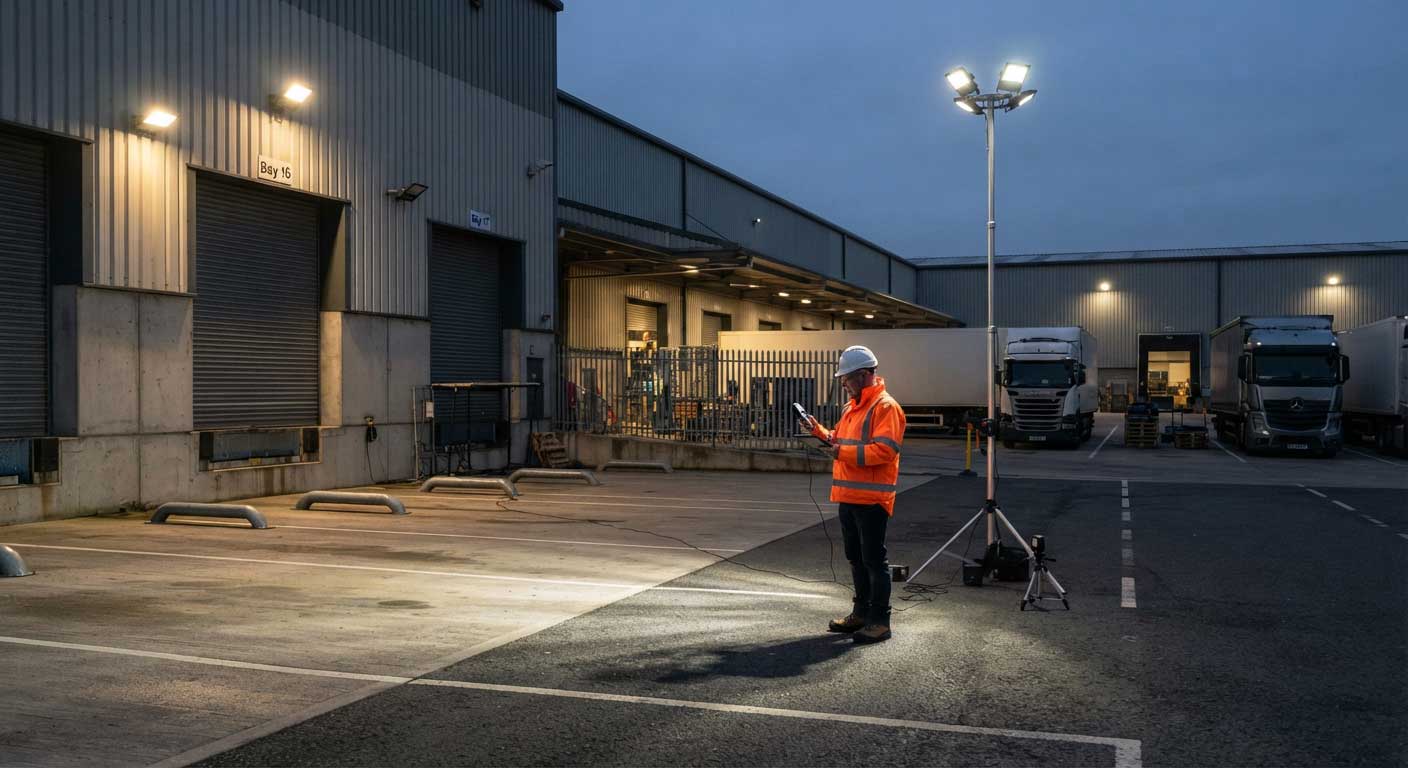
Outdoor flood lights face rain, dust, condensation, temperature changes, and sometimes corrosive environments.
Do not choose an IP rating simply because a product description says “waterproof.” Match the enclosure to the actual installation conditions and the certification requirements applicable to the market.
UL notes that line-voltage outdoor luminaires are evaluated under UL 1598, including applicable wet-location requirements.
For industrial buyers, also inspect:
A flood light installed beside a coastal warehouse deserves different scrutiny from one mounted under a protected residential eave.
Color temperature is another specification that is easy to overlook.
DarkSky recommends warmer outdoor lighting where possible and identifies 2700K or lower as a night-friendly choice for many residential applications. Its Five Principles also emphasize useful, targeted, low-level, controlled, and warm-colored lighting.
That does not mean every commercial application should use 2700K. Security, industrial inspection, sports, and color-critical environments may have different requirements.
Control is equally important. Motion sensors, timers, photocells, and dimming can prevent a high-output fixture from operating at full power when nobody needs it.
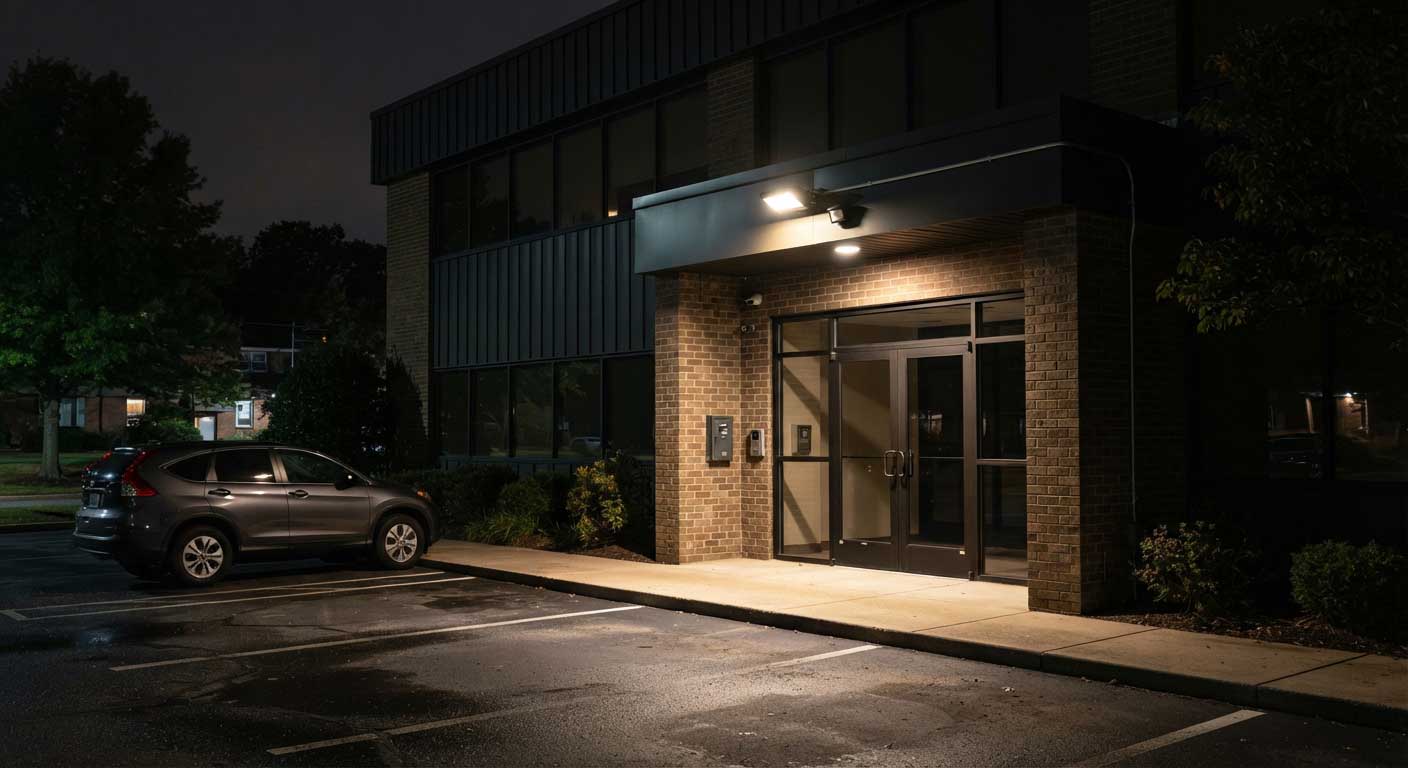
A 200W fixture is not automatically twice as useful as a 100W fixture.
Compare lumens, lm/W, beam distribution, lifetime information, driver quality, thermal design, and controls. DOE specifically uses lumens-per-watt as a measure of luminaire efficiency, making it more informative than wattage alone when comparing light output against electrical input.
For a commercial buyer, this also affects maintenance. A fixture that delivers the required illumination with better optical control may reduce the number of fixtures needed, simplify maintenance access, and avoid unnecessary light spilling into neighboring areas.
Before approving a product, check:
There is no single correct lumen number. The required output depends on the application, mounting height, beam angle, surface reflectance, and target illuminance. For small residential work areas, DarkSky cites roughly 300–800 lumens as a practical range.
It depends on the mounting position and target area. Narrow beams suit concentrated targets, while wider beams cover larger areas. Professional projects should use photometric data rather than choosing an angle by appearance alone.
No. Wattage describes electrical consumption, not the quality of illumination. Compare lumens, efficacy, optics, glare control, and distribution.
For many residential outdoor applications, warmer light around 2700K is a practical choice. Commercial and industrial applications may require a different CCT according to visibility, color recognition, safety, and site requirements.
The correct rating depends on the exposure and installation environment. Rain-exposed locations require equipment specifically suitable for the conditions. Certification and manufacturer installation instructions should be checked rather than relying on the word “waterproof.”
LED flood lights can provide high light output with relatively low electrical consumption. DOE’s exterior-lighting guidance evaluates efficiency using lumens per watt and sets a 118 lm/W benchmark for covered floodlight purchases.
Knowing how to choose flood lights is less about finding the brightest fixture and more about matching light to the actual job. Start with the target area, mounting height, beam distribution, environment, and required illumination. Then compare efficacy, CCT, controls, enclosure, and certifications.
For SEEKINGLED, that specification-first approach is especially important in commercial and industrial projects, where the fixture has to perform reliably after installation—not just look impressive on a product sheet.
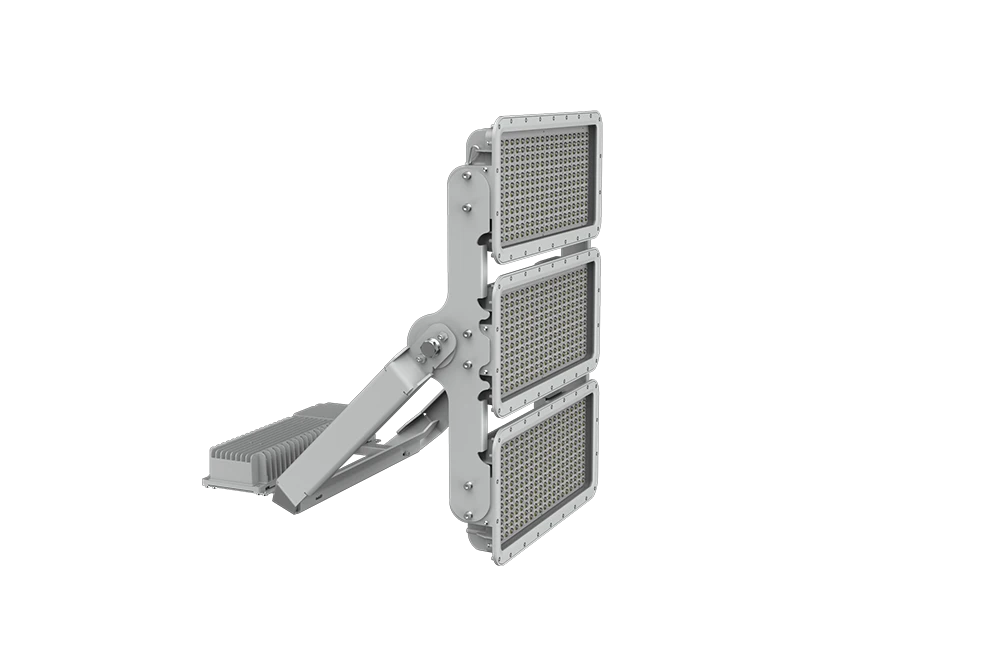
Sports Stadium LED Lighting by SEEKINGLED delivers high mast illumination, precise beam control, and EN 12193 compliant performance for professional venues.
View details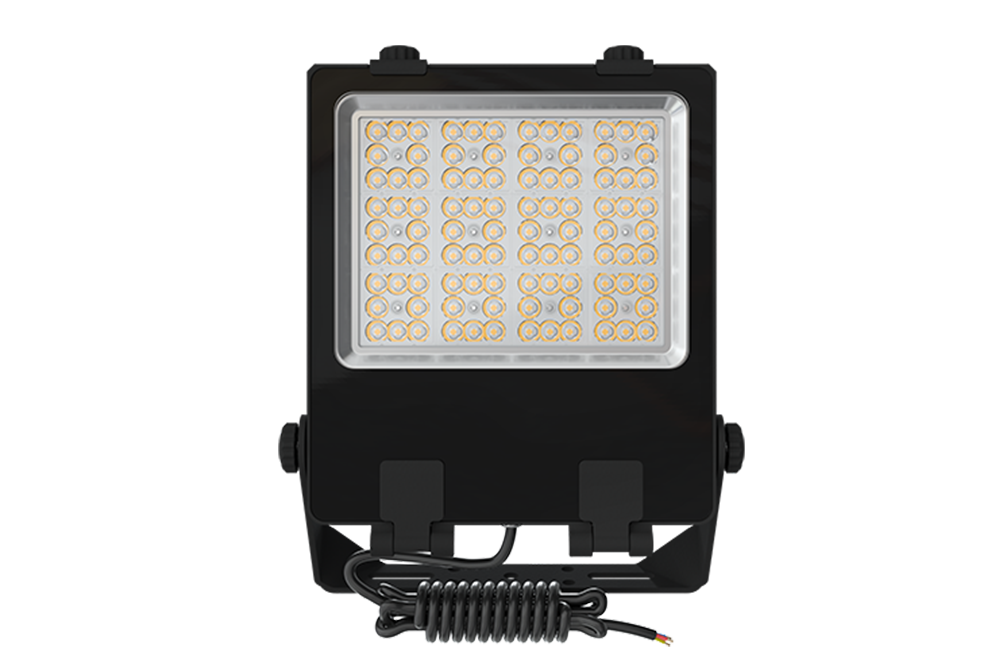
SEEKING FLX Series LED flood light outdoor for sports courts and open-area projects with 170lm/W efficiency, IP66 protection and multiple beam distributions. Designed for long-life commercial and public outdoor use.
View details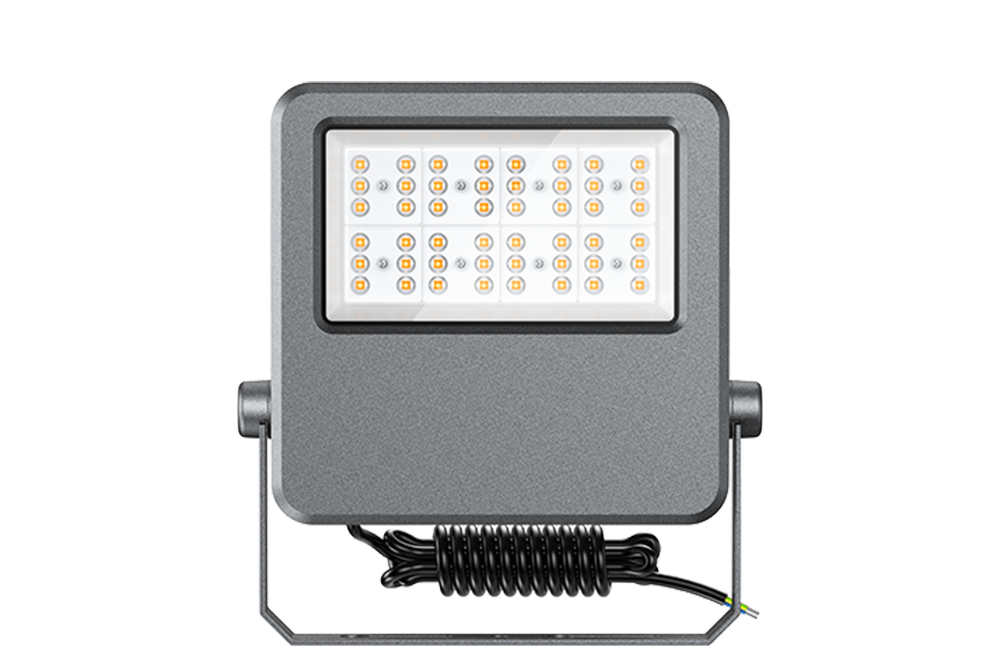
SEEKING FLE Series LED outdoor flood lights for sports grounds and open areas with multiple beam angles, IP66 protection and up to 170lm/W. Designed for long-life outdoor installations with professional driver options.
View details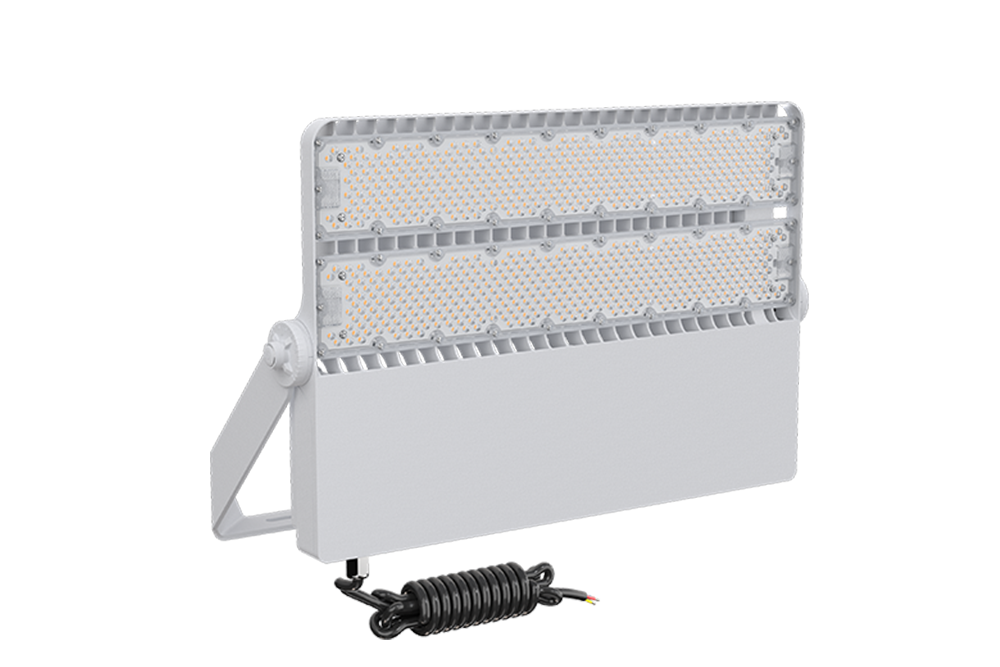
SEEKING FLD Series outdoor LED flood lights and high power led flood light deliver up to 960W with precision beam angles for sports fields, stadiums and large outdoor areas. IK08 & IP66 protection, 170lm/W efficiency and 100,000h lifetime.
View details
How long can LED lights last in real conditions? Discover true lifespan, key factors, and why SEEKINGLED lighting systems perform longer in demanding environments.
View details
Discover how lighting for hazardous areas improves safety in explosive environments. Learn certifications, zone classifications, selection tips, and industry best practices.
View details
What is an explosion proof linear light? Learn how hazardous area linear fixtures work, where they are used, and why ATEX-certified LED lighting matters.
View details
Learn how to stop my high bay LED lights from flickering by identifying wiring, driver, and control issues. Field-based guidance from SEEKINGLED.
View details