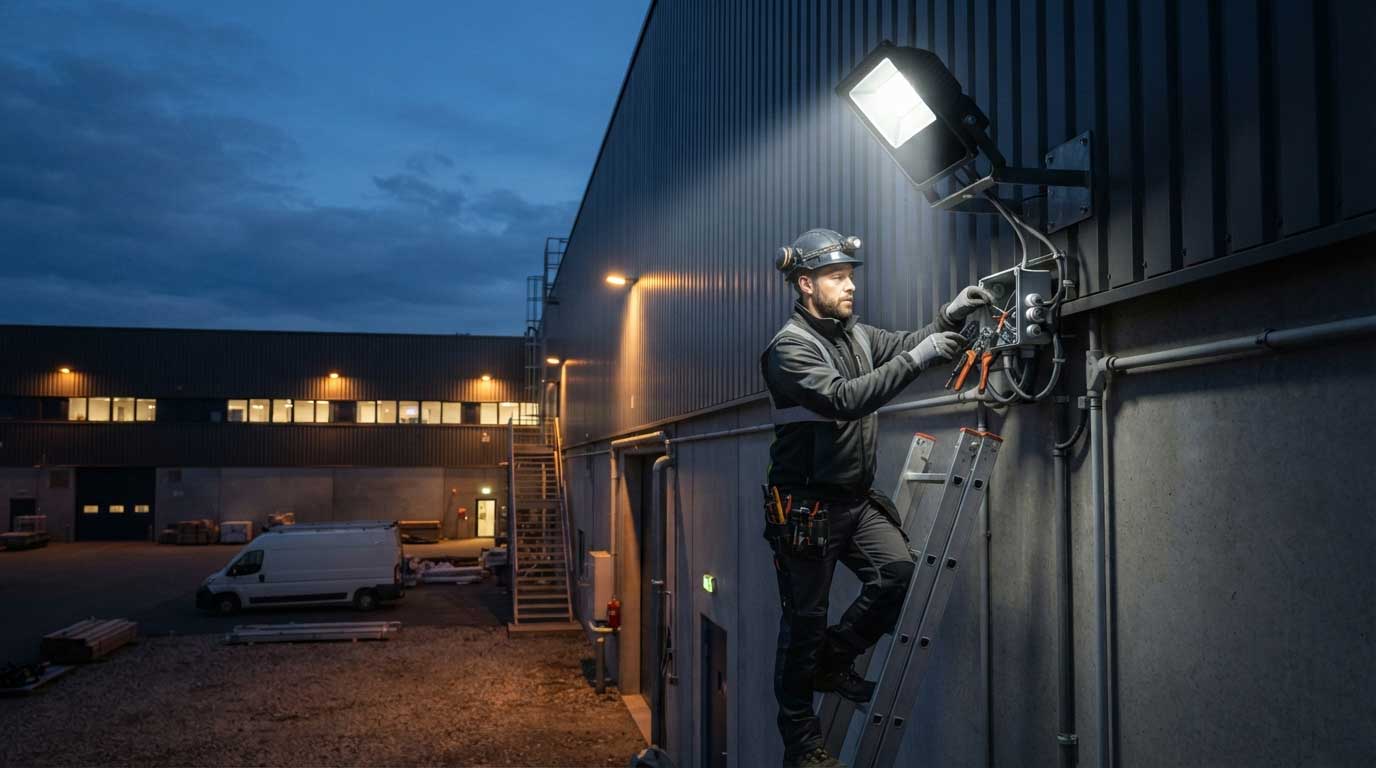
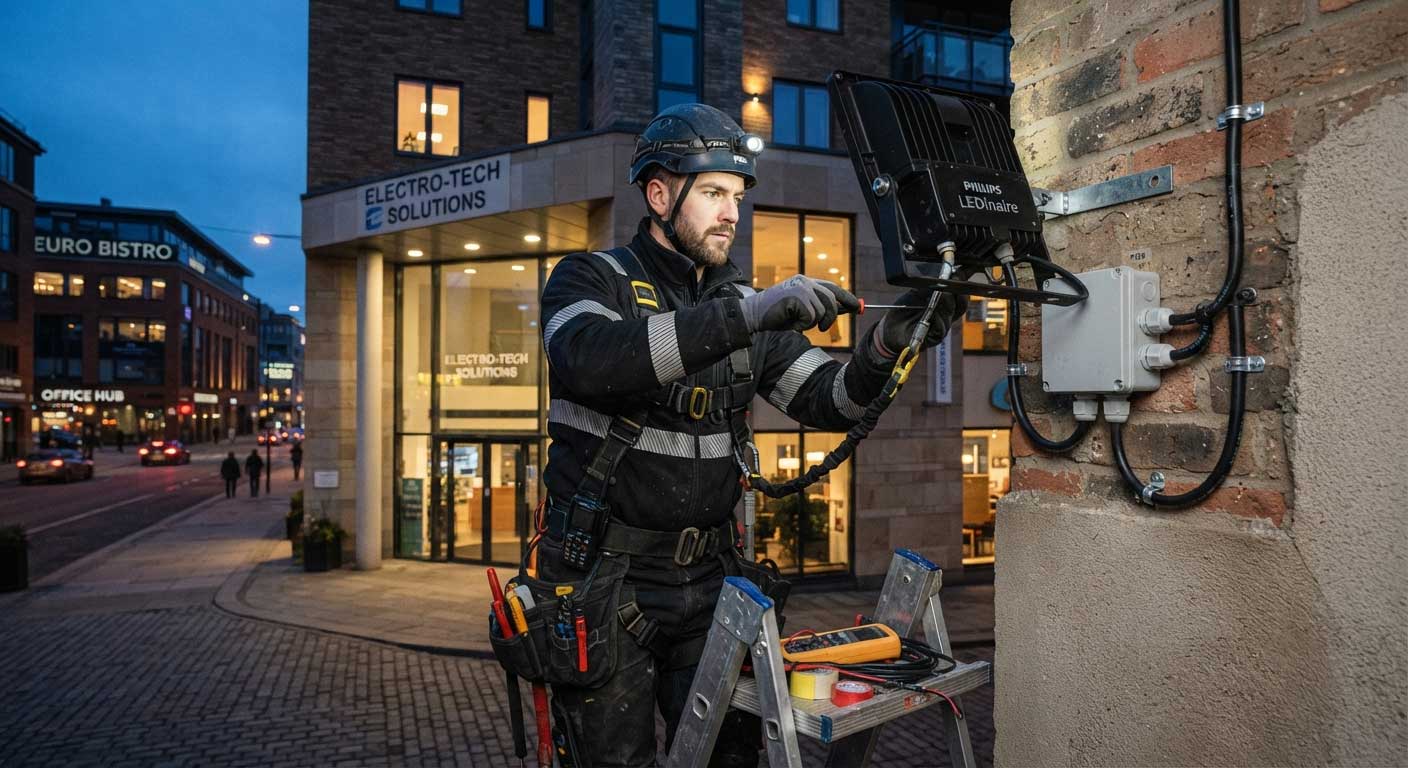
How to connect LED flood light is a question that usually comes up before installation, not after failure. The wiring itself is not complicated, but outdoor flood lights work with mains power, so a clear understanding of the basics matters.
Most professional LED flood lights, including models from SEEKINGLED, are designed for direct connection to AC power and do not require external transformers.
Understanding LED Flood Light Wiring Basics
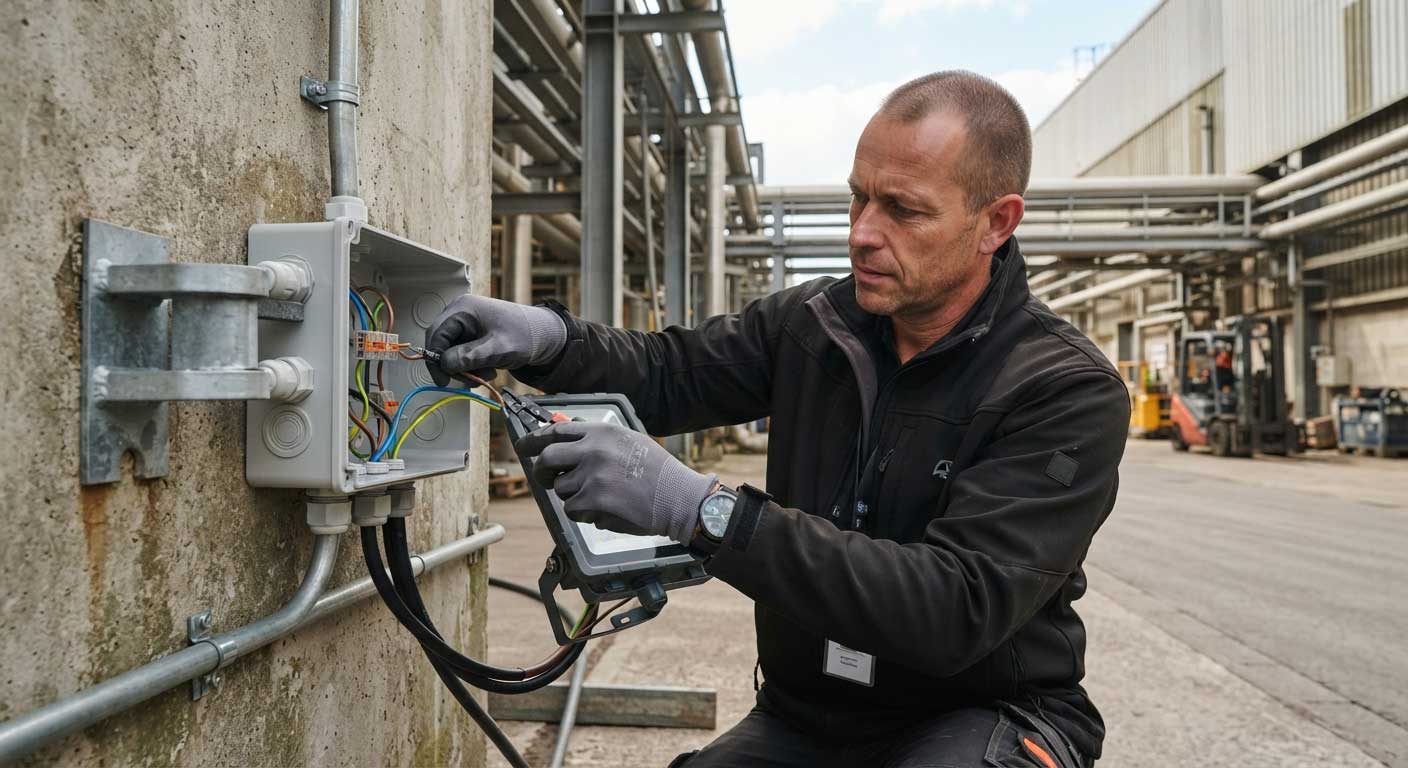
A standard LED flood light typically has three wires:
- Live (L) – brown or black
- Neutral (N) – blue
- Ground (Earth) – yellow-green
These wires are usually pre-installed from the factory and protected by a sealed cable gland for outdoor use.
Before connecting anything, always confirm the input voltage. SEEKINGLED LED flood lights commonly support 100–277V AC, which covers most European and North American power systems.
How to Connect LED Flood Light Step by Step
For wall-mounted or pole-mounted flood lights, the connection process is usually as follows:
- Switch off power at the breaker, not just the wall switch
- Open the junction box or mounting base
- Match live to live, neutral to neutral, ground to ground
- Secure connections using waterproof connectors or terminal blocks
- Close and seal all covers before restoring power
The goal is not speed, but stable contact and long-term weather protection.
Outdoor Installation: What People Often Miss
Outdoor LED flood lights fail more often due to poor wiring than product quality. Common issues include:
- No grounding connection
- Loose terminals inside junction boxes
- Cable glands not tightened, allowing moisture inside
SEEKINGLED designs flood lights with IP65 protection, but correct installation is still essential to keep water and dust out over time.
Connecting LED Flood Lights with Sensors or Timers
Some LED flood lights support motion sensors or photocells. In these cases:
- The sensor is wired between power supply and the flood light
- Live wire routing must follow the sensor’s wiring diagram
- Neutral and ground usually remain continuous
If unsure, it’s better to let a licensed electrician handle sensor integration.
FAQ: How to Connect LED Flood Light?
How to wire a floodlight to a plug?
Answer:
To wire a floodlight to a plug, connect the live, neutral, and ground wires correctly using a suitable outdoor-rated cable and waterproof plug. Always confirm voltage compatibility and use proper protection before powering the fixture.
What is a LED flood light wiring diagram?
Answer:
A LED flood light wiring diagram shows how live, neutral, and ground wires connect between the power source and the fixture. It helps installers understand correct wiring paths and avoid electrical connection mistakes.
What is LED flood light connection?
Answer:
LED flood light connection refers to joining the fixture wires with the electrical supply safely. Most outdoor LED flood lights use three connections: live, neutral, and earth ground for reliable operation.
How to connect flood light wire?
Answer:
To connect flood light wire, turn off power first, identify each wire, match live-to-live, neutral-to-neutral, and ground-to-ground, then secure all connections inside a waterproof junction box.
How to connect LED flood light?
Answer:
To connect LED flood light, switch off the circuit breaker, connect the AC supply wires according to the wiring markings, protect the cable entry point, and test the fixture after installation.
How to wire a flood light?
Answer:
To wire a flood light, connect the fixture’s live, neutral, and ground wires to the matching power supply wires. Outdoor installations should use waterproof connectors and proper grounding for safety.
How to wire LED flood lights?
Answer:
To wire LED flood lights, connect each fixture to the correct AC power supply, ensure polarity is matched, and protect all terminals from moisture. Multiple fixtures should also be checked for circuit capacity.
What is a LED floodlight wiring diagram?
Answer:
A LED floodlight wiring diagram provides a visual guide showing where each wire connects. It typically includes live, neutral, and earth connections between the power source, switch, sensor, and LED floodlight.
More answers
Final Advice from Project Experience
If you’re searching how to connect LED flood light, treat it as an electrical task, not just a lighting upgrade. A properly connected LED flood light will run for years with minimal attention.
This is exactly why SEEKINGLED focuses on clear wiring design, wide voltage drivers, and stable outdoor performance—so installers can do the job once and move on.
Quick FAQs –LED Flood Light
LED flood light installation guide — what should I check before starting?
LED flood light installation guide — what should I check before starting?
Start with power, not the light. Confirm voltage range first — most SEEKINGLED units handle 100–277V, but don’t assume. Then look at the mounting surface. If it vibrates or flexes, fix that first. I’ve seen perfectly wired lights fail just because the bracket loosened over time. Also, check your cable entry point. If water can find a way in, it eventually will.
LED flood light connection — what usually goes wrong?
LED flood light connection — what usually goes wrong?
It’s rarely the wiring logic. Live to live, neutral to neutral — that part is simple. Problems come from loose terminals or rushed sealing. One small gap in the junction box, and moisture builds up slowly. Not immediate failure, just gradual issues. That’s harder to notice, but more common.
How to wire a floodlight to a plug safely?
How to wire a floodlight to a plug safely?
It can be done, but only for temporary or portable setups. Use a proper plug with grounding. Brown (live) to live pin, blue (neutral) to neutral, and always connect earth. Don’t skip grounding — that’s not optional outdoors. And avoid cheap adapters. They hold up fine indoors, not outside.
How to wire LED flood lights for long-term outdoor use?
How to wire LED flood lights for long-term outdoor use?
Focus less on speed, more on stability. Use waterproof connectors, tighten cable glands properly, and leave no exposed copper. If the cable feels slightly loose, redo it. In outdoor installs, “almost tight” is basically loose after a few months. SEEKINGLED fixtures are sealed well, but the connection point is always the weak spot if rushed.
How to install LED flood light without future issues?
How to install LED flood light without future issues?
Mounting angle matters more than people think. Too flat, and you get glare. Too steep, and coverage drops off. Try to visualize the light spread before fixing it in place. Also, don’t trap heat — avoid tight enclosed spots unless the fixture is rated for it. A clean install isn’t just about turning it on, it’s about how it behaves after six months.
led flood light recommended

Sports Stadium LED Lighting by SEEKINGLED delivers high mast illumination, precise beam control, and EN 12193 compliant performance for professional venues.
View detailsSEEKING FLX Series LED flood light outdoor for sports courts and open-area projects with 170lm/W efficiency, IP66 protection and multiple beam distributions. Designed for long-life commercial and public outdoor use.
View detailsSEEKING FLE Series LED outdoor flood lights for sports grounds and open areas with multiple beam angles, IP66 protection and up to 170lm/W. Designed for long-life outdoor installations with professional driver options.
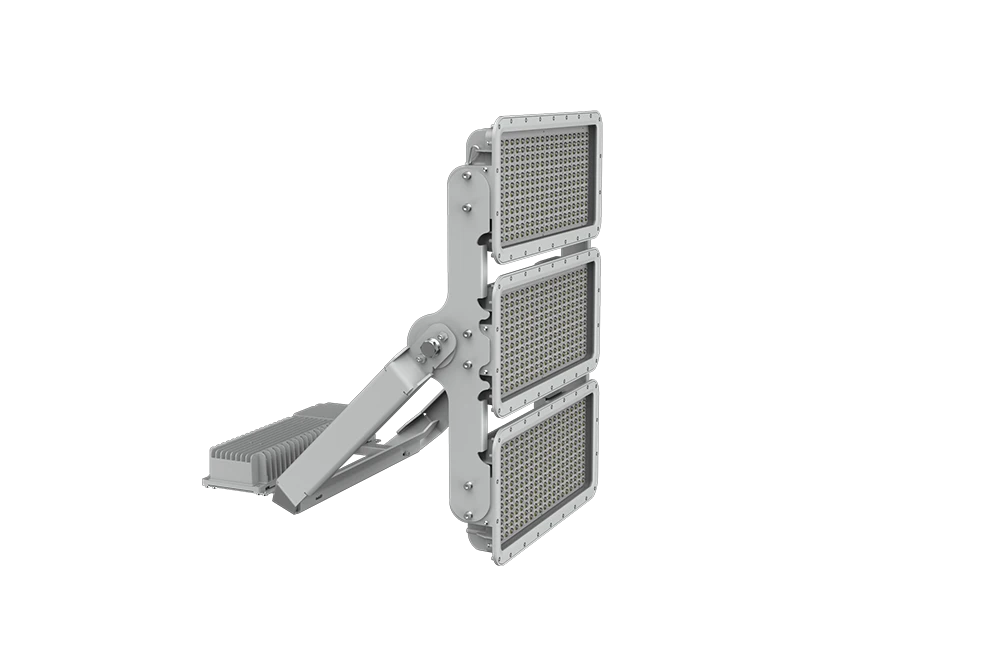
View detailsSEEKING FLD Series outdoor LED flood lights and high power led flood light deliver up to 960W with precision beam angles for sports fields, stadiums and large outdoor areas. IK08 & IP66 protection, 170lm/W efficiency and 100,000h lifetime.
View details  Seeking LED