 Seeking LED
XJ-HBS150W Replaces 400W Metal Halide in USA Factory
320Engineering case record of XJ-HBS150W LED high bay replacing 400W metal halide lights in a USA steel factory, focusing on dust performance, heat dissipation, and energy savings.
View detailsSearch the whole station
how to get a explosive proof cap off junction box?
To get a explosive proof cap off junction box safely, first de-energize the circuit, verify the hazardous area is gas-free, clean exposed threads, and use the proper cover wrench or strap wrench to loosen the cap without damaging the flame-path threads. Never force, grind, or modify the enclosure.
That is the short answer.
The longer answer is where most people make mistakes.
Over the past decade working around petrochemical terminals, fuel loading racks, offshore platforms, and grain processing facilities, I have seen more explosion-proof junction boxes damaged during maintenance than during actual service. The problem usually isn’t corrosion. It’s impatience.
One maintenance technician grabs a pipe wrench.
Another uses a hammer and screwdriver.
Five minutes later, the flame-path threads are scarred, the enclosure certification is compromised, and a box designed to contain an internal explosion becomes questionable.
In hazardous locations, removing an explosion-proof cap is not just a mechanical task. It is a safety procedure.
Unlike ordinary electrical junction boxes, explosion-proof enclosures rely on precisely machined threaded joints or flame paths.
According to Electrical Contractor Magazine’s hazardous location guidance, threaded covers are intentionally designed to cool and contain gases generated by an internal explosion. The threaded engagement itself forms part of the protection system. Source:
Electrical Contractor Magazine
Website: https://www.ecmag.com
Article: Explosion-Proof Equipment: What to Use to Determine Hazardous Locations Classification
Because of this design:
A cover that has not been opened for five years can feel welded shut.
Sometimes it nearly is.
Before touching the enclosure, complete these checks.
Never assume a circuit is dead.
Follow lockout/tagout procedures.
Verify:
This is basic electrical safety, but surprisingly often skipped during troubleshooting.
In Class I areas:
Many facilities require a gas test before opening any explosion-proof enclosure.
You will usually encounter one of three styles:
| Cover Type | Typical Appearance | Removal Method |
|---|---|---|
| Threaded Cap | Round threaded cover | Unscrew |
| Bolted Cover | Multiple bolts around perimeter | Remove bolts |
| Hinged Explosion-Proof Cover | Industrial enclosure door | Remove locking hardware |
Most explosion-proof junction boxes use threaded covers. Eaton’s hazardous location junction boxes, for example, commonly use threaded construction throughout the enclosure.
Using the wrong tool is the fastest way to destroy a flame path.
Recommended tools:
Avoid:
I once inspected a refinery box where someone used a grinder to cut a seized cover.
The box cost about $400.
The replacement project cost over $7,000 because permits, shutdown approvals, and recertification were required.
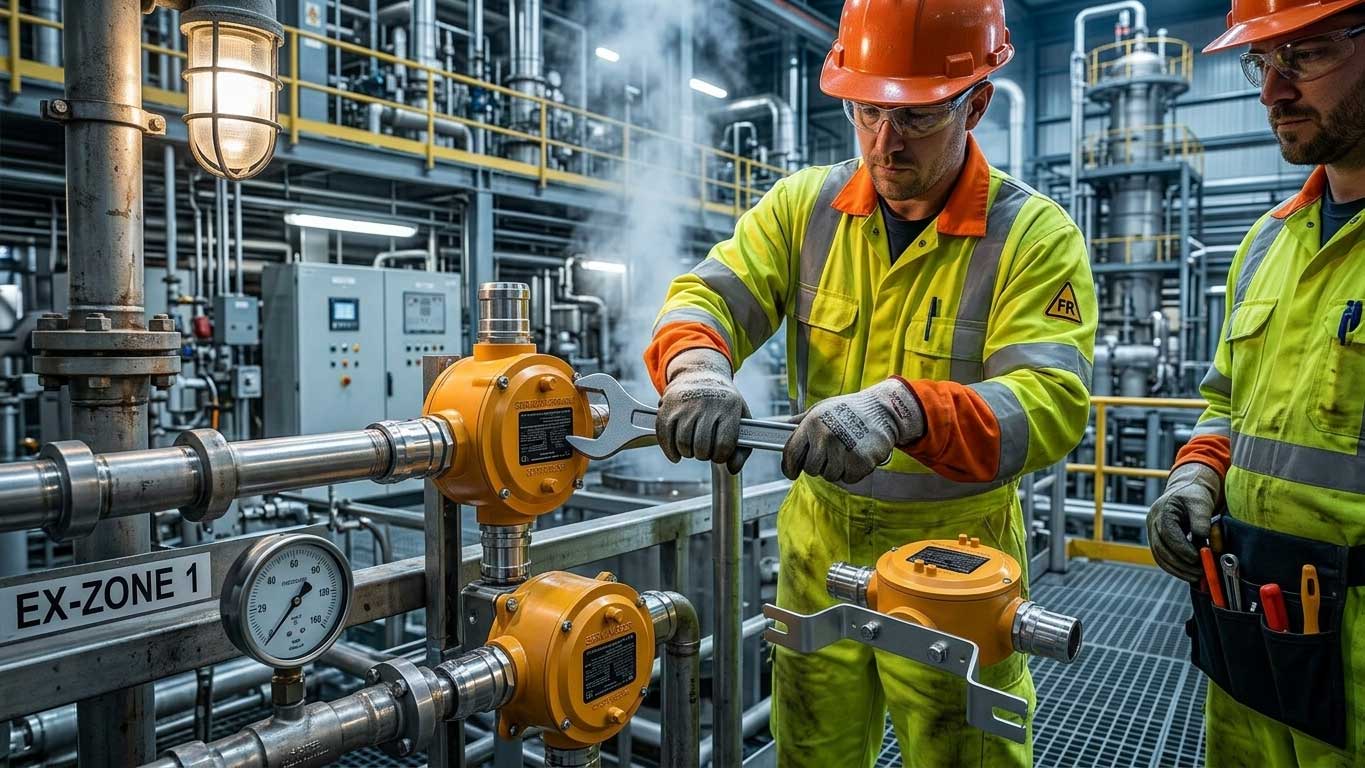
Before applying force:
Use a brass brush.
Many seized covers are actually blocked by debris rather than corrosion.
Apply around the thread interface.
Allow:
Do not flood the enclosure.
Use only products permitted by site procedures.
Attach the correct wrench.
Apply steady force.
Avoid sudden impacts.
A slow continuous load is much safer than shock loading.
If movement begins:
This gradually breaks corrosion.
Trying to force the cover off in one motion often damages threads.
After removal inspect:
Any significant damage may require enclosure replacement.
Common with:
Offshore installations suffer heavily.
According to industry corrosion studies published by NACE International (now AMPP), atmospheric corrosion costs industrial operators billions annually through maintenance and equipment replacement.
Source:
Association for Materials Protection and Performance (AMPP)
Website: https://www.ampp.org
I’ve seen freshly painted process units where contractors unknowingly sealed cover threads with coating.
The enclosure wasn’t corroded.
It was glued shut by paint.
Many facilities only open boxes during failures.
A five-minute inspection every few years prevents most seizure issues.
The following actions can void certifications.
| Incorrect Action | Risk |
|---|---|
| Grinding cover threads | Destroys flame path |
| Using chisels | Thread damage |
| Heating with torch | Ignition risk |
| Drilling cover | Certification loss |
| Striking with sledgehammer | Cracking enclosure |
Explosion-proof protection depends on maintaining the original flame path dimensions. Modifying those dimensions can compromise enclosure performance.
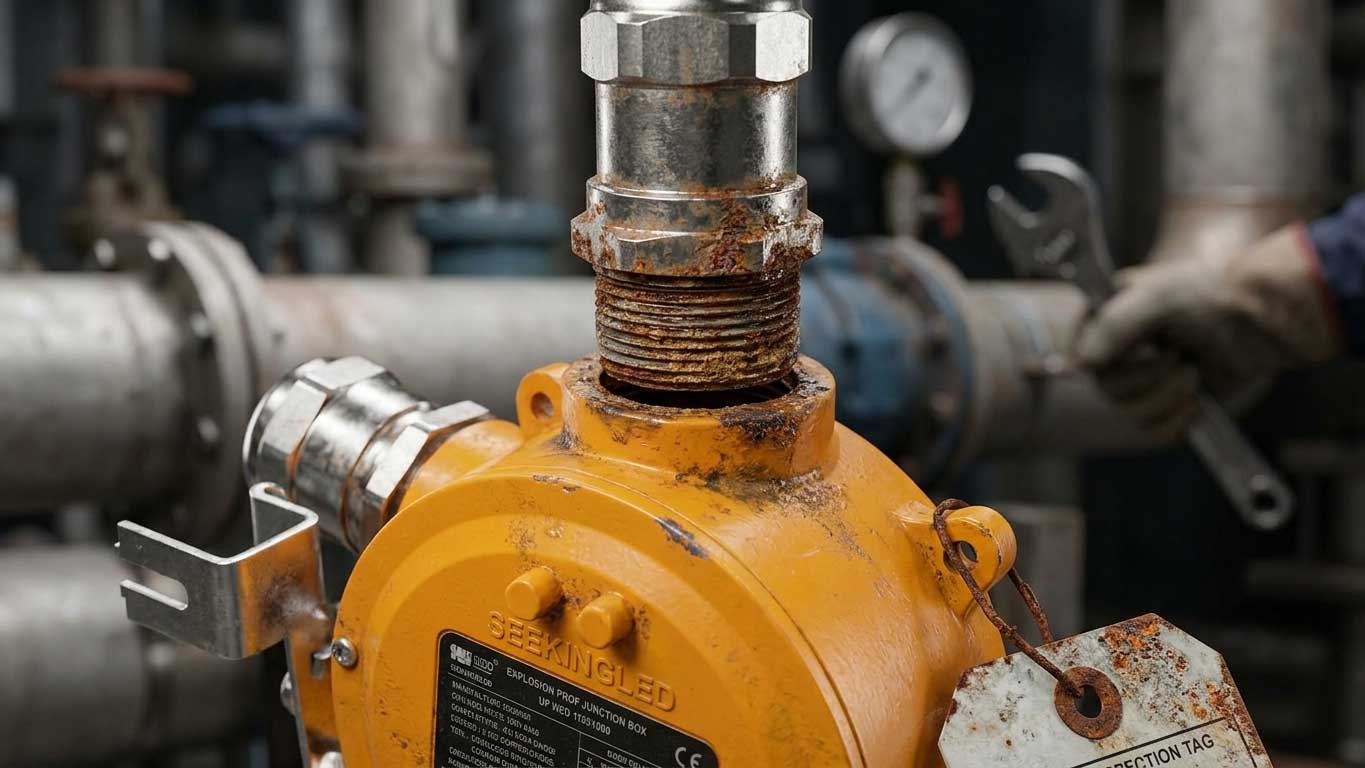
Experienced hazardous-area electricians often:
This is far cheaper than replacing a damaged enclosure.
Several industry professionals also report using manufacturer-approved conductive anti-seize compounds on applicable threaded components when permitted by equipment documentation and site standards.
Always follow the enclosure manufacturer’s instructions.
| Problem | Possible Cause | Solution |
|---|---|---|
| Cover won’t move | Corrosion | Penetrating oil and proper wrench |
| Cover moves slightly then stops | Dirty threads | Clean and work back and forth |
| Cover damaged | Previous improper removal | Replace enclosure |
| Threads stripped | Excessive force | Replace enclosure |
| Water inside | Failed seal or maintenance issue | Inspect and repair immediately |
Not recommended.
Pipe wrenches frequently damage flame-path threads and cover surfaces.
No.
Open flames should never be used around hazardous location equipment.
No.
Drilling or modifying an explosion-proof enclosure can invalidate its certification and safety rating.
Most industrial facilities inspect them during scheduled maintenance shutdowns, typically annually or according to plant reliability programs.
Stop.
Excessive force can damage the enclosure. Contact the manufacturer or a qualified hazardous-location electrician.
Direct access to product page:Explosion proof Junction box
How to get a explosive proof cap off junction box safely? Disconnect power, verify the area is safe, clean the threads, apply approved penetrating lubricant, and remove the cap using the proper cover wrench while protecting the flame-path surfaces. Never grind, drill, hammer, or modify the enclosure. Preserving the flame path is more important than removing the cover quickly.
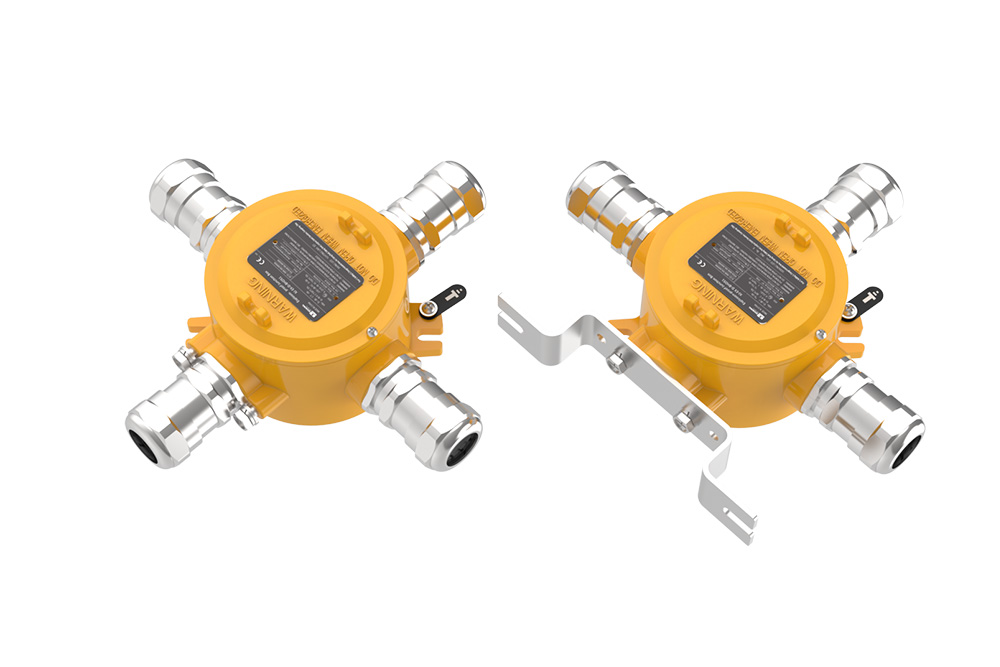
Explosion-proof Junction Box for safe wiring in Zone 1 areas. Fast, tool-free installation, ATEX & IECEx certified. Trusted performance from SEEKINGLED.
View details
Engineering case record of XJ-HBS150W LED high bay replacing 400W metal halide lights in a USA steel factory, focusing on dust performance, heat dissipation, and energy savings.
View details
what is an atex area? Learn how hazardous zones are classified, ATEX requirements, and how certified lighting protects explosive environments.
View details
Choose eco friendly flood lights for lower energy use, longer lifespan, and reduced carbon impact. Reliable outdoor LED solutions built by SEEKINGLED.
View details
ATEX LED lighting designed for hazardous industrial zones. Learn how certified explosion-proof lighting improves safety and efficiency in oil, gas, and chemical facilities.
View details