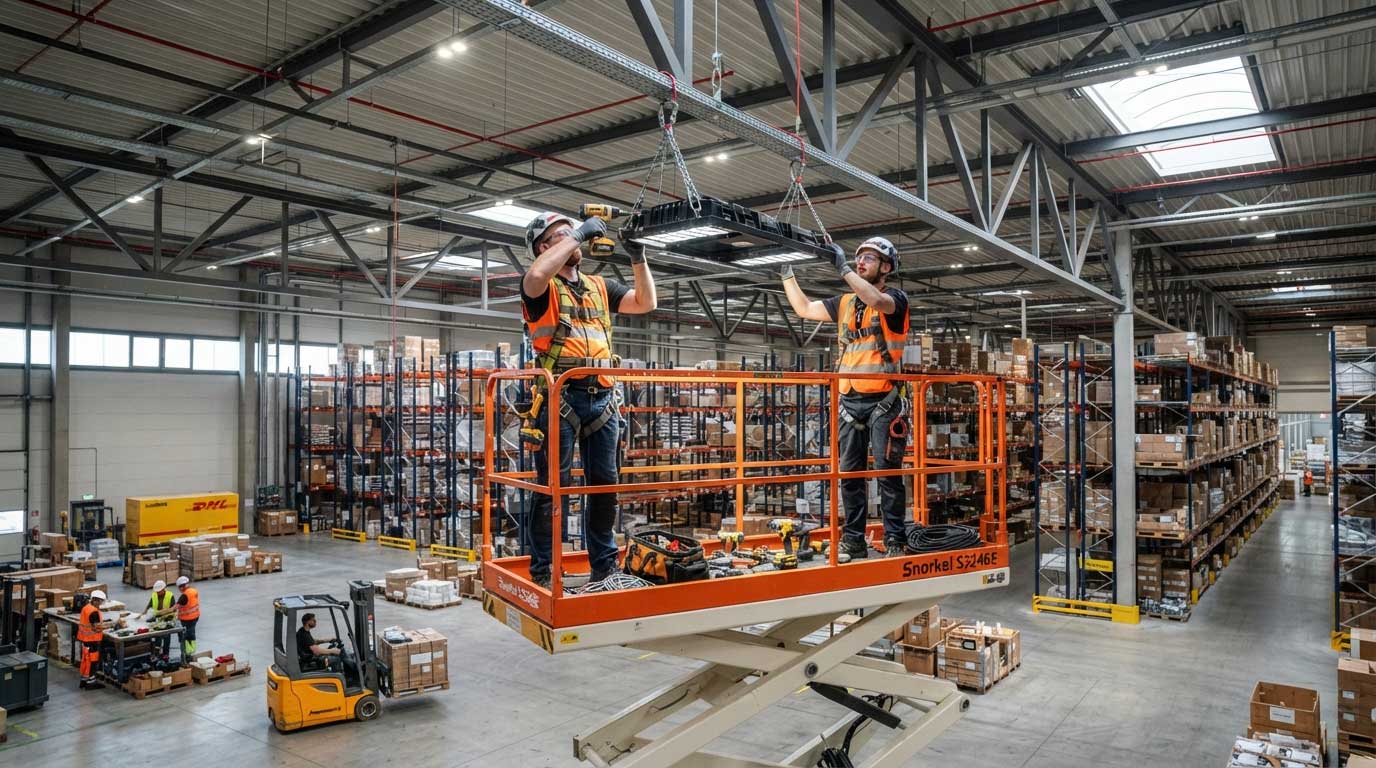
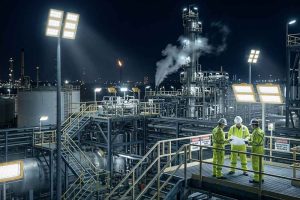
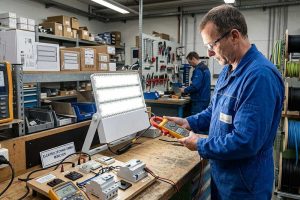
To hang high bay lights, select the correct mounting method, install secure hardware, attach safety cables, adjust fixture height, and confirm alignment before connecting power. Proper mounting ensures safe operation and effective light distribution in high-ceiling spaces.
At SEEKINGLED, we have assisted industrial lighting projects where fixture suspension directly affected lighting performance and maintenance efficiency. Hanging high bay lights is not only a mechanical task; the mounting height, spacing, and support structure determine how well the entire lighting system performs.Visit the product page:LED High Bay Lights
Understanding how to hang high bay lights correctly
When searching how to hang high bay lights, many people focus only on the physical process of attaching fixtures to a ceiling. In commercial and industrial environments, however, the installation method has a direct impact on safety, illumination quality, and long-term maintenance.
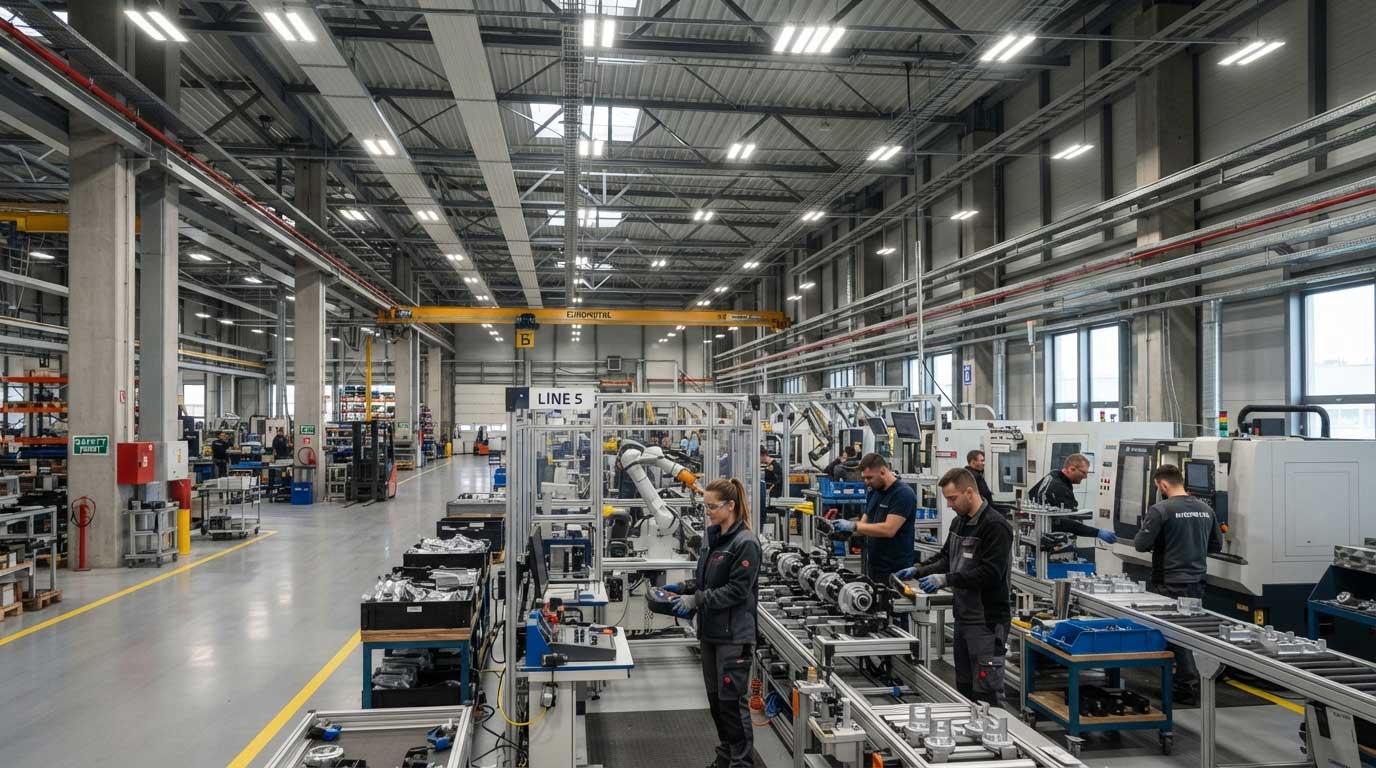
High bay lights are typically installed in buildings with ceilings between 15 feet and 60 feet or more, including:
Warehouses
Manufacturing plants
Distribution centers
Aircraft hangars
Sports facilities
Large workshops
Because these fixtures are mounted high above working areas, the hanging system must support the fixture weight while maintaining the correct lighting position.
A professional installation usually considers:
Ceiling structure
Fixture weight
Mounting height
Light distribution angle
Maintenance access
During real industrial installations, we have found that a few inches of height difference can change the lighting pattern significantly. A fixture installed too high may reduce brightness at the working level, while one installed too low may create glare.
According to the U.S. Department of Energy, LED lighting provides high efficiency and long service life, but achieving these benefits depends on proper system design and installation.
The correct hanging method depends on the fixture design, ceiling structure, and application requirements.
Chain mounting high bay lights
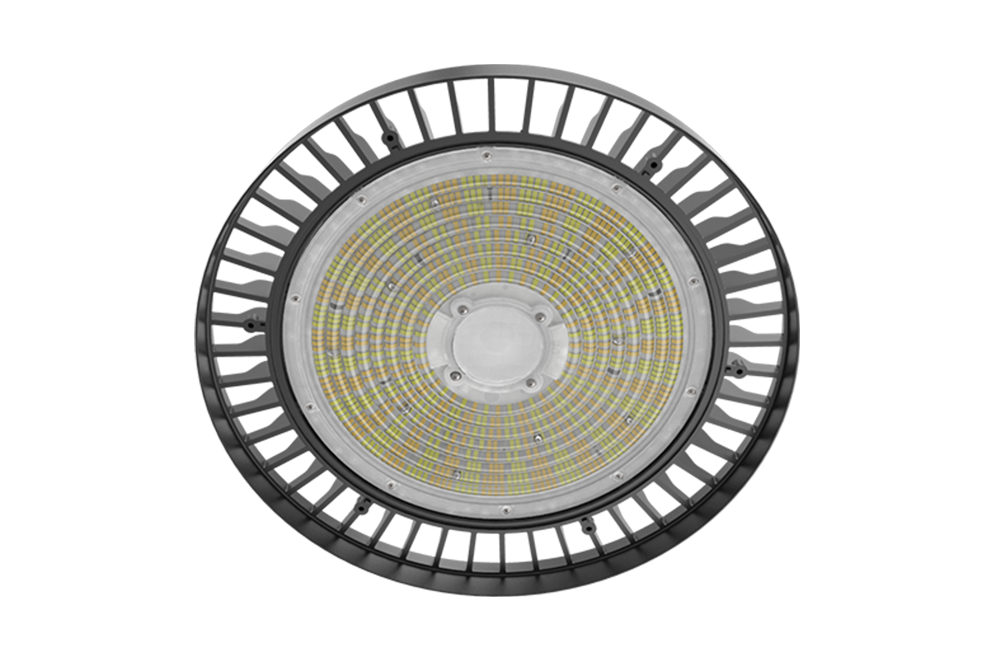
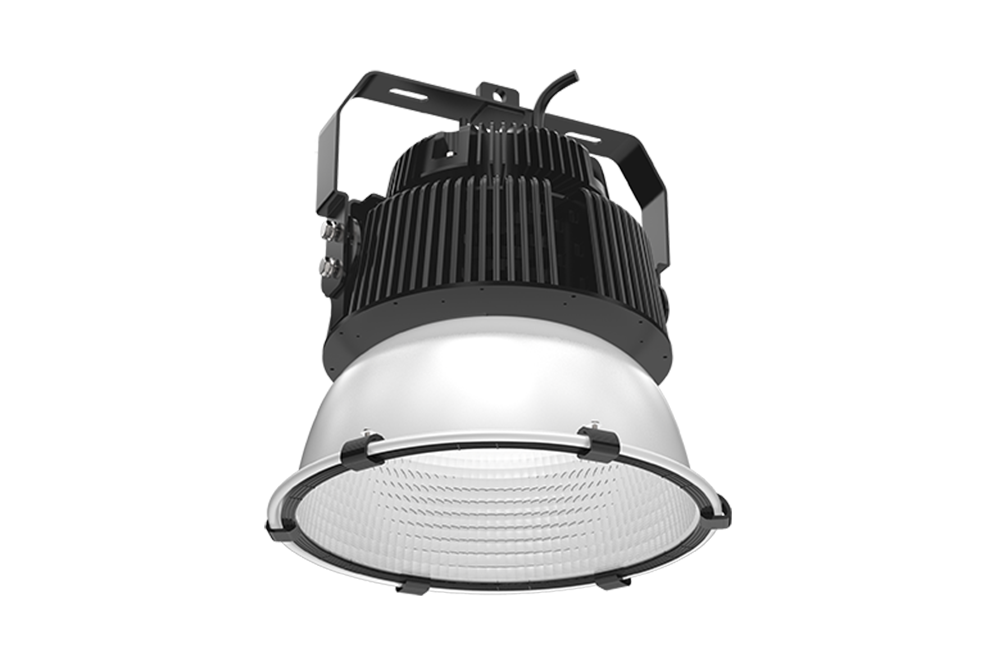
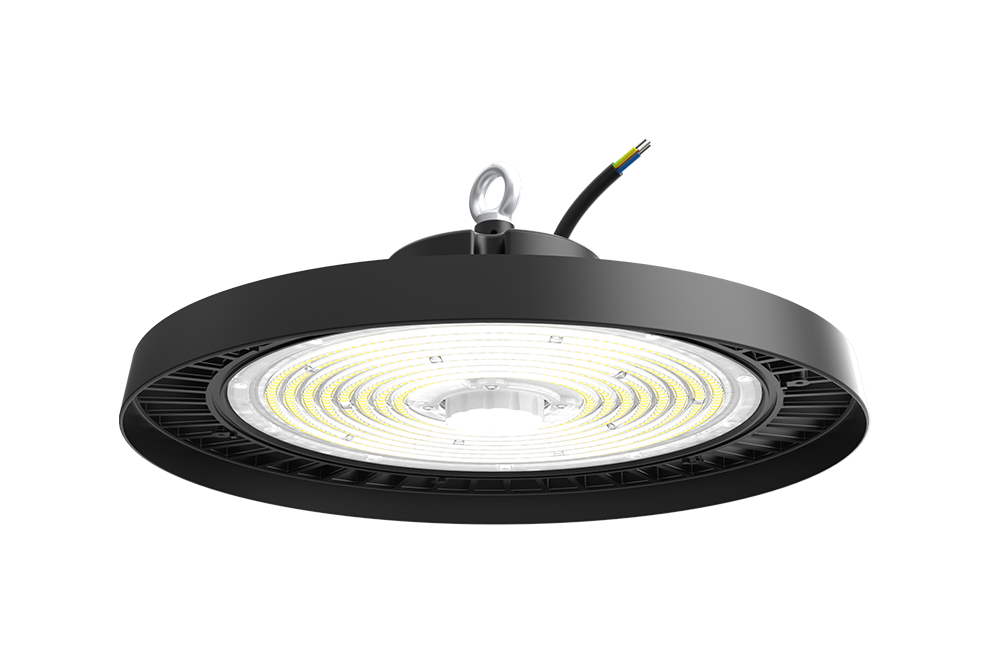
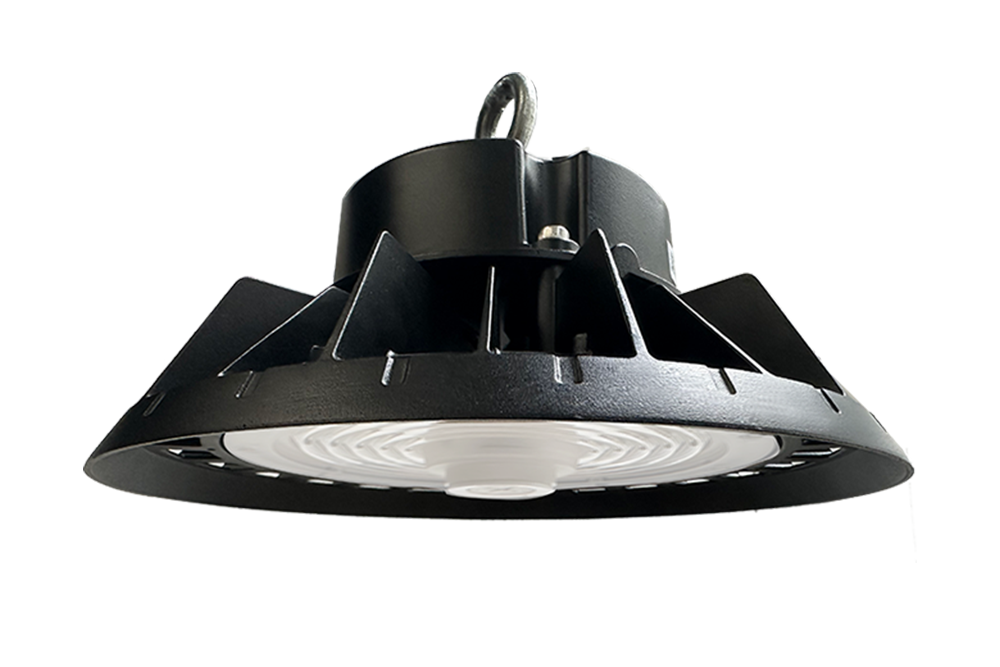
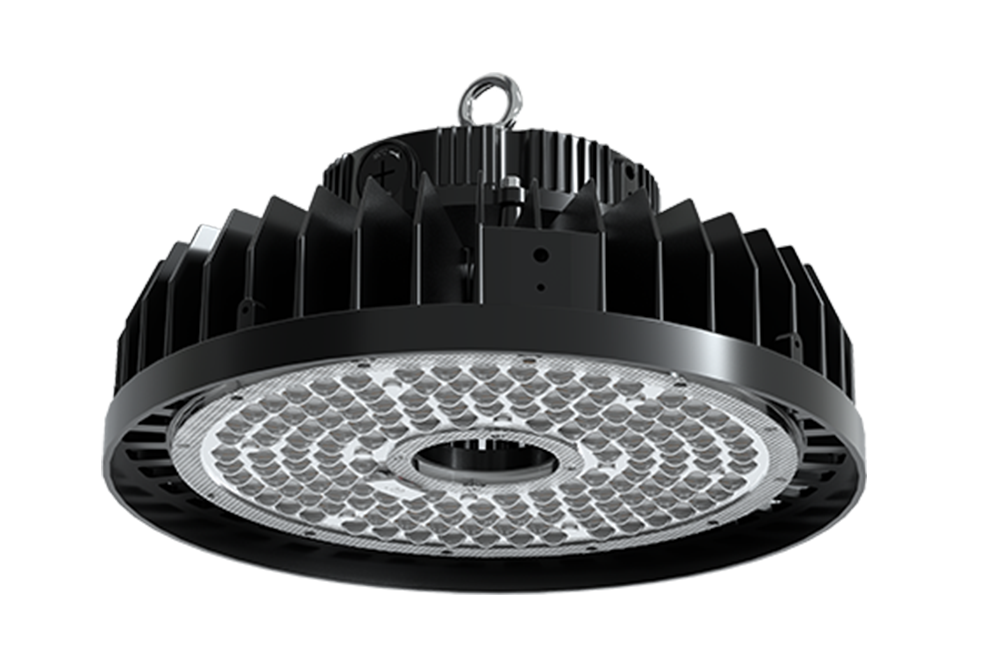
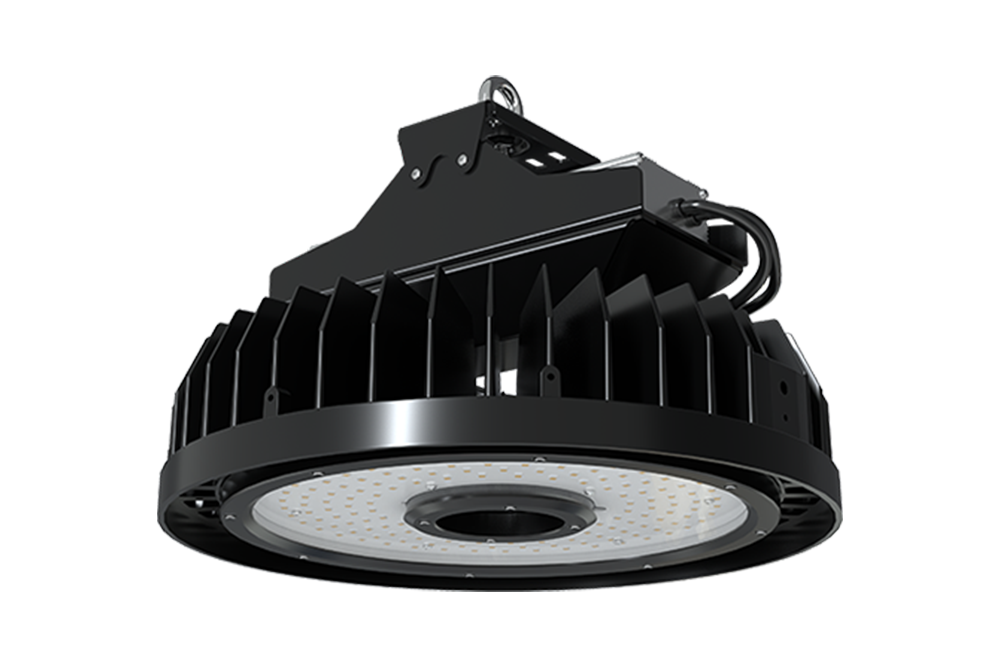
Chain mounting is one of the most common methods for UFO LED high bay lights.
The installation usually involves:
Installing a ceiling hook
Attaching a safety chain
Connecting the fixture hook
Adjusting hanging height
Advantages:
Simple installation
Easy height adjustment
Suitable for warehouses and factories
This method is widely used because it allows future adjustment if the facility layout changes.
Hook mounting high bay lights
Hook mounting uses a built-in fixture hook connected to a secure ceiling point.
It is commonly used for:
Industrial workshops
Storage facilities
Commercial buildings
Benefits include:
Faster installation
Strong support
Easier replacement
Pendant mounting high bay lights
Pendant mounting suspends the fixture from a rigid pipe or rod.
It provides:
Stable positioning
Cleaner appearance
Precise installation height
This method is often selected for modern commercial spaces where appearance matters.
Preparing before hanging high bay lights
Before starting installation, proper preparation prevents safety problems and unnecessary adjustments.
Check ceiling structure
The mounting point must support the fixture weight and installation hardware.
Check:
Steel beams
Ceiling supports
Mounting brackets
Suspension points
Never attach heavy lighting fixtures to unsuitable surfaces.
Determine installation height
The hanging height affects:
Brightness
Beam coverage
Fixture quantity
Energy efficiency
Example:
Ceiling Height
Common Application
15–25 ft
Small warehouses, workshops
25–40 ft
Large warehouses
40+ ft
Distribution centers, industrial halls
Select proper mounting accessories
Common accessories include:
Chains
Hooks
Pendant kits
Safety cables
Mounting brackets
Using the correct accessories improves installation stability.
Step-by-step guide on how to hang high bay lights
Step 1: Turn off power and prepare safety equipment
Before installation:
Disconnect electrical power
Prepare lifting equipment
Wear appropriate safety gear
Check installation tools
High bay lights are often installed at significant heights, so proper access equipment is essential.
Step 2: Mark fixture positions
Measure and mark where each high bay light will be installed.
The layout should consider:
Room dimensions
Work areas
Equipment placement
Required illumination level
A poor layout can create uneven brightness even with high-quality fixtures.
Step 3: Install mounting hardware
Secure the mounting accessories before lifting the fixture.
Typical process:
Install ceiling hook or bracket.
Attach chain or pendant.
Add safety cable.
Confirm support strength.
The safety cable provides additional protection if the primary suspension point fails.
Step 4: Attach and secure the high bay fixture
After mounting hardware is installed, carefully lift the fixture into position.
Check:
Fixture balance
Hook connection
Chain strength
Safety cable attachment
Horizontal alignment
The fixture should hang securely without unnecessary movement.
For large industrial projects, installation teams often inspect every mounting point before powering the system because replacing incorrectly installed fixtures at high ceilings can require expensive lifting equipment.
Step 5: Adjust high bay light height and alignment
After the fixture is securely hung, the next step is adjusting the final position.
Correct alignment helps achieve:
Better light coverage
Reduced glare
More uniform illumination
Improved working visibility
Small adjustments can make a noticeable difference, especially in warehouses with tall storage racks or production lines.
During industrial lighting projects, we often find that the final adjustment stage is where installation quality becomes visible. Two fixtures with identical specifications can produce different results if one is positioned incorrectly.
Step 6: Complete wiring and test the lighting system
After hanging the fixtures, complete the electrical connection according to the manufacturer’s instructions.
Typical steps include:
Connect power cables.
Confirm grounding.
Check dimming or sensor controls.
Restore power.
Test fixture operation.
After turning on the system, inspect:
Test Item
Purpose
Brightness level
Confirm sufficient illumination
Light distribution
Identify dark areas
Fixture stability
Check mounting security
Control function
Verify sensors or dimming
For large commercial projects, lighting measurements may be performed using a lux meter to confirm the system meets application requirements.
How high should high bay lights be hung?
The ideal mounting height depends on the building and fixture specifications.
General guidance:
Mounting Height
Recommended High Bay Application
15–25 feet
Small warehouses and workshops
25–40 feet
Distribution centers and factories
40–60+ feet
Large industrial facilities
However, height alone does not determine performance.
Other factors include:
Lumen output
Beam angle
Ceiling layout
Required lighting level
A 150W LED high bay installed at 20 feet may require a different configuration compared with the same fixture installed at 45 feet.
Common mistakes when hanging high bay lights
Using weak mounting hardware
High bay lights operate for many years, so the suspension system must remain reliable.
Avoid:
Low-quality hooks
Incorrect chains
Improper brackets
Unsupported mounting points
Always use hardware suitable for the fixture weight.
Installing lights without safety cables
Safety cables provide additional protection for suspended fixtures.
They help reduce risks caused by:
Hardware failure
Vibration
Accidental impact
For industrial environments, safety accessories are an important part of responsible installation.
Ignoring future maintenance
A fixture installed too high or positioned poorly can increase maintenance difficulty.
Before final installation, consider:
Access equipment availability
Cleaning requirements
Replacement procedures
Good lighting design considers the entire product lifecycle.
Tools required for hanging high bay lights
Professional installation usually requires:
Tool
Purpose
Lift equipment
Access high ceilings safely
Measuring tools
Confirm fixture spacing
Safety equipment
Protect installers
Mounting tools
Secure hardware
Electrical testers
Verify connections
For industrial buildings with ceilings above 30 feet, using proper lifting equipment is strongly recommended.
Why choose SEEKINGLED high bay lighting solutions?
SEEKINGLED provides professional LED high bay lighting solutions for warehouses, factories, and commercial applications.
Our products are designed with:
High-efficiency LED technology
Reliable thermal management
Durable industrial construction
Optimized light distribution
We understand that hanging high bay lights correctly is only one part of a successful lighting project. The fixture type, installation method, and working environment must work together.
From warehouse upgrades to new industrial facilities, SEEKINGLED helps customers develop lighting systems that improve visibility while reducing long-term operating costs.
FAQ: how to hang high bay lights?
What is the best way to hang high bay lights?
The best method depends on the fixture design and ceiling structure. Common options include chain mounting, hook mounting, and pendant mounting.
How high should LED high bay lights be installed?
LED high bay lights are generally installed between 15 and 60 feet depending on the building type, fixture output, and lighting requirements.
Do high bay lights need safety cables?
Yes. Safety cables are recommended for suspended high bay lights because they provide additional protection if the primary mounting system fails.
Can high bay lights be mounted directly to the ceiling?
Some high bay models support direct mounting, but many industrial fixtures are designed for suspension using chains, hooks, or brackets.
How much weight can high bay mounting hardware support?
The mounting hardware must support the fixture weight according to manufacturer specifications. Always use suitable hardware rated for the installation.
How far apart should high bay lights be hung?
Spacing depends on fixture wattage, beam angle, ceiling height, and required illumination. Professional layouts are recommended for large spaces.
Conclusion
Learning how to hang high bay lights requires careful planning, suitable mounting hardware, and correct positioning.
A successful installation is not only about suspending a fixture from the ceiling. Proper height, spacing, safety cables, and alignment all influence lighting performance and long-term reliability.
SEEKINGLED provides industrial LED high bay lighting solutions designed for warehouses, factories, and commercial buildings, helping customers achieve safe, efficient, and dependable illumination.
The SEEKING HBC-T Series high bay lights LED offer long-lasting performance for warehouses, production plants and logistics centers. Durable IP65 & IK08 housing, 60°/90° beam angles, up to 150 lm/W, and a lifespan beyond 100,000 hours. Ideal for airport halls, commercial storage, construction sites and large indoor spaces.
The SEEKING HBS Series LED UFO high bay light delivers 140 lm/W efficiency, IP65 protection and MEAN WELL drivers. A durable high-rise lighting solution for factories, warehouses and commercial halls.
SEEKING HBD Series LED high bay lighting delivers 160 lm/W efficiency, IP66 protection, and long 100,000-hour lifespan. A durable UFO high bay solution for warehouses, workshops, logistics centers and commercial facilities.
The SEEKING HBC Series high bay LED light fixtures combine strong efficiency, practical design and reliable SOSEN drivers. A durable UFO high bay lighting option for warehouses, workshops and wholesale projects.
The SEEKING GSL Series high bay LED light delivers powerful, efficient lighting for industrial and commercial spaces. With IP65 protection, flexible mounting, and up to 140 lm/W performance, it’s ideal for warehouses, workshops, and retail areas.
The SEEKING HB15(GLE) Series delivers advanced high bay led lighting with UGR 100,000 h) and reliable illumination for demanding commercial environments.
Discover the SEEKING HB13(GLK) Series ufo led high bay light, engineered for sports halls, airport lounges, showrooms, and large commercial spaces. UGR 100,000 h). Ideal for industrial ufo high bay lighting fixtures and commercial retrofits.
SEEKING HBF Series offers industrial LED high bay lighting with up to 200lm/W efficiency, SOSEN flicker-free driver, IP65 protection and optional microwave motion sensor. Ideal for warehouses, factories and commercial distribution projects.
The HLD Series linear high bay LED lights from SEEKING deliver up to 200 lm/W with multiple beam angles and adjustable CCT options for warehouse, workshop, corridor and general industrial lighting.
The HBK Series LED high bay light by SEEKING combines 500W power, 160–175 lm/W efficiency and IP65 durability for heavy-duty industrial lighting. Designed for warehouse, factory and production facilities with demanding ceiling heights.
LED high bay lights engineered for extreme heat and low-temperature industrial sites. SEEKING HBK Ultua Series operates from -40°C to +70°C with Nichia LEDs and Inventronics driver.
High bay LED lights built for warehouses, production plants and wholesale distribution. SEEKING HBI Series offers up to 200lm/W, IP65, IK08 and optional microwave motion sensor for energy saving operation.
27-Oct-2011 Boot NO.:5B-B27 We launched the 50W, 100W, 150W, COB light source high bay light, 200W、SMD light source high bay light, suitable for warehouse, workshop where height is less than 15mtr
Are LED lights explosion proof? Learn the truth about explosion-proof LED lighting, certifications, and safe use in hazardous areas with expert insights from SEEKINGLED.
how many amps does a led light use in real installations? Learn the typical amp draw of LED lights at different voltages and how electricians estimate circuit loads with SEEKINGLED.
 Seeking LED