 Seeking LED
What Is a Flood Light 100 Watt LED and When Is It the Right Choice?
159Flood light 100 watt LED for outdoor and commercial use. Strong brightness, lower energy cost, and durable performance from SEEKINGLED.
View detailsSearch the whole station
How to wire high bay lights? High bay lights should be wired by connecting the power supply, grounding wire, and LED fixture according to voltage requirements and electrical codes. Proper wiring ensures stable performance, reduces safety risks, and extends fixture lifespan in warehouses, factories, and commercial spaces.
At SEEKINGLED, we have worked with industrial lighting projects covering warehouses, manufacturing plants, and high-ceiling facilities. During installation reviews, we found that many lighting failures were not caused by LED chips or drivers, but by incorrect wiring methods, loose terminals, or unsuitable voltage connections.
Wiring LED high bay lights is not complicated, but every connection point matters. A typical installation includes three main electrical connections:
| Wire Connection | Function | Installation Requirement |
|---|---|---|
| Live Wire (L) | Provides electrical power | Connect to AC power supply line |
| Neutral Wire (N) | Completes electrical circuit | Connect securely to neutral conductor |
| Ground Wire (PE) | Safety protection | Connect to grounding system |
Before wiring begins, always switch off the circuit breaker and verify that no voltage is present. For industrial projects, electricians usually test circuits with a voltage meter before touching any conductors.
The U.S. Department of Energy (DOE) highlights that LED lighting systems can significantly reduce energy consumption compared with traditional lighting technologies. According to U.S. Department of Energy Lighting Facts, LED lighting can use at least 75% less energy and last up to 25 times longer than incandescent lighting.
This is why correct installation is critical. A high-efficiency LED high bay light can only deliver expected performance when electrical connections, voltage input, and thermal conditions are properly managed.
For most commercial LED high bay lights, the basic wiring structure is straightforward:
AC Power Source → Circuit Breaker → Junction Box → LED High Bay Driver → LED Module
For a standard 120V or 277V industrial system:
Some industrial facilities use 347V or 480V systems, especially in large warehouses and manufacturing environments. Before installation, always confirm the fixture input voltage range shown on the product label.
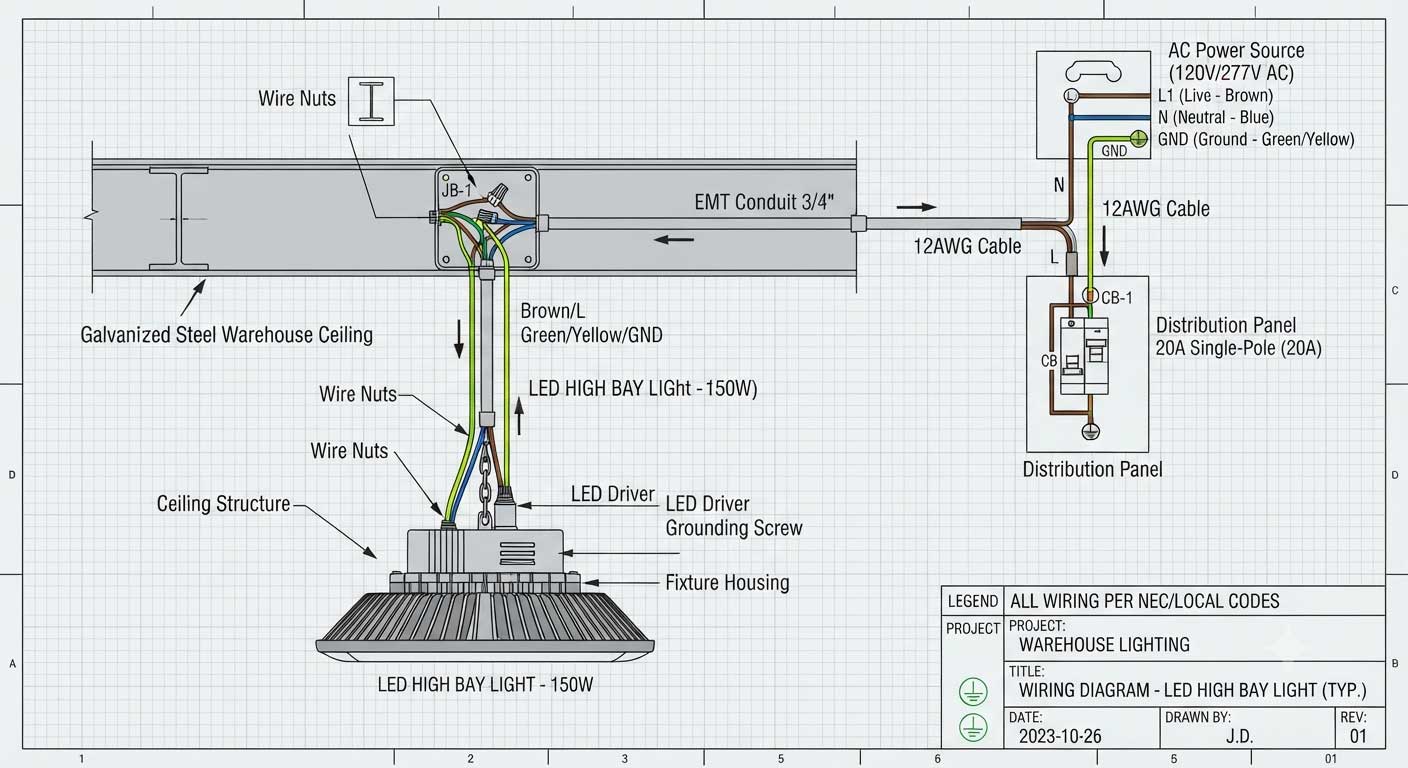
Many replacement projects involve removing old HID, metal halide, or fluorescent high bay fixtures and installing LED alternatives.
In retrofit projects, the wiring process usually requires checking:
A common mistake we have seen on-site is connecting a new LED high bay directly into an old circuit without checking the previous ballast wiring. Traditional HID fixtures often use ballasts, while LED high bays normally require direct AC connection.
For example, when replacing a 400W metal halide fixture with a 150W LED high bay, removing unnecessary ballast components can improve efficiency and reduce potential failure points.
According to ENERGY STAR LED Lighting Information, qualified LED products are tested for efficiency, performance, and reliability standards. Choosing a properly certified LED fixture combined with correct wiring improves long-term operation.
Even experienced installers can encounter problems when working quickly in large facilities. Common issues include:
Connecting a 120V fixture to a 277V circuit without proper compatibility may damage the driver immediately.
A loose connection creates resistance, heat buildup, and possible flickering problems.
Industrial environments require reliable grounding because metal fixtures and electrical equipment are exposed to harsh operating conditions.
Unused ballasts may create unnecessary energy losses and additional failure points.
Based on our experience supporting industrial lighting installations, several details are often overlooked:
For SEEKINGLED high bay lighting projects, installation planning usually starts from application conditions first: ceiling height, operating hours, temperature range, and electrical infrastructure. A correct wiring approach is only one part of achieving reliable industrial illumination.Visit the product page:Industrial LED High Bay Lights
Modern industrial facilities are increasingly using dimmable LED high bay lights to reduce energy consumption and improve lighting management. Wiring these systems requires additional control wires beyond the standard L, N, and ground connections.
Common control options include:
| Control Type | Additional Wiring | Typical Application |
|---|---|---|
| 0-10V Dimming | Dim+ and Dim- wires | Warehouses, factories, distribution centers |
| Motion Sensor | Sensor cable connection | Storage areas and energy-saving applications |
| Smart Lighting System | Network/control wiring | Large commercial buildings |
For a 0-10V dimming high bay light, the main power connection remains the same:
AC Power → L / N / Ground → LED Driver
Additional low-voltage control wires are connected separately:
Dim+ → Controller Positive Terminal
Dim- → Controller Negative Terminal
One detail we often check during industrial projects is cable separation. Power cables and low-voltage control cables should be installed correctly to avoid interference and unstable dimming performance.
The wiring method can change depending on the environment where the fixture operates.
Warehouses usually require:
For warehouses with 20–40 feet ceilings, electricians typically install multiple fixtures on dedicated circuits. Proper circuit planning prevents excessive loading and simplifies maintenance.
Manufacturing facilities may have:
In these environments, selecting suitable IP-rated fixtures and protected wiring accessories is essential.
Sports halls and large indoor arenas often require:
Lighting circuits are usually divided into separate groups so operators can control different areas independently.
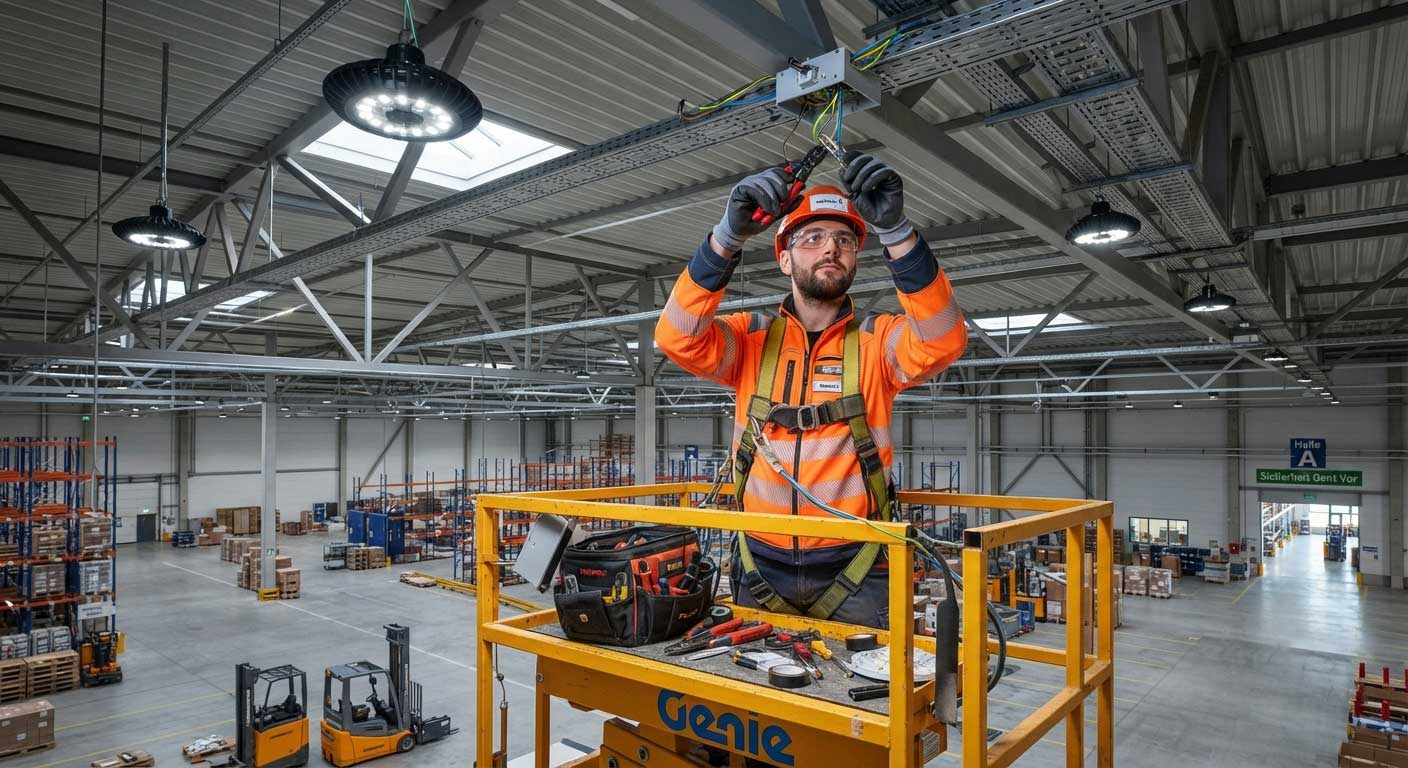
After completing the wiring process, testing should always be performed before final operation.
A professional inspection usually includes:
Check:
Confirm:
Verify:
The National Electrical Code (NEC), published by National Fire Protection Association NEC Standards, provides widely adopted electrical installation requirements in the United States, including wiring methods, grounding, and safety practices.
The number of LED high bay lights connected to one circuit depends on:
For example:
A 150W LED high bay operating on a 277V system consumes approximately:
150W ÷ 277V ≈ 0.54A
A 20A circuit theoretically supports multiple fixtures, but professional installers usually consider safety margins and continuous load requirements instead of using the maximum capacity.
In commercial projects, leaving additional capacity helps prevent overheating and allows future lighting expansion.
Yes. Most LED high bay lights are designed for direct AC connection without traditional ballasts. Connect the live, neutral, and ground wires according to the fixture specifications.
Yes. A ground connection is strongly recommended for metal-body industrial lighting fixtures because it provides electrical fault protection.
Common high bay light voltages include 120V, 208V, 240V, and 277V. Some industrial models support wider voltage ranges such as 100–277V AC.
Yes. Many modern LED high bay fixtures support 0-10V dimming, sensors, or smart controls. Always confirm driver compatibility before installation.
Flickering may result from loose wiring, incompatible dimming controls, unstable voltage, or driver problems. Checking every connection point is the first troubleshooting step.
Yes. Most LED high bay retrofit projects require bypassing or removing old ballasts because LED fixtures usually use direct AC input.
Yes. Multiple fixtures can share one circuit if the total electrical load remains within safe limits and follows local electrical codes.
Before completing an installation, confirm:
✅ Power is disconnected during wiring
✅ Voltage matches fixture requirements
✅ Live, neutral, and ground wires are correctly connected
✅ Terminals are tightened properly
✅ Dimming cables are installed correctly if required
✅ Fixtures are securely mounted
✅ Final electrical testing is completed
A properly wired LED high bay system delivers stable illumination, lower maintenance costs, and longer operating life. From our experience at SEEKINGLED, the difference between an average lighting installation and a reliable industrial lighting system often comes down to small wiring details completed correctly from the beginning.
Whether you are upgrading a warehouse, factory, or commercial facility, understanding how to wire high bay lights helps ensure safer installation and better long-term lighting performance.
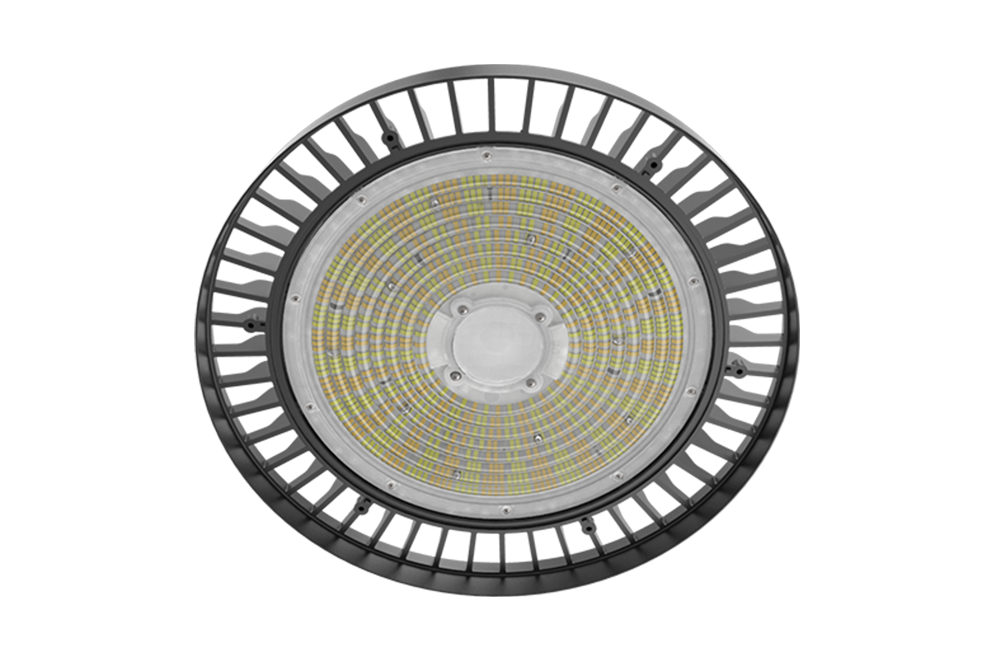
The SEEKING HBC-T Series high bay lights LED offer long-lasting performance for warehouses, production plants and logistics centers. Durable IP65 & IK08 housing, 60°/90° beam angles, up to 150 lm/W, and a lifespan beyond 100,000 hours. Ideal for airport halls, commercial storage, construction sites and large indoor spaces.
View details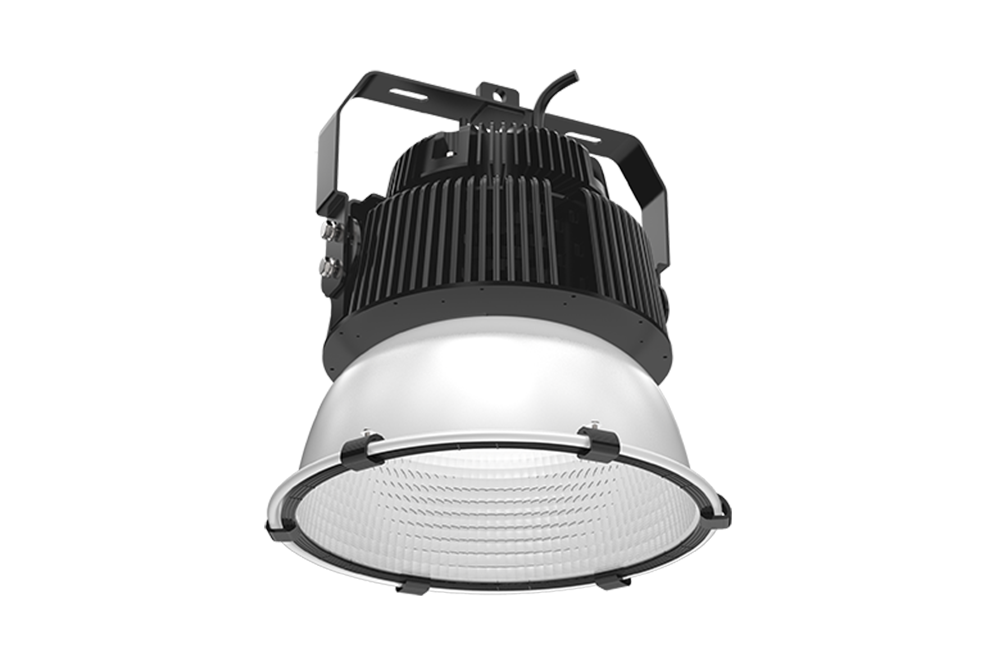
The SEEKING HBS Series LED UFO high bay light delivers 140 lm/W efficiency, IP65 protection and MEAN WELL drivers. A durable high-rise lighting solution for factories, warehouses and commercial halls.
View details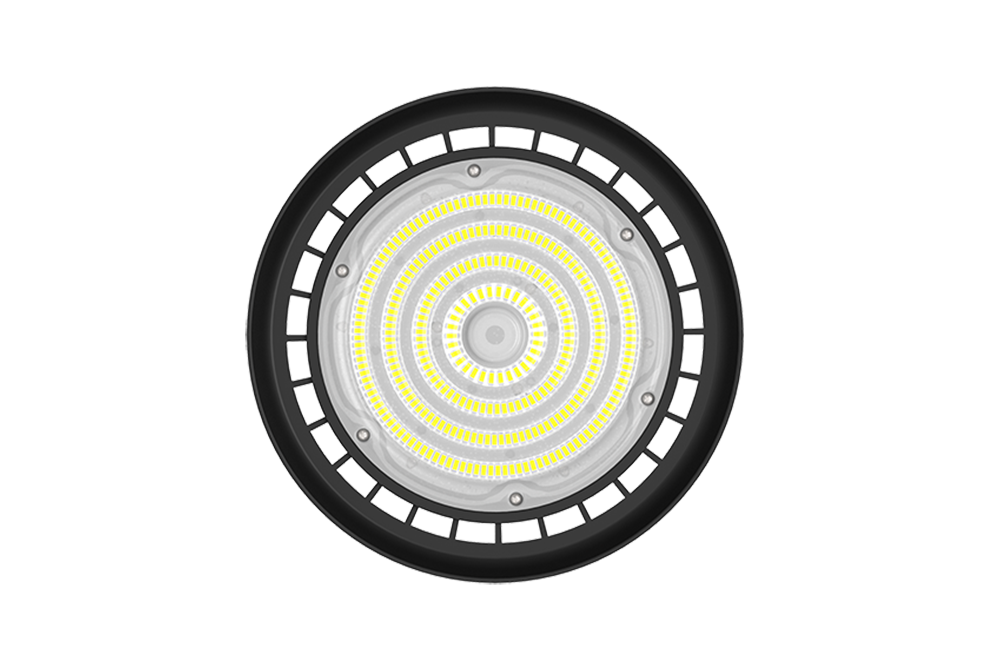
SEEKING HBD Series LED high bay lighting delivers 160 lm/W efficiency, IP66 protection, and long 100,000-hour lifespan. A durable UFO high bay solution for warehouses, workshops, logistics centers and commercial facilities.
View details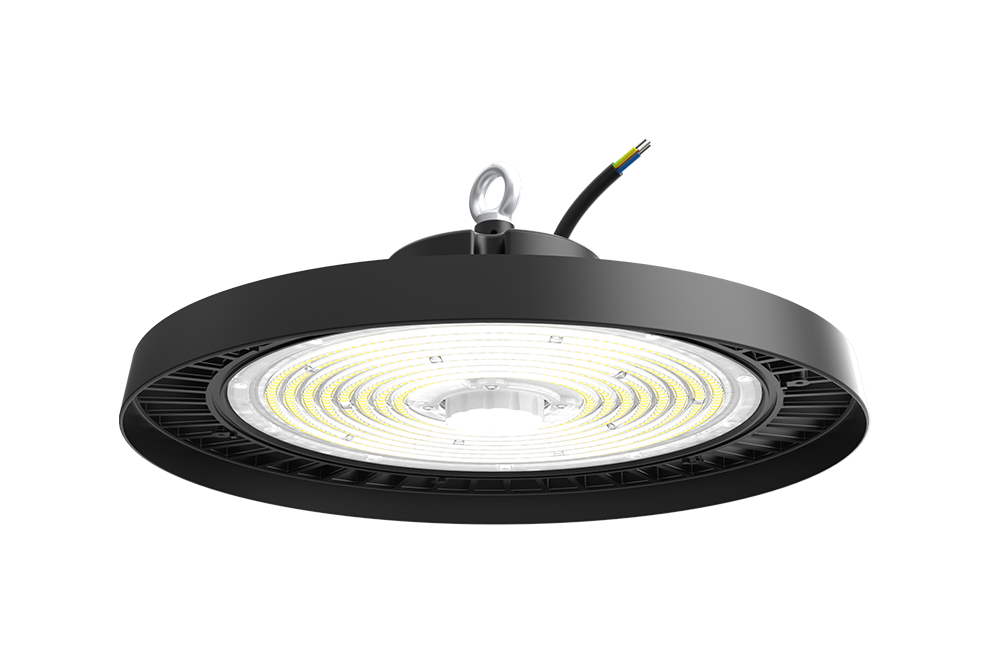
The SEEKING HBC Series high bay LED light fixtures combine strong efficiency, practical design and reliable SOSEN drivers. A durable UFO high bay lighting option for warehouses, workshops and wholesale projects.
View details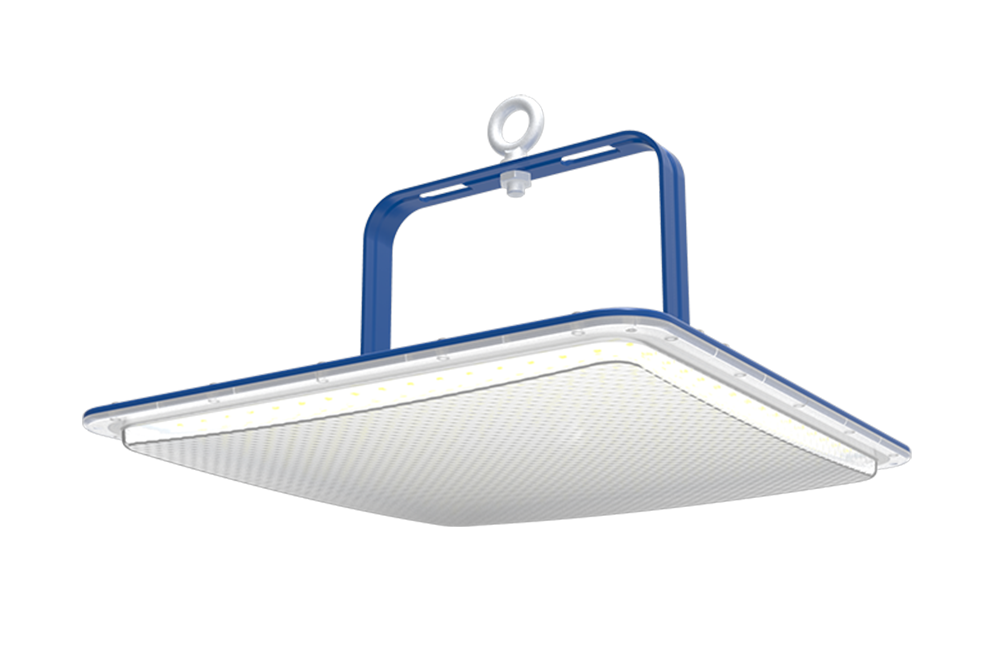
The SEEKING GSL Series high bay LED light delivers powerful, efficient lighting for industrial and commercial spaces. With IP65 protection, flexible mounting, and up to 140 lm/W performance, it’s ideal for warehouses, workshops, and retail areas.
View details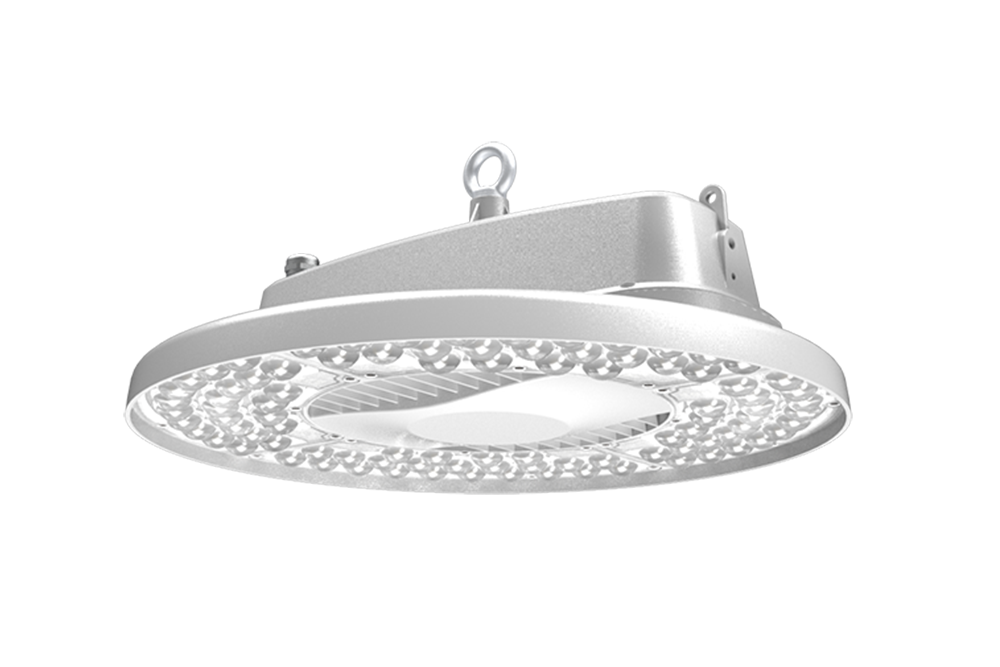
The SEEKING HB15(GLE) Series delivers advanced high bay led lighting with UGR 100,000 h) and reliable illumination for demanding commercial environments.
View details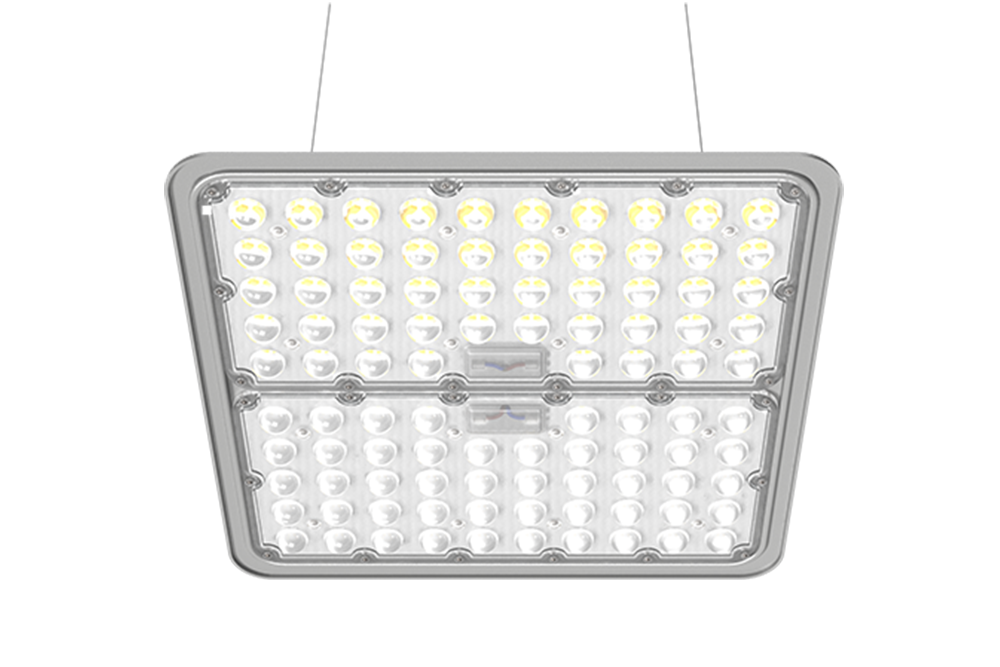
Discover the SEEKING HB13(GLK) Series ufo led high bay light, engineered for sports halls, airport lounges, showrooms, and large commercial spaces. UGR 100,000 h). Ideal for industrial ufo high bay lighting fixtures and commercial retrofits.
View details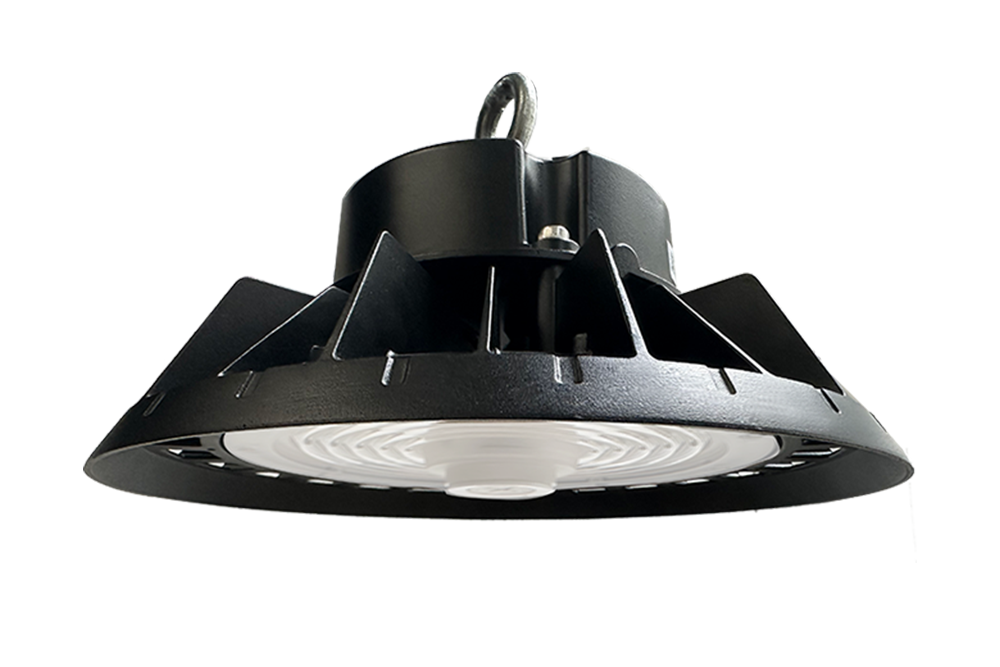
SEEKING HBF Series offers industrial LED high bay lighting with up to 200lm/W efficiency, SOSEN flicker-free driver, IP65 protection and optional microwave motion sensor. Ideal for warehouses, factories and commercial distribution projects.
View details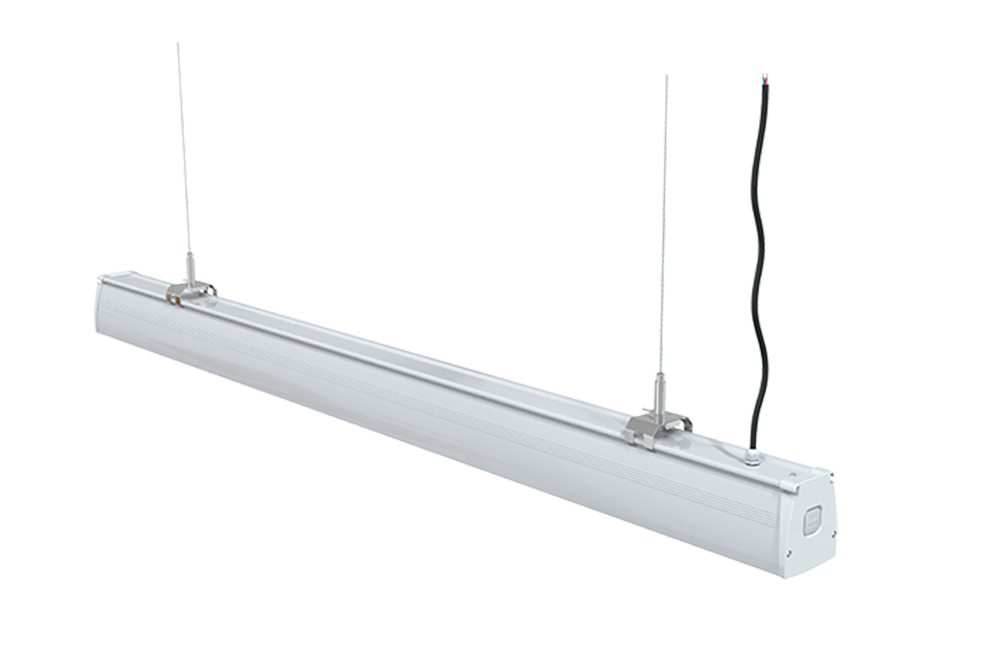
The HLD Series linear high bay LED lights from SEEKING deliver up to 200 lm/W with multiple beam angles and adjustable CCT options for warehouse, workshop, corridor and general industrial lighting.
View details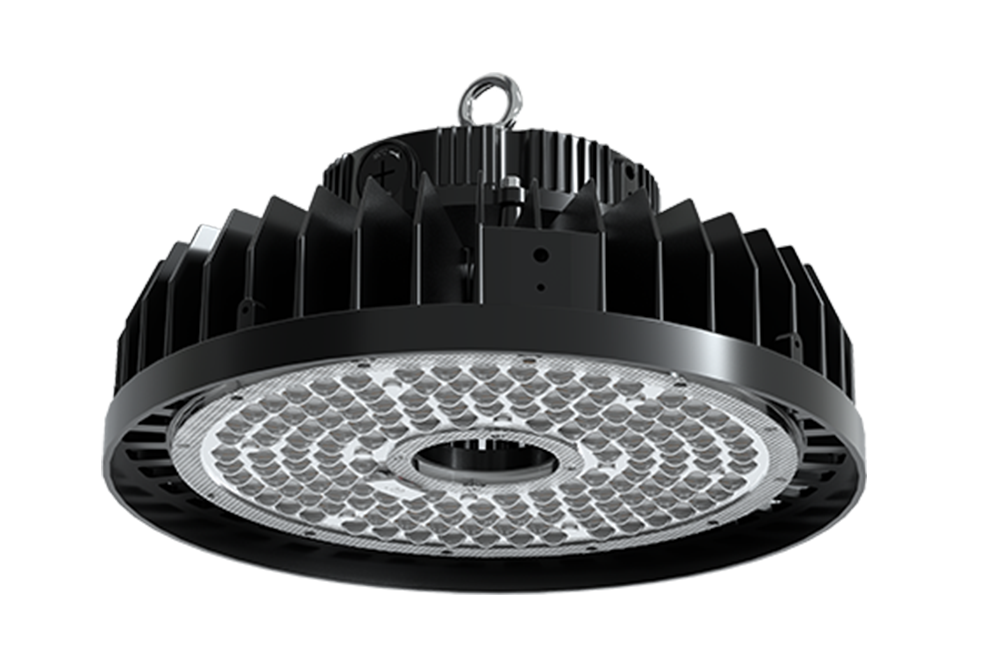
The HBK Series LED high bay light by SEEKING combines 500W power, 160–175 lm/W efficiency and IP65 durability for heavy-duty industrial lighting. Designed for warehouse, factory and production facilities with demanding ceiling heights.
View details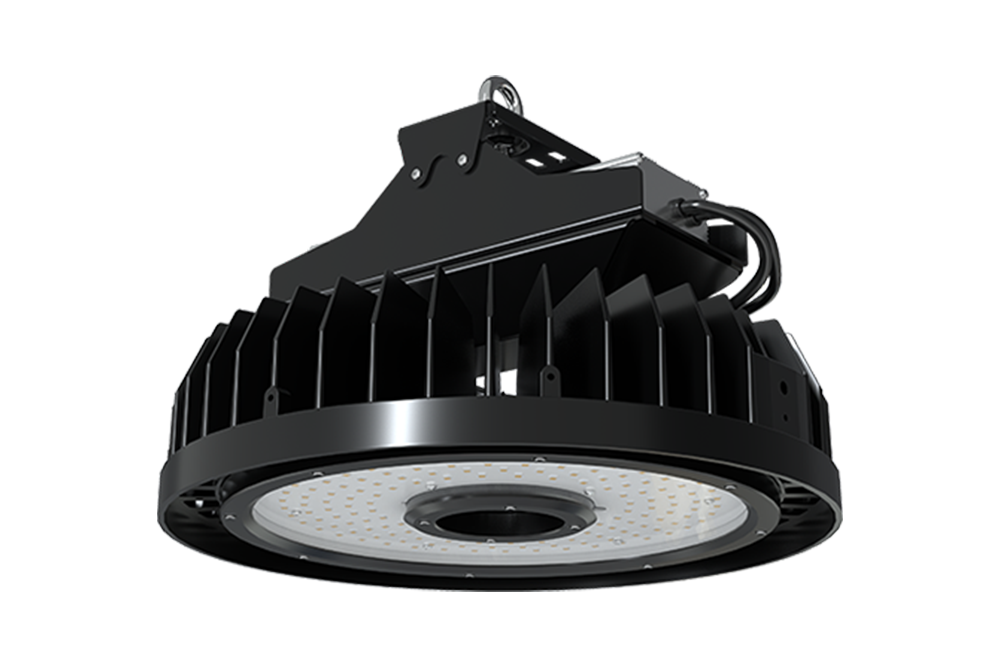
LED high bay lights engineered for extreme heat and low-temperature industrial sites. SEEKING HBK Ultua Series operates from -40°C to +70°C with Nichia LEDs and Inventronics driver.
View details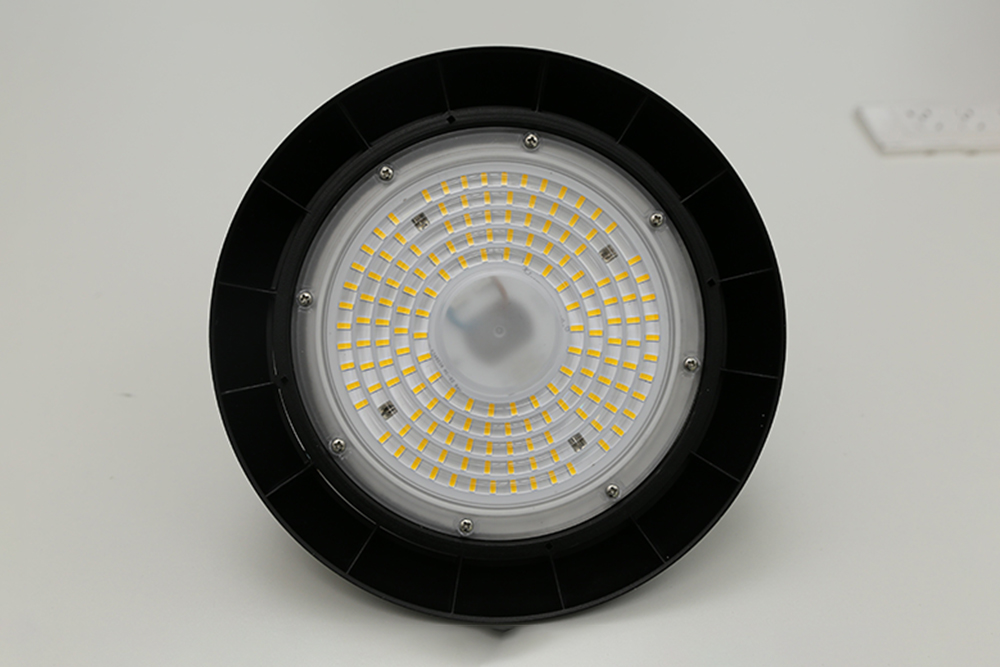
High bay LED lights built for warehouses, production plants and wholesale distribution. SEEKING HBI Series offers up to 200lm/W, IP65, IK08 and optional microwave motion sensor for energy saving operation.
View details
Flood light 100 watt LED for outdoor and commercial use. Strong brightness, lower energy cost, and durable performance from SEEKINGLED.
View details
Linear LED high bay light solutions for warehouses, logistics centers and industrial corridors. Learn how SEEKINGLED linear high bay fixtures solve uneven lighting, energy waste and installation challenges.
View details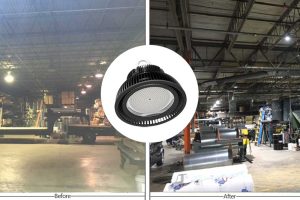
LED High Bay Replacement for 400W Metal Halide was carried out in Germany using XJ-HBG150W. This project record documents how 192 MH fixtures were replaced by 72 LED high bays through a new lighting calculation.
View details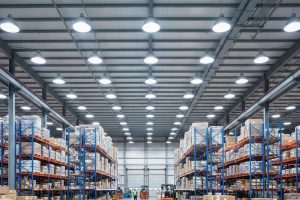
How far apart should LED high bay lights be spaced? Learn practical spacing guidelines based on ceiling height, beam angle, and real industrial layouts.
View details