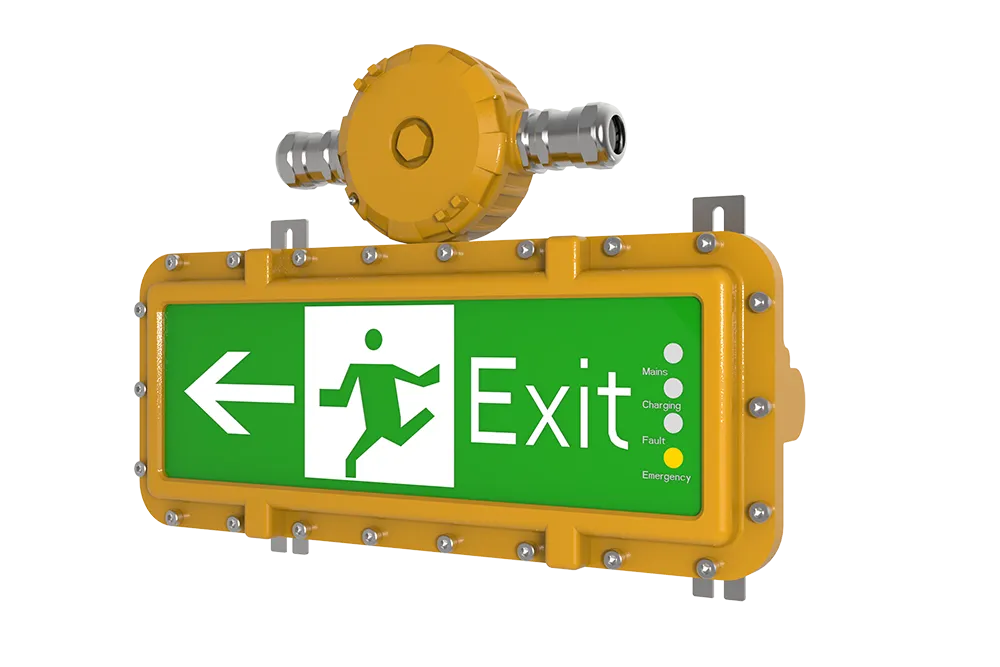
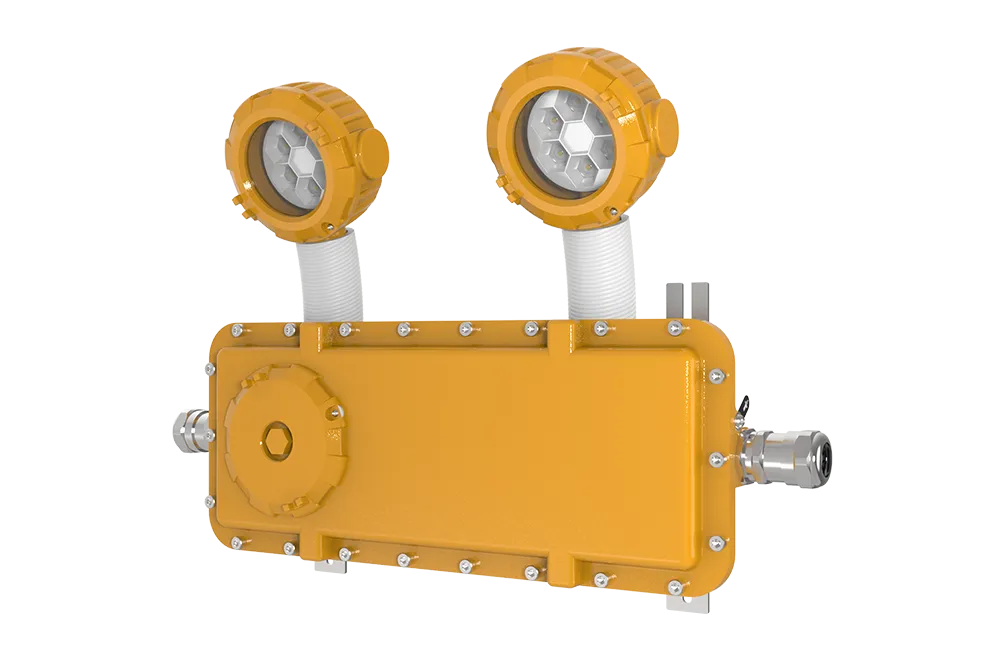
Testing an explosion proof LED exit light is not the same as checking a standard emergency sign in an office or warehouse.
In hazardous areas, the test itself must not create risk, and in most cases, it must be done without opening the luminaire.
This guide describes how to test explosion proof LED exit light based on common industrial practice and site experience, including projects where SEEKINGLED explosion proof exit lights are installed.
Understand the purpose of the test first
Before touching the fixture, it helps to be clear about what the test is meant to confirm.
In most plants, testing an explosion proof LED exit light is done to check three things:
- The exit light turns on immediately when normal power is lost
- The emergency mode remains stable for the rated duration
- The housing and installation remain intact and safe
The test is not intended to check internal wiring or battery cells on site.
Do a visual check before switching power
A simple visual inspection often reveals more than expected.
Engineers usually look for:
- Damage on the enclosure
- Loose cable glands
- Missing bolts or distorted covers
- Faded or blocked exit markings
If any of these are found, testing should stop and the issue should be logged.
This step is part of how to test explosion proof LED exit light properly, even though it is often skipped.
Simulate power failure instead of opening the fixture
In normal operation, the safest way to test is by simulating a mains power loss.
Typical steps on site:
- Isolate the normal power supply using approved procedures
- Observe whether the exit light switches to emergency mode
- Confirm that the LED output is steady and clearly visible
Explosion proof exit lights from SEEKINGLED are designed so that this test can be done externally, without opening the enclosure.
Check emergency duration only when required
Not every routine test needs a full discharge.
In many facilities:
- Monthly checks confirm activation only
- Full duration tests are scheduled less frequently
When a full test is required, the light should remain on for its rated emergency time, such as 90 or 120 minutes, depending on the project specification.
Avoid opening the explosion proof housing during testing
Opening the enclosure is not part of normal testing.
From an engineering point of view:
- Opening should only be done in a safe, non-hazardous condition
- It should be performed by authorised personnel
- Flame paths and seals must be protected
For this reason, most testing procedures focus on behaviour, not internal access.
Know what counts as a failed test
During testing, several signs indicate that the exit light does not meet requirements:
- The light does not switch to emergency mode
- Illumination flickers or drops quickly
- Emergency runtime is clearly shorter than expected
Any of these results should be recorded and followed by inspection or replacement.
Record the test results
In industrial environments, testing is not complete without documentation.
A basic record usually includes:
- Date of test
- Location of the explosion proof LED exit light
- Test result (pass / fail)
- Name of the technician
This is often required during audits or safety reviews.
Why testing practice matters
Explosion proof LED exit lights are part of a safety system.
They are expected to work during power failure, smoke, or evacuation conditions.
SEEKINGLED designs explosion proof exit lights to support straightforward external testing, helping maintenance teams confirm performance without compromising explosion protection.
LED Explosion proof lights Recommendations
 Seeking LED