 Seeking LED
ATEX LED Light Customized: Why Standard Specs Are Often Not Enough
58Atex led light customized for hazardous areas. Built for real conditions, not just specs. Discover durable, project-based solutions from SEEKINGLED.
View detailsSearch the whole station
how to wire flood lights correctly by switching off the circuit at the breaker, confirming the circuit is de-energized, identifying live, neutral and ground conductors, then making secure connections in a suitable junction box. Outdoor connections must be protected from moisture, and mains-voltage installation should be completed by a qualified electrician.
Most commercial LED flood lights use three basic connections:
| Wire | Marking | Typical color | Function |
|---|---|---|---|
| Live | L | Brown or black | Supplies AC power |
| Neutral | N | Blue or white | Completes the circuit |
| Earth/Ground | E / PE | Green-yellow | Provides a protective fault path |
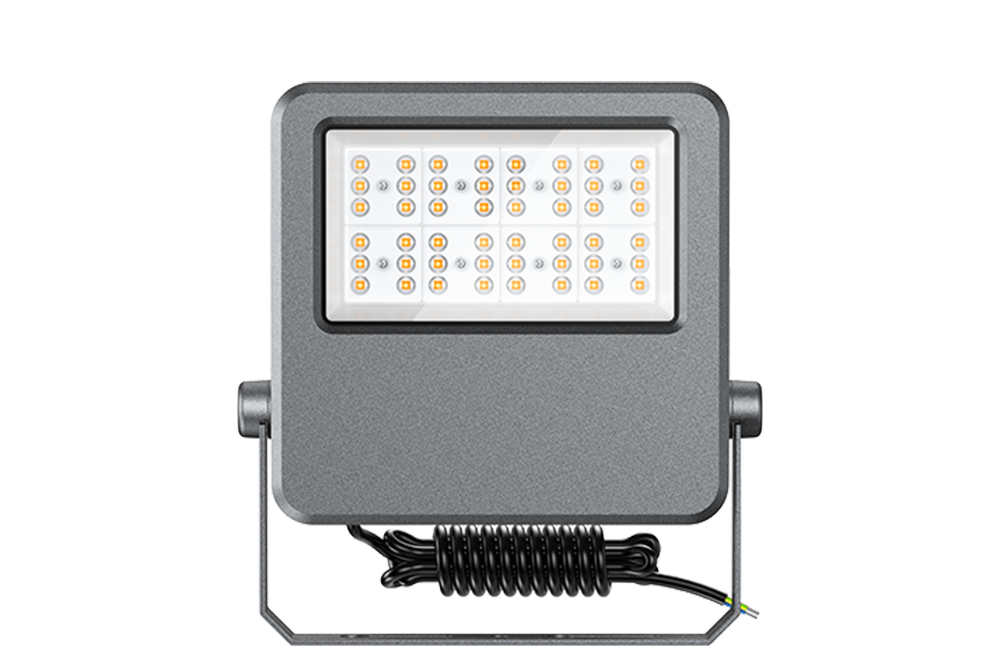
For example, the SEEKINGLED FLD Series installation specification identifies Brown as L, Blue as N, and Green+Yellow as E. The manufacturer also specifies a user-provided junction box and wiring terminal for the connection.
Do not rely on wire color alone when working on an existing installation. Regional wiring practices and older installations can differ. Verify the conductor function before making a connection.
OSHA requires grounded and grounding conductors to be identifiable and distinguishable, and its electrical rules require grounding paths to be permanent and continuous.
Start at the electrical panel.
Turning off the wall switch is not enough. Switch off the relevant circuit breaker and verify that the circuit is actually de-energized with an appropriate tester.
This is one of those installation details that seems almost too obvious to mention. It is also the detail that should never be skipped.
Before connecting anything, compare the flood light’s input specification with the supply voltage.
The SEEKINGLED FLD Series, for example, is rated for 100–277V AC, 50/60Hz, while its specification also lists a 10kV surge protection rating. Those specifications do not mean every flood light has the same electrical requirements, so the actual product label and installation sheet should always take priority.
Also inspect:
Once the circuit is confirmed safe, connect the conductors according to the fixture markings.
For the SEEKINGLED FLD Series:
Brown → L (Live)
Blue → N (Neutral)
Green/Yellow → E (Earth)
Connections should be made using an appropriate terminal or connector inside the designated junction box. Do not leave mains connections exposed behind the fixture.
The FLD installation instructions specifically show the connection being made through a junction box and wiring terminal, followed by adjustment of the fixture angle.
This is where outdoor installations often become less forgiving.
A flood light can have a high IP rating, but that does not automatically make an incorrectly installed junction box waterproof.
Check the complete installation:
SEEKINGLED’s FLD Series is specified at IP65/IP66 depending on the published configuration, with IK08 impact protection, but the manufacturer’s installation instructions still require proper electrical installation by a skilled electrician.
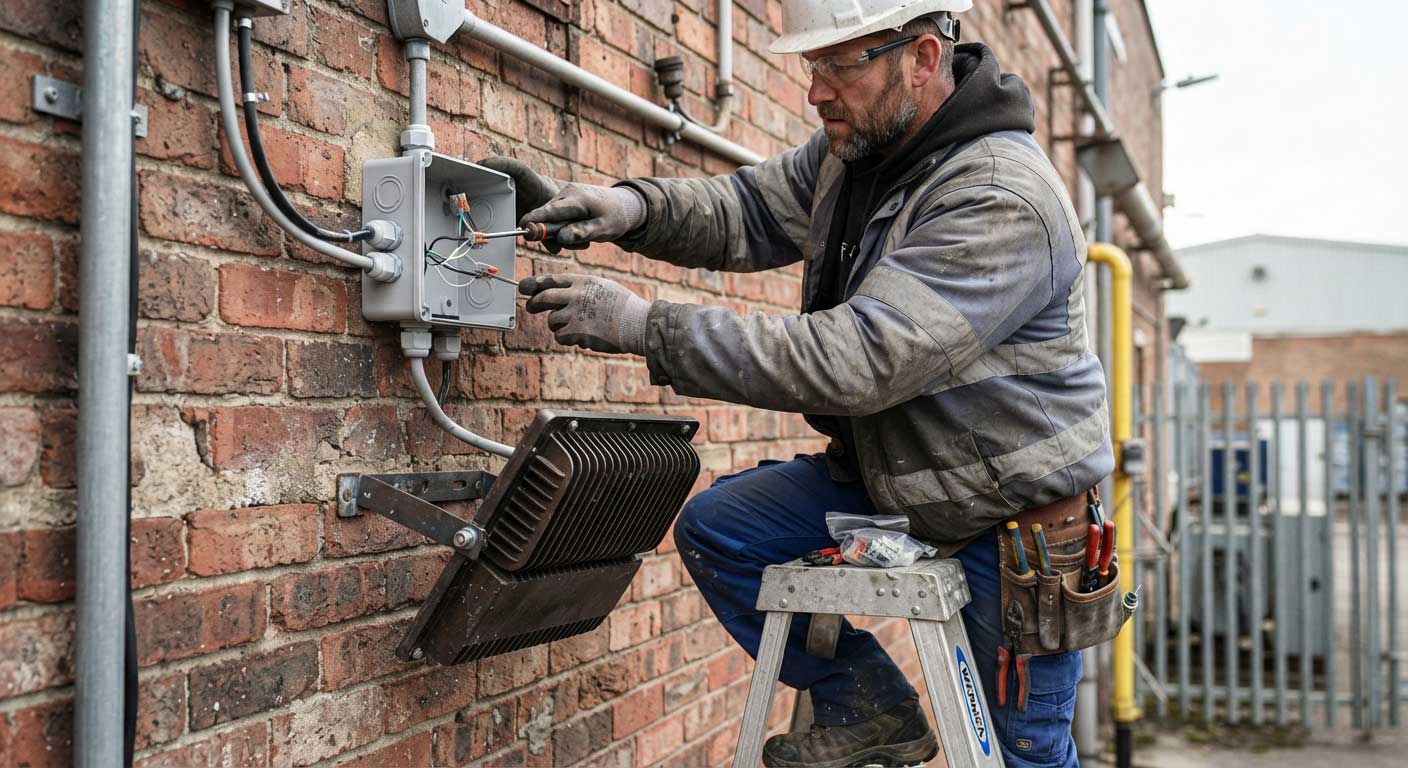
Multiple flood lights can be installed on the same circuit, but the circuit must be designed for the total electrical load and applicable local requirements.
For example, ten 100W flood lights represent a nominal connected load of:
10 × 100W = 1,000W
At 120V, the simple nominal current calculation is approximately:
1,000W ÷ 120V = 8.33A
Actual operating current can differ because LED drivers have power-factor characteristics and electrical losses. Circuit, conductor and protection sizing should therefore be based on the manufacturer’s electrical data and the applicable electrical code—not a rough wattage calculation alone.
OSHA requires conductors and equipment to be protected from overcurrent and requires conductors to have sufficient ampacity for the load.
A motion sensor, photocell or timer can be added when the lighting system needs automatic control.
The exact wiring depends on the controller. The sensor may switch the live conductor while neutral and protective earth remain continuous, but the manufacturer’s wiring diagram should always be followed.
Do not improvise sensor wiring simply because the terminals look similar.
| Problem | Likely issue | What to check |
|---|---|---|
| Light does not turn on | No supply or loose connection | Breaker, L/N connections |
| Flickering | Loose connection or driver issue | Terminals and driver |
| Trips breaker | Short circuit or overload | Wiring and circuit load |
| Corrosion | Moisture entering connection | Junction box and cable gland |
| Electrical shock risk | Missing/poor earth | Grounding path |
| Water damage | Poor sealing | Cable entry and enclosure |
One useful installation habit is to inspect the wiring after the first period of bad weather rather than assuming the job is finished when the lamp turns on. Outdoor electrical problems often develop slowly.
Many commercial LED flood lights are designed for direct AC input and contain an internal driver. Confirm the fixture’s rated voltage before connection. SEEKINGLED models include products designed for 100–277V AC input.
On the SEEKINGLED FLD Series, the brown conductor is marked L, blue is N, and green-yellow is E. Always verify the specific product documentation before wiring.
A grounded Class I fixture normally requires an appropriate protective earth connection. The grounding method must comply with the fixture design and local electrical requirements. OSHA requires grounding for applicable fixed equipment and a permanent, continuous grounding path.
Yes, when the circuit, conductors and overcurrent protection are appropriately sized for the combined load and local electrical requirements.
For outdoor installations, electrical connections should be properly enclosed and protected from weather. SEEKINGLED’s FLD installation instructions specifically show a user-provided junction box and wiring terminal.
Possible causes include a wiring fault, damaged cable, incorrect circuit protection, excessive connected load or a defective driver. Disconnect power and have the circuit checked rather than repeatedly resetting the breaker.
Mains-voltage outdoor lighting involves shock, fire and weather-related risks. SEEKINGLED’s own installation instructions state that installation should be performed by a skilled electrician familiar with LED luminaire requirements and proper installation methods.
how to wire flood lights is straightforward only when the electrical details are treated seriously: isolate the circuit, verify the supply, identify L/N/E correctly, use proper terminals and protect every outdoor connection against moisture. The wiring may take minutes; getting the installation right is what determines whether the flood light remains reliable years later.
Atex led light customized for hazardous areas. Built for real conditions, not just specs. Discover durable, project-based solutions from SEEKINGLED.
View details
how much does a street light weigh? Discover real weight ranges for poles and fixtures, with expert insights on installation, materials, and structural design.
View details
Flood lights should be installed where they can cover the target area with controlled glare, secure mounting, protected wiring, and suitable beam distribution.
View details
Are LED flood lights as bright as halogen? Compare lumen output, beam performance, and real-world brightness to see how modern LED flood lights replace halogen lighting.
View details