 Seeking LED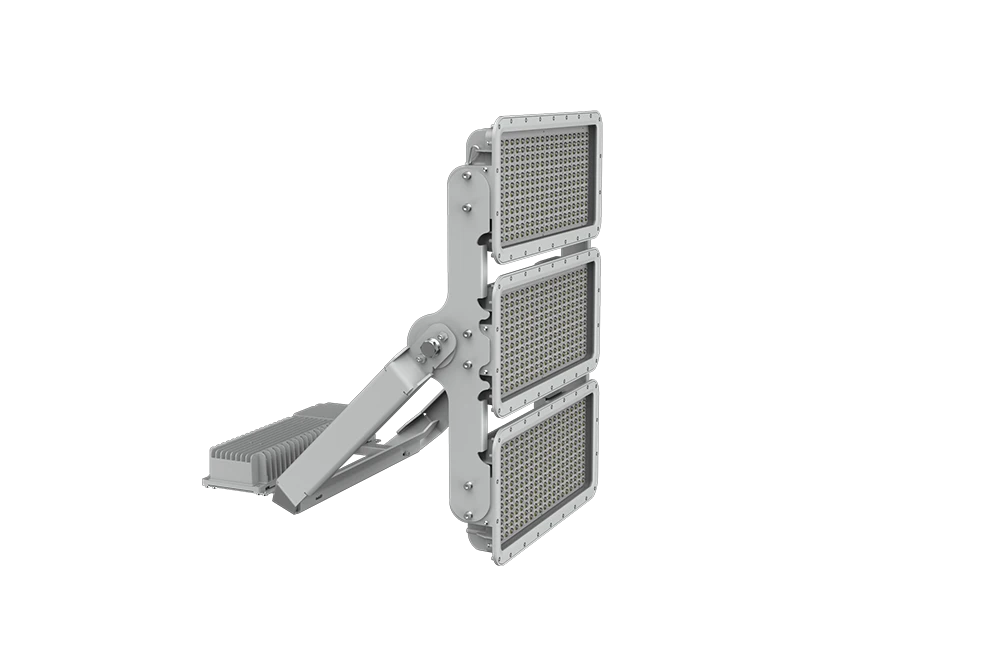
What Is LED Explosion Proof Lighting?
336What is LED explosion proof lighting? This guide explains how explosion-proof LED lighting works, where it is used, and why certified systems are critical for hazardous environments.
View detailsSearch the whole station
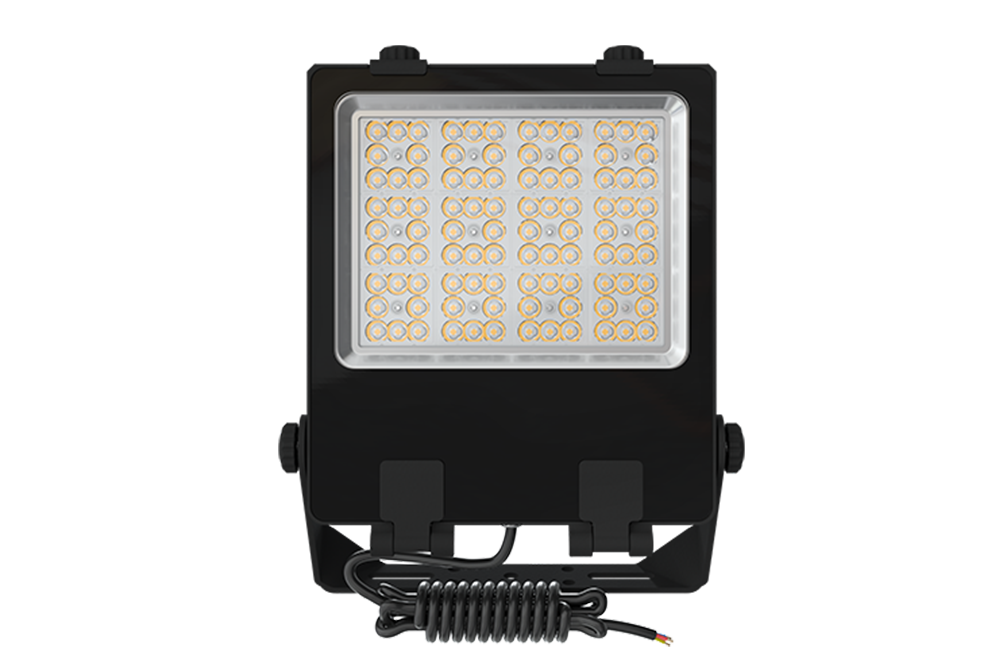
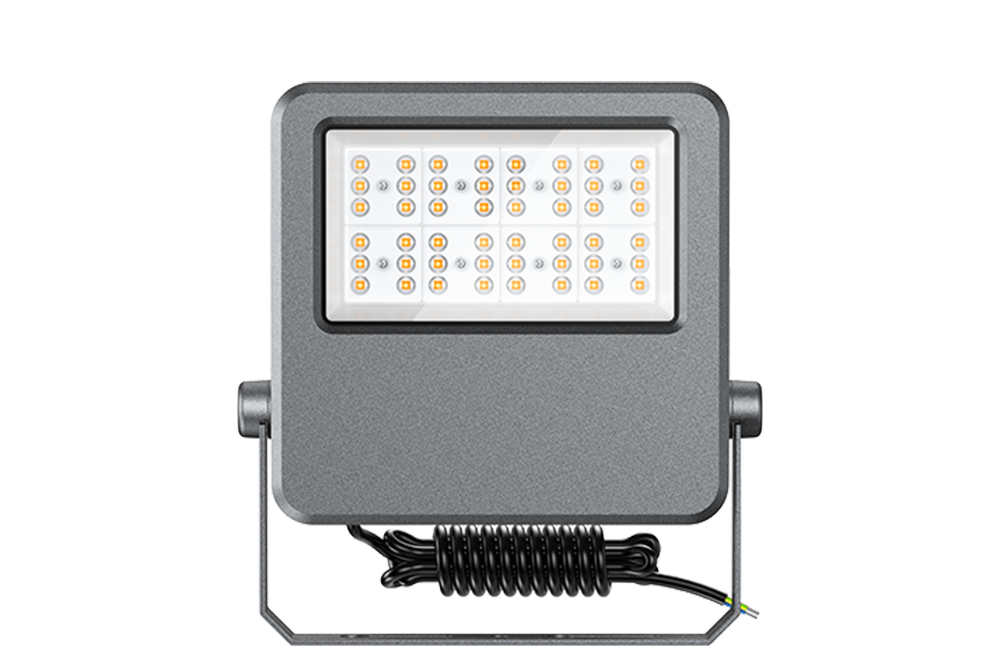
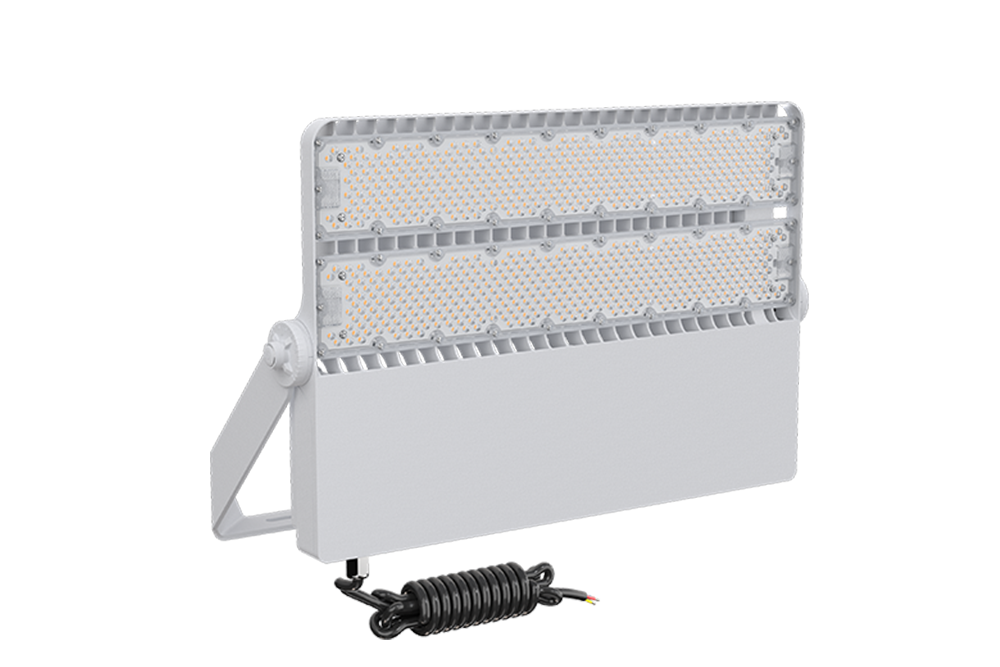
what is flood lights? Flood lights are directional luminaires designed to project a controlled beam over a relatively large area or onto a specific surface. They are widely used for security, sports, warehouses, construction sites, parking areas, building façades, and outdoor architectural lighting. Modern LED flood lights combine high efficiency with precise optical control.
The technically correct term is usually floodlight, although “flood lights” is commonly used when referring to multiple fixtures.
The Illuminating Engineering Society (IES) defines a floodlight as a projector designed to illuminate a scene or object so it appears substantially brighter than its surroundings. It is normally weather-resistant and can be aimed in different directions. Importantly, IES notes that floodlight field angles can range from approximately 10° to more than 100°.
That range is why two flood lights with the same wattage can behave very differently.
A narrow optical distribution can push light toward a distant wall, sign, tower, or sports area. A wide distribution can spread light across a loading yard or building façade.
From a lighting manufacturer’s perspective, this is one of the most commonly misunderstood parts of flood lighting: wattage tells you how much electrical power the fixture consumes; optics determine where much of that light goes.
An LED flood light converts electrical energy into visible light through semiconductor LEDs and then uses a reflector, lens, or optical system to control the distribution.
A typical commercial LED flood light contains:
The driver regulates electrical power supplied to the LEDs. The thermal structure moves heat away from the LED board. The optical system then shapes the light.
That last part deserves more attention than it usually gets.
A 150W flood light with a controlled 60° beam can produce a very different visual result from a 150W fixture using a much wider distribution. The fixture has not become “brighter” simply because the beam is wider. The light has been redistributed.
| Feature | Flood Light | General Outdoor Light |
|---|---|---|
| Beam control | Usually directional | Depends on fixture |
| Aiming | Commonly adjustable | Often fixed |
| Coverage | Area or specific surface | Task/application dependent |
| Typical use | Security, façade, sports, yards | Paths, streets, entrances |
| Optics | Lens/reflector focused on distribution | Application-specific |
| Mounting | Wall, pole, bracket, structure | Various |
ANSI/IES RP-8-22 describes floodlighting as using aimable luminaires to direct light onto architectural elements, irregular surfaces, or areas requiring illumination over longer distances. It also cautions that conventional roadway lighting should generally not be replaced by floodlighting because glare can increase.
Flood lights are useful when the target area is larger than the light source itself or when the installer needs to direct light from a distance.
Common applications include:
The installation environment changes the specification. A flood light mounted beside a warehouse dock has different optical and mechanical requirements from one mounted 20 meters above a football field.
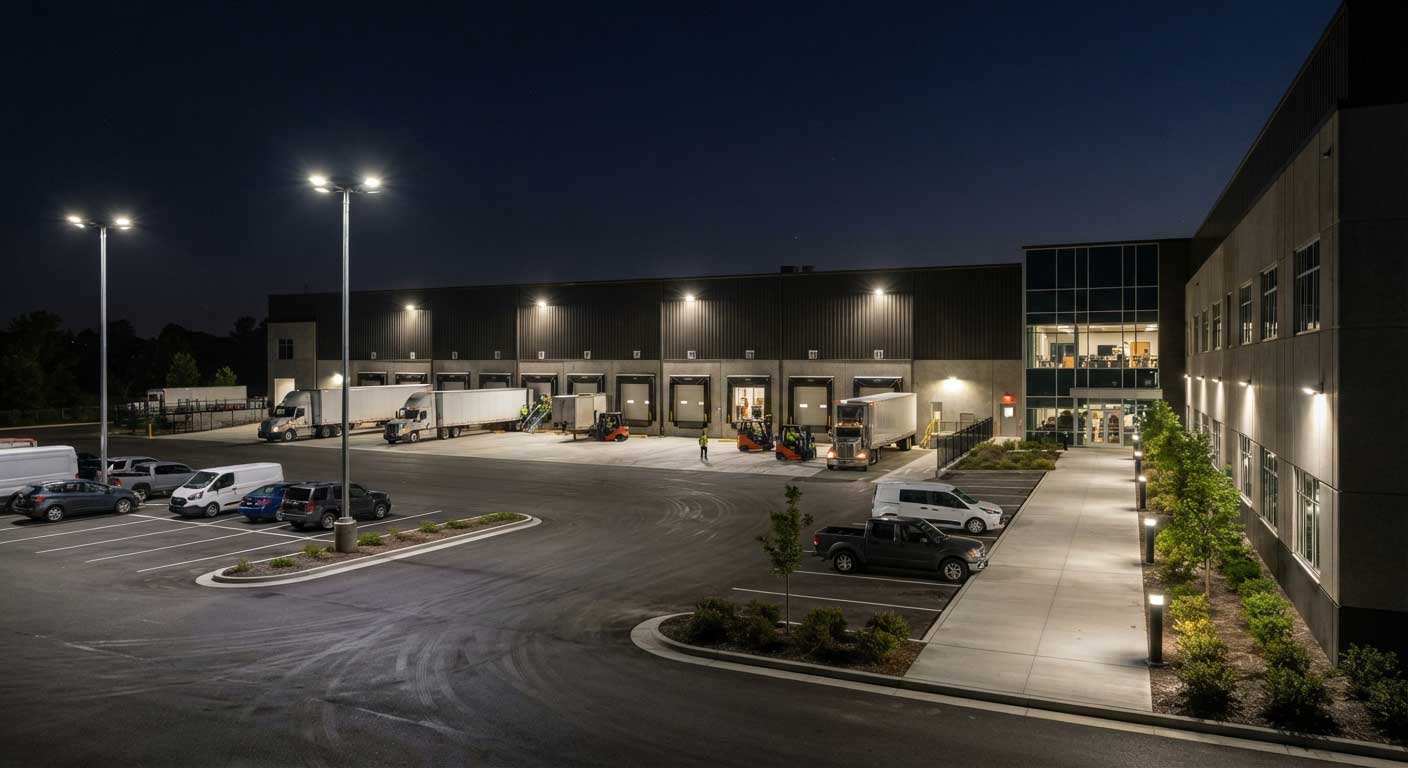
A good flood light is not simply the fixture with the highest wattage.
For professional projects, I would examine the specification sheet in roughly this order:
DOE’s Federal Energy Management Program provides a useful benchmark: its current exterior-lighting acquisition guidance sets a minimum luminaire efficacy rating of 118 lm/W for floodlight luminaires covered by that federal purchasing category.
That figure should not be treated as a universal “good flood light” threshold. Product efficiency is only one part of a lighting decision. Distribution, uniformity, glare, reliability, and installation conditions can matter just as much.
Imagine mounting a flood light on a 10-meter-high warehouse wall.
If the beam is too narrow, the center of the illuminated area may become excessively bright while the edges fall away quickly.
If it is too wide, much of the available light may land outside the intended area.
IES distinguishes beam angle from field angle: beam angle is generally based on the directions where intensity reaches 50% of maximum, while field angle uses 10% of maximum intensity.
This is why a professional lighting layout should use photometric data rather than choosing a fixture from wattage alone.
More light is not automatically better lighting.
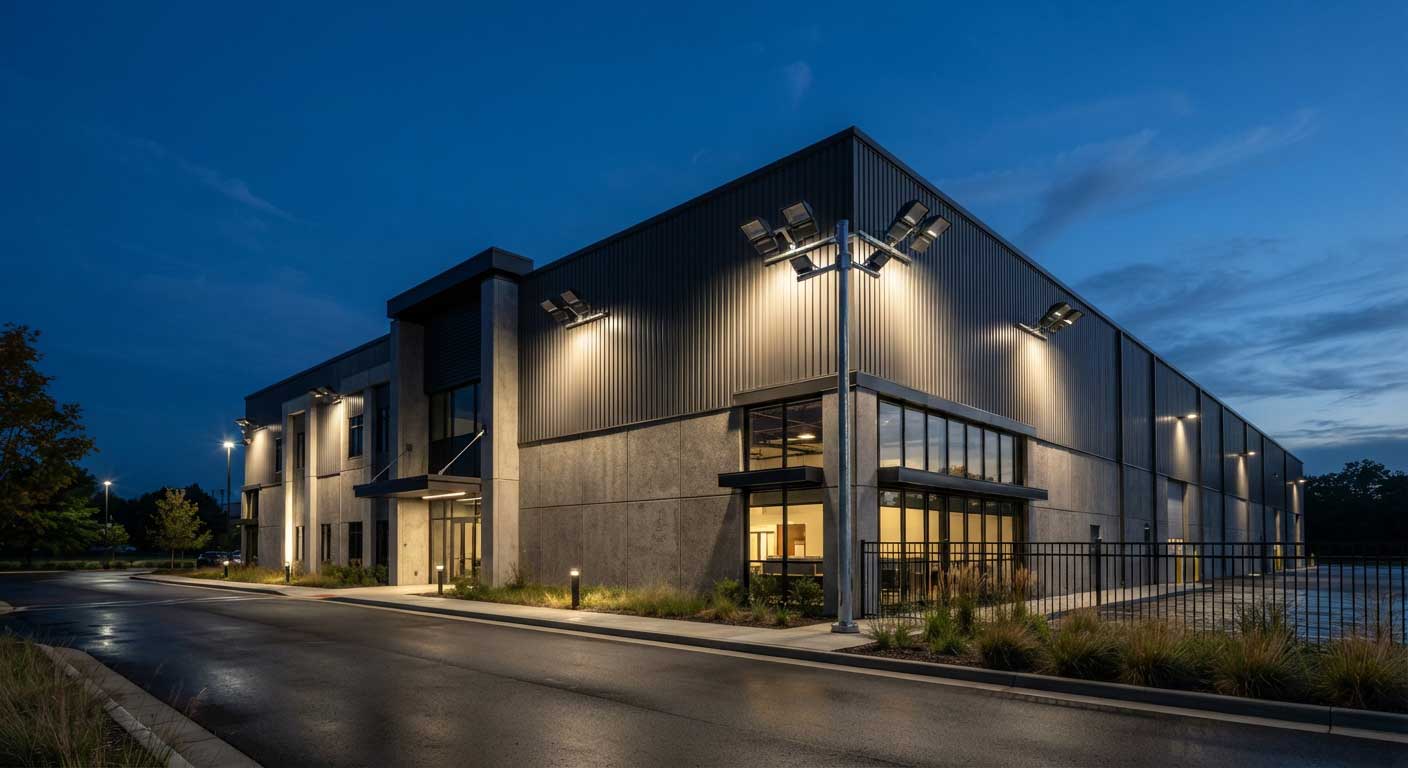
The Federal Highway Administration identifies spill light, glare, and sky glow as related forms of unwanted outdoor-lighting impact. It recommends thoughtful optical design and shielding to control light that falls outside the intended area.
For a commercial installation, the practical check is simple: stand outside the target area and look back toward the fixture.
If the LED source is painfully bright from the driver’s or neighboring property’s viewpoint, the problem may not be insufficient lighting. The fixture may simply be aimed poorly or have unsuitable optics.
FHWA also notes that bright sources against a dark background can generate glare complaints even when measured spill light is relatively low.
There is no single lumen number that fits every flood-light application.
A small residential security light might require far less output than a high-mounted industrial fixture. Sports lighting, warehouse yards, and large parking areas also require consideration of mounting height, target size, spacing, uniformity, and optics.
For that reason, professional lighting design starts with the area and required illumination—not with a random lumen number.
| Application | Important consideration |
|---|---|
| Home security | Coverage and glare control |
| Warehouse yard | Mounting height and uniformity |
| Parking lot | Distribution and spacing |
| Building façade | Beam angle and aiming |
| Sports field | High output and precise optics |
| Construction site | Robustness and glare control |
| Industrial perimeter | IP rating, optics, and reliability |
Flood lights are used to illuminate large areas or specific surfaces, including parking lots, warehouses, sports fields, construction sites, building façades, yards, and security zones.
LED flood lights generally provide high efficacy, long operating life, and good optical control. The actual advantage depends on fixture quality, operating conditions, controls, and the application.
There is no universal best beam angle. Narrow beams suit distant targets, while wider distributions are generally more suitable for broad areas. IES recognizes floodlight field angles ranging from about 10° to more than 100°.
Yes. Their directional output makes them useful for illuminating entrances, gates, parking areas, fences, and building perimeters. Proper aiming is important so security lighting does not create excessive glare.
Many outdoor flood lights are designed with weather-resistant enclosures, but the actual protection level depends on the product’s IP rating and installation. The fixture rating should always be checked against the environment.
Yes. Floodlights are widely used for sports facilities, but sports applications require more than high lumen output. Beam control, mounting height, uniformity, glare, and aiming all become critical.
A spotlight generally concentrates light into a narrower beam for a specific target. A flood light normally provides broader coverage, although the two categories can overlap depending on optical design.
what is flood lights can be answered simply: they are directional lighting fixtures designed to project controlled illumination across an area or onto a specific surface. In professional projects, the important decision is not merely choosing more watts. It is matching lumens, optics, mounting height, beam distribution, environment, and glare control to the actual space.

What is LED explosion proof lighting? This guide explains how explosion-proof LED lighting works, where it is used, and why certified systems are critical for hazardous environments.
View details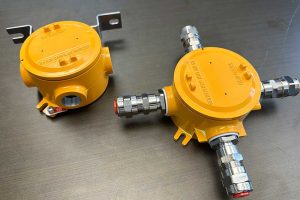
Hazardous Area Junction Box designed for Zone 1, 2, 21 and 22 hazardous locations. SEEKINGLED flameproof wiring enclosure compliant with IEC 60079-1.
View details
What does explosion proof lighting mean? Learn how certified explosion proof lighting works, where it is required, and why certification matters in hazardous areas. By SEEKINGLED.
View details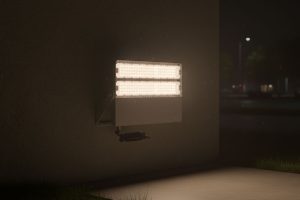
Are LED Flood Lights Dimmable in real use? Learn how dimmable LED flood lights work, driver types, dimming methods, and common issues in outdoor lighting.
View details