I’ve worked in lighting projects for over 12 years, mostly in warehouses, mid-size arenas, and production halls. And I’ll say this upfront: indoor led floodlights are often misunderstood.
People treat them like oversized ceiling lamps. They’re not.
When designed properly, indoor LED floodlights solve problems that high bays alone sometimes can’t—shadow control, wall washing, multi-angle coverage, or uniformity correction in complex spaces.
But only when selected correctly.
Why Indoor LED Floodlights Matter in Industrial Projects
The U.S. Department of Energy (DOE) has repeatedly confirmed that LED technology can reduce lighting energy consumption by at least 50–75% compared to traditional HID systems (DOE Solid-State Lighting Program reports). That number isn’t theoretical. I’ve seen it play out in retrofit projects.
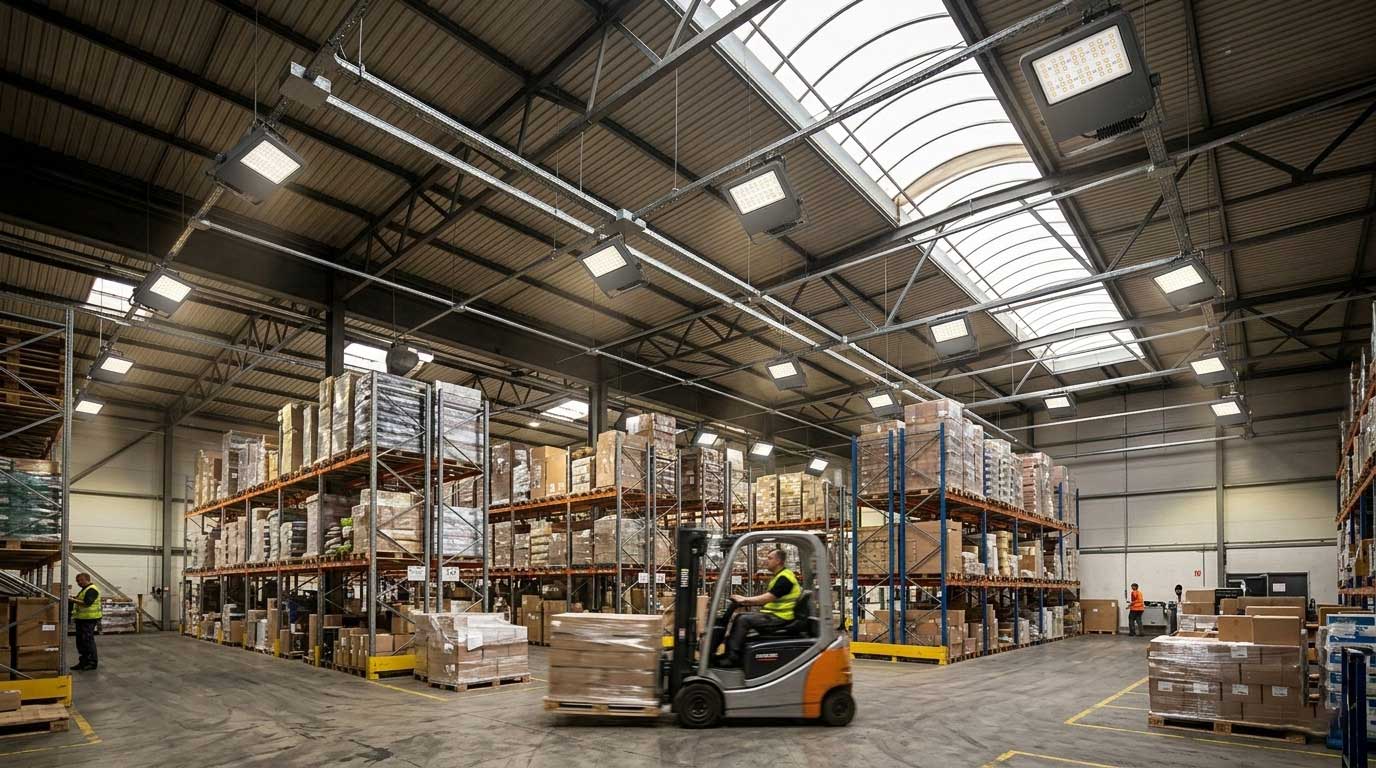
In one logistics warehouse upgrade (8 m ceiling, mixed shelving layout), replacing metal halide floods with modern indoor led floodlights reduced total lighting load from 28 kW to 14.8 kW. More importantly, uniformity improved.
Brightness is easy.
Uniform light is harder.
That’s where flood optics matter.
When Indoor LED Floodlights Make Sense
Not every indoor space needs flood-style optics. But they work extremely well in:
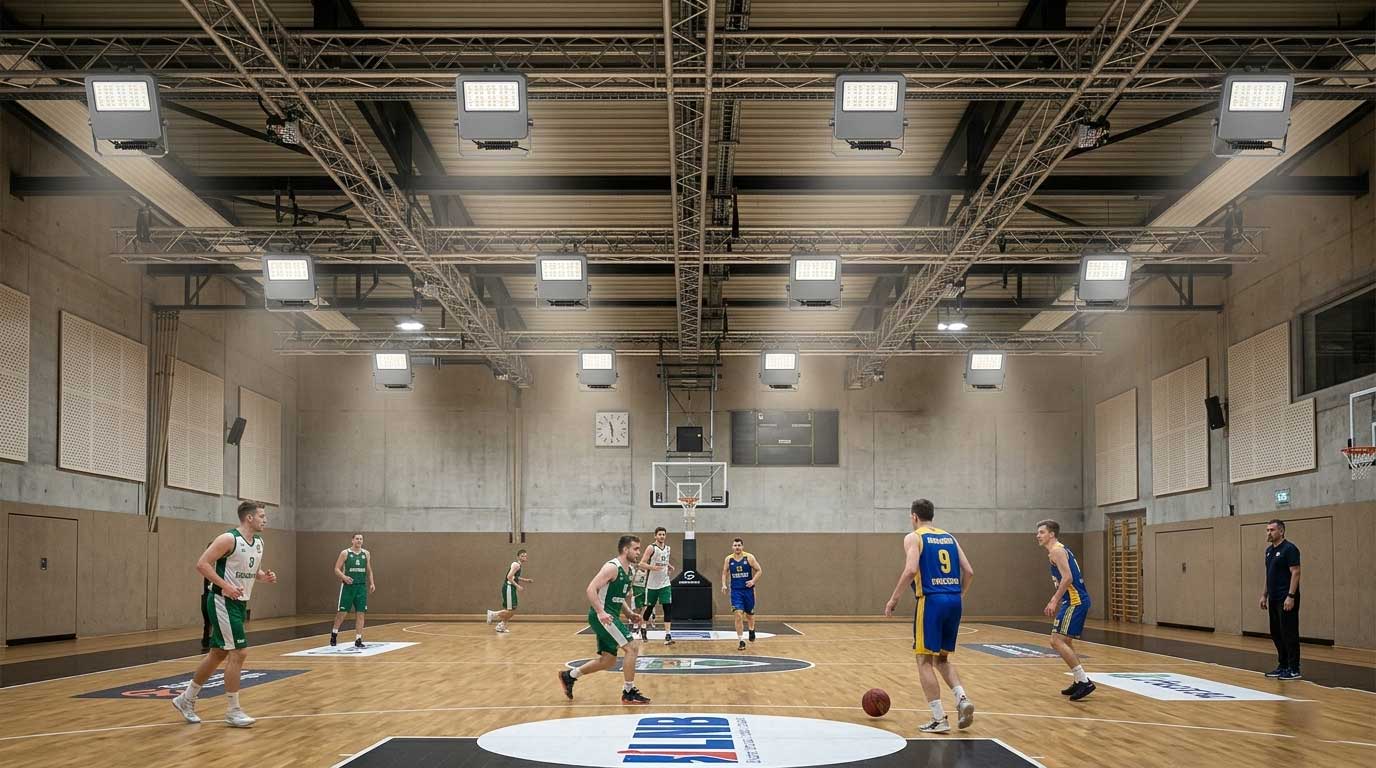
- Indoor sports halls
- Distribution centers with open floor plans
- Industrial workshops with machinery shadows
- Multi-use exhibition halls
Unlike narrow high bays, indoor led floodlights allow adjustable beam angles—30°, 60°, 90°, or wider. This flexibility helps correct uneven light distribution, especially near walls or tall shelving.
In projects where glare complaints occur, a controlled 120×60° beam often solves it without increasing wattage.
Efficiency: Real Numbers, Not Marketing Claims
Efficiency matters, but it needs context.
High-performance indoor led floodlights today reach 160–170 lm/W, which aligns with premium-grade industrial LED standards. According to the International Energy Agency (IEA), improving lighting efficacy remains one of the most cost-effective decarbonization strategies in commercial buildings.
But lumen output alone isn’t enough.
Color rendering (CRI >80) ensures material clarity.
Power factor ≥0.95 reduces system losses.
Low THD (<15%) protects electrical stability.
These are not decorative specs. They affect long-term performance in real facilities.
Thermal Management: The Quiet Determinant of Lifespan
I’ve inspected fixtures that claimed 100,000 hours yet lost 20% brightness within two years. The reason? Heat.
Aluminum die-cast housing isn’t just about durability—it’s about thermal conductivity. Proper heat dissipation keeps junction temperatures stable, protecting LED chips over time.
Industry standard L80B20 >100,000 hours means 80% lumen maintenance for at least 100,000 hours at 25°C. That metric follows LM-80 testing guidelines recognized globally.
But field conditions vary.
In indoor sports halls with limited airflow, heat buildup is real. That’s why heavier housings and driver quality matter more than flashy lumen numbers.
Driver Quality: Where Many Projects Fail
A floodlight is only as stable as its driver.
Reputable constant-current drivers such as MEAN WELL or LIFUD are widely used in industrial lighting because of consistent output regulation and surge protection.
10kV surge protection is especially important in facilities with heavy machinery. I’ve seen unstable grids shorten fixture life dramatically.
Choosing certified components (TUV, CE, CB, UKCA, SAA) isn’t paperwork—it’s risk management.
SEEKINGLED Indoor LED Floodlights: Practical Design Philosophy
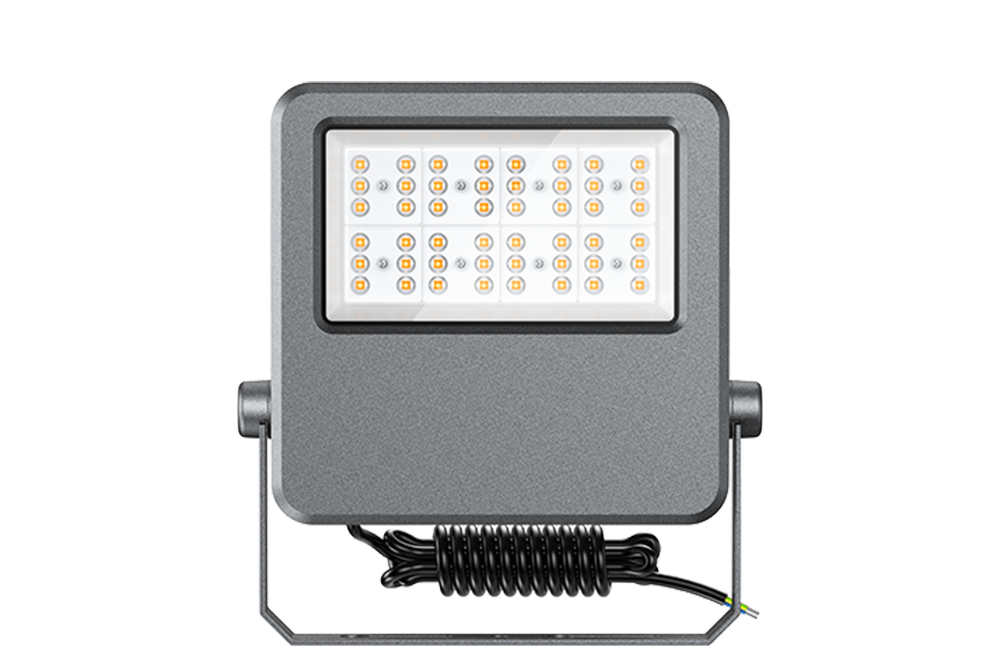
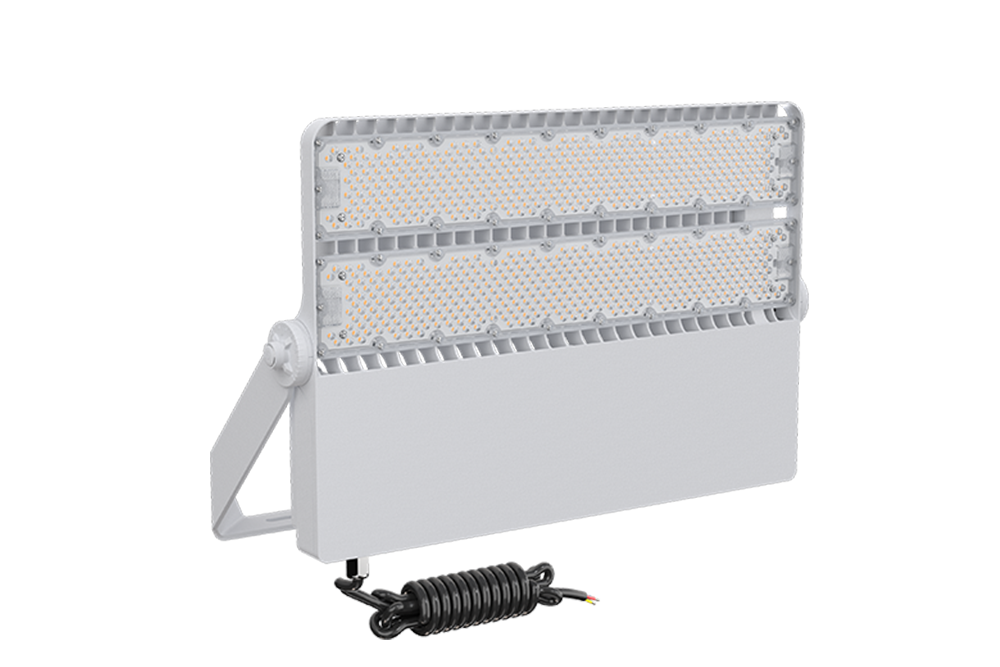
At SEEKINGLED, indoor LED floodlights are not designed as “luxury architectural” pieces. They’re engineered for working environments.
Key characteristics include:
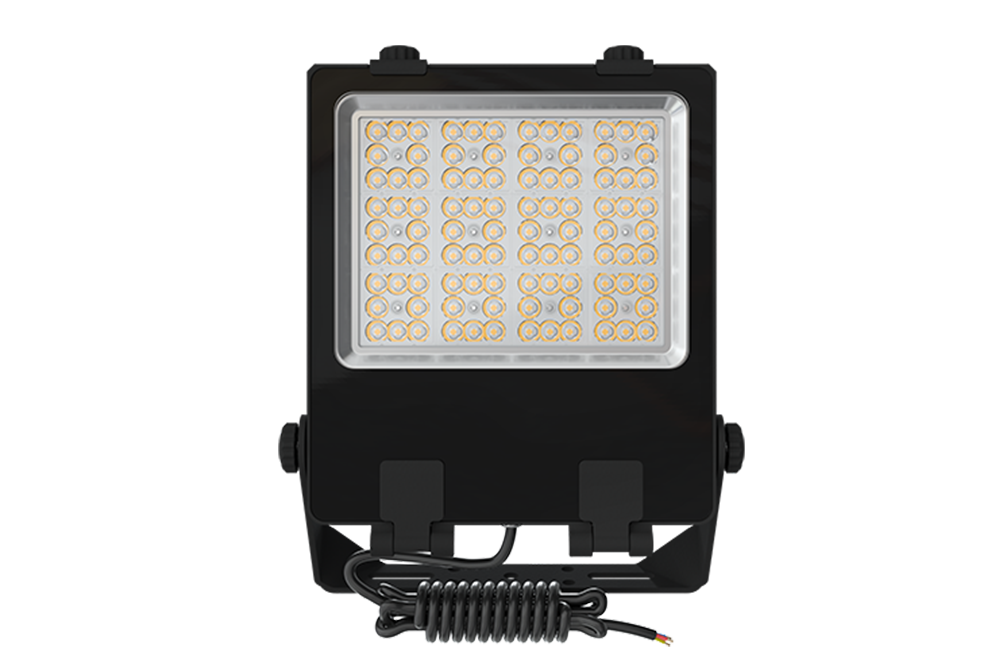
- 100W–300W range for scalable applications
- Up to 170 lm/W system efficacy
- Multiple beam options including 120×60°
- IK08 impact resistance
- IP65/66 protection
- L80B20 >100,000 hours
What stands out in field installations is consistency. No flicker. No unstable output after warm-up.
That stability builds trust over time.
Uniformity vs. Brightness: The Real Metric
Lighting engineers often reference uniformity ratio (U0) rather than just lux levels. According to EN 12464-1 (European indoor workplace lighting standard), adequate uniformity ensures visual comfort and reduces fatigue.
Indoor LED floodlights help correct uneven lux zones—especially near vertical surfaces.
In one community sports hall project, adding angled indoor floodlights reduced wall-to-center lux deviation from 1:3.2 to 1:1.8. That difference was visible immediately.
Energy Savings and ROI
The DOE estimates LED retrofits in commercial buildings can deliver payback within 2–4 years, depending on operating hours. Facilities running 10–14 hours daily see faster returns.
Indoor LED floodlights especially benefit:
- Multi-use venues
- Distribution hubs
- Industrial manufacturing floors
Because lighting is not seasonal—it’s daily.
Final Thoughts: Choosing Indoor LED Floodlights the Right Way
Indoor LED floodlights are not just “big lamps.” They are tools for solving complex lighting geometry inside industrial environments.
Choose them when:
- Uniformity correction is needed
- Multi-angle coverage matters
- Glare control is required
Avoid them when a standard high bay is already sufficient.
From my experience, the difference between a good lighting project and a problematic one rarely comes down to wattage. It comes down to optics, thermal design, and driver stability.
SEEKINGLED indoor LED floodlights are built with that practical philosophy—balanced output, controlled distribution, and long-term reliability.
And in real-world facilities, that’s what actually matters.
Indoor LED Floodlights recommended
Sports Stadium LED Lighting by SEEKINGLED delivers high mast illumination, precise beam control, and EN 12193 compliant performance for professional venues.
SEEKING FLX Series LED flood light outdoor for sports courts and open-area projects with 170lm/W efficiency, IP66 protection and multiple beam distributions. Designed for long-life commercial and public outdoor use.
SEEKING FLE Series LED outdoor flood lights for sports grounds and open areas with multiple beam angles, IP66 protection and up to 170lm/W. Designed for long-life outdoor installations with professional driver options.
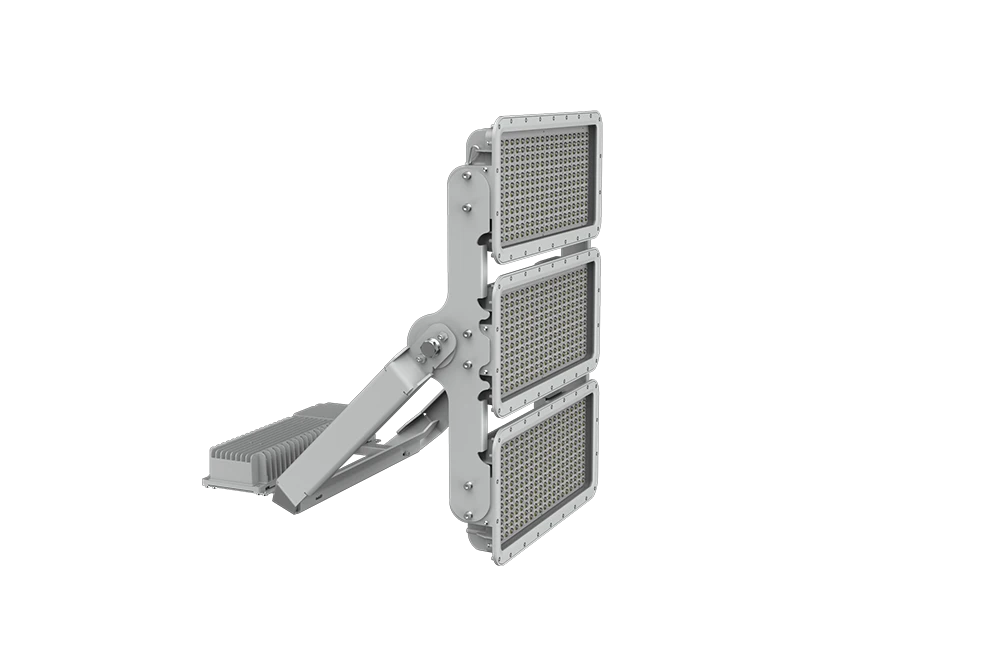
SEEKING FLD Series outdoor LED flood lights and high power led flood light deliver up to 960W with precision beam angles for sports fields, stadiums and large outdoor areas. IK08 & IP66 protection, 170lm/W efficiency and 100,000h lifetime.
loading…
This is the last post!
 Seeking LED