 Seeking LED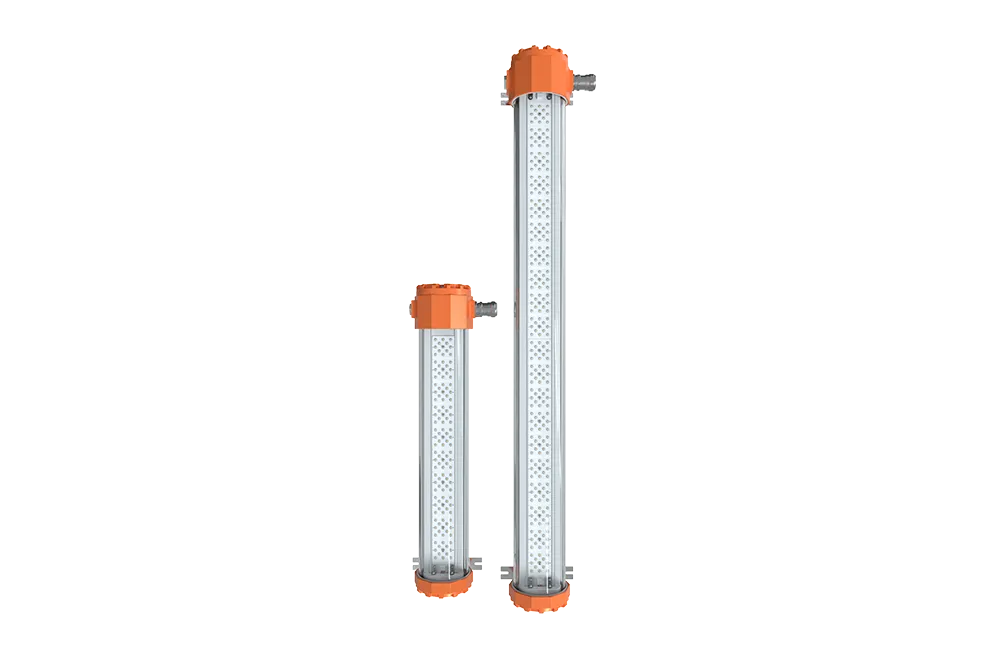
What Is the Most Powerful LED Flood Light?
217What is the most powerful LED flood light? Learn what power really means in outdoor flood lighting, beyond wattage numbers.
View detailsSearch the whole station
Selecting a reliable lamp explosion proof solution is not simply about lumen output. In hazardous facilities, lighting becomes part of the safety infrastructure. This article explains how the HB21 Series from SEEKINGLED is engineered for Zone 1, Zone 2, Zone 21, and Zone 22 environments, why IEC 60079 compliance matters, and what actually makes a high bay luminaire suitable for long-term industrial deployment.
I have been involved in hazardous area lighting specification for more than a decade, mainly for petrochemical storage terminals and chemical processing plants. In these environments, lighting failure is not a maintenance inconvenience. It can shut down operations.
According to IEC 60079 standards, Zone 1 refers to areas where explosive gas atmospheres are likely to occur during normal operation. Zone 21 refers to combustible dust environments under similar risk frequency. These classifications are defined internationally and adopted across the EU through ATEX Directive 2014/34/EU.
A genuine lamp explosion proof luminaire must comply with:
Flameproof (Ex db) design means the enclosure can withstand an internal explosion and prevent flame propagation outside the housing. This is structural engineering, not marketing language.
The HB21 Series from SEEKINGLED is built on this principle.
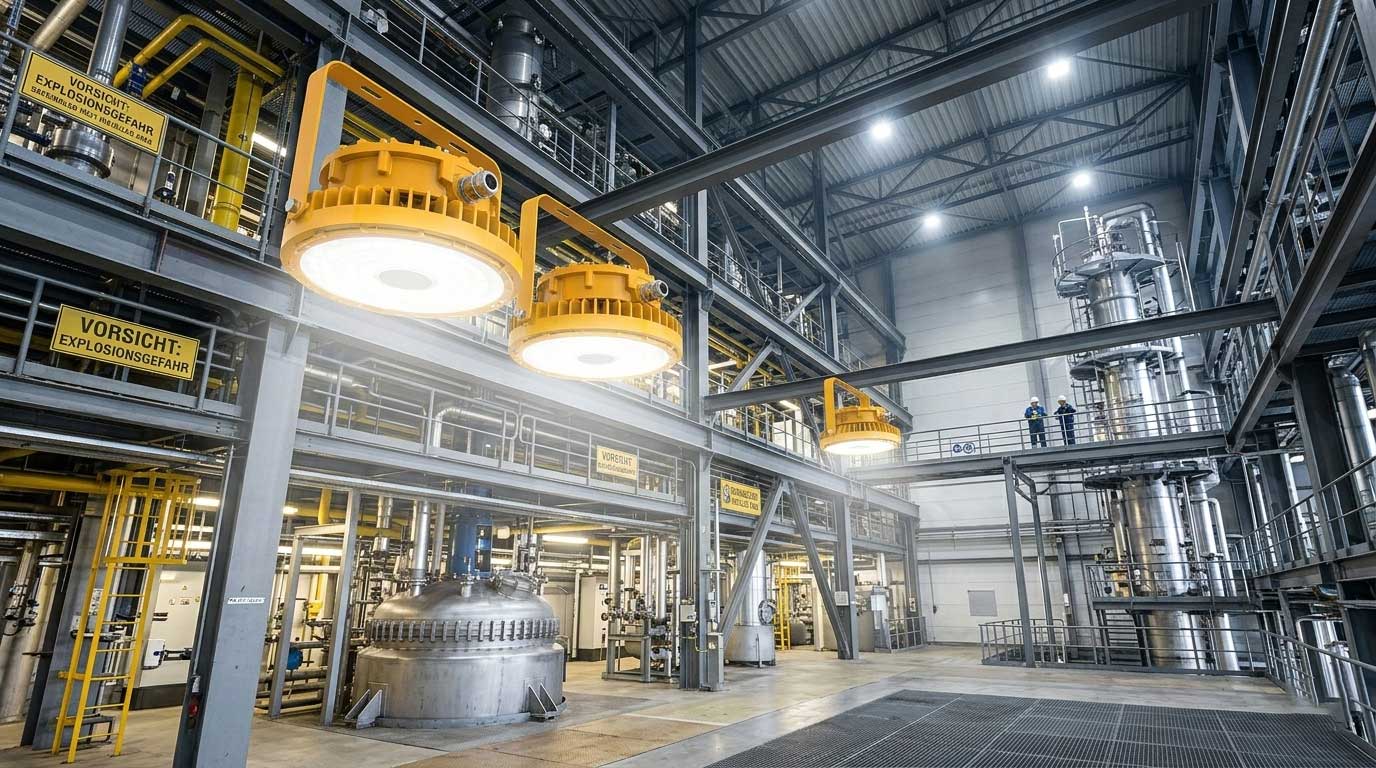
Industrial facilities rarely have low mounting heights. In LNG compressor buildings and chemical blending workshops, I often see mounting heights above 10 meters.
The HB21 Series offers power options from 15W to 300W. In practical terms:
With luminous efficacy up to 150 lm/W and CRI above 80, it delivers consistent white light (4000K or 5700K). Compared with traditional metal halide lamps, which typically provide 70–90 lm/W and degrade rapidly after 8,000–10,000 hours, LED technology provides measurable energy savings.
The rated L80B20 >100,000 hours follows IES LM-80 methodology. That means lumen maintenance remains at 80% after extended operation under controlled testing conditions. In real facilities, that translates to fewer shutdown permits and lower lift equipment usage for replacement.
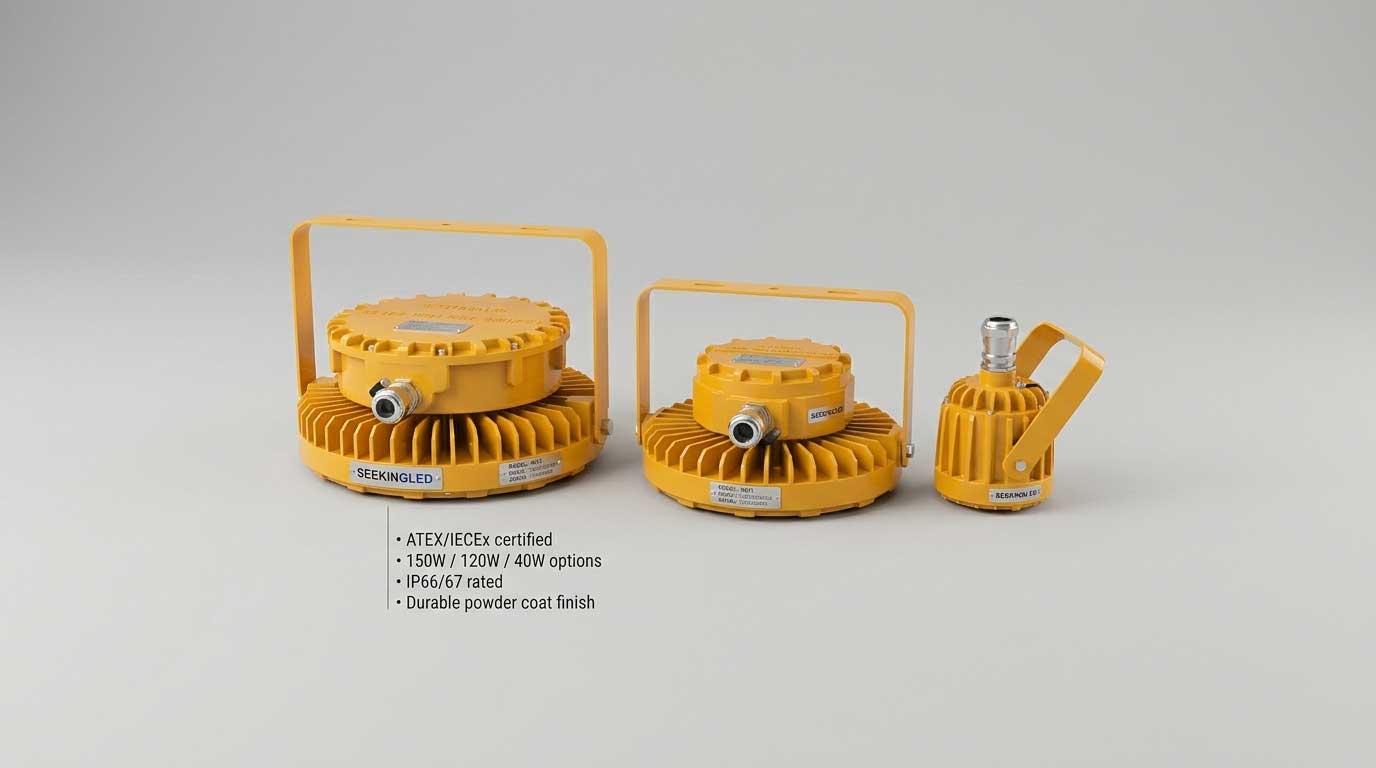
HB21 carries ATEX and IECEx certification issued by CSA Group.
ATEX Marking:
II 2G Ex db IIC T6/T5 Gb
II 2D Ex tb IIIC T80°C/T95°C Db
IECEx Equivalent:
Ex db IIC T6/T7 Gb
Ex tb IIIC T80°C/T95°C Db
Gas Zones: 1 & 2
Dust Zones: 21 & 22
These markings are not decorative. Inspectors check temperature class (T6/T5), gas group (IIC), and enclosure type during commissioning.
The allowable temperature range of -20°C to +55°C ensures stable operation in both cold storage facilities and high ambient process plants.
IP66 ingress protection and IK10 impact rating add another layer of physical durability. In grain facilities or cement plants where airborne particles are constant, sealing performance becomes critical.
HB21 operates on 100–277V, 50/60Hz input. Power factor ≥0.95 and THD <15% reduce harmonic distortion in sensitive industrial grids. In facilities with multiple heavy motors, stable power characteristics matter.
Three-step power adjustment reduces SKU complexity. From a procurement standpoint, that simplifies inventory management without compromising compliance.
Cable entries: 2×M25×1.5.
Built-in junction box simplifies installation in conduit-based hazardous wiring systems.
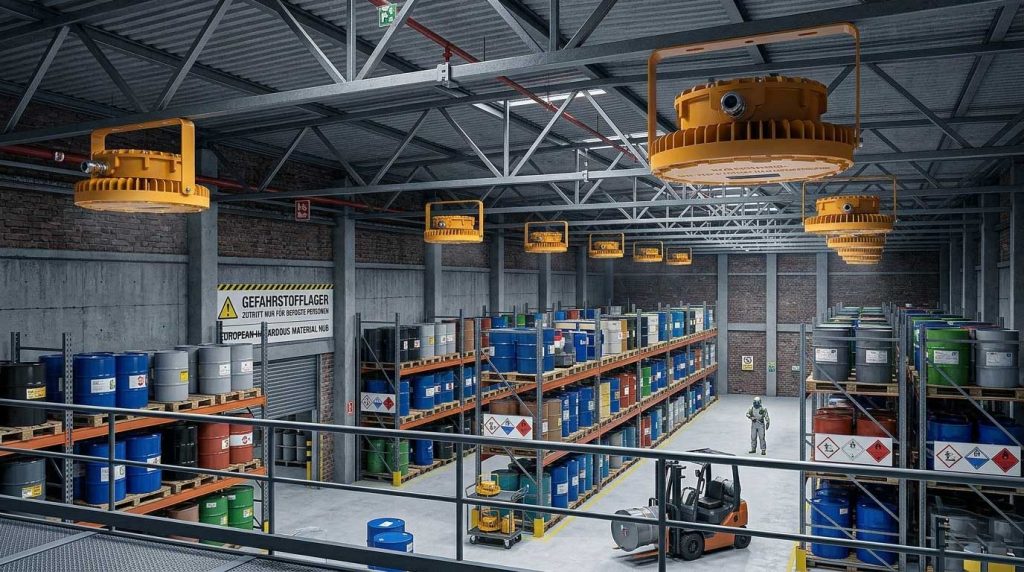
Most clients focus first on wattage. Experienced engineers ask about temperature class and certification body. That difference tells you everything.
In one refinery upgrade project, replacing metal halide fixtures with certified LED explosion proof high bay lights reduced maintenance cycles from every 18 months to projected 6–8 years. The savings were not theoretical. They were documented in maintenance logs.
Lighting in hazardous zones must be predictable. No flicker. No overheating. No certification ambiguity.
A properly engineered lamp explosion proof high bay luminaire is not just an LED fixture inside a heavy housing. It is a certified safety device designed to operate where explosive gas or dust may exist.
The HB21 Series from SEEKINGLED combines IEC 60079 compliance, ATEX & IECEx certification, 150 lm/W efficiency, robust flameproof construction, and long service life. For petroleum, chemical, marine, airport, and industrial hazardous area lighting, selecting a dependable lamp explosion proof solution is a decision that directly supports operational safety and long-term reliability.
And in hazardous environments, reliability is never optional.
SEEKINGLED LED Linear Explosion Proof Light and Explosion Proof lighting is ATEX and IECEx certified for Zone 1, Zone 2, Zone 21 and Zone 22 hazardous locations, built for long-term industrial use.
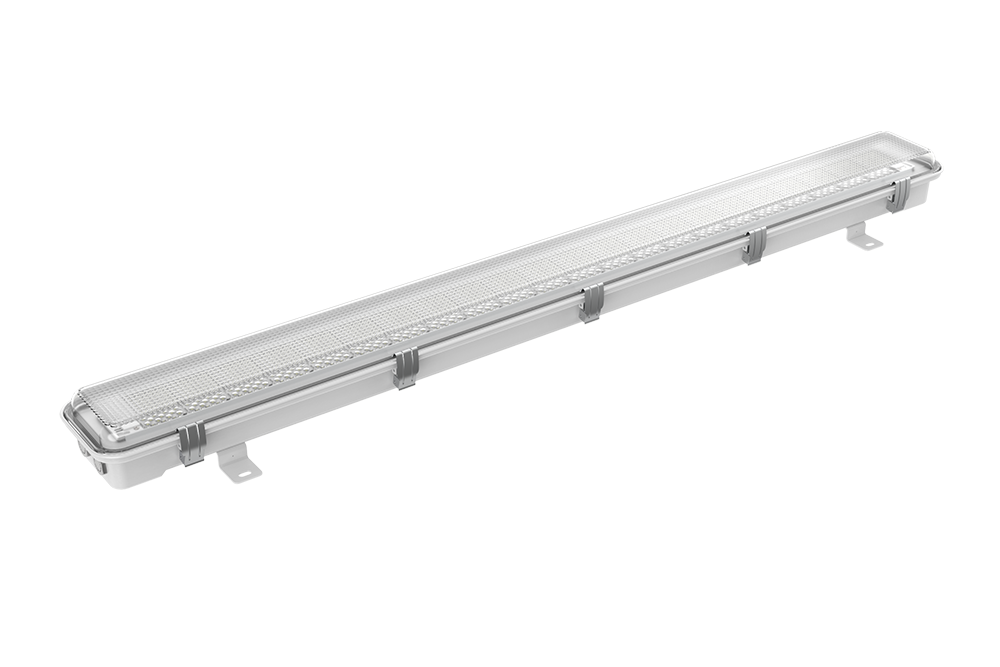
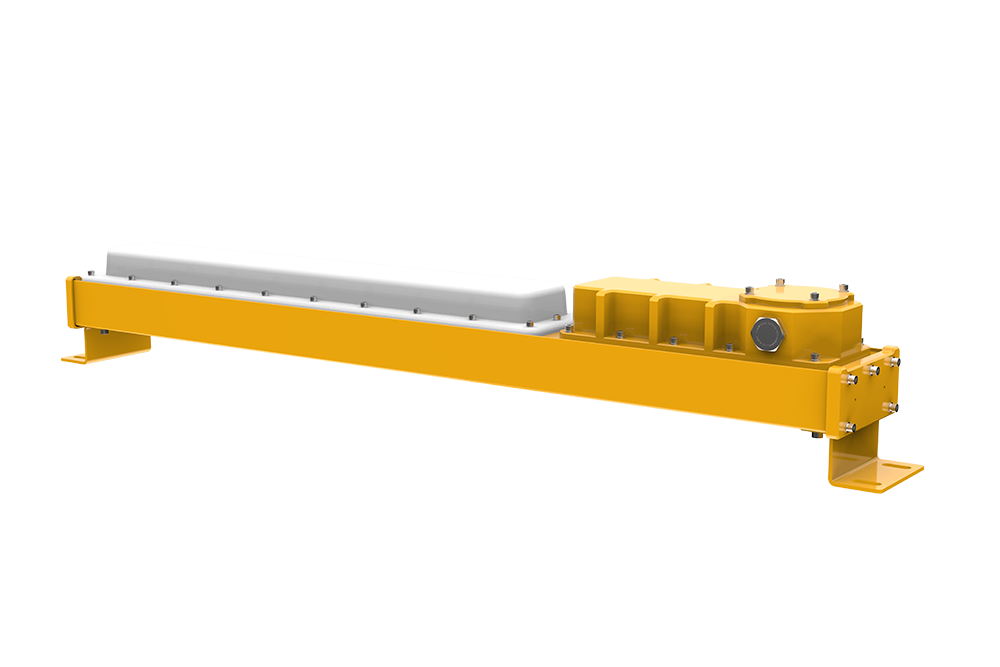
LED Linear Explosion Proof Lights and EX Proof lights for Zone 1, Zone 2, Zone 21 and Zone 22 hazardous areas. ATEX & IECEx certified explosion proof LED linear lighting with emergency function, adjustable power and IP67 protection by SEEKINGLED.
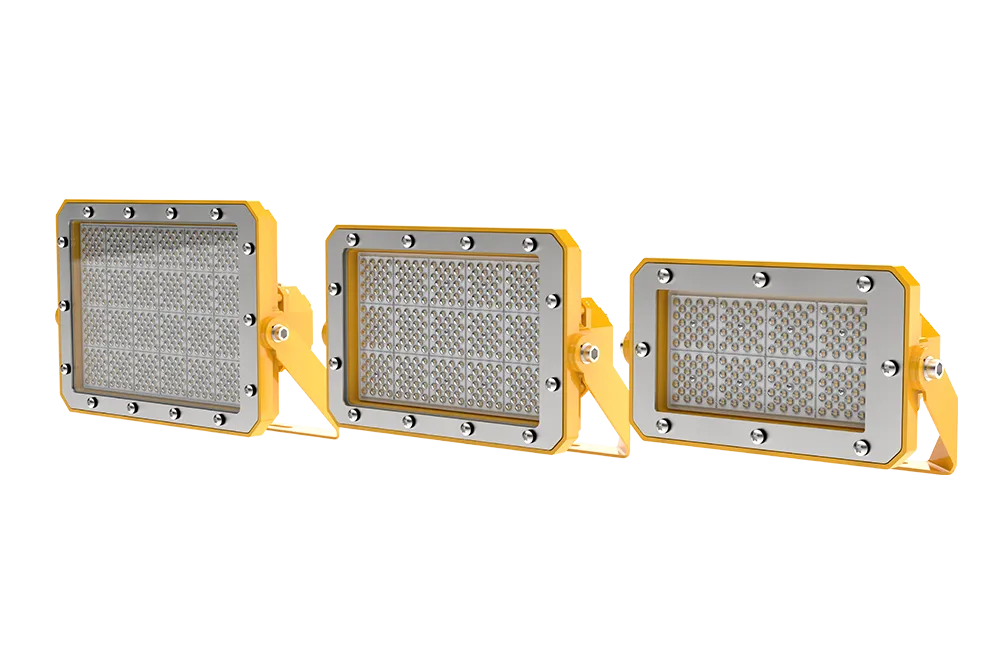
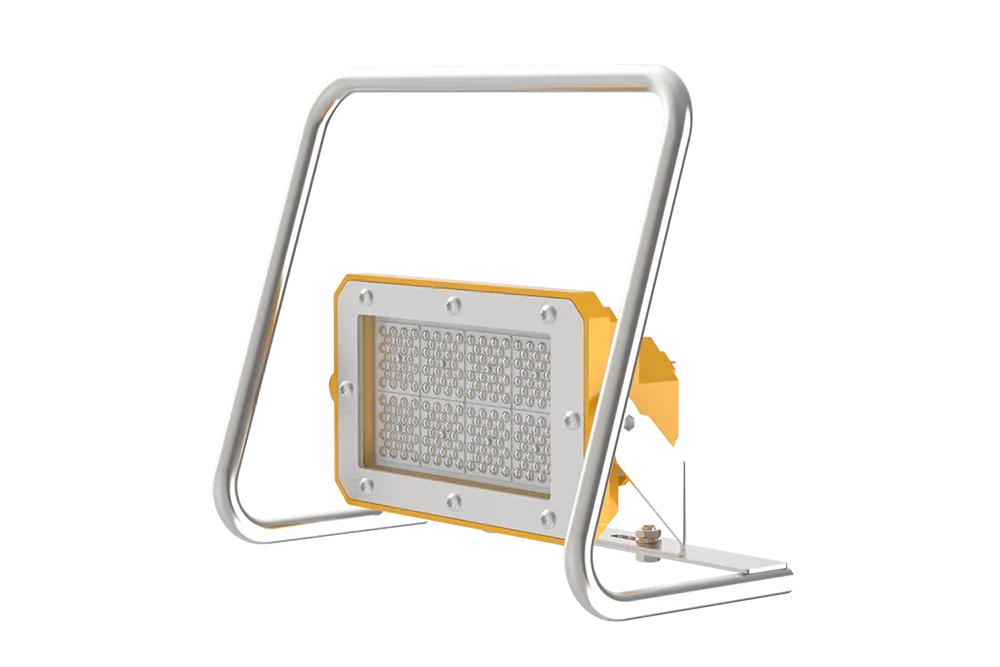
SEEKINGLED LED Explosion Proof Flood Lights are ATEX certified for Zone 2 and Zone 22 hazardous areas, offering high efficiency, adjustable power and integrated junction box.
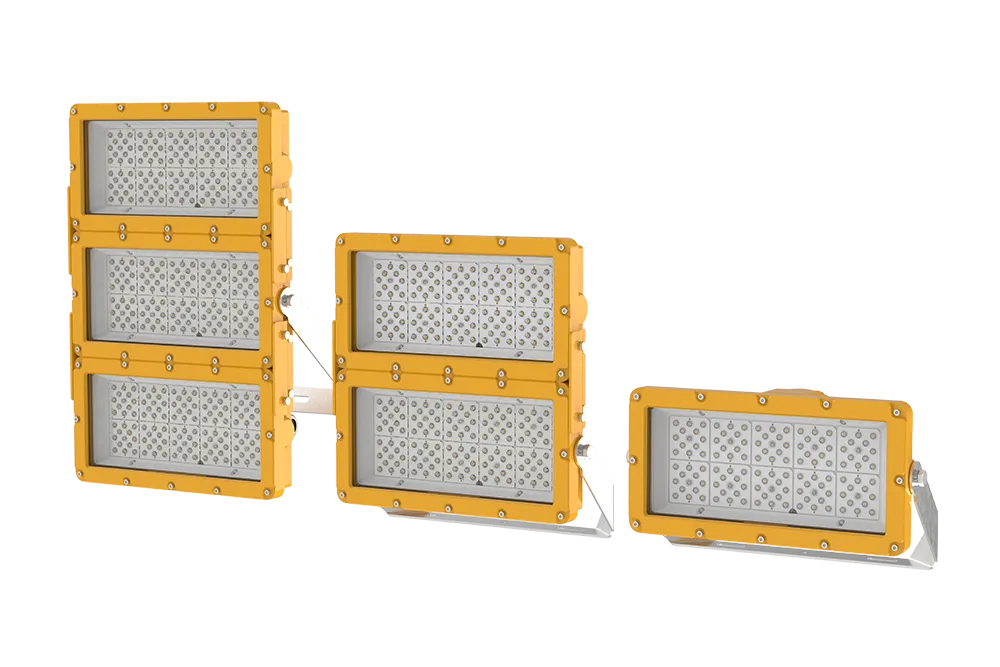
SEEKINGLED LED Explosion Proof Flood Lights are flameproof ATEX and IECEx certified for Zone 1 and Zone 2 hazardous areas, offering high power, adjustable output and long service life.
SEEKINGLED LED Gas Station Canopy Lights are ATEX certified for Zone 2 and Zone 22 hazardous areas, featuring adjustable power and built-in explosion-proof junction box.
ATEX: Ex II 2G Ex db IIB T6/T5 GbEx II 2D Ex tb IIIC T80°C/ T95°C Db IECEx Ex db IIB T6 Gb;Ex tb IIIC T80°C Db Feature: ● For Zone 1,2 and Zone 21,22● Flameproof type, the strongest● 100W can replace 250W HID,energy saving● Power:60W,80W,10…
ATEX: II 3G Ex nR ⅡC T5/T6 GcII 3D Ex tc ⅢC T80℃/T95℃Dc ATEX Certificate NO: TÜV CY 26 ATEX 0207611 X Feature: ● For Zone 2 and Zone 22● 150W can replace 250W HID lamps,Energy saving● Power:50W,75W,100W,150W,200W Application: Oil and gas, m…
LED explosion proof high bay lights are designed for Zone 1, Zone 2, Zone 21 and Zone 22 hazardous areas. This page introduces the HB21 Series from SEEKING, including certifications, power options and real application considerations.
LED Linear Explosion Proof Lights from SEEKINGLED. LU Series Flame Proof lights ATEX-certified explosion proof LED linear lighting for Zone 2 gas and Zone 22 dust areas, IP69K, IK10, long lifetime and flexible power options.
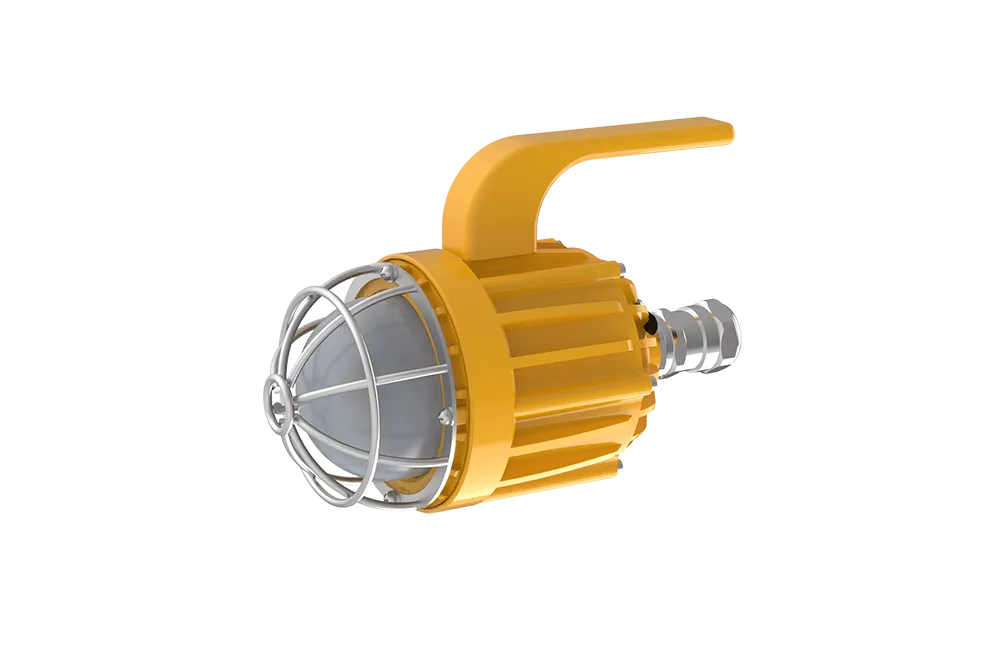
Certified explosion proof work lights for Zone 1 & 21 hazardous areas. Portable, ATEX & IECEx approved, built for oil, gas and chemical plants by SEEKINGLED.
ATEX: II 3G Ex nR ⅡC T6 GcII 3D Ex tc ⅢC T80℃ Dc ATEX Certificate NO: TÜV CY 26 ATEX 0207611 X Feature: ● For Zone 2 and Zone 22● Accepts battery-powered supply● indestructible● Power:AC input:50W,75W,100WDC input:15W,25W,35W Application: O…
ATEX: Ex II 2G Ex db IIB T6 GbEx II 2D Ex tb IIIC T80°C Db IECEx Ex db IIB T6 Gb;Ex tb IIIC T80°C Db Feature: ● For Zone 1,2 and Zone 21,22● Flameproof type, the strongest Application: Oil and gas, marine, Chemical, pharmaceutical, semicondu…
ATEX: Ex II 2G Ex db IIB T6 GbEx II 2D Ex tb IIIC T80°C Db IECEx Ex db IIB T6 Gb;Ex tb IIIC T80°C Db Feature: ● For Zone 1,2 and Zone 21,22● Flameproof type, the strongest Application: Oil and gas, marine, Chemical, pharmaceutical, semicondu…
ATEX: Ex II 2G Ex d e IIB T6 Gb ATEX: Ex d e IIB T6 Gb; Feature: ● For Zone 1,2● 9W can replace 18W fluorescent lamps,50% Energy saving Application: Oil and gas, marine, Chemical, pharmaceutical, semiconductor,mining,military industry, pain…
loading…
This is the last post!
What is the most powerful LED flood light? Learn what power really means in outdoor flood lighting, beyond wattage numbers.
View details
Hyperlite LED high bay light built for real industrial use. SEEKINGLED HBD Series delivers stable output, 160 lm/W efficiency, and long service life.
View details
What are the best LED outdoor flood lights for yards, driveways, or commercial spaces? Discover brightness, durability, and beam angle tips from SEEKINGLED experts.
View details
Learn how to hang high bay lights safely with professional mounting methods, installation tips, spacing advice, and industrial LED lighting solutions.
View details