 Seeking LED
Can a LED Put Out Street Lights?
285Can a LED put out street lights? Learn what this question really means, common myths, real causes of street light outages, and how modern LED systems behave.
View detailsSearch the whole station
An LED flood light wiring diagram looks simple on paper—three wires, one driver, one power source. But after installing flood lights on warehouses, parking lots, sports courts, and building facades across Europe and North America, I can say this clearly: most wiring failures don’t come from bad products. They come from small decisions made during installation.
This article is written from the perspective of a field engineer, not a catalog editor. If you’re wiring LED flood lights for long-term outdoor use, details matter.
Most commercial LED flood lights, including those from SEEKINGLED, use a Class I electrical design. That means:
This wiring standard aligns with IEC 60598 and NEC Article 410, both of which define safety requirements for luminaires used outdoors.
According to the U.S. National Electrical Code (NEC), improper grounding is one of the leading causes of outdoor lighting failure and shock risk. I’ve seen this firsthand—especially in coastal or high-humidity environments.

It sounds obvious, but on real sites, power isolation is rushed. OSHA reports that improper lockout procedures remain a major cause of electrical injury. Always isolate the circuit at the breaker—not just the switch.
For outdoor LED flood light wiring, the junction box must match or exceed the fixture’s IP rating. Installing an IP65 flood light into an IP54 box is a silent failure waiting to happen.
I’ve inspected installations where the light “worked” without grounding—until the first insulation breakdown. Grounding protects both people and drivers. SEEKINGLED drivers are designed to meet IEC 61347, but they still rely on proper earthing.
Even experienced electricians repeat these errors:
The International Electrotechnical Commission (IEC) notes that transient voltage surges are a major cause of premature LED driver failure. In parking lots and open yards, this is not theory—it’s daily reality.

A frequent question tied to LED floodlight installation wiring is load capacity.
According to the U.S. Department of Energy, LED flood lights typically draw 70–85% less power than halogen equivalents. That allows more fixtures per circuit—but only if voltage drop is calculated.
Rule from experience:
If cable run exceeds 30 meters, measure voltage at the last fixture. LEDs are sensitive. A small drop can cause flicker or early driver stress.
This article is written by a lighting installation engineer with over 12 years of experience in outdoor and industrial LED projects. I’ve worked alongside inspectors, contractors, and facility owners, troubleshooting wiring issues long after installation crews have left.
SEEKINGLED designs LED flood lights specifically for demanding outdoor environments, focusing on driver reliability, sealing integrity, and installer-friendly wiring layouts.

A proper led flood light wiring diagram is not just about connecting wires—it’s about respecting electrical standards, environmental exposure, and real-world conditions. When wiring is done correctly, LED flood lights deliver stable performance for years. When it’s rushed, failures come early and quietly.
If you’re planning or reviewing a led flood light wiring diagram, treat it as part of the system—not an afterthought.
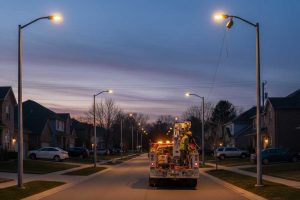
Can a LED put out street lights? Learn what this question really means, common myths, real causes of street light outages, and how modern LED systems behave.
View details
Where to buy led flood lights for homes or commercial projects? Discover reliable purchasing options, quality tips, and real buying advice from SEEKINGLED lighting experts.
View details
LED flood light installation guide from field engineers. Learn safe mounting, wiring, aiming angles, and compliance tips for long‑lasting outdoor lighting.
View details
Class 1 Division 1 LED lighting is designed for areas where explosive gases may be present during normal operations. Learn certification, applications, safety requirements, and selection tips.
View details