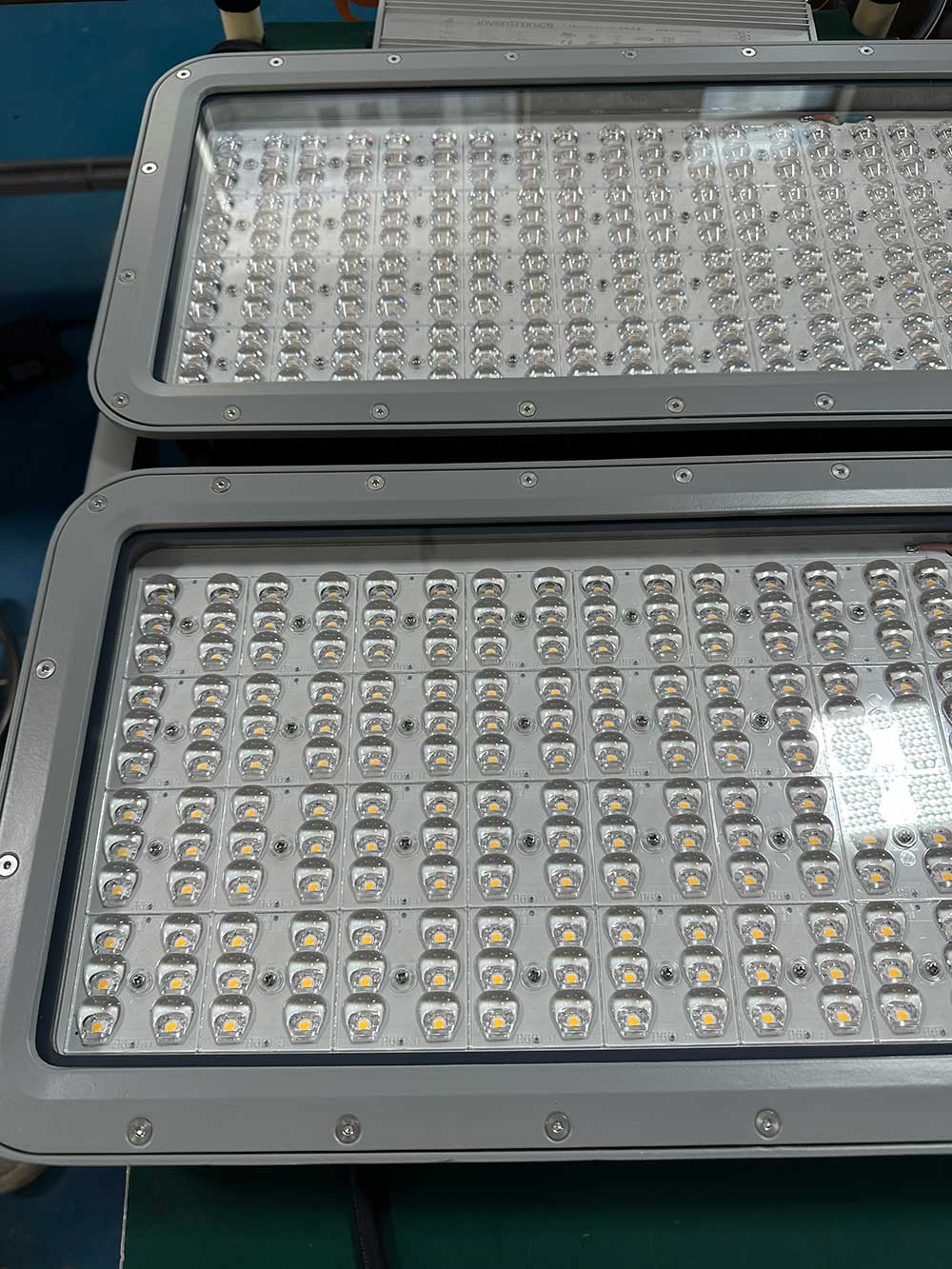
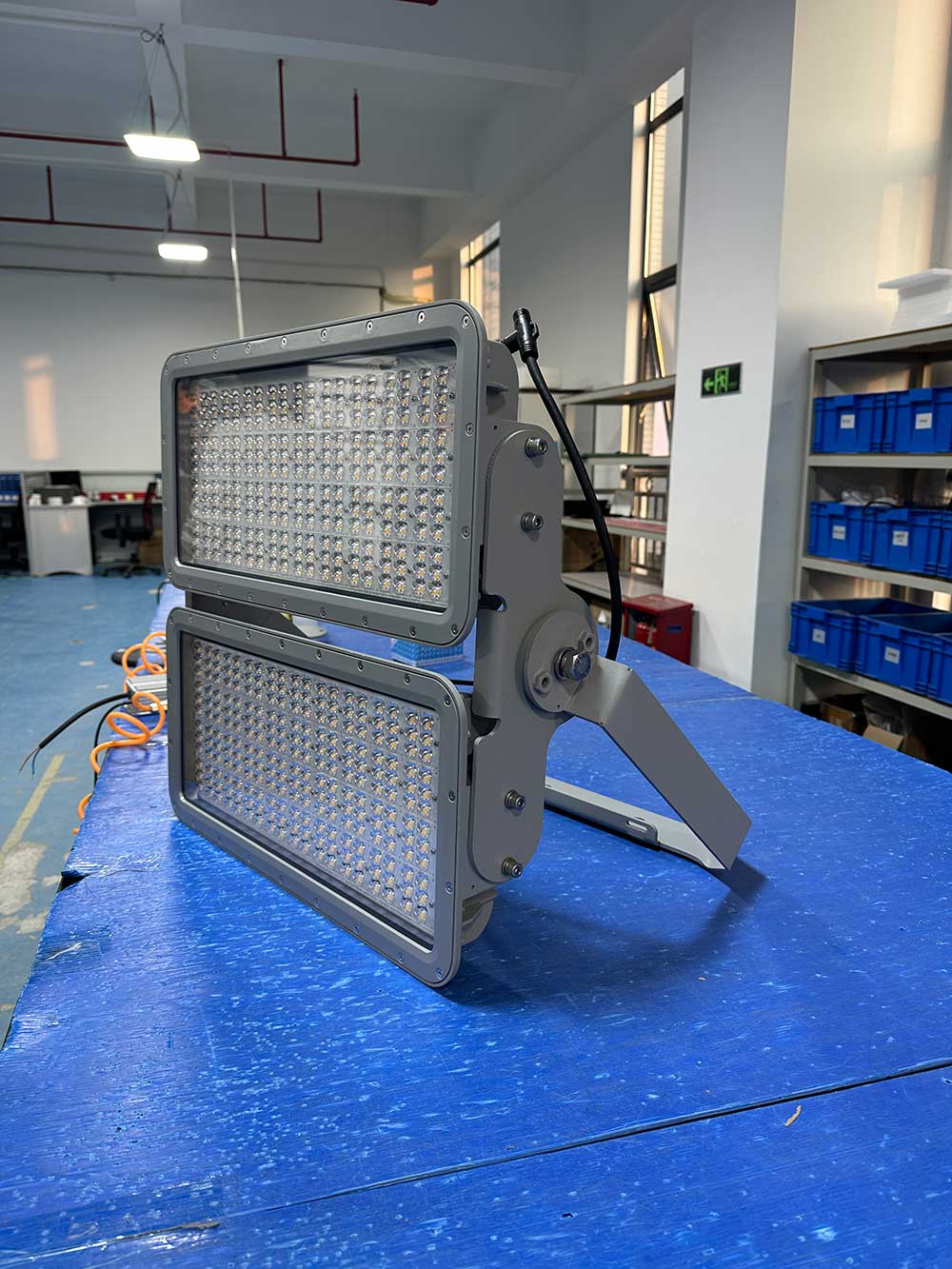
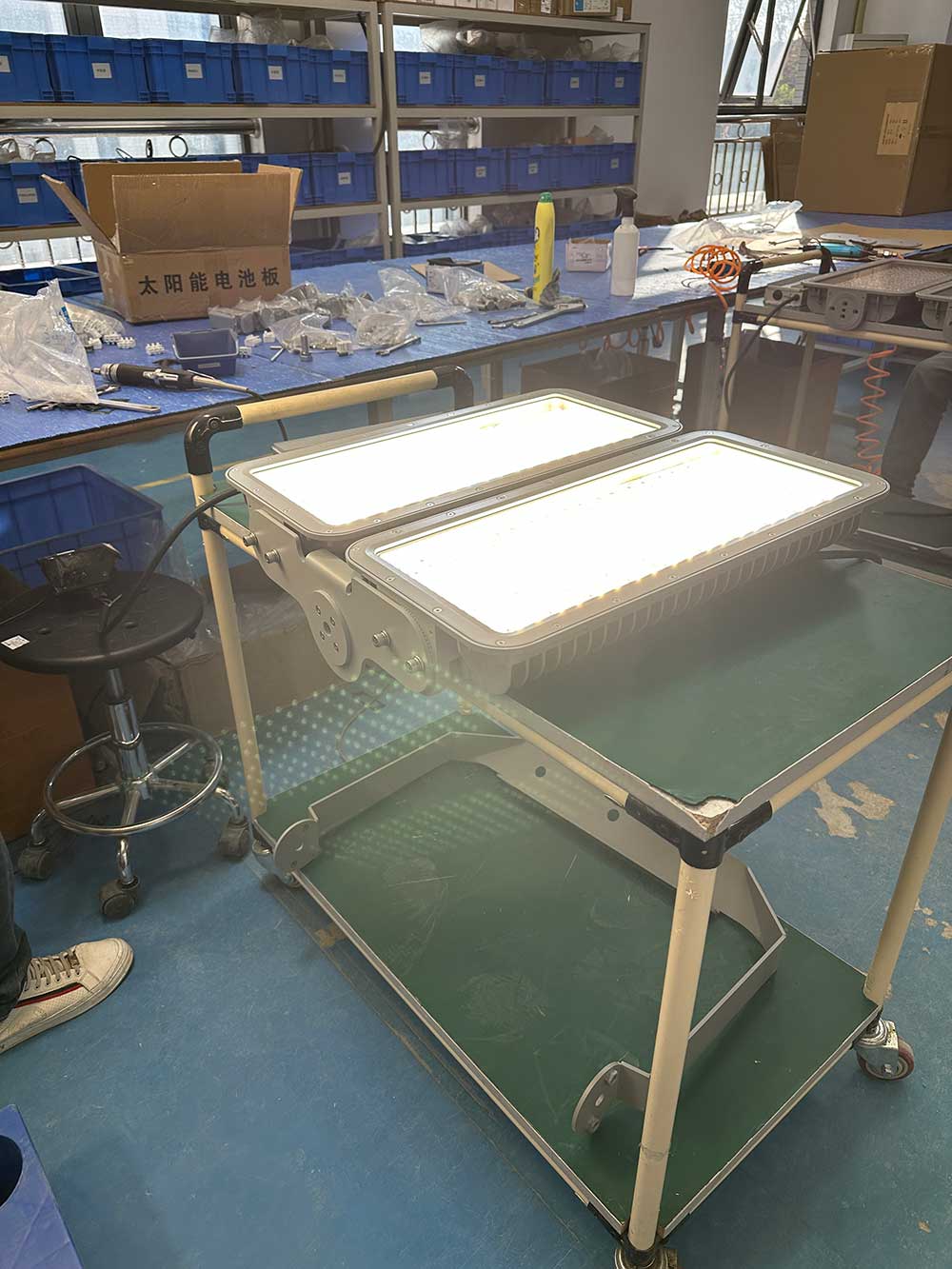
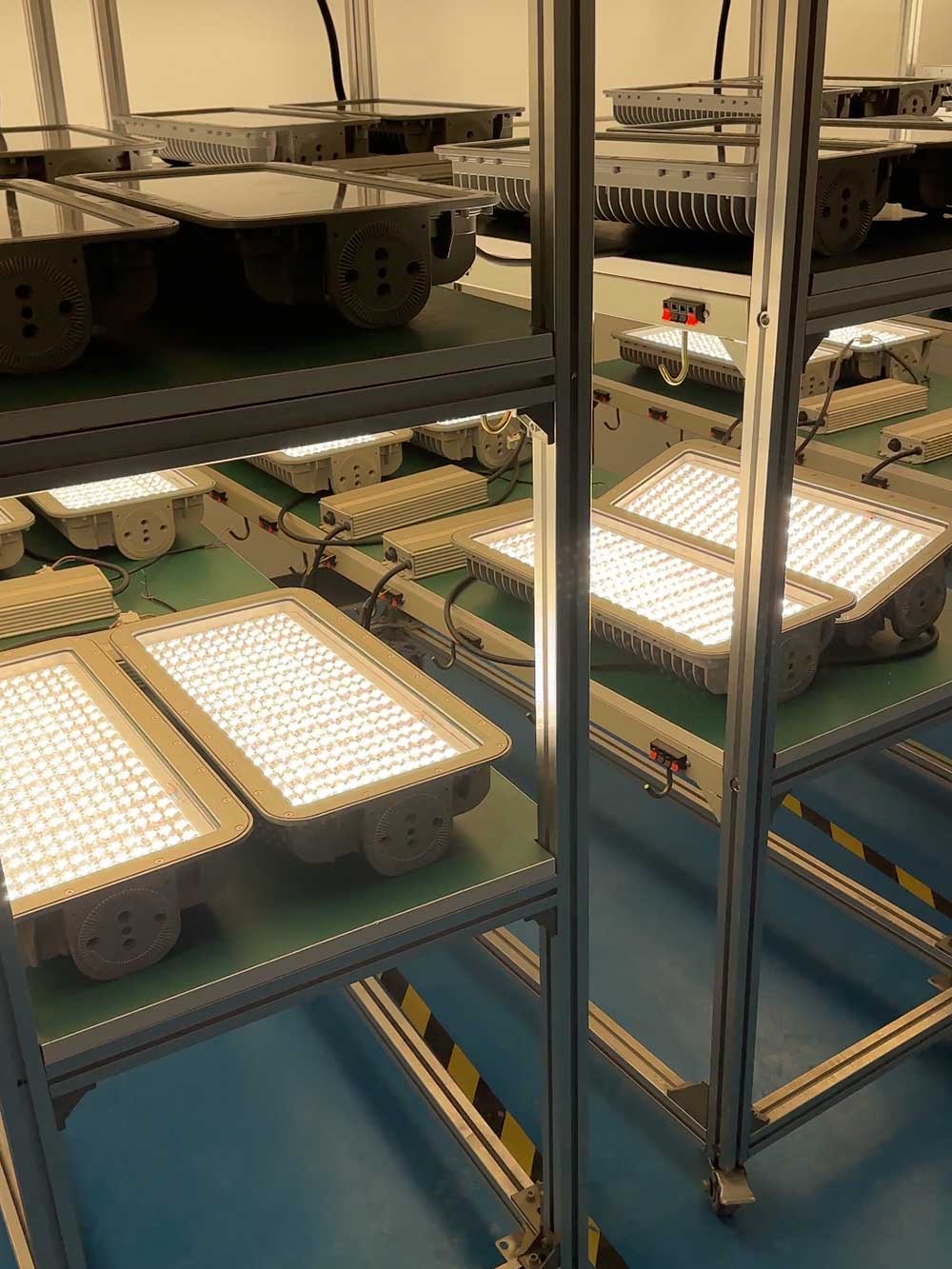
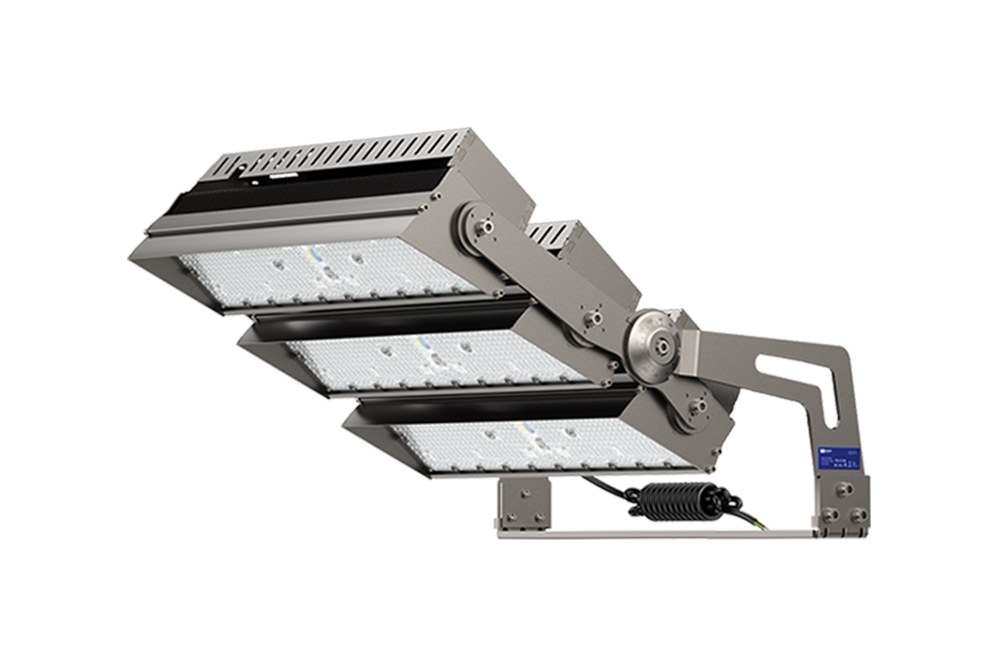
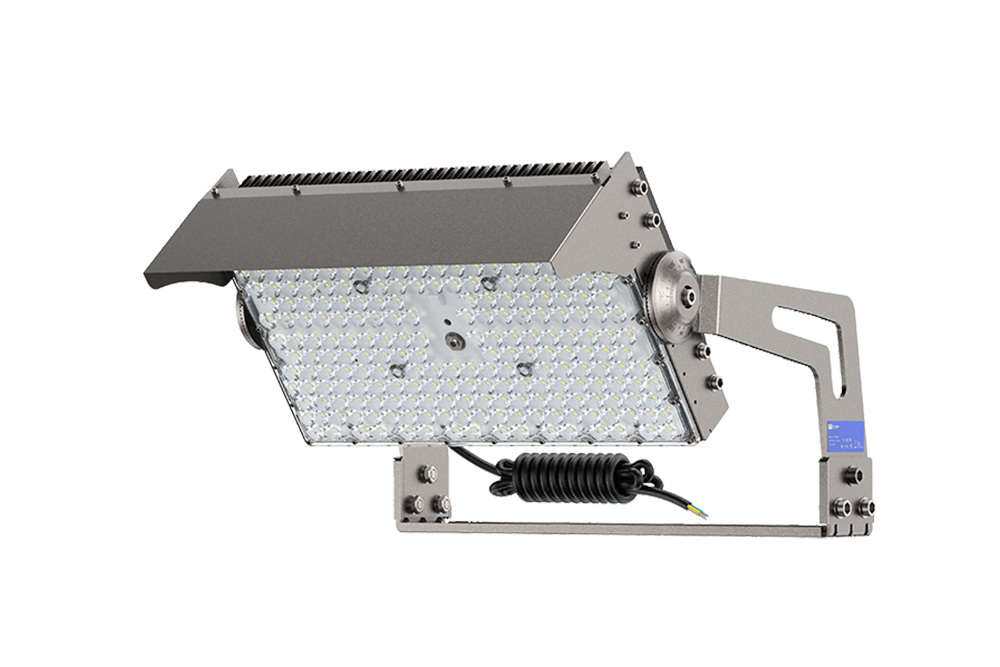
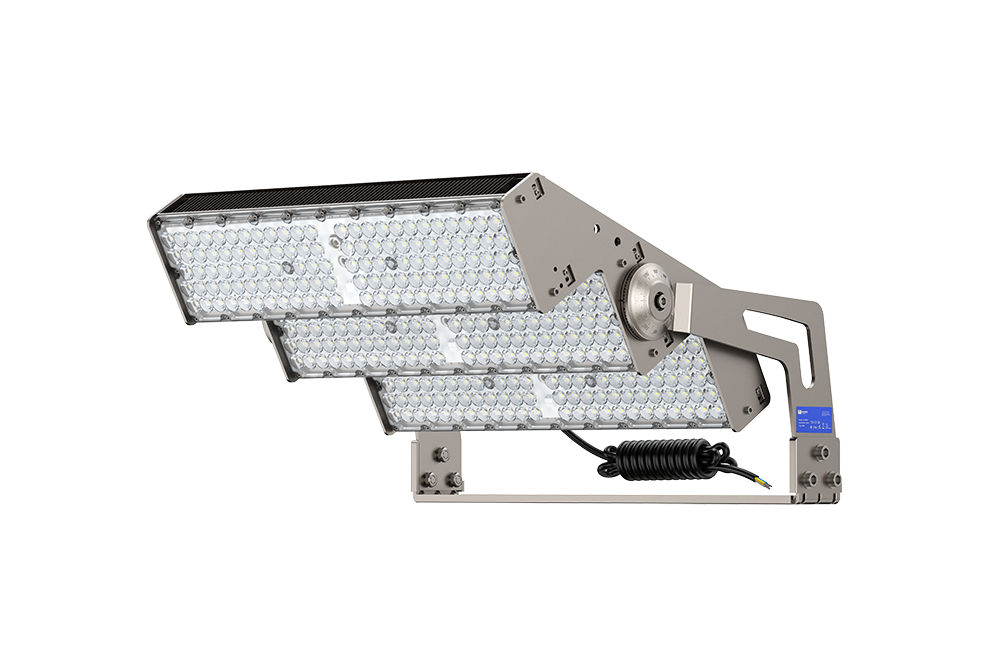
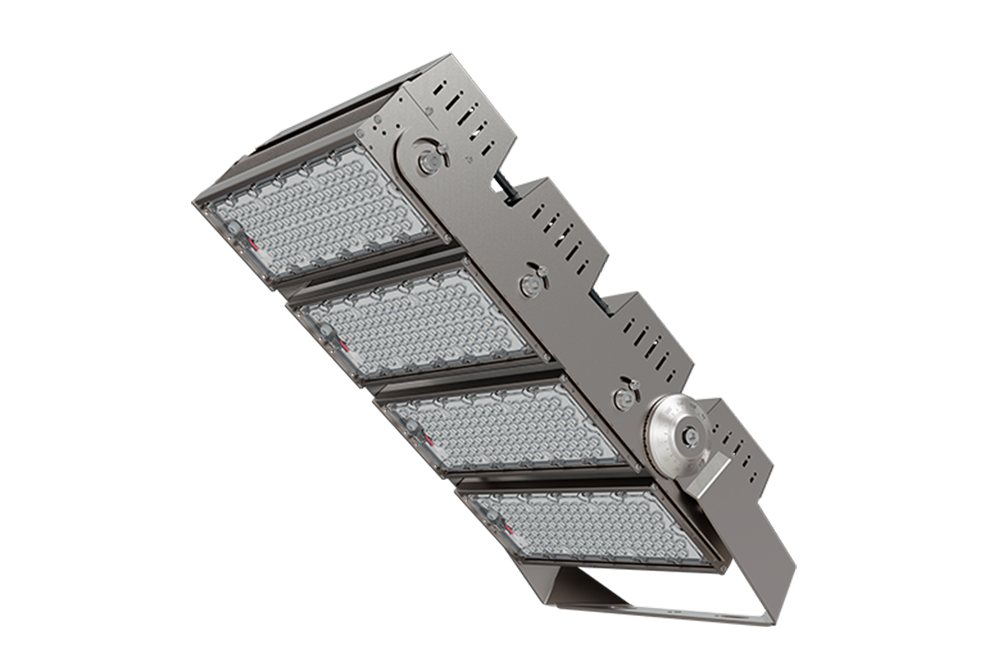
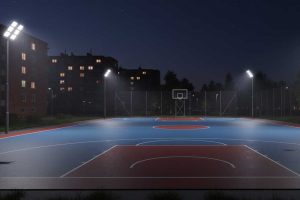
The LED Stadium Lights Series was developed for stadiums where lighting is judged during the game, not during installation. Once players start moving and the ball is in the air, small lighting issues become obvious very quickly.
Glare near the sideline. Dark zones across midfield. Uneven brightness when the camera pans. These problems usually don’t show up on paper, but everyone notices them on the field. This series was built to avoid exactly that.
SEEKINGLED didn’t start this range by chasing the highest numbers. The focus was control first, power second. Because in stadium lighting, uncontrolled power usually creates more problems than it solves.
From a stadium lighting news perspective, one trend has become clear over the past five years:
Lighting complaints are no longer about “brightness.” They’re about control, uniformity, and visual comfort.
According to the U.S. Department of Energy, modern led stadium lighting systems can reduce energy consumption by 50–70% compared to legacy HID—but only when optical control is properly implemented.
In real match environments, that “control gap” is where most systems fail.
Optics That Adjust to the Field, Not the Other Way Around
No two pitches behave the same under light. Pole height changes things. Distance changes things. Even the surface finish of the field changes how light feels to players.
That’s why the LED Stadium Lights Series offers 10°, 20°, 30°, 60°, 90°, P50 and P60 beam options. In real projects, lighting designers rarely use just one beam angle. A narrow optic may be perfect for long throws, while wider distributions help smooth out darker zones closer to the touchline.
Trying to force one beam pattern across an entire stadium usually ends in compromise. This series is designed to avoid that from the start.
Why Multi-Beam LED Stadium Lighting Matters
In sports stadium LED lighting, a single beam angle almost always creates problems:
Narrow beams → hotspot glare
Wide beams → light spill + wasted energy
Mixed beams → controlled uniformity
From field measurements I’ve participated in, combining optics improved uniformity ratios (U0) by up to 25% in mid-size football fields.
That’s not theoretical—it’s visible to players within minutes.
Power Levels Chosen for Practical Use
The series is available in 500 W, 1000 W, and 1500 W versions. Not every area of a stadium needs maximum output, and using oversized fixtures everywhere often increases glare without improving visibility.
With up to 22,000 lumens per luminaire, an efficacy of 150 lm/W, and CRI above Ra 80, the lighting stays clear and consistent. Colors look natural. Lines remain sharp. This matters more than people expect, especially for broadcast and officiating.
What’s important here is how the light holds up over time. Stadium lights don’t fail all at once. They drift. Uneven aging is usually what makes a field feel “wrong” after a few seasons.
LED Sports Lighting vs Traditional HID
Feature
LED Sports Lighting
Metal Halide
Start Time
Instant
10–15 min
Flicker
Minimal
Noticeable
Maintenance
Low
High
Color Stability
Stable
Degrades
In led sports field lighting, consistency matters more than peak output.
Broadcast cameras don’t forgive fluctuation.
Control That Works in Daily Operation
Stadium lighting doesn’t operate at full power all the time. Training sessions, maintenance checks, partial events—these all need flexibility.
The LED Stadium Lights Series supports DALI-2 and DMX512, making it easy to integrate into modern lighting control systems. Dimming is smooth and predictable, without flicker or sudden jumps.
From an operator’s point of view, reliability matters more than advanced features that are rarely used. A system that responds consistently is far more valuable than one that looks impressive on paper.
How Stadium LED Lights Reduce Operational Cost
In real stadium operations:
Training mode → 30–50% power
Maintenance mode → targeted lighting
Match mode → full output
This is where stadium lights led systems outperform traditional setups.
Operators don’t need complexity. They need predictable behavior.
Designed Around EN 12193, Not Around Guesswork
Lighting standards exist because experience has already shown what works and what doesn’t.
SEEKINGLED provides professional stadium lighting design services based on EN 12193, covering Class I, II, and III. This includes proper targets for horizontal and vertical illuminance, as well as uniformity.
For competition and broadcast environments, vertical illuminance and glare control often become the deciding factors. For training fields, comfort and consistency usually matter more than maximum brightness.
Designing within these standards keeps expectations clear for everyone involved.
Key Metrics in Stadium Lighting LED Design
Critical parameters include:
Horizontal illuminance (lux)
Vertical illuminance (camera visibility)
Glare rating (GR value)
Uniformity ratio (U0, U1)
Ignoring any one of these is where most led field lighting systems fail—not during installation, but during broadcast.
Built for Long-Term Outdoor Use
Outdoor stadium lighting lives a hard life. Heat, rain, wind, long operating hours. Over time, weak thermal design or unstable drivers show their limits.
The LED Stadium Lights Series is built with durability in mind. Thermal management and housing strength are treated as priorities, not afterthoughts. In real installations, these factors determine how stable the system remains after years of use.
Replacing fixtures on high poles is expensive and disruptive. The goal is to avoid that situation altogether.
Failure Points in Stadium LED Lighting
From real audits:
Driver failure due to heat buildup
Lens yellowing (UV exposure)
Corrosion in coastal environments
A well-designed stadium lighting led system avoids these through:
Thermal separation
Anti-UV materials
Corrosion-resistant coatings
Most failures aren’t electrical. They’re environmental.
Where the LED Stadium Lights Series Makes Sense
This series is well suited for:
Professional football and soccer stadiums
Outdoor competition venues
Broadcast-ready sports fields
High-standard training facilities
It scales well across different layouts and usage levels. The focus is always the same: stable light, controlled distribution, and predictable performance.
In practical deployments, this type of led sports lighting is most effective where:
Camera broadcasting is required
High uniformity is mandatory
Long operation hours exist
Not every field needs this level. But when it does—you’ll know quickly.
FAQ – LED Stadium Lights Series & Sports Lighting
What is LED stadium lighting?
LED stadium lighting refers to high-power lighting systems designed for large sports venues, providing uniform illumination, glare control, and energy efficiency.
Why is LED sports field lighting better than traditional lighting?
LED systems offer instant start, lower energy use, better color rendering, and significantly reduced maintenance compared to HID lighting.
How many stadium LED lights are needed?
It depends on field size, pole height, and required lux levels. Professional stadiums typically require detailed lighting simulation.
What is the lifespan of stadium LED lights?
Most high-quality systems exceed 50,000–100,000 hours, depending on thermal design and operating conditions.
What is LED field lighting?
LED field lighting is a professional outdoor lighting system designed to provide uniform, high-quality illumination for sports fields, including football, soccer, baseball, and training grounds. It uses high-power LED fixtures with controlled beam angles to reduce glare and improve visibility for players, referees, and cameras.
Modern LED field lighting focuses on more than brightness. Proper optical design, uniformity, vertical illuminance, and color rendering are essential for creating a comfortable playing environment.
Why are LED football stadium lights better than traditional lighting?
LED football stadium lights provide better energy efficiency, instant startup, improved color quality, and more precise light control compared with traditional metal halide systems.
Key advantages include:
Instant on/off operation
Lower energy consumption
Reduced maintenance frequency
Better broadcast visibility
Adjustable beam distribution
For professional stadiums, LED football stadium lights help maintain consistent lighting performance throughout matches and training sessions.
What are the benefits of LED football field lights?
LED football field lights are designed to deliver strong illumination across large playing areas while minimizing glare and dark spots.
The main benefits include:
Feature
Advantage
High lumen output
Covers large fields
Multiple beam angles
Improves uniformity
High CRI
Produces natural colors
Long lifespan
Reduces replacement costs
Smart controls
Supports different lighting modes
A well-designed LED football field lighting system improves player visibility and ensures better conditions for spectators and broadcast cameras.
What services are included in football stadium LED lights projects?
Football stadium LED lights services usually include lighting design, photometric simulation, fixture selection, installation guidance, and system optimization.
Professional services often cover:
Stadium lighting calculations
Beam angle selection
Pole position analysis
Lux level planning
Control system integration
A complete design approach ensures the lighting system meets competition requirements instead of simply adding more powerful fixtures.
What is professional sports lighting?
Professional sports lighting refers to advanced lighting systems designed specifically for competitive sports environments where visibility, uniformity, and glare control are critical.
Unlike general outdoor lighting, professional sports lighting must consider:
Player movement speed
Ball tracking visibility
Camera requirements
Spectator comfort
Broadcast standards
High-quality systems are designed around performance requirements rather than only fixture wattage.
Why is sports stadium lighting important?
Sports stadium lighting plays a critical role in player performance, spectator experience, and broadcast quality. A poorly designed system can create shadows, glare, and uneven brightness across the field.
Modern sports stadium lighting uses:
Precision optics
High-efficiency LEDs
Advanced control systems
Uniform light distribution
Professional venues require lighting that remains stable throughout long operating hours and different event conditions.
Why is stadium lighting design important?
Stadium lighting design determines how effectively light is distributed across the playing area. It considers field dimensions, mounting height, beam angles, lux requirements, and glare limitations.
A proper stadium lighting design typically includes:
Horizontal illuminance analysis
Vertical illuminance calculation
Uniformity evaluation
Glare control assessment
At SEEKINGLED, stadium lighting projects focus on balancing brightness and visual comfort rather than simply increasing power output.
What are stadium light fixtures used for?
Stadium light fixtures are high-output LED luminaires designed for large sports venues, outdoor fields, and competition areas.
They are commonly used for:
Football stadiums
Soccer fields
Athletic tracks
Training facilities
Outdoor arenas
Professional stadium light fixtures usually feature durable housings, efficient heat dissipation, and adjustable optics to maintain stable performance in outdoor environments.
How does sports field lighting improve visibility?
Sports field lighting improves visibility by creating balanced illumination across the entire playing surface. It helps players track fast-moving objects while reducing uncomfortable glare.
A quality sports field lighting system focuses on:
Even brightness distribution
Correct beam angles
Low glare levels
Stable color performance
This is especially important for high-speed sports where poor lighting can affect player reaction and safety.
What is indoor arena LED lighting?
Indoor arena LED lighting is a specialized lighting solution designed for indoor sports venues, exhibition halls, and entertainment spaces.
Compared with traditional fixtures, indoor arena LED lighting provides:
Better energy efficiency
Instant operation
Improved color rendering
Flexible dimming control
It can support different scenarios, including competitions, training, events, and broadcasting.
What are LED stadium lighting solutions?
LED stadium lighting solutions are complete lighting systems that combine LED fixtures, optical design, control technology, and professional planning for sports venues.
A complete solution may include:
High-power LED stadium lights
DALI-2 or DMX control systems
Lighting simulation
Installation support
Energy optimization
These solutions help stadium operators achieve reliable lighting performance with lower long-term operating costs.
Why choose LED athletic field lighting?
LED athletic field lighting provides efficient and reliable illumination for sports facilities such as football fields, running tracks, and outdoor training areas.
Its advantages include:
Lower energy consumption
Long operating life
Reduced maintenance
Better player visibility
Improved nighttime usability
For facilities with frequent evening training or competitions, LED athletic field lighting provides consistent performance throughout the year.
Summary
Professional sports lighting is no longer only about making a field brighter. Modern LED field lighting, sports stadium lighting, and LED stadium lighting solutions focus on achieving the right balance between brightness, uniformity, glare control, and energy efficiency.
For football stadiums, athletic fields, and large sports venues, selecting the correct LED fixtures and completing proper stadium lighting design are essential for long-term performance.
SEEKINGLED LED Stadium Lights Series is designed around real match requirements—stable output, controlled beam distribution, and reliable operation in demanding outdoor environments. The best stadium lighting system is the one players, referees, and cameras can trust without noticing the lights themselves.
Final Thoughts
The LED Stadium Lights Series isn’t designed to impress in a specification table. It’s designed to work when the match starts and keep working long after the installation team has left.
SEEKINGLED approaches stadium lighting with a simple mindset: if players stop noticing the lights, the system is doing its job. And if the field still feels balanced after years of use, the design decisions were probably right.
That’s what this series is built for.
One last observation—from actual match environments:
When lighting is wrong, everyone notices immediately. When it’s right, no one talks about it.
That’s the real benchmark for LED Stadium Lights Series.
And it’s harder to achieve than most specifications suggest.
LED sports lighting stadium solutions from SEEKING. The TFV Series high mast LED lights deliver reliable, uniform illumination for stadiums, arenas and high-pole areas, with IP66 protection, long lifespan and flexible beam options.
Sports stadium lights from SEEKING TFC Series deliver stable, high-output LED lighting for stadiums, arenas, and high mast applications. With 150 lm/W efficiency, IP66 protection, and long lifespan, these high mast LED lights are built for demanding outdoor sports lighting projects.
Sports stadium lighting from SEEKING TFT Series is designed for stadiums, arenas, and high-mast applications. High efficiency LED flood lighting with multiple beam angles, 10kV surge protection, and long service life.
Sports stadium LED lighting from SEEKING TFD Series delivers powerful high mast illumination for stadiums, sports fields, and large venues. With up to 170 lm/W, multiple beam angles, IP66 protection, and 10kV surge resistance, it ensures reliable lighting for professional sports and high-pole applications.
On June 12, 2026, SEEKINGLED’s engineering team was having a technical discussion with explosion-proof experts from an EU Notified Body. The conversation mainly focused on product design drawings, physical samples, and production quality control.A...
Looking for the right flood light for basketball court projects? Learn how to choose outdoor court lighting that delivers uniform brightness, safety, and long-term reliability.
Learn what are flood lights used for in security, sports, warehouses, parking, and architecture. Discover how beam angle and aiming shape real lighting results.
 Seeking LED