 Seeking LED
Ex Proof Lighting: What Really Matters in Hazardous Areas?
129Ex proof lighting explained with real job site experience, certification rules, and safety insights. Learn how SEEKINGLED delivers reliable hazardous area lighting.
View detailsSearch the whole station
What Are Hazardous Area Batten Lights? Hazardous area batten lights are certified linear luminaires designed for explosive gas or dust environments. They provide safe, uniform illumination in hazardous locations while preventing ignition risks and reducing maintenance requirements.
The first time I walked through a refinery cable corridor, I expected to see large explosion-proof floodlights everywhere. Instead, most of the fixtures above the maintenance route were long, narrow battens.
Nothing decorative.
Nothing dramatic.
Just rows of rugged linear luminaires quietly illuminating several hundred meters of walkway.
A maintenance engineer beside me said, “These lights don’t attract attention. They just keep people moving safely.”
That simple observation explains why hazardous area batten lights have become one of the most widely used luminaires in industrial facilities.
A hazardous area batten light is a linear lighting fixture specifically designed and certified for locations where flammable gases, vapors, or combustible dust may be present.
Unlike ordinary industrial fixtures, these luminaires are built to:
They commonly carry:
The long linear design makes them particularly suitable for industrial walkways and process areas.
Linear fixtures solve a practical problem.
Industrial facilities contain:
Floodlights often create bright spots and dark shadows.
Batten lights distribute illumination evenly.
One offshore supervisor once told me:
“Workers don’t need dramatic lighting. They need to see every step.”
That philosophy explains why batten lights dominate so many hazardous installations.
These fixtures appear in many industries.
Some of the largest installations contain hundreds of batten fixtures.
In these facilities, lighting becomes part of the infrastructure itself.
| Industry | Typical Installation Area |
|---|---|
| Oil & Gas | Pipe racks and process units |
| Offshore | Walkways and platforms |
| Chemical | Production corridors |
| LNG | Loading facilities |
| Marine | Service decks |
| Pharmaceutical | Utility areas |
Hazardous locations are divided according to the likelihood of explosive atmospheres.
| Zone | Risk Level |
|---|---|
| Zone 0 | Continuous presence |
| Zone 1 | Likely during operation |
| Zone 2 | Unlikely and temporary |
| Zone 21 | Dust likely |
| Zone 22 | Dust occasional |
Hazardous area batten lights may be certified for:
The zone determines which lighting equipment may legally and safely be installed.
Two certification systems dominate hazardous lighting.
Required throughout the European Union.
Source:
https://single-market-economy.ec.europa.eu
International certification system for explosive atmospheres.
Source:
Certification testing evaluates:
Experienced engineers often examine the certification label before reviewing the product specifications.
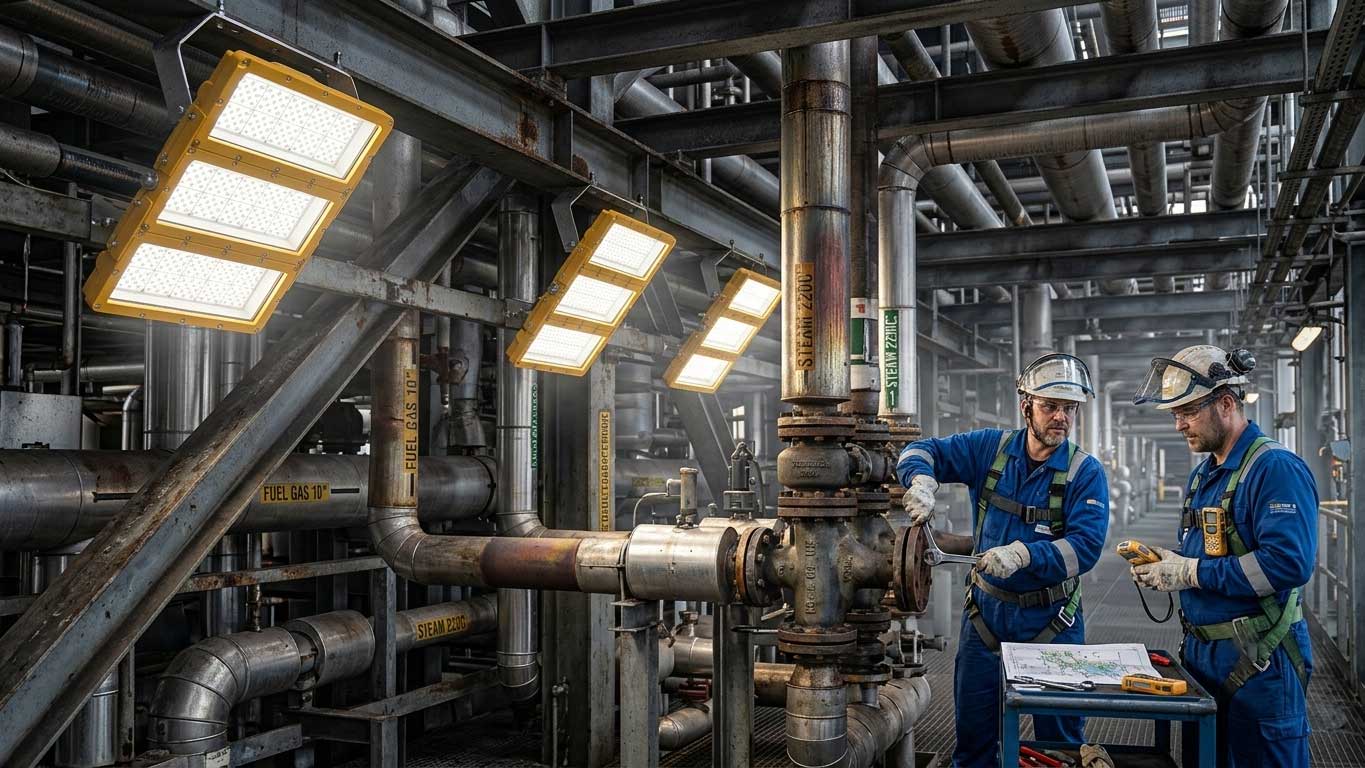
A typical batten light may carry markings such as:
Ex db eb IIC T5 Gb
At first glance, these markings look complicated.
They actually provide essential safety information.
| Marking | Meaning |
|---|---|
| Ex | Explosion protected |
| db | Flameproof protection |
| eb | Increased safety |
| IIC | Gas group |
| T5 | Temperature class |
| Gb | Equipment protection level |
The certification marking determines where the luminaire can safely operate.
Certain gases ignite at relatively low temperatures.
For this reason, hazardous lighting uses temperature classifications.
| Class | Maximum Surface Temperature |
|---|---|
| T1 | 450°C |
| T2 | 300°C |
| T3 | 200°C |
| T4 | 135°C |
| T5 | 100°C |
| T6 | 85°C |
Many hazardous area batten lights carry T4 or T5 ratings.
Several years ago, I watched a project delay caused entirely by an incorrect temperature classification.
The fixture met every other requirement.
One line on the certification label stopped the installation.
Older facilities often used fluorescent battens.
These systems required:
Modern LED battens offer:
According to the International Energy Agency, LED lighting remains the most energy-efficient mainstream lighting technology.
Source:
For hazardous facilities, maintenance reduction is often more valuable than energy savings.
People often assume explosions are the greatest threat.
In reality, corrosion destroys far more fixtures.
Common environmental challenges include:
During an inspection at a coastal terminal, I found several luminaires with functioning LED modules but severely corroded hardware.
The electronics survived.
The environment attacked everything else.
This is why many hazardous battens use:
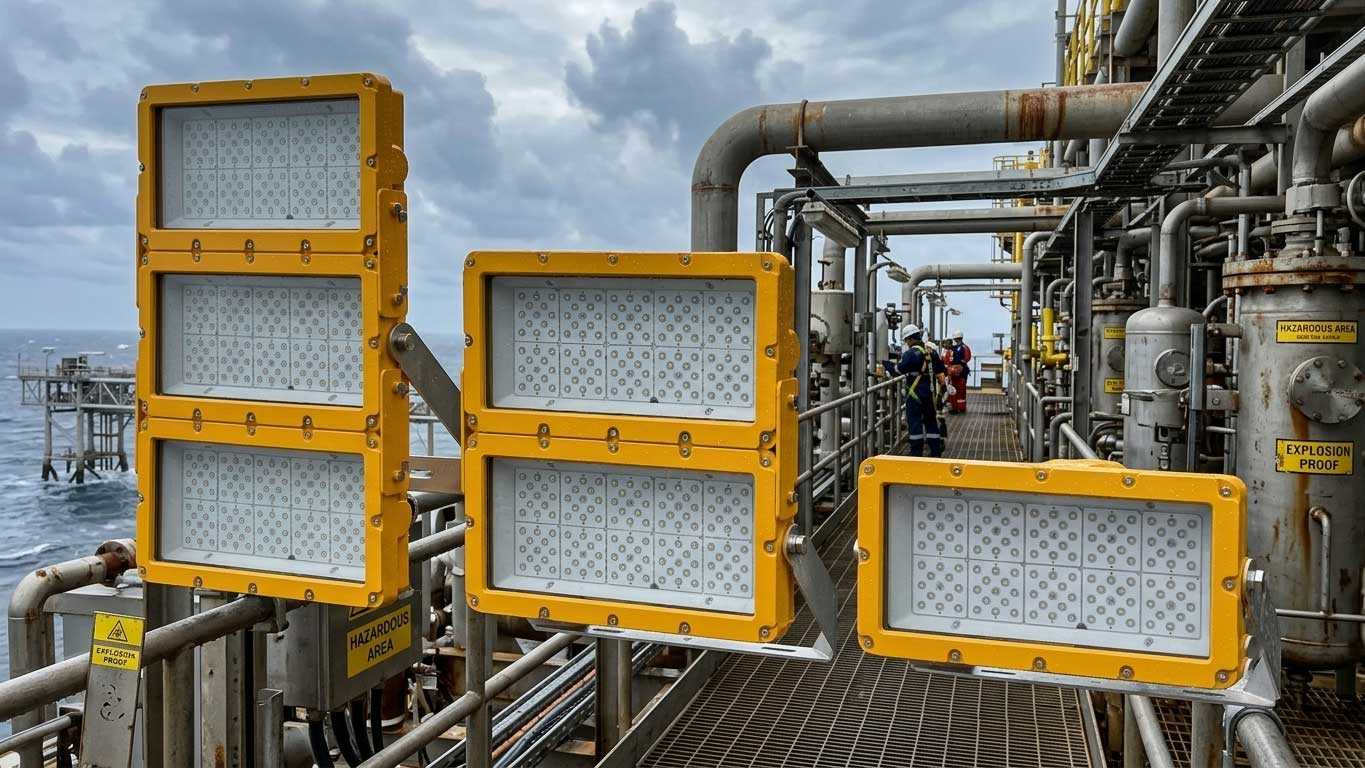
Modern LED batten fixtures typically provide:
Actual life depends on:
According to the U.S. Department of Energy, quality LED systems significantly outperform traditional technologies in lifespan and efficiency.
Source:
https://www.energy.gov/eere/ssl/led-basics
One maintenance manager once told me:
“The LEDs survive. Everything around them decides how long the fixture lasts.”
Many buyers expect lumen output to be the primary concern.
It rarely is.
Most engineers prioritize:
Brightness often comes later.
Reliability comes first.
At SEEKINGLED, hazardous lighting projects usually begin with questions such as:
The most successful installations often share one characteristic.
Nobody talks about the lighting after commissioning.
The fixtures continue operating.
Maintenance visits decrease.
Inspections pass.
And operations continue.
Quiet reliability is usually the best result.
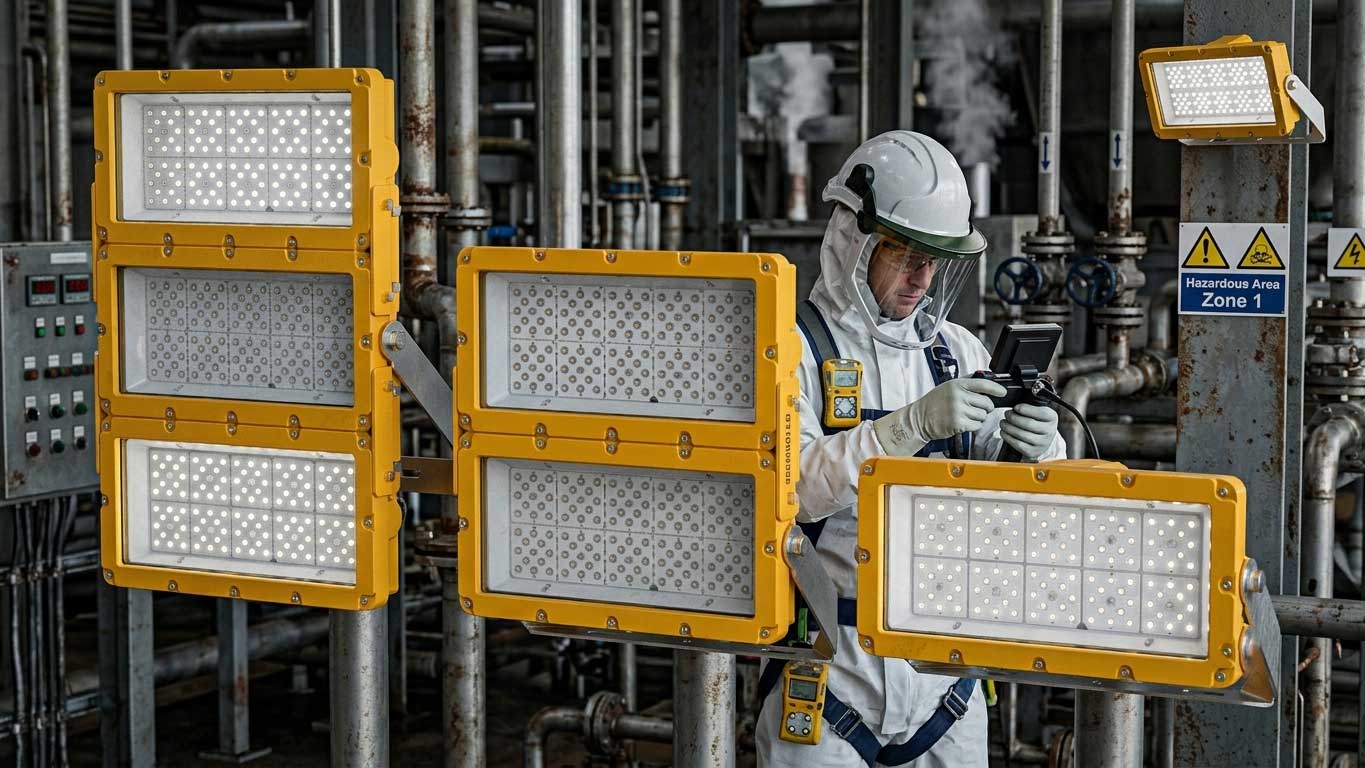
Hazardous area batten lights are certified linear luminaires designed to safely illuminate locations where flammable gases or combustible dust may be present.
Many are explosion protected through flameproof, increased safety, or other certified protection methods.
They are widely used in refineries, offshore platforms, chemical plants, fuel terminals, and industrial walkways.
Most quality fixtures provide between 50,000 and 100,000 operating hours.
Their linear design produces uniform illumination and reduces dark areas.
So, What Are Hazardous Area Batten Lights?
They are certified industrial luminaires designed to provide safe, reliable illumination in locations where explosive atmospheres may occur.
Their value does not come from appearance.
It comes from reliability.
In refineries, offshore platforms, chemical plants, and industrial facilities, hazardous area batten lights quietly perform one of the most important jobs in the entire lighting system.
They help people work safely.
Every shift.
Every day.
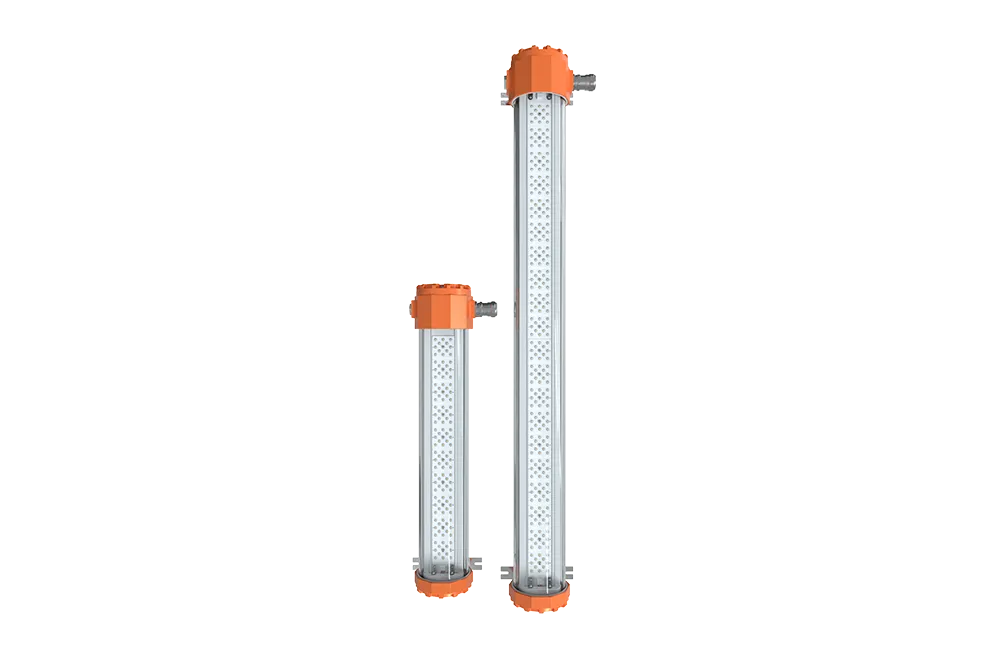
SEEKINGLED LED Linear Explosion Proof Light and Explosion Proof lighting is ATEX and IECEx certified for Zone 1, Zone 2, Zone 21 and Zone 22 hazardous locations, built for long-term industrial use.
View details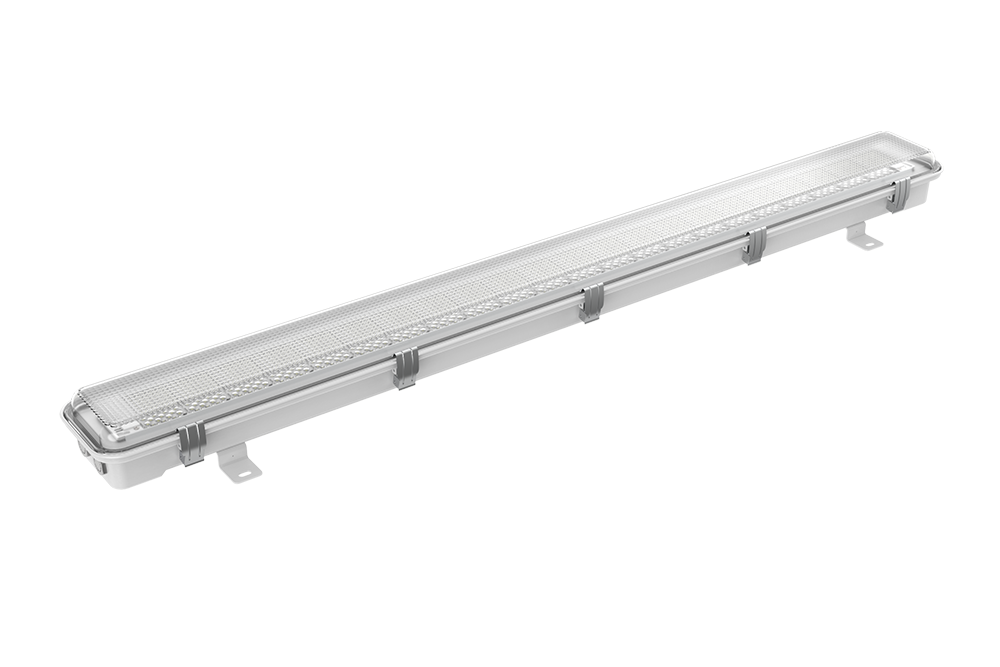
LED Linear Explosion Proof Lights and EX Proof lights for Zone 1, Zone 2, Zone 21 and Zone 22 hazardous areas. ATEX & IECEx certified explosion proof LED linear lighting with emergency function, adjustable power and IP67 protection by SEEKINGLED.
View details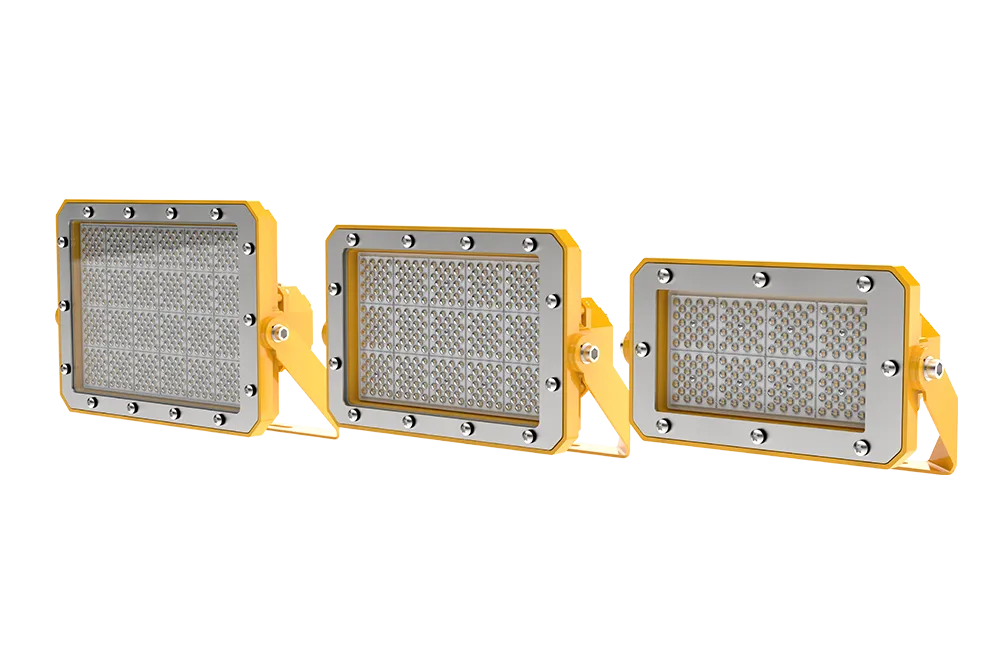
SEEKINGLED LED Explosion Proof Flood Lights are ATEX certified for Zone 2 and Zone 22 hazardous areas, offering high efficiency, adjustable power and integrated junction box.
View details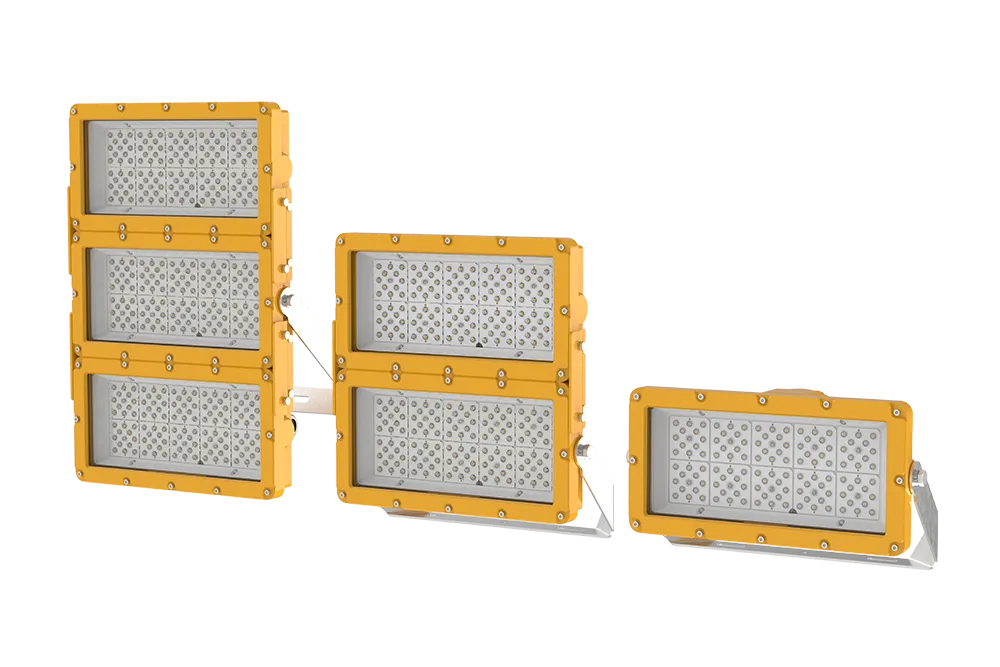
SEEKINGLED LED Explosion Proof Flood Lights are flameproof ATEX and IECEx certified for Zone 1 and Zone 2 hazardous areas, offering high power, adjustable output and long service life.
View details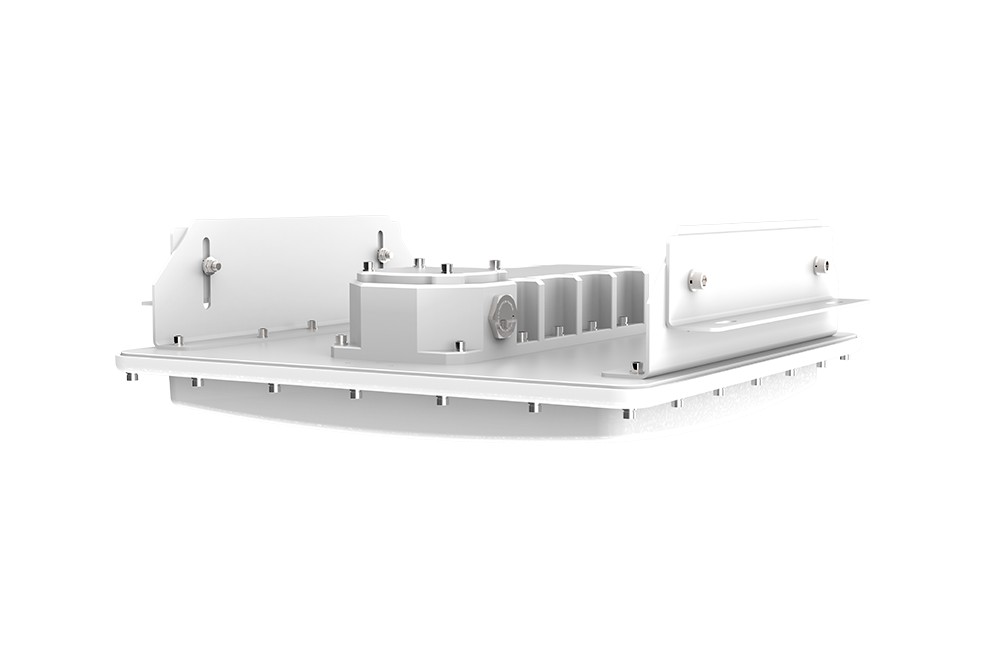
SEEKINGLED LED Gas Station Canopy Lights are ATEX certified for Zone 2 and Zone 22 hazardous areas, featuring adjustable power and built-in explosion-proof junction box.
View details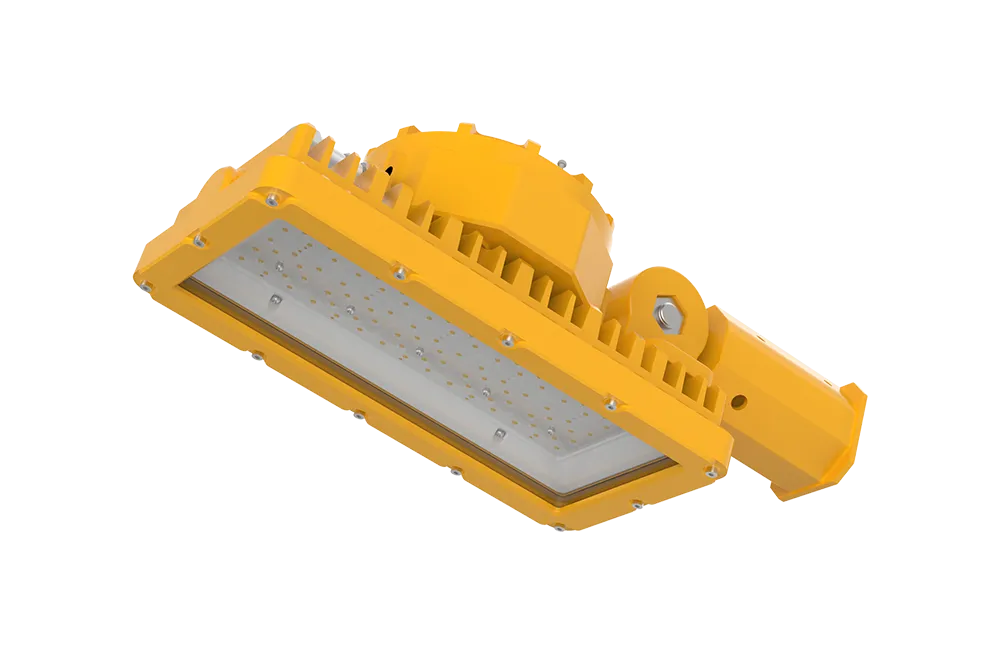
ATEX: Ex II 2G Ex db IIB T6/T5 GbEx II 2D Ex tb IIIC T80°C/ T95°C Db IECEx Ex db IIB T6 Gb;Ex tb IIIC T80°C Db Feature: ● For Zone 1,2 and Zone 21,22● Flameproof type, the strongest● 100W can replace 250W HID,energy saving● Power:60W,80W,100W Application: Oil and gas, marine, Chemical, pharmaceutical, semiconductor,mining,military industr…
View details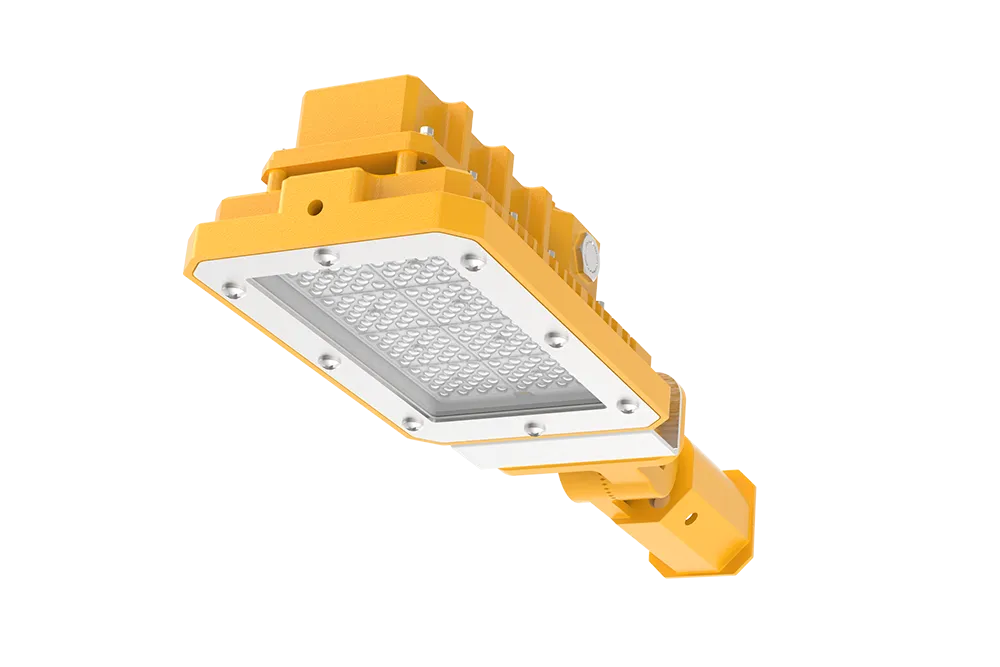
ATEX: II 3G Ex nR ⅡC T5/T6 GcII 3D Ex tc ⅢC T80℃/T95℃Dc ATEX Certificate NO: TÜV CY 26 ATEX 0207611 X Feature: ● For Zone 2 and Zone 22● 150W can replace 250W HID lamps,Energy saving● Power:50W,75W,100W,150W,200W Application: Oil and gas, marine, Chemical, pharmaceutical, semiconductor,mining,military industry, paint booth,power plant ETC…
View details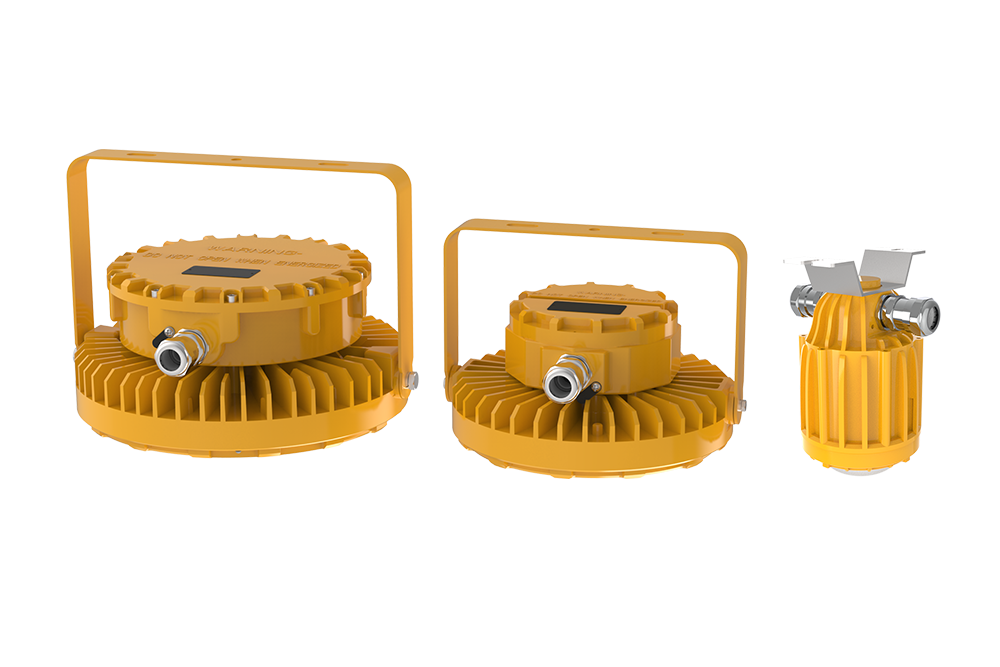
LED explosion proof high bay lights are designed for Zone 1, Zone 2, Zone 21 and Zone 22 hazardous areas. This page introduces the HB21 Series from SEEKING, including certifications, power options and real application considerations.
View details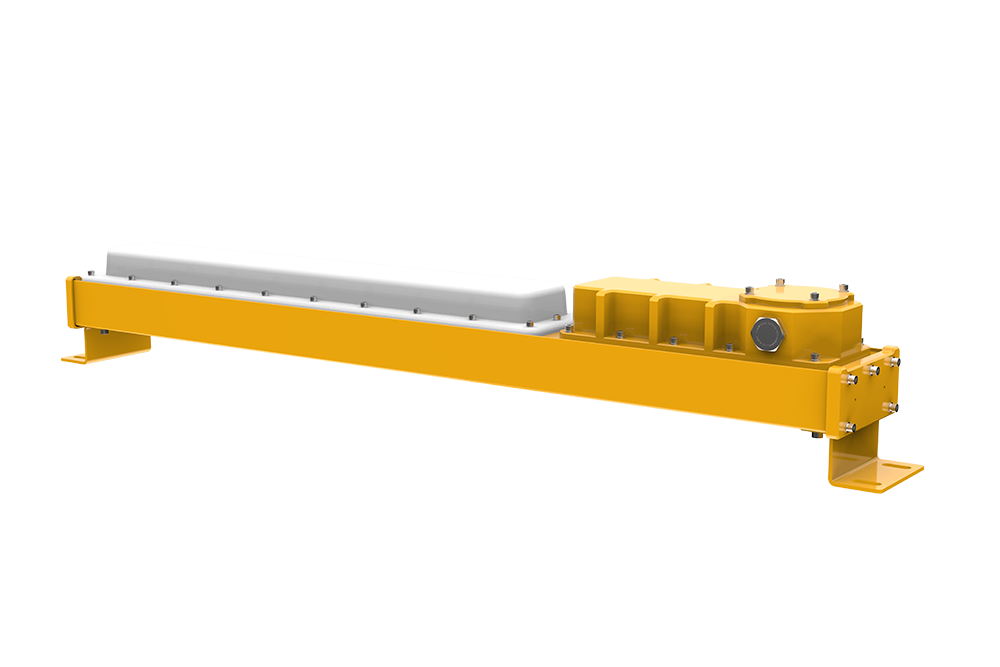
LED Linear Explosion Proof Lights from SEEKINGLED. LU Series Flame Proof lights ATEX-certified explosion proof LED linear lighting for Zone 2 gas and Zone 22 dust areas, IP69K, IK10, long lifetime and flexible power options.
View details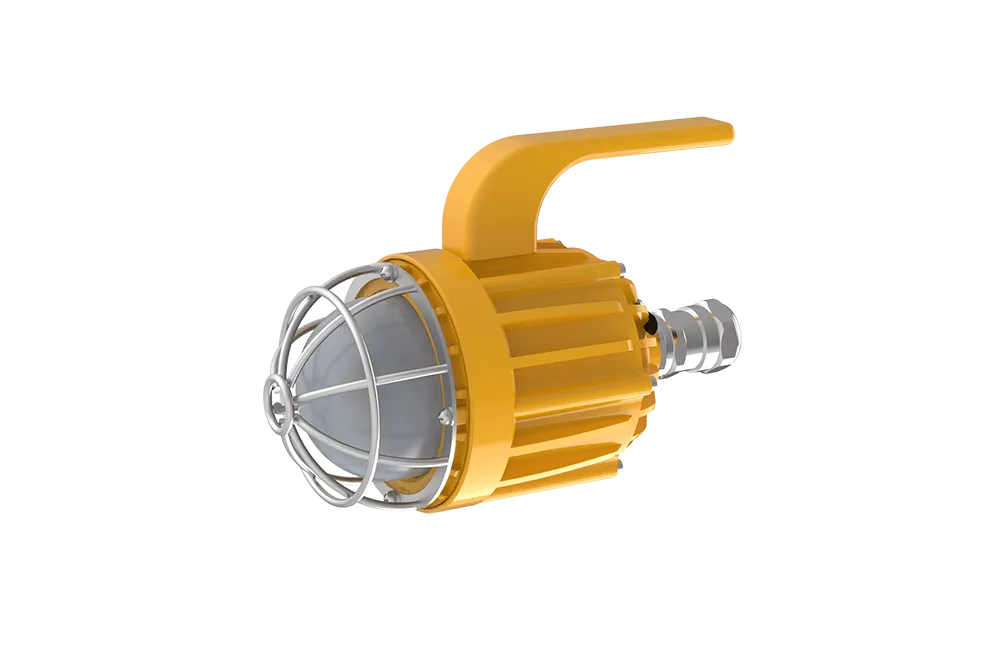
Certified explosion proof work lights for Zone 1 & 21 hazardous areas. Portable, ATEX & IECEx approved, built for oil, gas and chemical plants by SEEKINGLED.
View details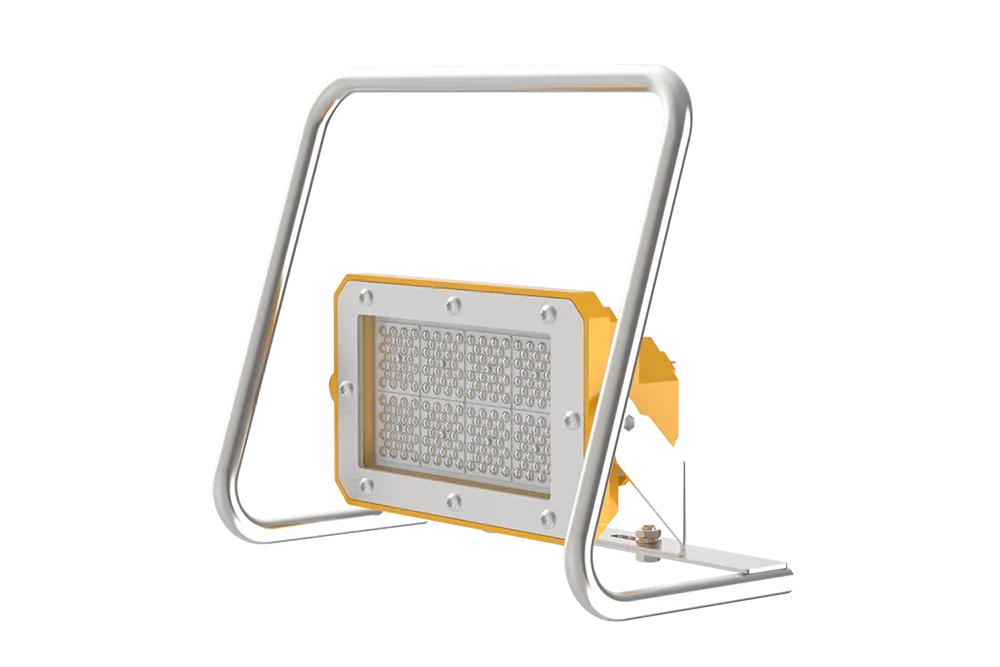
ATEX: II 3G Ex nR ⅡC T6 GcII 3D Ex tc ⅢC T80℃ Dc ATEX Certificate NO: TÜV CY 26 ATEX 0207611 X Feature: ● For Zone 2 and Zone 22● Accepts battery-powered supply● indestructible● Power:AC input:50W,75W,100WDC input:15W,25W,35W Application: Oil and gas, marine, Chemical, pharmaceutical, semiconductor,mining,military industry, paint booth,po…
View details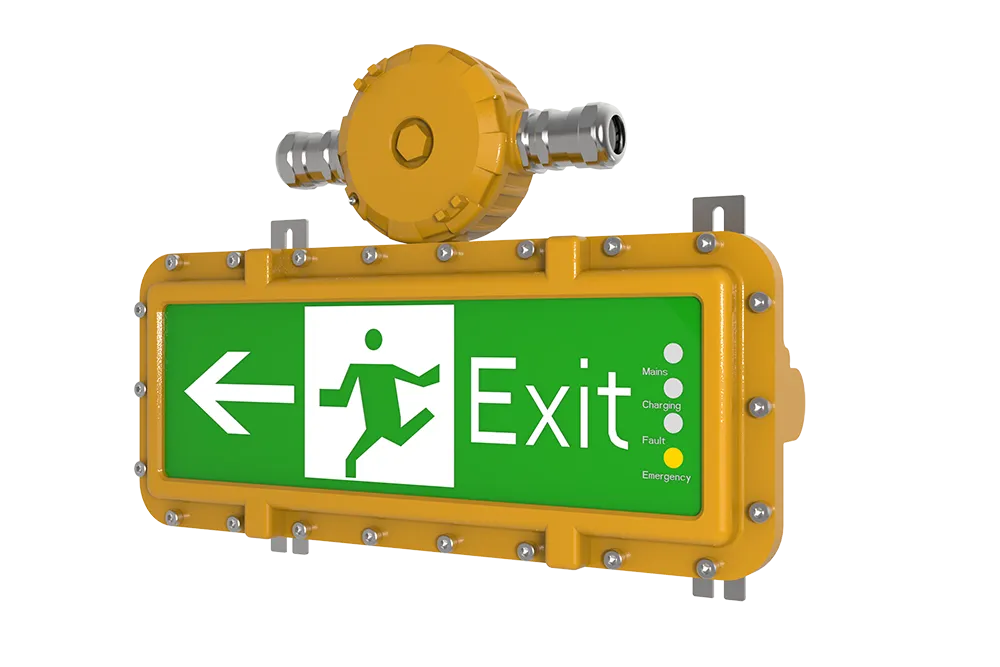
ATEX: Ex II 2G Ex db IIB T6 GbEx II 2D Ex tb IIIC T80°C Db IECEx Ex db IIB T6 Gb;Ex tb IIIC T80°C Db Feature: ● For Zone 1,2 and Zone 21,22● Flameproof type, the strongest Application: Oil and gas, marine, Chemical, pharmaceutical, semiconductor,mining,military industry, paint booth,power plant ETC hazardous area. Technical Specifications:…
View details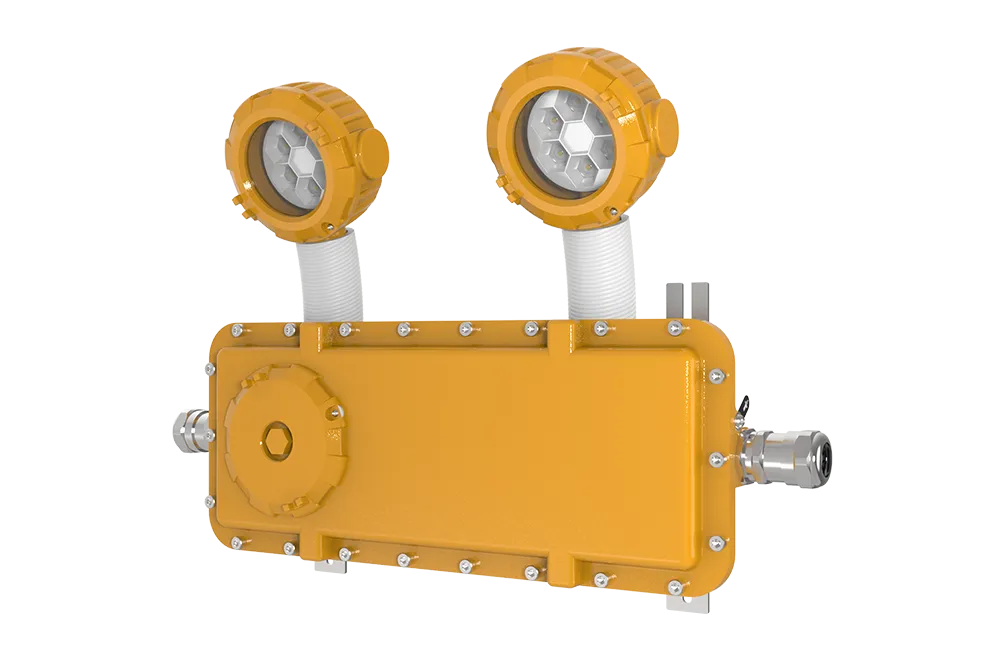
ATEX: Ex II 2G Ex db IIB T6 GbEx II 2D Ex tb IIIC T80°C Db IECEx Ex db IIB T6 Gb;Ex tb IIIC T80°C Db Feature: ● For Zone 1,2 and Zone 21,22● Flameproof type, the strongest Application: Oil and gas, marine, Chemical, pharmaceutical, semiconductor,mining,military industry, paint booth,power plant ETC hazardous area. Technical Specifications:…
View details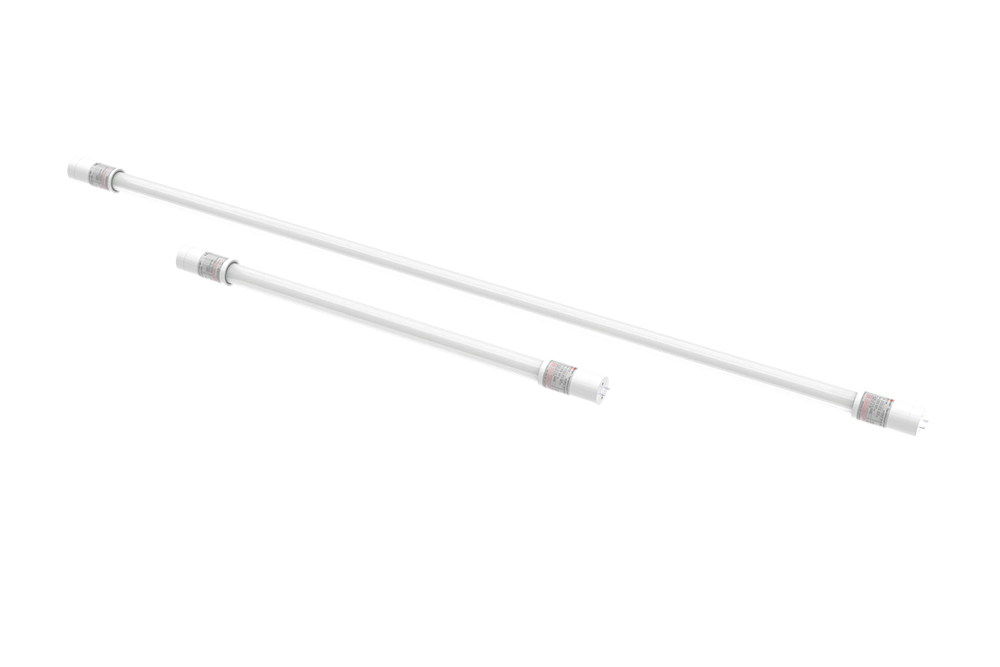
ATEX: Ex II 2G Ex d e IIB T6 Gb ATEX: Ex d e IIB T6 Gb; Feature: ● For Zone 1,2● 9W can replace 18W fluorescent lamps,50% Energy saving Application: Oil and gas, marine, Chemical, pharmaceutical, semiconductor,mining,military industry, paint booth,power plant ETC hazardous area. Technical Specifications: Standards:60079-0, 60079-1, 60079…
View details
Ex proof lighting explained with real job site experience, certification rules, and safety insights. Learn how SEEKINGLED delivers reliable hazardous area lighting.
View details
LED industrial high bay lights designed for warehouses, workshops and logistics hubs. Discover how SEEKINGLED HBF Series reduces energy cost, improves reliability and simplifies industrial lighting upgrades.
View details
Explosion proof lights factory explained: certifications, production process, and real quality control insights. Learn how SEEKINGLED ensures safety and reliability.
View details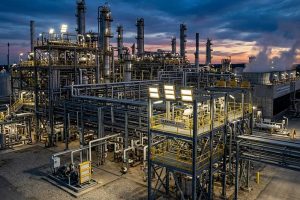
Hazardous lighting ensures safe illumination in explosive environments. Learn standards, real applications, and how to choose reliable hazardous lighting solutions.
View details