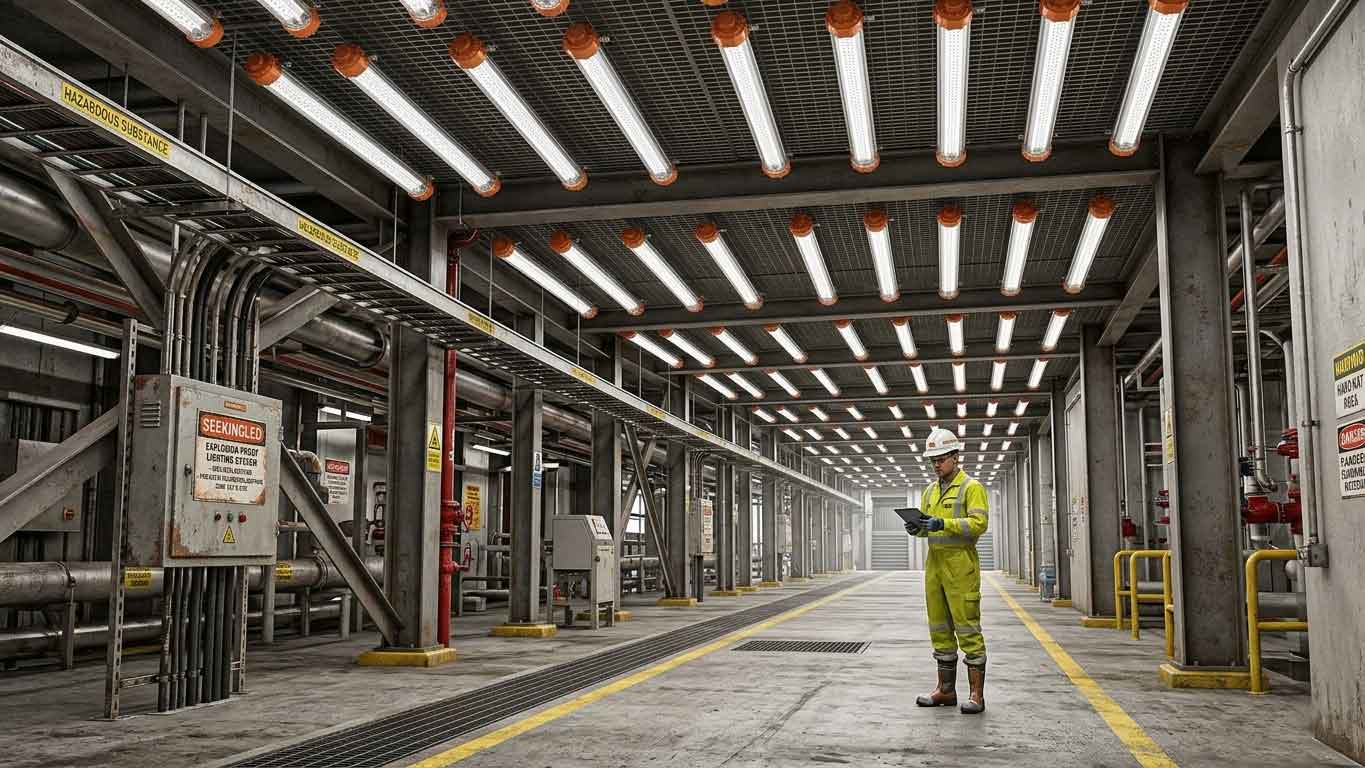
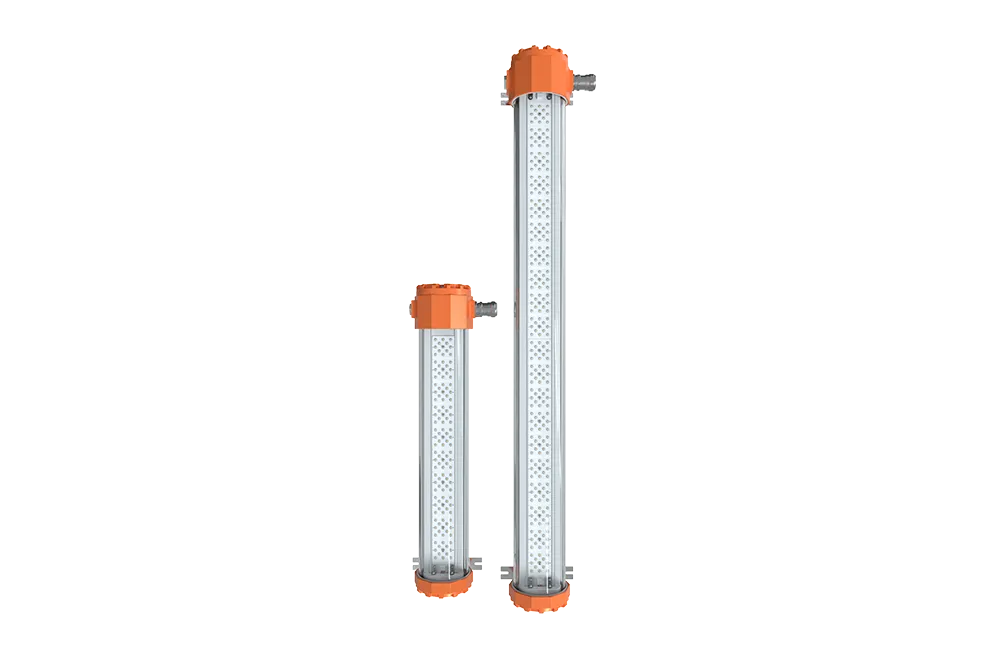
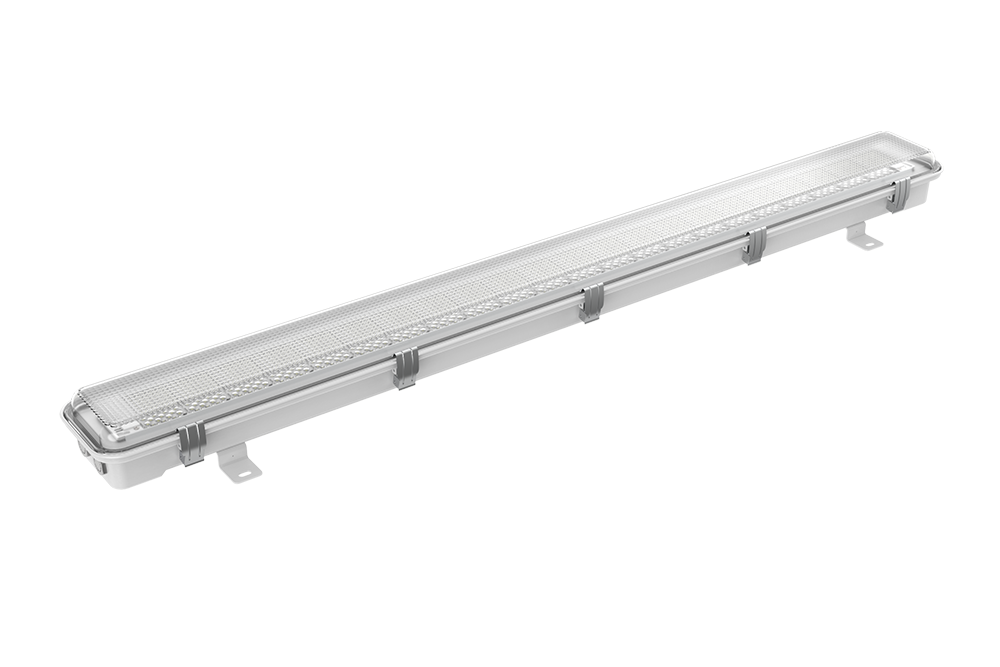
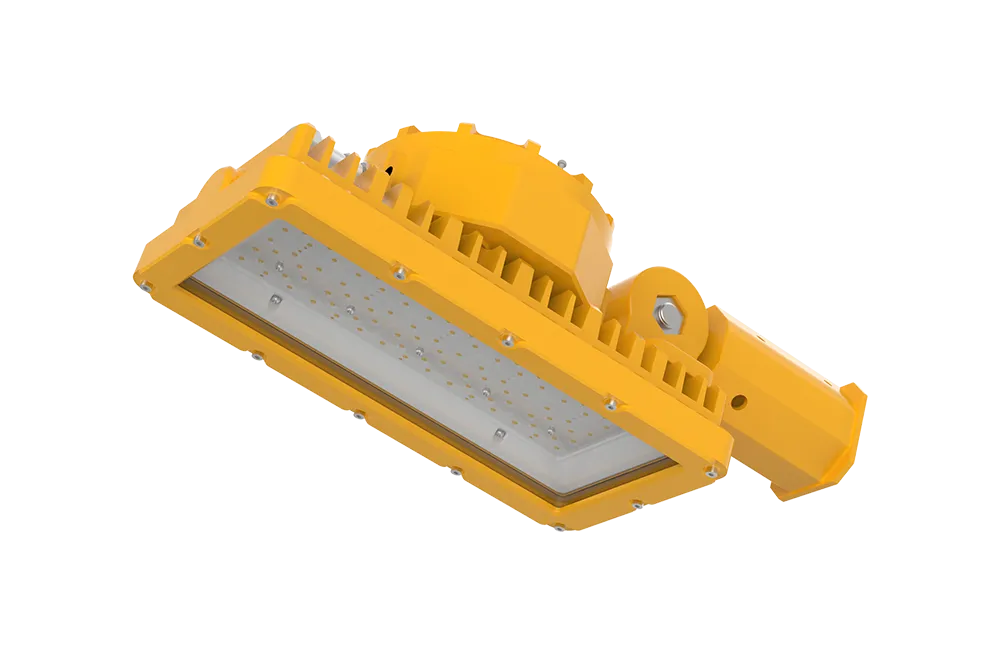
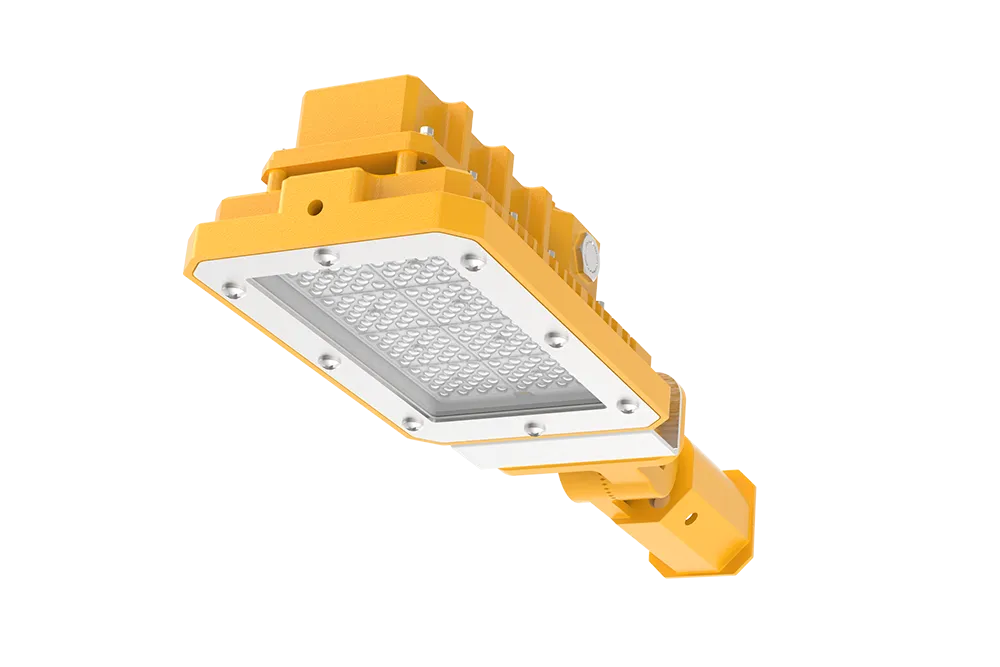
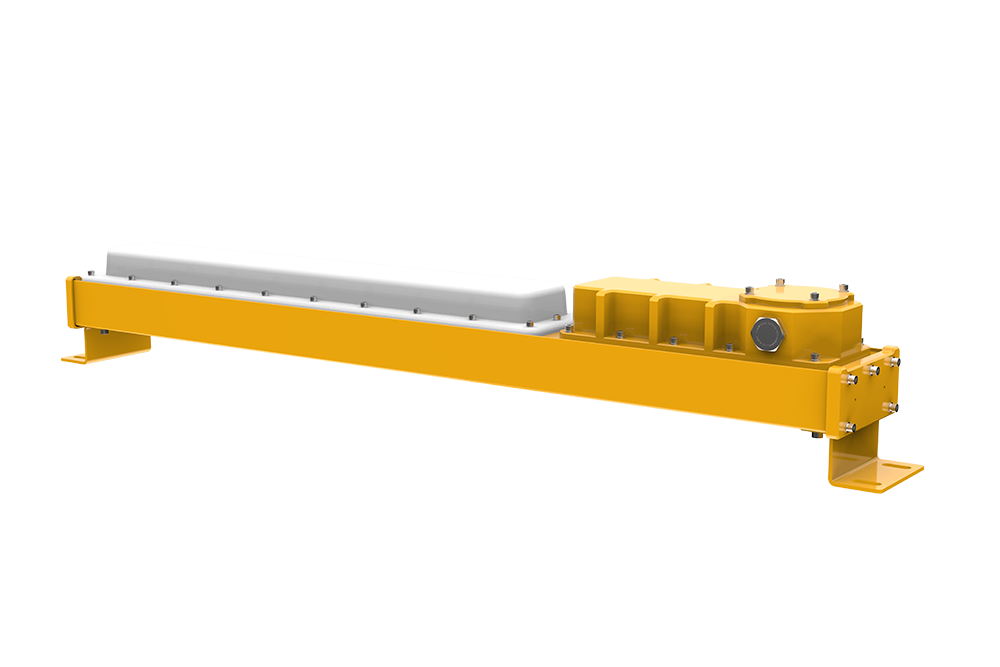
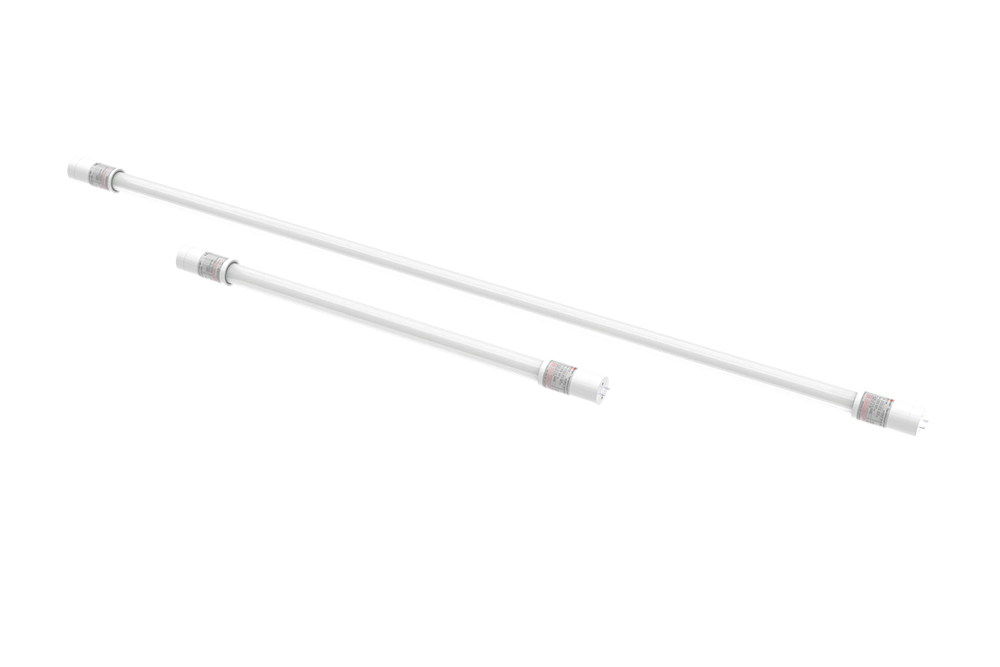
Explosion proof LED linear lighting provides long, uniform, and certified-safe illumination in hazardous environments, using sealed housings and controlled flame paths to prevent ignition of flammable gases or dust.
That’s the official definition. But in real projects, it’s not about “lighting”—it’s about whether the fixture quietly survives years of vapor, dust, pressure, and cleaning cycles… without becoming a failure point.
what makes explosion proof led linear lighting different
Not just elongated fixtures
Linear lighting is often misunderstood as simply “longer lamps.” In hazardous zones, that assumption leads to poor decisions.
Explosion-proof linear lights must:
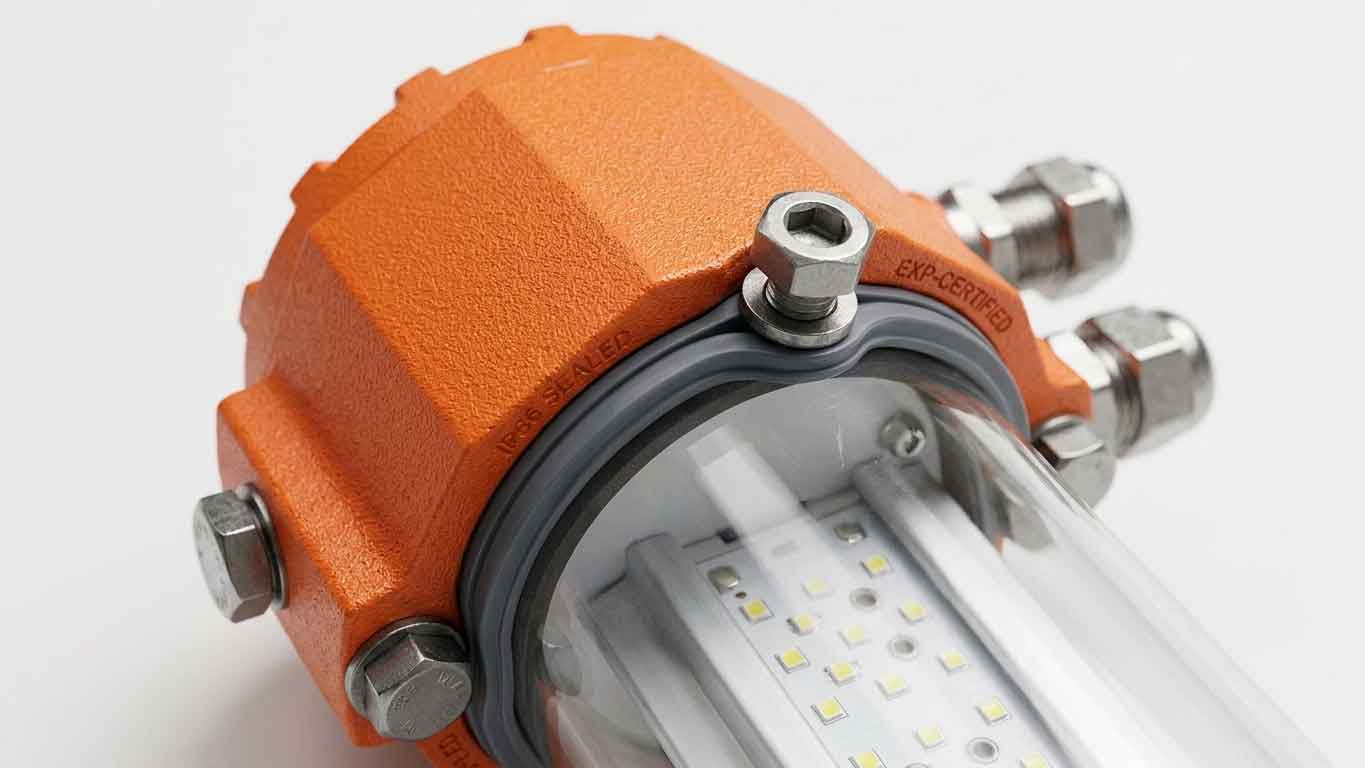
Contain internal ignition sources
Dissipate heat along extended housings
Maintain sealing consistency across longer joints
According to IEC 60079-1 (Flameproof Enclosures), the enclosure must withstand internal explosion pressure and prevent flame propagation externally. Linear structures increase this challenge due to extended sealing surfaces.
Why linear format is used anyway
Despite complexity, linear designs are widely adopted because they solve real problems:
Eliminate shadow zones in long workspaces
Provide uniform lux distribution (critical in inspection tasks)
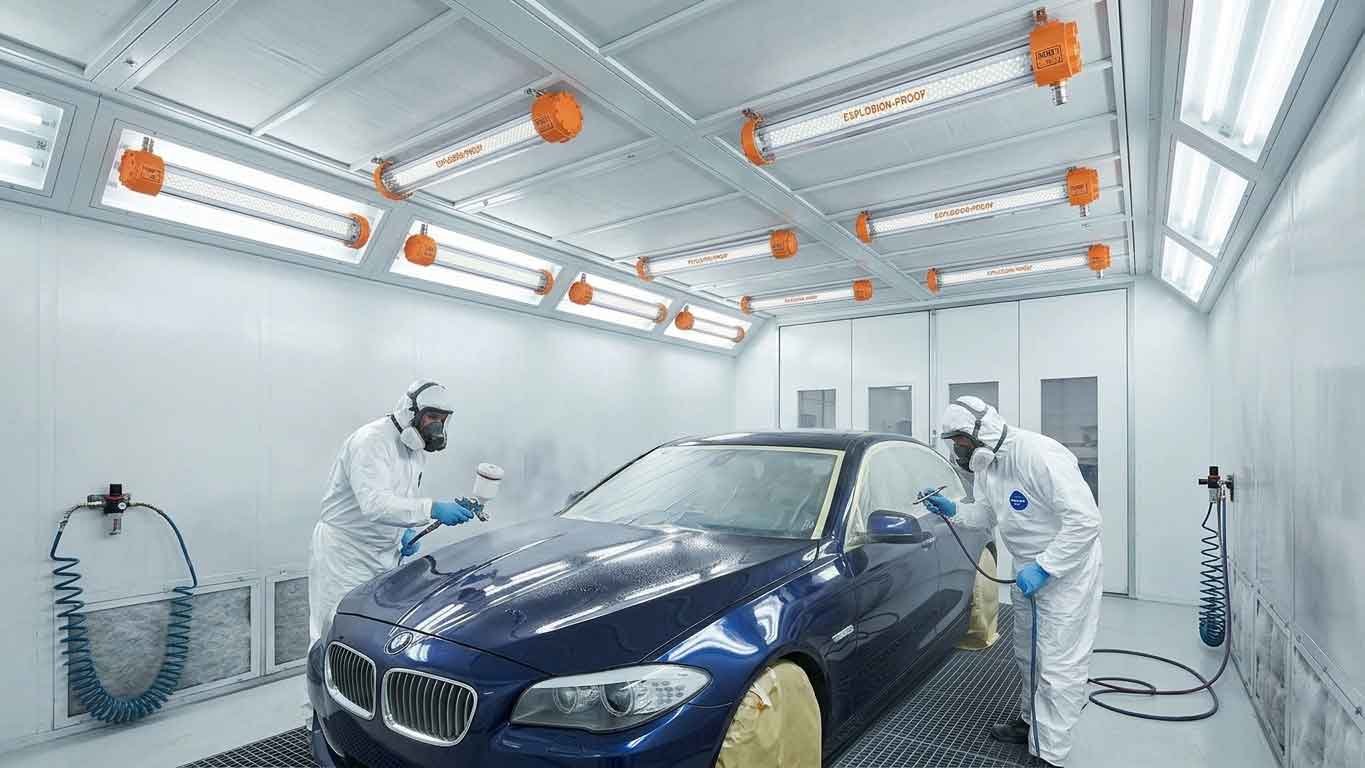
In one automotive coating line I worked on, switching from point-source fixtures to linear explosion-proof lighting reduced shadow defects during inspection by roughly 22%—not a small margin when repaint costs are involved.
Why aluminum? The Aluminum Association notes its superior thermal conductivity, which directly impacts LED lifespan and stability.
But casting quality matters more than material label. Poor density leads to:
Micro leakage paths
Reduced explosion containment
Structural fatigue under vibration
I’ve rejected batches where porosity wasn’t visible—only revealed under pressure testing.
2. Continuous sealing system
Linear lights introduce longer sealing paths, which increases failure risk.
Typical design includes:
Silicone or fluororubber gaskets
Precision-machined joints
IP66–IP69K protection levels
According to IP rating standards (IEC 60529):
IP66 → protection against powerful water jets
IP69K → high-pressure, high-temperature washdown
This becomes critical in environments like paint booths or food-grade facilities.
3. Heat dissipation along length
Unlike compact fixtures, linear lights distribute heat over a longer surface.
Advantages:
Lower hotspot temperature
Improved LED longevity
Stable lumen output over time
Field data from U.S. Department of Energy (DOE) shows LED lifetime drops significantly when junction temperature increases—thermal management isn’t optional.
4. Optical uniformity
Linear fixtures use:
Diffused lenses
Wide beam distribution (typically 120°)
Result:
Even lux levels
Reduced glare
Better visual comfort
In inspection environments, uneven lighting is often mistaken for product defects—something engineers learn the hard way.
where explosion proof led linear lighting is actually used
Common hazardous applications
From real deployments:
Paint spray booths (VOC vapor zones)
Chemical processing plants
Oil & gas pipelines
Grain storage facilities (dust explosion risk)
Pharmaceutical cleanrooms
According to NFPA 33 (Spray Application Using Flammable Materials), spray booth environments require explosion-proof electrical equipment due to vapor ignition risks.
performance comparison: linear vs traditional explosion proof lighting
Feature
Linear Lighting
Traditional Fixtures
Light distribution
Uniform
Spot-based
Installation count
Lower
Higher
Maintenance
Easier (modular)
More frequent
Energy efficiency
Higher overall
Moderate
how SEEKINGLED approaches explosion proof led linear lighting
Engineering beyond certification
SEEKINGLED linear explosion-proof systems are not just compliant—they’re built for field realities.
In one retrofit project in a solvent storage facility, replacing legacy fixtures with SEEKINGLED linear systems reduced maintenance interventions by over 40% within 18 months.
Installation flexibility
Linear fixtures support:
Ceiling mounting
Suspended installation
Wall alignment
This matters more than it sounds—improper mounting angles often create shadow zones even with high lumen output.
common mistakes when selecting linear explosion proof lighting
1. Focusing only on wattage
Higher wattage ≠ better visibility. Uniformity matters more than raw output.
2. Ignoring certification details
Look for:
Ex db / Ex eb markings
Temperature class (T4, T5, T6)
Certification is not decoration—it defines where the fixture can legally operate.
3. Underestimating environment
Factors often missed:
Humidity cycles
Chemical corrosion
Cleaning frequency
I’ve seen perfectly “certified” lights fail within a year because no one accounted for daily high-pressure washdowns.
faq about explosion proof led linear lighting
Are linear explosion proof lights better than round fixtures?
Not always. They’re better for long, continuous spaces but unnecessary for compact areas.
Can they be used outdoors?
Yes, if rated IP66 or higher and corrosion-resistant.
Do they consume more energy?
No. In many cases, they reduce total energy use by requiring fewer fixtures.
SEEKINGLED LED Linear Explosion Proof Light and Explosion Proof lighting is ATEX and IECEx certified for Zone 1, Zone 2, Zone 21 and Zone 22 hazardous locations, built for long-term industrial use.
LED Linear Explosion Proof Lights and EX Proof lights for Zone 1, Zone 2, Zone 21 and Zone 22 hazardous areas. ATEX & IECEx certified explosion proof LED linear lighting with emergency function, adjustable power and IP67 protection by SEEKINGLED.
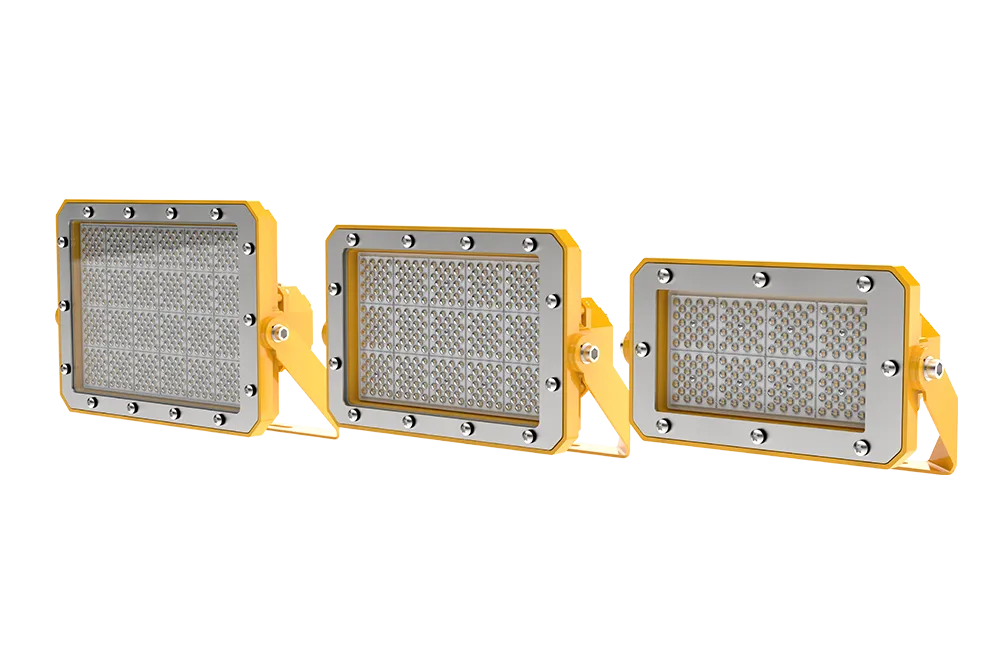
SEEKINGLED LED Explosion Proof Flood Lights are ATEX certified for Zone 2 and Zone 22 hazardous areas, offering high efficiency, adjustable power and integrated junction box.
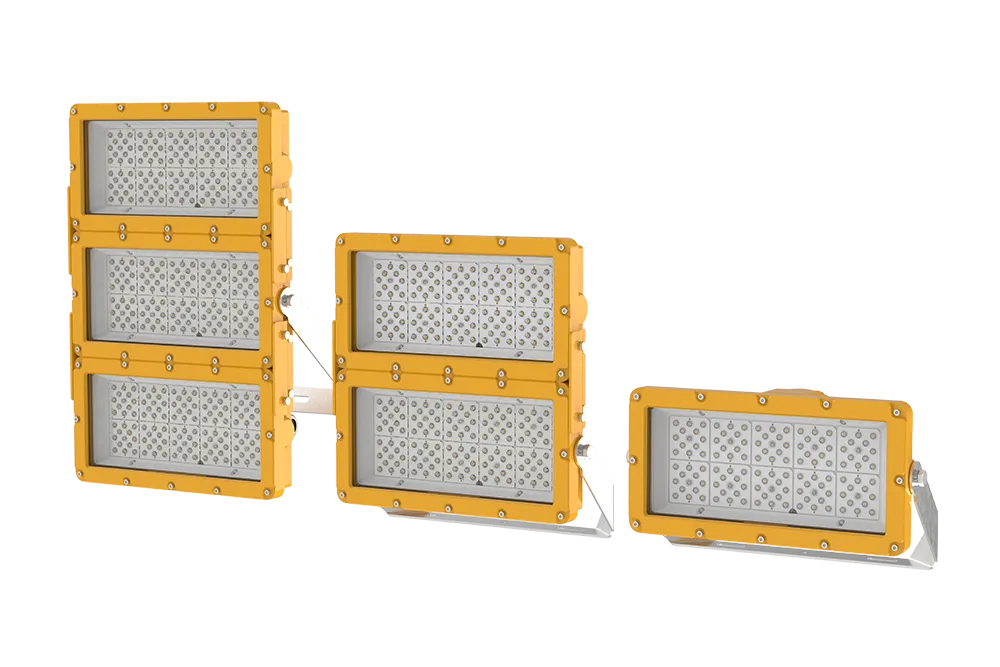
SEEKINGLED LED Explosion Proof Flood Lights are flameproof ATEX and IECEx certified for Zone 1 and Zone 2 hazardous areas, offering high power, adjustable output and long service life.
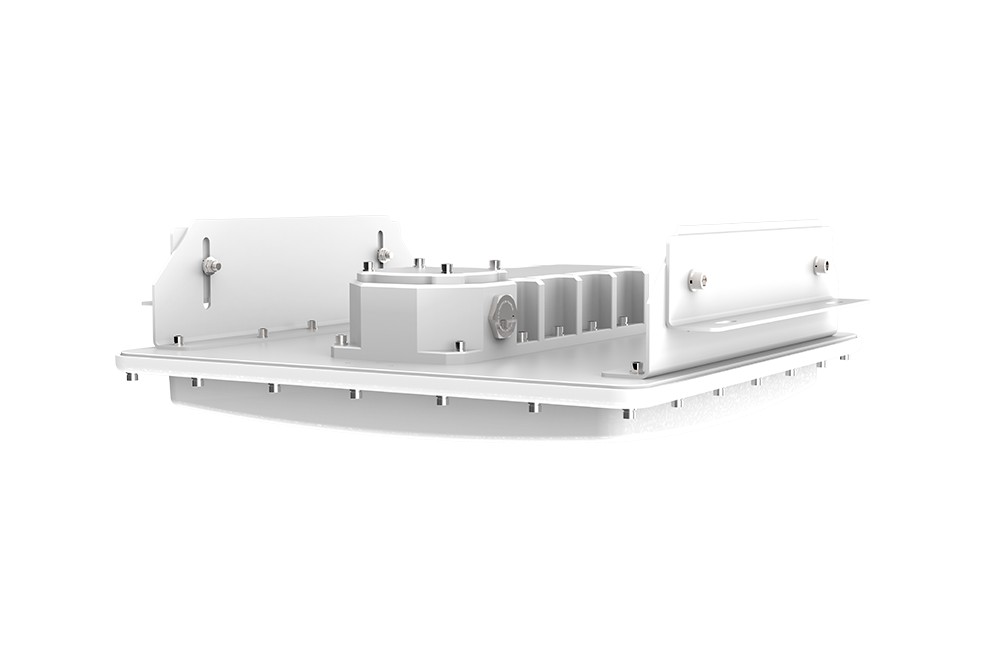
SEEKINGLED LED Gas Station Canopy Lights are ATEX certified for Zone 2 and Zone 22 hazardous areas, featuring adjustable power and built-in explosion-proof junction box.
ATEX: Ex II 2G Ex db IIB T6/T5 GbEx II 2D Ex tb IIIC T80°C/ T95°C Db IECEx Ex db IIB T6 Gb;Ex tb IIIC T80°C Db Feature: ● For Zone 1,2 and Zone 21,22● Flameproof type, the strongest● 100W can replace 250W HID,energy saving● Power:60W,80W,100W Application: Oil and gas, marine, Chemical, pharmaceutical, semiconductor,mining,military industr…
ATEX: II 3G Ex nR ⅡC T5/T6 GcII 3D Ex tc ⅢC T80℃/T95℃Dc ATEX Certificate NO: TÜV CY 26 ATEX 0207611 X Feature: ● For Zone 2 and Zone 22● 150W can replace 250W HID lamps,Energy saving● Power:50W,75W,100W,150W,200W Application: Oil and gas, marine, Chemical, pharmaceutical, semiconductor,mining,military industry, paint booth,power plant ETC…
LED explosion proof high bay lights are designed for Zone 1, Zone 2, Zone 21 and Zone 22 hazardous areas. This page introduces the HB21 Series from SEEKING, including certifications, power options and real application considerations.
LED Linear Explosion Proof Lights from SEEKINGLED. LU Series Flame Proof lights ATEX-certified explosion proof LED linear lighting for Zone 2 gas and Zone 22 dust areas, IP69K, IK10, long lifetime and flexible power options.
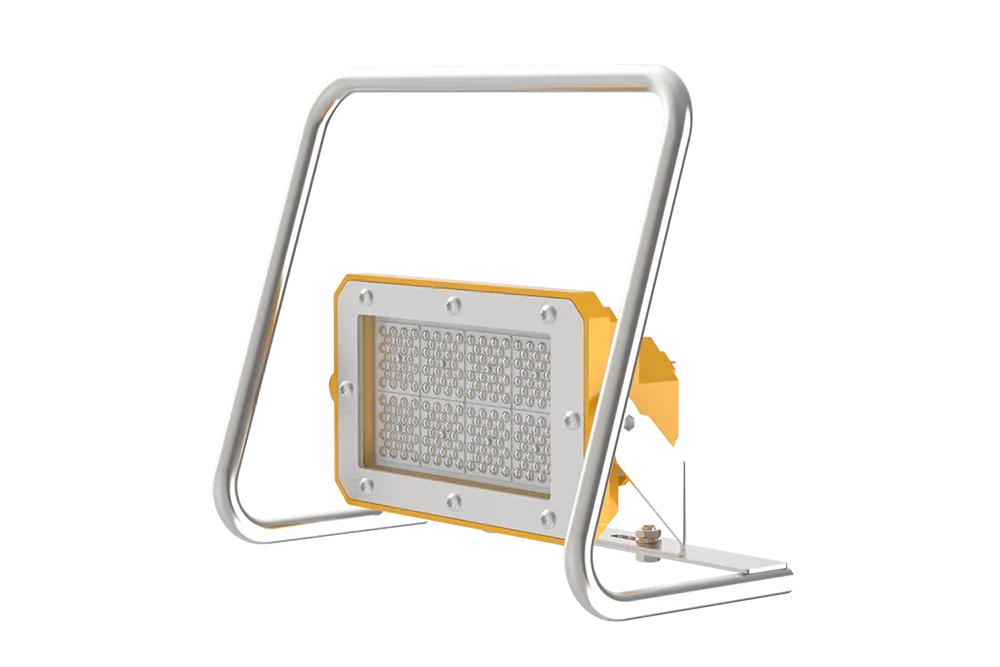
Certified explosion proof work lights for Zone 1 & 21 hazardous areas. Portable, ATEX & IECEx approved, built for oil, gas and chemical plants by SEEKINGLED.
ATEX: II 3G Ex nR ⅡC T6 GcII 3D Ex tc ⅢC T80℃ Dc ATEX Certificate NO: TÜV CY 26 ATEX 0207611 X Feature: ● For Zone 2 and Zone 22● Accepts battery-powered supply● indestructible● Power:AC input:50W,75W,100WDC input:15W,25W,35W Application: Oil and gas, marine, Chemical, pharmaceutical, semiconductor,mining,military industry, paint booth,po…
ATEX: Ex II 2G Ex db IIB T6 GbEx II 2D Ex tb IIIC T80°C Db IECEx Ex db IIB T6 Gb;Ex tb IIIC T80°C Db Feature: ● For Zone 1,2 and Zone 21,22● Flameproof type, the strongest Application: Oil and gas, marine, Chemical, pharmaceutical, semiconductor,mining,military industry, paint booth,power plant ETC hazardous area. Technical Specifications:…
ATEX: Ex II 2G Ex db IIB T6 GbEx II 2D Ex tb IIIC T80°C Db IECEx Ex db IIB T6 Gb;Ex tb IIIC T80°C Db Feature: ● For Zone 1,2 and Zone 21,22● Flameproof type, the strongest Application: Oil and gas, marine, Chemical, pharmaceutical, semiconductor,mining,military industry, paint booth,power plant ETC hazardous area. Technical Specifications:…
ATEX: Ex II 2G Ex d e IIB T6 Gb ATEX: Ex d e IIB T6 Gb; Feature: ● For Zone 1,2● 9W can replace 18W fluorescent lamps,50% Energy saving Application: Oil and gas, marine, Chemical, pharmaceutical, semiconductor,mining,military industry, paint booth,power plant ETC hazardous area. Technical Specifications: Standards:60079-0, 60079-1, 60079…
Black Housing LED High Bay for Warehouse Lighting was required in a Danish warehouse. This project record documents how XJ-HBK130W was selected to meet aesthetic requirements while improving efficiency and reducing shipping cost.
Discover what is high bay LED lighting, how it works, where it is used, and why industries choose LED high bay solutions for efficient commercial illumination.
 Seeking LED