 Seeking LED
What Is the Difference Between Spot and Flood LED Lights?
83What is the difference between spot and flood LED lights? Learn beam angles, brightness, and real-world uses to choose the right lighting with SEEKINGLED expert tips.
View detailsSearch the whole station
what is a flood light bulb? A flood light bulb is a directional lamp designed to spread bright light across a relatively broad area rather than concentrate it into a narrow beam. It is commonly used for yards, driveways, building exteriors, signs, security areas, and architectural lighting.
The word “flood” describes the light distribution, not simply the wattage or brightness. The Illuminating Engineering Society defines a floodlight as a projector that illuminates a scene or object substantially brighter than its surroundings, with beam spreads ranging from about 10° to more than 100°.
That distinction matters when choosing an LED flood light. Two lamps can produce similar lumen output but illuminate a property very differently because their beam angles, optics, mounting heights, and aiming directions are different.
At SEEKINGLED, this is one of the first things we check when evaluating an exterior lighting application. A lamp that looks powerful on a specification sheet can perform poorly if its beam is too narrow for the area. On the other hand, an excessively wide beam can waste useful light beyond the target.
A conventional household bulb is often designed to provide general illumination around a room. A flood light bulb is designed to send a larger proportion of its useful light in a controlled direction.
Typical flood light characteristics include:
The U.S. Department of Energy explains that lumens measure total visible light output, while watts measure electrical power input. It also notes that LEDs can reach efficacies of 150 lumens per watt or more in specialized applications.
So a 100-watt incandescent bulb and a 15-watt LED flood light should not be compared by wattage alone.
The easiest way to understand the difference is to look at the beam.
| Feature | Flood Light Bulb | Spotlight Bulb |
|---|---|---|
| Beam | Broad | Narrow |
| Main purpose | Area coverage | Concentrated highlighting |
| Typical use | Yard, driveway, facade | Trees, signs, architectural details |
| Light distribution | Wide | Focused |
| Coverage | Larger area | Smaller target |
| Main selection factor | Beam + lumens | Beam + intensity |
DOE lighting guidance gives a useful example: a 25° beam can be considered a narrow flood, while a 60° beam is a wide flood.
This is why searching only for “brightest flood light bulb” can lead to the wrong product.
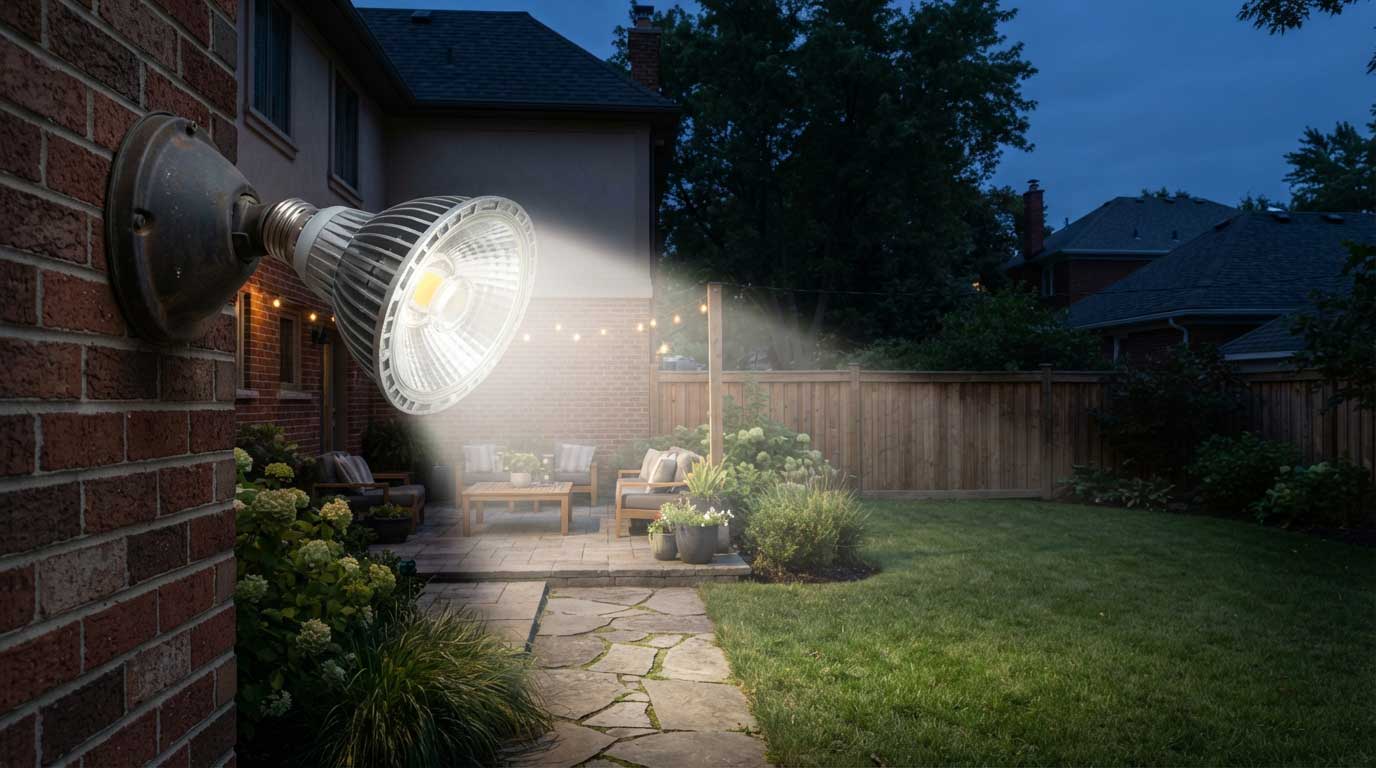
Inside an LED flood light bulb, the LEDs generate light and an optical system helps shape its distribution. Depending on the lamp design, that optical system may use a reflector, lens, or both.
For directional lamps, beam angle is particularly important. DOE’s CALiPER research notes that beam angle is commonly used to describe directional lamp distribution and that flood lamps typically have broader beam angles than spot lamps. It also points out that manufacturers do not always use identical descriptive categories, so the numerical beam angle is more useful for comparison.
This is a practical specification to check when comparing products.
A 40° flood and a 90° flood can have the same nominal lumen output but create very different patterns on a wall or lawn.
Flood light bulbs are useful wherever a relatively broad area needs controlled illumination.
Common applications include:
For large commercial installations, the term “flood light” may refer to a complete luminaire rather than a replaceable bulb. The IES describes floodlighting equipment as aimable luminaires capable of directing controlled light toward a particular surface.
That distinction is important for B2B buyers. A replaceable PAR-style flood lamp is not the same product category as an integrated LED floodlight fixture.
There is no single lumen rating that fits every flood light application.
A rough residential starting point might look like this:
| Application | Typical starting consideration |
|---|---|
| Small entrance or patio | 500–1,000 lumens |
| Backyard security lighting | 700–1,500 lumens |
| Driveway or larger yard | 1,000–3,000 lumens |
| Commercial exterior area | Project-specific |
| Architectural floodlighting | Based on target and photometrics |
These figures are application starting points, not universal lighting standards.
The actual result depends on mounting height, beam angle, target distance, surface reflectance, surrounding darkness, and how evenly the area needs to be illuminated.
IES guidance makes the same practical point in professional floodlighting design: the designer selects beam type and then refines wattage and aiming through trial and adjustment.
A useful specification check is surprisingly short.
Lumens indicate total light output. Do not use wattage as a substitute for brightness. DOE specifically recommends comparing lumen output when selecting light bulbs.
This determines how broadly the light spreads. For a backyard, driveway, or wall, distribution can matter as much as total lumens.
Common directional LED lamp families include PAR and BR shapes, with different physical dimensions and optical characteristics. DOE’s lamp guidance identifies R, BR, ER, MR, MRX, and PAR among directional lamp shapes covered by its guidance.
A bulb installed outdoors needs to be compatible with the fixture and environmental conditions. Check the manufacturer’s temperature, enclosure, damp-location, or wet-location requirements rather than assuming every LED flood bulb can be exposed directly to weather.
Efficiency matters when a flood light operates for long periods. DOE’s current FEMP guidance lists 118 lm/W as the minimum efficacy requirement for floodlight luminaires in covered federal procurement applications.
That figure applies to the specified federal procurement category; it is not a universal performance requirement for every consumer bulb.
A flood light bulb is used to illuminate a relatively broad area with directional light. Typical applications include driveways, yards, building exteriors, gardens, signs, entrances, and security areas.
Not necessarily. A flood light bulb may appear more effective because its light is directed toward a target. Brightness should be compared using lumens, while beam angle determines how that output is distributed.
A flood light generally spreads light over a broader area, while a spotlight concentrates light into a narrower beam. IES and DOE lighting guidance both distinguish floodlighting from narrower directional distributions through beam characteristics.
Only when the bulb and fixture are suitable for the intended outdoor environment. Check the product documentation for weather exposure, fixture enclosure, temperature limits, and the applicable electrical requirements.
It depends on the target. A narrower distribution can project light farther, while a wider distribution covers more area. DOE guidance identifies 25° as an example of a narrow flood and 60° as a wide flood.
LEDs can provide substantially more light per watt than traditional incandescent technology. DOE notes that LED efficacy can reach 150 lm/W or more in specialized applications, although actual performance varies by product.
No. A flood light bulb is a replaceable lamp designed to produce a broad directional beam. A flood light fixture or luminaire is the complete lighting assembly, including the light source, housing, optics, electrical components, and mounting structure.
A flood light bulb is fundamentally a directional light source designed to spread useful illumination across a broader area. When choosing one, look beyond wattage: lumens, beam angle, lamp shape, outdoor compatibility, color temperature, and optical distribution determine how the light actually performs.
For professional exterior lighting, the most useful question is not simply how bright the bulb is. It is where that light lands. That is the difference between a flood light that merely produces high output and one that delivers useful coverage.
At SEEKINGLED, that distinction is central to evaluating LED flood lighting for residential, commercial, industrial, and architectural applications.
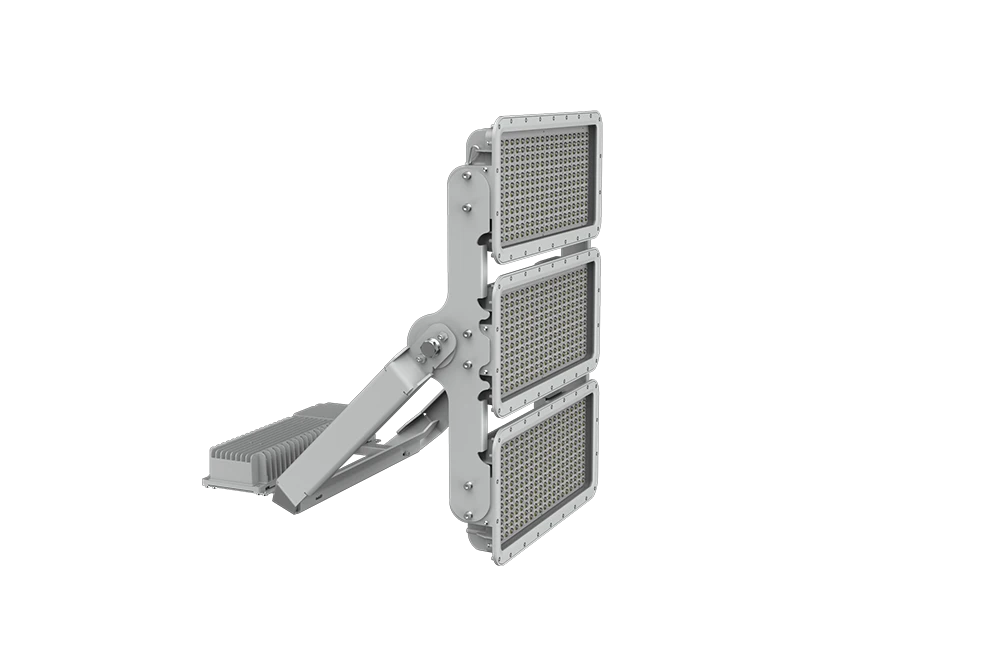
Sports Stadium LED Lighting by SEEKINGLED delivers high mast illumination, precise beam control, and EN 12193 compliant performance for professional venues.
View details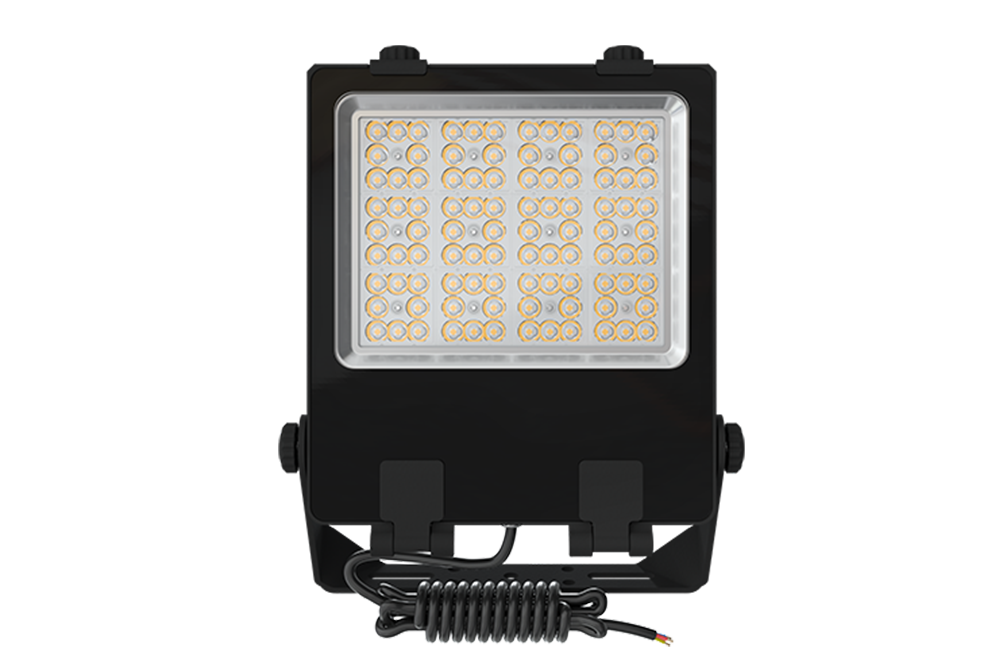
SEEKING FLX Series LED flood light outdoor for sports courts and open-area projects with 170lm/W efficiency, IP66 protection and multiple beam distributions. Designed for long-life commercial and public outdoor use.
View details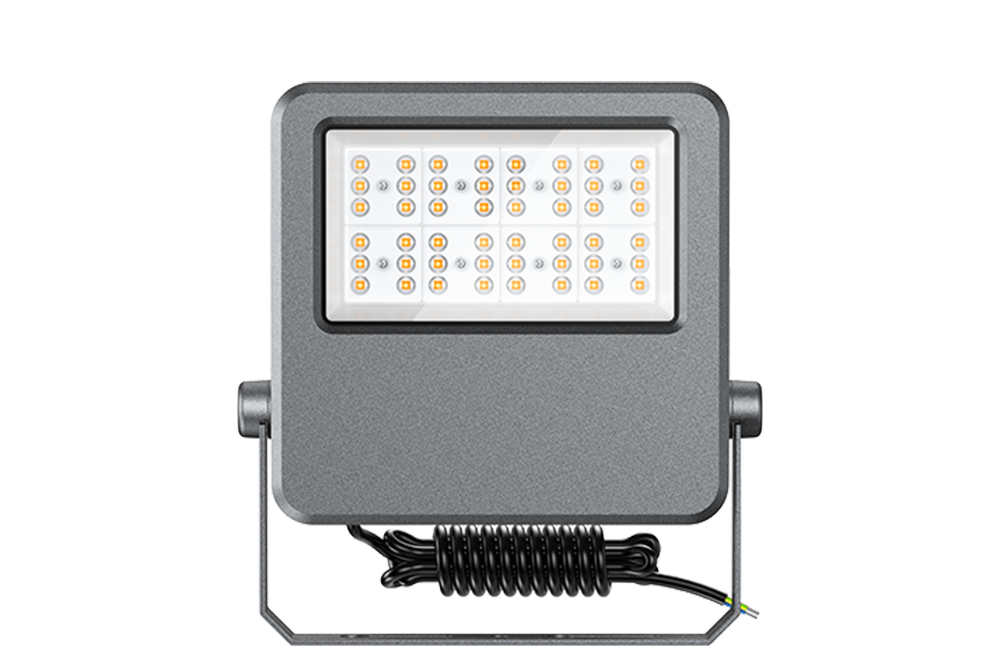
SEEKING FLE Series LED outdoor flood lights for sports grounds and open areas with multiple beam angles, IP66 protection and up to 170lm/W. Designed for long-life outdoor installations with professional driver options.
View details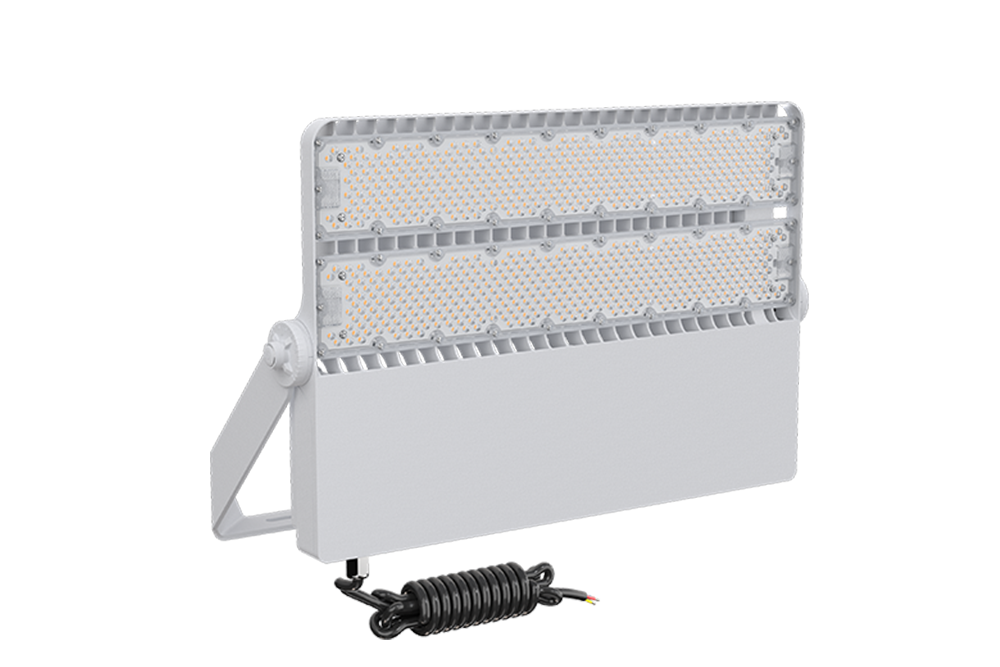
SEEKING FLD Series outdoor LED flood lights and high power led flood light deliver up to 960W with precision beam angles for sports fields, stadiums and large outdoor areas. IK08 & IP66 protection, 170lm/W efficiency and 100,000h lifetime.
View details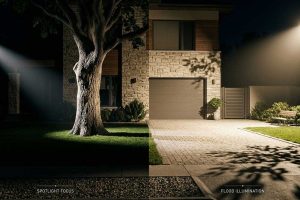
What is the difference between spot and flood LED lights? Learn beam angles, brightness, and real-world uses to choose the right lighting with SEEKINGLED expert tips.
View details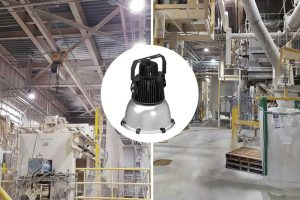
Factory lighting upgrade using XJ-HBS150W high bays to replace 600W metal halide lamps, achieving over 75% energy savings after redesign and on-site testing.
View details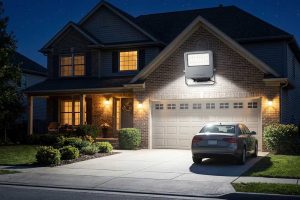
How bright is a 5000K LED flood light? Learn the real brightness, lumens, visibility range, and best outdoor uses with expert insights from SEEKINGLED.
View details
What is an explosion-proof high bay light fixture? Discover how it safely delivers high-lumen lighting in hazardous areas with certified protection and durability.
View details