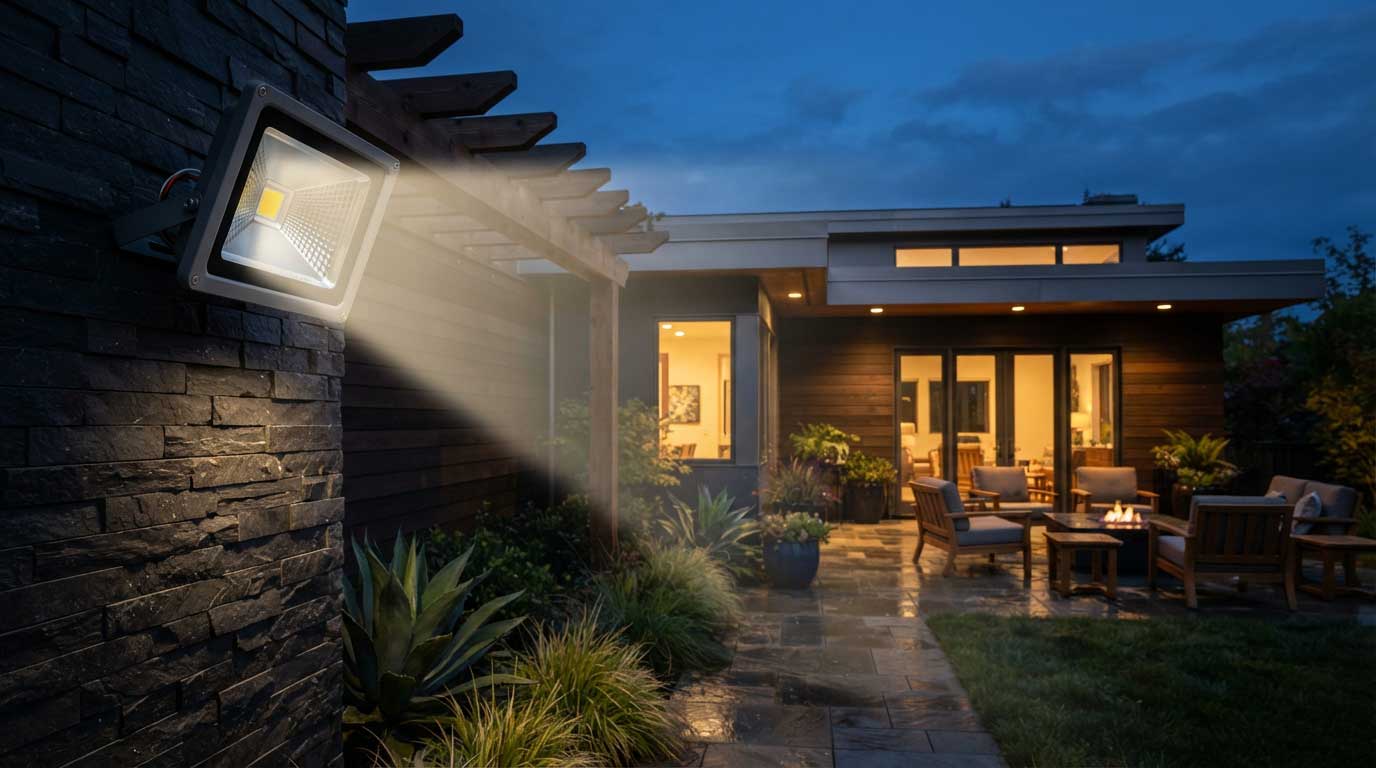
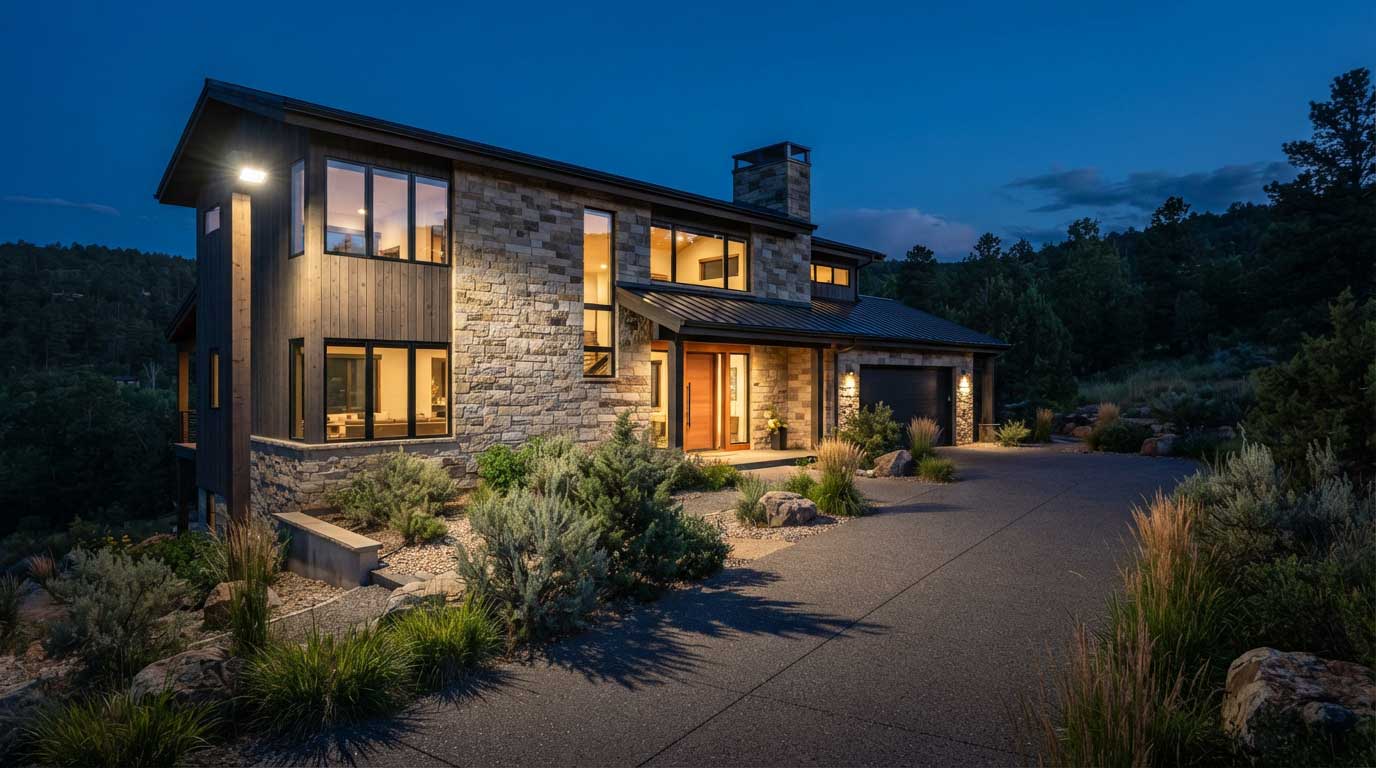
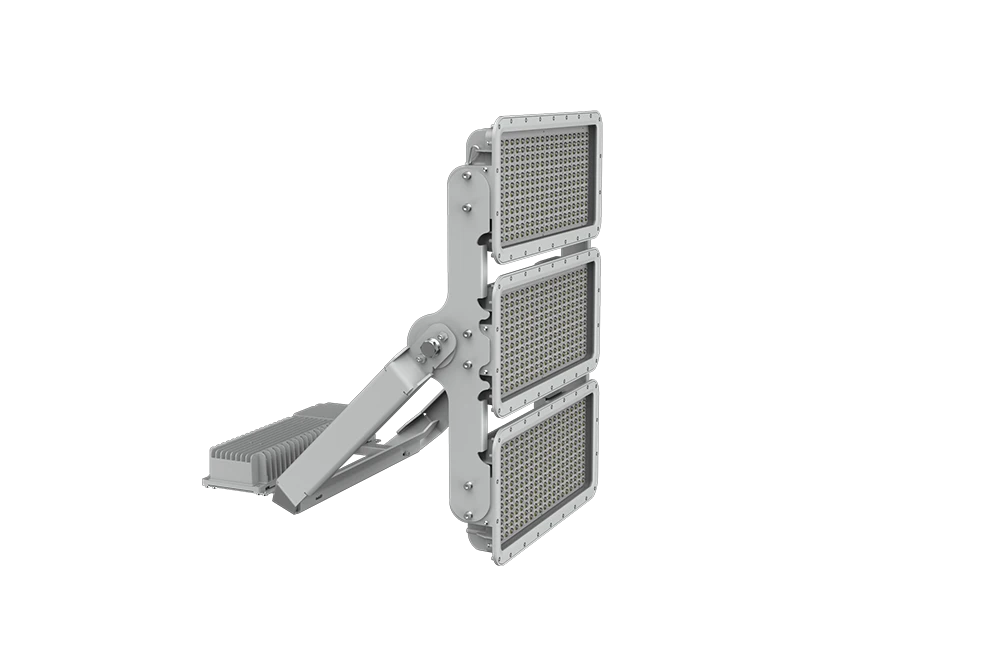
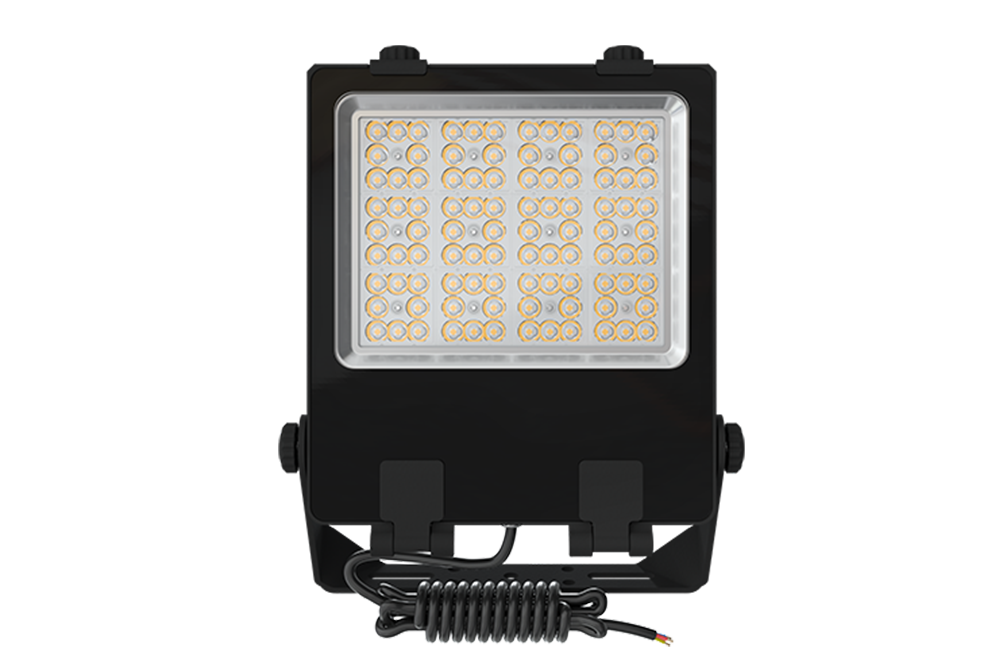
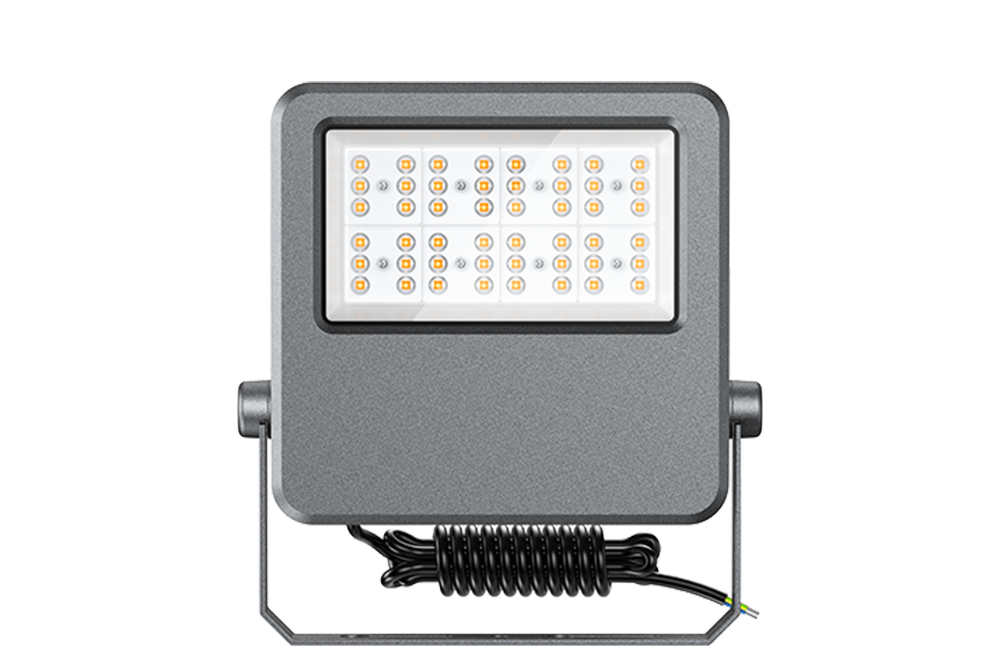
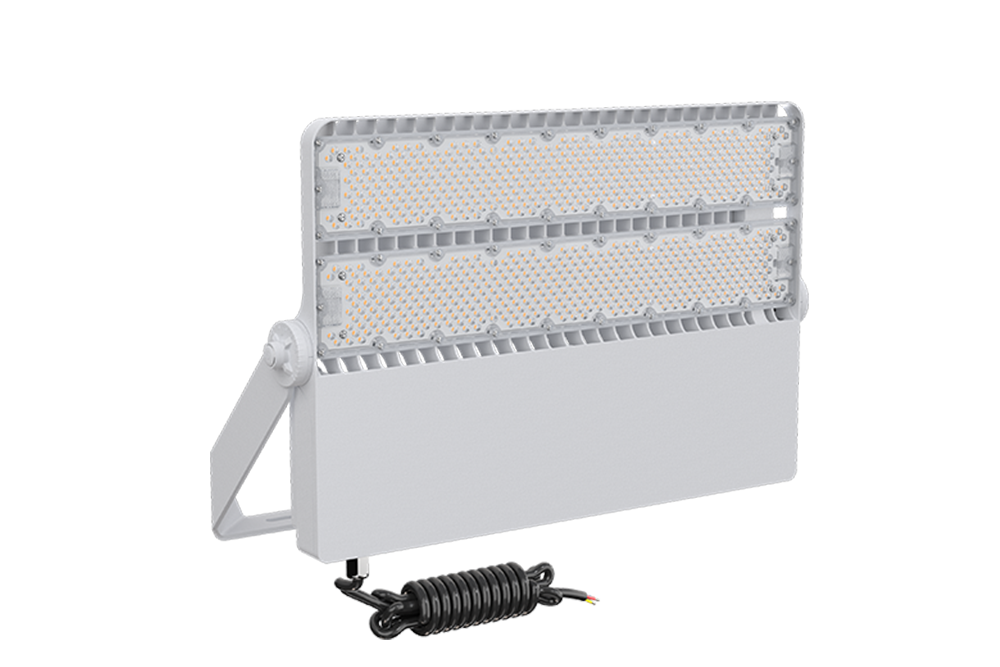
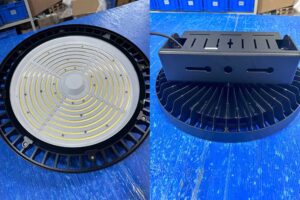
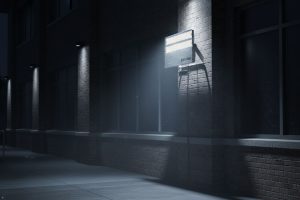
What is flood light bulb? A flood light bulb is a directional light source designed to spread strong illumination across a relatively wide area. Unlike a standard bulb, it uses its shape, reflector, or lens to direct light toward yards, walls, driveways, signs, buildings, and other outdoor targets.
A useful distinction from professional lighting work: “flood” describes distribution, not simply brightness. The Illuminating Engineering Society defines a floodlight as a projector intended to make a scene or object considerably brighter than its surroundings. Its beam spread can range from about 10° to more than 100°.
For SEEKINGLED, that difference matters when selecting an LED flood lighting solution. A high-lumen source with the wrong beam can create a bright patch close to the fixture while leaving the far side of the target underlit.
What Is a Flood Light Bulb Used For?
A flood light bulb is mainly used when light needs to cover an area rather than highlight one small point.
Common applications include:
Residential yards and gardens
Driveways and garages
Building entrances
Commercial property exteriors
Parking and loading areas
Warehouse surroundings
Signs and billboards
Architectural facades
Landscape features
Security lighting
Flood lighting can also project light over considerable distances. ANSI/IES guidance describes floodlighting as a method for directing a controlled beam toward architectural elements, irregular surfaces, or distant targets.
That is why flood lighting appears in both residential products and professional commercial luminaires. The underlying principle is similar, but the fixture size, optical system, mounting method, and output can be very different.
How Does a Flood Light Bulb Work?
Inside an LED flood bulb, the light-emitting diodes produce the light while the optical system controls where that light travels.
The optical design may include:
Reflectors
Lenses
Optical chambers
Diffusers
Directional lamp housings
Beam angle becomes important here. DOE CALiPER testing of 38 LED PAR38 lamps found measured beam angles ranging from 8° to 64°, demonstrating how dramatically directional characteristics can vary even within one lamp family.
In practical terms, a narrow beam concentrates light farther into a particular area. A wider beam covers more space but spreads the available output more broadly.
Flood Light Bulb vs. Spotlight Bulb
The simplest difference is the width of the beam.
Feature
Flood Light Bulb
Spotlight Bulb
Beam distribution
Broad
Narrow
Primary purpose
Area illumination
Focused illumination
Typical target
Yard, wall, driveway
Tree, sign, architectural detail
Coverage
Larger area
Smaller area
Optical priority
Spread + uniformity
Concentration + intensity
There is no single beam angle that makes every product a “good” flood light. The IES definition itself allows a wide range, from relatively narrow field angles to more than 100°.
In a real installation, the mounting position changes the result again. A 40° beam mounted close to a wall behaves very differently from the same beam mounted high on a pole.
How Many Lumens Does a Flood Light Bulb Produce?
Flood light bulbs are available across a wide range of lumen outputs, so the correct figure depends on the application.
DOE explains that lumens measure visible light output, while watts describe electrical power input. Its purchasing guidance gives examples showing that an LED producing around 800 lumens may use approximately 5.9–10.5 watts, compared with 60 watts for a traditional incandescent reference lamp.
For professional floodlighting, however, lumen output alone is not enough.
DOE’s current federal purchasing guidance lists a minimum 118 lm/W luminaire efficacy requirement for floodlight luminaires in its covered procurement category.
That figure is for the specified federal procurement category, not a universal requirement for every flood bulb.
A buyer should therefore compare:
Total lumens
Lumens per watt
Beam angle
Center-beam intensity
Mounting height
Target distance
Optical distribution
Outdoor environmental rating
Why Beam Angle Matters in Outdoor Flood Lighting
This is where product selection often goes wrong.
Suppose two flood lights produce similar total lumens. One has a narrow distribution and the other a wide distribution. Their measured light output may look comparable on paper, yet the illuminated area can be completely different.
IES guidance emphasizes controlled aiming for floodlighting and notes that poor aiming can produce glare, wasted light, or uneven illumination.
For a building facade, for example, the objective is not to make the fixture itself appear extremely bright. The objective is to put useful light onto the facade.
What Should You Check When Choosing a Flood Light Bulb?
1. Lumen Output
Choose output according to the size and distance of the target rather than simply selecting the largest number.
2. Beam Angle
A wider beam is useful for broad areas. A narrower beam can be more suitable for distant or concentrated targets.
3. Lamp Size and Base
Check physical dimensions and the socket or fixture compatibility before selecting a replacement bulb.
4. Outdoor Rating
For exterior applications, verify that the bulb and fixture are suitable for the actual environmental conditions. A bulb being marketed as an “outdoor flood” does not automatically mean it can be directly exposed to rain in every fixture.
5. Color Temperature
The selected CCT changes the appearance of the property. Warm white can create a softer residential atmosphere, while cooler white can produce a more neutral or crisp visual appearance.
6. Fixture Efficiency
For long operating hours, compare lumens per watt as well as total lumens. Efficiency becomes particularly relevant in commercial installations where many fixtures operate simultaneously.
FAQ About Flood Light Bulbs
What is flood light bulb used for?
A flood light bulb is used to illuminate a relatively broad area with directional light. Typical applications include yards, driveways, building facades, signs, entrances, gardens, and commercial exterior areas.
Is a flood light bulb brighter than a normal bulb?
Not necessarily. Its advantage is controlled directional distribution. A flood bulb can make an area appear brighter because more of its output is directed toward the intended target.
What is the difference between a flood light bulb and a spotlight?
A flood light bulb generally distributes light over a broader area, while a spotlight concentrates illumination into a narrower beam. The exact boundary depends on the manufacturer’s optical design and the lighting terminology being used.
Are LED flood light bulbs energy efficient?
LED technology can provide substantially more light per watt than traditional incandescent technology. DOE data illustrates this difference, with an 800-lumen LED replacement typically requiring about 5.9–10.5 watts in its cited general-purpose comparison.
What beam angle is best for a flood light bulb?
It depends on the target. A narrow distribution can concentrate light toward a distant surface, while a wide distribution can cover a larger nearby area. Professional floodlighting should be selected according to the required coverage and photometric performance.
Can a flood light bulb be used outdoors?
It can be used outdoors when the bulb, socket, and complete fixture are suitable for the environmental conditions. Always follow the manufacturer’s installation and enclosure requirements.
Does higher wattage mean a brighter flood light bulb?
No. Wattage measures electrical power consumption, not visible light output. Lumens are the more relevant measurement for total visible output, while beam characteristics determine how that output is distributed.
Conclusion
A flood light bulb is a directional light source designed to spread illumination across a relatively broad area. For buyers comparing LED flood lighting, the useful specifications go beyond wattage: lumens, beam angle, optical distribution, efficacy, mounting conditions, and environmental suitability all affect the finished result.
At SEEKINGLED, flood lighting is evaluated as a complete lighting application rather than simply a bulb with a high lumen number. The light needs to reach the intended surface, maintain useful coverage, and work with the installation environment.
Sports Stadium LED Lighting by SEEKINGLED delivers high mast illumination, precise beam control, and EN 12193 compliant performance for professional venues.
SEEKING FLX Series LED flood light outdoor for sports courts and open-area projects with 170lm/W efficiency, IP66 protection and multiple beam distributions. Designed for long-life commercial and public outdoor use.
SEEKING FLE Series LED outdoor flood lights for sports grounds and open areas with multiple beam angles, IP66 protection and up to 170lm/W. Designed for long-life outdoor installations with professional driver options.
SEEKING FLD Series outdoor LED flood lights and high power led flood light deliver up to 960W with precision beam angles for sports fields, stadiums and large outdoor areas. IK08 & IP66 protection, 170lm/W efficiency and 100,000h lifetime.
Where to buy led flood lights for homes or commercial projects? Discover reliable purchasing options, quality tips, and real buying advice from SEEKINGLED lighting experts.
Ordinary T8 fluorescent tubes may only be visible as lights up high, but the actual illuminance reaching the working surface is often less than 20 lux.To solve this problem, SEEKINGLED has designed a 500W industrial high bay light. It adopts...
How long do LED flood lights last depends on heat, driver quality and usage hours. Learn realistic lifespan ranges and what affects long-term performance.
 Seeking LED