 Seeking LED
What Are LED Flood Lights?
190What are LED flood lights and how they are used outdoors. Learn real-world applications, differences, and why SEEKINGLED flood lights matter.
View detailsSearch the whole station
how to install exterior flood light? Turn off the circuit, confirm the wiring is dead, mount the fixture to a suitable weatherproof box, connect the conductors correctly, seal exposed openings, then restore power and test the light and aiming.
Installing an exterior flood light looks simple from the ground. On an actual installation, the troublesome part is usually not tightening the mounting screws. It is the junction box, water exposure, cable entry, grounding, and whether the mounting surface can hold the fixture without movement.
At SEEKINGLED, we approach exterior flood-light installation from the fixture outward: first identify the electrical environment, then the mounting structure, then the optical direction. A bright light that is securely mounted but aimed into a neighbor’s window is not a successful installation.
Before touching the existing wiring, identify whether the flood light is replacing an existing fixture or being installed at a completely new location.
For a hardwired mains-voltage fixture, switch off the correct circuit breaker and verify that the conductors are de-energized with an appropriate tester. Do not rely on the wall switch alone.
Outdoor electrical equipment also needs protection against moisture. The National Electrical Code includes outdoor locations among areas where GFCI protection requirements apply to applicable receptacles, and outdoor wiring devices need appropriate weather-resistant protection.
For this reason, check:
If the installation requires running a new branch circuit, modifying mains wiring, or the existing wiring is unclear, use a licensed electrician. ESFI specifically recommends qualified electricians for GFCI installation work.
The best position is not necessarily the highest position.
For a backyard or side entrance, mounting the LED Flood Lights too low can put the beam directly into people’s eyes. Mounting it excessively high can spread the beam over an unnecessarily large area and make maintenance more difficult.
A useful starting point is a solid wall, eave, garage exterior, or other structural surface that can support the fixture and keep the electrical enclosure protected.
Before drilling, stand several feet away and imagine the beam path.
Ask:
This small visual check often prevents a second installation attempt.
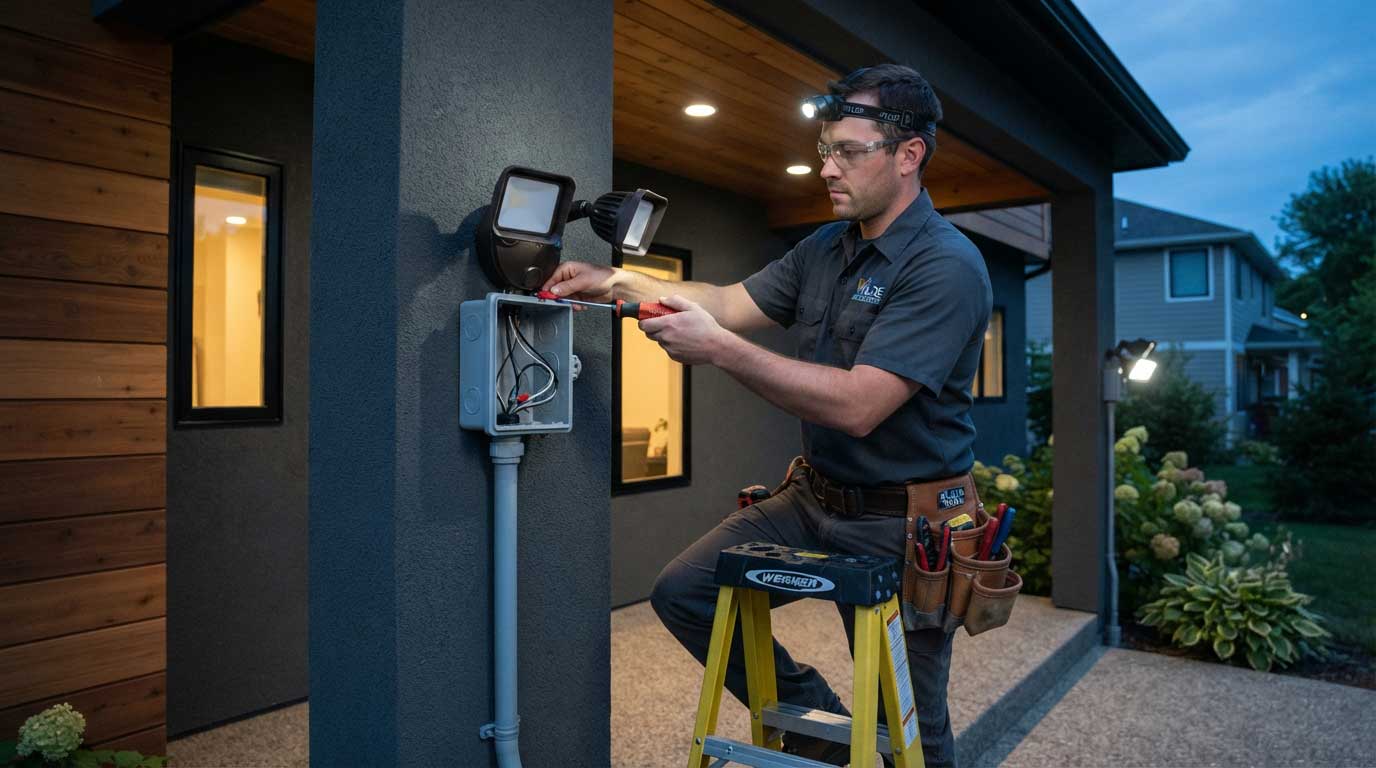
The enclosure is one of the details worth slowing down for.
For outdoor receptacles and associated weatherproof equipment, NEC requirements address damp and wet locations. Leviton’s outdoor safety guidance notes that outdoor receptacles require weather-resistant construction and suitable weatherproof enclosures; direct weather exposure calls for an extra-duty while-in-use cover for applicable receptacle installations.
A flood light‘s own enclosure and junction arrangement should likewise follow the fixture manufacturer’s instructions and the applicable local code.
Do not simply wrap an exposed connection in electrical tape and consider the job weatherproof.
With the circuit safely isolated, connect the fixture according to its wiring diagram.
A typical mains-voltage fixture may include:
| Conductor | Typical function |
|---|---|
| Black/brown | Line or live |
| White/blue | Neutral |
| Green/green-yellow | Protective earth/ground |
Wire colors vary by region and installation age, so never identify a conductor by color alone. Confirm the circuit and follow the fixture documentation.
The grounding connection deserves particular attention on metal-bodied equipment. A fault that energizes exposed metal can create a serious shock hazard.
After making the connections, place the conductors neatly inside the approved enclosure. Avoid pinching insulation under the fixture base or leaving connectors exposed to direct weather.
Once the electrical connection is complete, fasten the fixture firmly to the mounting surface.
Do not leave the housing slightly loose so that you can “adjust it later.” Wind and vibration can gradually move an unsecured fixture.
Then aim the light.
For a driveway, the beam normally needs to reach farther forward. For a doorway, a downward and slightly outward angle may provide better facial and ground visibility without sending light directly toward passing vehicles.
For security lighting, controlled distribution matters more than simply choosing the highest lumen rating.
DarkSky International recommends directing outdoor light only where it is needed and using controls such as motion sensors or timers to reduce unnecessary nighttime illumination.
Restore power only after the enclosure and fixture are fully assembled.
Check:
For GFCI protection, ESFI explains that the device interrupts power when it detects a ground fault and recommends regular testing of GFCIs.
Walk around the property after dark. This is more informative than judging the beam while standing underneath the fixture.
Look at the light from the driveway, sidewalk, neighboring-facing side, and inside nearby rooms. The final adjustment is often only a few degrees.
Vinyl siding, thin trim, or a weak fascia section may not provide adequate support. Use an appropriate mounting box or structural support designed for the installation.
A cable opening facing upward can become a water path. Follow the manufacturer’s required cable-entry orientation and sealing method.
Outdoor electrical components must be suitable for their environment. ESFI advises that outdoor electrical equipment and lighting use appropriate outdoor-rated protection and GFCI protection where required.
The beam can look perfectly positioned from three feet away and completely wrong from the driveway.
Make the final aiming adjustment from normal viewing positions after sunset.
A simple replacement may be possible for someone legally permitted and competent to perform the work, but mains-voltage installation can involve shock, fire, grounding, and code risks. New circuits or uncertain wiring should be handled by a qualified electrician.
The exact requirement depends on the electrical configuration and local code. Applicable outdoor receptacles require GFCI protection under NEC provisions, while hardwired luminaires have their own requirements. Check the current local code rather than assuming every fixture uses the same arrangement.
There is no single height suitable for every property. Mounting height should match the fixture’s beam distribution, intended coverage, mounting structure, and manufacturer’s instructions.
Usually, some downward aiming helps control glare and keeps useful light on the ground. The exact angle depends on the application and optical distribution.
Possible causes include incompatible controls, unstable power, loose connections, unsuitable dimmers, or a fixture problem. Turn off the circuit and have the electrical connection checked rather than repeatedly operating a suspect installation.
Motion sensors are useful for security lighting because the fixture does not need to remain at full output continuously. They can also reduce unnecessary nighttime lighting when correctly positioned and adjusted.
Learning how to install exterior flood light is less about drilling a hole and more about getting the electrical protection, mounting surface, weather resistance and beam direction right. A properly installed SEEKINGLED flood light should stay secure, keep electrical connections protected, illuminate the intended area, and avoid unnecessary glare.
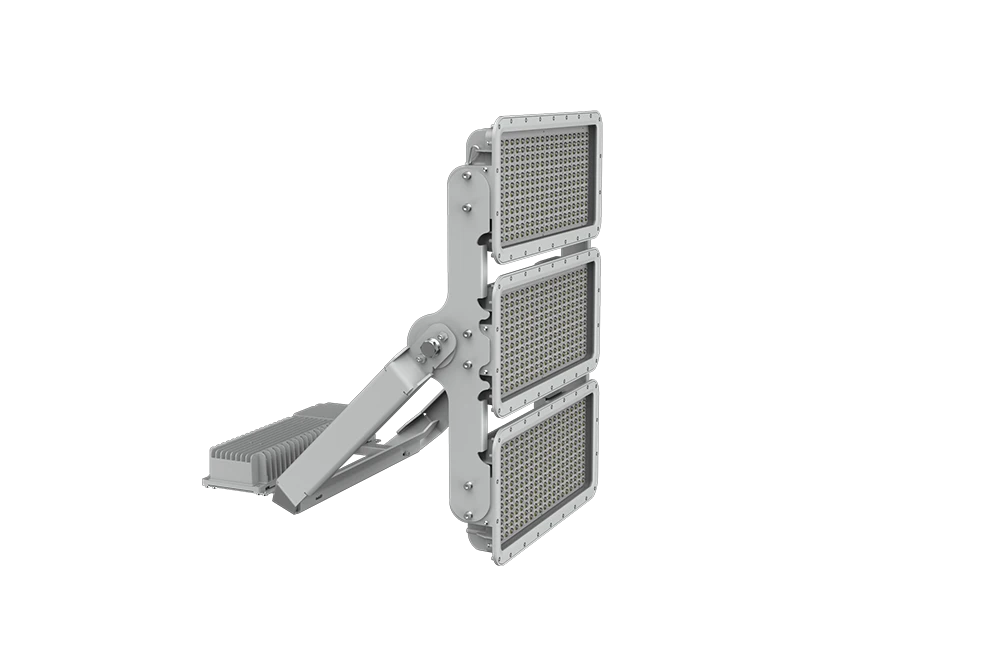
Sports Stadium LED Lighting by SEEKINGLED delivers high mast illumination, precise beam control, and EN 12193 compliant performance for professional venues.
View details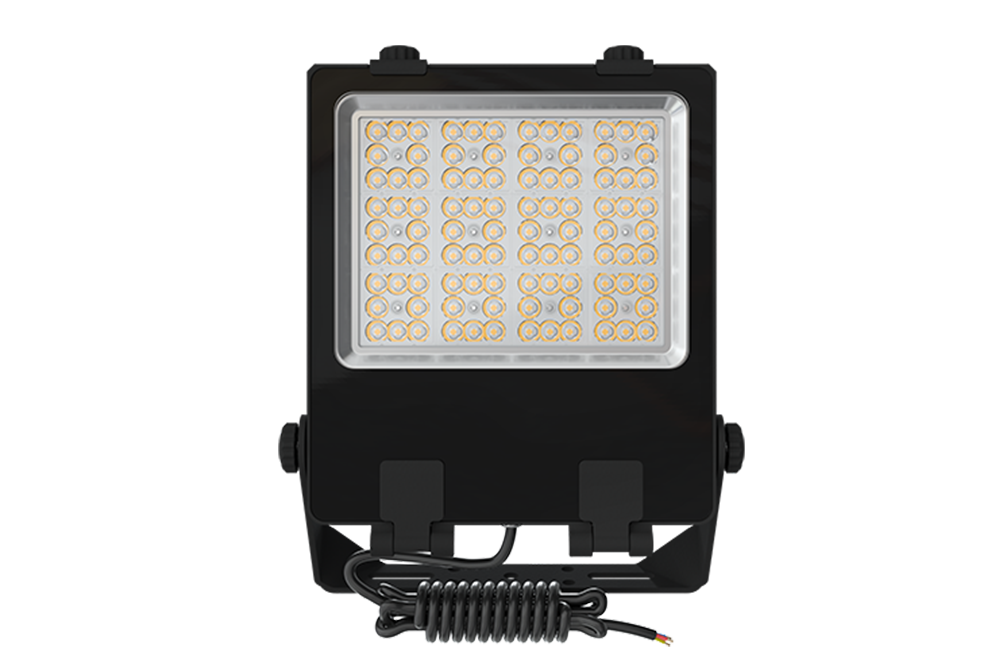
SEEKING FLX Series LED flood light outdoor for sports courts and open-area projects with 170lm/W efficiency, IP66 protection and multiple beam distributions. Designed for long-life commercial and public outdoor use.
View details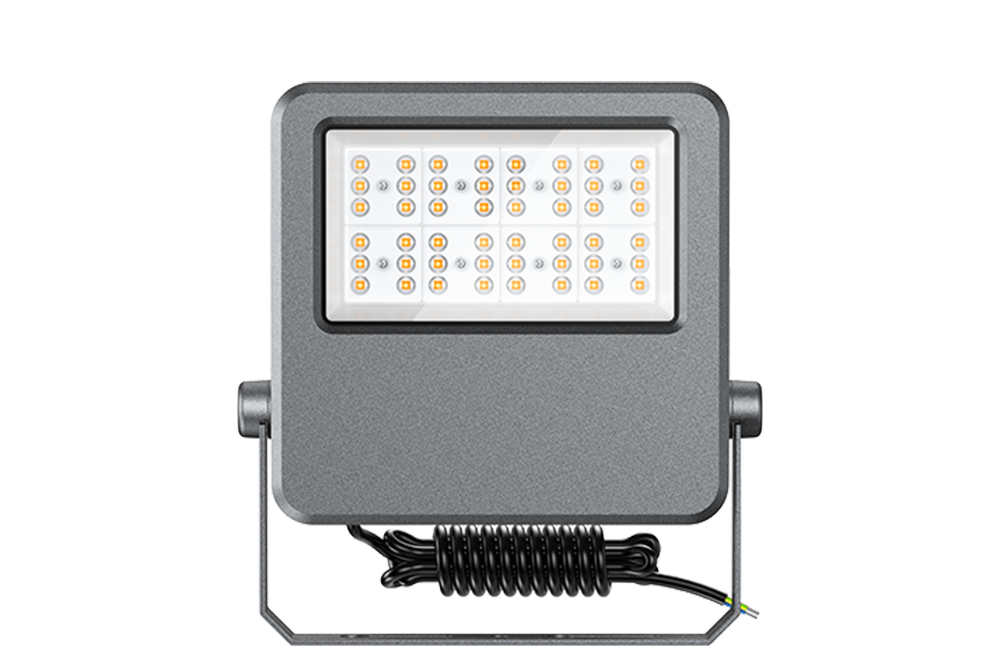
SEEKING FLE Series LED outdoor flood lights for sports grounds and open areas with multiple beam angles, IP66 protection and up to 170lm/W. Designed for long-life outdoor installations with professional driver options.
View details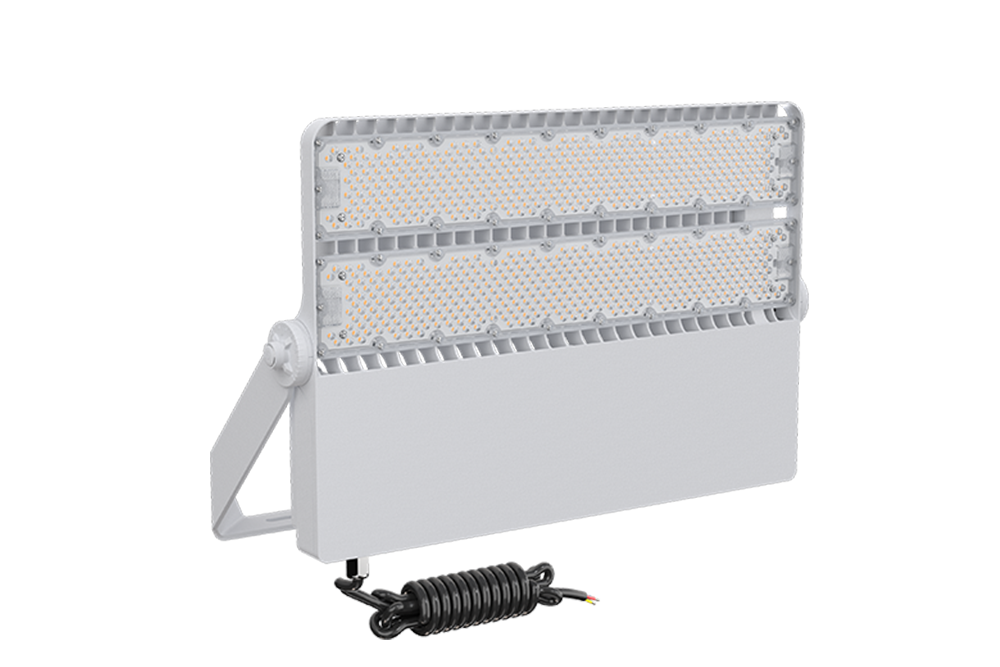
SEEKING FLD Series outdoor LED flood lights and high power led flood light deliver up to 960W with precision beam angles for sports fields, stadiums and large outdoor areas. IK08 & IP66 protection, 170lm/W efficiency and 100,000h lifetime.
View details
What are LED flood lights and how they are used outdoors. Learn real-world applications, differences, and why SEEKINGLED flood lights matter.
View details
Discover hazardous area led lights for Zone 1 and Zone 2 applications. Learn certifications, LED advantages, installation requirements, and industrial safety solutions.
View details
SEEKING showcased advanced LED lighting solutions at the 2024 Hong Kong International Lighting Fair and Outdoor and Tech Light Expo, including new HLS linear trunking and HLD linear high bay, covering garden lights, flood lights, high bay, street ...
View details
Explosion proof high bay LED light selection requires more than certification. This article shares real project experience using SEEKINGLED HB21 Series in ATEX and IECEx hazardous areas, with insights based on IEC 60079 standards and long-term fie...
View details