 Seeking LED
How Bright Is 10W LED Flood Light?
389How Bright Is 10W LED Flood Light? Learn lumen output, coverage, and real use cases. Discover if a 10W LED flood light is enough for your space.
View detailsSearch the whole station
What Is an ATEX LED Floodlight?
An ATEX LED floodlight is a hazardous-area lighting fixture certified for use in potentially explosive atmospheres containing flammable gases, vapors, mists, or combustible dust. It combines ATEX safety certification with high-efficiency LED technology to provide powerful, reliable illumination while minimizing ignition risks in industrial environments.
When people hear the phrase “ATEX LED floodlight,” they often focus on the LED part.
The engineers responsible for refinery safety usually focus on the ATEX part.
That difference says a lot.
Several years ago, during a lighting assessment at a petrochemical storage facility, I watched maintenance personnel inspect floodlights mounted nearly 20 meters above a loading area. Nobody was discussing beam angles or color temperature. The discussion revolved around certification markings, hazardous area classification, and inspection records.
In hazardous locations, lighting is not simply an electrical product.
It becomes part of the facility’s safety strategy.
ATEX comes from the French term:
ATmosphères EXplosibles
The certification framework applies to equipment intended for use in potentially explosive atmospheres throughout the European Economic Area.
According to the European Commission, ATEX Directive 2014/34/EU establishes requirements for equipment and protective systems used in explosive atmospheres.
Source:
https://single-market-economy.ec.europa.eu
For a floodlight to achieve ATEX certification, manufacturers must demonstrate that the fixture will not create an ignition source under defined operating conditions.
This evaluation may include:
Certification is not self-declared.
Independent assessment is a critical part of the process.
Explosive atmospheres are more common than many people realize.
Most professionals immediately think of oil refineries.
But hazardous atmospheres also exist in:
According to the European Agency for Safety and Health at Work (EU-OSHA), explosive atmospheres can develop whenever flammable substances mix with air under certain conditions.
Source:
In those environments, a standard floodlight may introduce unacceptable risk.
An ATEX LED floodlight is specifically engineered to prevent that scenario.
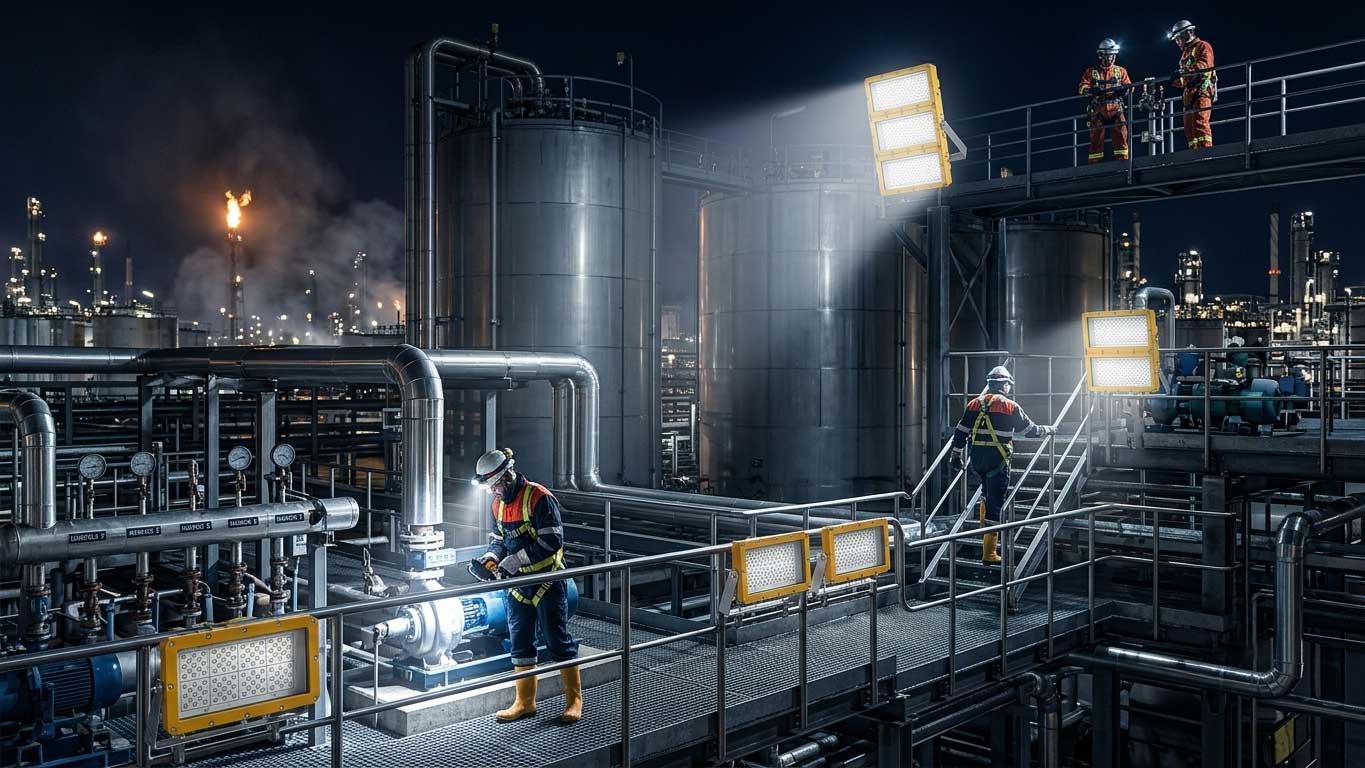
Refineries remain one of the most common applications.
Floodlights provide visibility around:
Large outdoor spaces require broad illumination coverage, particularly during night operations.
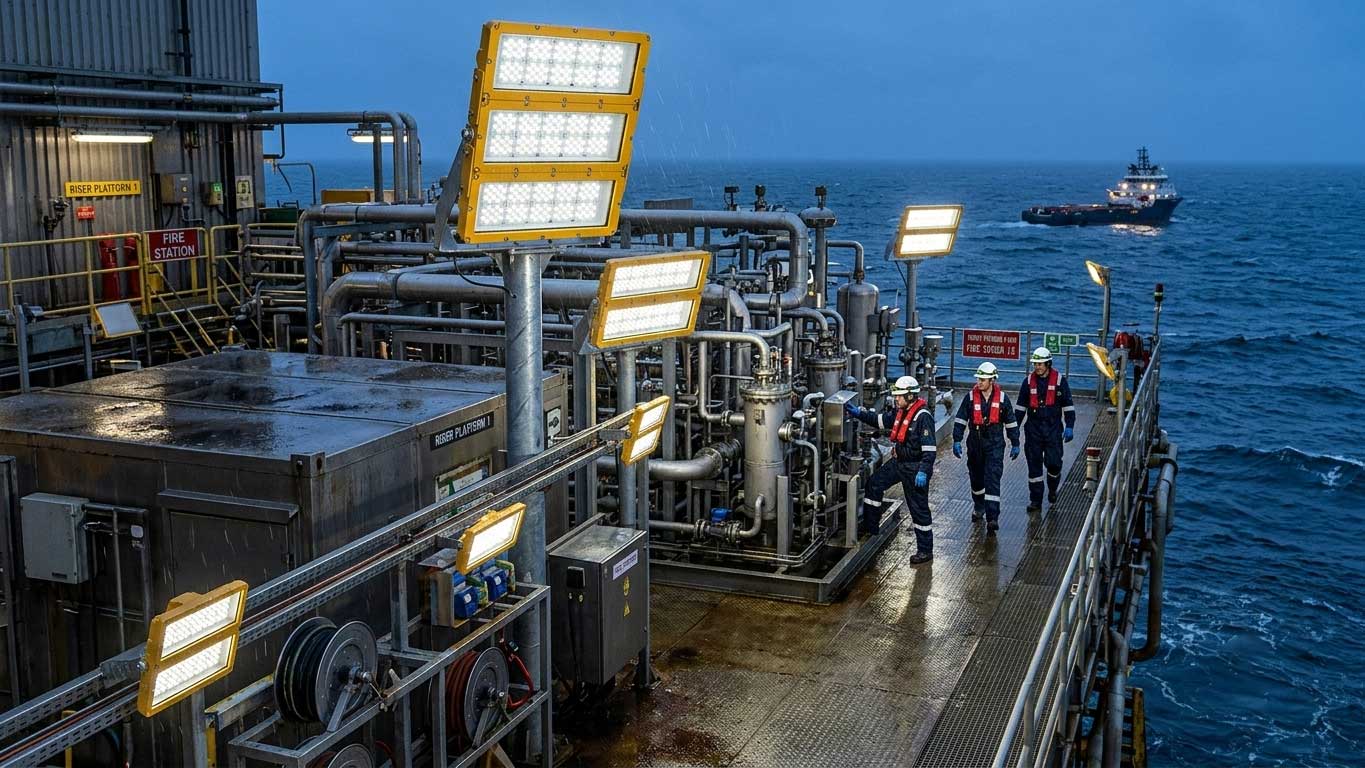
Offshore facilities present unique challenges.
I once visited a production platform where every exposed metal component showed signs of continuous salt exposure.
The floodlights had been operating through storms, sea spray, vibration, and temperature fluctuations for years.
That experience reinforced something I’ve observed repeatedly:
A floodlight can look impressive in a catalog.
Its real value appears after years in service.
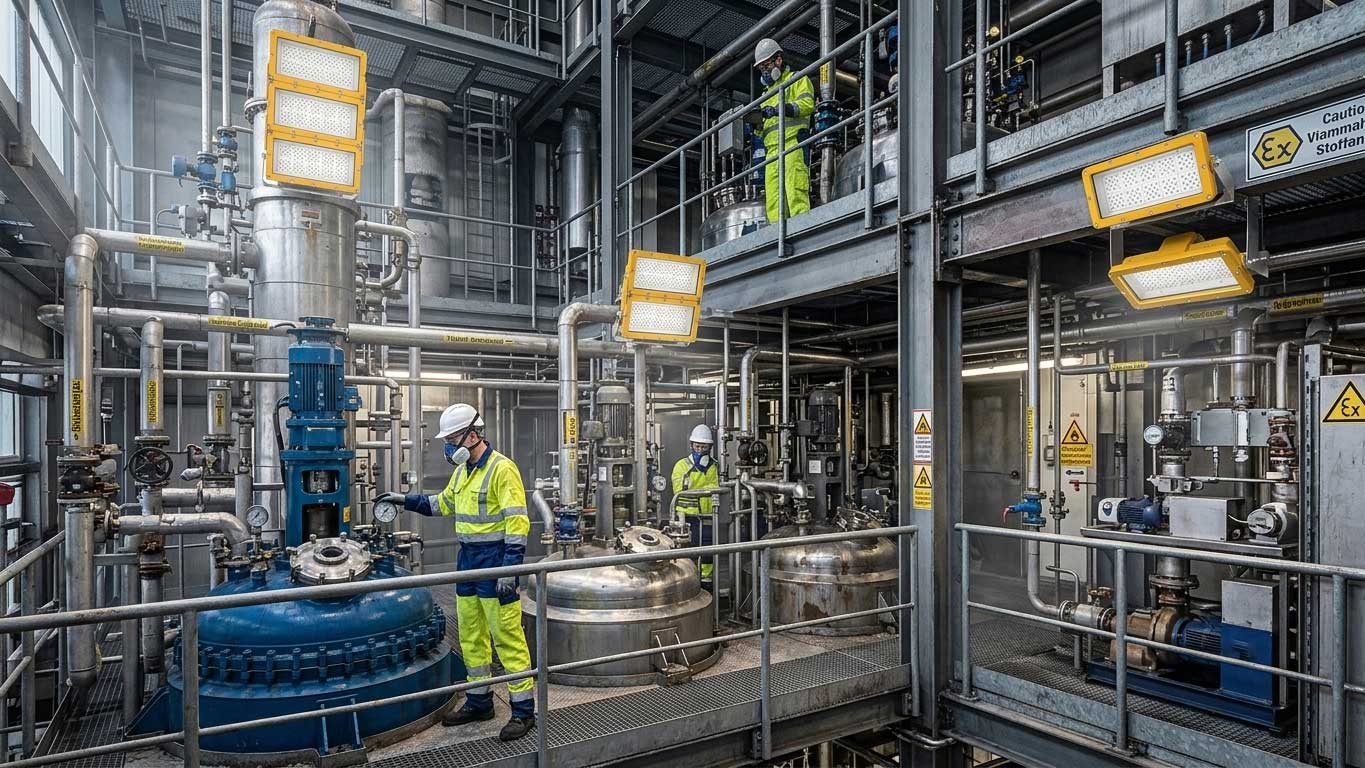
Chemical plants frequently require hazardous-area floodlighting around:
The lighting must remain reliable while operating in potentially corrosive atmospheres.
The basic purpose is straightforward.
Provide illumination without becoming an ignition source.
Manufacturers achieve this through specialized engineering features.
Common design elements include:
The goal is not merely preventing failure.
The goal is ensuring that even under fault conditions, the fixture remains safe for its intended hazardous zone.
ATEX classifications are based on how frequently explosive atmospheres may occur.
| Zone | Description |
|---|---|
| Zone 0 | Explosive gas atmosphere continuously present |
| Zone 1 | Explosive atmosphere likely during normal operation |
| Zone 2 | Explosive atmosphere unlikely and short duration |
| Zone 20 | Combustible dust continuously present |
| Zone 21 | Dust atmosphere likely during operation |
| Zone 22 | Dust atmosphere unlikely and infrequent |
One mistake I occasionally see during procurement reviews is assuming all ATEX fixtures are interchangeable.
They are not.
A floodlight approved for Zone 2 may not be suitable for Zone 1.
The classification must always match the installation environment.
Fifteen years ago, hazardous-area floodlighting often relied on metal halide technology.
Today, LED systems dominate new projects.
According to the U.S. Department of Energy, LEDs can significantly reduce energy consumption while delivering longer service life compared with traditional lighting technologies.
Source:
Advantages include:
Maintenance savings are often underestimated.
At one petrochemical facility, replacing a floodlight required:
The labor cost exceeded the fixture cost itself.
Reducing maintenance interventions quickly becomes a major financial benefit.
Certification is essential.
It is not the only consideration.
When evaluating an ATEX LED floodlight, experienced engineers often focus on:
Heat remains one of the primary factors affecting LED longevity.
Well-designed thermal systems help maintain performance over time.
Marine and chemical environments demand robust materials.
Look carefully at:
Brightness alone tells only part of the story.
Beam distribution often determines how effectively a floodlight illuminates large industrial spaces.
Initial purchase price rarely reflects total ownership cost.
Maintenance access, replacement frequency, and downtime often have greater financial impact.
Certification does not automatically guarantee suitability for:
Always verify:
Experienced project teams never rely solely on marketing materials.
At SEEKINGLED, hazardous-area lighting is designed around actual operating environments rather than laboratory conditions.
Industrial facilities expose equipment to challenges that specification sheets rarely capture:
Over time, those conditions reveal the true quality of a floodlight.
Certification gets the product approved.
Field reliability earns long-term trust.
An ATEX LED floodlight is a certified hazardous-area lighting fixture designed to safely illuminate locations where explosive gas or dust atmospheres may be present.
They are commonly installed in refineries, offshore platforms, chemical plants, LNG facilities, fuel terminals, and combustible dust environments.
Yes. LED technology generally provides lower energy consumption and longer operational life than traditional hazardous-area lighting technologies.
Absolutely. Most industrial ATEX floodlights are designed specifically for demanding outdoor environments.
High-quality industrial ATEX LED floodlights typically achieve operating lifetimes between 50,000 and 100,000 hours depending on environmental conditions and maintenance practices.
So, what is an ATEX LED floodlight?
It is a specialized hazardous-area lighting fixture engineered to provide powerful illumination while preventing ignition risks in potentially explosive atmospheres.
The best ATEX LED floodlight installations rarely attract attention. They simply continue operating through harsh weather, corrosive environments, maintenance cycles, and years of industrial service. That reliability is precisely why ATEX LED floodlight technology remains a critical part of modern hazardous-area safety systems.
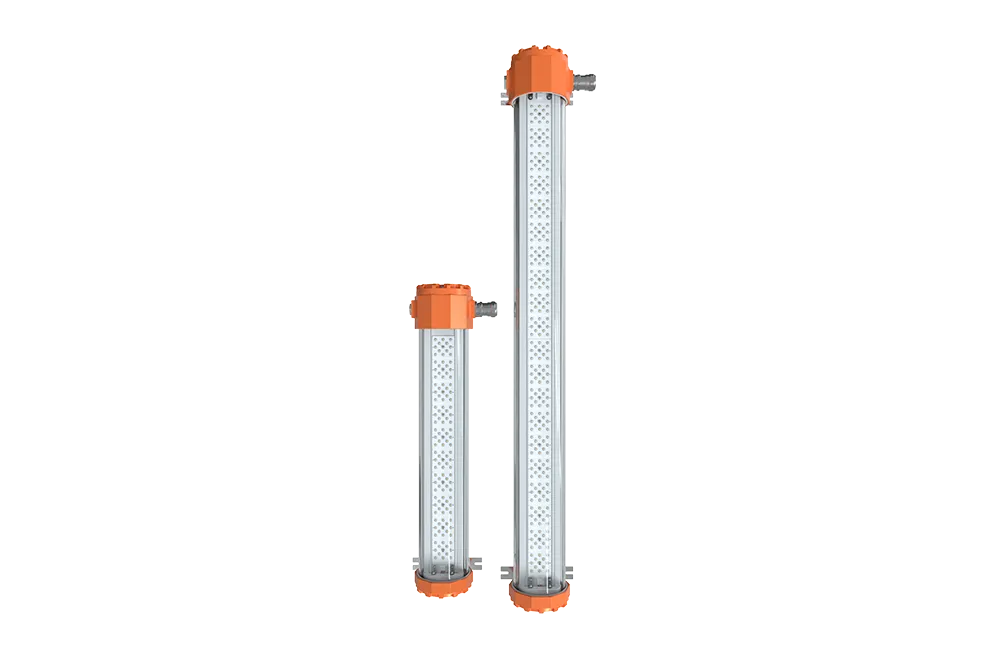
SEEKINGLED LED Linear Explosion Proof Light and Explosion Proof lighting is ATEX and IECEx certified for Zone 1, Zone 2, Zone 21 and Zone 22 hazardous locations, built for long-term industrial use.
View details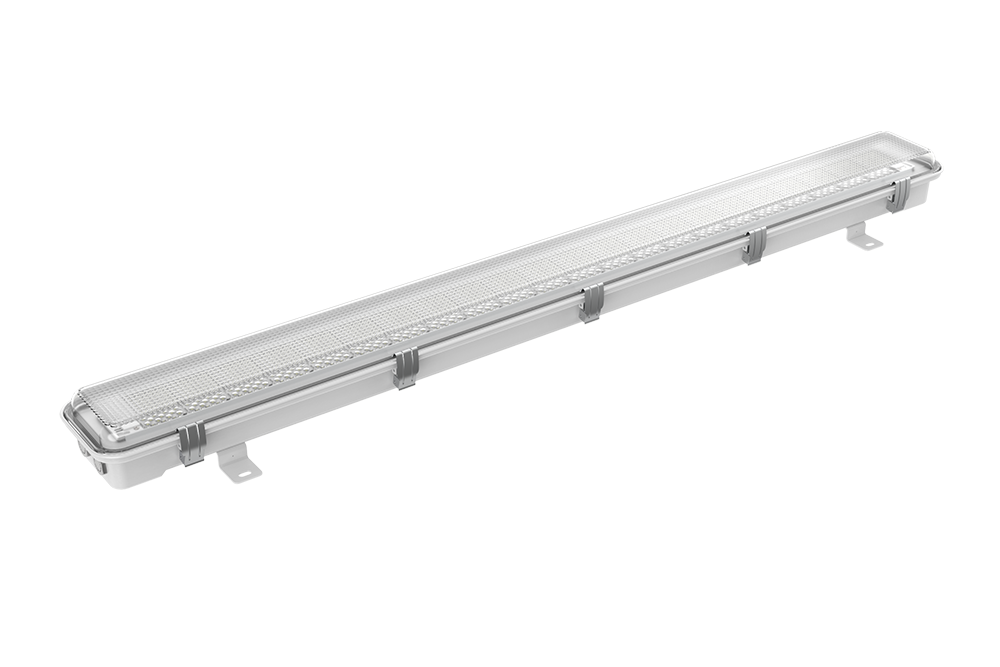
LED Linear Explosion Proof Lights and EX Proof lights for Zone 1, Zone 2, Zone 21 and Zone 22 hazardous areas. ATEX & IECEx certified explosion proof LED linear lighting with emergency function, adjustable power and IP67 protection by SEEKINGLED.
View details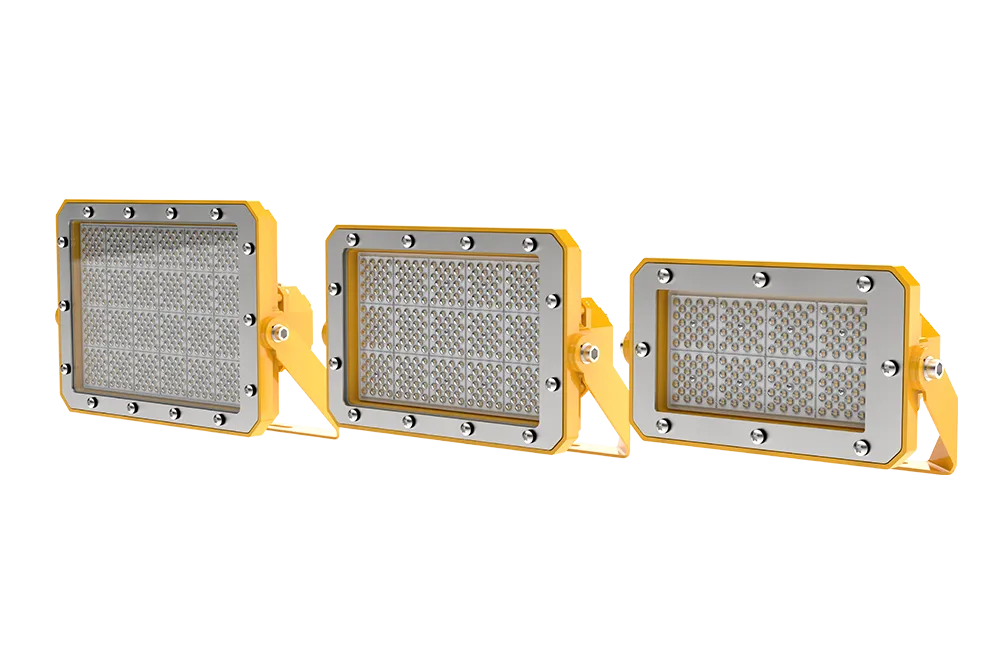
SEEKINGLED LED Explosion Proof Flood Lights are ATEX certified for Zone 2 and Zone 22 hazardous areas, offering high efficiency, adjustable power and integrated junction box.
View details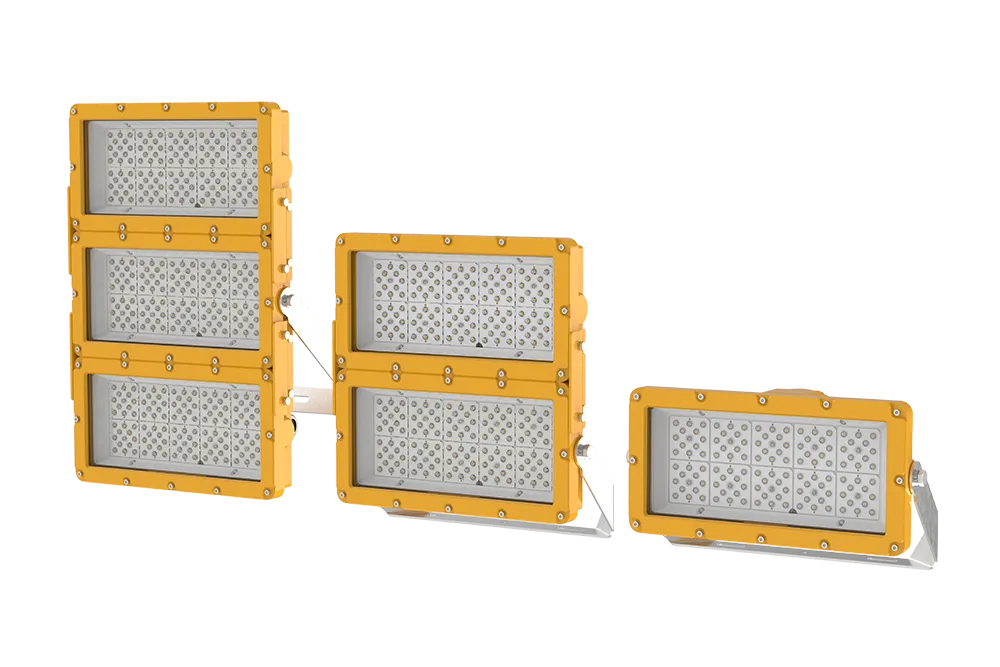
SEEKINGLED LED Explosion Proof Flood Lights are flameproof ATEX and IECEx certified for Zone 1 and Zone 2 hazardous areas, offering high power, adjustable output and long service life.
View details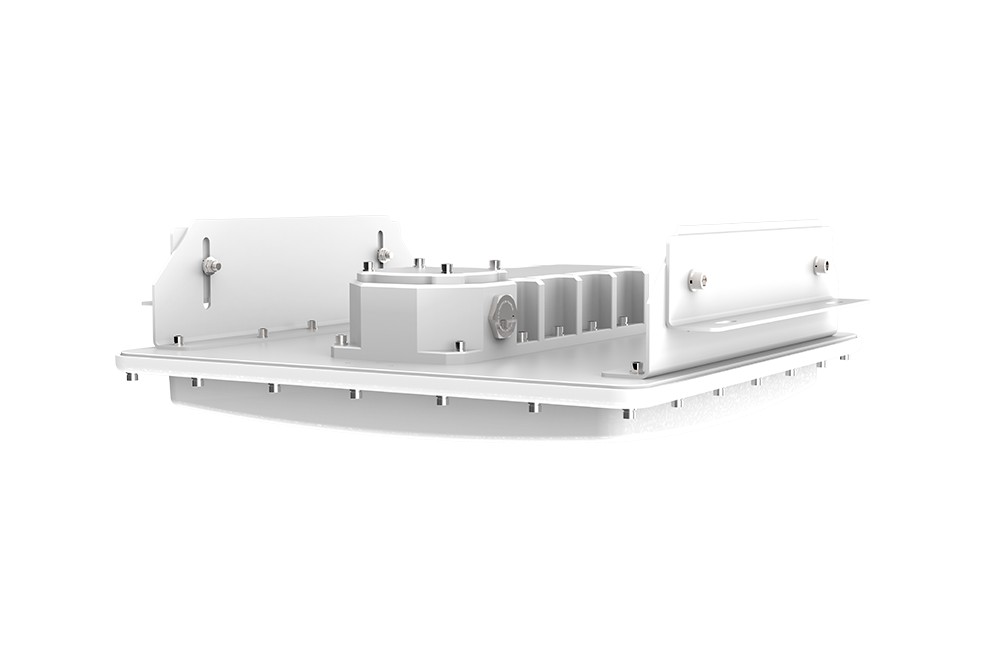
SEEKINGLED LED Gas Station Canopy Lights are ATEX certified for Zone 2 and Zone 22 hazardous areas, featuring adjustable power and built-in explosion-proof junction box.
View details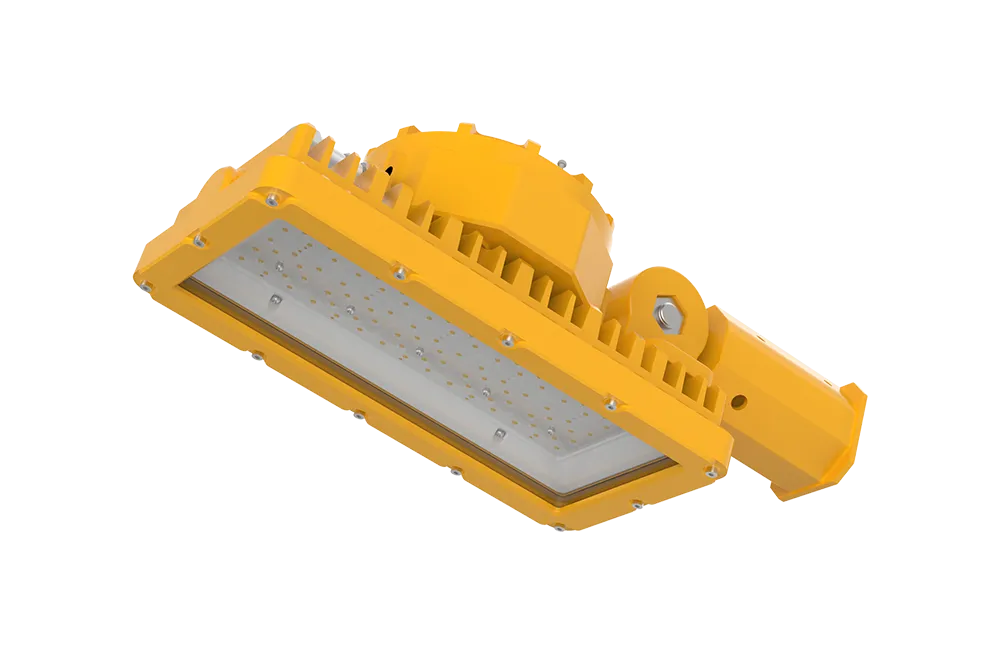
ATEX: Ex II 2G Ex db IIB T6/T5 GbEx II 2D Ex tb IIIC T80°C/ T95°C Db IECEx Ex db IIB T6 Gb;Ex tb IIIC T80°C Db Feature: ● For Zone 1,2 and Zone 21,22● Flameproof type, the strongest● 100W can replace 250W HID,energy saving● Power:60W,80W,100W Application: Oil and gas, marine, Chemical, pharmaceutical, semiconductor,mining,military industr…
View details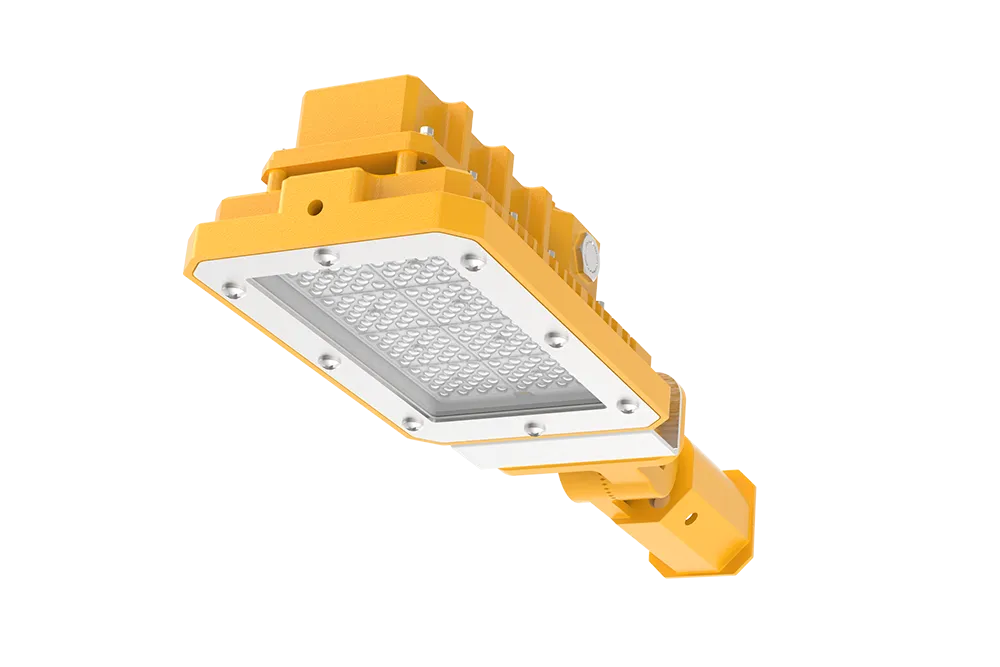
ATEX: II 3G Ex nR ⅡC T5/T6 GcII 3D Ex tc ⅢC T80℃/T95℃Dc ATEX Certificate NO: TÜV CY 26 ATEX 0207611 X Feature: ● For Zone 2 and Zone 22● 150W can replace 250W HID lamps,Energy saving● Power:50W,75W,100W,150W,200W Application: Oil and gas, marine, Chemical, pharmaceutical, semiconductor,mining,military industry, paint booth,power plant ETC…
View details
LED explosion proof high bay lights are designed for Zone 1, Zone 2, Zone 21 and Zone 22 hazardous areas. This page introduces the HB21 Series from SEEKING, including certifications, power options and real application considerations.
View details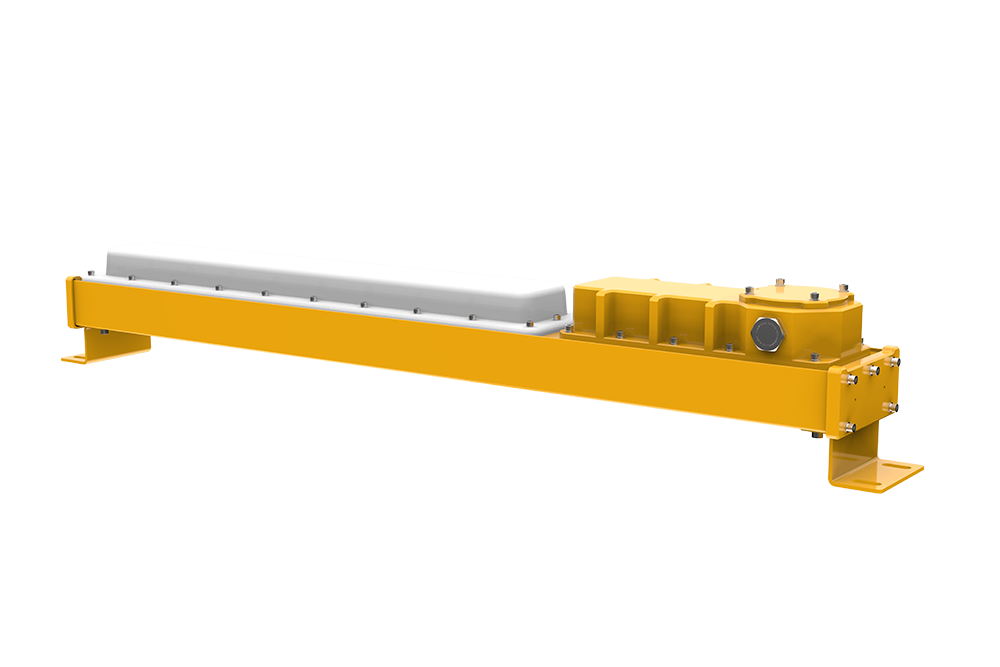
LED Linear Explosion Proof Lights from SEEKINGLED. LU Series Flame Proof lights ATEX-certified explosion proof LED linear lighting for Zone 2 gas and Zone 22 dust areas, IP69K, IK10, long lifetime and flexible power options.
View details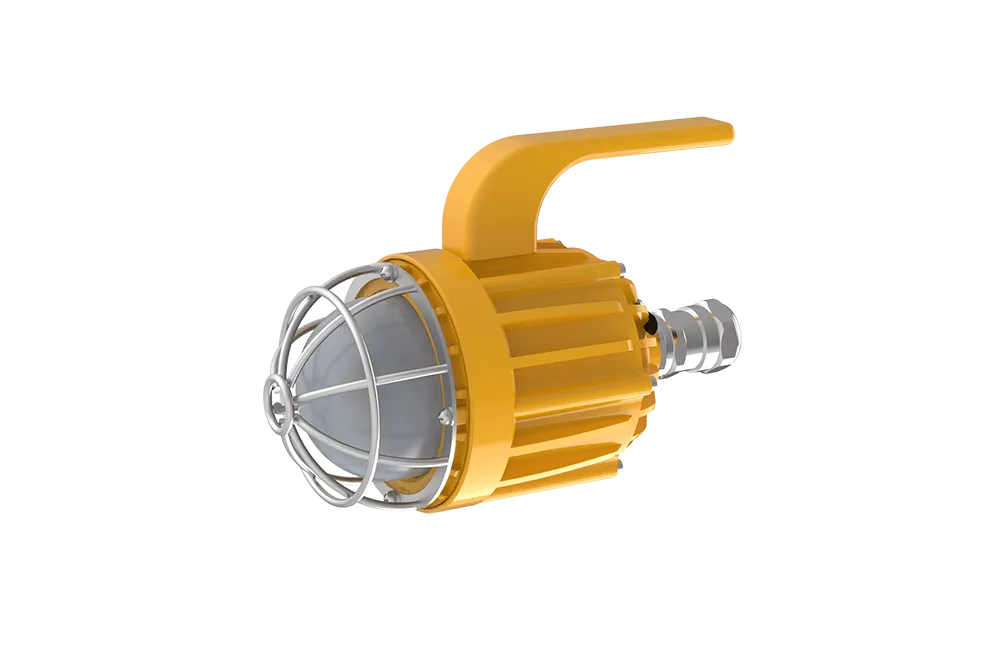
Certified explosion proof work lights for Zone 1 & 21 hazardous areas. Portable, ATEX & IECEx approved, built for oil, gas and chemical plants by SEEKINGLED.
View details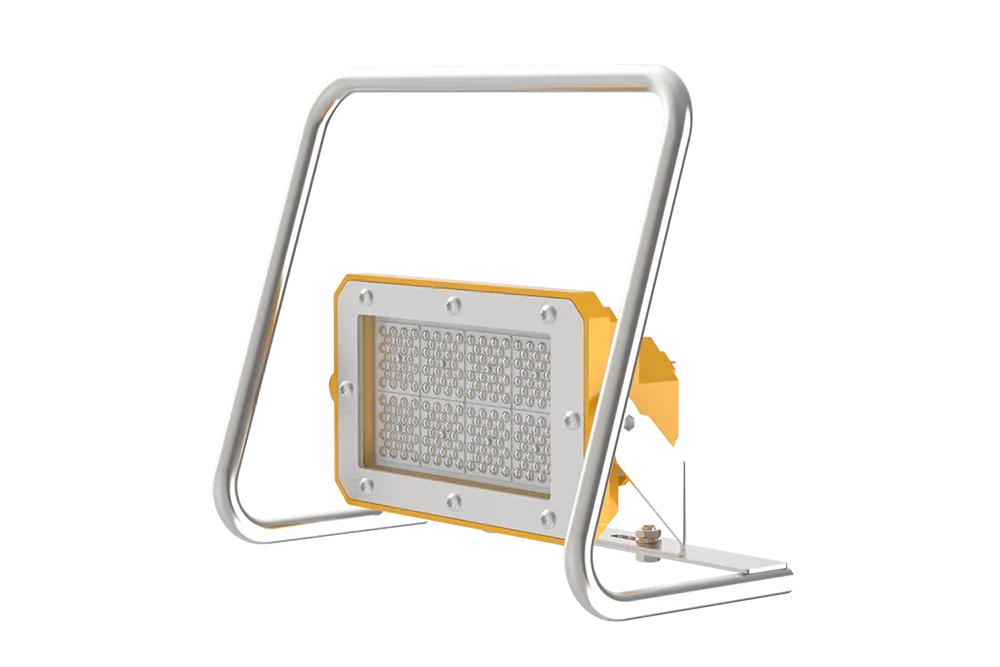
ATEX: II 3G Ex nR ⅡC T6 GcII 3D Ex tc ⅢC T80℃ Dc ATEX Certificate NO: TÜV CY 26 ATEX 0207611 X Feature: ● For Zone 2 and Zone 22● Accepts battery-powered supply● indestructible● Power:AC input:50W,75W,100WDC input:15W,25W,35W Application: Oil and gas, marine, Chemical, pharmaceutical, semiconductor,mining,military industry, paint booth,po…
View details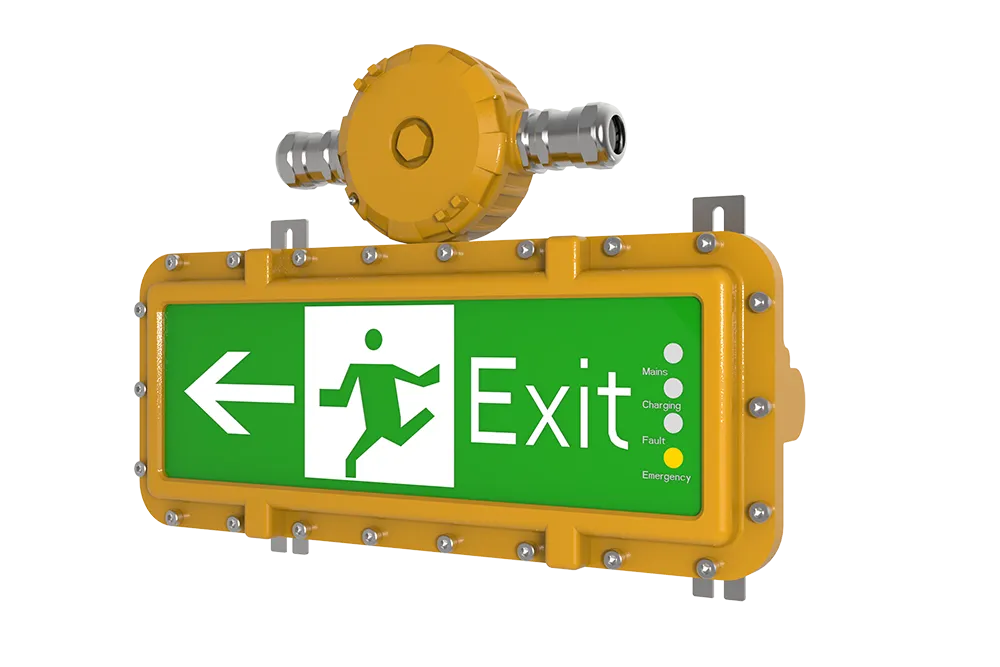
ATEX: Ex II 2G Ex db IIB T6 GbEx II 2D Ex tb IIIC T80°C Db IECEx Ex db IIB T6 Gb;Ex tb IIIC T80°C Db Feature: ● For Zone 1,2 and Zone 21,22● Flameproof type, the strongest Application: Oil and gas, marine, Chemical, pharmaceutical, semiconductor,mining,military industry, paint booth,power plant ETC hazardous area. Technical Specifications:…
View details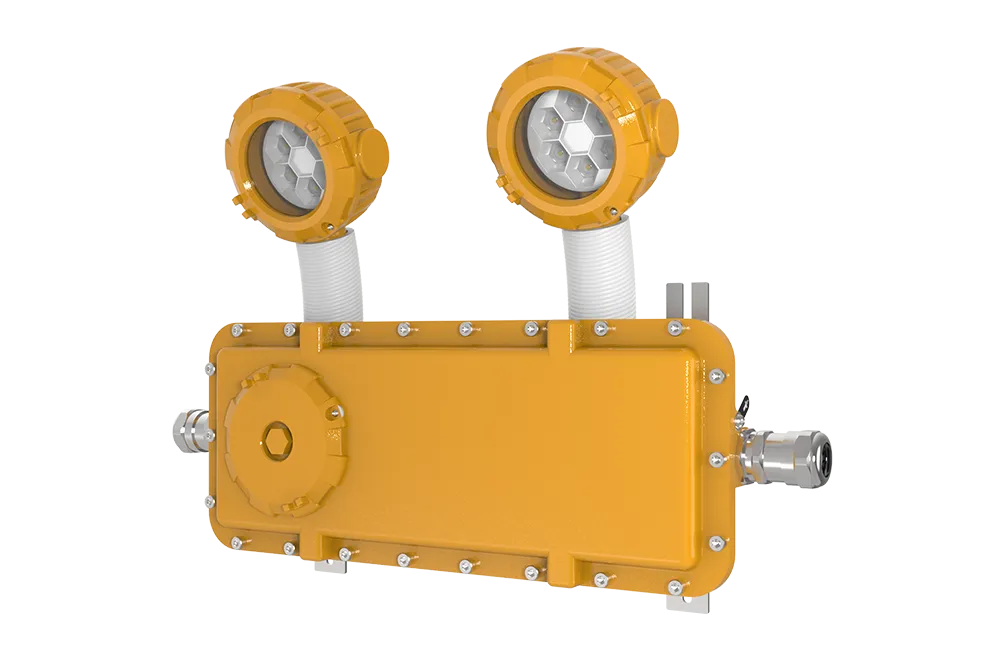
ATEX: Ex II 2G Ex db IIB T6 GbEx II 2D Ex tb IIIC T80°C Db IECEx Ex db IIB T6 Gb;Ex tb IIIC T80°C Db Feature: ● For Zone 1,2 and Zone 21,22● Flameproof type, the strongest Application: Oil and gas, marine, Chemical, pharmaceutical, semiconductor,mining,military industry, paint booth,power plant ETC hazardous area. Technical Specifications:…
View details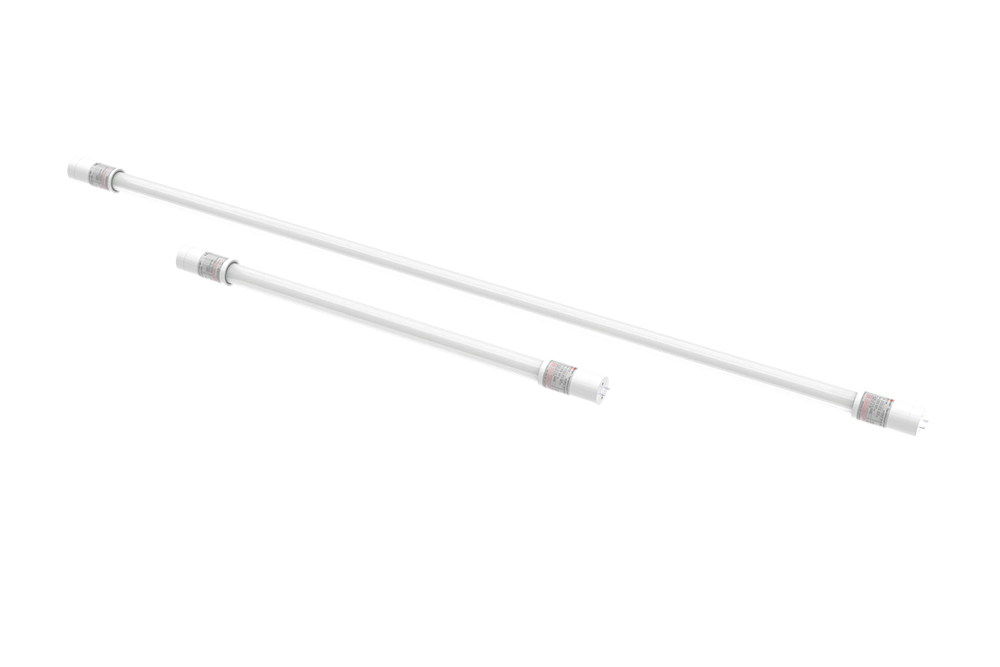
ATEX: Ex II 2G Ex d e IIB T6 Gb ATEX: Ex d e IIB T6 Gb; Feature: ● For Zone 1,2● 9W can replace 18W fluorescent lamps,50% Energy saving Application: Oil and gas, marine, Chemical, pharmaceutical, semiconductor,mining,military industry, paint booth,power plant ETC hazardous area. Technical Specifications: Standards:60079-0, 60079-1, 60079…
View details
How Bright Is 10W LED Flood Light? Learn lumen output, coverage, and real use cases. Discover if a 10W LED flood light is enough for your space.
View details
What does explosion proof lighting mean? Learn how certified explosion proof lighting works, where it is required, and why certification matters in hazardous areas. By SEEKINGLED.
View details
Discover why SEEKINGLED explosion-proof lighting is trusted worldwide. ATEX & IECEx certified, flameproof design, high efficiency, and reliable performance for hazardous areas.
View details
How long to LED lights last in real conditions? Not just specs—see true lifespan, failure causes, and what affects LED durability in daily use.
View details