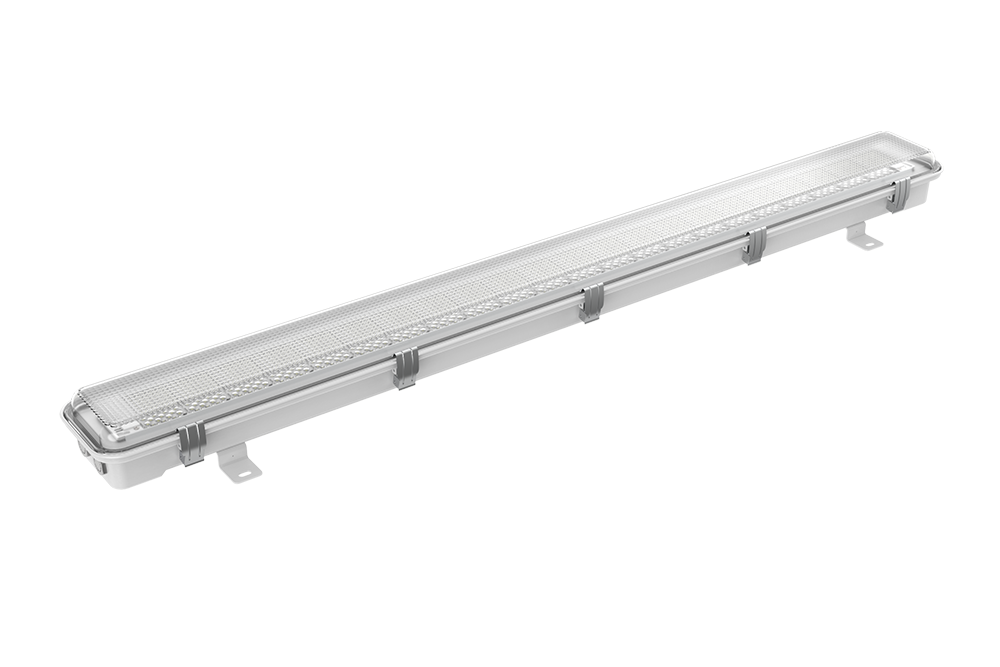
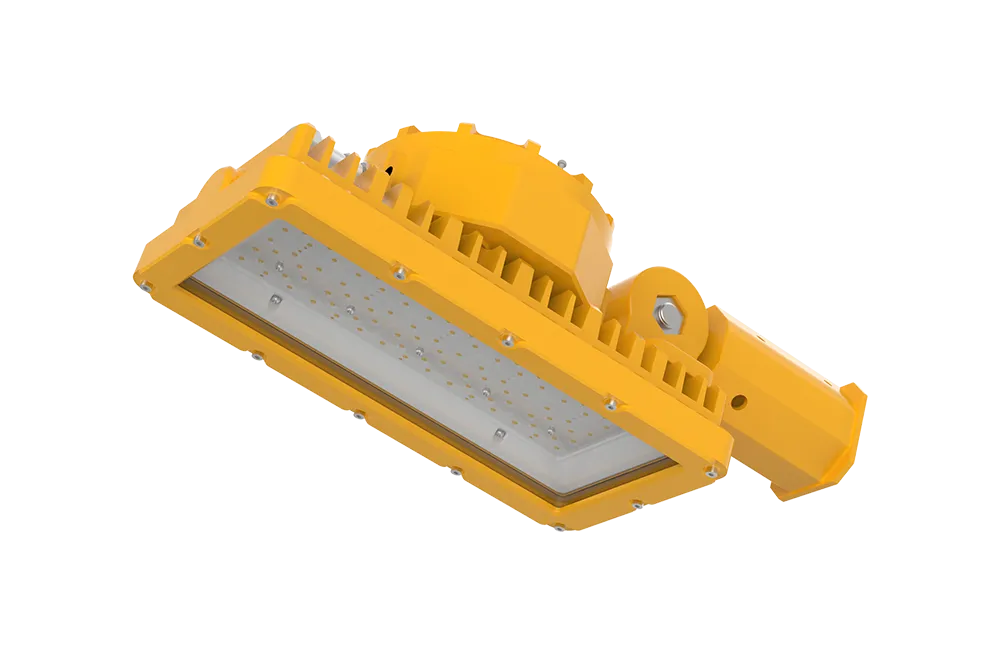
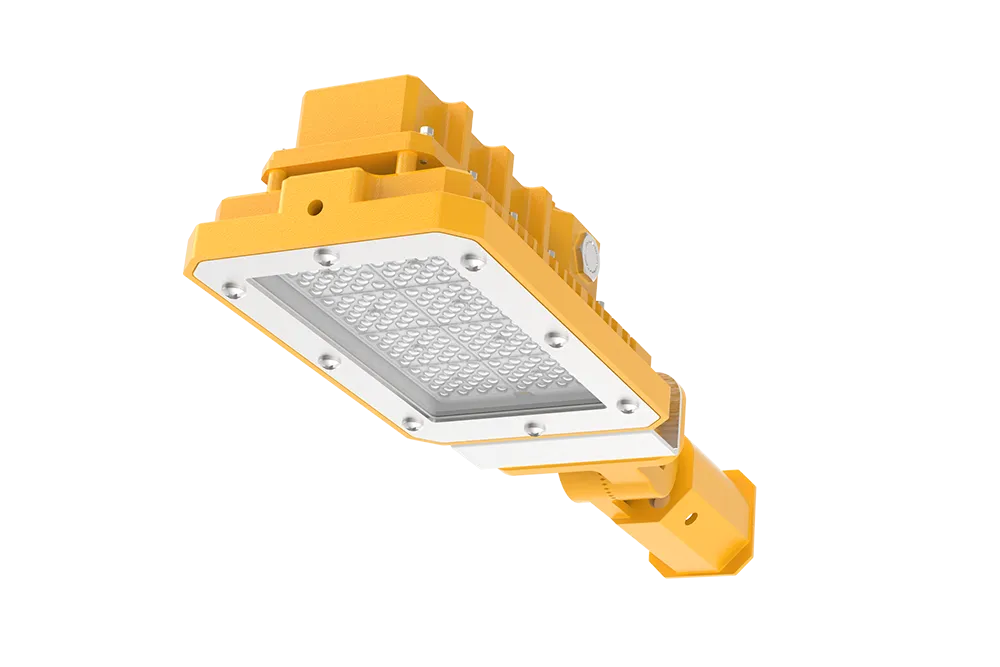
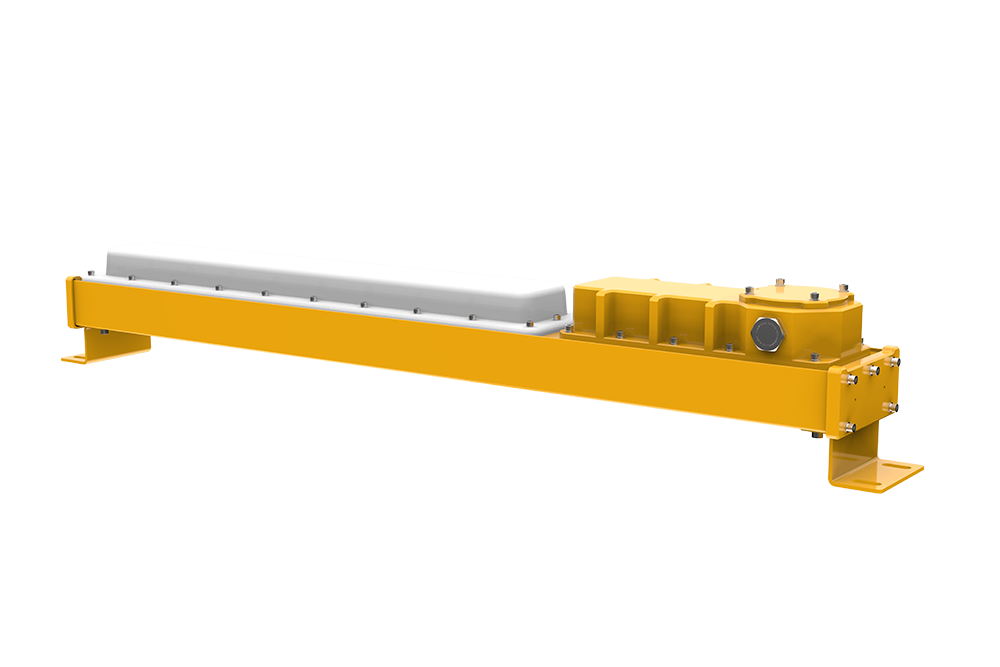
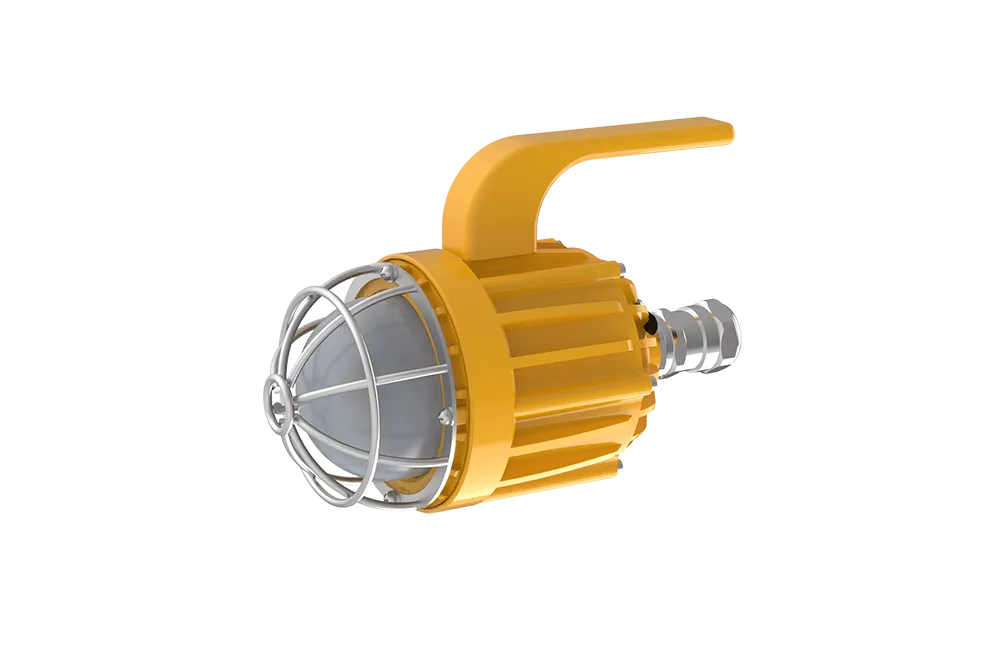
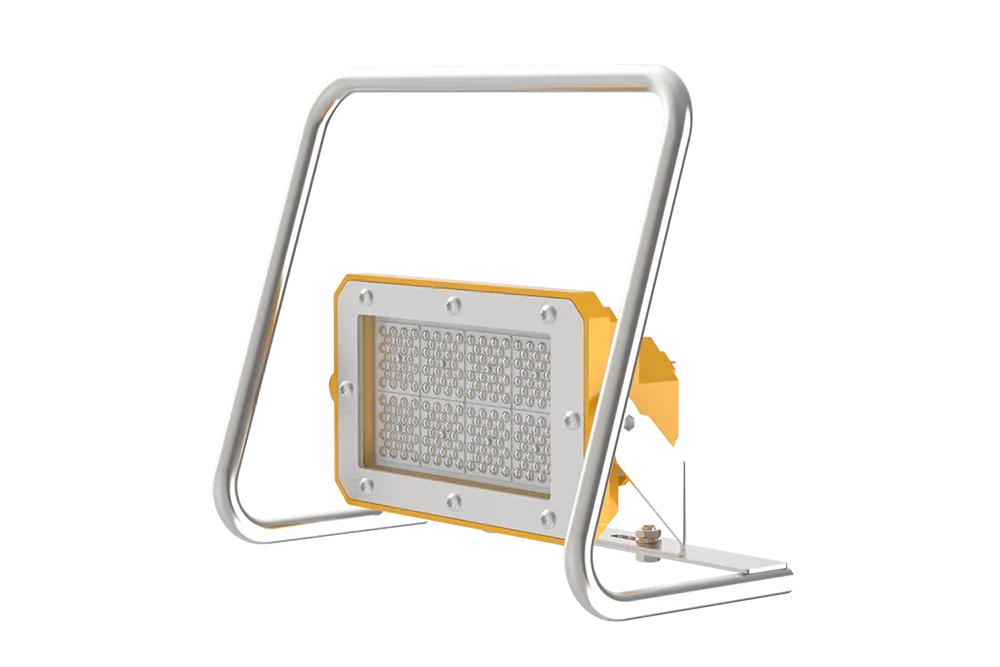
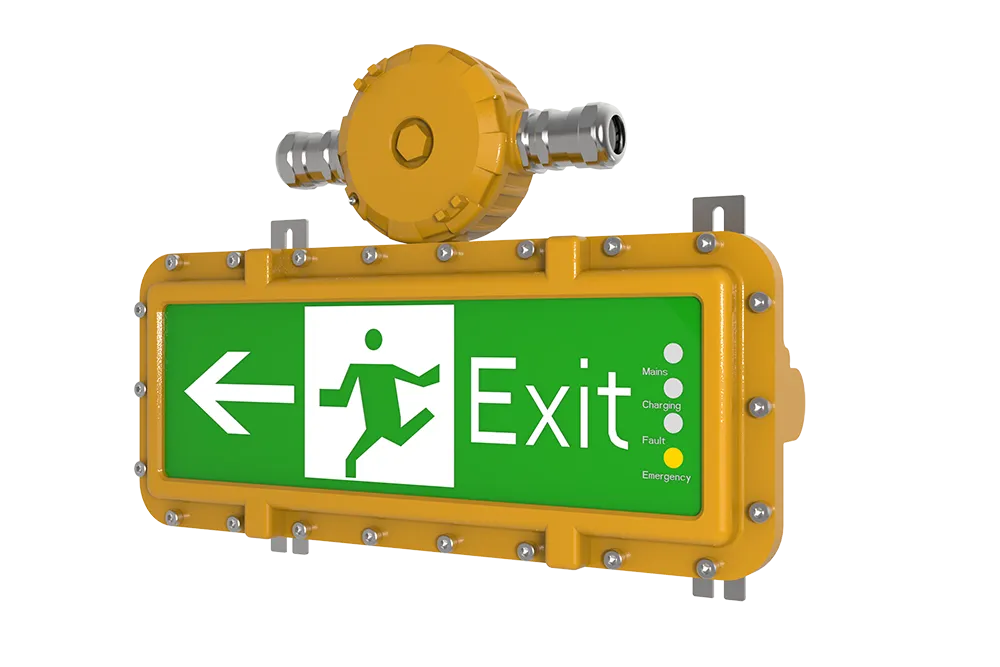
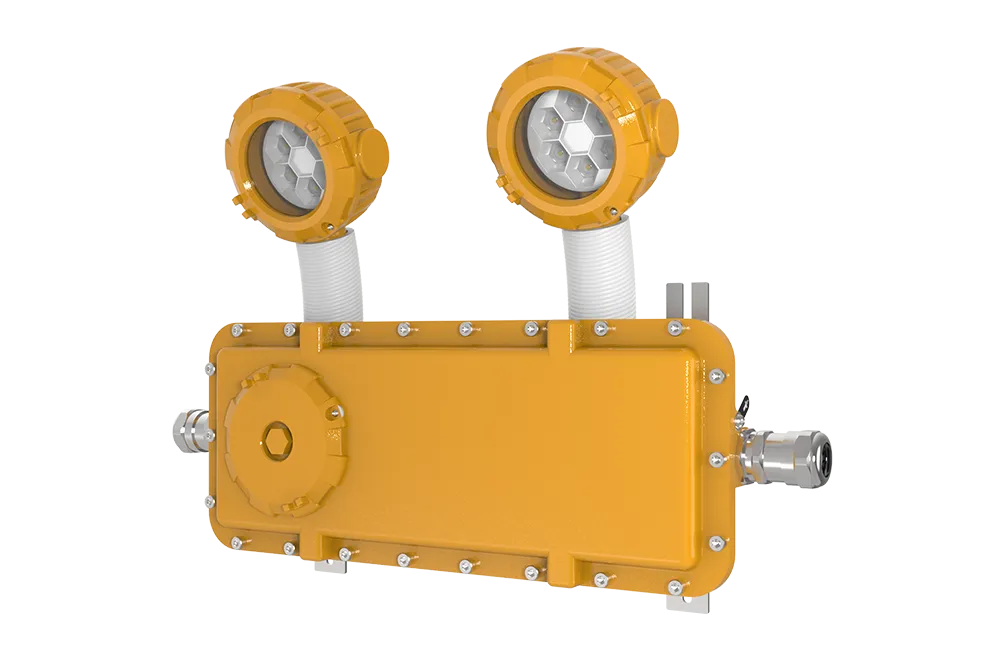
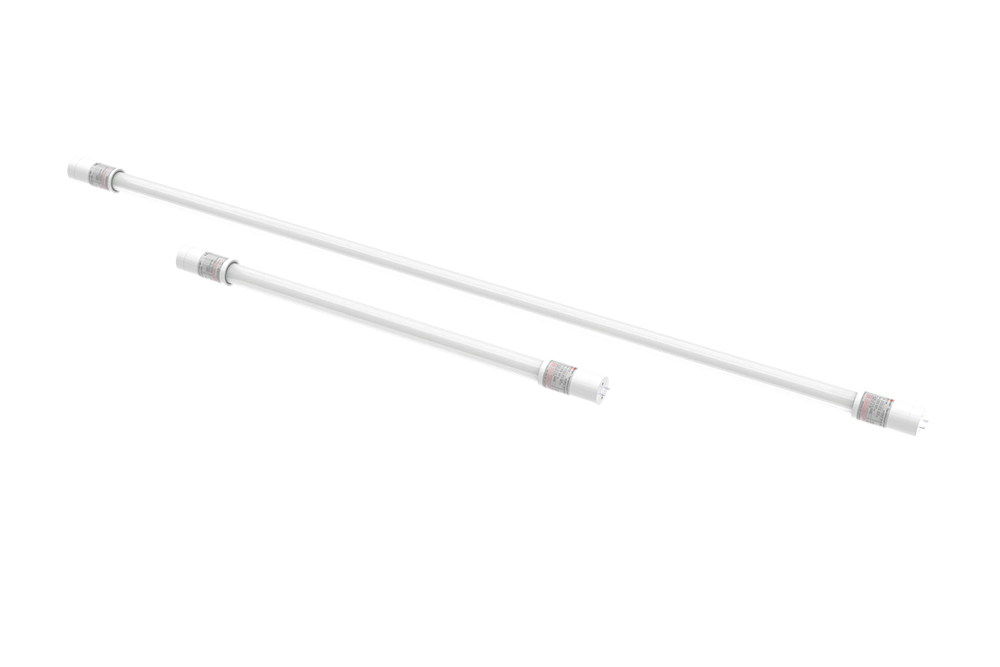
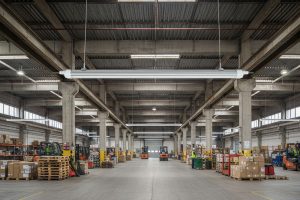
Explosion proof linear lights are used in hazardous industrial environments where flammable gases, combustible dust, or volatile vapors may be present. Common applications include oil refineries, chemical plants, offshore platforms, grain facilities, paint booths, mining operations, and fuel storage terminals where certified lighting is required to prevent ignition risks.
The first time I saw explosion proof linear fixtures installed correctly was inside a coastal petrochemical loading station. The maintenance supervisor pointed at the fixtures overhead and said something I still remember clearly: “These lights are not here because the site is dark. They are here because one spark can shut down an entire terminal.”
That sentence explains the entire industry.
In hazardous locations, lighting becomes part of the safety system itself.
Why hazardous industries use explosion proof linear lights
Regular industrial lighting is not designed to safely contain electrical faults inside explosive atmospheres.
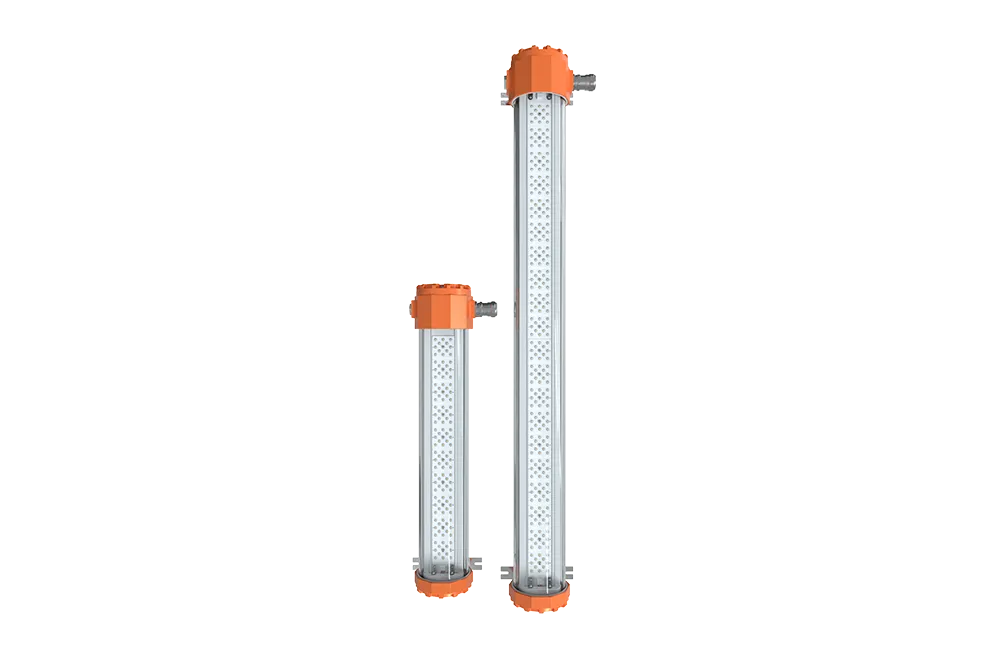
Explosion proof linear fixtures are engineered differently.
They are built with:
Sealed aluminum housings
Reinforced impact-resistant lenses
Thermal control systems
Certified conduit entries
Corrosion-resistant coatings
High ingress protection ratings
If an internal arc or spark occurs, the fixture prevents ignition from reaching the surrounding environment.
According to the Occupational Safety and Health Administration (OSHA), hazardous locations are areas where fire or explosion hazards may exist because of flammable gases, vapors, dust, or ignitable fibers.
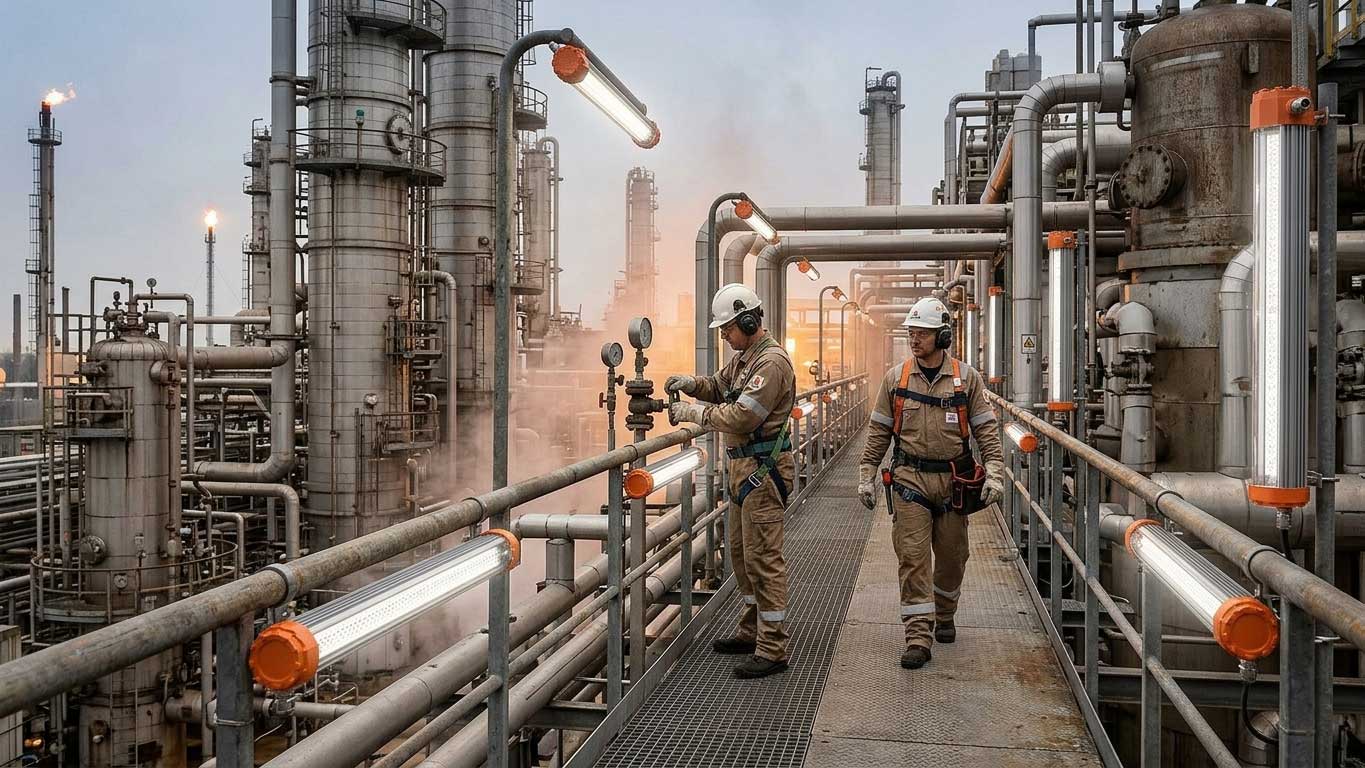
Oil and gas remains one of the largest application sectors for explosion proof linear lights.
These facilities operate around:
Hydrocarbon vapors
Pressurized gas systems
Fuel transfer equipment
Crude oil storage
Solvent exposure
Lighting must continue operating reliably despite vibration, moisture, corrosion, and extreme temperatures.
I once visited a refinery turnaround project where older fluorescent hazardous fixtures had started failing after years of exposure to salt-laden coastal air. The replacement LED linear systems dramatically reduced maintenance downtime because technicians no longer needed to constantly replace tubes and ballasts.
Typical installation zones include:
Oil & Gas Area
Lighting Purpose
Pipe racks
Maintenance visibility
Loading terminals
Fuel transfer operations
Compressor rooms
Hazardous gas protection
Offshore platforms
Corrosion resistance
Refinery walkways
Continuous safe illumination
H2: Chemical processing plants
Chemical facilities often contain volatile solvents, combustible vapors, and reactive substances.
That creates environments where ordinary electrical fixtures become dangerous.
Explosion proof linear lights are widely installed in:
Mixing rooms
Solvent storage zones
Process corridors
Chemical packaging lines
Reactor platforms
One challenge inside chemical plants is corrosion.
Cheap fixtures rarely survive long in environments containing chlorine, ammonia, sulfur compounds, or acidic moisture. I have personally seen standard painted housings blister and oxidize within two years near aggressive chemical wash areas.
That is why quality hazardous fixtures use:
Marine-grade powder coating
Stainless steel hardware
Sealed gaskets
Corrosion-resistant alloys
According to the National Fire Protection Association (NFPA), combustible dust and chemical vapor explosions continue to cause major industrial incidents worldwide.
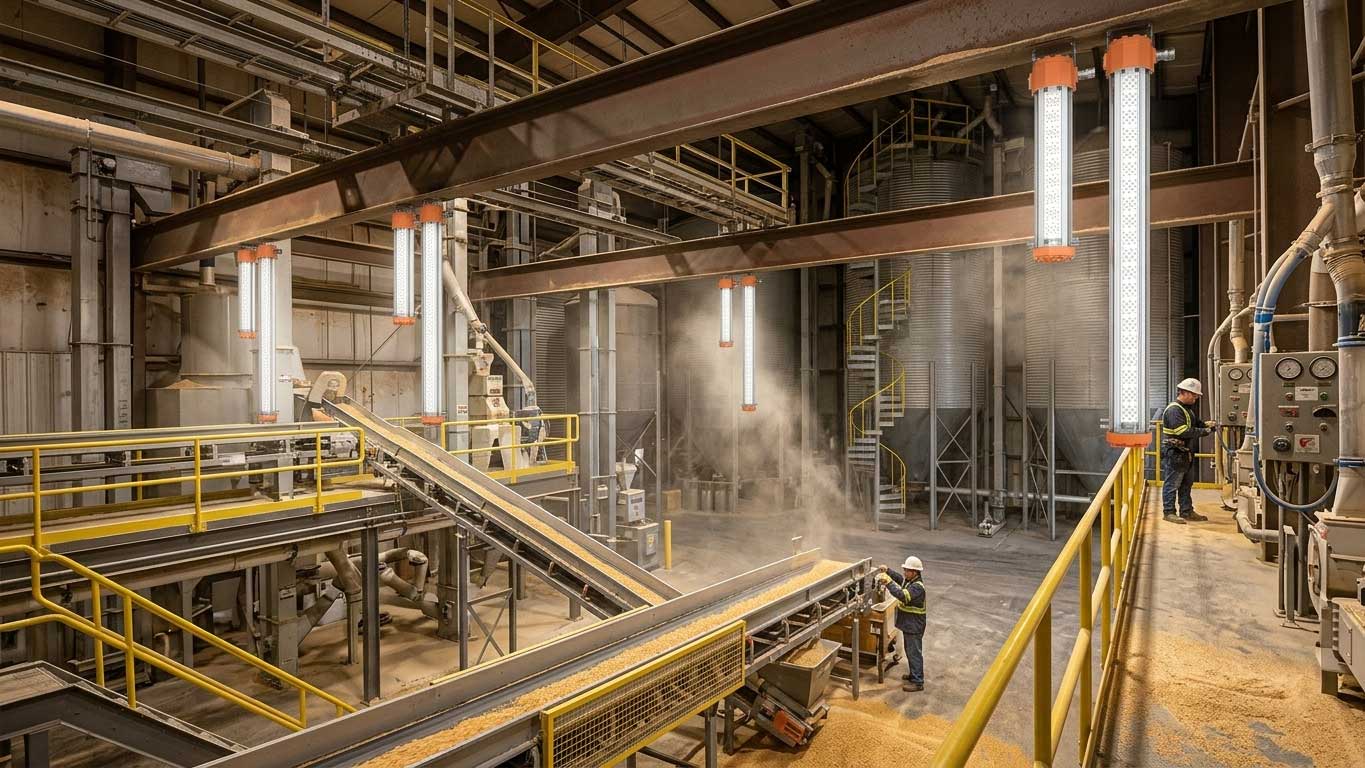
But suspended organic dust particles can become explosively combustible under the right conditions.
Facilities using explosion proof linear lighting include:
Grain silos
Flour mills
Feed processing plants
Sugar refining plants
Corn storage facilities
Dust accumulates on surfaces, cable trays, and fixtures over time. If ignition occurs, secondary explosions can become devastating.
At a Midwest grain terminal retrofit project I observed years ago, maintenance crews specifically requested sealed LED linear fixtures because traditional fixtures accumulated excessive dust internally.
The newer sealed designs reduced cleaning frequency and improved visibility along conveyor systems.
Offshore marine platforms
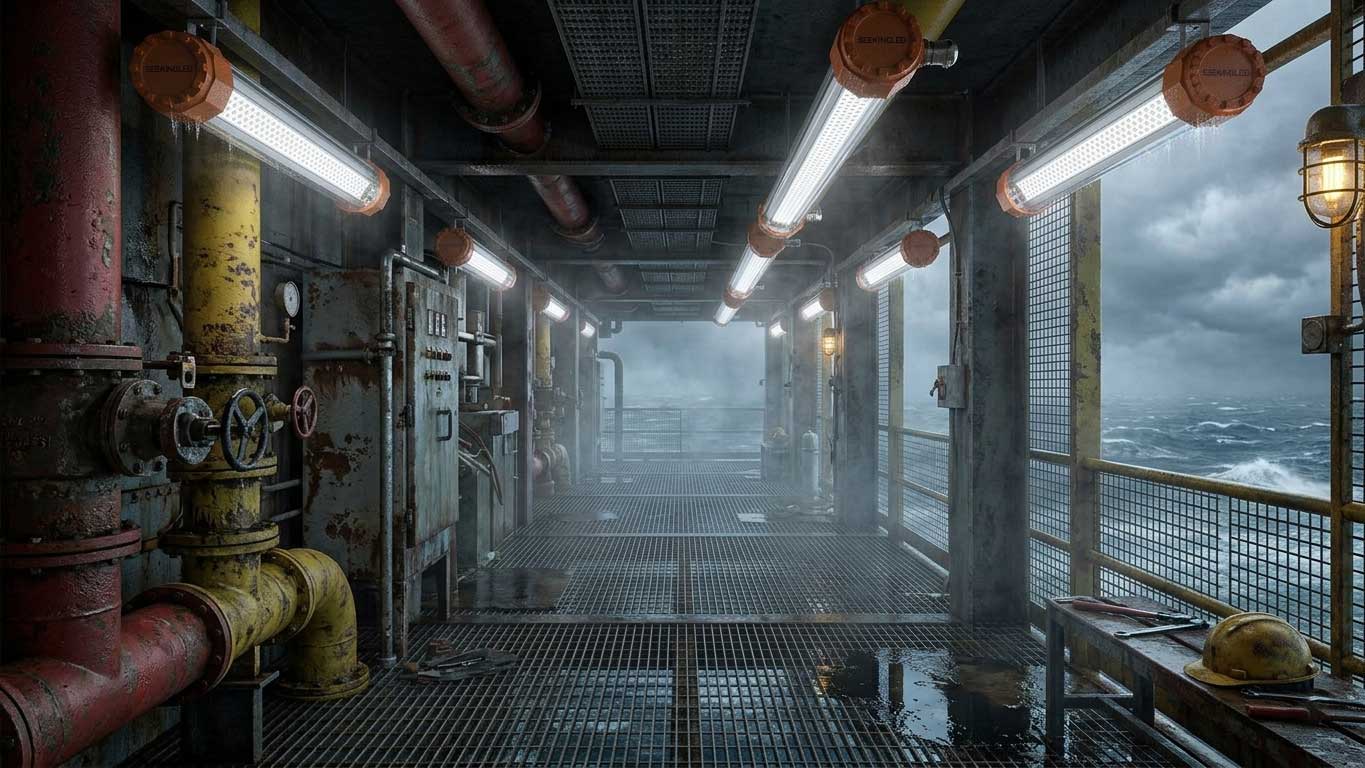
Offshore environments are among the harshest applications for lighting equipment.
Fixtures face:
Salt spray
Constant humidity
Vibration
Wind exposure
Temperature fluctuations
Explosion proof linear lights are commonly mounted along:
Technicians need accurate color visibility and surface defect detection. Linear LED fixtures distribute light more evenly than older HID systems, especially along large finishing lines.
Operators inspecting valves, pipelines, gauges, and instrumentation benefit from uniform illumination instead of concentrated hotspots.
Easier installation in narrow spaces
Linear fixtures fit naturally into:
Corridors
Walkways
Pipe racks
Tunnels
Utility passages
Common hazardous classifications
Choosing the wrong certification can create major compliance problems.
Classification
Typical Environment
ATEX Zone 1
Gas likely during normal operation
ATEX Zone 2
Gas unlikely but possible
Zone 21
Combustible dust
Class 1 Div 1
Explosive gases frequently present
Class 1 Div 2
Hazard only under abnormal conditions
One mistake I still see online is people assuming all industrial waterproof lights are automatically explosion proof.
They are not.
Certification matters.
FAQ:Where are explosion proof linear lights used?
Can explosion proof linear lights be used outdoors?
Yes. Many are specifically engineered for outdoor hazardous locations including offshore platforms, refineries, fuel depots, and marine terminals.
Are explosion proof linear lights waterproof?
Most industrial-grade fixtures feature IP66 or IP67 protection against water and dust ingress.
What industries require ATEX-certified lighting?
Industries involving flammable gas, vapor, or dust hazards often require ATEX-certified fixtures, especially in Europe and international hazardous-area projects.
Are LED explosion proof lights more efficient?
Yes. LED hazardous lighting generally consumes less power and requires less maintenance than fluorescent or HID hazardous fixtures.
Final thoughts
Understanding where explosion proof linear lights are used reveals something important about industrial safety itself. These fixtures are rarely installed for convenience alone. They exist because dangerous atmospheres exist.
From offshore drilling platforms to grain elevators and chemical reactors, hazardous-area lighting quietly performs one critical role every hour of operation: preventing ordinary electrical equipment from becoming an ignition source.
The facilities that take hazardous lighting seriously usually understand something many others learn too late — reliability and safety are deeply connected.
SEEKINGLED LED Linear Explosion Proof Light and Explosion Proof lighting is ATEX and IECEx certified for Zone 1, Zone 2, Zone 21 and Zone 22 hazardous locations, built for long-term industrial use.
LED Linear Explosion Proof Lights and EX Proof lights for Zone 1, Zone 2, Zone 21 and Zone 22 hazardous areas. ATEX & IECEx certified explosion proof LED linear lighting with emergency function, adjustable power and IP67 protection by SEEKINGLED.
SEEKINGLED LED Explosion Proof Flood Lights are ATEX certified for Zone 2 and Zone 22 hazardous areas, offering high efficiency, adjustable power and integrated junction box.
SEEKINGLED LED Explosion Proof Flood Lights are flameproof ATEX and IECEx certified for Zone 1 and Zone 2 hazardous areas, offering high power, adjustable output and long service life.
SEEKINGLED LED Gas Station Canopy Lights are ATEX certified for Zone 2 and Zone 22 hazardous areas, featuring adjustable power and built-in explosion-proof junction box.
ATEX: Ex II 2G Ex db IIB T6/T5 GbEx II 2D Ex tb IIIC T80°C/ T95°C Db IECEx Ex db IIB T6 Gb;Ex tb IIIC T80°C Db Feature: ● For Zone 1,2 and Zone 21,22● Flameproof type, the strongest● 100W can replace 250W HID,energy saving● Power:60W,80W,100W Application: Oil and gas, marine, Chemical, pharmaceutical, semiconductor,mining,military industr…
ATEX: II 3G Ex nR ⅡC T5/T6 GcII 3D Ex tc ⅢC T80℃/T95℃Dc ATEX Certificate NO: TÜV CY 26 ATEX 0207611 X Feature: ● For Zone 2 and Zone 22● 150W can replace 250W HID lamps,Energy saving● Power:50W,75W,100W,150W,200W Application: Oil and gas, marine, Chemical, pharmaceutical, semiconductor,mining,military industry, paint booth,power plant ETC…
LED explosion proof high bay lights are designed for Zone 1, Zone 2, Zone 21 and Zone 22 hazardous areas. This page introduces the HB21 Series from SEEKING, including certifications, power options and real application considerations.
LED Linear Explosion Proof Lights from SEEKINGLED. LU Series Flame Proof lights ATEX-certified explosion proof LED linear lighting for Zone 2 gas and Zone 22 dust areas, IP69K, IK10, long lifetime and flexible power options.
Certified explosion proof work lights for Zone 1 & 21 hazardous areas. Portable, ATEX & IECEx approved, built for oil, gas and chemical plants by SEEKINGLED.
ATEX: II 3G Ex nR ⅡC T6 GcII 3D Ex tc ⅢC T80℃ Dc ATEX Certificate NO: TÜV CY 26 ATEX 0207611 X Feature: ● For Zone 2 and Zone 22● Accepts battery-powered supply● indestructible● Power:AC input:50W,75W,100WDC input:15W,25W,35W Application: Oil and gas, marine, Chemical, pharmaceutical, semiconductor,mining,military industry, paint booth,po…
ATEX: Ex II 2G Ex db IIB T6 GbEx II 2D Ex tb IIIC T80°C Db IECEx Ex db IIB T6 Gb;Ex tb IIIC T80°C Db Feature: ● For Zone 1,2 and Zone 21,22● Flameproof type, the strongest Application: Oil and gas, marine, Chemical, pharmaceutical, semiconductor,mining,military industry, paint booth,power plant ETC hazardous area. Technical Specifications:…
ATEX: Ex II 2G Ex db IIB T6 GbEx II 2D Ex tb IIIC T80°C Db IECEx Ex db IIB T6 Gb;Ex tb IIIC T80°C Db Feature: ● For Zone 1,2 and Zone 21,22● Flameproof type, the strongest Application: Oil and gas, marine, Chemical, pharmaceutical, semiconductor,mining,military industry, paint booth,power plant ETC hazardous area. Technical Specifications:…
ATEX: Ex II 2G Ex d e IIB T6 Gb ATEX: Ex d e IIB T6 Gb; Feature: ● For Zone 1,2● 9W can replace 18W fluorescent lamps,50% Energy saving Application: Oil and gas, marine, Chemical, pharmaceutical, semiconductor,mining,military industry, paint booth,power plant ETC hazardous area. Technical Specifications: Standards:60079-0, 60079-1, 60079…
This engineering-focused news article explains how LED stadium lighting improves light efficiency in real applications, covering Sports Stadium LED Lighting, LED Flood Light, and related solutions by SEEKINGLED.
This article introduces a real LED high bay light application in a European kindergarten using SEEKINGLED GSL Series, focusing on eye safety, low glare, and comfortable lighting for children.
What Are the Best LED Flood Lights? Discover how to choose best commercial LED flood lights for outdoor use with stable performance, durability, and real-world reliability.
How do LED lights work? This guide explains how LED lighting works, how LEDs produce light, and why LED lights are more efficient for industrial and commercial applications.
 Seeking LED