 Seeking LED
what are atex zones?
19what are atex zones? Learn ATEX hazardous area classifications, zone 0, zone 1, zone 2, and how explosion-proof lighting protects industrial facilities.
View detailsSearch the whole station
Because something in the circuit is not stable.
And no, flickering is not “normal” for LED flood lights—outdoor or indoor.
When flickering shows up, it’s usually a warning. Ignore it, and the light doesn’t magically recover. It gets worse.
Most people jump straight to blaming the light. That’s usually the wrong first move.
Outdoor LED flood lights flicker when voltage fluctuates. Long cable runs, shared circuits, or aging breakers can all cause momentary drops. The light reacts instantly—your eyes catch it as flicker.
If the flicker happens when other equipment turns on, that’s your answer right there.
No brand fixes bad power.
Here’s something installers know, but buyers don’t always hear:
LEDs themselves are stable.
Drivers are not.
Heat, moisture, and time hit the driver first. Once a driver starts drifting out of spec, flickering shows up. Sometimes subtle. Sometimes annoying. Sometimes constant.
If flickering increases after rain or long operation hours, the driver is already compromised.
Motion sensors. Photocells. Smart controls.
They’re useful, but they’re also frequent troublemakers.
If your LED flood lights flicker at startup or when switching modes, compatibility is the issue. Not all controls work cleanly with LED drivers. Some send unstable signals that the driver struggles to interpret.
You won’t “adjust” your way out of this.
Hardware compatibility matters.
Outdoor flood lights run hot by nature. When heat dissipation isn’t adequate, internal protection kicks in.
The result isn’t always shutdown. Sometimes it’s flickering.
If the light flickers only after running for a while, heat is not a guess—it’s a strong suspect.
This is where fixture design makes a real difference.
This isn’t marketing. It’s construction.
Reliable brands like SEEKINGLED focus on driver stability, sealed housings, and proper thermal paths. That doesn’t make flicker impossible—but it makes it far less common in real outdoor conditions.
Cheap lights often look fine on day one. Flicker shows up later.
Replacing the LED chips
Resetting the breaker repeatedly
Ignoring early flicker
Those are delays, not solutions.
Flickering is a symptom. Treat it like one.
If you’re asking why are my LED flood lights flickering, the system is unstable somewhere—power, driver, control, or heat.
Find that weak point. Fix it properly.
Or replace the fixture with one built for outdoor reality, not just specs on paper.
That’s where manufacturers like SEEKINGLED earn trust—quietly, over time.

what are atex zones? Learn ATEX hazardous area classifications, zone 0, zone 1, zone 2, and how explosion-proof lighting protects industrial facilities.
View details
How much do LED street lights cost for roads, parking areas, and municipal projects? This guide explains price ranges, cost factors, and real-world LED street lighting choices from SEEKINGLED.
View details
LED High Bay Light project using XJ-HBF150W in an automotive testing facility. 400 units installed to meet camera-based testing requirements with stable illuminance.
View details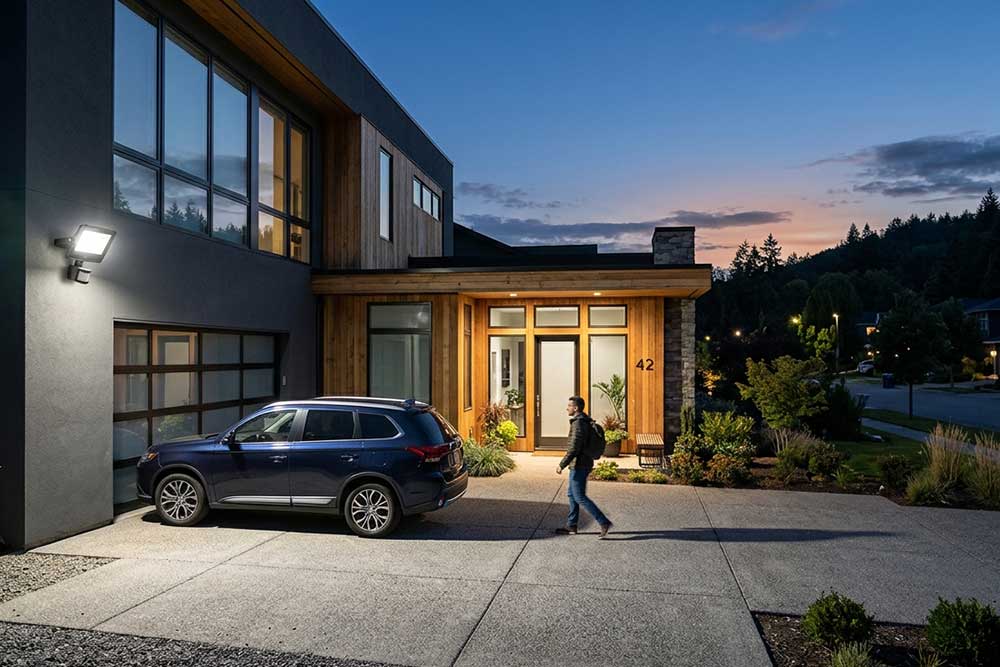
Motion sensor flood lights detect movement within a defined area and automatically switch on when triggered. Most residential models use passive infrared (PI...
View details