 Seeking LED
Why Do LED Street Lights Turn Purple?
239Why do LED street lights turn purple over time? This Q&A explains the real reasons behind purple street lights, how phosphor failure happens, and what cities usually do next.
View detailsSearch the whole station
Short answer:
something in the system is unstable—and it’s usually not the LED chips themselves.
Blinking doesn’t happen randomly. When LED flood lights blink, there’s always a reason. You just need to know where to look first.
Most blinking starts at the power source.
Loose wiring, inconsistent voltage, or a shared circuit under load—any of these can cause LED flood lights to blink. I’ve seen installations where lights worked fine during the day, then started blinking at night when other equipment kicked in.
That’s not a defective light.
That’s unstable input power.
Before replacing anything, check the basics. Tight connections. Correct voltage range. Clean grounding.
Skipping this step wastes time.
Here’s a hard truth many people don’t like hearing:
When LED flood lights blink, the driver is usually the weak point, not the LED.
Drivers don’t like heat, moisture, or cheap components. Outdoors, those problems show up fast. Once a driver starts failing, blinking is often the first warning sign.
If the blinking gets worse over time, that’s not coincidence. That’s the driver giving up.
This one gets overlooked constantly.
If your LED flood lights are connected to a dimmer or control system that isn’t designed for LEDs, blinking is almost guaranteed. Even if it “sort of works” at first.
LEDs don’t behave like old halogen or HID lights. Using the wrong dimmer creates unstable current—and blinking follows.
No adjustment fixes this. The hardware has to match.
Outdoor LED flood lights run long hours. When heat has nowhere to go, components start protecting themselves.
Blinking can happen when internal temperatures exceed safe limits. It’s common with compact housings or poorly designed heat sinks.
If blinking happens after the light has been on for a while, heat is a strong suspect.
This is where product design separates serious manufacturers from shortcut brands.
Well-designed LED flood lights don’t eliminate problems—but they reduce them.
Brands like SEEKINGLED focus on stable drivers, proper thermal management, and outdoor-rated components. That doesn’t make blinking impossible, but it makes it rare.
In real installations, that difference matters more than advertised wattage or lumen numbers.
Don’t assume it’s “normal.”
Don’t replace the fixture immediately.
Don’t ignore early blinking—it usually gets worse.
Start with power. Then driver. Then compatibility. That order saves time and money.
If you’re asking “why are my LED flood lights blinking,” the system is telling you something is wrong.
Blinking is a symptom.
Fix the cause, not the light—unless the light was poorly built to begin with.
That’s why choosing reliable outdoor fixtures from manufacturers like SEEKINGLED matters long before problems show up.
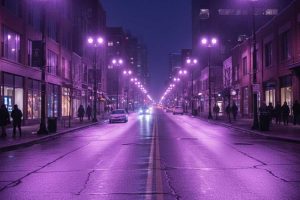
Why do LED street lights turn purple over time? This Q&A explains the real reasons behind purple street lights, how phosphor failure happens, and what cities usually do next.
View details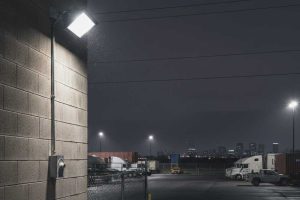
How to install LED flood light correctly for outdoor and industrial applications. Learn wiring, mounting height, safety tips, and common installation mistakes.
View details
explosion proof led lighting engineered for Zone 1 & 2 hazardous areas. ATEX & IECEx certified, energy-efficient and built for oil, gas and chemical safety.
View details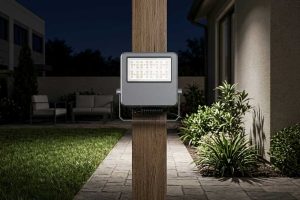
How bright is a 20 watt LED flood light? Discover lumen output, real-world brightness, and best uses with SEEKINGLED field-tested insights.
View details