 Seeking LED

How to replace LED flood light correctly and safely?
235Learn how to replace LED flood light step by step. Practical guidance for outdoor, commercial, and industrial applications using SEEKINGLED fixtures.
View detailsSearch the whole station
Petrol station forecourts are commonplace in daily life, yet they present a clear and inherent explosion risk. Petrol and diesel release flammable vapours during dispensing, storage, and transfer operations. When these vapours mix with air and encounter an ignition source—such as an electrical spark or hot surface—the result can be a rapid explosion or fire.
In such environments, the installation of Explosion Proof lighting is a mandatory requirement, not an optional enhancement. Properly certified fixtures isolate potential ignition sources, preventing any internal fault from propagating into the surrounding explosive atmosphere and thereby safeguarding personnel, equipment, and operational continuity.
European Regulatory Framework
The European Union addresses these risks through the ATEX directives, which form the cornerstone of equipment safety in explosive atmospheres:
Directive 2014/34/EU (ATEX 114) governs the design, manufacture, and certification of equipment for use in potentially explosive atmospheres.
Directive 1999/92/EC (ATEX 137) establishes minimum requirements for worker protection, including the classification of hazardous areas and the selection of suitable equipment.
These directives draw directly from the IEC 60079 series of international standards. They mandate that all electrical apparatus—including lighting—must be certified to ensure it cannot act as an effective ignition source. Within the EU, petrol stations are required to use ATEX-certified explosion-proof luminaires (typically marked Ex d or Ex e) to achieve full compliance and avoid liability.
Hazardous Area Classification at Petrol Stations
Not every part of a petrol station carries the same level of risk. Hazardous areas are classified according to the likelihood and duration of an explosive gas atmosphere (Zone system for gases and vapours). Classification must be undertaken by qualified engineers, taking into account site layout, ventilation, equipment configuration, and operational practices. Standard classifications include:
Zone 0: Areas where an explosive atmosphere is present continuously, for long periods, or frequently (typically more than 1,000 hours per year). This applies to the interiors of storage tanks, pump internals, or vent pipes. Only the highest level of protection (Category 1 equipment) is permissible, employing the most stringent protection methods.
Zone 1: Areas where an explosive atmosphere is likely to occur occasionally in normal operation (typically 10–1,000 hours per year). This usually covers the immediate vicinity of dispensers, pump islands (extending approximately 0.5–1 metre above ground level), filling nozzles, and zones around normal vapour release points. Category 2 equipment is required, such as Ex d flameproof or Ex e increased safety explosion-proof luminaires, capable of containing any potential internal ignition.
Zone 2: Areas where an explosive atmosphere is not likely in normal operation but, if it does occur, will exist only for a short period (typically less than 10 hours per year, confined to abnormal conditions such as leaks). This encompasses the wider forecourt, vehicle parking positions, and peripheral zones. Category 3 equipment is permitted, although many operators opt for higher-rated fixtures to ensure greater reliability.
Areas outside these classified zones are deemed non-hazardous (safe areas), where standard lighting may be used.
The Necessity of ATEX-Certified Explosion-Proof Lighting
Conventional luminaires pose risks through switching sparks, prolonged surface heating, or vapour ingress into enclosures. ATEX-certified fixtures incorporate established protection concepts—such as flameproof enclosure (Ex d) or increased safety (Ex e)—ensuring that internal faults remain contained and cannot ignite the external atmosphere.
Leading European operators, including Shell, BP, and Total, have widely adopted ATEX-certified LED gas station canopy lights for forecourt illumination. These fixtures typically feature high IP ratings for weather resistance, extended service life, and low maintenance needs, contributing to a marked reduction in incident rates.
Compliance with ATEX is a legal obligation across the EU and represents a fundamental aspect of an operator’s duty of care. Accurate zone classification, appropriate equipment selection, and regular inspections are essential to prevent incidents, protect people, and sustain business operations in one of the most stringently regulated hazardous environments encountered in everyday use.
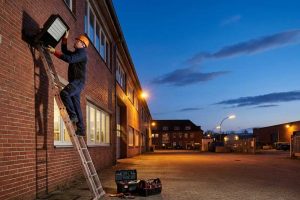
Learn how to replace LED flood light step by step. Practical guidance for outdoor, commercial, and industrial applications using SEEKINGLED fixtures.
View details
ex proof led lights engineered for Zone 1 & 2 hazardous areas. ATEX & IECEx certified, energy-efficient and built for oil, gas and chemical safety by SEEKINGLED.
View details
how much power does a 200w led light use - cost guide | SEEKINGLED
View details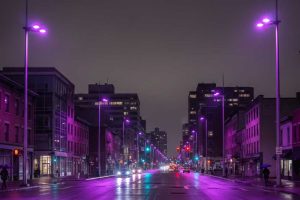
Why are there purple LED street lights appearing in cities? This official Q&A explains the real technical causes, safety impact, and how municipalities address purple street lights.
View details