 Seeking LED
How Far Apart Should LED High Bay Lights Be Spaced?
311How far apart should LED high bay lights be spaced? Learn practical spacing guidelines based on ceiling height, beam angle, and real industrial layouts.
View detailsSearch the whole station
If you’re wondering why does my LED flood light stay on, the most common reason is not actually the LED itself. It’s usually the sensor system — motion detector, photocell, or wiring — keeping the light permanently triggered.
That’s the short explanation.
But when you’re standing outside at midnight staring at a light that refuses to turn off, the real cause can be less obvious. Sometimes it’s a simple adjustment. Sometimes it’s a faulty component. And occasionally it’s just the way the installation was done.
Let’s go through the situations I’ve actually seen in the field.
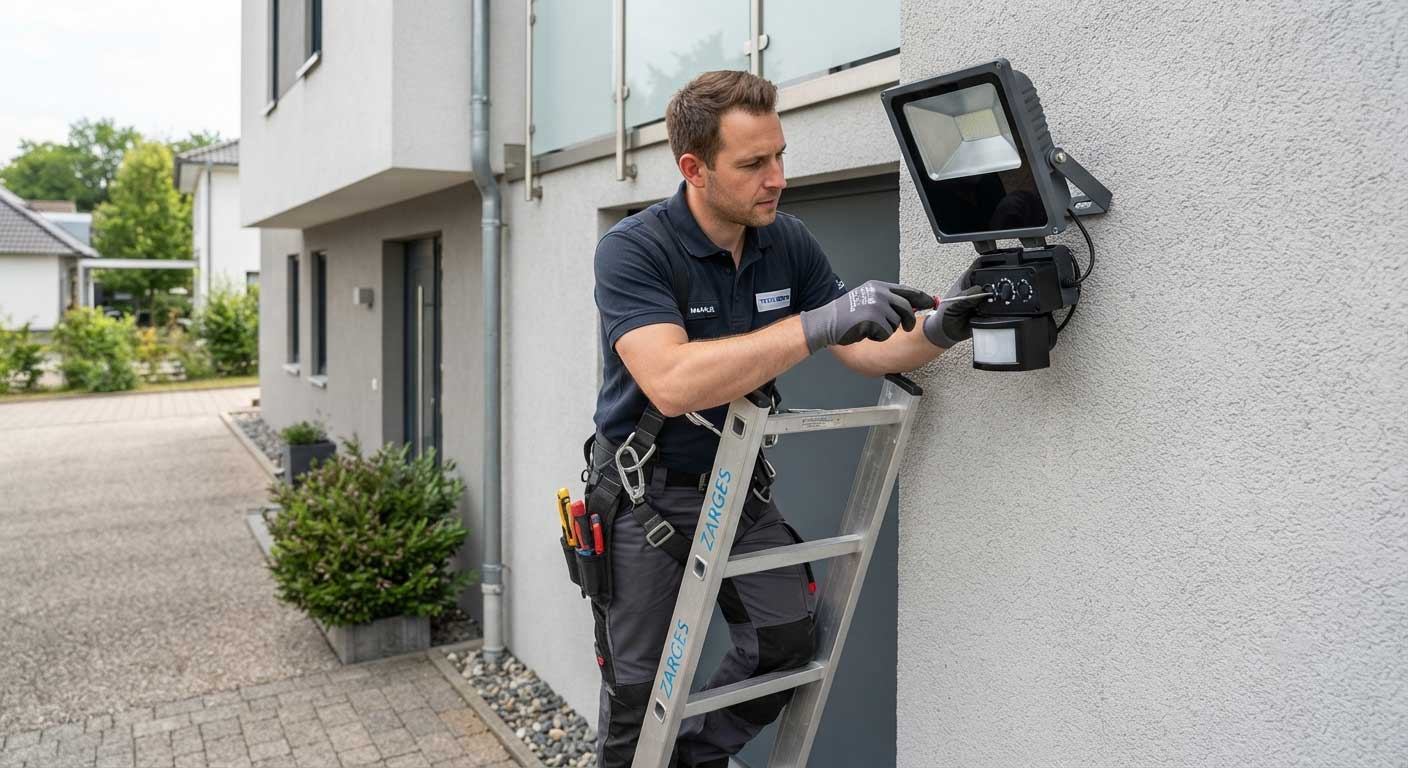
The first thing I check when someone asks why does my LED flood light stay on is the motion sensor sensitivity.
Most security flood lights have adjustable detection levels. If the sensitivity is set too high, the sensor reacts to almost anything:
I’ve seen flood lights in parking lots that never turn off simply because wind keeps moving nearby leaves.
Dial the sensitivity down a bit. Often the problem disappears immediately.
It’s simple. But surprisingly easy to overlook.
Another common issue is timer settings.
Many flood lights allow the light to remain on for a specific time after motion detection — sometimes 1 minute, sometimes 10 or even 20 minutes.
If motion continues to be detected during that period, the timer resets.
Which means the light never actually turns off.
From the outside it looks like the light is permanently on, when in reality it’s being retriggered again and again.
A quick adjustment usually solves this.
Outdoor security lights often combine motion sensors with photocells.
The photocell decides when it’s dark enough for the light to operate. The motion sensor decides when to turn it on.
But photocells can be fooled.
If the flood light shines directly onto its own sensor, it can create a feedback loop. The photocell thinks it’s daytime because it detects light — then suddenly darkness again once the light turns off.
The cycle repeats.
Sometimes installers accidentally mount the light where reflective surfaces bounce light back to the sensor. White walls are famous for this.
If you’re asking why does my LED flood light stay on, check where the sensor is pointing.
That small detail causes a surprising number of problems.
Not every issue comes from sensors.
Sometimes the wiring itself is wrong.
I’ve seen installations where the motion sensor was bypassed unintentionally during wiring. The result? The flood light receives constant power and stays on permanently.
This happens more often with DIY installations or quick replacements where wire colors don’t match the original fixture.
If the light never responds to motion at all — it’s just always on — the wiring should be inspected.
Sensors do wear out.
Heat, moisture, and dust slowly degrade electronic components. Over time the sensor may fail in the “triggered” state, meaning it continuously signals the light to remain on.
At that point adjustments won’t help.
The sensor or the entire fixture may need replacement.
This is why professional outdoor fixtures often use higher quality components and better sealing. For example, SEEKINGLED LED flood lights are designed with sealed housings and durable electronics to reduce long-term sensor failures in outdoor environments.
Not every lighting product is built with that level of durability.
Sometimes the cause is simply the environment.
I once inspected a flood light installed above a warehouse entrance that stayed on all night. After checking the wiring and sensor, everything looked correct.
The real culprit?
A spider web right across the sensor lens.
Insects kept hitting the web and triggering motion detection.
Remove the web — problem solved.
Strange things like that happen more often than people think.
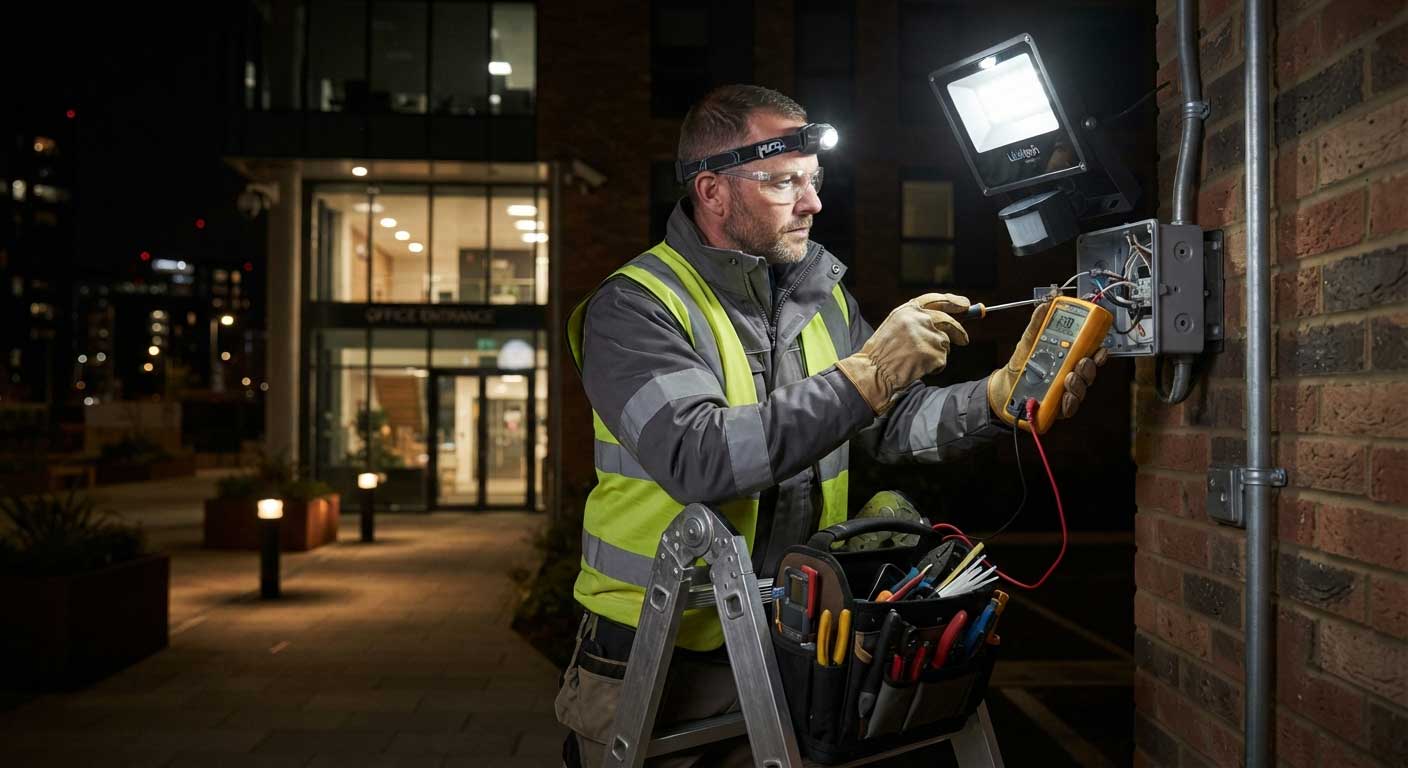
A motion flood light stays on continuously because of incorrect sensor settings, constant movement detection, wiring issues, or a faulty motion sensor. Adjusting sensitivity, timer settings, and detection range can often solve the problem.
Common causes include nearby moving objects, heat sources, pets, or traffic triggering the sensor repeatedly. For outdoor security lighting, proper sensor positioning and installation are important to prevent unnecessary operation and extend LED flood light lifespan.
Motion flood lights are outdoor lighting fixtures that automatically turn on when movement is detected, providing security, convenience, and energy savings.
They are commonly installed around homes, warehouses, garages, parking areas, and commercial buildings. Compared with traditional flood lights, motion-activated models reduce energy consumption by operating only when illumination is needed.
Flood lights at night can be energy efficient when combined with LED technology and motion sensors. They provide bright outdoor illumination while reducing unnecessary operating hours.
Modern LED flood lights use significantly less energy than traditional halogen lights and can provide long service life. Motion control further improves efficiency by activating lighting only when people or vehicles enter the detection area.
Sensor lights work by using motion detectors, such as PIR or microwave sensors, to detect movement and automatically control the light.
When the sensor detects activity, it sends a signal to turn the light on for a preset period. After movement stops, the light switches off automatically. This makes sensor lights useful for security lighting, walkways, entrances, and outdoor areas where continuous lighting is unnecessary.
How long do motion sensor flood lights last? Motion sensor flood lights typically last 5–10 years, while high-quality LED models can operate for 50,000 hours or more under proper conditions. Their actual lifespan depends on LED quality, sensor durability, weather exposure, installation method, and operating frequency.Learn more about “How Long Do Motion Sensor Flood Lights Last“
How to change LED flood light bulb is a common question, especially for outdoor lighting around buildings, parking areas, or sports facilities. The short answer is: it depends on the type of LED flood light you are using.
Unlike traditional halogen or HID floodlights, many modern LED flood lights are designed as integrated fixtures rather than bulb-replaceable lamps.Learn more about “How to Change LED Flood Light Bulb“
So if you’re asking why does my LED flood light stay on, the answer usually comes down to sensors, wiring, or installation conditions rather than the LED technology itself.
Start with the simple checks: sensor sensitivity, timer settings, and photocell position. Most of the time the fix is straightforward.
And if the fixture is older or poorly designed, replacing it with a more reliable model can save a lot of frustration. High-quality outdoor fixtures — including many produced by SEEKINGLED — are built specifically to avoid these sensor and wiring issues over long-term use.
Because in outdoor lighting, reliability matters just as much as brightness.
A security light that never turns off is not really doing its job.
How long do motion sensor flood lights last?
It’s not a fixed number.
On paper, LEDs run for years. In reality, what fails first is usually the sensor, not the light source. I’ve replaced quite a few where the LED was still fine, but the sensor just wouldn’t behave anymore.
Rough estimate? Around 3–5 years in normal outdoor use.
If the environment is harsh, expect less.
Why does my flood light stay on?
Usually, it’s still reacting to something.
Not always obvious. Wind, shadows, even small movements you don’t notice right away. The sensor keeps picking it up, so the light never really gets a chance to turn off.
From a distance it looks “stuck,” but it’s actually being triggered again and again.
Why is my flood light staying on all night?
Seen this a few times.
Either there’s constant activity in the area, or the sensor is getting confused. Light reflecting back into the sensor can mess with it more than people expect.
In busier places, it’s simpler — movement never stops, so the light doesn’t either.
How do you turn off flood lights that won’t shut off?
First thing I’d try — cut the power for a minute.
After that, check the settings. Sensitivity too high or delay too long can make it feel like it never switches off.
If changing those doesn’t help, then it’s probably not a settings issue anymore.
What should I do if my flood light won’t turn off?
When it really won’t turn off at all, I stop adjusting and start checking.
Look at the wiring. Sometimes the sensor gets bypassed without realizing it, especially in quick installs.
If wiring looks fine, then it’s likely the sensor itself. At that point, replacing the fixture is usually quicker than trying to fix it.
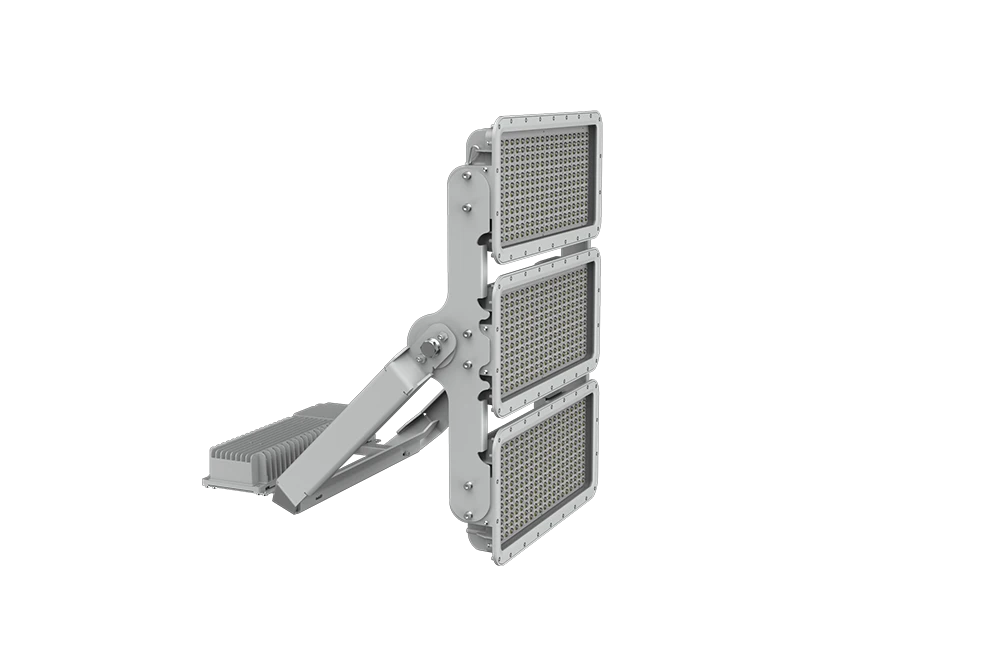
Sports Stadium LED Lighting by SEEKINGLED delivers high mast illumination, precise beam control, and EN 12193 compliant performance for professional venues.
View details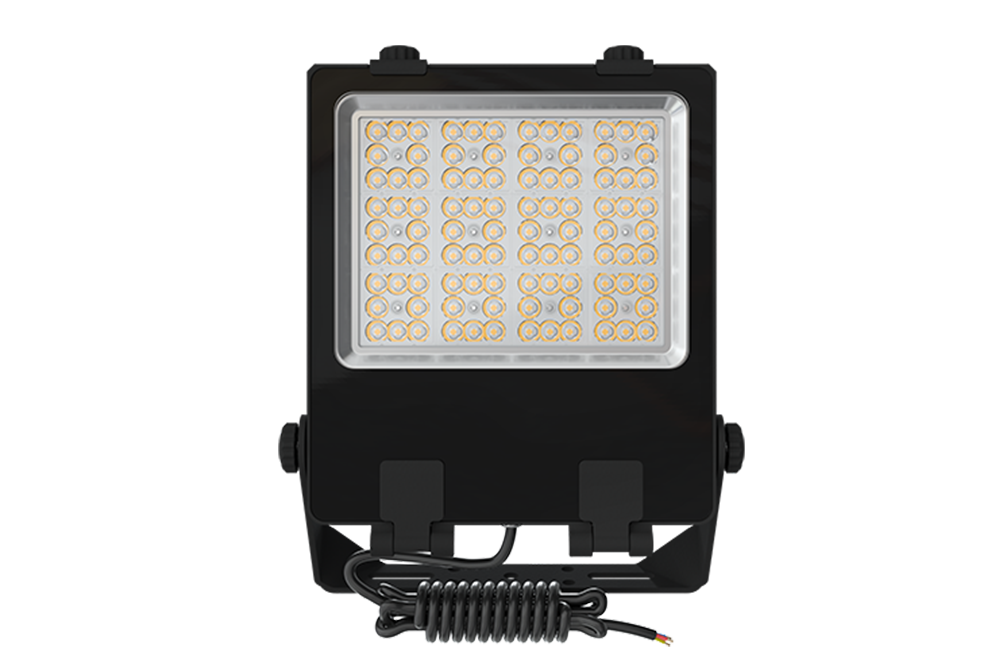
SEEKING FLX Series LED flood light outdoor for sports courts and open-area projects with 170lm/W efficiency, IP66 protection and multiple beam distributions. Designed for long-life commercial and public outdoor use.
View details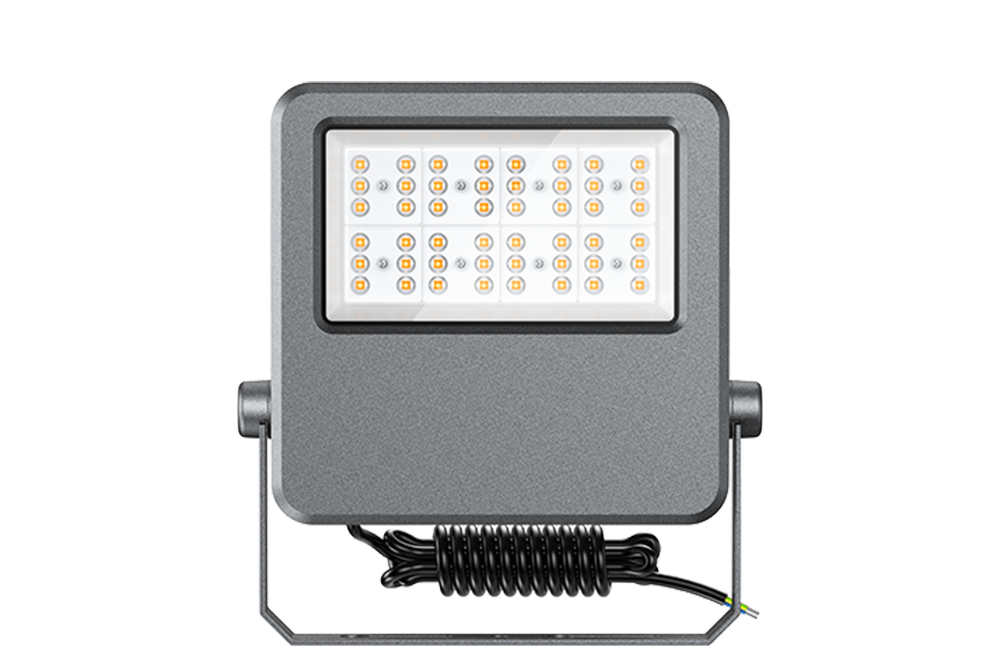
SEEKING FLE Series LED outdoor flood lights for sports grounds and open areas with multiple beam angles, IP66 protection and up to 170lm/W. Designed for long-life outdoor installations with professional driver options.
View details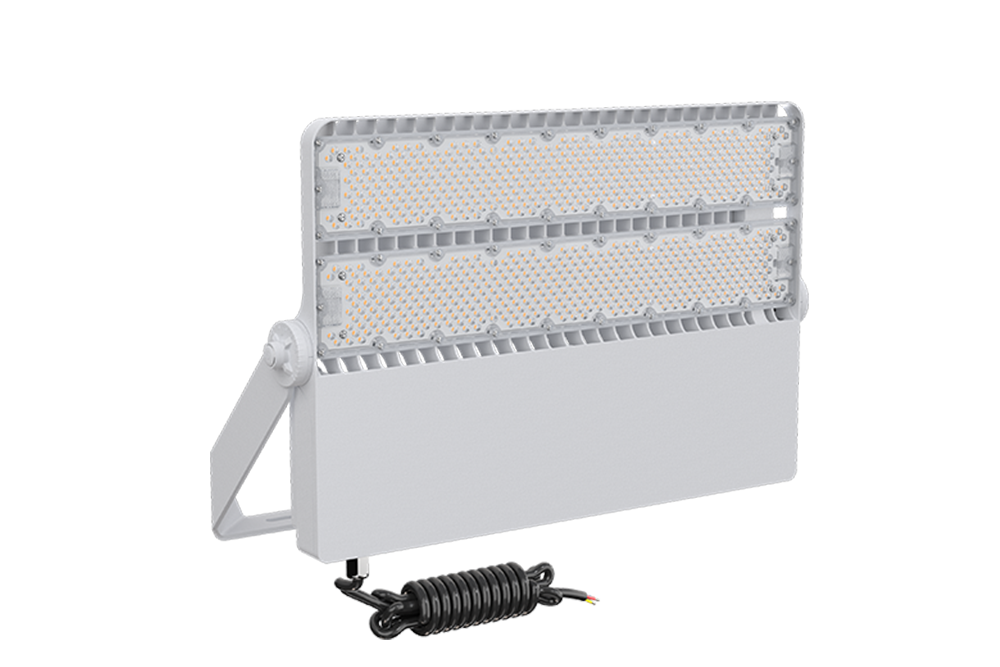
SEEKING FLD Series outdoor LED flood lights and high power led flood light deliver up to 960W with precision beam angles for sports fields, stadiums and large outdoor areas. IK08 & IP66 protection, 170lm/W efficiency and 100,000h lifetime.
View details
How far apart should LED high bay lights be spaced? Learn practical spacing guidelines based on ceiling height, beam angle, and real industrial layouts.
View details
Do LED flood lights attract bugs? Learn how color temperature, brightness, and installation affect insects, and how SEEKINGLED outdoor LED flood lights reduce the issue.
View details
Discover how high bay LED lights 200W from SEEKINGLED solve glare, energy waste, and maintenance issues in sports halls, warehouses, and large commercial interiors. UGR
View details
how much power does a 200w led light use - cost guide | SEEKINGLED
View details