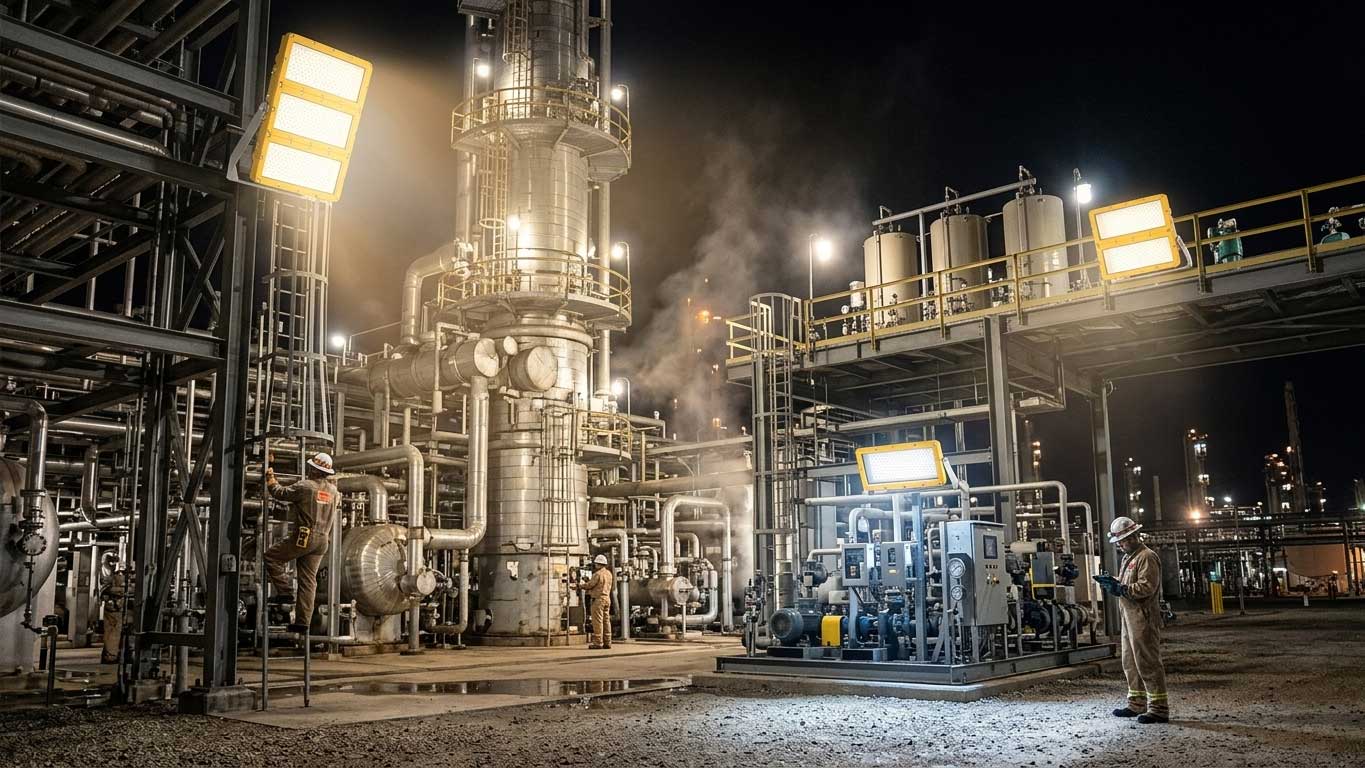
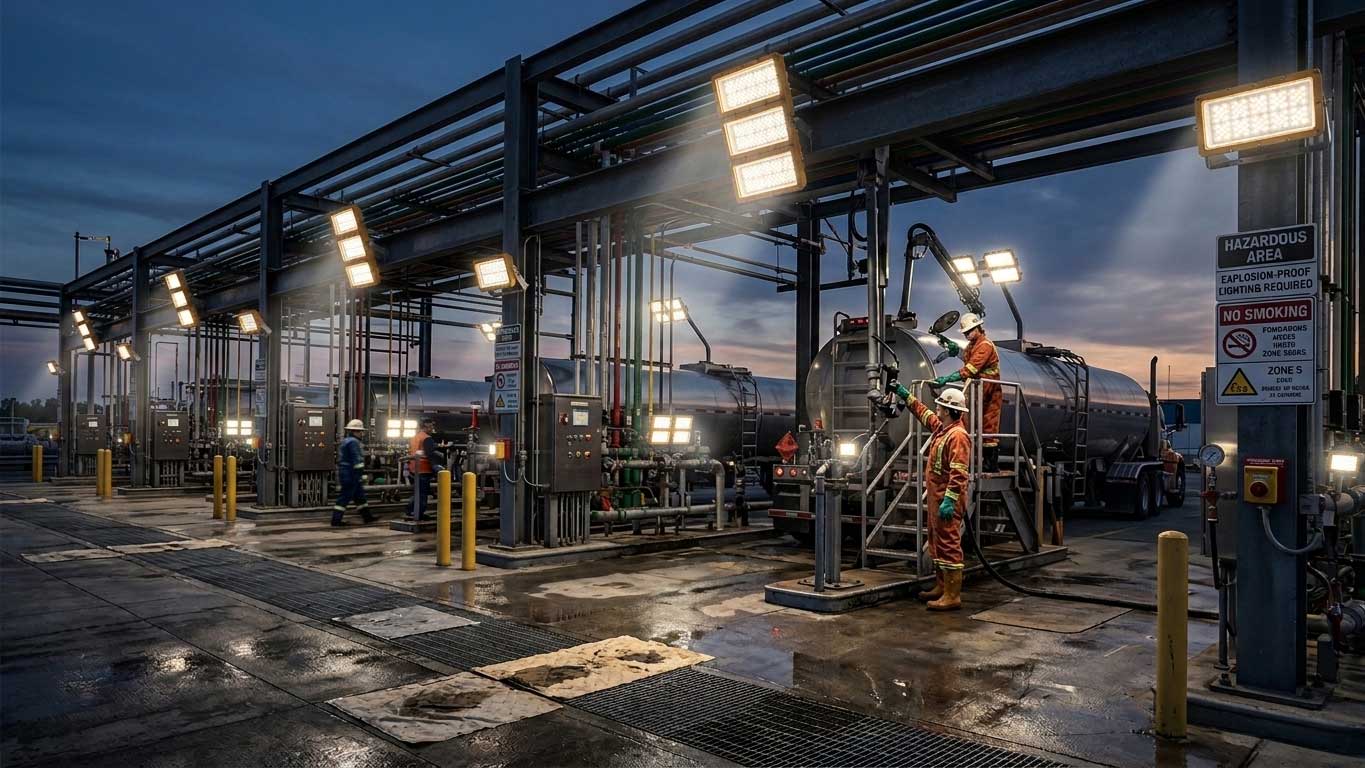
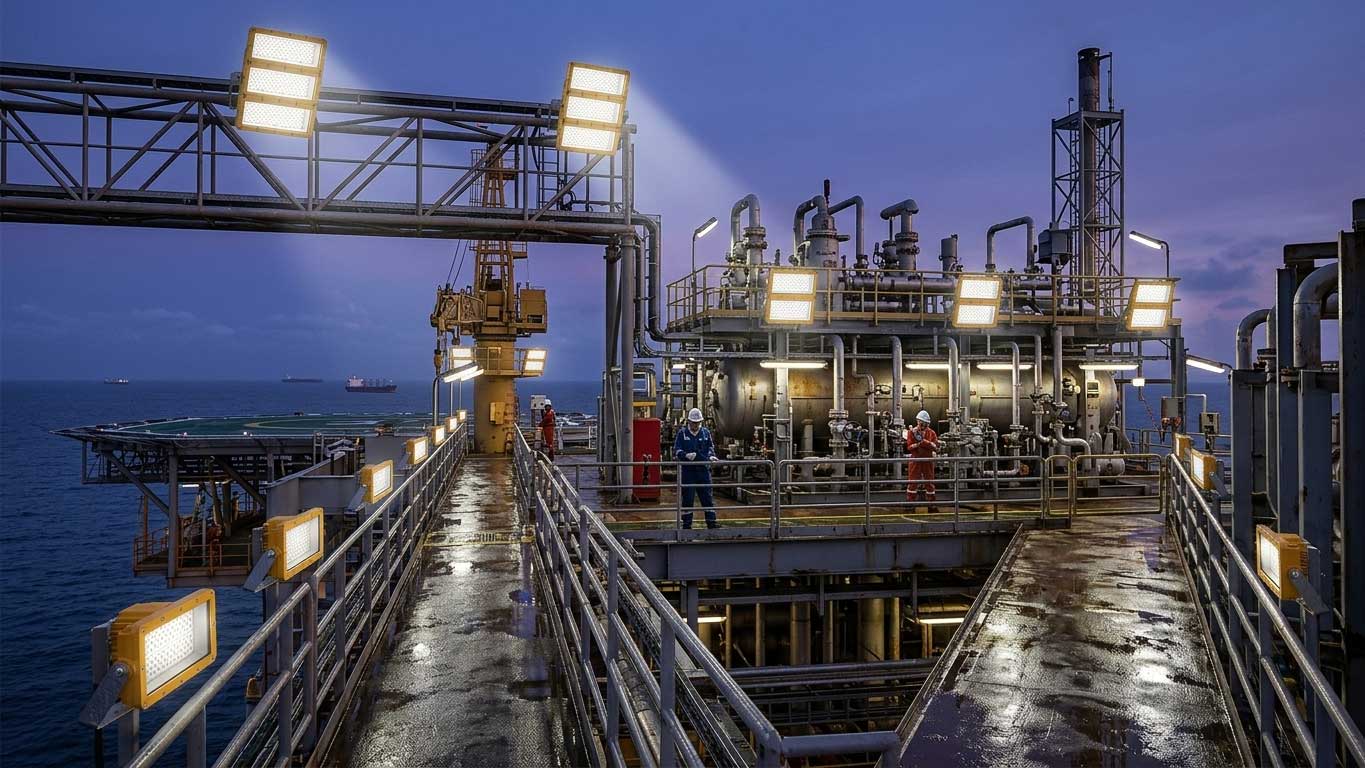
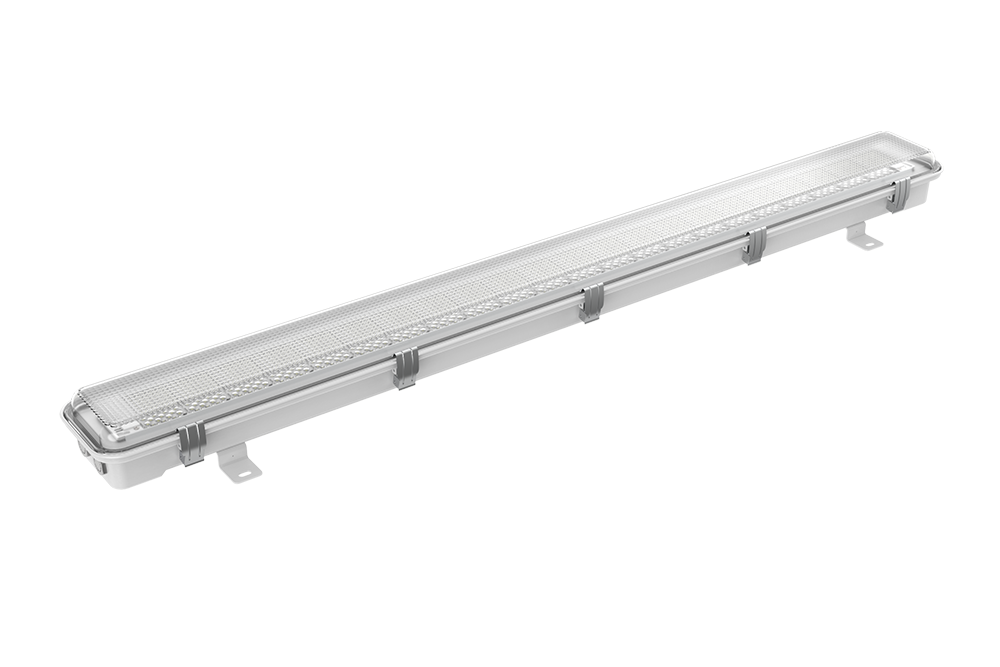
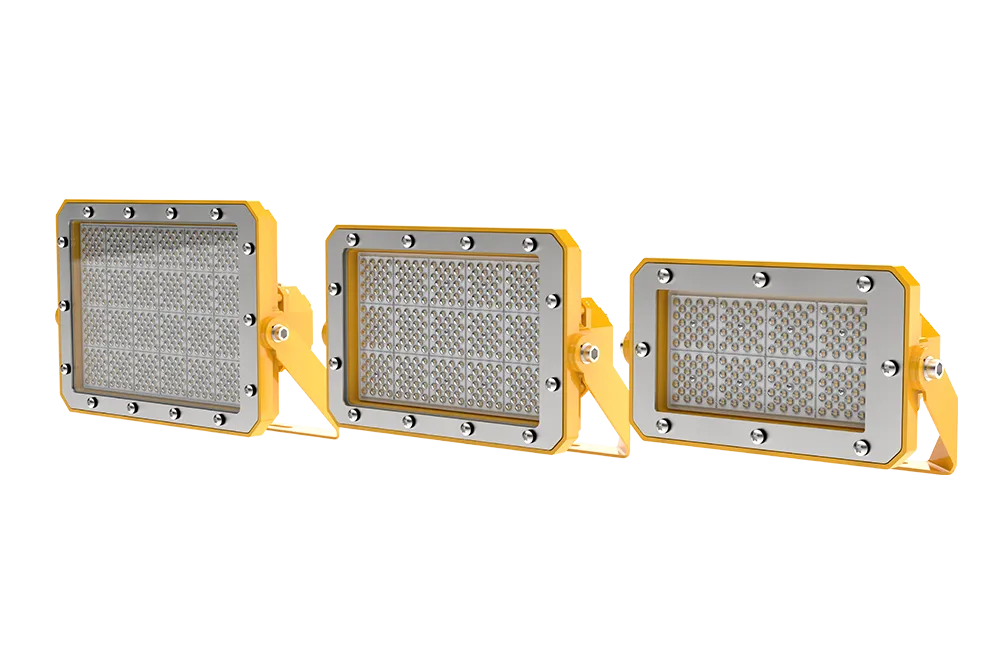
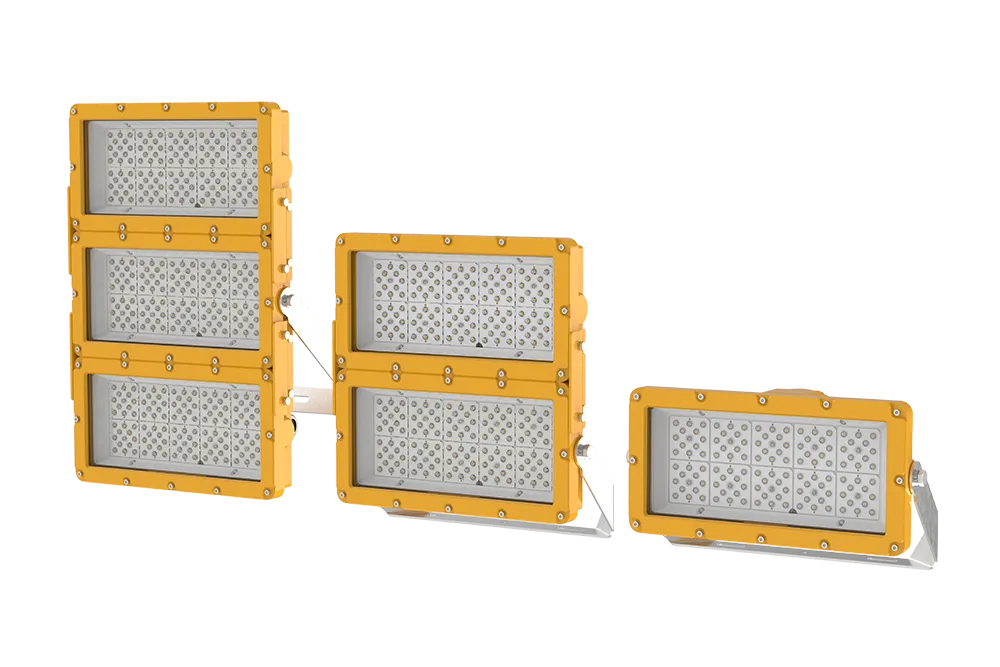
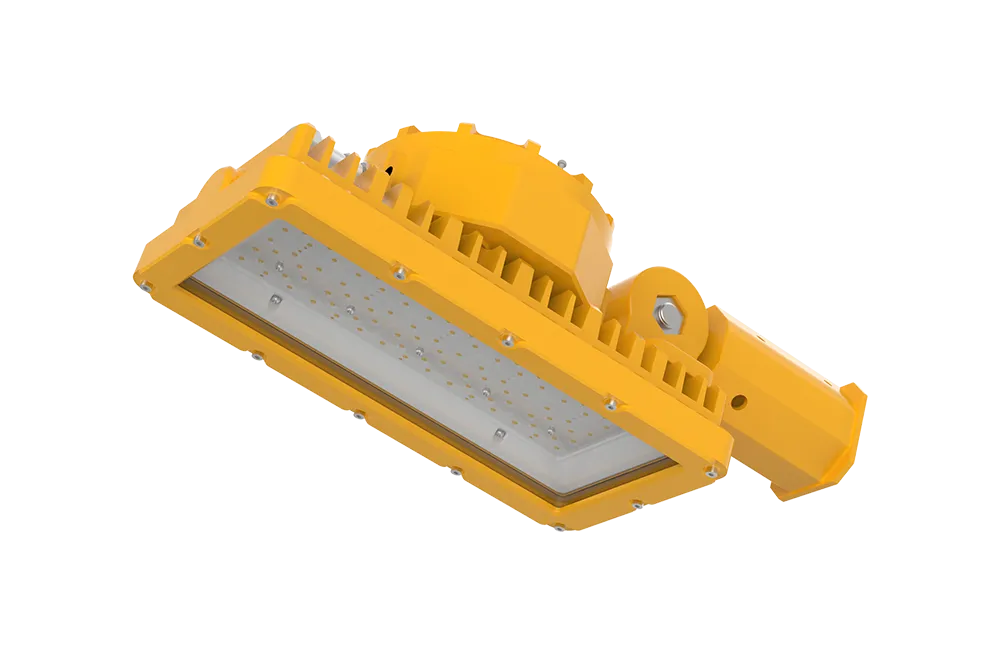
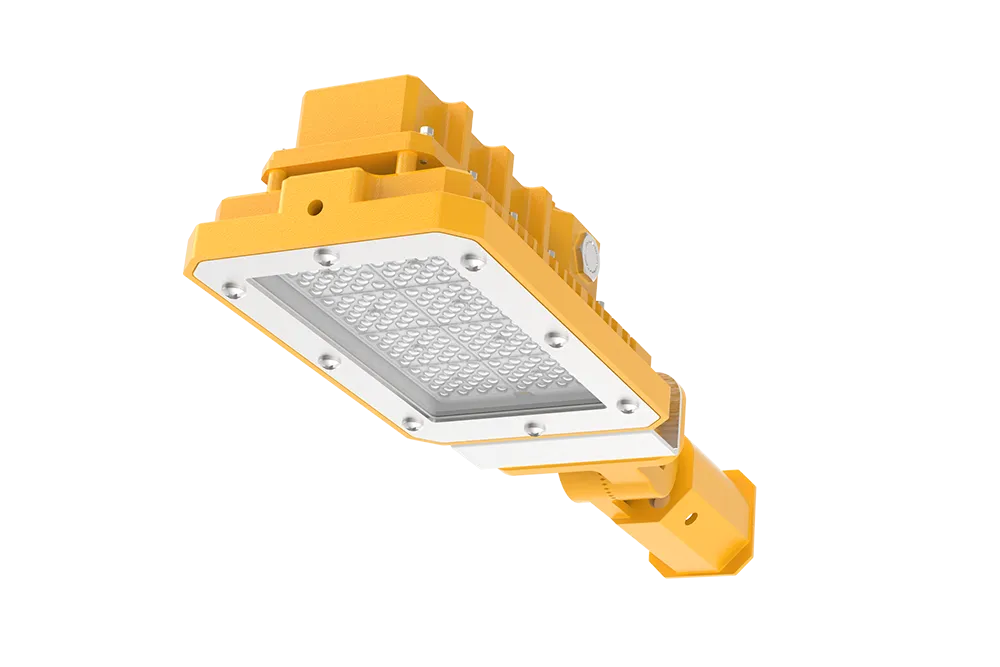
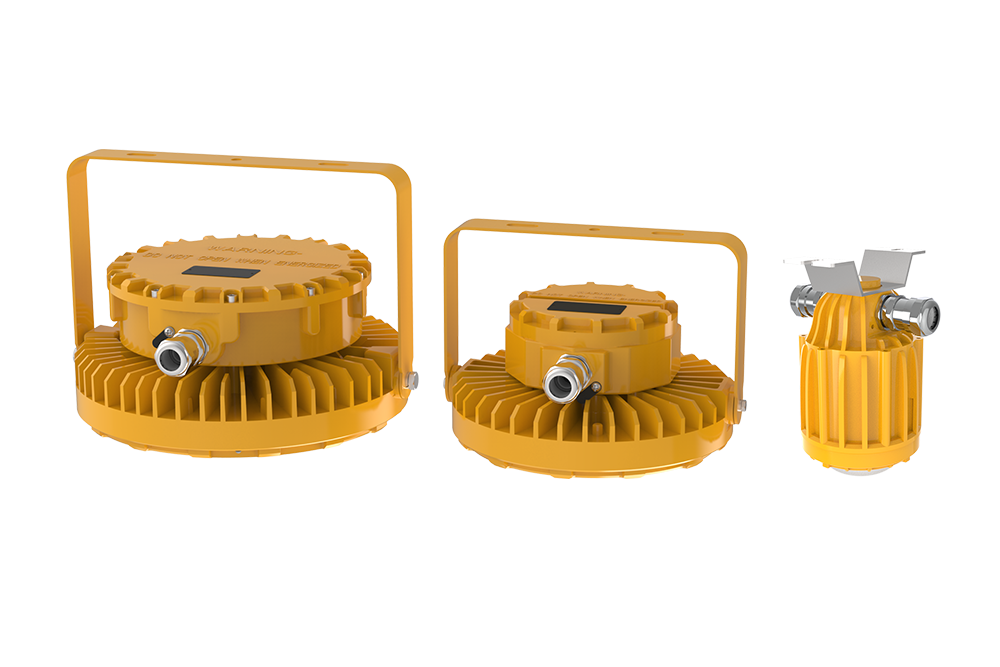
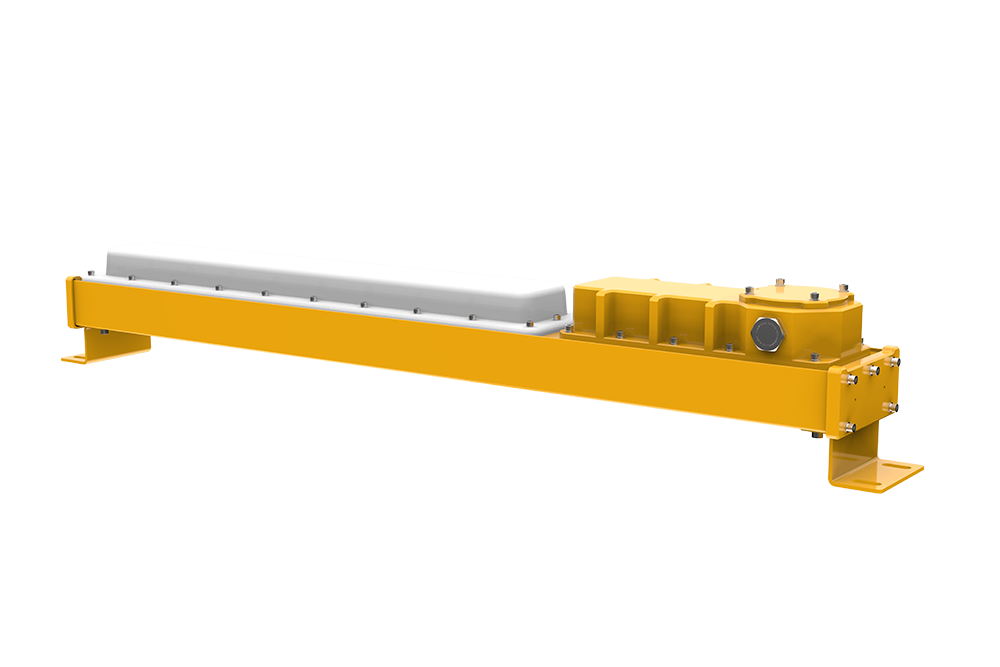
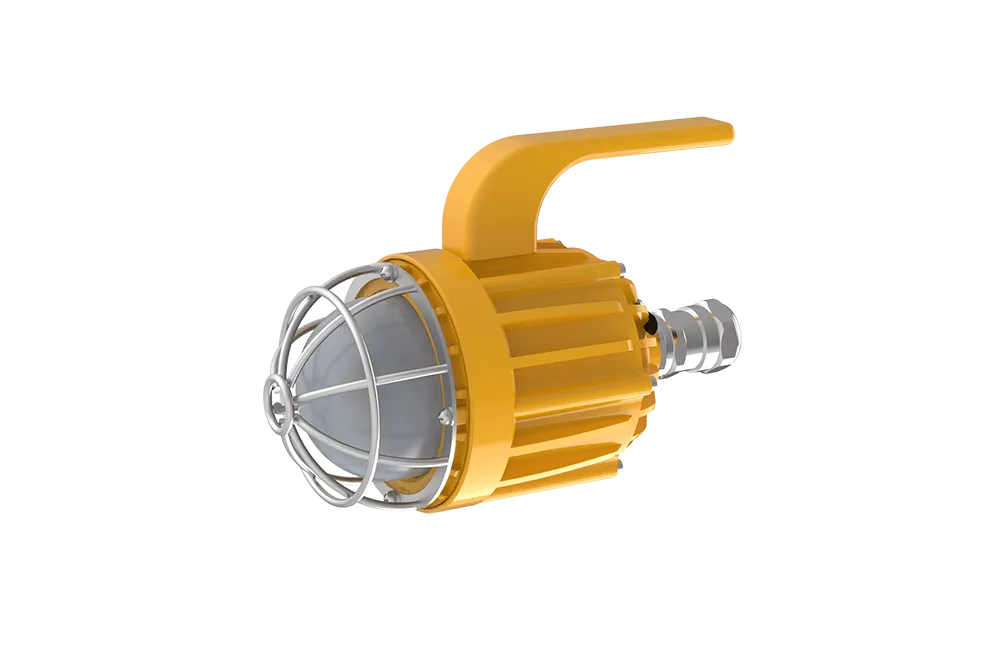
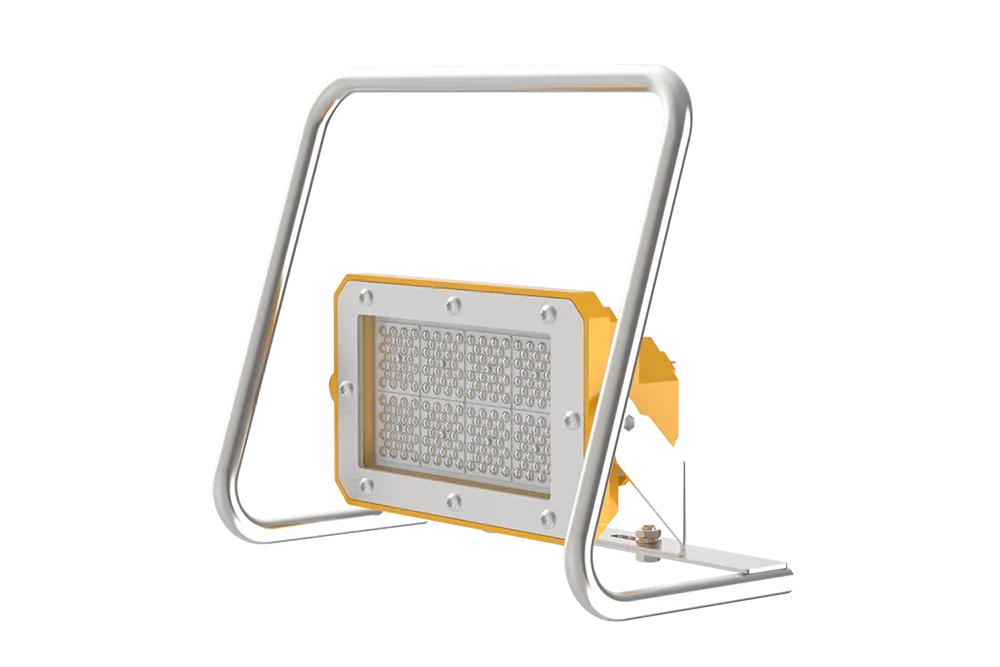
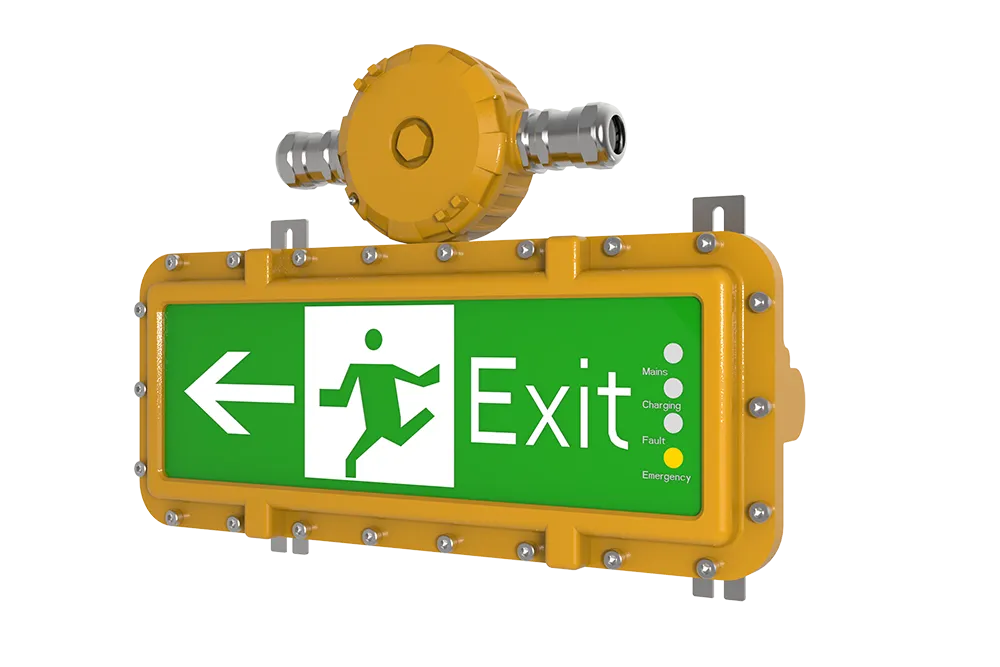
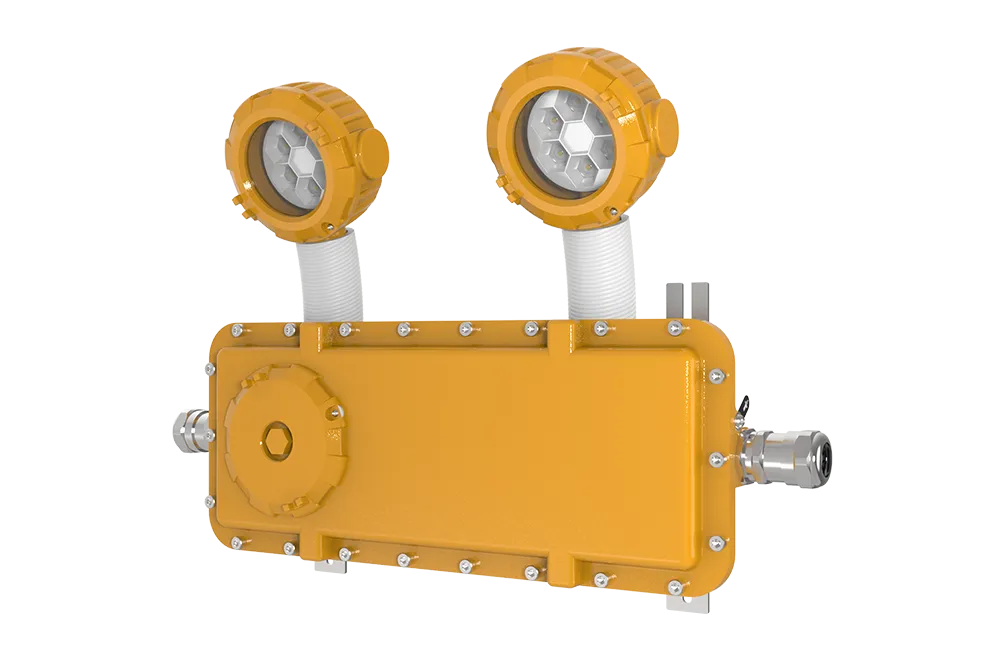
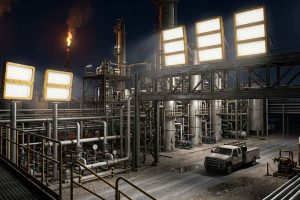
Hazardous area floodlights are specially certified lighting fixtures designed for locations where flammable gases, combustible dust, or explosive vapors may be present. They provide high-output illumination while preventing the lighting equipment itself from becoming an ignition source, making them essential for refineries, chemical plants, offshore platforms, and fuel storage facilities.
Most people notice hazardous area floodlights only after sunset.
Engineers usually notice them long before that.
I remember standing on an offshore loading platform just before dawn. The sea was calm. The transfer pumps were running. Everything appeared normal.
What caught my attention wasn’t the process equipment.
It was the lighting.
Several floodlights had been operating continuously in a corrosive marine atmosphere for years. Salt spray coated almost every exposed metal surface nearby, yet the floodlights remained fully operational.
That’s when one maintenance supervisor said something I’ve never forgotten:
“Out here, reliability isn’t measured in months. It’s measured in winters.”
Industrial buyers understand exactly what he meant.
Why Hazardous Area Floodlights Are Different from Standard Floodlights
A standard floodlight is designed to illuminate an area.
A hazardous area floodlight has a second responsibility.
It must not create an ignition source.
That changes the entire design process.
The housing.
The seals.
The thermal management.
The cable entries.
Even the certification process.
Years ago, I inspected a fuel storage terminal where several conventional floodlights had been installed temporarily during a maintenance shutdown.
They worked.
They produced light.
They were also completely unsuitable for the location.
The issue wasn’t brightness.
The issue was certification.
Hazardous environments require equipment specifically designed and approved for those conditions.
A rugged industrial light and a hazardous area floodlight are not the same thing.
Where Hazardous Area Floodlights Are Commonly Used
Oil and Gas Facilities
The oil and gas industry remains one of the largest users of hazardous area floodlights.
Common installation areas include:
Refinery process units
Tank farms
Loading terminals
LNG facilities
Offshore platforms
Compressor stations
These environments frequently contain flammable gases and vapors.
Proper lighting must perform reliably without introducing additional risk.
According to the U.S. Energy Information Administration (EIA), the United States operates more than 130 petroleum refineries with a combined capacity exceeding 18 million barrels per day.
That represents thousands of hazardous-area lighting installations operating every day.
Chemical Processing Plants
Chemical facilities create a different challenge.
Corrosion.
Not dramatic corrosion.
Slow corrosion.
The type that begins around hardware, cable entries, and exposed fasteners.
I once visited a specialty chemical facility where the LED modules still performed perfectly after years of operation.
The weakest point wasn’t the LED.
It was the external hardware selected during procurement.
That experience reinforced something I tell customers regularly:
When evaluating hazardous area floodlights, don’t focus only on lumens.
Focus on the entire fixture.
The environment certainly will.
Offshore and Marine Installations
Marine environments test lighting equipment relentlessly.
Salt.
Humidity.
Wind-driven moisture.
Continuous vibration.
The ocean eventually finds every weakness.
Floodlights installed offshore must resist corrosion while maintaining certification and optical performance.
This is one reason marine-grade coatings and stainless-steel hardware are often prioritized in offshore specifications.
Why LED Technology Changed Hazardous Floodlighting
Ten years ago, many hazardous facilities still relied on metal halide floodlights.
Today, most new projects specify LED technology.
The transition wasn’t driven by marketing.
It was driven by operations.
According to the U.S. Department of Energy, LED lighting can reduce energy consumption by 50% or more compared with many traditional lighting technologies while offering significantly longer service life.
Hazardous area floodlights are certified lighting fixtures designed for environments where flammable gases, vapors, or combustible dust may be present. They provide safe illumination while preventing ignition risks.
Where are hazardous area floodlights used?
They are commonly installed in refineries, chemical plants, offshore platforms, LNG terminals, tank farms, and fuel storage facilities.
Are hazardous area floodlights explosion proof?
Many hazardous area floodlights are available in explosion-proof configurations depending on the required certification and hazardous-area classification.
Why are LED hazardous area floodlights preferred?
LED floodlights provide longer service life, lower maintenance requirements, improved energy efficiency, and reduced heat generation compared with traditional HID technologies.
How long do hazardous area floodlights last?
High-quality industrial LED floodlights commonly achieve operating lifespans between 50,000 and 100,000 hours depending on environmental conditions and operating temperatures.
Final Thoughts
Hazardous area floodlights are far more than high-power industrial lighting fixtures.
They are part of a facility’s risk management strategy.
The best installations rarely attract attention.
They simply continue working through rain, salt spray, vibration, temperature swings, and years of continuous operation.
In hazardous industrial environments, that’s often the strongest endorsement a lighting system can receive.
And that’s exactly why hazardous area floodlights remain one of the most critical components of modern industrial infrastructure.
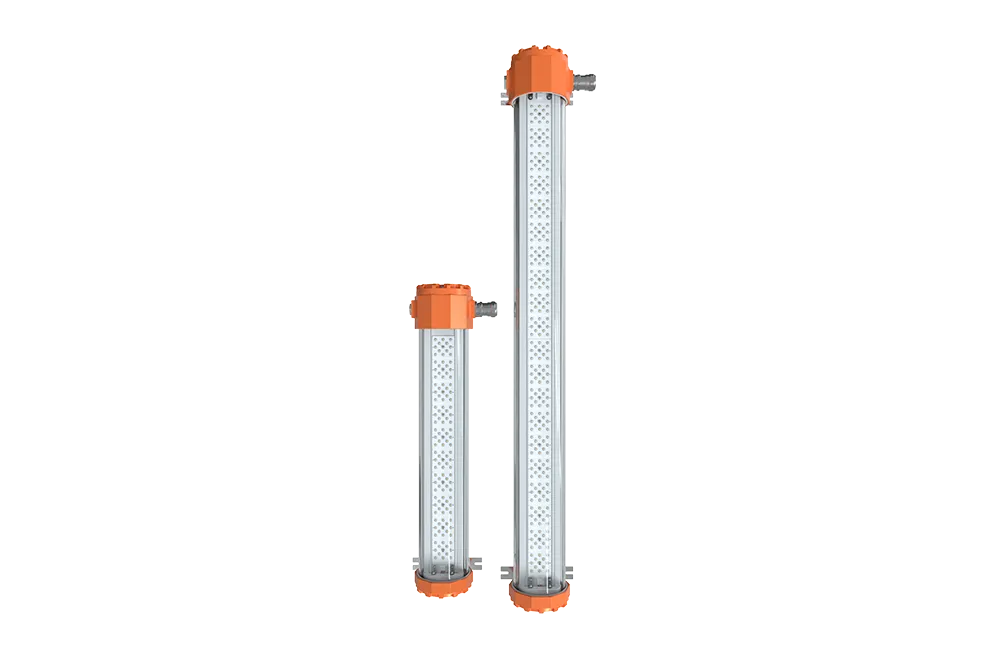
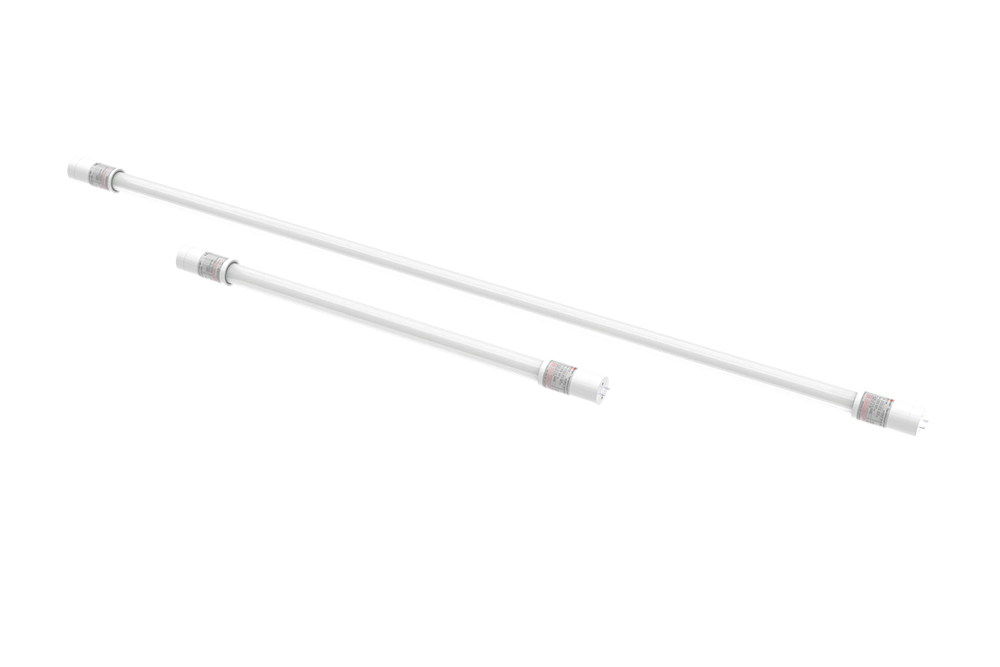
SEEKINGLED LED Linear Explosion Proof Light and Explosion Proof lighting is ATEX and IECEx certified for Zone 1, Zone 2, Zone 21 and Zone 22 hazardous locations, built for long-term industrial use.
LED Linear Explosion Proof Lights and EX Proof lights for Zone 1, Zone 2, Zone 21 and Zone 22 hazardous areas. ATEX & IECEx certified explosion proof LED linear lighting with emergency function, adjustable power and IP67 protection by SEEKINGLED.
SEEKINGLED LED Explosion Proof Flood Lights are ATEX certified for Zone 2 and Zone 22 hazardous areas, offering high efficiency, adjustable power and integrated junction box.
SEEKINGLED LED Explosion Proof Flood Lights are flameproof ATEX and IECEx certified for Zone 1 and Zone 2 hazardous areas, offering high power, adjustable output and long service life.
SEEKINGLED LED Gas Station Canopy Lights are ATEX certified for Zone 2 and Zone 22 hazardous areas, featuring adjustable power and built-in explosion-proof junction box.
ATEX: Ex II 2G Ex db IIB T6/T5 GbEx II 2D Ex tb IIIC T80°C/ T95°C Db IECEx Ex db IIB T6 Gb;Ex tb IIIC T80°C Db Feature: ● For Zone 1,2 and Zone 21,22● Flameproof type, the strongest● 100W can replace 250W HID,energy saving● Power:60W,80W,100W Application: Oil and gas, marine, Chemical, pharmaceutical, semiconductor,mining,military industr…
ATEX: II 3G Ex nR ⅡC T5/T6 GcII 3D Ex tc ⅢC T80℃/T95℃Dc ATEX Certificate NO: TÜV CY 26 ATEX 0207611 X Feature: ● For Zone 2 and Zone 22● 150W can replace 250W HID lamps,Energy saving● Power:50W,75W,100W,150W,200W Application: Oil and gas, marine, Chemical, pharmaceutical, semiconductor,mining,military industry, paint booth,power plant ETC…
LED explosion proof high bay lights are designed for Zone 1, Zone 2, Zone 21 and Zone 22 hazardous areas. This page introduces the HB21 Series from SEEKING, including certifications, power options and real application considerations.
LED Linear Explosion Proof Lights from SEEKINGLED. LU Series Flame Proof lights ATEX-certified explosion proof LED linear lighting for Zone 2 gas and Zone 22 dust areas, IP69K, IK10, long lifetime and flexible power options.
Certified explosion proof work lights for Zone 1 & 21 hazardous areas. Portable, ATEX & IECEx approved, built for oil, gas and chemical plants by SEEKINGLED.
ATEX: II 3G Ex nR ⅡC T6 GcII 3D Ex tc ⅢC T80℃ Dc ATEX Certificate NO: TÜV CY 26 ATEX 0207611 X Feature: ● For Zone 2 and Zone 22● Accepts battery-powered supply● indestructible● Power:AC input:50W,75W,100WDC input:15W,25W,35W Application: Oil and gas, marine, Chemical, pharmaceutical, semiconductor,mining,military industry, paint booth,po…
ATEX: Ex II 2G Ex db IIB T6 GbEx II 2D Ex tb IIIC T80°C Db IECEx Ex db IIB T6 Gb;Ex tb IIIC T80°C Db Feature: ● For Zone 1,2 and Zone 21,22● Flameproof type, the strongest Application: Oil and gas, marine, Chemical, pharmaceutical, semiconductor,mining,military industry, paint booth,power plant ETC hazardous area. Technical Specifications:…
ATEX: Ex II 2G Ex db IIB T6 GbEx II 2D Ex tb IIIC T80°C Db IECEx Ex db IIB T6 Gb;Ex tb IIIC T80°C Db Feature: ● For Zone 1,2 and Zone 21,22● Flameproof type, the strongest Application: Oil and gas, marine, Chemical, pharmaceutical, semiconductor,mining,military industry, paint booth,power plant ETC hazardous area. Technical Specifications:…
ATEX: Ex II 2G Ex d e IIB T6 Gb ATEX: Ex d e IIB T6 Gb; Feature: ● For Zone 1,2● 9W can replace 18W fluorescent lamps,50% Energy saving Application: Oil and gas, marine, Chemical, pharmaceutical, semiconductor,mining,military industry, paint booth,power plant ETC hazardous area. Technical Specifications: Standards:60079-0, 60079-1, 60079…
Through 2019 Hong Kong International Lighting Fair (Autumn Edition), we released 5 series new design product. Including HB09--HBT series led high bay light, STL series street light, FLX series led flood light and TFX, TFL series sport stadium ligh...
Looking for a reliable 60 watt LED flood light? Strong output, low power use, and stable performance for outdoor spaces. Built for real projects by SEEKINGLED.
Are LED street lights low voltage safe to touch? This article explains real-world safety risks, wiring facts, and what low voltage actually means in street lighting.
Atex led flood light supply for hazardous zones. Real project insights, certified performance, and reliable solutions from SEEKINGLED for oil, gas, and industrial sites.
 Seeking LED