 Seeking LED
What are ATEX rated lights?
0What are ATEX rated lights? Learn how ATEX-certified LED lights protect hazardous oil, gas, chemical, and dust-prone industrial environments safely.
View detailsSearch the whole station
What is hazardous area flood light is a certified explosion-proof lighting system designed for large industrial spaces where flammable gas, vapor, or combustible dust may exist, engineered so that electrical faults cannot ignite the surrounding atmosphere.
In real operations, it is treated less like a lighting fixture and more like a safety barrier. I’ve seen refinery contractors reject entire lighting layouts during pre-commission checks simply because enclosure sealing reports didn’t match zone documentation—even when the lights still functioned normally.
Hazardous flood lights are installed where wide-area illumination is required but ignition risk cannot be ignored. These are typically high mast or wall-mounted systems covering large open zones.
Common environments include:
Unlike general flood lighting, failure analysis is part of the design lifecycle. Engineers care less about brightness curves and more about what happens under fault conditions: arc containment, heat control, and seal integrity.
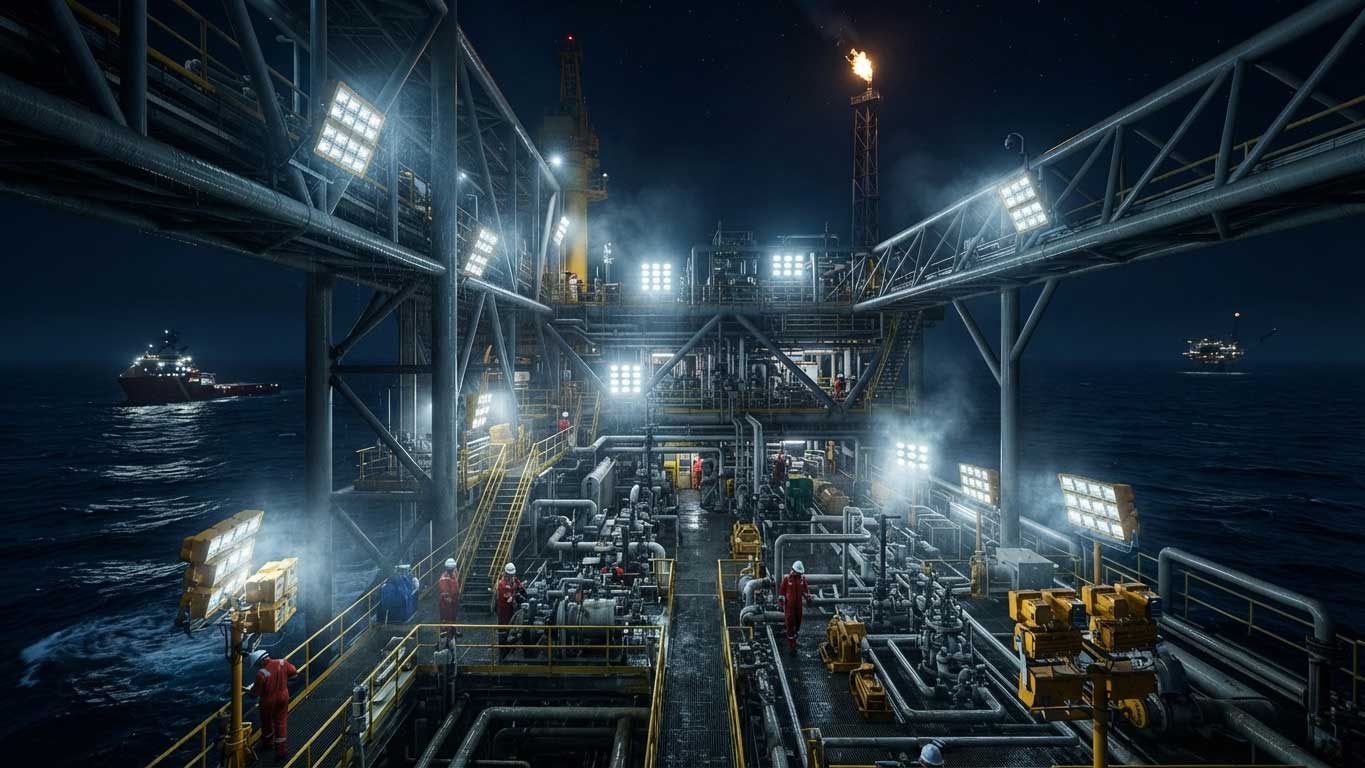
Hazardous area flood lighting is governed by strict international frameworks. These define not performance, but failure safety behavior.
In field audits, certification documentation is often reviewed before physical installation even begins. Equipment without valid classification is typically rejected regardless of performance specs.
The core principle is simple: no ignition source can escape the fixture—even during internal failure.
This leads to three engineering layers:
Internal arcs are contained within a reinforced housing.
Surface temperature is controlled below ignition thresholds of surrounding gases or dust.
Ingress protection (often IP66 or higher) prevents vapor, dust, and moisture intrusion.
In real environments, sealing degradation—not LED failure—is the most common inspection issue.
During maintenance reviews in coastal petrochemical yards, one pattern appears repeatedly:
One senior maintenance engineer once summarized it in a way that stuck:
“We don’t replace lights because they stop working. We replace them because inspection rules change the risk level.”
That reflects how hazardous lighting is managed in practice—documentation, sealing history, and compliance cycles matter as much as hardware condition.
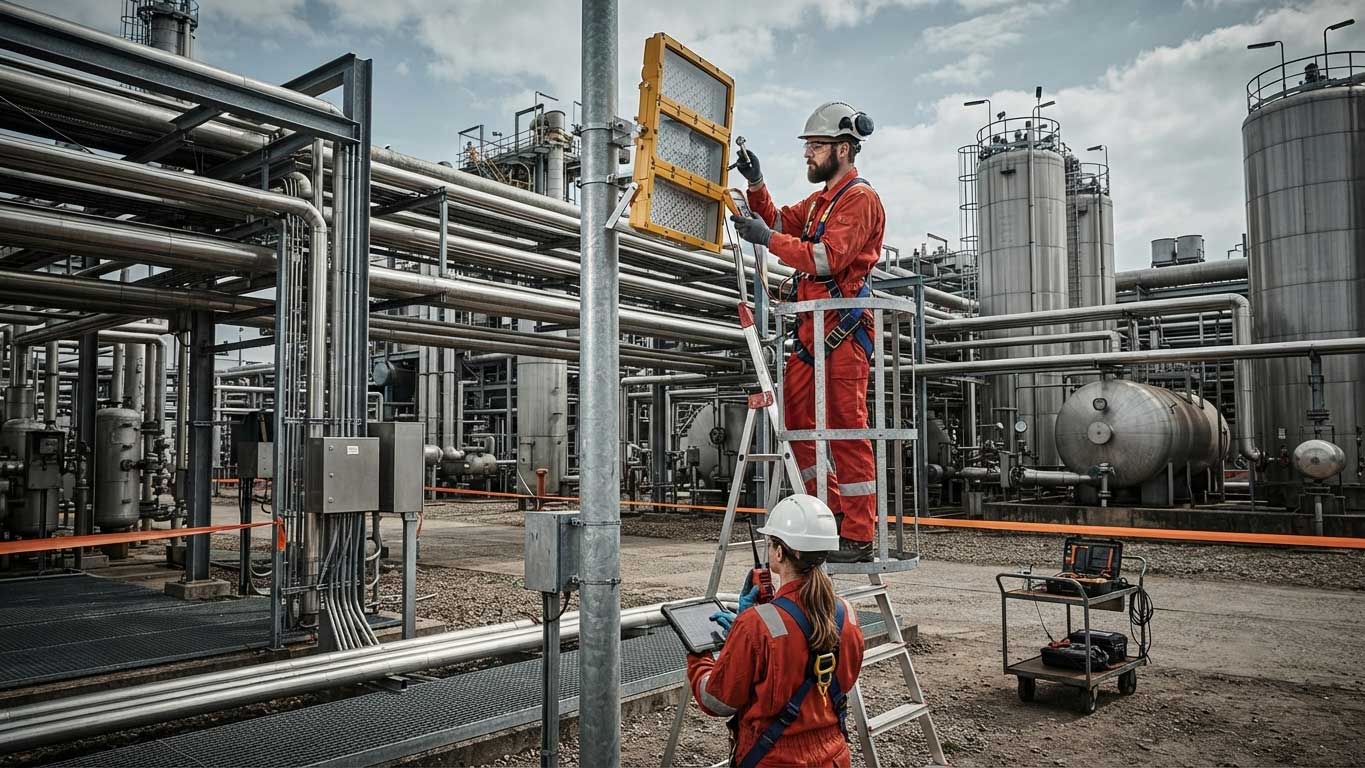
These systems are deployed in environments where ignition risk cannot be eliminated:
Each site follows different zoning rules (Zone 1, 2, 21, 22), but the lighting philosophy remains unchanged: prevent ignition under both normal and fault conditions.
In traditional lighting, lumen output dominates decision-making.
In hazardous lighting, compliance overrides everything.
| Factor | Hazardous Flood Light | Standard Flood Light |
|---|---|---|
| Explosion protection | Mandatory | Not required |
| Certification | ATEX / IECEx | None |
| Zone suitability | Zone 1/2/21/22 | General use only |
| Failure behavior | Controlled containment | Not defined |
| Selection priority | Safety compliance | Brightness |
This explains why procurement decisions in industrial sectors often favor certified units even at significantly higher cost.Visit the product page: Explosion Proof Lighting
It is used for wide-area illumination in explosive environments where gas, vapor, or dust may be present.
It is fully sealed and designed to prevent ignition sources from escaping under fault conditions.
Yes, when designed and certified under ATEX or IECEx standards.
Zone 1, Zone 2 (gas) and Zone 21, Zone 22 (dust areas).
Most systems operate between 50,000 and 100,000 hours depending on environment.
Because installation without certification is not legally permitted in hazardous environments.
Sealing systems and cable entry points, not LED components.
What is hazardous area flood light is ultimately a safety engineering system designed for environments where electrical ignition must be impossible under both normal and failure conditions.
In field reality, its value is not measured by brightness or efficiency, but by containment reliability, certification validity, and long-term sealing integrity. From offshore platforms to chemical storage yards, it functions as a silent safety boundary that protects operations where risk cannot be eliminated, only controlled.
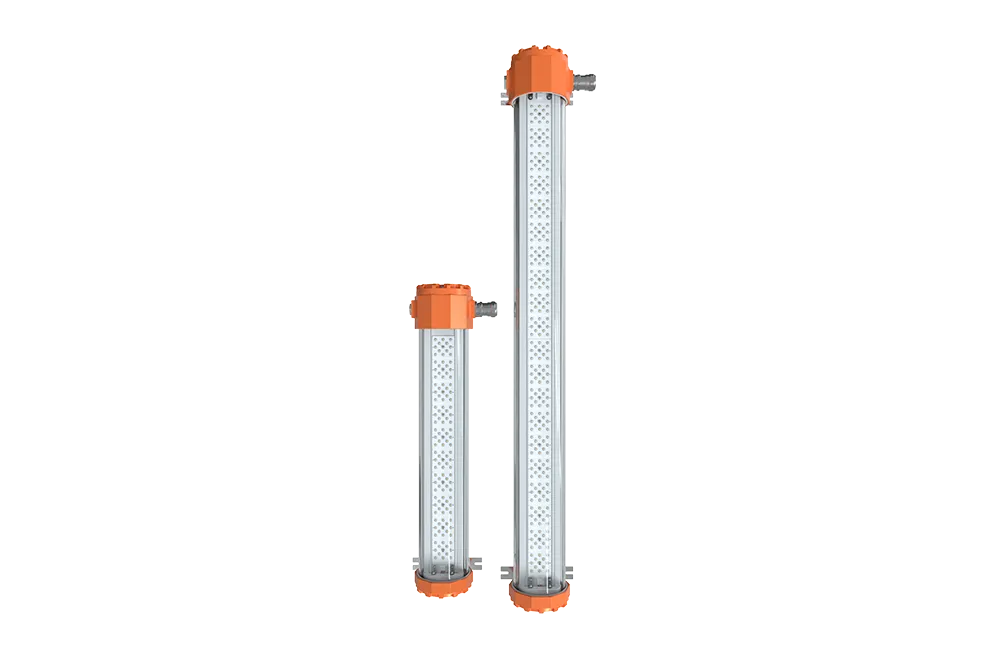
SEEKINGLED LED Linear Explosion Proof Light and Explosion Proof lighting is ATEX and IECEx certified for Zone 1, Zone 2, Zone 21 and Zone 22 hazardous locations, built for long-term industrial use.
View details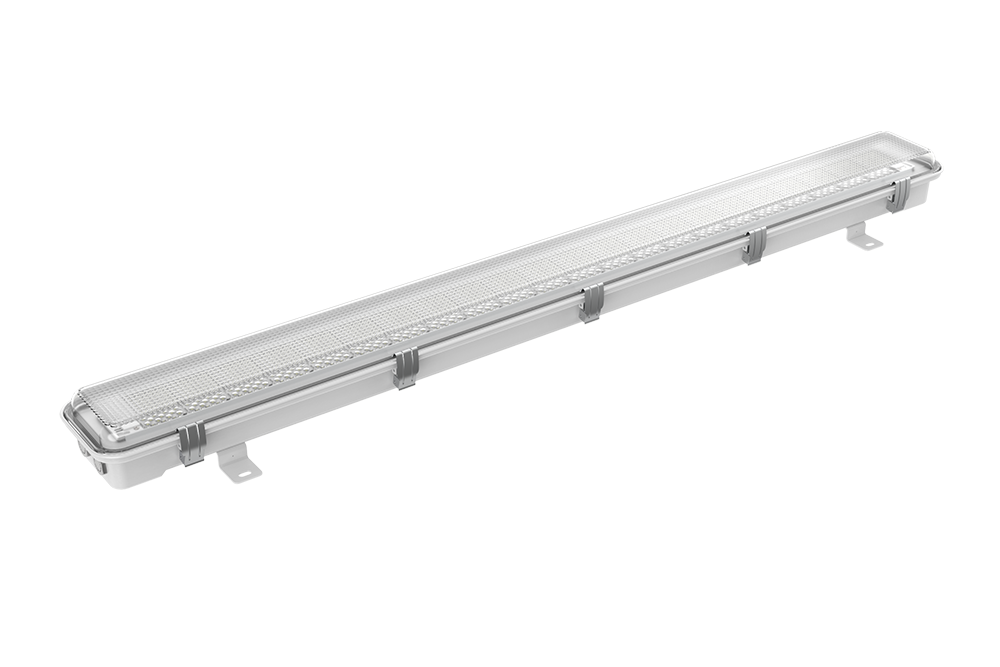
LED Linear Explosion Proof Lights and EX Proof lights for Zone 1, Zone 2, Zone 21 and Zone 22 hazardous areas. ATEX & IECEx certified explosion proof LED linear lighting with emergency function, adjustable power and IP67 protection by SEEKINGLED.
View details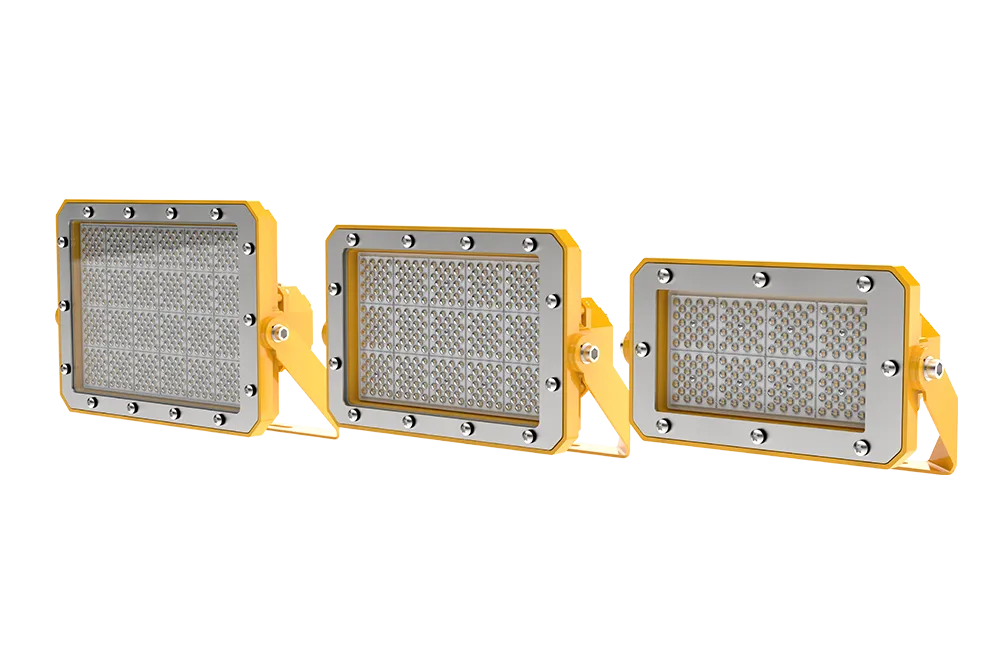
SEEKINGLED LED Explosion Proof Flood Lights are ATEX certified for Zone 2 and Zone 22 hazardous areas, offering high efficiency, adjustable power and integrated junction box.
View details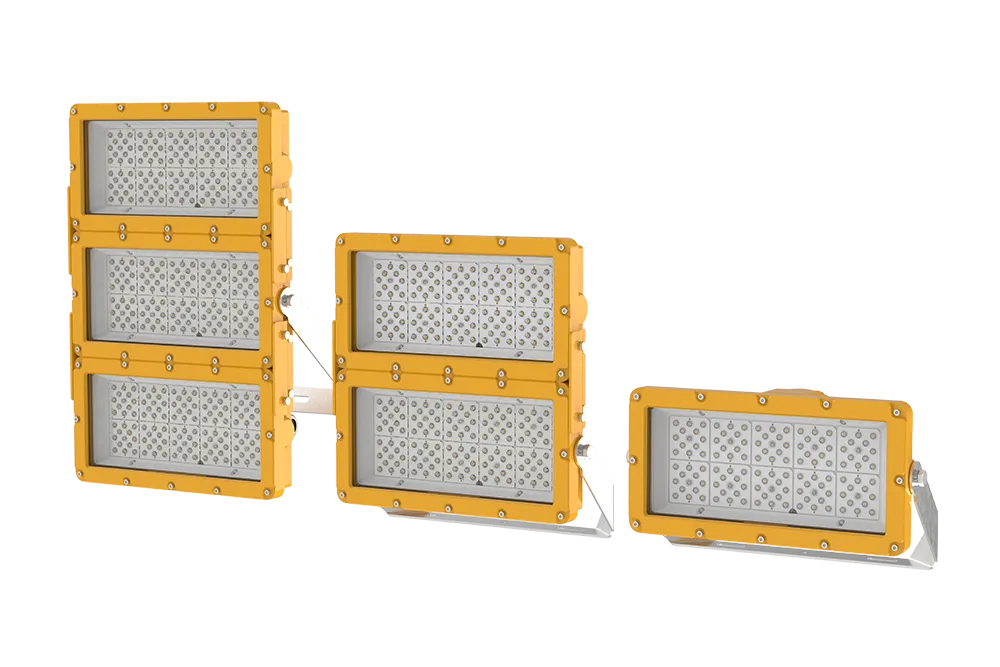
SEEKINGLED LED Explosion Proof Flood Lights are flameproof ATEX and IECEx certified for Zone 1 and Zone 2 hazardous areas, offering high power, adjustable output and long service life.
View details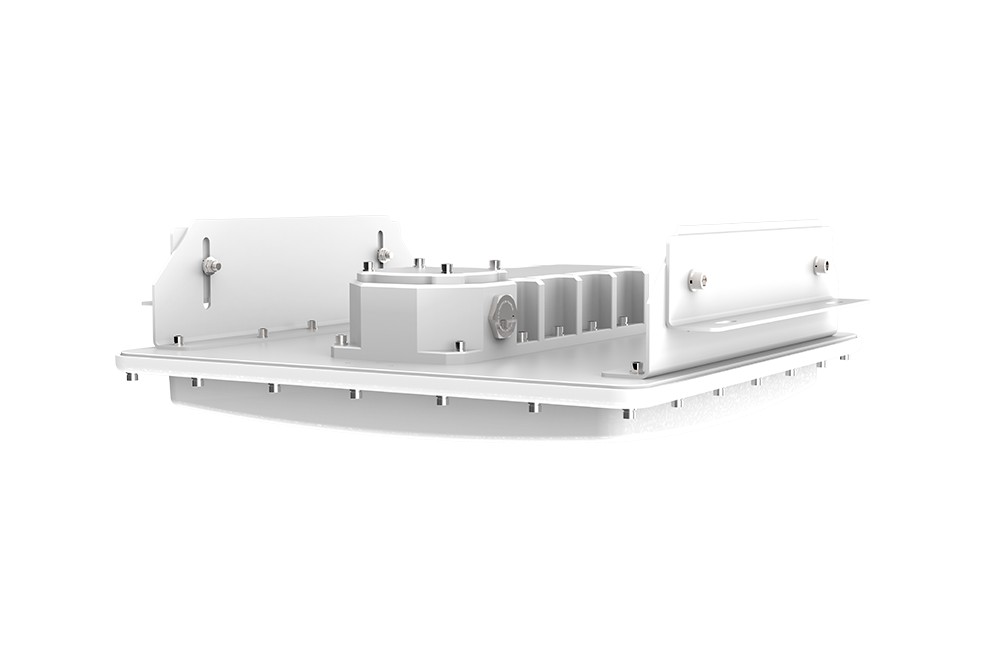
SEEKINGLED LED Gas Station Canopy Lights are ATEX certified for Zone 2 and Zone 22 hazardous areas, featuring adjustable power and built-in explosion-proof junction box.
View details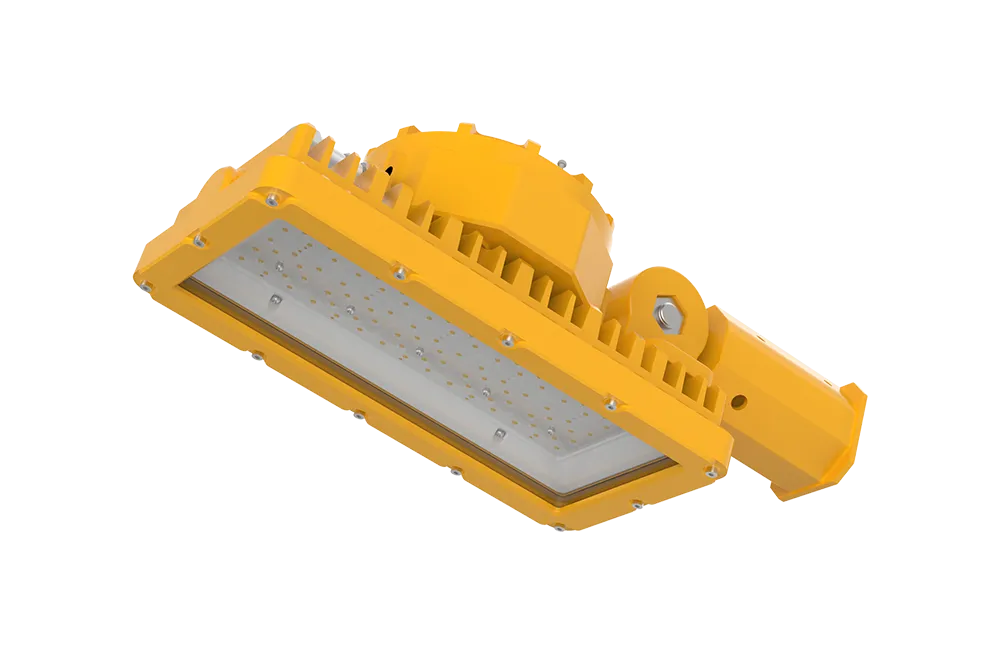
ATEX: Ex II 2G Ex db IIB T6/T5 GbEx II 2D Ex tb IIIC T80°C/ T95°C Db IECEx Ex db IIB T6 Gb;Ex tb IIIC T80°C Db Feature: ● For Zone 1,2 and Zone 21,22● Flameproof type, the strongest● 100W can replace 250W HID,energy saving● Power:60W,80W,100W Application: Oil and gas, marine, Chemical, pharmaceutical, semiconductor,mining,military industr…
View details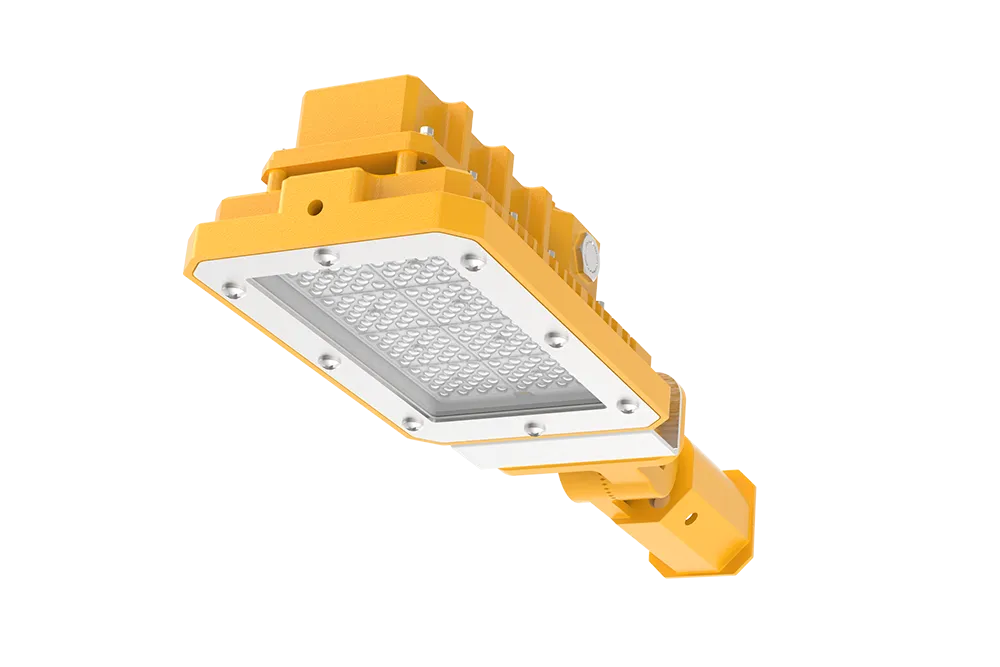
ATEX: II 3G Ex nR ⅡC T5/T6 GcII 3D Ex tc ⅢC T80℃/T95℃Dc ATEX Certificate NO: TÜV CY 26 ATEX 0207611 X Feature: ● For Zone 2 and Zone 22● 150W can replace 250W HID lamps,Energy saving● Power:50W,75W,100W,150W,200W Application: Oil and gas, marine, Chemical, pharmaceutical, semiconductor,mining,military industry, paint booth,power plant ETC…
View details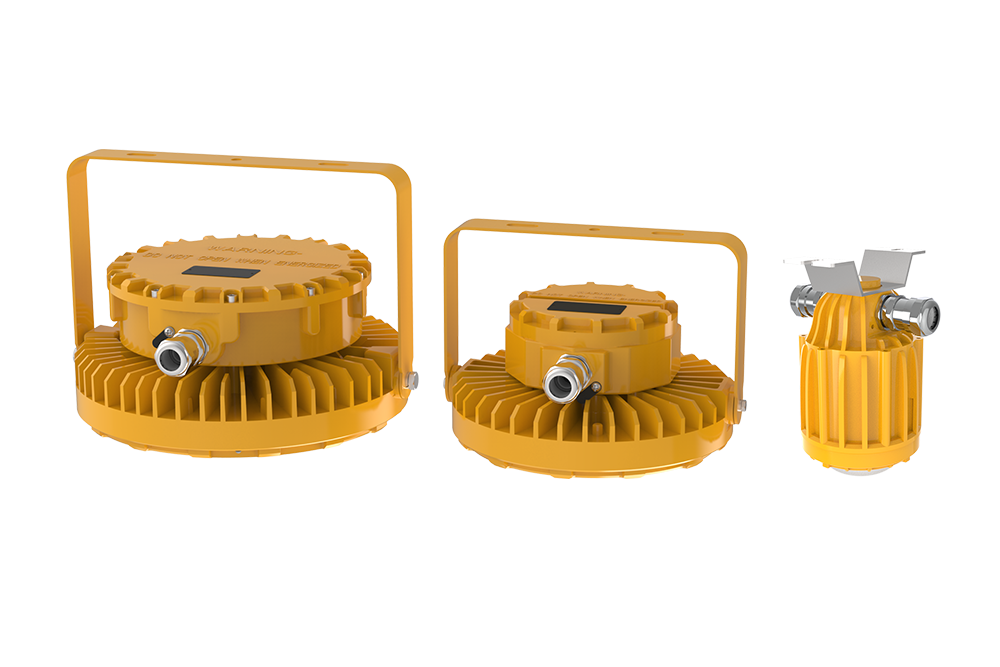
LED explosion proof high bay lights are designed for Zone 1, Zone 2, Zone 21 and Zone 22 hazardous areas. This page introduces the HB21 Series from SEEKING, including certifications, power options and real application considerations.
View details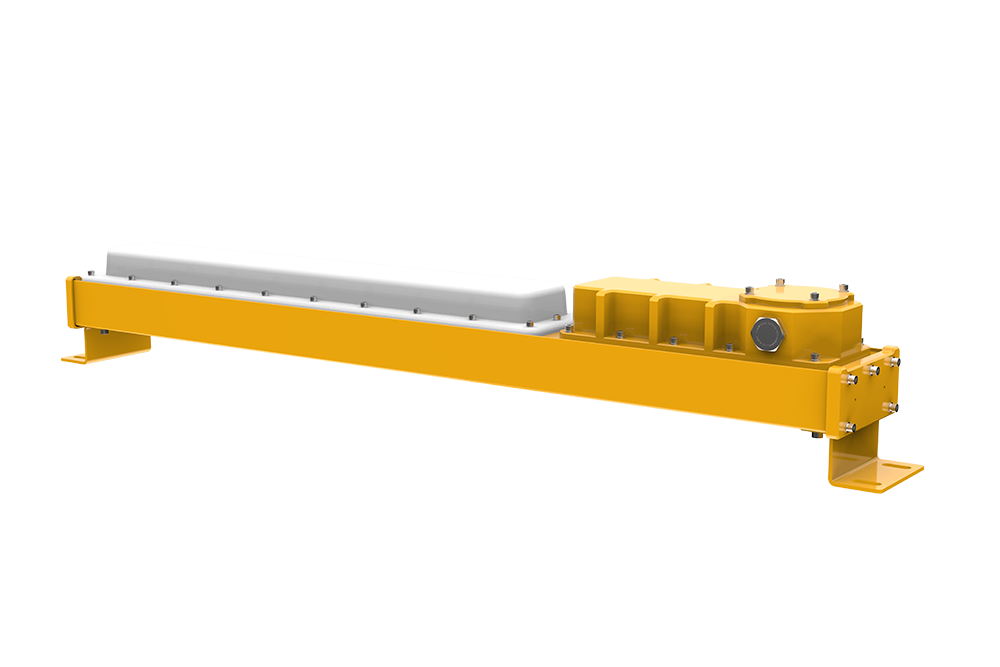
LED Linear Explosion Proof Lights from SEEKINGLED. LU Series Flame Proof lights ATEX-certified explosion proof LED linear lighting for Zone 2 gas and Zone 22 dust areas, IP69K, IK10, long lifetime and flexible power options.
View details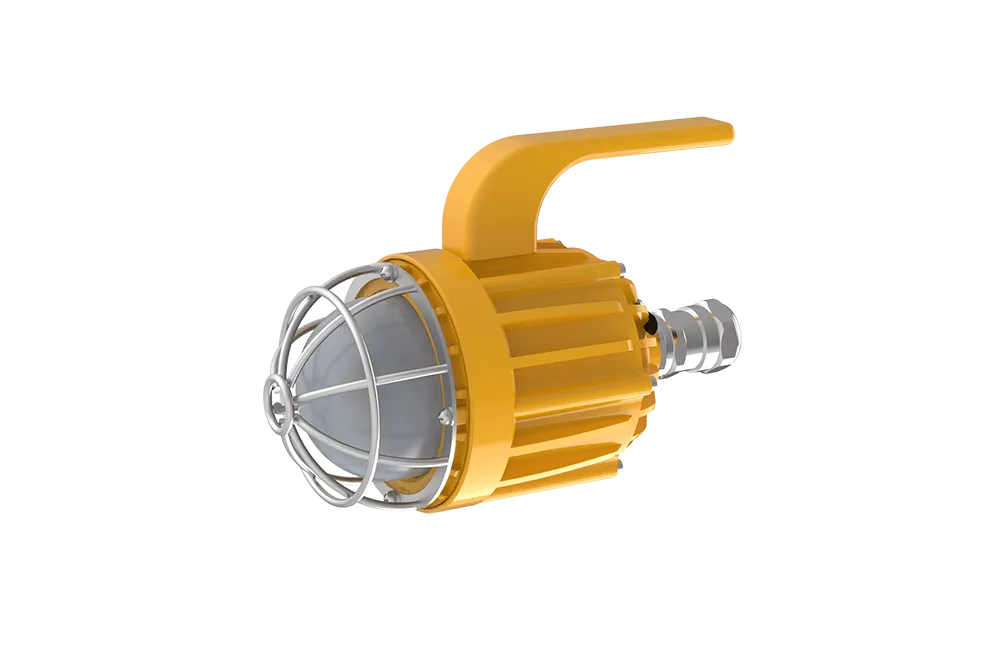
Certified explosion proof work lights for Zone 1 & 21 hazardous areas. Portable, ATEX & IECEx approved, built for oil, gas and chemical plants by SEEKINGLED.
View details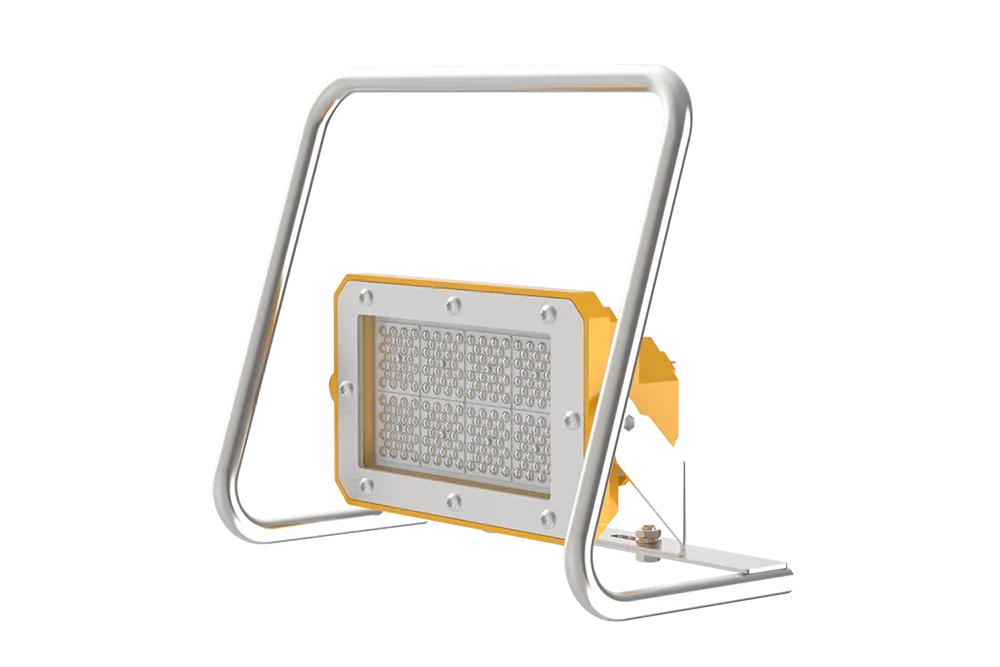
ATEX: II 3G Ex nR ⅡC T6 GcII 3D Ex tc ⅢC T80℃ Dc ATEX Certificate NO: TÜV CY 26 ATEX 0207611 X Feature: ● For Zone 2 and Zone 22● Accepts battery-powered supply● indestructible● Power:AC input:50W,75W,100WDC input:15W,25W,35W Application: Oil and gas, marine, Chemical, pharmaceutical, semiconductor,mining,military industry, paint booth,po…
View details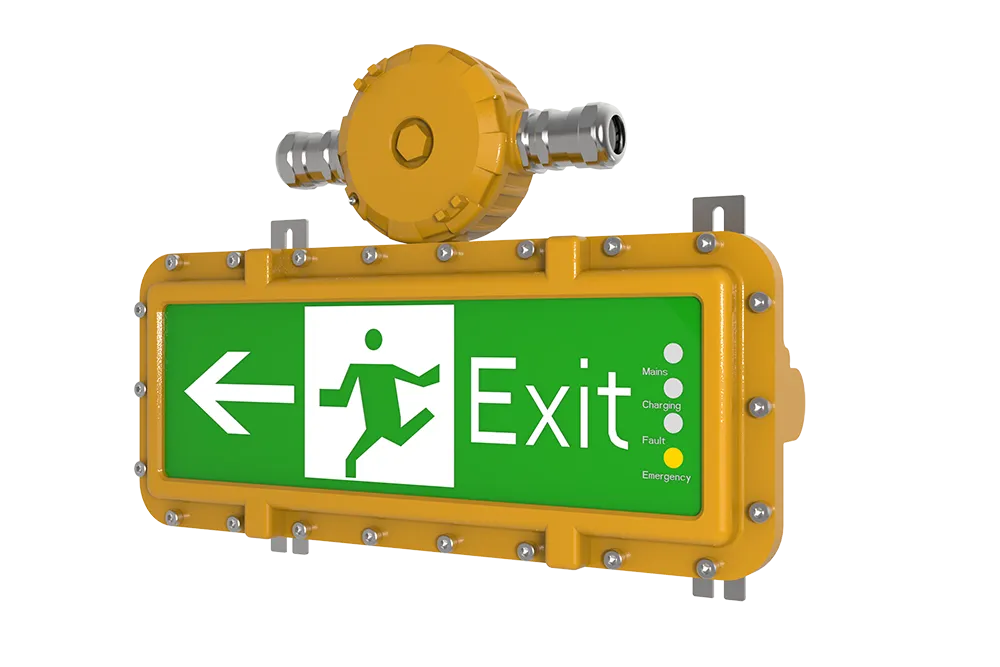
ATEX: Ex II 2G Ex db IIB T6 GbEx II 2D Ex tb IIIC T80°C Db IECEx Ex db IIB T6 Gb;Ex tb IIIC T80°C Db Feature: ● For Zone 1,2 and Zone 21,22● Flameproof type, the strongest Application: Oil and gas, marine, Chemical, pharmaceutical, semiconductor,mining,military industry, paint booth,power plant ETC hazardous area. Technical Specifications:…
View details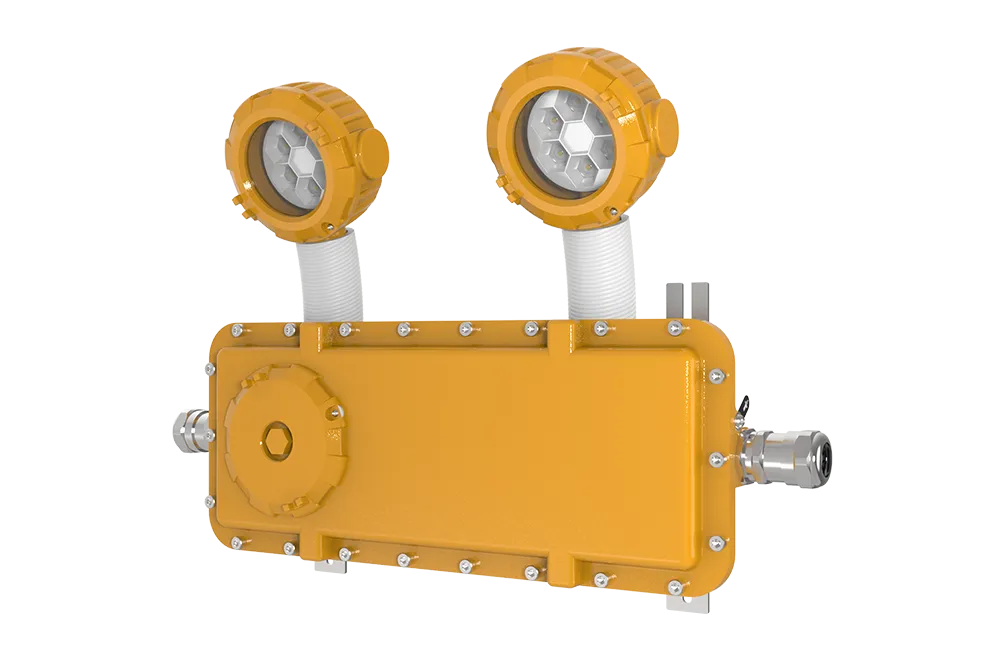
ATEX: Ex II 2G Ex db IIB T6 GbEx II 2D Ex tb IIIC T80°C Db IECEx Ex db IIB T6 Gb;Ex tb IIIC T80°C Db Feature: ● For Zone 1,2 and Zone 21,22● Flameproof type, the strongest Application: Oil and gas, marine, Chemical, pharmaceutical, semiconductor,mining,military industry, paint booth,power plant ETC hazardous area. Technical Specifications:…
View details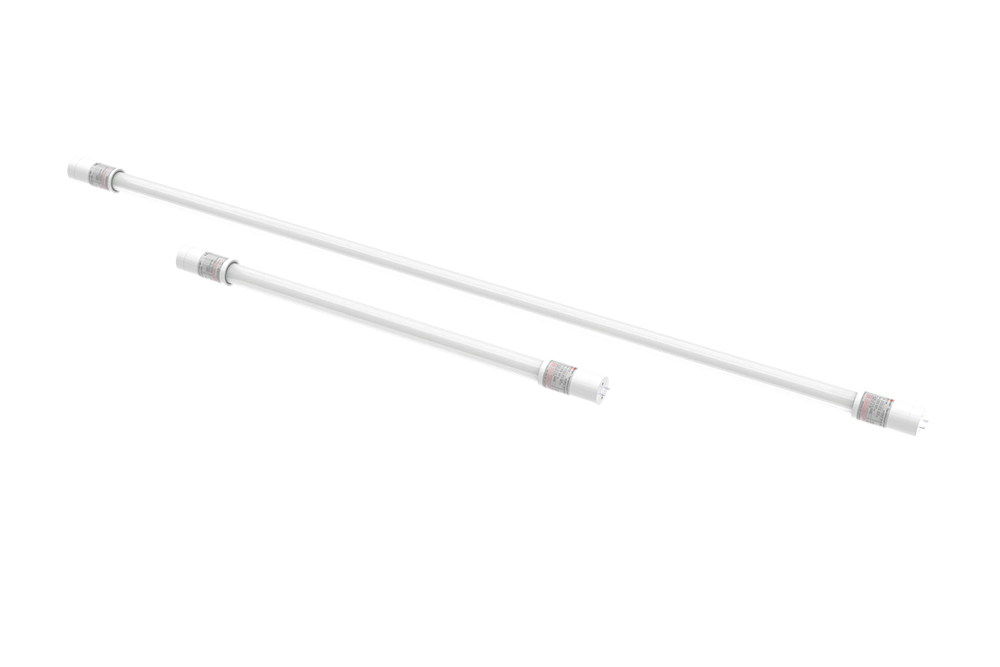
ATEX: Ex II 2G Ex d e IIB T6 Gb ATEX: Ex d e IIB T6 Gb; Feature: ● For Zone 1,2● 9W can replace 18W fluorescent lamps,50% Energy saving Application: Oil and gas, marine, Chemical, pharmaceutical, semiconductor,mining,military industry, paint booth,power plant ETC hazardous area. Technical Specifications: Standards:60079-0, 60079-1, 60079…
View details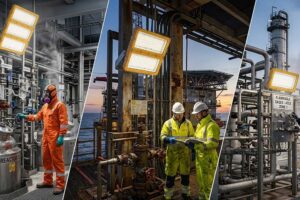
What are ATEX rated lights? Learn how ATEX-certified LED lights protect hazardous oil, gas, chemical, and dust-prone industrial environments safely.
View details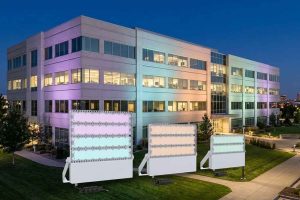
Colored LED flood lights create vibrant outdoor lighting for events, landscapes, and buildings. Learn real-world usage, color control tips, and expert insights with SEEKINGLED.
View details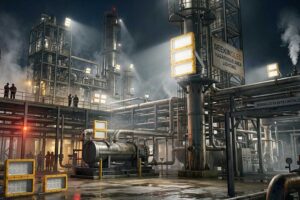
Why Explosion-Proof Flood Lights Exist is more than a safety question. Learn how hazardous-area flood lights prevent ignition risks in oil, gas, chemical, and dust-filled facilities.
View details
Learn how explosion proof paint booth lighting improves safety, visibility, and compliance in hazardous spray areas. Expert insights from SEEKINGLED.
View details