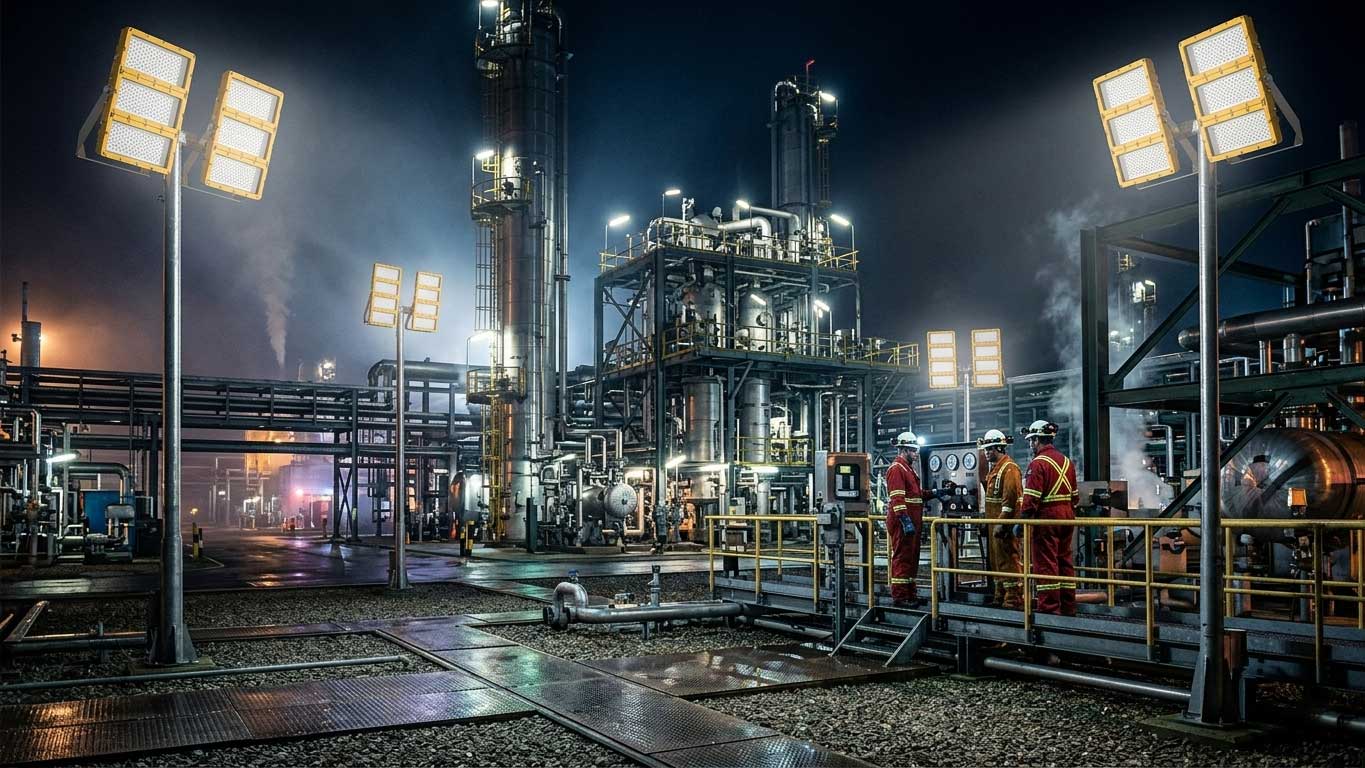
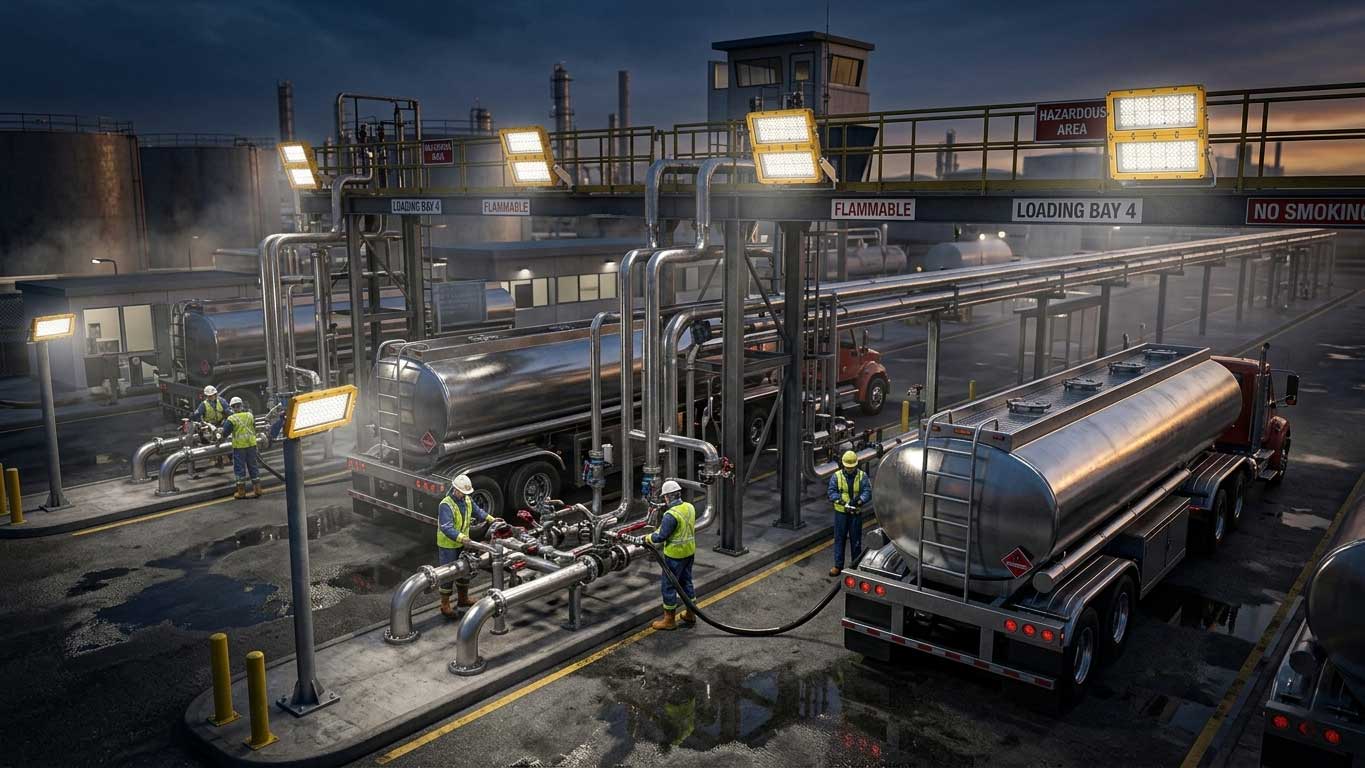
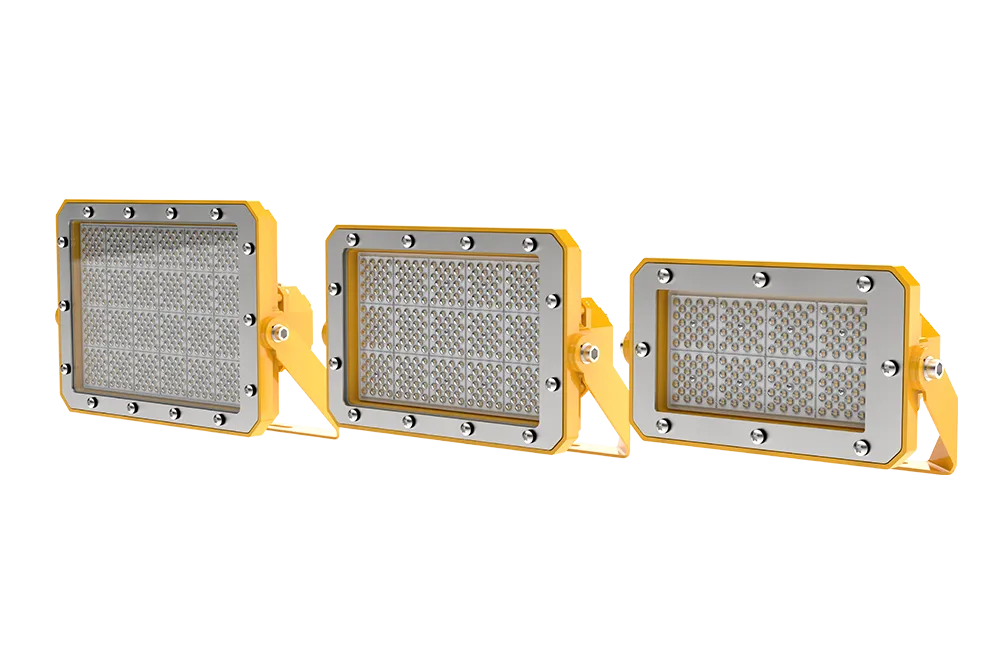
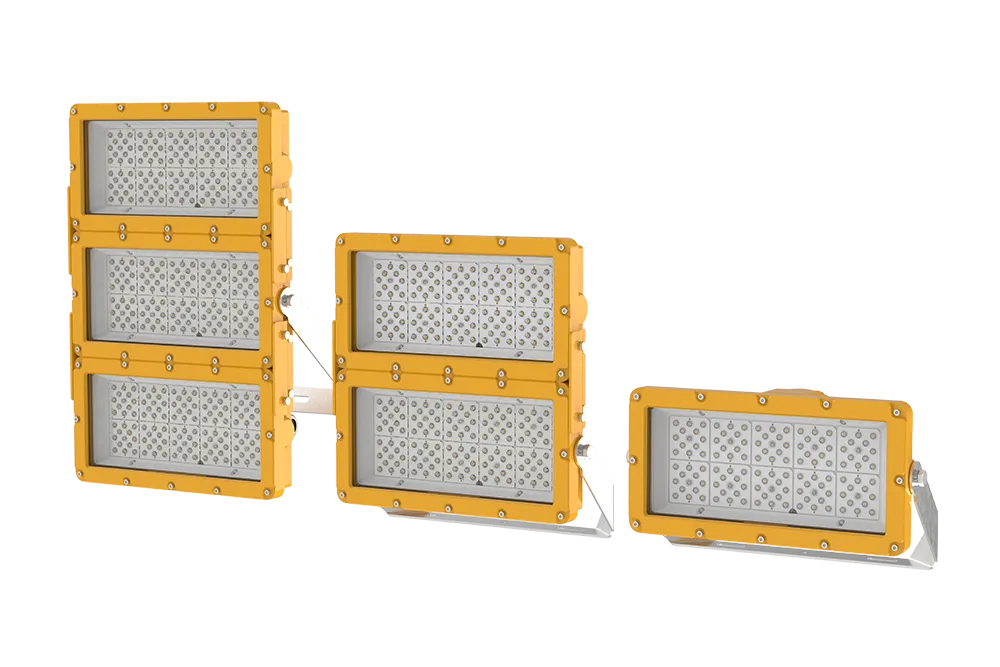
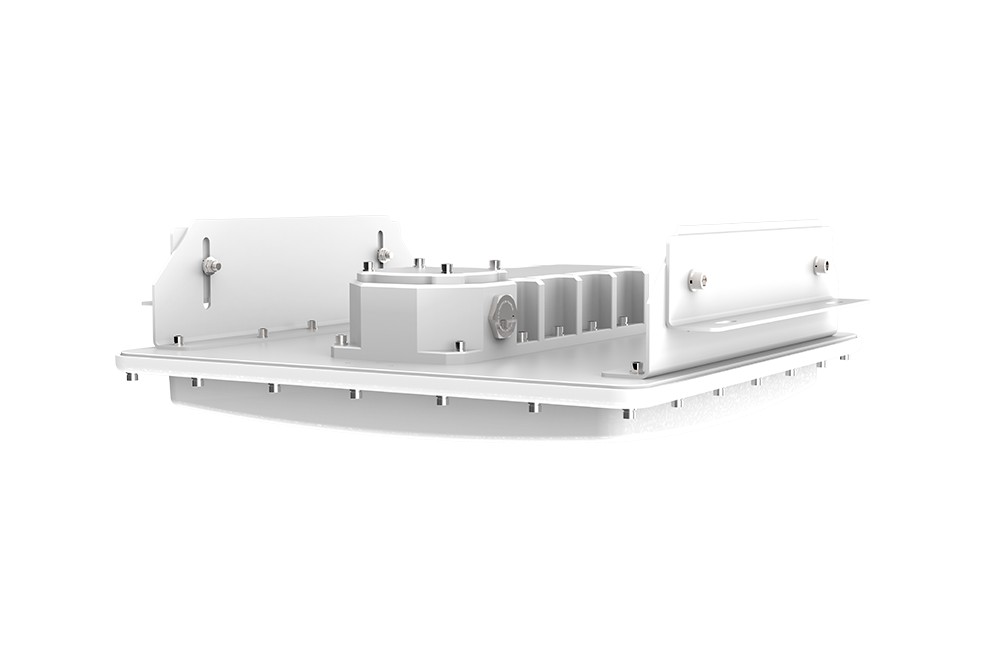
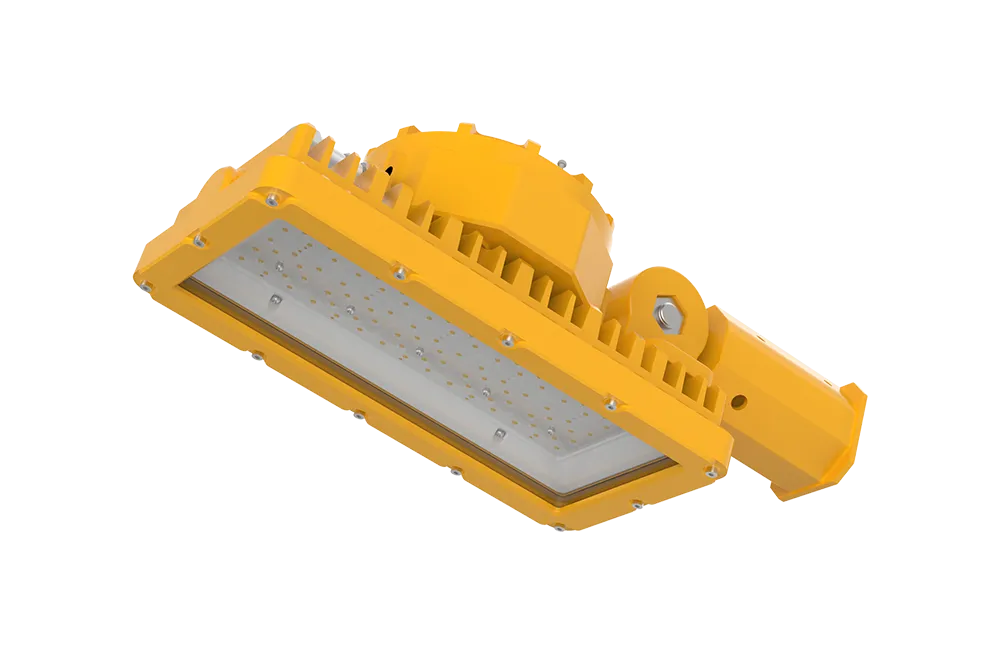
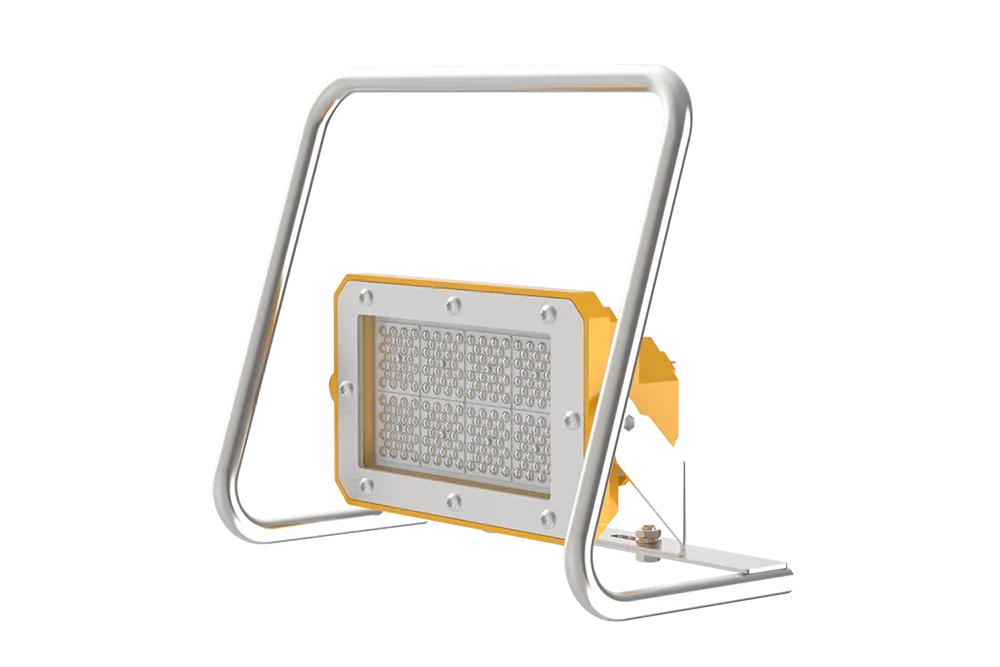
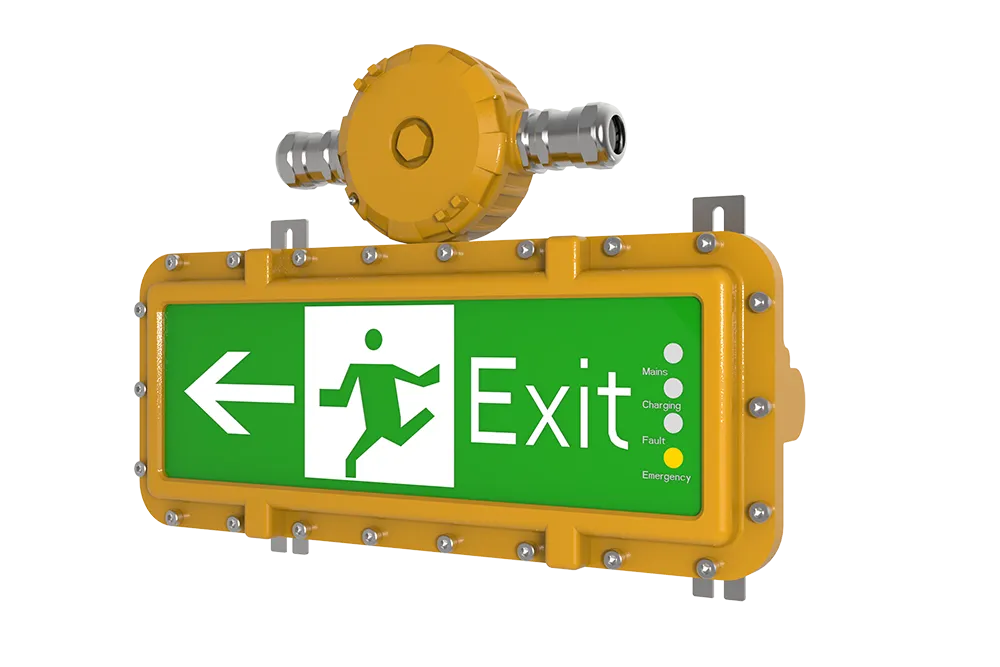
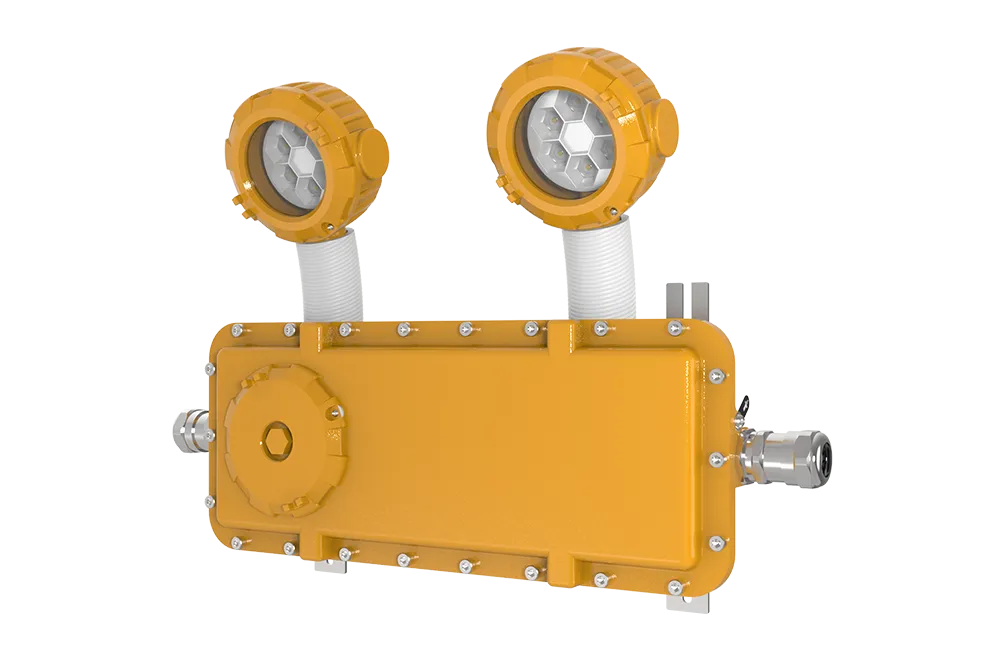
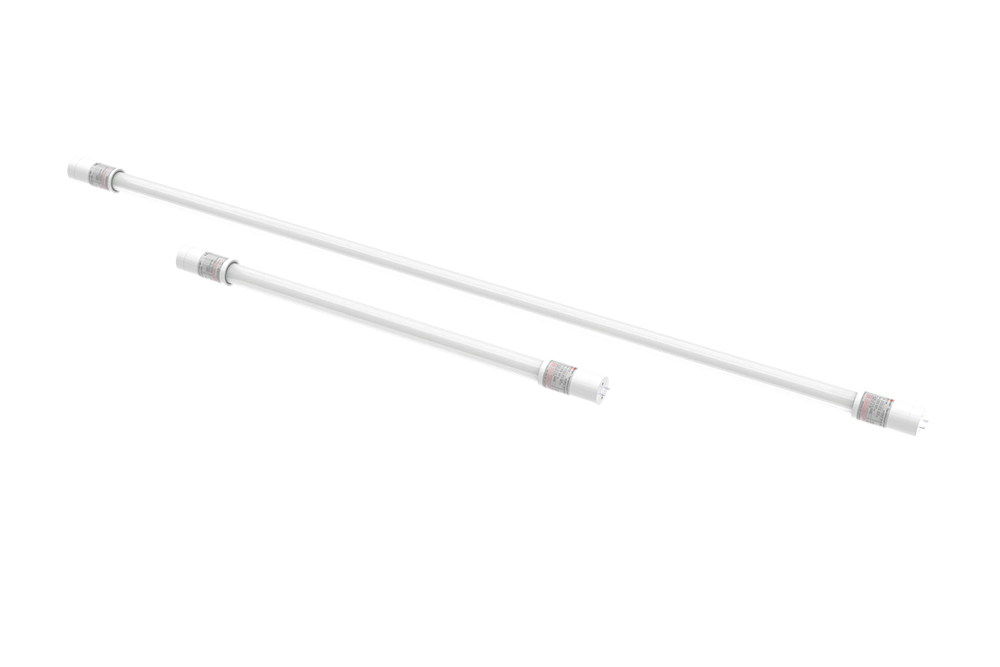
Hazardous area floodlights are high-output lighting fixtures specifically designed and certified for locations where flammable gases, vapors, combustible dust, or explosive atmospheres may be present. They provide wide-area illumination while preventing the lighting equipment itself from becoming an ignition source in hazardous industrial environments.
For people outside the industry, hazardous area floodlights often look similar to ordinary industrial floodlights.
For the engineers responsible for refinery operations at 2 a.m., they are something entirely different.
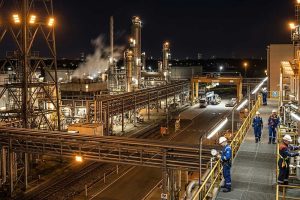
A few years ago, I was walking through a crude oil loading terminal shortly before sunrise. The floodlights had been running all night. Tank trucks were moving in and out. Vapors occasionally appeared around loading points during transfers.
Nobody on site discussed lumen output.
Nobody discussed color temperature.
The maintenance team talked about reliability.
That tells you a lot about what hazardous area floodlights are really designed to do.
Why Are Hazardous Area Floodlights Necessary?
The short answer is safety.
Hazardous locations contain conditions where an electrical spark, excessive heat, or equipment failure could potentially ignite a flammable atmosphere.
According to the Occupational Safety and Health Administration (OSHA), hazardous locations are areas where fire or explosion hazards may exist due to flammable gases, vapors, combustible dust, or ignitable fibers.
A hazardous area floodlight must illuminate the area without increasing risk.
That distinction changes everything about how the fixture is designed.
Typical hazardous-area applications include:
Oil refineries
LNG facilities
Fuel storage terminals
Chemical plants
Grain processing facilities
Offshore platforms
Paint manufacturing facilities
Many of these sites look perfectly normal during daily operation.
The hazard is often invisible.
That’s exactly why certified equipment matters.
What Makes Hazardous Area Floodlights Different?
People often assume hazardous floodlights are simply stronger industrial lights.
Not exactly.
The engineering priorities are different.
Instead of focusing solely on illumination, hazardous area floodlights are designed around risk control.
Key features commonly include:
Feature
Purpose
Explosion-resistant housing
Contains internal faults
Controlled surface temperature
Prevents ignition
Sealed construction
Blocks contaminant ingress
Corrosion-resistant materials
Extends operating life
Certified electrical components
Meets hazardous standards
Several years ago, during an inspection at a chemical facility, I saw two floodlights mounted side by side.
One was a certified hazardous fixture.
The other was a temporary industrial replacement installed during maintenance.
To most people, they looked similar.
To a safety auditor, they were completely different products.
Appearance can be misleading.
Certification cannot.
Where Are Hazardous Area Floodlights Used?
Oil and Gas Facilities
Oil and gas operations remain one of the largest users of hazardous area floodlights.
Common applications include:
Tank farms
Loading terminals
Offshore platforms
Refineries
Compressor stations
According to the U.S. Energy Information Administration (EIA), the United States has more than 130 operating petroleum refineries with a total refining capacity exceeding 18 million barrels per day.
That translates into thousands of hazardous-area lighting installations operating continuously.
Chemical Manufacturing Plants
Chemical plants create a unique set of challenges.
Corrosion.
Heat.
Vibration.
Moisture.
Chemical vapors.
I’ve seen fixtures fail because of housing corrosion long before the LED modules reached the end of their life.
That’s one reason experienced engineers evaluate the entire fixture—not just the light source.
A floodlight is only as durable as its weakest component.
Grain Processing Facilities
Combustible dust remains one of the most underestimated industrial hazards.
According to the U.S. Chemical Safety Board (CSB), combustible dust explosions continue to cause serious industrial incidents across multiple industries.
often require certified hazardous lighting systems.
Dust sitting on a surface may appear harmless.
Suspended in the air, it becomes something else entirely.
Why LED Technology Dominates Modern Hazardous Floodlighting
Ten years ago, metal halide floodlights were common across hazardous industrial facilities.
Today, most new projects specify LED technology.
The reasons are practical.
According to the U.S. Department of Energy, LED lighting can reduce energy consumption substantially while providing significantly longer service life compared to many conventional lighting technologies.
Interestingly, maintenance savings often outweigh energy savings.
At one refinery project I visited, replacing a floodlight required:
Permit approval
Gas testing
Lift equipment
Area isolation
Two maintenance technicians
The labor cost exceeded the fixture cost.
That’s a reality many buyers don’t discover until years after installation.
What Certifications Should Hazardous Area Floodlights Have?
Certification requirements depend on location and industry.
Common standards include:
Certification
Market
UL844
North America
Class I Division 1
North America
Class I Division 2
North America
ATEX
European Union
IECEx
Global Markets
One piece of advice I often give project managers:
Don’t simply ask whether a floodlight is certified.
Ask for the documentation.
The difference matters.
How Do Experienced Engineers Evaluate Hazardous Floodlights?
After more than a decade working with industrial lighting projects, I’ve noticed a pattern.
Experienced engineers rarely start by asking about brightness.
Instead, they ask:
How does the fixture manage heat?
What housing materials are used?
How does it perform in corrosive environments?
What certifications support it?
What maintenance history exists?
Brightness matters.
Reliability matters more.
Because nobody remembers how bright a floodlight was when it was new.
They remember whether it was still working five years later.
Why SEEKINGLED Focuses on Industrial Reliability
At SEEKINGLED, hazardous area floodlights are developed around real-world industrial conditions.
Not showroom environments.
Not laboratory demonstrations.
Real facilities.
The places where:
Corrosion appears first
Maintenance access is difficult
Downtime becomes expensive
Reliability directly affects safety
Because eventually every industrial environment reveals weaknesses.
Weak seals.
Poor coatings.
Inferior hardware.
The question isn’t whether the environment will find them.
The question is how long it takes.
FAQ:What Are Hazardous Area Floodlights?
What are hazardous area floodlights?
Hazardous area floodlights are certified high-output lighting fixtures designed for locations where explosive gases, vapors, or combustible dust may be present.
Are hazardous area floodlights explosion proof?
Many hazardous area floodlights are available in explosion-proof configurations depending on the required classification and certification standard.
Where are hazardous area floodlights commonly used?
They are widely used in refineries, chemical plants, offshore platforms, tank farms, LNG facilities, and grain processing operations.
Why are LED hazardous floodlights preferred?
LED technology offers lower energy consumption, longer lifespan, lower heat generation, and reduced maintenance requirements compared with traditional HID lighting.
How long do hazardous area floodlights last?
High-quality industrial LED floodlights typically achieve operating lifespans between 50,000 and 100,000 hours depending on environmental conditions.
Final Thoughts
So, what are hazardous area floodlights?
They’re far more than powerful outdoor lights.
They are engineered safety devices designed to illuminate hazardous industrial environments without becoming part of the hazard themselves.
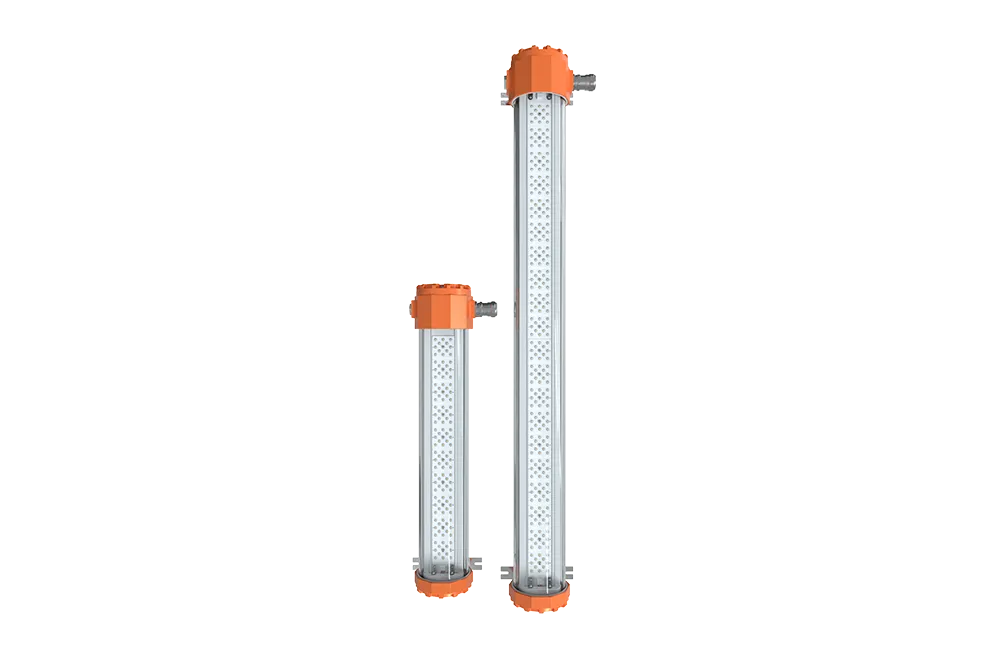
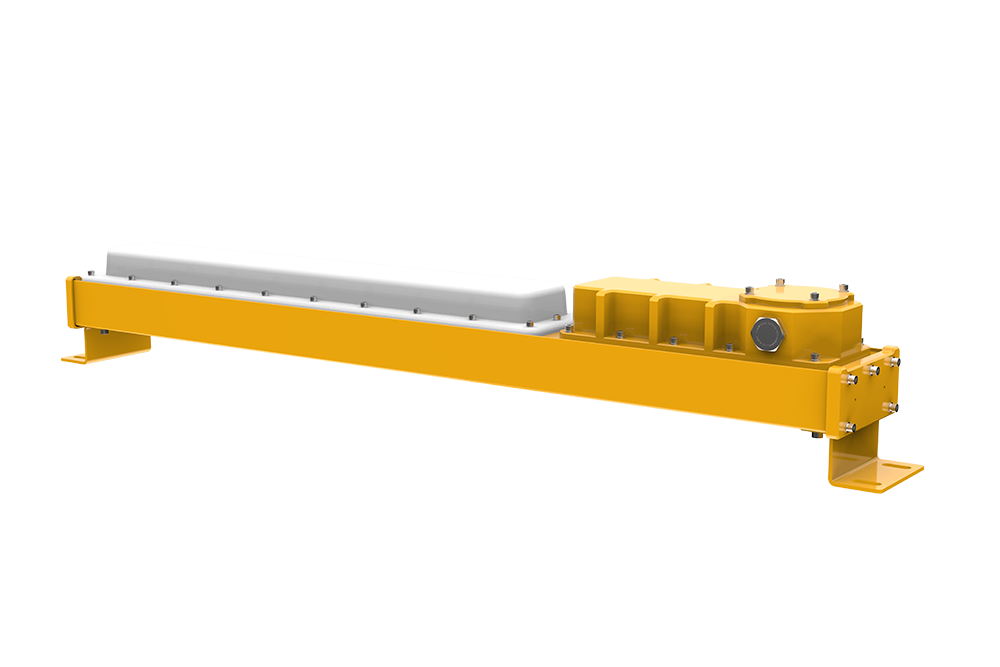
SEEKINGLED LED Linear Explosion Proof Light and Explosion Proof lighting is ATEX and IECEx certified for Zone 1, Zone 2, Zone 21 and Zone 22 hazardous locations, built for long-term industrial use.
LED Linear Explosion Proof Lights and EX Proof lights for Zone 1, Zone 2, Zone 21 and Zone 22 hazardous areas. ATEX & IECEx certified explosion proof LED linear lighting with emergency function, adjustable power and IP67 protection by SEEKINGLED.
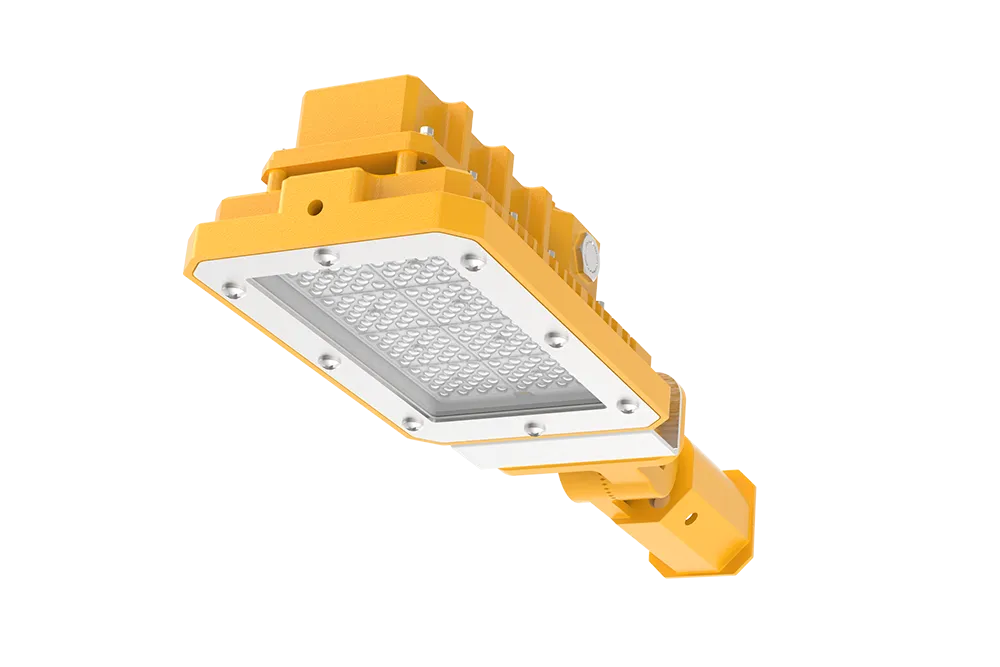
SEEKINGLED LED Explosion Proof Flood Lights are ATEX certified for Zone 2 and Zone 22 hazardous areas, offering high efficiency, adjustable power and integrated junction box.
SEEKINGLED LED Explosion Proof Flood Lights are flameproof ATEX and IECEx certified for Zone 1 and Zone 2 hazardous areas, offering high power, adjustable output and long service life.
SEEKINGLED LED Gas Station Canopy Lights are ATEX certified for Zone 2 and Zone 22 hazardous areas, featuring adjustable power and built-in explosion-proof junction box.
ATEX: Ex II 2G Ex db IIB T6/T5 GbEx II 2D Ex tb IIIC T80°C/ T95°C Db IECEx Ex db IIB T6 Gb;Ex tb IIIC T80°C Db Feature: ● For Zone 1,2 and Zone 21,22● Flameproof type, the strongest● 100W can replace 250W HID,energy saving● Power:60W,80W,100W Application: Oil and gas, marine, Chemical, pharmaceutical, semiconductor,mining,military industr…
ATEX: II 3G Ex nR ⅡC T5/T6 GcII 3D Ex tc ⅢC T80℃/T95℃Dc ATEX Certificate NO: TÜV CY 26 ATEX 0207611 X Feature: ● For Zone 2 and Zone 22● 150W can replace 250W HID lamps,Energy saving● Power:50W,75W,100W,150W,200W Application: Oil and gas, marine, Chemical, pharmaceutical, semiconductor,mining,military industry, paint booth,power plant ETC…
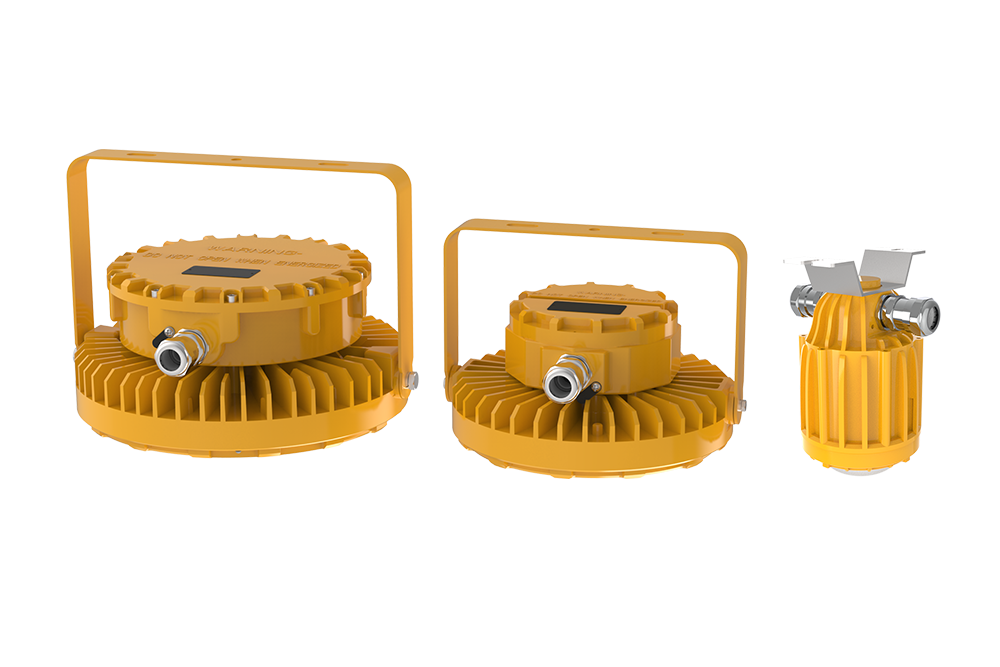
LED explosion proof high bay lights are designed for Zone 1, Zone 2, Zone 21 and Zone 22 hazardous areas. This page introduces the HB21 Series from SEEKING, including certifications, power options and real application considerations.
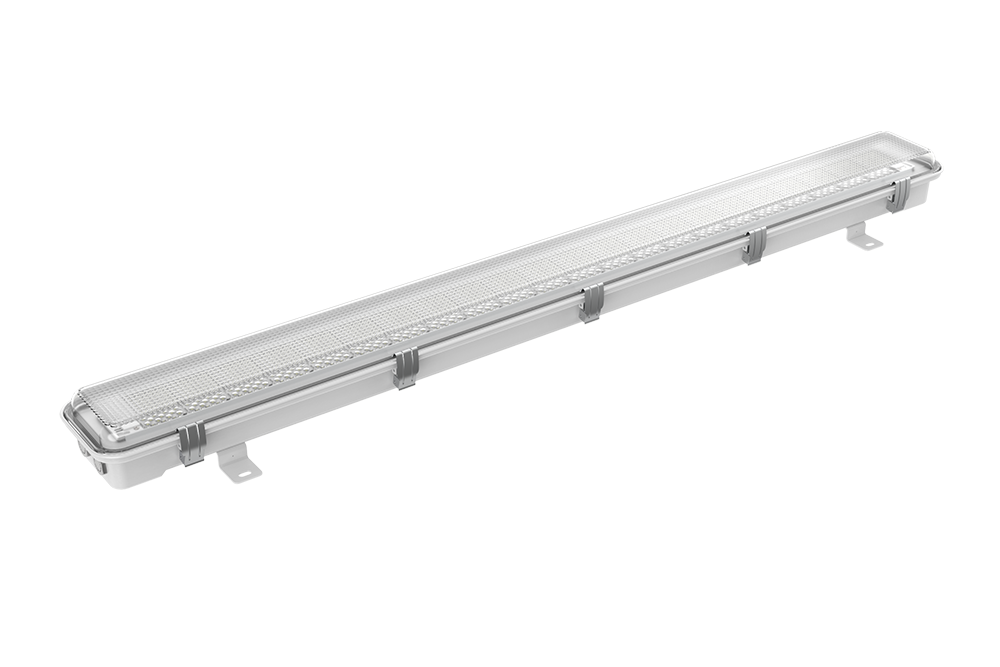
LED Linear Explosion Proof Lights from SEEKINGLED. LU Series Flame Proof lights ATEX-certified explosion proof LED linear lighting for Zone 2 gas and Zone 22 dust areas, IP69K, IK10, long lifetime and flexible power options.
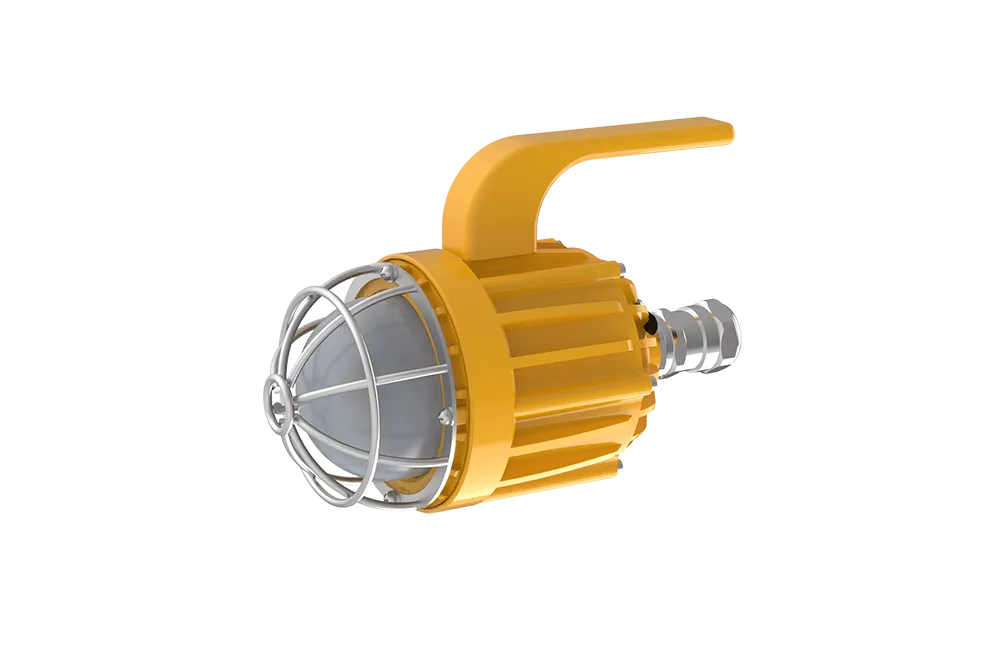
Certified explosion proof work lights for Zone 1 & 21 hazardous areas. Portable, ATEX & IECEx approved, built for oil, gas and chemical plants by SEEKINGLED.
ATEX: II 3G Ex nR ⅡC T6 GcII 3D Ex tc ⅢC T80℃ Dc ATEX Certificate NO: TÜV CY 26 ATEX 0207611 X Feature: ● For Zone 2 and Zone 22● Accepts battery-powered supply● indestructible● Power:AC input:50W,75W,100WDC input:15W,25W,35W Application: Oil and gas, marine, Chemical, pharmaceutical, semiconductor,mining,military industry, paint booth,po…
ATEX: Ex II 2G Ex db IIB T6 GbEx II 2D Ex tb IIIC T80°C Db IECEx Ex db IIB T6 Gb;Ex tb IIIC T80°C Db Feature: ● For Zone 1,2 and Zone 21,22● Flameproof type, the strongest Application: Oil and gas, marine, Chemical, pharmaceutical, semiconductor,mining,military industry, paint booth,power plant ETC hazardous area. Technical Specifications:…
ATEX: Ex II 2G Ex db IIB T6 GbEx II 2D Ex tb IIIC T80°C Db IECEx Ex db IIB T6 Gb;Ex tb IIIC T80°C Db Feature: ● For Zone 1,2 and Zone 21,22● Flameproof type, the strongest Application: Oil and gas, marine, Chemical, pharmaceutical, semiconductor,mining,military industry, paint booth,power plant ETC hazardous area. Technical Specifications:…
ATEX: Ex II 2G Ex d e IIB T6 Gb ATEX: Ex d e IIB T6 Gb; Feature: ● For Zone 1,2● 9W can replace 18W fluorescent lamps,50% Energy saving Application: Oil and gas, marine, Chemical, pharmaceutical, semiconductor,mining,military industry, paint booth,power plant ETC hazardous area. Technical Specifications: Standards:60079-0, 60079-1, 60079…
SEEKING showcased advanced LED lighting solutions at the 2024 Hong Kong International Lighting Fair and Outdoor and Tech Light Expo, including new HLS linear trunking and HLD linear high bay, covering garden lights, flood lights, high bay, street ...
ATEX LED lights designed for hazardous zones in oil, gas, and chemical plants. Discover how explosion-proof lighting improves safety, efficiency, and reliability with SEEKINGLED.
LED motion activated flood light improves outdoor security with instant illumination and energy savings. Learn real installation tips, sensor settings, and expert insights with SEEKINGLED.
 Seeking LED